← Redwood Bureau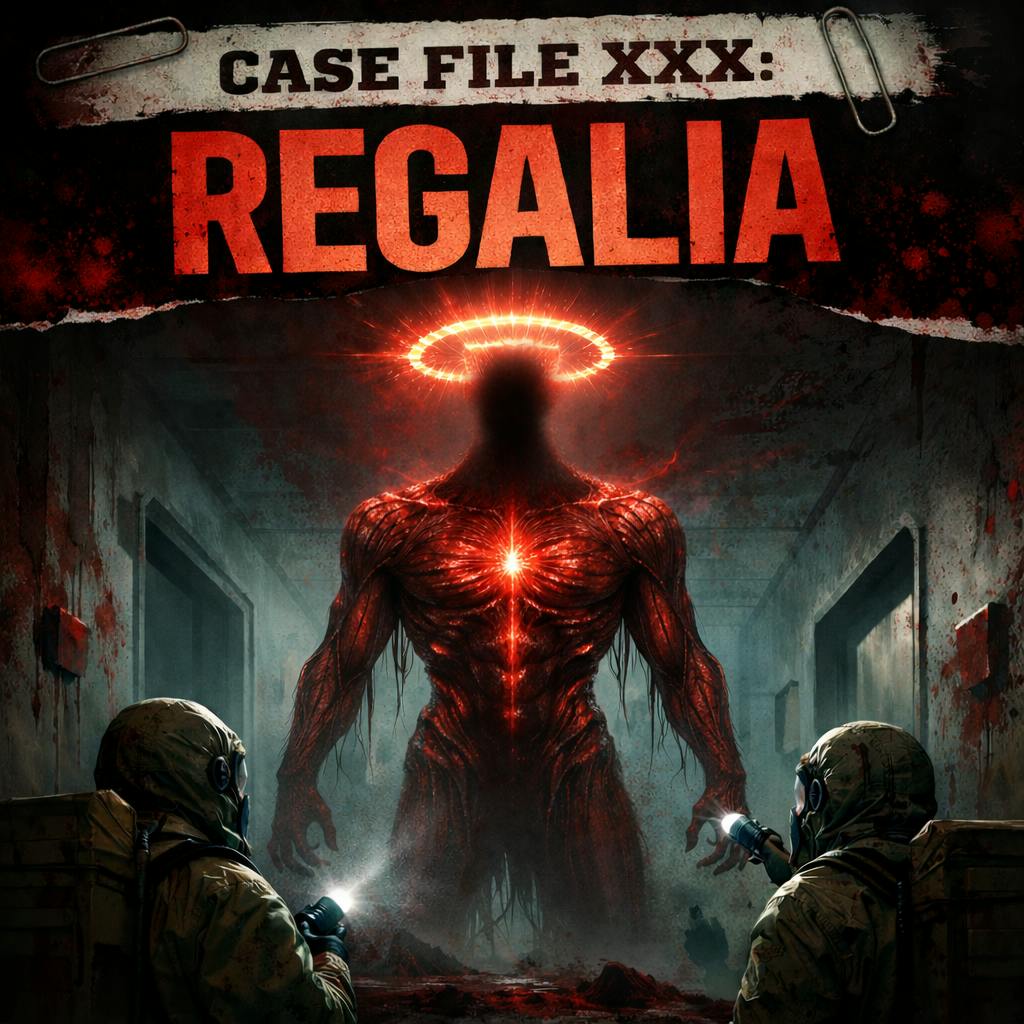
Redwood Bureau
"REGALIA" _ Case File #XXX
00:43:42
A program so sealed it didn’t even have a name. All we got was a signal interception from a hospital response the Bureau couldn’t avoid. What came out of that wing wasn’t an accident—and it isn’t over.
Loading summary
Transcript98 lines
- [00:01]
A
Look at him.
- [00:01]
B
Eating whatever he wants, never gaining a pound. Well, I'm stuck with the boring special and can't lose an ounce. How's your lunch, man?
- [00:08]
C
Amazing.
- [00:09]
D
Yours?
- [00:10]
E
So good.
- [00:11]
A
Oh, I'm so happy for you.
- [00:13]
D
Cool, buddy.
- [00:14]
E
Weight loss isn't fair, but Mochi Health
- [00:17]
F
is the affordable GLP1 source that can fix your frustration with food.
- [00:21]
D
So same time next week? No.
- [00:23]
E
Definitely. And your friends.
- [00:25]
F
Learn more@joinmochi.com Mochi members have access to licensed physicians and nutritionists. Results may vary. This episode is brought to you by Redfin. You're listening to a podcast, which means you're probably multitasking, maybe even scrolling home listings on Redfin, saving homes without expecting to get them. But Redfin isn't just built for endless browsing. It's built to help you find and own a home with agents who close twice as many deals. When you find the one, you've got a real shot at getting it. Get started@redfin.com own the dream.
- [01:03]
C
Beware the Redwood Bureau. A secret organization which captures and researches creatures and objects that defy explanation. Their reckless procedures have led to countless innocent lives lost. I am Agent Conroy. I worked for the Redwood Bureau, but I have escaped them to leak their reports to the unsuspecting public. You have the right to know. Since the North America. He wasn't a bitch. Saddam. Conroy isn't missing. If he was, you wouldn't be hearing my voice right now. He's in the field, not hiding, not running, not concerned. He's working. And if that ever changes, you'll know. Because this channel will go dark while implementing Deadman Protocol. What you're about to hear didn't come from a lucky break or a stolen folder left on the wrong desk. This project was locked down tighter than most, sealed behind need to know walls so thick that even the people assigned to it only saw their own narrow slice. No chatter, no loose threads, no convenient access points. Then the hospital incident happened. When something forces the Bureau to mobilize. Real time coordination, rapid response, external cover stories. The system has to move faster than it likes. And when it moves fast, it generates traffic, messages, calls, status updates. The kind of signals you can't avoid if you're trying to control a scene before it gets out of your hands. That window was brief, but we found it. How we did that, I'm not going to explain. For obvious reasons, the method matters less than the fact that we got a mole into the stream long enough to leech out fragments before the Bureau sealed the wound and burned the trail behind it. So understand what? This is not a complete file, not a full truth, and not a story told by someone who understands the whole machine. It's intercepted material, reports, audio, and a debrief pulled from a program that started at birth and stayed quiet for years, right up until it couldn't.
- [03:41]
D
For the last 20 years, I've had what most of my buddies in the Bureau would call the cushiest assignment a person can land without sustaining permanent deformation. They'd say it the way guys say things when they're half joking and half resentful. Like they're congratulating you while they're trying to figure out what you did to deserve it. When you spend your career getting yanked out of bed at 2am sucking down MREs and watching people get torn apart by things that shouldn't exist, the idea of a stable desk and predictable hours seems like a myth. And that was me. Stable, predictable, clean hands. At least on paper. I didn't kick doors. I didn't clear rooms. I didn't sit in the back of an APC with a rifle between my knees and a bad feeling in my gut. I didn't spend weeks in the field listening to some site supervisor brief my team about how the local authorities are cooperating while we were actively rewriting their memories and burying bodies. I sat behind glass and screens and my whole job was to keep eyes on one person who, for reasons nobody bothered to share with me, mattered enough to the Bureau that we were willing to spend two decades documenting the mundane details of her life. I'd started with an envelope and a code. No briefing or meeting or someone turns on a projector with a terrifying image and tells you this is bigger than you. Just an envelope brought to me with a signature lying at the bottom like I was signing for a package. I remember the room because it was one of those Bureau spaces that always feels like it was built to discourage individuality. Flat, light beige walls, no clocks, and the kind of silence that makes you aware of your own breathing. The first page told me everything I needed to know, which is Bureau speak for basically nothing. Female subject, infant data continuity prioritized. Physical proximity discouraged. Direct contact prohibited unless explicitly authorized. Then a list of tasks written in the same dry language. School records, medical records, behavioral notes, social development markers, phone metadata. Once she was old enough to have one Internet activity. Once she was old enough to start using it later. Therapists, recordings. Once the right nudges had been applied to the right people in her life so that help was on the table and our microphones were in the room. It was boring, to say the least. Childhood is a long stretch of predictable data points when you're not not the one living it. Feeding schedules, naps, doctor visits with a pediatrician's handwriting. That was so terrible. Deciphering it was the hardest part of my day. I'd flip through those pages and think, this is what we're doing. This is the Bureau's big secret. Then she started school. Report cards came in with neat little boxes checked off and comments written by tired teachers who thought they were talking to parents. Not an agency that could pull a yearbook photo before it ever got printed. Attendance sheets. Notes about difficulty focusing and daydreaming, that sort of thing. There were moments, though, Tiny, easy to miss moments if it wasn't your job to watch them all, where things just seemed a little wrong. But wrongness is a common feeling in my line of work, and you learn to file it away. You notice, you log, you move on. My buddies just saw the surface. We'd be in the same break room, them coming off quarantine from some life threatening mission, me going through another day of no significant changes. And they had this look like I was a spoiled rich kid in a poor town. But deep down, even the guys who liked to talk knew the truth of it. Nothing around here was ever that easy. In the back of my mind was always this ticking clock. The Bureau doesn't pay someone to stare at one life for two decades unless that life is connected to something that can cause devastation beyond imagination. The strangest part was how little anyone ever told me. Even as the years stacked up in normal agencies, you might expect updates, chain of command meetings, the occasional. Here's why this matters. In the Bureau, the opposite is almost a rule. The less you know, the less you can leak. And the less you leak, the fewer people they have to disappear later. Need to know isn't a policy here. It's the foundation the whole house is built on. Every quarter like clockwork, I'd turn in the mandated report where she lived, who she talked to, whether her grades were stable, whether her medical records showed anything unusual. I'd flag any anomalies the way the template instructed me to, and I'd keep my opinions to myself because my opinions weren't part of the task list. I told myself the same comforting lie most of us tell ourselves when we're doing work we don't understand. That somewhere above me there was a person who knew what all of this meant. That I was a small part of a larger plan. And the plan was in capable hands. For a long time that seemed to hold up. She grew the way kids grow. Middle school brought a quietness that looked like shyness. High school brought fatigue that could have been hormones, depression, stress or any other normal teenage girl thing. At 17, she got her first job. At 18, she started talking about applying to college, though we made sure that didn't happen. There were boyfriends and fallouts and friend drama. The kind of tiny disasters that feel like the end of the world when you're young and barely make it as a footnote on a quarterly report. I remember a specific day, about a year ago now, when I looked at the latest batch of documents and realized everything looked normal. She was passing her classes. She was laughing with her friends. She was making plans. And I caught myself thinking, genuinely, stupidly thinking, that maybe the bureau had been wrong about her. That maybe this was just a long, expensive paranoia project that would eventually be archived and forgotten. That maybe I'd coast to retirement with clean hands and nothing worse than boredom. Then, a few months before her 19th birthday, her file started changing in a way I couldn't quantify yet. There wasn't one big red flag. It wasn't a single incident that made me sit up straight and call my supervisor. The therapist's notes got longer. The gaps between sessions got shorter. The language and her search history went from anxious and scattered to focused in a way that wasn't healthy. Not ghosts and hauntings and the usual amateur nonsense people reach for when they're scared. More like someone trying to describe a sensation that didn't have words and getting angrier every time they came up empty handed. She started reporting that people were staring at her in public. That she'd catch the same face more than once in a day. That she'd hear her name spoken in crowded places and turn around to nothing. On paper, it read like paranoia, clean and textbook. The kind of thing you could diagnose without a degree. But I had the history. I'd been staring at her for almost two decades. I knew what her normal stress looked like. I knew the rhythm of her life. I knew the pattern so well that I could feel when they slipped. And this wasn't a slip. This was something threading itself into her days with a quiet malevolence. I did what I'd always done because it was the only thing I could do.
- [12:22]
B
Close the door.
- [12:23]
A
Excuse me.
- [12:25]
E
Close it.
- [12:25]
B
Doctor. All the way.
- [12:27]
A
This is a restricted area. If you're looking for administration, they're gone for the night. This is my office. I don't know who you are, but
- [12:35]
B
you can't just sit down.
- [12:36]
A
I'm not going to sit down until you tell me why you're in my office.
- [12:39]
B
You're going to sit down because if you don't, I'll walk out of here and you'll spend the rest of your life trying to remember what daylight feels like. Sit down.
- [12:50]
A
I'm calling security.
- [12:52]
B
You won't.
- [12:53]
A
Why wouldn't I?
- [12:54]
B
You know exactly why I don't.
- [12:57]
A
If you're here about billing or a complaint, I have a lawyer.
- [13:01]
B
What you have are victims.
- [13:03]
A
I don't know what you're talking about. I'm a pediatrician. This is insane.
- [13:07]
B
Of course you are. That's how you got away with it. As long as you have.
- [13:11]
A
You can't come in here and accuse me of whatever you're implying. If you have something to say, you can say to my lawyer.
- [13:18]
B
I don't need to accuse you. I'm here to inform you.
- [13:21]
A
Inform me of what?
- [13:23]
B
That we have your schedule for the last three years. We have your keycard logs. We have the missing sedatives that lead right back to you. We have the messages you sent from your personal phone. We have the edits you made to the charts when you thought you were cleaning up.
- [13:40]
A
That. That's. Those are normal communications. That's literally part of my job.
- [13:48]
B
You like the ones that didn't have anyone else in the room, didn't you?
- [13:51]
A
You don't get to. You don't get to say that like you know me.
- [13:55]
B
I don't care about you. I know what you did, and that's all that matters.
- [14:00]
A
No. No, you don't. You don't.
- [14:02]
B
You can't. We don't need. Can we have it. We have enough that if you ever saw freedom again, you'd have lost your license, your family, your home, your. And the ability to walk through a grocery store without someone wanting to put you in the ground. In fact, you'd be lucky if the courts got to you before the fathers did.
- [14:22]
A
This is. This is extortion.
- [14:25]
B
Call it what you want, but I will have your compliance.
- [14:29]
A
Who are you?
- [14:31]
B
I'm the guy holding all the cards.
- [14:33]
A
If you have this, if any of this is real, then why haven't you. Why haven't you done something? Why am I still sitting here?
- [14:41]
B
Because we don't care about your moral redemption. We care about your usefulness.
- [14:47]
A
Jesus Christ.
- [14:49]
B
I think it's a little late to find religion, doctor.
- [14:52]
C
What?
- [14:53]
A
What do you want from me?
- [14:55]
B
One small, simple task.
- [14:59]
A
Clean.
- [14:59]
B
Quiet. You do it. You go Back to your life.
- [15:04]
A
And if I don't wanna find out? Okay, fine. What task?
- [15:11]
B
Tomorrow morning, you will administer a neonatal dose to a newborn female. The name is in this file. You will do it within the first hour after delivery.
- [15:22]
A
A neonatal dose of what?
- [15:25]
B
You don't need to know what it is.
- [15:28]
A
I'm not injecting an infant with some random substance.
- [15:32]
B
Don't suddenly pretend you care about protecting children.
- [15:35]
A
That's not the same.
- [15:37]
B
I wonder if your wife would agree.
- [15:40]
A
You're asking me to poison a baby.
- [15:43]
B
I'm not asking you anything. I'm telling you what you're going to do.
- [15:48]
A
Why this child? Why me?
- [15:50]
B
Because that's the way it is.
- [15:53]
A
I'm going to need. I'm going to need some documentation, a written order, something that releases me of liability if anything happens.
- [16:01]
B
The only thing you need to worry is doing what I tell you, exactly how and when I tell you.
- [16:09]
A
How do you. How do you want me to do it?
- [16:11]
B
You will find a syringe in your personal locker labeled as a standard vaccine. Bring it with the others and administer it.
- [16:20]
A
And how do I chart it?
- [16:22]
B
Just as you normally would. No deviations, nothing outside of normal. Administer the shot and you're done. It really couldn't be simpler.
- [16:33]
A
What happens to me after you continue working?
- [16:36]
B
You continue pretending you're a good man. You continue making sure no one sees the parts of you we've already seen. If you do what you're told, you keep your life intact.
- [16:48]
A
And if I do this, you. You destroy the file?
- [16:52]
B
No, of course not.
- [16:55]
A
Then what am I getting out of this?
- [16:57]
B
You're getting to wake up tomorrow with your name still attached to your career instead of a headline.
- [17:03]
A
I want some kind of guarantee. I want immunity. Something in writing.
- [17:07]
B
You don't get guarantees. You get consequences. You can't just. I can and I am. This is what your life is now, Doctor. You do what you're told when you're told. It's that simple.
- [17:22]
A
This is insane.
- [17:23]
B
This is reality. You just haven't been subject to it until now.
- [17:29]
A
What if I refuse? What if I quit? Walk out?
- [17:32]
B
Then the next pediatrician on the list gets a visit. The baby gets the dose anyway. And you get to find out what happens when everyone knows what you are. Now. Repeat the instructions back to me.
- [17:46]
A
I administer the neonatal dose to the newborn female tomorrow morning within the first hour. And I chart it like normal. And I don't say anything.
- [17:57]
B
And if you create problems for us or fail to do what you're told in any capacity Then you.
- [18:04]
A
You destroy me.
- [18:06]
B
I wouldn't say destroy so much as advertise. But it seems we have an understanding. Alright, say it like you mean it.
- [18:17]
A
I understand. I'll do it.
- [18:19]
B
Good. I'll see you soon.
- [18:25]
C
Warning. Signal interruption detected.
- [18:30]
E
Hey there. Darkness prevails here. Founder of eeriecast, my little network of scary shows. I appreciate you listening to our scary content, but did you know you can support us? Get ad free feeds of your favorite shows, get a 20% discount code to the Eeriecast store and unlock access to members only audiobooks all at the same time. Just go to eeriecast.com/& become a member today. It's cheap and really helps us out. That's eeriecast.com/plus. Thank you.
- [19:05]
C
Signal connection restored.
- [19:09]
D
As long as I kept up with the reports on schedule, my supervisor left me alone. Which was the whole point of having a guy like me sitting behind a desk in the first place. Which had been going great until it wasn't. We got her into counseling the same way we get most things into motion. A couple of nudges in the right places, the right concerns raised by the right adults, and suddenly there's a licensed professional talking to her in a room we can listen to. What started is the usual adolescent noise. Turned into a young woman trying very hard to sound reasonable while describing what it feels like to be trapped inside your own body with something else. She kept circling the same point. She said she couldn't shake the feeling if not being alone, even when she was alone. Then she tried to explain the physical part and you could hear her get embarrassed, like she was bracing for the moment. The clinician's tone changed and she was labeled a paranoid schizophrenic. She said it felt like a muscle spasm, except it was everything at once. A crawling tension under the skin and behind the eyes. Like her whole body wanted to recoil from itself, like her organs were trying to shift out of place and couldn't quite manage. Came in waves. Some days it was a background hum she could ignore if she stayed busy. Some days it hit so hard she couldn't sit still without feeling like she was going to peel out of her own skin. She kept insisting she wasn't hearing voices and she wasn't seeing things, not exactly, but she kept getting a certainty that someone was right behind her. The therapist handled it the way his own checklist demanded. Questions about sleep, diet, caffeine, substances, recent trauma, family history. All the usual gates you walk through when you're trying to figure out if you're looking at anxiety A neurological issue or a body reacting to something the mind can't label. The tone stayed calm and practical. No validation, no dismissal. Just the steady insistence that the world was still rational and they could still do something about it. By the end of the session, she recommended basic blood work to rule out anything systemic and a short term prescription to take the edge off while they waited for the results and a follow up in three days. A simple plan designed to keep someone from spiraling. That's where I stepped in. We don't let civilian medicine introduce variables we can't account for. And we don't let lab results sit in a place where people not in the know start asking questions. I flagged the prescription and routed it through a compromised fulfillment chain. What she picked up from the pharmacy looked exactly like what she was prescribed, right down to the printed label and dosing instructions. Except the pills were a placebo. The blood test was even easier. A courier with the right badge walked into the lab and walked out with her specimen in a cooler and the hospital logged it as collected. The sample went to a facility I don't have access to under a chain of custody number that meant nothing to me. And I never saw the results. I wasn't supposed to. My role didn't allow me any extra information. Bringing us to now. She admitted herself to the hospital. I had no idea. She didn't talk about it in her house or message anyone about it. She just went there quietly. There was no way I could have known. I found out through an emergency alert that our AI has connected to her identity. Voluntary admission. Severe generalized pain. Acute onset bleeding from the nose, the eyes, the ears. It was coming out of every orifice and too much of it too fast. They triaged her immediately and moved her into a room and started doing what hospitals do when someone is failing. Labs, lines, imaging, more hands, more noise. The whole place snapping into that controlled panic hospitals are known for. I didn't sit back and watch. I took action immediately. First call went to the project supervisor. When he answered, I gave him a location and told him we needed a team there fast. While he organized that, I had an operator place a call to the hospital through a spoofed line with a calm, official voice. Cdc. Possible unknown deadly disease. Isolate patient. Restrict access. Clear the wing if possible. No one goes near her. Await Federal response team. Hospitals don't argue with those kinds of calls. Administrators don't want liability. Doctors don't want to be the headline that says they let something spread. Nurses don't want to take something home. Within minutes the wing had been emptied out, doors closed, tape went up. A young woman in obvious agony got left behind glass and locked doors. Which is exactly what you do when you think you're dealing with contamination and exactly what you do when you want to keep a problem from spreading to everyone else. Up until that night, my assignment had been a slow drip of normal life in a file. A girl growing up, a job my buddies called Easy Street. The truth is, I don't know what the fuck happened here, but I did everything I was told and there isn't anything I could have done differently that would have changed anything.
- [25:00]
E
We rolled in responding as CDC because it clears places faster than anything else and it keeps civilians from doing heroic things that make our job harder. You show up in a hazmat with the right letters on your chest and no one tries to stop you or call anyone else. By the time our vehicle hit the ambulance bay, security had a rope line up and administration was in the exact kind of panic where they were desperate for someone to take control away from them. We gave them that. We moved in a six man team, full hazmat suits, respirators on. We cleared the corridor leading to the wing, pushed stack back with short commands and kept our pace steady so it looked like we were there to help. The wing was empty by the time we made visual contact with the room. Doors were shut, lights were on, monitors were running. We had eyes on the patient through the room window. She was on the bed, upright, legs drawn up, arms locked around her midsection like she was trying to hold herself together by force. She was swollen in a way that wasn't fluid retention or bloating. Her skin was distended in uneven patches, rising and falling in different places, like something inside her was inflating sections of her and letting them collapse, then inflating somewhere else, then collapsing again. Her face was wet and streaked dark. She was crying, blood thick, bright at the corners of the eyes, then darkening as it ran, and it kept coming. Her mouth was bleeding too. Every time her lips parted, it poured out in short pulses like the pressure behind it was rising and falling. There was blood dripping out from from under the gown, pooling and spreading. We made contact through the glass. She turned her head toward us, like she'd been waiting for someone to finally show up and help her. She said, I can't hold it back anymore, and she got maybe half through the sentence before she gagged on blood and swallowed hard to keep it down. I asked her what she meant by it. She shook her head once, small Vast. And then she started crying harder, and the swelling in her neck jumped like something under the skin had flexed. At that point, our attached scientific asset arrived at the corridor entrance carrying a hard case. He looked through the glass for less than 10 seconds, and then he told me he wasn't going in without her being fully restrained. We cleared the rooms in the hall and sealed the wing behind us after verifying it was empty. The wing was contained as far as physical access goes. We breached the patient room, and a second the door opened. The smell hit us. Blood has a smell everyone knows, metallic and hot, but this had another layer under it, like raw meat left out too long, and it coated the inside of my respirator. She looked at us and tried to speak again, but her stomach convulsed and she folded forward with a sound that started as a sob and turned into something else. As her body locked up, the swelling changed in function. It stopped being random bulges and started resembling a pattern. You could see distinct areas of her torso and thighs and upper arms distend in sequence, then relax, then distend again, like a wave traveling through her, and each wave was deeper than the last. Then the light started. It wasn't on the skin like a tattoo. It was inside her. It lit up in seams between muscle, thin lines at first and then thicker, branching and linking, and they were not straight. They curved and intersected like circuitry, and they glowed a deep red that made the blood on her look black by comparison. The lines weren't static. They grew, etching themselves through tissue, and wherever a line formed, the flesh around it tightened as if the line had tension of its own. Her ribs shifted under the skin like they were being pushed from the inside. Her abdomen swelled outward and had pulled inward hard enough that you could see the outline of her pelvis change. She let out a series of screams, interrupted by choking and gagging, and the sound of it was distorted and wet. We moved to restrain. I gave the command before hands ever made contact. Her back arched violently and her head snapped toward the ceiling and her mouth open like she was trying to draw in air and couldn't find it. Her eyes rolled up, blood still running, and all the red lines inside her frightened at once. The bulges became structure, muscle separated from bone, not tearing like an injury, but peeling like something was unfastening it along natural seams. It rose under the skin and pressed outward until the skin split in multiple planes across the torso and shoulders, and when it split, it wasn't a clean cut. It ripped in jagged lines as the tension exceeded what skin can endure, and the edges curled back like damp paper. What came out was the meat that had been inside her reorganized. A shoulder shape rose first, then the other, then a thick column of muscle that lifted a neck without a head, and as it rose, it dragged more tissue with it, as if it was pulling itself free by its own cognition. The red lines ran through it like veins of light, and they kept forming as it moved, mapping across newly exposed surfaces, bridging gaps, tightening things into place. She was still on the bed as it pulled itself out of her. Her eyes were open and still blinking, but the color was gone from her deflated skin as everything emptied out of her. The thing escaping her grew as it rose. It added length and mass as it pulled the rest of her interior structure into alignment, and it got big fast enough that the rooms stopped accommodating it. Ceiling tiles popped, light fixtures snapped, sprinkler lines broke and water dumped, dousing the muscle surface and running down in sheets, turning the floor into a pink puddle. It stood fully upright and its upper body pushed into the ceiling space, forcing panels aside. By the time it cleared the bed, it was already taller than the door frame. When it straightened, it was nearly 20ft, bending at the torso because the room wasn't built for was muscle, skinless, wet, and steaming into the cold air of the room with no head. Above the thick neck column, there was a light structure, red, shaped like a crown or a ringed crest, not attached by flesh holding position above where a head should have been. The light it cast cut across the ceiling and left a shadow where there was nothing to cast it. A head shaped silhouette projected below it. My Keem froze for a fraction of a second because nothing in training prepares you for this kind of shit. It reached out and grabbed the agent to the right of me. It enveloped him in a mass of large muscle digits that tightened around his torso and lifted him off the floor like he weighed nothing. The crown light hovered above and the red lines across the muscle brightened along the arm that held him, as if the limb was receiving more current. It began separating him, peeling pieces away like it was opening a fruit. It pulled his arm straight until his shoulder joint failed, and when the arm came free, blood sprayed in a hard arc and hit the wall and ceiling. His scream came muffled through the respirator. It set the arm down, controlled like it was placing a treasure. Then it opened his chest. The sound was a wet ripping and then a sudden rush as pressure released. Blood poured down the front of his shredded hazmat suit in sheets as organs and intestines dropped onto the floor. His body went slack. The creature held him up for another second or two, then let him fall. He hit the floor hard and didn't move again. That's when I ordered engagement. We fired controlled bursts, targeting the torso. Because there was no physical head, the rounds punched into muscle and disappeared into it. There was impact and splatter, but there was no sign of any pain response. The creature shifted its weight and the floor cracked under it. A chunk of ceiling came down and crushed the girl's empty body. The scientist deployed a device from his case, some kind of emitter or projector, throwing a patterned red light into the room that matched the lines already in the creature's body. For a moment, the creature's movement stuttered. That moment lasted a second, maybe less. Then it moved faster than we could follow. It crossed a space to my left and backhanded one of my men. He went flying across the room and hit the wall head first, leaving a bloody smear before collapsing into a heap. He convulsed, seemingly still alive, but before we could do anything about it, the thing was there, putting a foot on his back and pressing until the spine broke and his torso turned to mush. The hallway outside the wing filled with noise alarms, people shouting evacuation orders over the intercom. You could hear staff at the far end of the corridor screaming without seeing what was happening because all they had was the sound of gunfire and the building shaking. I lost two more in the next 30 seconds. One was lifted and folded several times before being dropped into the pink pooling floor, a messy square of broken flesh. The other had managed to dodge several rapid attacks while emptying his magazine and reloading, but simply couldn't keep up. It got its hands on him and twisted until he came apart. At that point, it was me, one other agent, and a scientist who was backing up while still trying to work his device, his hands shaking enough that he could barely hold onto it. The creature turned its focus on me. It closed the distance by doing something I can't quite describe. It was almost like it was able to move through a moment in time, ending up where it wanted to be. Behind me. It grabbed me around the torso, trapping my left arm. The grip was like a steel vise, tightening slowly and deliberately. I could feel the hard parts of my vest pressing into me as my ribs started to crack. My vision narrowed. The crown light was above me, close enough that the red glow flashed across my face shield and turned everything into a deep arterial color except the shadowy Outline of a twisted face hanging above that stump of a neck. I reached for the artifact with my right hand. I was told only to use it as a last resort. I deemed this as an appropriate usage. Short length, heavy bone handle with a dormant rune on the pommel. I thumbed it and a glowing blade matching the same same red of the entity sizzled to life. I drove it into the creature's wrist, then pulled it towards me hard. The blade parted the tissue in a clean smoking line. The grip loosened enough for me to drop and land on my feet. But still feeling my lungs complain as air rushed back into them. The creature stumbled back and its body shuddered. The sound it made wasn't a screen scream the way an animal screams. It was layered noise, high and low at once. It went down on one knee, then fell onto its side, hard enough that the floor cracked beneath it. I sprang forward, moving on adrenaline and training. I ran in and cut into the abdomen, the blade opening it, revealing thick muscle and red pulsing lines. It swung at me. I rolled away and the swing hit the wall and continued into the next room. Drywall studs and dust filled the corridor beyond. I pulled the containment spike from my kit. It was a specialized compact device, heavy for its size, a worn metal mixed with something that looked ancient, engraved with shallow channels and ruins. I rushed back in and drove it into the wound I'd made, deep enough that only the tip remained outside and hit the activator. Sharp spikes unfolded internally and locked into the flesh surrounding it. The tip of the device flared red, not the same red as the creature's internal lines, but close. It sparked and pulsed like it was attuning to the thing's energy. The creature stopped moving, its thrashing cut off mid motion. The sound cut off and the whole room went quiet except for sprinklers and distant evacuation announcements and my own respirator filtering my ragged breathing. It rose to its feet in one smooth motion and it turned toward me. The crown light held steady above the neck column. The muscle line still glow glowed, but they dimmed slightly around the containment spike, like the energy had been rerouted. Then it lowered itself and knelt, as if waiting for instruction. I keyed my radio and gave the casualty count and status update. I reported catastrophic structural damage to the wing and adjacent corridor, as well as ongoing civilian evacuation. Then I said, the only line that mattered to awaiting command asset is contained. As I looked at what was kneeling in front of me. 20ft of skinless muscle with a crown of red light and veins of ruins. Whatever this thing is, I Hope you know what you're doing.
- [40:23]
C
What you just heard was everything we were able to pull before the Bureau cauterized the stream and went back to silence. And the silence is the point. They didn't just respond to this. They invested in it. They blackmailed a pediatrician into putting an unknown substance into a newborn on her first day alive, then spent the next 20 years doing what the Bureau does best. Watching, shaping, interfering when outside systems got too close to answers and keeping the subject's life on a track only they understood. That's what's missing from this file. The why you heard a desk operative who didn't know what he was guarding, only what he was supposed to collect and when he was supposed to. To interfere. You heard a field commander who didn't walk into that hospital expecting to witness a birth on the scale of a myth. But here's the detail that doesn't fit the nobody knew story. When the moment came, the commander had the tools that were already tuned to the problem. A blade that cut what bullets couldn't, and a containment device that didn't just stop. Made it all obey. Those aren't improvised solutions. You don't carry those by accident. Somebody upstream knew enough to prepare for that exact form of emergence. And they equipped a man who wasn't told what he was walking into. We still don't know what the entity was, what was injected into her, or what the Bureau's end goal is. We don't have the blood work they intercepted. We don't have the real program. Name the sponsor, the origin point, or the list of other subjects. Because I highly doubt any program like this runs on a single trial. What we do know is Conroy and I hadn't caught a single whisper of it until the hospital forced the Bureau to move in public. That means they've been doing it quietly, successfully, for a long time. And whatever they pulled out of that room alive, they didn't contain it to protect you. They contained it because they created it and they wanted it.
- [42:45]
F
My dad taught me a lot, including how easy it is to forget to cancel things. So I downloaded Experian, my bff Big financial friend. Experian could help me cancel my unused subscriptions and lower my bills, saving me hundreds a year. Get started with the Experian app today. Your big financial friends here to help you save smarter. Results will vary. Not all bills are subscriptions eligible. Savings not guaranteed. $631 a year average savings with one negotiations and one plus cancellations paid. Membership with connected payment account required. See experian.com for details.
- [43:14]
D
Experian
- [43:16]
B
when you host with cut water canned cocktails, expect company. Entertain effortlessly. Cut water real cocktails, perfectly mixed. Copyright 2026Cutwater Spirits, San Diego, CA Enjoy responsibly.