Podcast
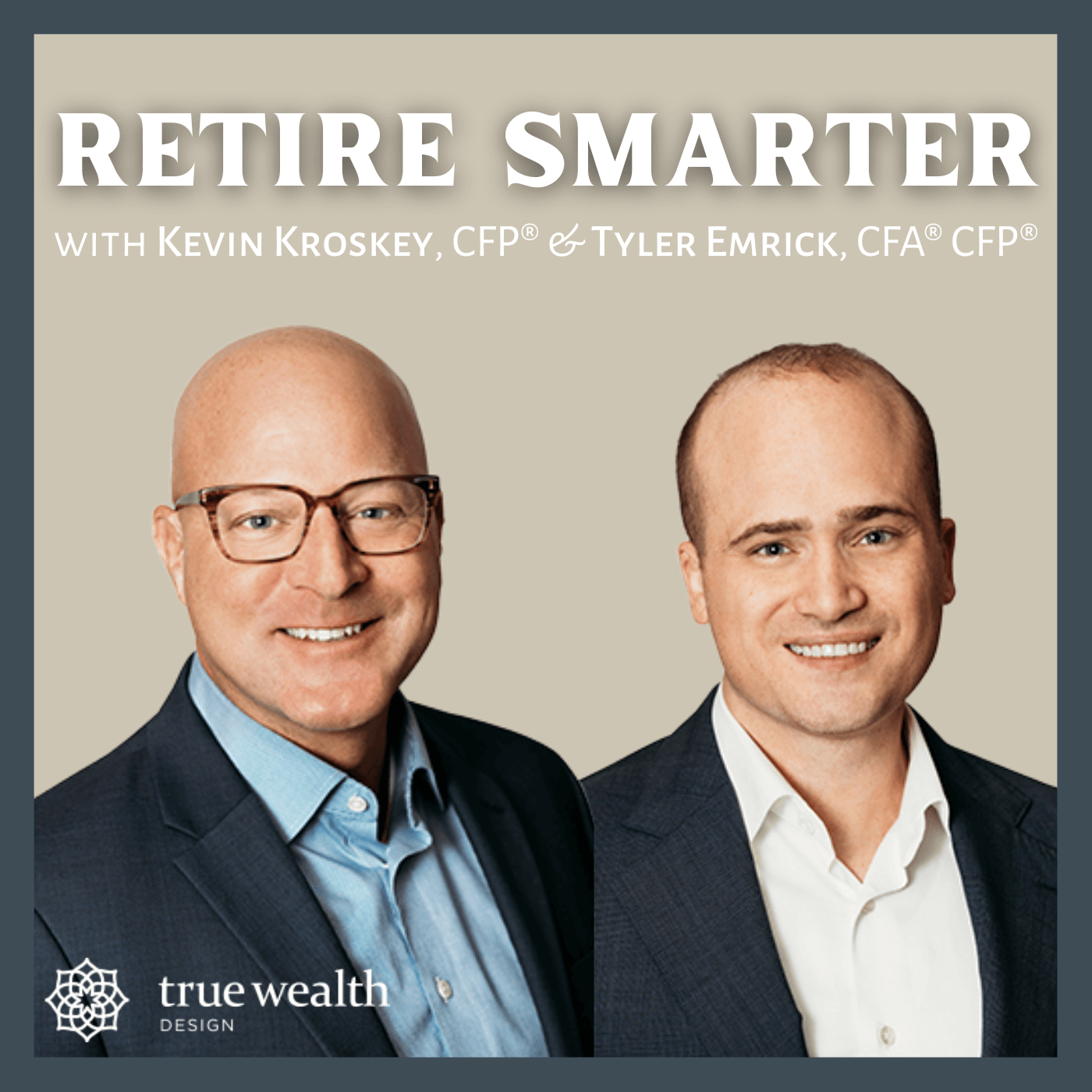
Retire Smarter with Kevin Kroskey, CFP® & Tyler Emrick, CFA® CFP®
Hosted by Kevin Kroskey, CFP® & Tyler Emrick, CFA® CFP® · EN
Planning Retirement Smarter. Living Retirement Better. With Kevin Kroskey, CFP® & Tyler Emrick, CFA® CFP® of True Wealth Design. #Retire #Stocks #Investing #401k #IRA #CFP #TrueWealthDesign. Contact at https://www.truewealthdesign.com/ or by calling 855-893-7526.
36episodes
Episodes
Newest firstAll episodes
Can You Retire Before 59½? Here's What You Need to Know
3w ago00:16:25Tap to summarizeMany people assume they have to wait until age 59½ before they can retire because that's when retirement accounts generally become available without the 10% early withdrawal penalty. But in reality, early retirement is often less about how much you've saved and more about how you access your money. In this episode, Tyler Emrick, CFA, CFP® discusses the planning strategies that can help bridge the gap before traditional retirement account access, why saving across different account types creates flexibility, and how thoughtful income planning can make early retirement a realistic option. We discuss: Why age 59½ matters—and why it doesn't necessarily determine when you can retire Planning opportunities including the Rule of 55, 72(t), and Net Unrealized Appreciation (NUA) Why taxable brokerage accounts, Roth IRA contributions, and cash reserves can create flexibility Building a retirement income bridge before Social Security, pensions, and Medicare begin Healthcare planning before age 65, including COBRA and ACA Marketplace coverage Have questions? Need help making sure your investments and retirement plan are on track? Click to schedule a free 20-minute call with one of True Wealth's CFP® Professionals. http://bit.ly/calltruewealth Our website: https://www.truewealthdesign.com/ Phone: 855.TWD.PLAN Contact our team: https://www.truewealthdesign.com/contact-a-financial-advisor/ Check out our other no-cost financial resources here: https://www.truewealthdesign.com/financial-resources/ Facebook: https://www.facebook.com/TrueWealthDesign/ LinkedIn: https://www.linkedin.com/company/true-wealth-design/ X: https://x.com/truewealthdesgn Watch the show now on YouTube: https://www.youtube.com/channel/UCjENBHOti-IEJFqeydZm_Fg?sub_confirmation=1
Transcribe →How Much Money Is Enough To Retire?
4w ago00:24:55Tap to summarizeHow much money is enough to retire? It may be the most common retirement planning question, but it isn't always the right one. In this episode, Tyler Emrick, CFA®, CFP®, explores why financial security is often more psychological than mathematical and why some retirees with millions of dollars still worry about running out of money. Tyler discusses: Why "enough" often keeps moving Behavioral biases that affect retirement decisions Why many retirees struggle to spend after decades of saving The difference between financial independence and financial confidence Practical ways to think differently about retirement Have questions? Need help making sure your investments and retirement plan are on track? Click to schedule a free 20-minute call with one of True Wealth's CFP® Professionals. http://bit.ly/calltruewealth Our website: https://www.truewealthdesign.com/ Phone: 855.TWD.PLAN Contact our team: https://www.truewealthdesign.com/contact-a-financial-advisor/ Schedule your no-cost discovery call: http://bit.ly/calltruewealth Check out our other no-cost financial resources here: https://www.truewealthdesign.com/financial-resources/ Watch the show now on YouTube: https://www.youtube.com/channel/UCjENBHOti-IEJFqeydZm_Fg?sub_confirmation=1
Transcribe →Going Back to Work in Retirement? Here's What to Know First
Jul 900:20:06Tap to summarizeMore retirees than ever are choosing to work in retirement, whether for additional income, consulting opportunities, or simply because they enjoy staying engaged. In this episode, Tyler Emrick, CFA®, CFP®, discusses the financial planning considerations that often accompany returning to work after retirement. Tyler covers: Social Security earnings limits ACA health insurance before Medicare Medicare and IRMAA considerations How working affects retirement tax planning Deciding whether working is financially and personally worthwhile Have questions? Need help making sure your investments and retirement plan are on track? Click to schedule a free 20-minute call with one of True Wealth's CFP® Professionals. http://bit.ly/calltruewealth Our website: https://www.truewealthdesign.com/ Phone: 855.TWD.PLAN Contact our team: https://www.truewealthdesign.com/contact-a-financial-advisor/ Check out our other no-cost financial resources here: https://www.truewealthdesign.com/financial-resources/ Watch the show now on YouTube: https://www.youtube.com/channel/UCjENBHOti-IEJFqeydZm_Fg?sub_confirmation=1
Transcribe →The Most Valuable Tax Planning Window in Retirement
Jul 200:20:54Tap to summarizeMany retirees have a unique period between retirement and the start of Social Security and Required Minimum Distributions (RMDs) when their taxable income may be significantly lower than it will be later in retirement. In this episode, Tyler Emrick, CFA®, CFP®, explains why this retirement tax planning window may be one of the biggest opportunities affluent retirees have to improve lifetime tax efficiency. Tyler covers: Why taxes often increase later in retirement Roth conversion opportunities before RMDs Capital gains harvesting strategies Social Security timing considerations Medicare IRMAA planning The widow's tax trap Why waiting too long can permanently reduce planning flexibility Have questions? Need help making sure your investments and retirement plan are on track? Click to schedule a free 20-minute call with one of True Wealth's CFP® Professionals. http://bit.ly/calltruewealth Our website: https://www.truewealthdesign.com/ Phone: 855.TWD.PLAN Contact our team: https://www.truewealthdesign.com/contact-a-financial-advisor/ Check out our other no-cost financial resources here: https://www.truewealthdesign.com/financial-resources/ Watch the show now on YouTube: https://www.youtube.com/channel/UCjENBHOti-IEJFqeydZm_Fg?sub_confirmation=1
Transcribe →The New Social Security Report Is Out: What Retirees Actually Need To Know
Jun 2500:18:27Tap to summarizeGet your customized planning started by scheduling a no-cost discovery call: http://bit.ly/calltruewealth The 2026 Social Security Trustees Report is out, and it is already creating headlines about the future of Social Security benefits. In this episode, Tyler Emrick, CFA®, CFP®, breaks down what affluent retirees and pre-retirees actually need to know about the new Social Security report, including the 2032 trust fund projection, the 2034 combined trust fund projection, and why Social Security is not “going bankrupt.” Tyler covers: What the 2026 Social Security Trustees Report says Why benefits do not disappear if the trust fund is depleted Why the retirement trust fund projection moved to 2032 How much of scheduled benefits may still be payable The most likely Social Security fixes Congress may consider Whether Social Security claiming strategies should change What affluent retirees should focus on instead Have questions? Need help making sure your investments and retirement plan are on track? Click to schedule a free 20-minute call with one of True Wealth's CFP® Professionals. http://bit.ly/calltruewealth
Transcribe →Donor-Advised Funds Explained: The Most Underused Tax Strategy for Charitable Retirees
Jun 1800:19:18Tap to summarizeDonor-advised funds have become one of the most popular charitable giving tools in the country, with more than $326 billion now held in donor-advised fund accounts. Yet many retirees and investors still don't fully understand how donor-advised funds work, when they make sense, or how they can fit into a broader tax planning and retirement planning strategy. In this episode, Tyler Emrick, CFA®, CFP®, covers: What a donor-advised fund is and how it works Why donor-advised fund assets have nearly doubled since 2020 How donating appreciated stock can reduce taxes and avoid capital gains Why investment growth inside a donor-advised fund may increase charitable impact over time How charitable bunching strategies can create larger tax deductions Common donor-advised fund mistakes and misconceptions Real-world situations where donor-advised funds may fit into a retirement or tax planning strategy For retirees and investors who regularly support charities, a donor-advised fund can be much more than a charitable account. It can be a tax planning tool, an investment tool, and a way to simplify ongoing charitable giving. Have questions? Need help making sure your investments and retirement plan are on track? Click to schedule a free 20-minute call with one of True Wealth's CFP® Professionals. http://bit.ly/calltruewealth Our website: https://www.truewealthdesign.com/ Phone: 855.TWD.PLAN Contact our team: https://www.truewealthdesign.com/contact-a-financial-advisor/ Check out our other no-cost financial resources here: https://www.truewealthdesign.com/financial-resources/ Watch the show now on YouTube: https://www.youtube.com/channel/UCjENBHOti-IEJFqeydZm_Fg?sub_confirmation=1
Transcribe →How to Rebalance a Highly Appreciated Portfolio Without Selling: The 351 Exchange Strategy
Jun 1100:19:22Tap to summarizeGet your customized planning started by scheduling a no-cost discovery call: http://bit.ly/calltruewealth Many investors have highly appreciated stocks and ETFs they would like to diversify, simplify, or replace, but selling those investments can create a significant capital gains tax bill. In this episode, Tyler Emrick, CFA®, CFP®, discusses the 351 Exchange Strategy, a little-known tax-efficient planning opportunity that may allow investors to exchange appreciated stocks and ETFs into a diversified ETF without first selling and realizing capital gains taxes. Tyler covers: What a 351 Exchange is and how it works The difference between a 351 Exchange and a traditional exchange fund Rules investors must satisfy before qualifying Which assets qualify and which assets do not ETF eligibility requirements How highly appreciated ETF portfolios may be consolidated into a diversified ETF How concentrated stock positions may fit into a 351 Exchange strategy The potential benefits of reducing concentration risk without immediately triggering capital gains taxes How 351 Exchanges compare to tax-aware long-short strategies and other tax-efficient diversification techniques Have questions? Need help making sure your investments and retirement plan are on track? Click to schedule a free 20-minute call with one of True Wealth's CFP® Professionals. http://bit.ly/calltruewealth Our website: https://www.truewealthdesign.com/ Phone: 855.TWD.PLAN Contact our team: https://www.truewealthdesign.com/contact-a-financial-advisor/ Schedule your no-cost discovery call: http://bit.ly/calltruewealth Check out our other no-cost financial resources here: https://www.truewealthdesign.com/financial-resources/ Watch the show now on YouTube: https://www.youtube.com/channel/UCjENBHOti-IEJFqeydZm_Fg?sub_confirmation=1
Transcribe →So You’ve Decided To Do A Roth Conversion… Now What?
Jun 400:15:18Tap to summarizeSo you’ve decided to do a Roth conversion… now what? Most Roth conversion conversations focus on whether you should do one. But the long-term value often comes from how the strategy is actually implemented. In this episode, Tyler Emrick, CFA®, CFP® walks through the overlooked decisions that can materially impact the outcome of a Roth conversion strategy. Topics include: When to complete a Roth conversion Whether to spread conversions throughout the year Tax bracket management and conversion timing Why recharacterizations no longer being available matters How to pay Roth conversion taxes efficiently Roth conversions before age 59½ Estimated tax payments and withholding strategies Which investments may be best suited for Roth accounts Why higher-growth investments are often prioritized inside Roth IRAs Coordinating Roth conversions with investment management and rebalancing Tyler also explains why many Roth conversion mistakes have less to do with the conversion itself — and more to do with poor timing, tax management, and implementation decisions. Have questions? Need help making sure your investments and retirement plan are on track? Click to schedule a free 20-minute call with one of True Wealth's CFP® Professionals. http://bit.ly/calltruewealth Our website: https://www.truewealthdesign.com/ Phone: 855.TWD.PLAN Contact our team: https://www.truewealthdesign.com/contact-a-financial-advisor/ Schedule your no-cost discovery call: http://bit.ly/calltruewealth Check out our other no-cost financial resources here: https://www.truewealthdesign.com/financial-resources/ Facebook: https://www.facebook.com/TrueWealthDesign/ LinkedIn: https://www.linkedin.com/company/true-wealth-design/ X: https://x.com/truewealthdesgn Watch the show now on YouTube: https://www.youtube.com/channel/UCjENBHOti-IEJFqeydZm_Fg?sub_confirmation=1
Transcribe →The Biggest Investment Mistakes Aren’t What You Think
May 2800:19:03Tap to summarizeInvestment management is often framed around picking stocks, predicting markets, and finding outperforming investments. But many of the decisions that have the biggest long-term impact on investor outcomes come from diversification, tax strategy, portfolio construction, and how investments are implemented over time. In this episode, Tyler Emrick, CFA®, CFP®, discusses the often-overlooked side of investing and why portfolio management involves much more than simply picking investments. Topics covered include: Why diversification still matters despite years of U.S. market dominance Emerging markets outperformance and the importance of global exposure How ETFs and asset location can improve after-tax returns Asset location strategies across taxable and retirement accounts Public REIT dislocations and investment vehicle structure considerations Managing concentrated stock positions more tax efficiently Donor-advised funds, QCDs, and gifting appreciated securities Tax-aware long/short strategies and multi-year planning The “architecture before allocation” philosophy at True Wealth Design Tyler also explains how coordinated planning across investments, taxes, retirement income, estate strategy, and charitable giving can help improve long-term outcomes. Need help making sure your investments and retirement plan are on track? Click to schedule a free 20-minute call with one of True Wealth's CFP® Professionals. http://bit.ly/calltruewealth Our website: https://www.truewealthdesign.com/ Phone: 855.TWD.PLAN Contact our team: https://www.truewealthdesign.com/contact-a-financial-advisor/ Schedule your no-cost discovery call: http://bit.ly/calltruewealth Check out our other no-cost financial resources here: https://www.truewealthdesign.com/financial-resources/ Facebook: https://www.facebook.com/TrueWealthDesign/ LinkedIn: https://www.linkedin.com/company/true-wealth-design/ X: https://x.com/truewealthdesgn Watch the show now on YouTube: https://www.youtube.com/channel/UCjENBHOti-IEJFqeydZm_Fg?sub_confirmation=1
Transcribe →Is Your Retirement Advice Already Too Late? Why Proactive Planning Matters
May 2100:22:37Tap to summarizeGet your customized planning started by scheduling a no-cost discovery call: http://bit.ly/calltruewealth This episode walks through what proactive financial planning actually looks like beyond investment management alone. Tyler Emrick, CFA, CFP® breaks down how ongoing advice should work for retirees and pre-retirees, including the structure of our Progress Meetings, Tax & Investment Review Meetings, and the ongoing planning conversations that happen throughout the year as life changes. We also discuss why coordinated planning matters so much as retirement decisions become more interconnected — from Roth conversions and tax planning to Medicare, Social Security, estate planning, spending goals, and retirement income strategies. In this episode: What proactive financial planning actually means Why preparation matters in advisor meetings The difference between investment management and true financial planning How we help families navigate retirement transitions and major life decisions Roth conversion mistakes and tax planning coordination Why written recommendations and ongoing advice matter How taxes, investments, healthcare, and estate planning all work together As retirement approaches, small financial decisions can have larger long-term consequences. The goal of proactive planning is helping families make informed decisions before those mistakes become expensive later. Have questions? Need help making sure your investments and retirement plan are on track? Click to schedule a free 20-minute call with one of True Wealth's CFP® Professionals. http://bit.ly/calltruewealth
Transcribe →