Podcast
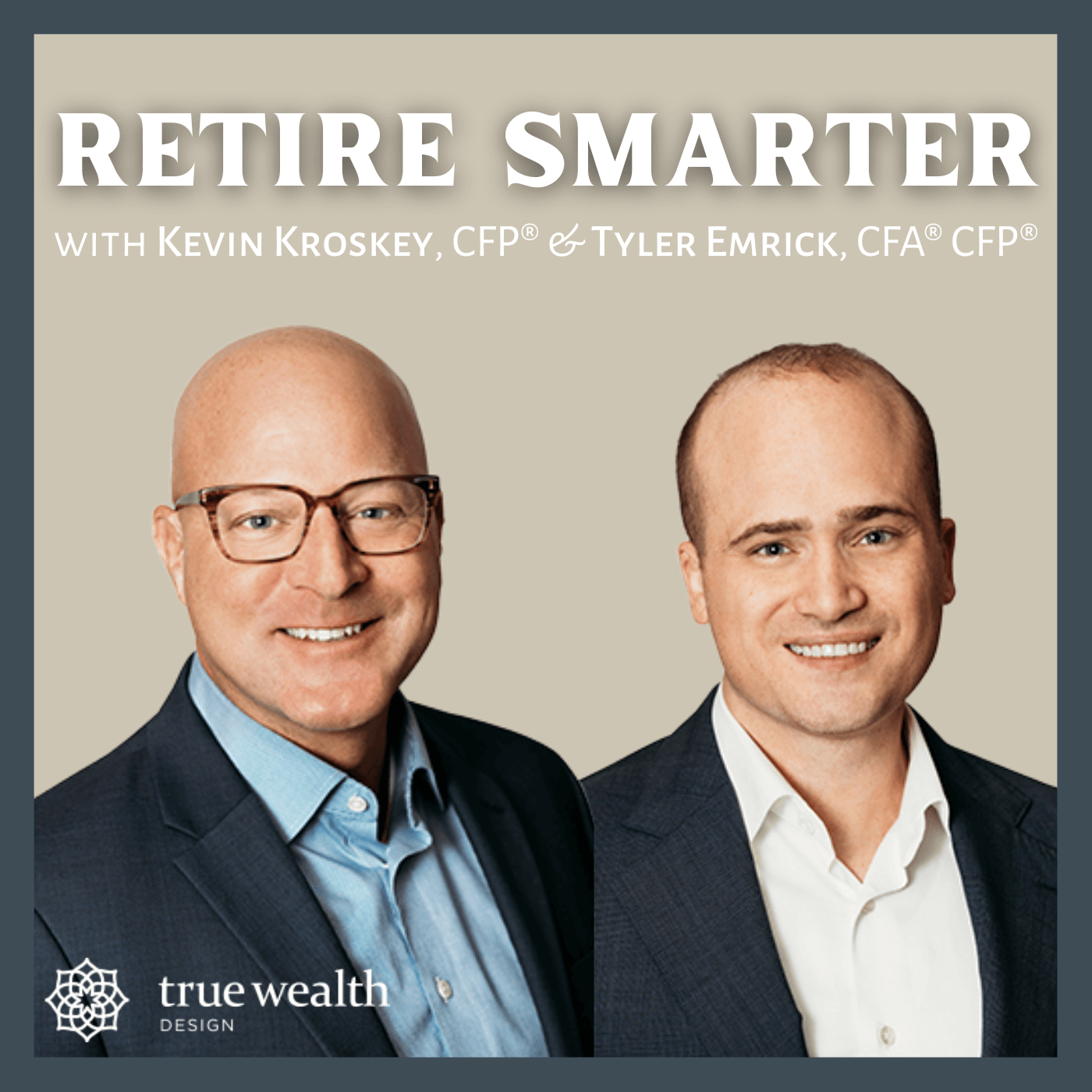
Retire Smarter with Kevin Kroskey, CFP® & Tyler Emrick, CFA® CFP®
Hosted by Kevin Kroskey, CFP® & Tyler Emrick, CFA® CFP® · EN
Planning Retirement Smarter. Living Retirement Better. With Kevin Kroskey, CFP® & Tyler Emrick, CFA® CFP® of True Wealth Design. #Retire #Stocks #Investing #401k #IRA #CFP #TrueWealthDesign. Contact at https://www.truewealthdesign.com/ or by calling 855-893-7526.
39episodes
Episodes
Newest firstAll episodes
Inherited IRA 10-Year Rule: Don’t Make This Costly Mistake
Mar 2600:19:41Tap to summarizeGet your customized planning started by scheduling a no-cost discovery call: http://bit.ly/calltruewealth If you’ve inherited an IRA, the rules have changed — and getting them wrong can be costly. The SECURE Act replaced the old “stretch IRA” with a 10-year distribution rule for most non-spouse beneficiaries, creating new complexity around when and how withdrawals must be taken. Many beneficiaries don’t realize that in some cases, required minimum distributions (RMDs) still apply within that 10-year window. In this episode, Tyler Emrick, CFP®, CFA®, breaks down how the 10-year rule works, who it applies to, and the key mistakes that can lead to unnecessary taxes and penalties. Tyler covers: How the 10-year rule works for inherited IRAs When annual RMDs are required — and when they’re not Exceptions for eligible designated beneficiaries Key considerations when a trust is named as beneficiary Tax planning strategies to avoid bracket creep Have questions? Need help making sure your investments and retirement plan are on track? Click to schedule a free 20-minute call with one of True Wealth's CFP® Professionals. http://bit.ly/calltruewealth
Transcribe →Social Security Strategies for Couples: Timing Decisions Worth $100,000+
Mar 1900:20:22Tap to summarizeGet your customized planning started by scheduling a no-cost discovery call: http://bit.ly/calltruewealth Social Security is often treated as a simple decision — pick an age and file. But for couples, it is much more than that. In this episode, Tyler Emrick, CFP®, CFA®, explains how Social Security decisions should be coordinated between spouses and why the timing of those decisions can impact your retirement income by $100,000 or more. With growing concerns around system changes and long-term funding, making the right decision matters more than ever. Tyler covers: The three types of Social Security benefits couples need to understand Why the higher earner’s decision has the biggest long-term impact How to coordinate timing between spouses Key considerations like working while claiming and the earnings test Have questions? Need help making sure your investments and retirement plan are on track? Click to schedule a free 20-minute call with one of True Wealth's CFP® Professionals. http://bit.ly/calltruewealth
Transcribe →How to Diversify Concentrated Stock Without a Big Tax Bill
Mar 1200:18:43Tap to summarizeA strong market can create a new problem. A single stock or ETF grows to represent a large portion of your net worth. Now you face a difficult tradeoff: diversify and trigger a large tax bill, or hold the position and accept concentrated risk. In this episode, Tyler Emrick, CFP®, CFA®, walks through practical strategies for managing concentrated stock positions in a tax-efficient way. You will learn: How a Section 351 exchange into an ETF can provide diversification while deferring capital gains How tax-aware long-short strategies can help create ongoing tax offsets while gradually reducing a concentrated position When Net Unrealized Appreciation may apply to company stock inside a 401k How donor-advised funds and charitable planning can reduce capital gains on appreciated shares Have questions? Need help making sure your investments and retirement plan are on track? Click to schedule a free 20-minute call with one of True Wealth's CFP® Professionals. http://bit.ly/calltruewealth Our website: https://www.truewealthdesign.com/ Phone: 855.TWD.PLAN Contact our team: https://www.truewealthdesign.com/contact-a-financial-advisor/ Check out our other no-cost financial resources here: https://www.truewealthdesign.com/financial-resources/ Watch the show now on YouTube: https://www.youtube.com/channel/UCjENBHOti-IEJFqeydZm_Fg?sub_confirmation=1
Transcribe →The Retirement Spending Myth: Why the 80% Rule Gets It Wrong
Mar 500:20:56Tap to summarizeMost retirement plans assume your spending will stay flat, or that you will need about 80 percent of your pre-retirement income. But retirement does not actually work that way. In this episode, Tyler Emrick, CFP®, CFA®, explains what the research shows about how retirement spending changes over time and why relying on outdated rules like the 80 percent rule can lead to over-saving and under-living or under-planning altogether. Drawing on research from David Blanchett’s Retirement Spending Smile, Morningstar data, and EBRI studies, Tyler covers: Why retirement spending is not a straight line How spending often declines in mid-retirement and rises again later The Go Go, Slow Go, and No Go phases of retirement How fear of running out of money causes many retirees to under-spend A practical way to estimate your real retirement spending needs Have questions? Need help making sure your investments and retirement plan are on track? Click to schedule a free 20-minute call with one of True Wealth's CFP® Professionals. http://bit.ly/calltruewealth
Transcribe →Why Most People Are Wasting Their HSA (And How to Fix It)
Feb 2600:21:21Tap to summarizeGet your customized planning started by scheduling a no-cost discovery call: http://bit.ly/calltruewealth Health Savings Accounts (HSAs) may be the most powerful tax-free retirement planning tool available, yet most people use them completely wrong. If you’re enrolled in a High Deductible Health Plan (HDHP), your HSA could offer triple tax-free growth and a strategic way to fund healthcare and Medicare costs in retirement. Tyler Emrick, CFA®, CFP®, breaks down how to turn your HSA from a simple medical spending account into a long-term, tax-efficient retirement asset. In this video, you’ll learn: HSA eligibility rules, 2026 contribution limits, catch-up contributions, and the December “last-month rule” How High Deductible Health Plans qualify you to contribute Why leaving your HSA in cash limits long-term growth How to invest your HSA using brokerage options The “invest now, reimburse later” strategy to build tax-free retirement liquidity How HSAs can cover Medicare premiums, COBRA coverage, long-term care premiums, and other retirement healthcare costs Have questions? Need help making sure your investments and retirement plan are on track? Click to schedule a free 20-minute call with one of True Wealth's CFP® Professionals. http://bit.ly/calltruewealth Our website: https://www.truewealthdesign.com/ Phone: 855.TWD.PLAN Contact our team: https://www.truewealthdesign.com/contact-a-financial-advisor/ Check out our other no-cost financial resources here: https://www.truewealthdesign.com/financial-resources/ Watch the show now on YouTube: https://www.youtube.com/channel/UCjENBHOti-IEJFqeydZm_Fg?sub_confirmation=1
Transcribe →The RMD Tax Trap: Required Minimum Distribution Strategies That Lower Lifetime Taxes
Feb 1900:24:08Tap to summarizeGet your customized planning started by scheduling a no-cost discovery call: http://bit.ly/calltruewealth Required Minimum Distributions (RMDs) are not just mandatory withdrawals — they are forced taxable income that can quietly reshape your retirement tax picture. Higher income from RMDs can trigger increased marginal tax rates, IRMAA surcharges, greater Social Security taxation, and long-term compounding tax consequences — especially for married couples navigating the widow/widower tax penalty. In this episode, Tyler Emrick, CFA®, CFP®, breaks down how to think about RMD tax planning as a long-term process — not just a once-a-year withdrawal decision — including: Why RMD planning is really tax bracket management over time How Roth conversions can shrink future Required Minimum Distributions Smart timing and withholding strategies that create flexibility How Qualified Charitable Distributions (QCDs) reduce taxable income The role of income targeting and IRMAA awareness What types of assets to convert — and why it matters Have questions? Need help making sure your investments and retirement plan are on track? Click to schedule a free 20-minute call with one of True Wealth's CFP® Professionals. http://bit.ly/calltruewealth Our website: https://www.truewealthdesign.com/ Phone: 855.TWD.PLAN Contact our team: https://www.truewealthdesign.com/contact-a-financial-advisor/ Check out our other no-cost financial resources here: https://www.truewealthdesign.com/financial-resources/ Watch the show now on YouTube: https://www.youtube.com/channel/UCjENBHOti-IEJFqeydZm_Fg?sub_confirmation=1
Transcribe →Tax Filing Season 2026: Last-Minute Planning Moves for Individuals and Business Owners
Feb 1200:19:15Tap to summarizeGet your customized planning started by scheduling a no-cost discovery call: http://bit.ly/calltruewealth Tax filing season is here — and even though most tax planning happens before year-end, there are still important moves you can make before filing your 2025 return. In this video, Tyler Emrick, CFA®, CFP®, walks through last-minute tax planning moves that still matter during the 2026 filing season for individuals and business owners. We cover what you can still do before filing, how to avoid penalties and surprises, and several common items that often get missed — especially for small business owners and self-employed individuals. Here’s some of what we discuss in this episode: 🧾 HSA and IRA contributions you can still make for last year ⏳ Why income limits matter before funding Roth or IRA accounts 🏦 Safe harbor rules, extension payments, and avoiding penalties 🏢 Business owner deadlines, S-corp elections, and retirement plans 🔍 Common filing mistakes: 1099 errors and excess contributions Have questions? Need help making sure your investments and retirement plan are on track? Click to schedule a free 20-minute call with one of True Wealth's CFP® Professionals. http://bit.ly/calltruewealth Our website: https://www.truewealthdesign.com/ Phone: 855.TWD.PLAN Contact our team: https://www.truewealthdesign.com/contact-a-financial-advisor/ Check out our other no-cost financial resources here: https://www.truewealthdesign.com/financial-resources/ Watch the show now on YouTube: https://www.youtube.com/channel/UCjENBHOti-IEJFqeydZm_Fg?sub_confirmation=1
Transcribe →Retirement Cash Reserves in 2026: How Much Is Enough?
Feb 500:17:31Tap to summarizeGet your customized planning started by scheduling a no-cost discovery call: http://bit.ly/calltruewealth How much cash should you really hold in retirement? Too little cash can create stress and force poor decisions during market downturns. Too much cash can quietly erode a well-built retirement plan through inflation, taxes, and lost growth. In this episode, Tyler Emrick, CFA®, CFP®, breaks down how to think about retirement cash reserves in 2026, including: How much cash is actually enough in retirement — and when it becomes too much How interest rates change the cash trade-off in 2026 Where cash really lives inside a well-built portfolio (not just checking and savings accounts) This conversation is designed for people approaching retirement or already retired who want to make smarter, more intentional cash decisions — without chasing yields or taking unnecessary risk. Have questions? Need help making sure your investments and retirement plan are on track? Click to schedule a free 20-minute call with one of True Wealth's CFP® Professionals. http://bit.ly/calltruewealth Our website: https://www.truewealthdesign.com/ Phone: 855.TWD.PLAN Contact our team: https://www.truewealthdesign.com/contact-a-financial-advisor/ Check out our other no-cost financial resources here: https://www.truewealthdesign.com/financial-resources/ Watch the show now on YouTube: https://www.youtube.com/channel/UCjENBHOti-IEJFqeydZm_Fg?sub_confirmation=1
Transcribe →The 2026 Gift Tax Rules Explained: How to Gift Cash, Stock, and Family Loans Correctly
Jan 2900:13:05Tap to summarizeGet your customized planning started by scheduling a no-cost discovery call: http://bit.ly/calltruewealth Many parents and grandparents want to help family financially, but gift tax rules are often misunderstood. In this episode, Tyler Emrick, CFA®, CFP®, breaks down the 2026 gift tax rules in plain English, including how much you can give without triggering tax, when gifting appreciated stock makes sense, and how to properly structure family loans using IRS guidelines. We also explain when a gift tax return is required—and why filing one doesn’t necessarily mean you’ll owe tax. If you’re considering gifting money to children or grandchildren, this episode will help you do it the right way. Here’s some of what we discuss in this episode: 🧾 Gifts over the limit require filing IRS Form 709 🧱 Using appreciated stock instead of cash to potentially lower taxes 📉 Kids in lower tax brackets can sell gifted stock at reduced or zero tax 📝 Family loans are an alternative to large gifts and offer more control 🧠 Gifting strategy should consider estate size, tax brackets, and family dynamics Our website: https://www.truewealthdesign.com/ Phone: 855.TWD.PLAN Contact our team: https://www.truewealthdesign.com/contact-a-financial-advisor/ Check out our other no-cost financial resources here: https://www.truewealthdesign.com/financial-resources/ Watch the show now on YouTube: https://www.youtube.com/channel/UCjENBHOti-IEJFqeydZm_Fg?sub_confirmation=1
Transcribe →How Much Can You Spend in Retirement? A Smarter Take on the 4% Rule
Jan 2300:26:42Tap to summarizeGet your customized planning started by scheduling a no-cost discovery call: http://bit.ly/calltruewealth For decades, the 4% rule has been used as a simple guideline for retirement spending—but it was never meant to be a guarantee. In this episode, Tyler Emrick, CFA®, CFP®, will revisit the research behind the 4% rule and explore new findings from its creator, Bill Bengen, suggesting that retirees may be able to spend more under updated assumptions. We explain why sequence-of-returns risk matters more than average returns, how thinking in terms of portfolio “runway” can help manage downturns, and why dynamic withdrawal strategies often lead to better long-term outcomes. If you’re wondering how much you can realistically spend in retirement, this episode will help you think about it the right way. Here’s some of what we discuss in this episode: 🔄 Retirement spending should be dynamic, not static 🧱 Diversification and flexible withdrawal strategies help weather market downturns 🛫 A “runway” of preservation assets (cash/bonds) buys time during volatility 🔧 Rebalancing and spending flexibility are critical to long-term success 💬 Planning should be annual, adaptive, and personalized—not one-and-done Have questions? Need help making sure your investments and retirement plan are on track? Click to schedule a free 20-minute call with one of True Wealth's CFP® Professionals. http://bit.ly/calltruewealth Our website: https://www.truewealthdesign.com/ Phone: 855.TWD.PLAN Contact our team: https://www.truewealthdesign.com/contact-a-financial-advisor/ Check out our other no-cost financial resources here: https://www.truewealthdesign.com/financial-resources/ Watch the show now on YouTube: https://www.youtube.com/channel/UCjENBHOti-IEJFqeydZm_Fg?sub_confirmation=1
Transcribe →