Podcast
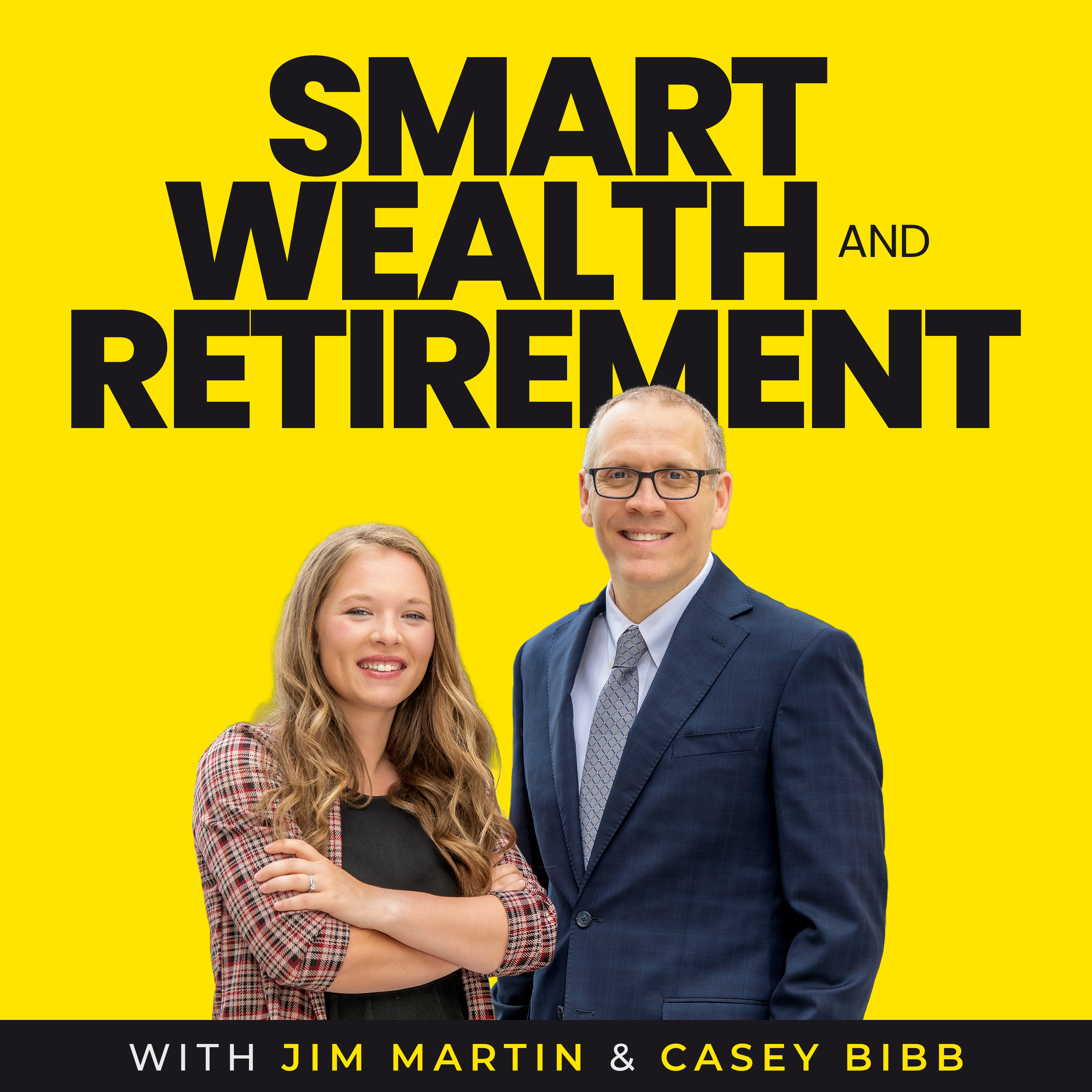
Smart Wealth and Retirement
Hosted by Jim Martin & Casey Bibb · EN
Smart Wealth and Retirement is your go-to podcast for clear, actionable guidance to build your dream retirement. Hosted by experienced Dave Ramsey SmartVestor Pros, each episode simplifies the complexities of retirement planning and wealth management, giving you strategies you can confidently implement today.
Whether you’re nearing retirement or already there, we’ll cover crucial topics such as creating sustainable retirement income, managing taxes strategically, making smart investment decisions, maximizing your Social Security benefits, and much more.
Our goal is simple: help you achieve financial clarity and peace of mind, so you can spend retirement focused on what truly matters. Tune in weekly to get straightforward advice, timely insights, and practical answers to your biggest retirement questions.
It’s time to secure your financial future—start listening to Smart Wealth and Retirement and make informed decisions that help you retire with confidence.
Whether you’re nearing retirement or already there, we’ll cover crucial topics such as creating sustainable retirement income, managing taxes strategically, making smart investment decisions, maximizing your Social Security benefits, and much more.
Our goal is simple: help you achieve financial clarity and peace of mind, so you can spend retirement focused on what truly matters. Tune in weekly to get straightforward advice, timely insights, and practical answers to your biggest retirement questions.
It’s time to secure your financial future—start listening to Smart Wealth and Retirement and make informed decisions that help you retire with confidence.
39episodes
Episodes
Newest firstAll episodes
Are You Really Ready to Retire? Start With These 5 Essentials
2w ago00:23:41Tap to summarizeIn this episode of the Smart Wealth & Retirement Podcast, financial advisors and retirement planners Jim Martin & Casey Bibb of Martin Wealth Solutions discuss five essential areas every retiree should evaluate before leaving the workforce. Jim and Casey explain that retirement readiness isn't determined by a single account balance—it's about having a comprehensive plan. They walk through the key building blocks of a successful retirement, including income planning, healthcare, taxes, investments, and estate planning. Along the way, they share practical insights to help listeners identify gaps in their current strategy and feel more confident about their future. Whether retirement is just around the corner or still several years away, this episode provides a practical checklist to help ensure you're prepared for the transition. http://retirewithmartin.com/ ← Learn about working with us www.planwellretirehappy.com Episode Breakdown 00:00 Introduction to today's episode 00:52 Meet the hosts 01:36 Why retirement readiness is about more than savings 03:08 Essential #1: Create a reliable retirement income plan 05:18 Essential #2: Prepare for healthcare expenses and Medicare 07:34 Essential #3: Build a tax-efficient retirement strategy 09:46 Essential #4: Review your investment allocation and risk 12:04 Essential #5: Organize your estate plan and beneficiary designations 14:22 Why these five areas work together 16:10 Common retirement planning gaps 18:02 Stress-testing your retirement plan 20:06 Action steps before retirement 22:12 Final thoughts and key takeaways 23:18 Closing remarks Disclaimer Opinions expressed herein are solely those of Martin Wealth Solutions, unless otherwise specifically cited. Material presented is believed to be from reliable sources, but no representations are made by our firm as to another parties' informational accuracy or completeness. Content provided herein is for informational purposes only and should not be used or construed as investment advice or a recommendation regarding the purchase or sale of any security. There is no guarantee that any statements, opinions or forecasts provided herein will prove to be correct. All information or ideas provided should be discussed in detail with an advisor, accountant or legal counsel prior to implementation. Past performance may not be indicative of future results. Indices are not available for direct investment. Any investor who attempts to mimic the performance of an index would incur fees and expenses which would reduce returns. Securities investing involves risk, including the potential for loss of principal. There is no assurance that any investment plan or strategy will be successful.
Transcribe →How QCDs Can Reduce Taxes in Retirement
3w ago00:21:09Tap to summarizeIn this episode of the Smart Wealth & Retirement Podcast, financial advisors and retirement planners Jim Martin & Casey Bibb of Martin Wealth Solutions discuss one of the most overlooked tax strategies available to retirees: Qualified Charitable Distributions (QCDs). Jim and Casey explain how QCDs allow individuals to give directly from an IRA to qualified charities while potentially reducing taxable income. They walk through who can use this strategy, how it interacts with Required Minimum Distributions (RMDs), and why it can be especially valuable for charitably inclined retirees. The conversation highlights the tax advantages of QCDs, common mistakes to avoid, and how this strategy may fit into a broader retirement income and tax plan. http://retirewithmartin.com/ ← Learn about working with us www.planwellretirehappy.com Episode Breakdown 00:00 Introduction to today's topic 01:36 What is a Qualified Charitable Distribution (QCD)? 03:14 Who qualifies to use a QCD? 04:58 How QCDs work with IRA accounts 06:42 Understanding the tax benefits of QCDs 08:18 QCDs and Required Minimum Distributions (RMDs) 10:02 Why QCDs can be more effective than charitable deductions 11:48 Common mistakes retirees make with QCDs 13:26 Rules and limitations to understand 15:08 Real-world examples of QCD planning 16:52 Coordinating charitable giving with retirement income 18:24 Key takeaways and planning considerations 20:06 Final thoughts and closing remarks Disclaimer Opinions expressed herein are solely those of Martin Wealth Solutions, unless otherwise specifically cited. Material presented is believed to be from reliable sources, but no representations are made by our firm as to another parties’ informational accuracy or completeness. Content provided herein is for informational purposes only and should not be used or construed as investment advice or a recommendation regarding the purchase or sale of any security. There is no guarantee that any statements, opinions or forecasts provided herein will prove to be correct. All information or ideas provided should be discussed in detail with an advisor, accountant or legal counsel prior to implementation. Past performance may not be indicative of future results. Indices are not available for direct investment. Any investor who attempts to mimic the performance of an index would incur fees and expenses which would reduce returns. Securities investing involves risk, including the potential for loss of principal. There is no assurance that any investment plan or strategy will be successful.
Transcribe →The Everyday Expenses Costing You Thousands
4w ago00:25:24Tap to summarizeIn this episode of the Smart Wealth & Retirement Podcast, financial advisors and retirement planners Jim Martin & Casey Bibb of Martin Wealth Solutions discuss how seemingly small spending habits can quietly undermine long-term financial goals. Jim and Casey explain that successful retirement planning isn't always about earning more—it’s often about being intentional with the money you already have. They explore common areas where people unknowingly waste money, how recurring expenses can compound over time, and why paying attention to cash flow can have a meaningful impact on retirement readiness. The conversation focuses on practical ways to identify financial leaks, prioritize spending, and make smarter decisions that align with long-term retirement goals without sacrificing the lifestyle you enjoy. http://retirewithmartin.com/ ← Learn about working with us www.planwellretirehappy.com Episode Breakdown 00:00 Introduction to today's topic 00:56 Meet the hosts 01:42 Why small expenses matter more than you think 03:26 The hidden impact of recurring spending 05:08 Common areas where people waste money 06:54 Subscription creep and forgotten expenses 08:38 Lifestyle inflation and its effect on retirement 10:22 The importance of intentional spending 12:06 Distinguishing needs from wants 13:48 How spending habits affect retirement timelines 15:34 Creating a spending plan that supports your goals 17:18 Simple ways to improve cash flow 19:04 Avoiding common budgeting mistakes 20:46 Practical action steps listeners can take today 22:28 Key takeaways and final thoughts 24:36 Closing remarks Disclaimer Opinions expressed herein are solely those of Martin Wealth Solutions, unless otherwise specifically cited. Material presented is believed to be from reliable sources, but no representations are made by our firm as to another parties’ informational accuracy or completeness. Content provided herein is for informational purposes only and should not be used or construed as investment advice or a recommendation regarding the purchase or sale of any security. There is no guarantee that any statements, opinions or forecasts provided herein will prove to be correct. All information or ideas provided should be discussed in detail with an advisor, accountant or legal counsel prior to implementation. Past performance may not be indicative of future results. Indices are not available for direct investment. Any investor who attempts to mimic the performance of an index would incur fees and expenses which would reduce returns. Securities investing involves risk, including the potential for loss of principal. There is no assurance that any investment plan or strategy will be successful.
Transcribe →Is $2 Million Enough to Retire Well?
Jun 2900:24:01Tap to summarizeIn this episode of the Smart Wealth & Retirement Podcast, financial advisors and retirement planners Jim Martin & Casey Bibb of Martin Wealth Solutions discuss a surprising reality many retirees and pre-retirees face: having a substantial nest egg but still not feeling financially secure. Jim and Casey explore why reaching a milestone like $2 million in savings doesn't automatically create confidence or peace of mind. They discuss the psychological side of wealth, concerns about inflation, healthcare costs, longevity, market volatility, and the fear of running out of money. They also explain why focusing solely on an account balance can be misleading and why understanding retirement income may be more important than the size of your portfolio. This episode offers practical insights for anyone wondering whether they've saved enough and how to shift their focus from wealth accumulation to retirement confidence. http://retirewithmartin.com/ ← Learn about working with us www.planwellretirehappy.com Episode Breakdown 00:00 Introduction to today's topic 00:54 Meet the hosts 01:40 Why $2 million doesn't always feel like enough 03:18 The emotional side of retirement planning 05:04 How inflation changes retirement expectations 06:48 Why account balances can be misleading 08:34 Income versus net worth in retirement 10:16 Healthcare and long-term care concerns 11:58 Longevity risk and planning for the unknown 13:40 Market volatility and retirement confidence 15:20 Common fears retirees experience 17:02 Building a retirement income strategy 18:46 Shifting from accumulation to distribution 20:24 Defining what financial security means to you 22:08 Key takeaways and final thoughts 23:30 Closing remarks Disclaimer Opinions expressed herein are solely those of Martin Wealth Solutions, unless otherwise specifically cited. Material presented is believed to be from reliable sources, but no representations are made by our firm as to another parties’ informational accuracy or completeness. Content provided herein is for informational purposes only and should not be used or construed as investment advice or a recommendation regarding the purchase or sale of any security. There is no guarantee that any statements, opinions or forecasts provided herein will prove to be correct. All information or ideas provided should be discussed in detail with an advisor, accountant or legal counsel prior to implementation. Past performance may not be indicative of future results. Indices are not available for direct investment. Any investor who attempts to mimic the performance of an index would incur fees and expenses which would reduce returns. Securities investing involves risk, including the potential for loss of principal. There is no assurance that any investment plan or strategy will be successful.
Transcribe →My Cancer Journey: Why Life’s Setbacks Don’t Have to Set Back Your Retirement - Part 2
Jun 2200:25:49Tap to summarizeIn this episode of the Smart Wealth & Retirement Podcast, financial advisors and retirement planners Jim Martin & Casey Bibb of Martin Wealth Solutions continue their discussion on the financial and retirement planning challenges that can arise following a cancer diagnosis. Jim and Casey explore how a major health event can affect retirement timelines, income needs, healthcare costs, and long-term financial security. They discuss the importance of preparing for unexpected medical expenses, coordinating insurance coverage, and maintaining flexibility within a retirement plan. They also highlight practical steps families can take to reduce financial stress during difficult times and ensure important planning decisions aren't overlooked. This episode provides valuable insight for retirees, caregivers, and anyone looking to build a retirement plan that can withstand life's unexpected challenges. http://retirewithmartin.com/ ← Learn about working with us www.planwellretirehappy.com Episode Breakdown 00:00 Introduction and recap from Part 1 01:04 Meet the hosts 02:12 The ongoing financial impact of a cancer diagnosis 04:08 Healthcare expenses beyond treatment costs 06:02 Income planning during a health crisis 07:56 The role of disability and insurance benefits 09:48 Managing retirement withdrawals during difficult periods 11:40 Planning for caregivers and family support 13:26 Estate planning considerations during major health events 15:18 Tax considerations and healthcare costs 17:06 Maintaining flexibility in your retirement plan 18:52 Common planning mistakes families make 20:34 Building a financial safety net 22:16 Key takeaways and practical planning steps 24:12 Final thoughts and encouragement 25:22 Closing remarks Disclaimer Opinions expressed herein are solely those of Martin Wealth Solutions, unless otherwise specifically cited. Material presented is believed to be from reliable sources, but no representations are made by our firm as to another parties’ informational accuracy or completeness. Content provided herein is for informational purposes only and should not be used or construed as investment advice or a recommendation regarding the purchase or sale of any security. There is no guarantee that any statements, opinions or forecasts provided herein will prove to be correct. All information or ideas provided should be discussed in detail with an advisor, accountant or legal counsel prior to implementation. Past performance may not be indicative of future results. Indices are not available for direct investment. Any investor who attempts to mimic the performance of an index would incur fees and expenses which would reduce returns. Securities investing involves risk, including the potential for loss of principal. There is no assurance that any investment plan or strategy will be successful.
Transcribe →How to Make Your Retirement Savings Last
Jun 1500:20:55Tap to summarizeIn this episode of the Smart Wealth & Retirement Podcast, financial advisors and retirement planners Jim Martin & Casey Bibb of Martin Wealth Solutions discuss one of the most important questions retirees face: How do you make sure your money lasts throughout retirement? Jim and Casey explain why retirement income planning requires more than simply building a large portfolio. They walk through the challenges retirees face, including inflation, market volatility, healthcare expenses, and withdrawal strategies, while emphasizing the importance of flexibility and long-term planning. This episode highlights practical ways to create sustainable income, avoid costly mistakes, and structure a retirement plan designed to provide confidence through every stage of retirement. http://retirewithmartin.com/ ← Learn about working with us www.planwellretirehappy.com Episode Breakdown 00:00 Introduction to today’s topic 00:50 Meet the hosts 01:30 Why retirees fear running out of money 03:02 The transition from accumulation to income 04:38 Understanding sustainable withdrawal strategies 06:12 Inflation and rising retirement costs 07:46 Market volatility and sequence of returns risk 09:18 Creating diversified income sources 10:52 Healthcare and unexpected expenses 12:24 Common mistakes retirees make with spending 13:58 The importance of flexibility in retirement planning 15:24 Tax-efficient income strategies 16:54 Stress-testing your retirement plan 18:22 Key takeaways and planning tips 20:02 Final thoughts and closing Disclaimer Opinions expressed herein are solely those of Martin Wealth Solutions, unless otherwise specifically cited. Material presented is believed to be from reliable sources, but no representations are made by our firm as to another parties’ informational accuracy or completeness. Content provided herein is for informational purposes only and should not be used or construed as investment advice or a recommendation regarding the purchase or sale of any security. There is no guarantee that any statements, opinions or forecasts provided herein will prove to be correct. All information or ideas provided should be discussed in detail with an advisor, accountant or legal counsel prior to implementation. Past performance may not be indicative of future results. Indices are not available for direct investment. Any investor who attempts to mimic the performance of an index would incur fees and expenses which would reduce returns. Securities investing involves risk, including the potential for loss of principal. There is no assurance that any investment plan or strategy will be successful.
Transcribe →My Cancer Journey: Why Life’s Setbacks Don’t Have to Set Back Your Retirement - Part 1
Jun 800:30:20Tap to summarizeIn this episode of the Smart Wealth & Retirement Podcast, financial advisors and retirement planners Jim Martin & Casey Bibb of Martin Wealth Solutions discuss one of the most difficult — yet important — topics in retirement planning: preparing for a major illness. Jim and Casey explain how a serious health event can impact not only your physical well-being, but also your finances, retirement income, and long-term plan. They walk through the potential costs of care, the role of insurance, and how proper planning can help reduce financial stress during an already challenging time. This episode emphasizes the importance of proactive planning, clear communication, and building flexibility into your retirement strategy so you and your family are better prepared for life’s unexpected events. http://retirewithmartin.com/ ← Learn about working with us www.planwellretirehappy.com Episode Breakdown 00:00 Introduction to today’s topic 01:42 Why planning for illness matters 03:18 The financial impact of a major health event 05:02 Types of care and associated costs 06:46 Insurance options and coverage gaps 08:28 Long-term care considerations 10:10 Out-of-pocket costs and budgeting 11:52 How illness affects retirement income 13:30 The importance of emergency reserves 15:06 Planning for caregiver needs 16:44 Communicating with family members 18:22 Legal documents and healthcare directives 20:02 Common mistakes people make 21:40 Building flexibility into your plan 23:18 Coordinating your financial strategy 25:04 Key takeaways and action steps 27:46 Final thoughts and encouragement Disclaimer Opinions expressed herein are solely those of Martin Wealth Solutions, unless otherwise specifically cited. Material presented is believed to be from reliable sources, but no representations are made by our firm as to another parties’ informational accuracy or completeness. Content provided herein is for informational purposes only and should not be used or construed as investment advice or a recommendation regarding the purchase or sale of any security. There is no guarantee that any statements, opinions or forecasts provided herein will prove to be correct. All information or ideas provided should be discussed in detail with an advisor, accountant or legal counsel prior to implementation. Past performance may not be indicative of future results. Indices are not available for direct investment. Any investor who attempts to mimic the performance of an index would incur fees and expenses which would reduce returns. Securities investing involves risk, including the potential for loss of principal. There is no assurance that any investment plan or strategy will be successful.
Transcribe →The Smart Way to Give Money to Your Kids without wrecking your retirement.
Jun 100:21:37Tap to summarizeIn this episode of the Smart Wealth & Retirement Podcast, financial advisors and retirement planners Jim Martin & Casey Bibb of Martin Wealth Solutions explore the concept of living your legacy through pre-inheritance giving. Jim and Casey discuss why more families are choosing to give assets during their lifetime rather than waiting to pass them on later. They explain how this approach can create meaningful impact, strengthen family relationships, and allow individuals to see the results of their generosity firsthand. They also cover important considerations like tax implications, gifting strategies, and ensuring your own retirement security remains intact. This episode helps listeners think intentionally about how and when they want to pass on wealth — and how to do it in a way that aligns with their values and long-term plan. http://retirewithmartin.com/ ← Learn about working with us www.planwellretirehappy.com Episode Breakdown 00:00 Introduction to today’s topic 01:30 What is pre-inheritance giving? 03:02 Why more families are giving during their lifetime 04:40 Emotional benefits of living your legacy 06:12 Financial considerations before gifting 07:46 Tax implications of gifting 09:18 Annual gift limits and strategies 10:52 Balancing generosity with retirement security 12:24 Family communication and expectations 13:58 Avoiding common gifting mistakes 15:20 When pre-inheritance giving makes sense 16:48 Structuring gifts intentionally 18:10 Key takeaways and planning tips 20:14 Final thoughts and closing Disclaimer Opinions expressed herein are solely those of Martin Wealth Solutions, unless otherwise specifically cited. Material presented is believed to be from reliable sources, but no representations are made by our firm as to another parties’ informational accuracy or completeness. Content provided herein is for informational purposes only and should not be used or construed as investment advice or a recommendation regarding the purchase or sale of any security. There is no guarantee that any statements, opinions or forecasts provided herein will prove to be correct. All information or ideas provided should be discussed in detail with an advisor, accountant or legal counsel prior to implementation. Past performance may not be indicative of future results. Indices are not available for direct investment. Any investor who attempts to mimic the performance of an index would incur fees and expenses which would reduce returns. Securities investing involves risk, including the potential for loss of principal. There is no assurance that any investment plan or strategy will be successful. References [1] Crews Bank (citing Nick Maggiulli / U. Penn survey data) — Average inheritance age and preference for earlier wealth transfers. https://www.crews.bank/charts/average-inheritance [2] RBC Wealth Management — Wealth transfer: Are you ready? Survey highlighting 'Giver' priorities and the benefits of giving while living. https://www.rbcwealthmanagement.com/en-us/campaign/wealth-transfer-are-you-ready
Transcribe →How to know if you’re actually ready to retire.
May 2500:17:41Tap to summarizeIn this episode of the Smart Wealth & Retirement Podcast, financial advisors and retirement planners Jim Martin & Casey Bibb of Martin Wealth Solutions discuss a mindset they often hear from people approaching retirement: “I’m as ready as I’ll ever be.” Jim and Casey explain why this way of thinking can be a hidden trap. While many individuals feel emotionally ready to retire, that confidence doesn’t always align with financial readiness, income sustainability, or long-term planning. They walk through the risks of retiring without a fully developed strategy and highlight the importance of clarity around income, taxes, healthcare, and market risk. This episode helps listeners understand the difference between feeling ready and actually being prepared — and what steps to take to bridge that gap. http://retirewithmartin.com/ ← Learn about working with us www.planwellretirehappy.com Episode Breakdown 00:00 Introduction to today’s topic 01:22 The “I’m ready” mindset explained 02:58 Why emotional readiness can be misleading 04:26 The gap between confidence and planning 05:58 Income planning vs. just having savings 07:30 The role of taxes in retirement readiness 09:02 Healthcare and unexpected costs 10:30 Market risk and timing concerns 11:58 Common mistakes when retiring too soon 13:20 How to evaluate true retirement readiness 14:48 Steps to strengthen your retirement plan 16:08 Key takeaways and final thoughts Disclaimer Opinions expressed herein are solely those of Martin Wealth Solutions, unless otherwise specifically cited. Material presented is believed to be from reliable sources, but no representations are made by our firm as to another parties’ informational accuracy or completeness. Content provided herein is for informational purposes only and should not be used or construed as investment advice or a recommendation regarding the purchase or sale of any security. There is no guarantee that any statements, opinions or forecasts provided herein will prove to be correct. All information or ideas provided should be discussed in detail with an advisor, accountant or legal counsel prior to implementation. Past performance may not be indicative of future results. Indices are not available for direct investment. Any investor who attempts to mimic the performance of an index would incur fees and expenses which would reduce returns. Securities investing involves risk, including the potential for loss of principal. There is no assurance that any investment plan or strategy will be successful.
Transcribe →8 Questions You Should Ask Before You Retire
May 1800:29:17Tap to summarizeIn this episode of the Smart Wealth & Retirement Podcast, financial advisors and retirement planners Jim Martin & Casey Bibb of Martin Wealth Solutions answer some of the most common questions people have about retirement planning. Jim and Casey cover a wide range of topics — from how much you need to retire, to Social Security timing, taxes, income planning, and investment strategy. They break down complex topics into simple, practical guidance, helping listeners better understand what really matters when preparing for retirement. Whether you're just getting started or getting close to retirement, this episode provides clarity around the questions that matter most and helps you feel more confident about your financial future. http://retirewithmartin.com/ ← Learn about working with us www.planwellretirehappy.com Episode Breakdown 00:00 Introduction to today’s episode 01:38 Why retirement questions matter 03:12 Question #1: How much do you need to retire? 05:46 Question #2: When should you take Social Security? 08:18 Question #3: How should your money be invested? 10:52 Question #4: How do taxes impact retirement income? 13:24 Question #5: How do you create a reliable income plan? 15:58 Question #6: What risks should you plan for? 18:22 Question #7: How do you balance growth and protection? 20:44 Question #8: When should you adjust your strategy? 23:06 How these answers work together in a plan 25:12 Common mistakes retirees make 27:03 Key takeaways and final thoughts Disclaimer Opinions expressed herein are solely those of Martin Wealth Solutions, unless otherwise specifically cited. Material presented is believed to be from reliable sources, but no representations are made by our firm as to another parties’ informational accuracy or completeness. Content provided herein is for informational purposes only and should not be used or construed as investment advice or a recommendation regarding the purchase or sale of any security. There is no guarantee that any statements, opinions or forecasts provided herein will prove to be correct. All information or ideas provided should be discussed in detail with an advisor, accountant or legal counsel prior to implementation. Past performance may not be indicative of future results. Indices are not available for direct investment. Any investor who attempts to mimic the performance of an index would incur fees and expenses which would reduce returns. Securities investing involves risk, including the potential for loss of principal. There is no assurance that any investment plan or strategy will be successful.
Transcribe →