Loading summary
Transcript32 lines
- [00:02]
A
Late last year, two National Guardsmen patrolling Washington, D.C. were shot. One was killed. The suspect was an Afghan national.
- [00:10]
B
We must now re examine every single alien who has entered our country from Afghanistan under Biden. And we must take all necessary measures to ensure the removal of any alien from any country who does not belong here or add benefit to our country. If they can't love our country, we don't want them. I know some of what we're hearing in the news and from this present administration is it's just they need to go back. They need to pack up. We didn't ask them to come, but we made a promise, Al.
- [00:46]
A
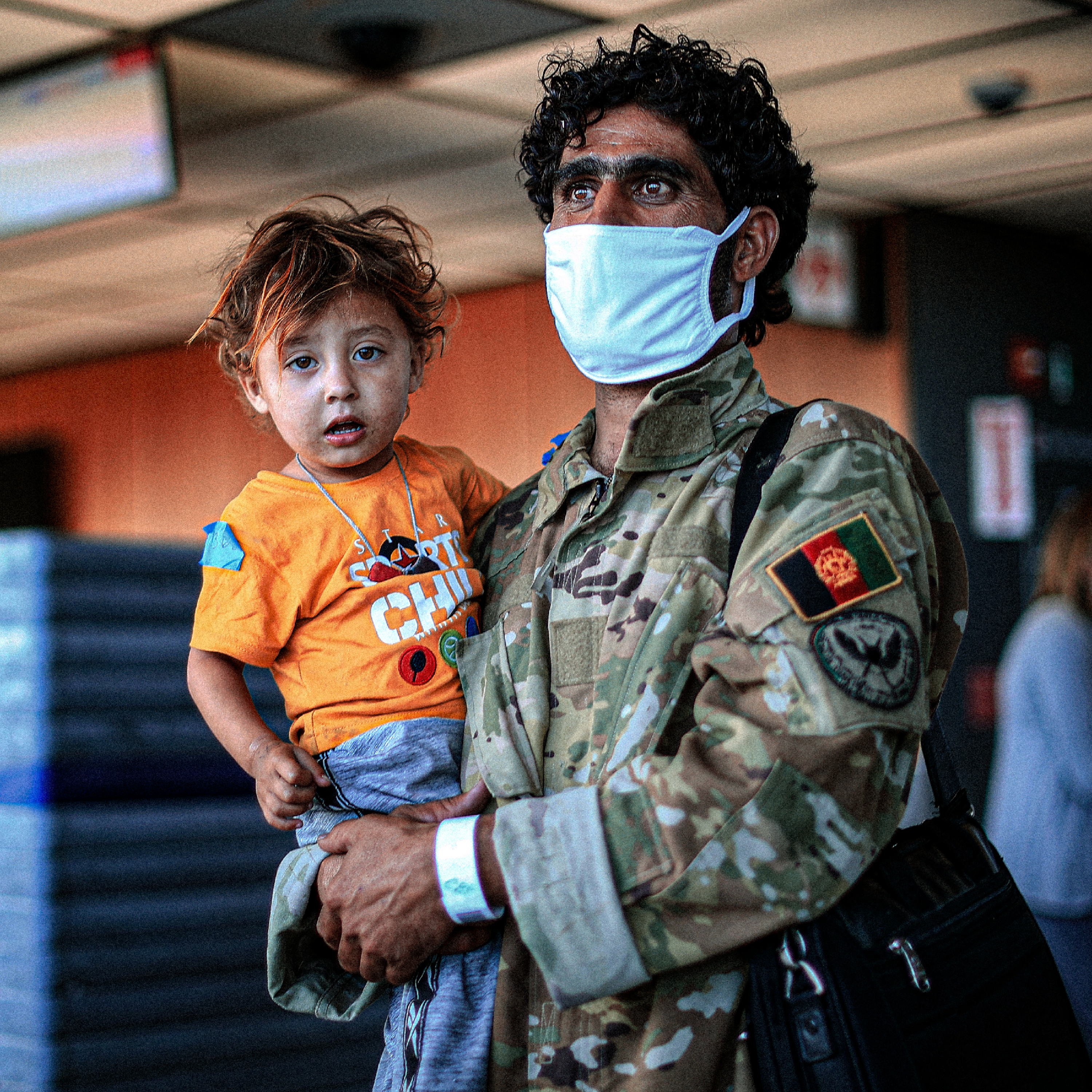
Coming up on more to the story, one organization works to fulfill a promise made to Afghan allies who supported the US Military during wartime. It's a promise now at risk of being broken under President Trump. Stay with us. Add a little curiosity into your routine with TED Talks Daily, the podcast that brings you a new TED Talk every weekday. In less than 15 minutes a day, you'll go beyond the headlines and learn about the big ideas shaping your future. Coming up, how AI will change the way we communicate, how to be a better leader and more. Listen to TED Talks Daily wherever you get your podcasts. This is MORE TO the story. I'm Al Edson. Immigration, most notably the deportation of immigrants around the country has been central in President Trump's second term. The administration has deported 675,000 people, according to the Department of Homeland Security. But after two National Guardsmen were shot in D.C. last year, one group of immigrants has come under extra scrutiny. People from Afghanistan. To be here legally, many of them relied on the Afghan Allies Protection act of 2009, which helped Afghans who served with the US military obtain a green card. Over 150,000 Afghan immigrants have been issued the special immigration visa known as an siv. But President Trump paused the Afghan SIV program last year and has ordered that it be shut down by April, potentially abandoning thousands of Afghan allies. Dozens of American organizations had formed in the past decade to help Afghans with the complicated SIV application and resettlement process. Jeff Holder is a pastor with one of them. It's called Tarjaman Relief. Tarjaman means translator impasto. The group is made of military and civilian volunteers and is based in Annapolis, Maryland. Jeff, how you doing this morning?
- [03:02]
B
I'm doing great. How about you, Al?
- [03:05]
A
I'm good. I'm good. So I am so curious about the work you do because you are a Baptist minister, but you're working in an organization that helps primarily Muslims from Afghanistan. How did you get involved in that?
- [03:21]
B
Yeah, that's a great question, Al. It's one that I asked some years ago, too. Let me just give you a little background about how that came about. My wife and I have been home from Africa. We served in Africa for 25 years. And we came back in the middle of 2015, and we found ourselves crossing paths with Muslims of Nashville. My wife was teaching ESL to some Afghan women who at the time, we did not know Tarjuman. But at the time, they had come to the SIV program, special immigrant visa program of the U.S. government. And so back in the summer of 2019, we had a friend who was a graduate student at Cornell, and one day she was telling us that there was this organization headquartered out of Annapolis, Maryland, made up of former military personnel who had served two, three, and four tours of duty in Afghanistan, as well as a group of civilians who had a real heart for the Afghan people and what was happening and that critical date in time. And they were looking for volunteers. And we were interviewed, and given our background and what we'd done for so many years, we were asked to serve as chaplain of Tarjuman. And so when the colonel asked if we would serve in that position, I reminded him that I was a Christian pastor and a Christian missionary, and he was asking me to be the chaplain to predominantly Muslim people. Did. Was he okay with that? And I'll never forget, he said, jeff, it's obvious that you never served in the U. S. Military, he said, because a chaplain is someone that will take the word of God, holy scriptures, prayer and encouragement to any person, regardless of their ethnicity, their language, their background. And I said, well, I can do that. I did that for 25 years in Africa. So that's how we started. We began a journey at that particular time, Al, that we didn't know where God was taking us. It was one of those serendipities in our life as it literally changed us in so many ways.
- [06:04]
A
Well, first of all, like, what does Tarjuman stand for? And then what is the organization itself?
- [06:12]
B
Tarjuman is a Pashtu word. There's many ethnicities in Afghanistan, and the Pashtun people are one of the large ones. Ones. And it's a Pashtu word for interpreter. So our military personnel that had actually served tours there quite naturally came to know Afghan families well because they had their own personal interpreters. And so these military men got back to the States, and as Kabul began to fall, the military men and women decided, you know, we better be proactive We've got to do something. So they set up an NGO at that time where they were receiving donations. And in the early months, they actually focused on a very small group of Afghans, primarily their own interpreters and those that they had worked with. And a long journey began because it's quite extensive to be able to be approved for that special immigrant visa.
- [07:17]
A
Yeah. So how many people has the group helped so far?
- [07:22]
B
Well, we've as best we can track, we have helped 3,000 plus people. I know that part of my role as chaplain was not only to encourage and pray and share holy scriptures, but to help these men and women complete the requirements set by the U.S. state Department. The vetting process is extensive. The organization is still there, but due to what's happening right now in our country in terms of immigration, immigration policy and what not, it's everything is on pause or everything is on hold. So we still support a few on the ground to try to help them survive until we can find out what next steps might be.
- [08:15]
A
When did you start to see a change in what your organization could do because of what was coming from the White House?
- [08:25]
B
Wow. Well, keep in mind, when we first began, we began actively working with the Afghan people. I say we. I did. My wife and I did in late July, early August 2021. That's when Kabul fell. And I think everyone can rem heart wrenching pictures of Afghans clinging to the landing gear of American planes, the last ones as they were leaving. So we began actively working then. At that particular time, there was a different administration that was calling the shots. And they were supportive of what not only Tarjaman, but the many other Afghan evac groups were doing. And they gave support as best they. There's always political and bureaucratic red tape that has to be cut through. And those of us that were literally daily in conversation with Afghans trying to help them complete the requirements, we felt like maybe it was a little slower than it needed to be. But we were grateful, al to have an administration that was supportive. Obviously, we were all a bit worried as the last administration came to an end and the new administration came in because we certainly knew from their first term of service that they were not pro immigrant. And we were quite worried what direction it might go. And so, yeah, and since for the last year it's been impossible, actually I had families that were this close, so very close to getting their visa and being put on a plane when the new administration came in and everything stopped.
- [10:26]
A
I want to talk a little bit about those people because we're talking about now that the operation has pretty much had to really pump the brakes because of this administration. Who are the people who are left in harm's way because of that?
- [10:44]
B
Yeah, we're thankful for the ones we've helped to get out. But there were, there's still so many left behind and there are some that are still in danger. I know some of what we're hearing in, in the news and from this present administration is it's just they need to go back, they need to pack up. We didn't ask them to come, but we did promise. We made a promise. Al the Afghan Allies Protection act of 2009 was passed by our US Congress. Given the fact that these men and women on the other side of the world gave their lives to protect us. But speaking to your earlier question about are the people still in harm's way? They are the people that had made it here, they came with their immediate family. They, they left their extended families back, back home. They could not come. And so they're back home. And some of them still are subject to intimidation and to ostracism, which means, you know, when things, services are being provided. If their child or their parent had anything to do their cousin or uncle with the US Government with, as they would call us, the Satan of, of America, then they don't get the same privileges of other people. Some, I mean, that can translate to food subsidies, it can translate to health care. It can. And so they are still intimidated. The Afghan people are versatile people and resilient people and they are trying to learn to work that system as best they can to stay safe. But it's a hard thing to do.
- [12:44]
A
Coming up on more to the story, the rigorous vetting process for Afghans applying for Special Immigrant Visas.
- [12:50]
B
These interviews that are being had are filtered through the FBI, the CIA, several different intelligence streams in America. To be sure, on their databases these people are not showing up as terrorists.
- [13:07]
A
But first, I want to remind you there is a really easy way that you can keep up with all the work we're doing here at Reveal. You can sign up for our free newsletter. Just go to revealnews.org newsletter to receive your weekly email reminding you about all of our good reporting. We have to stay connected now more than ever. Okay. More with Pastor Jeff Holder in just a moment. Stay with us. If you are a fan of our investigative work, we think you'll enjoy the podcast Master Plan, winner of the 2025 National Press Club Award for Audio Journalism. With the help of never before reported documents, Master Plan's new season, the Kingmakers exposes how a small network of lawyers and loyalists spent 440 years creating the conditions for Donald Trump's all powerful presidency. If you want to understand the world we're living in today, subscribe to Master Plan on Apple Podcasts, Spotify or wherever you're listening now.
- [14:06]
C
This is Josh Sanborn, producer at Reveal. This episode is made possible by support from Green Century Funds. If you're looking to go green with your investments, the Green Century Funds are for you. For 35 years, Green Century has provided a way for individuals to align their investments with their values. By keeping their money out of the most environmentally destructive industries, GreenCentry's team engages with global corporations and convinces them to adopt policies on issues that help protect the environment and improve the health of global communities. Additionally, greence Century is the only mutual fund company in the US Wholly owned by non profit organizations. Consider the Green Century Funds this tax season to ensure your investments are aligned with your values. For details and a prospectus, visit greencentury.com motherjones Investing involves risk. Sustainable investment strategies may not suit all investors. Past performance is not a guarantee of future results. The Green Century Funds are distributed by Distribution Services llc.
- [15:05]
B
I'm Victor Sweezy, host of the Land in Between from the Global Reporting Center. Join us on a trip to the Republic of Georgia, a country at the crossroads of the EU and Putin's Russia. From the tear gas filled streets of the capital to the manicured gardens of a billionaire oligarch, I'll take you to a critical moment in Georgia's history and explore what it means for the future of our world order. Subscribe now, wherever you get your podcasts.
- [15:40]
A
This is more to the story. I'm Al Letson and I'm back with Pastor Jeff Holder from Tarjaman Relief, an organization that helps Afghan allies immigrate to the U.S. you know, one of the things that I think about a lot when we talk about this subject is the way President Trump has talked about it and he's called into question the vetting process. Can you tell me how it works? How do you first connect with allies in Afghanistan?
- [16:11]
B
Yeah, that's a great question. In fact, President Trump and his advisers, Al, they know how it works. This is about political power. It's about keeping one's place. They know if Trump doesn't know his advisors, especially those at the Department of Defense, they know how strict the vetting process is when when an afgh one of our allies wanted to apply for the siv, there's an extensive Application process he goes through that itself can take him up to a year to complete. Then there's employment information that they have to apply with. Maybe they work for a contractor, a US Contractor that was on the ground in Afghanistan that was giving support to the war effort. I'm speaking of telecommunications, for instance. We had young men and young women who were translators with our telecommunications specialists so that they could engage together, communicate together. So they had to give all their employment history. So once they list all of that and get that sent in, then that vetting process, there are those at USCIS and other Department of State groups that will look at that and they will see things that look out of place, fishy or whatever. They'll send it right back and deny it and say, I need this, I need that. And what we need to realize, some of the times when that happened, it wasn't because they were a bad actor or a bad character. It had to do with translation between English and Pashtu or Dari or whatever language they were speaking. And so that can go back and forth for a year or more. Once they get all of their documents, along with their employment badge, their security badges that they all had to wear, those are submitted, those are evaluated. Once you get to that point, then there is another layer called calm approval. You may have heard Afghans talk about they're waiting for calm approval. That is the commander of the mission, and that's usually someone in the embassy that is trained, qualified, that had been boots on the ground in that war. They have to pass their scrutiny. After calm approval, there's another layer of approval. Biometrics are taken, and it's all of these biometrics, and all these, these interviews that are being had are filtered through the FBI, the CIA, several different intelligence streams in America to be sure, on their databases, these people are not showing up as terrorists. And as we all know, until recently when the tragedy happened in, in Washington, D.C. with an interpreter who had actually worked with, I believe, with our intelligence community, who had a mental moment and, and committed a horrible, horrible tragedy.
- [19:37]
A
So let's, let's talk about that a little bit. Can you tell me what you know about him?
- [19:42]
B
Well, again, he would have been vetted like everyone else. When the SIV holders get to the States, they go through a entry process where they are supported for just a brief time, very brief time, until they can get a job. They're required to even pay their airfare back to the government. I mean, they're not the freeloaders that the Trump government wants people to think they are. And. And coming to an atmosphere where, I'll Even say, in 20, 21, 22, 23, this was not so prevalent. But in the last few years, into an American culture where they were really not wanted and where they'd been demonized and where, if you listen to certain news outlets you were told about these people are coming here to replace you, you need to know that all lies, Al. Every one of them lies. There's not a more gracious people, and we've lived among different cultures. There's not a more gracious people than the Afghan people. And the whole time I was working and helping vet and pray with and counsel and help these men and women, and even as we've received them here in the States, here in Nashville, I have not one time not. Excuse me, I have not one time heard them gripe and complain and say anything hateful about their new country. I hear nothing but gratitude and thankfulness. For what? For. For America keeping their promise to them. And so when you have people, and I'm coming to it here, even when our Afghan allies resettle, and some do it better than others, just like you and. And I moving to another country, you may respond one way, I may respond a different way, but. And responded well. And some have struggled. Some are, if you can keep in mind, find the right job that will support them. And you need to realize they're also sending money back to their mother and their dad. They're supporting their own family, and they're helping others. So in this atmosphere now where they're being stopped, I have three Afghan friends that we've helped resettle here. Every one of them were engineers in Afghanistan. They're driving Uber here. And as I've tried to walk with them and help them know that when they're stopped by ice, here's what you need to do. Here are the documents you need to have. And even in that process, they don't say anything untoward. It's. Well, they're just doing their job, and I've got my paperwork to show them. But. But there are people who have hard times and all. I don't know all the backstory of the Afghan who shot our two National Guardsmen. I do know that he was struggling with some of the very issues that you and I are talking about right now. So I'm saying if you stop and think, in all these years we've had one horrible incident like this, we don't get through a week in America without having how many that's perpetrated, not by an alien A foreigner that's perpetrated by someone that's native born here. And so we've got to somehow as a nation live up to those principles, those founding principles of our founding fathers.
- [24:06]
A
I'm curious. So once they get approved, well, a, like once they get approved and once they get to the States, what kind of support is here for them?
- [24:15]
B
Yeah, great question. What we would do at Tarjman when we were, they were getting to that place because again, a little bit of the backstory here, everyone that we worked with in Afghanistan, many of them did not qualify, but they were still in harm's way. So what we tried to do, we tried to facilitate travel to safer places. We tried to provide food subsidies for them so that they did not starve as they were in hiding. We tried to move them to safe houses where we knew they would be out of harm's way for a season. So what we tried to do before and what the US Government does, and they do a good job of this, they have a database that they look at where cities where Afghans have lived so that when they come into a new environment, they are at least having some familiarity. There's people that speak their language, there are people that understand their culture. The US Government also would look at cost of living situations. You know, you take someone from that's going to be making minimum wage or less, maybe working two jobs and you don't want to move them to California for the cost of living is horrible. So those kind of things are in place. We also tried our best to when we could, to pair them up with people, with organizations, with churches. I mean, I've done a lot of that networking with, with churches or with mosque or on a couple of occasions where we've spoken to some of our Jewish friends. And so we've tried as best we can. Our government had some, some safeguards that they tried to build in. Look, don't forget the military that are here. I mean, these men and women who love some of these Afghan families like they're their own families. And for instance in Annapolis, where some of our military still live and teach, some have settled there because they can give them emotional support, they can encourage them, they can help them along the way. So it's not just to open the door to America, throw them there, and we hope to God they somehow survive. That's never ever in the picture.
- [26:43]
A
I'm curious, is there a danger that these people who have done so much for the United States, who have sacrificed so much, could possibly be sent back with this new Anti immigration push by the government.
- [26:57]
B
That's a great question. And it's one that for the last 12 months, I think those of us that are still in this kind of work are constantly researching and listening and checking on and trying to find the answer. The simple answer should be this. When that special immigrant visa is given to that ally, in fact, for all of ours, for the most part, it happened in Islamabad, Pakistan. We had to get many of ours out of Afghanistan or they would have been killed. Put them in safe houses sometime, they might be there a year or two while they're getting all of their paperwork completed. When the paperwork is in and they've been given initial approval, their final approval only comes when they have another interview at the U.S. embassy. When they pass that interview and a medical test, a psychological and a medical test, then they are officially approved and that visa is placed in their passport and that gets them into the country. And it's followed by a green card. A green card is legal residency in America. So the way it was written, the law was written, they should be perfectly safe with a green card. We've all been a little bit nervous with the way the law is interpreted by this administration and the threat that they're now going to be revetted.
- [28:41]
A
Does that keep you up at night
- [28:43]
B
worrying about whether does it does. It does. Because I'm thinking of the three or four families that we've helped resettle here. They are contributing well to their. Not only their families, their community, they are loved and respected and they are respectful. As I've already indicated throughout this conversation, they are model citizens. And to think that we would use lies and deception to destroy people's lives is unfathomable. And Al, let me tell you, there is a core court above which there is no appeal. That hearing is coming for all of us one day. And the way we have treated our neighbor and for those familiar with scriptures, we are our brother's keeper. When that question was asked, yes, we are. And for those who choose to do otherwise, there will be no appeals. But I do worry. I mean, some of our folks being sent back, they will have a death sentence over their heads. And that does keep me up, that keeps Tarjuman still going. And I would be remiss if I didn't put this in here somewhere. Al, some of the most amazing people. I've ever met, our US military and these soldiers, these men and women who fought combat missions, who flew Black Hawk helicopters. And right beside them was an Afghan sitting second seat in that Black Hawk helicopter. They were putting their lives on the line for you and me. And to think that we would make a promise as a nation and we would break that promise is, it's unforgivable. I pray that whatever is going on in our country right now is going to be a wake up call for all of us. Whether you're a person of faith or have no faith, it needs to be a wake up call. But especially for people of faith. We, we must get back to the teachings of Christ. We must treat one another with mutual respect. And that's where trust is built. And that's when understanding comes and when we can do that. It's not Somalis up in Minnesota that we need to worry about. It's not the Kurdish here in Tennessee. These are people, human beings, friends. And I believe if we would just rise to that rallying cry and we would get, get to know each other again. Think for ourselves, let our individual faiths inform us and come to know someone who is different from me. At the end of the day, we find out we're not that different at all.
- [32:18]
A
Chaplain Jeff Holder, I'm going to let you get the last word because that was beautiful. Thank you so much. We really appreciate you coming onto the show.
- [32:26]
B
Thank you so much, Brother Al, and blessings to you and all that you continue to do to tell more to the story. Thank you, my friend.
- [32:36]
A
Thank you. That was Pastor Jeff Holder from the organization Tarjaman Relief. If you like this conversation, you should check out our our reveal episode, How Minneapolis Taught America to Fight Back. We sent several reporters who grew up in Minnesota, back home where they reconnected with friends and neighbors and discovered the many ways they're protecting immigrants from ice raids. Lastly, a reminder that we are listener supported. That means listeners like you, you can help us thrive by making a gift today. Just go to revealnews.org gift again, that's revealenews.org gift and thank you. This episode was produced by members of the Justice Society, Josh sanburn and Carl McGurk. Allison Taki Telenides edited the show theme music and engineering helped by Fernando my man Yo Arruda and Jay Breezy. Mr. Jim Briggs, I'm Al Letson and you know, let's do this again next week. This is more to the story. From prx.