Loading summary
Transcript44 lines
- [00:02]
A
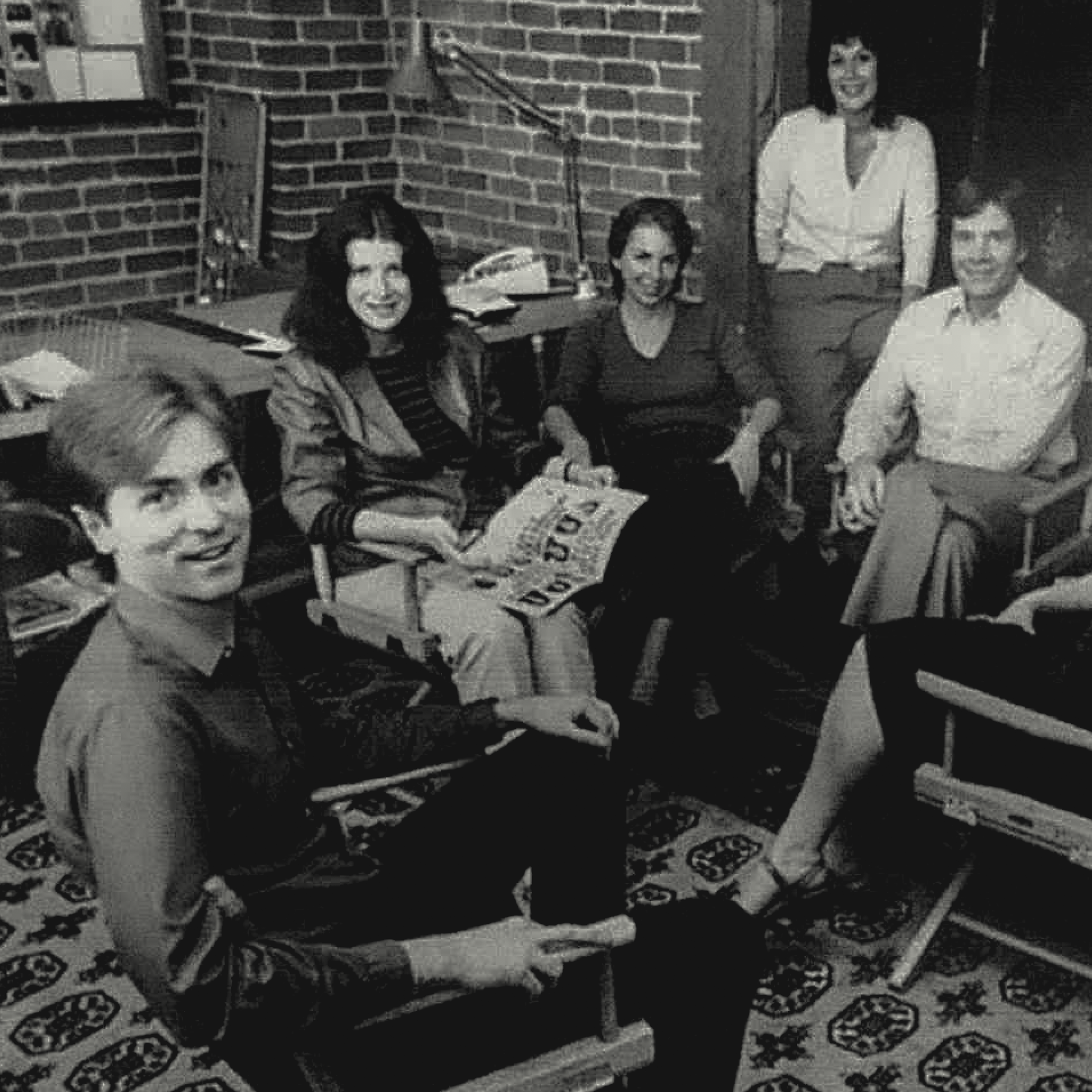
This group of journalists wanted to create a magazine that would do all those things that corporate media wasn't doing, that would be a nonprofit from the outset, that would be supported by and accountable to its community, and that would also be beautiful and engaging and cool looking and something that people wanted to bring into their life.
- [00:28]
B
Coming up on more to the story. The CEO of the center for Investigative Reporting and my boss marks the 50th year of mother Jones magazine. Stay with us.
- [00:42]
A
This episode is brought to you by Progressive Insurance. Do you ever find yourself playing the budgeting game? Well, with the name your price tool from Progressive, you can find options that fit your budget and potentially lower your bills. Try it@progressive.com, progressive Casualty Insurance Company and affiliates. Price and coverage match limited by state law. Not available in all states.
- [01:13]
B
This is more to the story. I'm Al Letson. 50 years ago, in a small San Francisco office above a fast food restaurant, the the staff of mother Jones, all 17 of them, published their first magazine. Following the Watergate scandal, investigative journalism made its mark and changed the course of history. The founders of Mother Jones believe that powerful people and corporations should be held accountable. By reporting for half of Mother Jones history, Monica Barouline has been contributing to its award winning journalism, first as an editor, then as the CEO since 2015. Two years ago, she spearheaded the merger of Mother Jones with the organization. I came from, the center for Investigative Reporting. We are now one powerhouse newsroom led by Monica. The CIR newsroom generates the Mother Jones magazine and website, social media and video productions, plus all the investigative audio reporting from Reveal. Monica joins me today from our San Francisco studio to help mark five decades of newsmaking. Monica, how you doing?
- [02:17]
A
I'm great. Elle, wonderful to be with you.
- [02:20]
B
So Mother Jones is celebrating. Well, first of all, like, who's your favorite employee?
- [02:28]
A
Always the one that I'm sitting with.
- [02:30]
B
Yeah, exactly. Mother Jones is celebrating its 50th anniversary this year. So take me back to its founding. Give me the Mother Jones origin story.
- [02:42]
A
Yeah, I mean, neither one of us, right, were around for it. But the if you cast your mind back to the early 70s, the Vietnam War had left huge scars on American society. Watergate had happened. There were these giant social movements transforming the country. The women's movement was gaining steam. The civil rights movement had been going. LGBTQ rights were coming forward. The environmental movement and the media was corporate media already even then 50 years ago was not always very prescient on all of these stories, was not always recognizing the changes that were happening and was also not always challenging power and questioning authority, particularly corporate power, since, you know, corporate owned media could sometimes run into conflicts with that. And so this group of journalists and the people that I, you know, want to particularly name are Adam Hochschild, Paul Jacobs, Richard Parker, and Jeffrey Klein, who had all worked for other sort of alternative and dissident magazines, wanted to create a magazine that would do all those things that corporate media wasn't doing, that would be a nonprofit from the outset, that would be supported by and accountable to its community, and that would also be beautiful and engaging and cool looking and something that people wanted to bring into their life.
- [04:21]
B
It's interesting to hear you talk about the era that Mother Jones was born out of, because it feels like we are right back in that same moment. Like all the things that you described, worrying about corporate power, racism, LGBTQ issues, all of that is still right now at the forefront of where we are today.
- [04:48]
A
Yeah, it feels to me actually like a very similar moment. Also government corruption, you know, distrust of people in a government that had lied to them in many ways, was really a feature of that moment. And so one of the things that actually keeps me saying right now is to think about how in moments like that in America, people have come together and made change. And this group of journalists that founded Mother Jones intended to do that and intended to help people figure out ways to make change.
- [05:23]
B
Yeah. Another one of the mirrors from then, 50 years ago to right now is that Nixon famously went after journalists. How do you compare that time to what's happening today with President Trump and his attacks on journalism?
- [05:41]
A
They're really actually quite similar. Maybe the difference was that Nixon did more of it covertly. You can hear him on the White House tapes really railing about the press. And he did have his friends try to disrupt media mergers, which is a thing that we also see right now. But. But he wasn't as out in the open about it. And Trump obviously also is his own media platform and is able to basically tell Americans, you shouldn't believe anybody but me. No one but me is giving you the information that you need. And that's not something that Nixon was able to do.
- [06:22]
B
So talk to me about some of the big stories over the years that Mother Jones has reported or covered.
- [06:29]
A
There are so many, I think a couple, so I'll just not even try to be comprehensive, but a couple that people might recognize. The story that put Mother Jones on the map early on was about the Ford Pinto, where they basically exposed that Ford made a calculus that it was less expensive to pay people whose loved ones had died in flaming wrecks than it would have been to fix the thing that made the cars explode in flames. There was an early investigation that was actually a collaboration with the center for Investigative Reporting, which you and I both work for AL now, but used to be a separate organization about the cycle of poison, where companies would export pesticides and herbicides that were banned in the US So that it would be used overseas and then of course, come back in the form of the products that that they were used on. There were investigations of tobacco. Mother Jones was really early in putting the lies of the tobacco industry actually right on the COVID which was kind of a gutsy move because also tobacco companies were the main source of advertising for magazines at the time. So going back to why it had to be a nonprofit, the profit sort of centers for magazines were not going to sustain this kind of reporting. There was a big story in the 2012 presidential campaign where our colleague David Korn exposed Mitt Romney basically saying 47% of Americans are lazy lie abouts that want the government to sustain them. There was a big investigation that, you know, we again worked together where our reporter got a job inside a private prison and worked there for four months and captured what was going on inside and also what was happening to him. There was a big project that we released together with our friends at the center for Public Integrity a couple of years ago that was called 40 acres and a lie about how the government gave land to formerly enslaved families and then turned around and took it away. So those are just like the tip of the iceberg.
- [08:50]
B
Yeah. So you've been talking with some other former Mother Jones folks lately. Are there any fun, surprising stories that you've learned about the organization?
- [08:59]
A
So many. And, you know, also, you know, particularly the, you know, 70s and 80s were a pretty wild time for a lot of people. But, you know, a sort of nerdily funny story is how the magazine got its name. They had originally picked a different name. It was New Dimensions, which maybe also not the most riveting name for magazine. And so fortunately, they got a cease and desist letter from some other organization that had already gotten that name. But they needed to basically launch within a very short time. And so they sat down and sort of looked at historical figures and lots of other names, and they picked Mother Jones, who had been a labor leader in the early part of the 20th century and came to activism late in life and took it upon herself to end child labor, for example. And so I had always thought that, okay, maybe not a lot of people know who the original Mother Jones is now, but maybe they did know it in the 70s and that's why they chose that name. But I asked Adam Hochschild, who was one of the founders, and he said, no, I had to look it up too. But it turns out that one of the sort of super smart and dedicated business side folks that were part of this founding group said, that's actually good. You want people to be a little bit intrigued and to have to think, you know, who. Who is this? And so that's how we ended up with the name.
- [10:32]
B
How did you get involved with Mother Jones and ultimately become the CEO?
- [10:37]
A
So there's a longer story and a shorter version of the story, but I was born in Germany, about a generation away from World War II. And so my childhood was kind of shaped by learning about what had happened, about the Holocaust, about the Nazi regime, and how lies and propaganda really enabled that. So I was always captivated by how truth can be a defense against those types of things. Then I came here in my 20s and I thought, well, you know, having grown up thinking about fascism, this is really not ever going to be relevant in my life again. Hooray. But I was still really interested in using truth and storytelling to help protect us from these kinds of forces. And so Mother Jones was always there in the kind of at the tip of the firmament for me of an independent, fearless news organization that would tell it like it is. And so one day I just, you know, wrote this fairly crazy and ill considered letter to the then editor in chief and said, you know, your magazine has been so great, it's, you know, gotten a little stale. I really hope you do something awesome with it.
- [11:57]
B
And wait, wait, wait, wait, wait, wait, wait. You told him that the magazine got stale?
- [12:03]
A
You know, I mean, magazines are like, you know, are like people, they go through times when they're hot and times when they're not so hot. And it was a hard, you know, this was in the early 2000s and, you know, 25 years into its trajectory, I think Mother Jones was doing a little soul searching about what it might be.
- [12:22]
B
And so you sent him this letter basically telling him, like, you gotta get your stuff together and whatever.
- [12:30]
A
Yeah, I said, I used to always subscribe and now I feel like it's sort of the same story over and over again. So he asked me to come visit. And I wasn't totally clear that it was a job interview, but they hired me.
- [12:45]
B
And so what's your trajectory? Like, what did they hire you for?
- [12:50]
A
So I think My original title was Feature. As editor, I had worked at an alternative weekly in Minneapolis. And so I had done a lot of investigative reporting myself and edited long form investigative stories, which was something that that obviously Mother Jones did. And I was also Mother Jones at the time had a website which was super early. They had had it since 1993, I think, the first general interest magazine on the web. And so one of the things that I remember saying in the interview was people are getting their information online. That's where your next readership is going to be. They're not just going to be reading the print magazine. And so part of the brief was let's figure out how to do that.
- [13:39]
B
Coming up on more to the story.
- [13:41]
A
The government is basically not following the Freedom of Information act anymore. So when you want the information that belongs to us as US Citizens, as taxpayers, you have to sue for it.
- [13:54]
B
But before we get to that, did you know that 65 to 70% of CIR's revenue comes from reader and listener support? From day one, we've been a people powered newsroom, accountable to only our audience, not a billionaire owner or advertiser. You can help us by going to revealnews.org gift again, that's revealnews.org gift and thank you. More with Monica Bauerlein in just a moment. This is more to the story. I'm Al Letts, and today we're chatting with my boss, the CEO of the center for Investigative Reporting, Monica Bauerlein. We're celebrating the 50th anniversary of Mother Jones. You took on a big challenge a couple years ago. Now, at this point, combining the Mother Jones organization with the center for Investigative Reporting, which is a part of Reveal, and how we all came to be one big happy family. But you did it in a time where journalism is being challenged from all sides. Talk to me a little bit about that merger and how you did it and what you see the future is of that merger.
- [15:15]
A
Well, the first thing I would say is I didn't do it. It was a real project that everybody that you were part of that, all of our colleagues were part of that. The CEO of what was then the separate center for Investigative Reporting, Robert Rosenthal, was part of lots of board members, supporters. So it was a real team effort. And it came from the realization that journalism is under attack is in an incredibly precarious place economically. Nonprofit journalism is an answer to that, but is also super challenged at a time when resources are scarce and there's a lot of need. And so if you have two different organizations that have A similar mission of speaking truth to power with investigative reporting. Is there a case for why they should be separate? Is it just that we're hung up on our individual organizational identities and doing things the way that we're used to? Or should we get outside of our attachment to how to what we're used to and try something new that serves the people that we claim to serve more effectively? And so CIR had this incredible host hosting an extraordinary show that had a huge reach. And so, you know, bringing that together with the team at Mother Jones that had created a really great digital and social footprint and, you know, still had the print magazine. And then on top of that, we have from both organization, really talented journalists doing video storytelling. It was just like, how could you not do that?
- [17:06]
B
What do you think the biggest change in journalism has been in your career that you've seen?
- [17:12]
A
I think the collapse of the business model. And it was really just a temporary business model. It just seemed permanent at the time. But we had this period of several decades where newspapers, television stations, broadcasters had sort of a monopoly on eyeballs, on reaching people, and advertisers would pay them to reach those people. And so they put some of that money, not enough of it, but some of that money into journalism and some of it into real public service journalism. And, you know, that's completely gone. When you look at the statistics of. I think there were 420,000 people working for newspapers in the late 90s, and there are 80,000 today. That's a collapse that is so much greater than, like, coal miners who, you know, the loss of coal mining jobs is a national crisis, but we have lost lots and lots more journalism jobs than that.
- [18:22]
B
Yeah, Let me ask you this. This is a little bit of a tricky question that, like, I ponder and think about a lot of the time. How do we cross the divide? Because so many people listen to this podcast. But I would say in many ways, we are preaching to the choir. We are preaching to people who believe that government should be held accountable, that investigative journalism and revealing the true world that is kind of behind the curtain is a worthy endeavor. But there is a. A whole divide that just will not even tune into what we do, because they feel like we are geometrically opposed to their beliefs. But in order to make change in this world, it feels like we have to figure out a way to cross that barrier.
- [19:18]
A
I wonder if we actually make it harder on ourselves by thinking of it as a barrier or a gap or like this massive chasm and not as an opportunity. Because the things that you said at the outset, just a moment ago that people believe that government should be accountable, that powerful people should be held to account. That is a really widespread belief. It's just. In fact, there's a regular survey that is done that consistently shows that government corruption is one of the greatest fears that Americans have across political beliefs. It's just that different people have different thoughts on where the corruption is coming from. And sometimes it's hard to. You know, nobody wants to hear that the folks that they believe in are corrupt. But I think it's less of, you know, one big divide and more like lots of little fissures and fractures and, you know, hills and valleys that we have to try to get over. But behind every hill and on the other side of every one of those valleys is somebody who is interested in hearing what's going on in the world. And there's so much less. I think this is just my read on where we are politically. I think there's so much less of a red, blue divide and so much more of a kind of divide between people who feel on the inside and people who feel the outside. And people who feel on the outside are the people that journalists have traditionally, even when we haven't always been good at it. That's who we should be there for. That's who we should be. That's whose stories we should be uplifting, and that's who we should be serving.
- [21:11]
B
Yeah, I don't want to turn this interview into, hey, give us money, but
- [21:18]
A
no, no, no, you should give us money. Everybody should give us money. Because the only other place that the money is going to be coming from is, you know, Jeff Bezos. And, you know, he's not gonna do it, right?
- [21:31]
B
So this is the portion where we explain why you should give us money. Number one, investigative journalism is extremely hard and extremely expensive. Can you talk a little bit about what it takes to keep this organization and the work that we're doing flowing?
- [21:52]
A
I wrote a column some years ago when we did this investigation of the private prison system that people still quote back to me. And it's because I sort of broke down what it costs to do that investigation, to put that reporter in that prison, to have the legal support, the fact checking support, to be able to bring that story to different platforms. And it came to about $300,000 all in. And I said, now, the revenue that we get from advertising that you might see when you read that story, because we do sell advertising, we try to bring in revenue every way that we can. That revenue was going to be about $5,000. And that's from 2 million people reading the story. So if we were to pay for this podcast with advertising, which, you know, people will hear on the podcast, we would be producing it about three times a year. That's how much, you know, more to the story would be coming from that revenue. So that's important revenue, but it is not going to come anywhere close to supporting the kind of journalism that you do on this show or that we do at Mother Jones. And so this kind of journalism is gonna be supported by a community of people who care about the truth and people who want that in their lives and in the lives of the world that they live in.
- [23:23]
B
Yeah, I'm also thinking about the cost of doing this work not just in personnel and going out and reporting, but also when you're doing investigative journalism, you are going to get sued. It's just a part of a lawyer on staff, Victoria Baranetsky, she's one of my favorites to have a lawyer on staff. So it's not just like the hard cost of doing the investigation. It's the hard cost of doing the investigation, along with the hard cost of the results of the investigation that could come back and haunt you.
- [24:04]
A
And the hard cost of protecting the journalists. And of now there's a whole other layer of legal costs of going after. The government is basically not following the Freedom of Information act anymore. So when you want the information that belongs to us as US Citizens, as taxpayers, you have to sue for it. So the costs are just going up all the time, too. And that's at an organization that turns over every nickel to start with.
- [24:37]
B
Yeah. So, Monica, what. What is your vision for the organization in the future?
- [24:46]
A
It's hard to know what exactly it will look like 10 or 20 or 50 years from now. What will be. How will journalism be coming to us if it's not on these little devices that are in our hands? But I think what I can feel really, really confident in is Mother Jones and the center for Investigative Reporting and Reveal will be ferociously independent and we will be around so long as there's a community of people supporting us. And we are actually this year, because it's our 50th anniversary and because the challenges for journalism are greater than ever, we are launching a campaign to make sure that we're here and that we're independent and fearless for the years, you know, the sort of tough years ahead, but also for the long distance future so that, you know, future Al and future Monica can sit here and be unafraid and tell the stories that need to be told.
- [25:48]
B
Monica Bauerlein, CEO of the center for Investigative Reporting, thank you so much for coming onto the show.
- [25:55]
A
Thank you so much to my absolute favorite host of all time.
- [25:58]
B
Ah, there we go. There we go. There we go. That was Monica Bauerlein, CEO of the center for Investigative Reporting, which produces Reveal. More to the story and the Mother Jones magazine. If you liked this episode, you should check out our conversation with NPR's David Folken Flick from last spring, where he talked about the challenges journalists face in covering the White House and his own employer being in Trump's crosshairs. We'll put the link in our show notes. Lastly, a reminder, we are listeners to supported. That means listeners like you. You can help us thrive by making a gift today. Just go to revealnews.org gift again, that's revealnews.org gift and thank you. Today's show was produced by members of the Justice Society, Josh sanburn and Cara McGurk. Allison Taki Teleditis edited the show, theme music and engineering, helped by Fernando my man Yo Aruda and Jay Breezy. Mr. Jim Briggs, I'm Al Letson. And you know, let's do this again next week. This is more to the story. From prx.