Loading summary
Transcript248 lines
- [00:01]
Podcast Host / Advertiser
This episode is brought to you by Progressive Insurance. You're listening to this podcast, so I know you've got a curious mind. Here's a helpful fact you might not know yet. Drivers who switch and save with Progressive save over $900 on average. Pop over to progressive.com answer some questions and you'll get a quick quote with discounts that are easy to come by. In fact, 99% of their auto customers earn at least one discount. Visit progressive.com and see if you can enjoy a little cash back. Progressive Casualty Insurance Company and affiliates national average 12 month savings of $946 by new customers surveyed who save with Progressive between June 2024 and May 2025. Potential savings will vary.
- [00:40]
Race Equation Commentator / Advocate
Scores of black veterans aren't getting the medical treatment or compensation they need, all because of their race.
- [00:47]
Medical Expert / Human Rights Advocate
We're doing this lung testing like this and it's not scientific and it's hurting patients.
- [00:53]
Narrator / Reveal Host (Al Letson)
I have seen white veterans get more benefits and if they basing it upon color of our skin, that's not right because we are all veterans.
- [01:02]
Podcast Host / Advertiser
We are banned from talking about anything
- [01:06]
Narrator / Reporter (Dina Rothenberg or Viola Funk)
that has race in it.
- [01:07]
Race Equation Commentator / Advocate
To hear all episodes of the Race Equation from the New England Journal of Medicine subscribe to Intention to Treat
- [01:14]
Jane Butcher (Reveal Supporter)
Want to make a lasting difference to Reveal and protect independent Journalism? Right now, it won't cost you a thing. Hi, it's Jane Butcher from Boulder, Colorado. I've spent my life fighting for justice, which is why I'm a longtime supporter of REVEAL and the center for Investigative Reporting. I'm stepping up to protect the future of fearless independent journalism and you can too, by joining CIR's Legacy Challenge. Just let Reveal know you're going to include them in your legacy plans. Provide some basic information, and here's the really exciting part. A generous donor will contribute up to $10,000 now to fund Reveal's essential reporting in honor of your gift. Your legacy gift of any size makes an impact not just in the future, but right now. If you'd like to join me or want to learn more, please reach out to giftsevealnews.org again, that's giftsrevealnews.org the Legacy Challenge is only available for a limited time. Stand up for the Truth Today
- [02:28]
Narrator / Reveal Host (Al Letson)
from the center for Investigative Reporting in prx, this is Reveal. I'm Al Letson. On most nights, Tommy Olson sits in a makeshift office at his home in Tromso, Norway, an island north of the Arctic Circle. He lives there with his wife and five kids.
- [02:46]
Tommy Olsen (Human Rights Worker in Norway)
I like to call it an office, but it's not. It's the hallway between the kitchen and a bedroom and a bathroom.
- [02:52]
Dimitris Jules (Human Rights Lawyer in Samos)
So.
- [02:54]
Tommy Olsen (Human Rights Worker in Norway)
And this is where I work.
- [02:56]
Narrator / Reveal Host (Al Letson)
Tommy used to work with children with disabilities, but he gave up that job to run a hotline from his home.
- [03:02]
Tommy Olsen (Human Rights Worker in Norway)
It's kind of insane how many people contact me on a daily basis.
- [03:08]
Narrator / Reveal Host (Al Letson)
It's a hotline for migrants facing danger thousands of miles away, people risking their lives for a chance at getting asylum in Europe.
- [03:17]
Tommy Olsen (Human Rights Worker in Norway)
Like Yesterday I had 55. The day before, I had 37.
- [03:22]
Narrator / Reveal Host (Al Letson)
The people who call Tommy are trying to reach Greece from Turkey, where around two and a half million refugees are now living. Some pay smugglers thousands of dollars. They travel in small boats. A lot can go wrong, and when it does, they call a stranger living in the Arctic for help.
- [03:41]
Tommy Olsen (Human Rights Worker in Norway)
It could be people who just have arrived on a Greek island and they need medical assistance and are afraid to contact authorities. Or it could be people in distress at sea, people drifting in boats or life rafts.
- [03:56]
Narrator / Reveal Host (Al Letson)
It's a harrowing journey across the Mediterranean sea. More than 31,000 people have died or gone missing since 2015. And back in January of 2022, the danger wasn't just in the waters.
- [04:09]
Medical Expert / Human Rights Advocate
Please hold for us as soon as possible.
- [04:12]
Narrator / Reveal Host (Al Letson)
This woman was part of a group from Afghanistan. They had just reached the Greek island of Lesbos when she contacted Tommy.
- [04:20]
Amali (Refugee from Afghanistan)
We don't want that the police get
- [04:21]
Narrator / Reporter (Dina Rothenberg or Viola Funk)
us and pushed back again. We are scared of that so much.
- [04:26]
Narrator / Reveal Host (Al Letson)
Tommy says he's received scores of calls like this before from people afraid of
- [04:32]
Tommy Olsen (Human Rights Worker in Norway)
being hunted down by men in uniforms with black masks, carrying guns, driving around in cars without license plates in broad daylight.
- [04:45]
Narrator / Reveal Host (Al Letson)
Think of Tommy as a 911 operator, only he's not dispatching ambulances. He's dispatching human rights workers in Greece. People who can show up to protect migrants from having their rights violated. Only in this case, no one came and the situation got dire very quickly. Tommy says masked men captured the group, put them into an inflatable life raft and pushed them back into the sea.
- [05:12]
Narrator / Reporter (Dina Rothenberg or Viola Funk)
The Greek police caught us and left
- [05:14]
Amali (Refugee from Afghanistan)
us in the sea, in the middle of the sea.
- [05:17]
Narrator / Reporter (Dina Rothenberg or Viola Funk)
Help us. Come help us.
- [05:20]
Narrator / Reveal Host (Al Letson)
Adrift in open water, the group was terrified.
- [05:24]
Narrator / Reporter (Dina Rothenberg or Viola Funk)
The boat is not good. The water is coming inside the boat. All the children, 17 children that we have.
- [05:34]
Narrator / Reveal Host (Al Letson)
In desperation, Tommy says he had to call the Turkish coast guard. Eventually, they found the boat and rescued the men, women, and 17 children. Tommy was upset that no organization came to protect the group from being forcibly expelled from Lesbos. But he understands why. Helping save migrants is something that can land you in jail and Tommy Olsen knows all, all about that. In Greece, he's a wanted man. Today we're updating a story we first brought you in 2025 with reporters Dina Rothenberg and Viola Funk from the Berlin podcast studio Slowly Media. They investigated how far one country is willing to go to stop the flow of migrants and punish human rights defenders. Here's Dena.
- [06:24]
Narrator / Reporter (Dina Rothenberg or Viola Funk)
To understand what's happening in Greece recently, you have to go back to the Greece of 2015.
- [06:31]
Dimitris Jules (Human Rights Lawyer in Samos)
The latest arrivals on Lesbos as migrants continue to brave winter weather to get to Europe.
- [06:37]
Narrator / Reporter (Dina Rothenberg or Viola Funk)
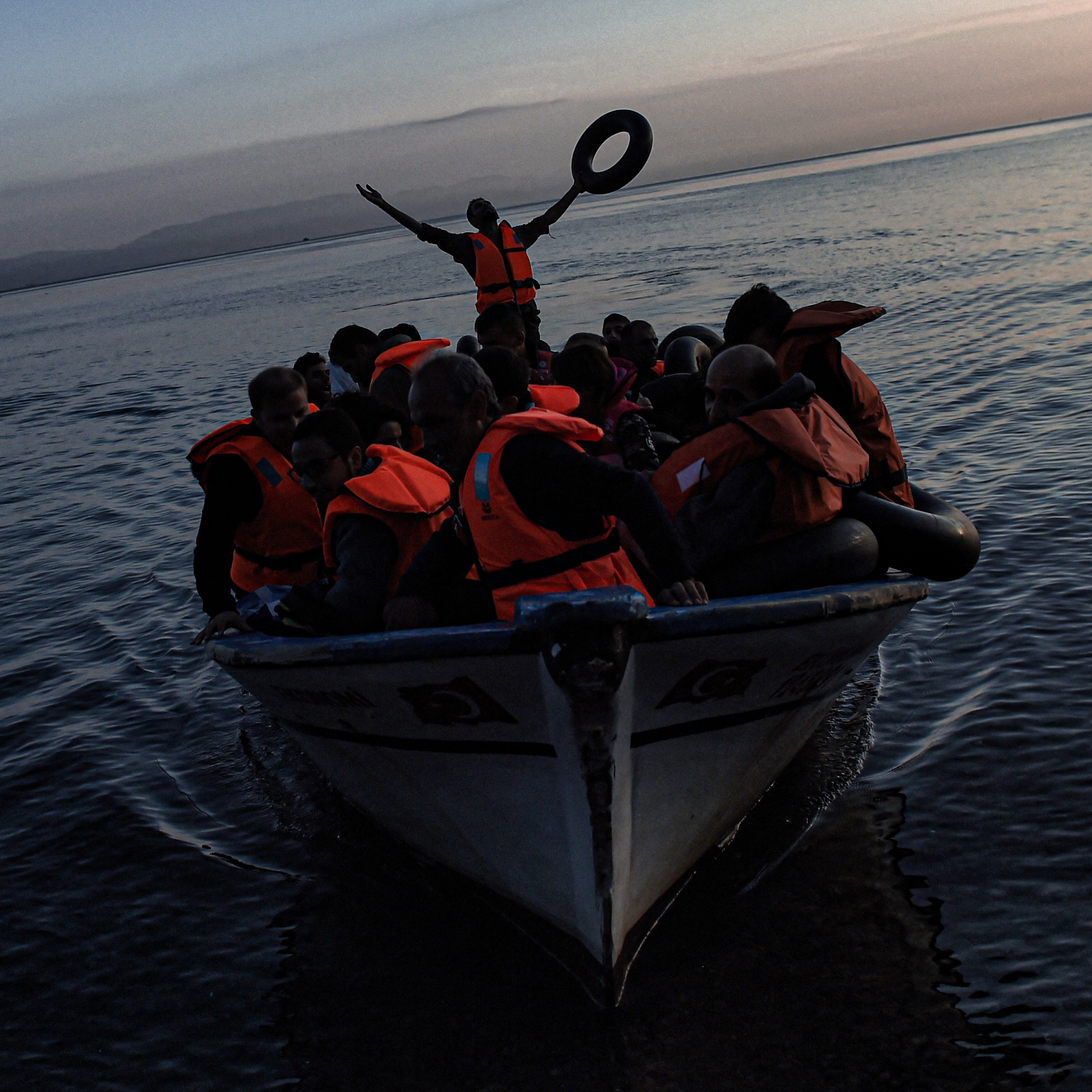
Nearly a million migrants entered the country that year. These were people fleeing repression and wars in places like Afghanistan, Syria, Iraq and Libya. And the Greek islands were the gateway to asylum.
- [06:51]
Race Equation Commentator / Advocate
These people, as soon as the boat arrived, they were shouting, europe, Europe. And they're thanking God for helping them to make that journey safely right here in the shores of Greece.
- [07:06]
Narrator / Reporter (Dina Rothenberg or Viola Funk)
Those who reached the islands were joyful, but others never made it. People were drowning by the hundreds and news crews documented the shocking images. Nothing has captured this crisis like the
- [07:18]
Kyriakos Mitsotakis (Greek Prime Minister)
picture that we began with last night.
- [07:21]
Narrator / Reporter (Dina Rothenberg or Viola Funk)
A picture of the lifeless body of a two year old Syrian boy. He was dressed in a red T shirt and had washed up, drowned on a beach. It's these images of Aylan Kurdi that have finally brought the tragedy home to people in Europe and pricked the conscience of of European leaders. Governments and ordinary citizens were moved. Volunteers from across Europe descended on Lesbos and other Greek islands. They joined with locals to help rescue and support the new arrivals. Tommy Olson was one of those volunteers. He was there on the beaches night and day.
- [08:01]
Tommy Olsen (Human Rights Worker in Norway)
We picked up people from boats who were already dead. We worked on children on the beaches who had drowned. I didn't know what I walked into.
- [08:14]
Narrator / Reporter (Dina Rothenberg or Viola Funk)
Tommy's low key and can keep his cool, which helped him cope with what felt like a constant emergency. Soon he was traveling to Greece five or six times a year and paying for the trips with his family's holiday budget money.
- [08:29]
Tommy Olsen (Human Rights Worker in Norway)
Yeah, it was at times very tense in the family. They didn't quite understand why I needed to do this.
- [08:38]
Narrator / Reporter (Dina Rothenberg or Viola Funk)
During this time, a powerful volunteer community took shape. Regular people were becoming human rights workers, including Tommy, who was mastering the geography of the islands and building a network of people centered on helping.
- [08:53]
Tommy Olsen (Human Rights Worker in Norway)
I had a pretty good network of people and organizations who I had daily contact with over WhatsApp and I started gathering information.
- [09:04]
Narrator / Reporter (Dina Rothenberg or Viola Funk)
Soon Tommy was documenting what was happening in Greece on Facebook. At first he shared basic information.
- [09:11]
Tommy Olsen (Human Rights Worker in Norway)
Number of people in the camps, number of boats arrived. If there had been drownings and, of course, the need of supplies, it was
- [09:19]
Narrator / Reporter (Dina Rothenberg or Viola Funk)
a way to say things like, stop sending baby clothes. Tommy became a key source of information. After a few years, the welcoming attitude towards asylum seekers trying to reach Europe began to wane. Greece's infrastructure was buckling and other European countries weren't helping enough. The mood started to shift from compassion to anger and fear.
- [09:47]
Aseel (Refugee from Syria)
There's tension in the air on Lesbos.
- [09:50]
Narrator / Reporter (Dina Rothenberg or Viola Funk)
Four days of civil unrest has people on edge. Amid widening protests over the handling of the refugee emergency, a new government in Greece adopted tougher policies on migration. It was welcomed by some voters, but criticized by human rights groups. By 2020, Tommy found himself compiling evidence of what he believed were massive human rights violations by Greek authorities. Scores of people being rounded up and illegally expelled from the islands. It's all up on the website of his ngo, the GNBOT Report.
- [10:29]
Tommy Olsen (Human Rights Worker in Norway)
We document the situation in the sea to put spotlight on things that goes under the radar for journalists and big newspapers.
- [10:40]
Narrator / Reporter (Dina Rothenberg or Viola Funk)
Tommy says exposing human rights violations is what's made him a marked man in Greece. Also, there are new regulations that make it harder for volunteers like him to help the new arrivals.
- [10:52]
Tommy Olsen (Human Rights Worker in Norway)
If you bring people water or food after they arrive, because it's hot, they need something, you will be arrested for assisting them.
- [11:05]
Narrator / Reporter (Dina Rothenberg or Viola Funk)
Only organizations registered with the government are allowed to help, and it's mostly big NGOs like Doctors Without Borders. The are able to meet the strict requirements. Smaller groups like Tommy's find registering too difficult. Tommy believes all these tactics are a way to make the journey to Greece harder and more dangerous, so that migrants will stay away. But people keep coming, Tommy says they're just forced to take more risks. They come at night and land in very remote places where nobody can see them.
- [11:38]
Tommy Olsen (Human Rights Worker in Norway)
In 2015, they always took the boat and drove towards the light because that's where they knew there were people. That's where they knew they got help. These days, lights means police, Lights means pushback. Light means being arrested, beaten, so they travel to the areas without any light.
- [12:07]
Narrator / Reporter (Dina Rothenberg or Viola Funk)
We spoke with a number of refugees who eventually reached Europe, and they corroborated Tommy's allegations. Several wouldn't speak in front of a microphone. Some feared their asylum applications would be negatively impacted. Plus, recalling these memories is often retraumatizing. But one woman agreed, provided we protect her identity.
- [12:29]
Amali (Refugee from Afghanistan)
I'm 22 years old, I'm married, and I live here with my husband and my daughter. And I'm from. From Afghanistan.
- [12:40]
Narrator / Reporter (Dina Rothenberg or Viola Funk)
We are calling this woman Amali. She was born and raised in A community of refugees who fled Afghanistan for Iran back when the Taliban was coming to power. When she turned 18, Amali says her parents announced that they were planning to marry her off to an older man. She was devastated, but she had a plan.
- [13:00]
Amali (Refugee from Afghanistan)
My dream was, okay, I go to the Europe, everything will be good. Nobody can find me. The European people are kind, they will help me.
- [13:12]
Narrator / Reporter (Dina Rothenberg or Viola Funk)
But first Amalie would need to make it to Turkey.
- [13:16]
Amali (Refugee from Afghanistan)
One night we just leave everything, our life and escape from Iran to Turkey.
- [13:25]
Narrator / Reporter (Dina Rothenberg or Viola Funk)
Amali and her husband lived in a refugee camp in Turkey and tried to apply for asylum there first, but were told applications were not being accepted.
- [13:35]
Amali (Refugee from Afghanistan)
They told us, it's finished, it's full. We have a lot of refugees here and we can't cover all. And I don't know what you want to do, but you can't stay here in Turkey.
- [13:51]
Narrator / Reporter (Dina Rothenberg or Viola Funk)
So they paid a smuggler to get them on a boat to Greece. By this time, Amali was pregnant and expecting her first. The couple made it to Lesbos, which sits just a few miles away from Turkey.
- [14:04]
Amali (Refugee from Afghanistan)
We arrived on the islands and I was so happy. I told myself, we were so happy. Congratulations, we arrived, everything is finished, we can start our life.
- [14:18]
Narrator / Reporter (Dina Rothenberg or Viola Funk)
That's not what happened. They survived crossing the Aegean Sea from Turkey, but they still aren't safe on Lesbos. Amali says her group walks for several hours in search of a refugee center. Before they reach any kind of town or village, a police officer crosses their path. Some of the people from her group panic and take off.
- [14:42]
Amali (Refugee from Afghanistan)
But I told them, why are you escape? They are police officers. They can help us, don't escape. And I told them, hello, can you help us? We are refugees, we want to stay here.
- [14:54]
Narrator / Reporter (Dina Rothenberg or Viola Funk)
The officer seems kind, his questions are polite. But as soon as other officers arrive and round up the group, the whole situation changes.
- [15:04]
Amali (Refugee from Afghanistan)
Suddenly I saw they are so angry. Why are you coming here? We don't want of you, just here. Why are you come? It's finished.
- [15:15]
Narrator / Reporter (Dina Rothenberg or Viola Funk)
Amali is confused and and doesn't understand what's happening.
- [15:18]
Amali (Refugee from Afghanistan)
I told them, you didn't help us. You are police officer. We are in danger, you should help me. They told us, no.
- [15:29]
Narrator / Reporter (Dina Rothenberg or Viola Funk)
Amali remembers it like this. The police officers leave. Then a new group arrives. Men in dark blue clothing with balaclavas. The masked men start hitting people, pushing them. They separate the man and woman and tell Amali to come with them.
- [15:47]
Amali (Refugee from Afghanistan)
And I told them, okay, no problem. My husband shouted and told me, don't go, don't go. Where are you going?
- [15:55]
Narrator / Reporter (Dina Rothenberg or Viola Funk)
What happens next is an alleged sexual assault and may be disturbing for some listeners. Amali says the men force her to strip off all her clothes. They touch her and look for money in her private places.
- [16:10]
Amali (Refugee from Afghanistan)
I told them, okay, that's enough. I scared, I'm young, I can't believe that I'm here. And he told me, don't come again, don't come back to Greece.
- [16:25]
Narrator / Reporter (Dina Rothenberg or Viola Funk)
They return her to the group and take away the other woman one by one.
- [16:31]
Amali (Refugee from Afghanistan)
And nobody speak about that. I just see everybody crying.
- [16:37]
Narrator / Reporter (Dina Rothenberg or Viola Funk)
Then, she says they force the men to line up and take off all their clothes. In front of the women and children, Amali covers the eyes of a two year old girl next to her. She says the masked men start beating the men with bells.
- [16:51]
Amali (Refugee from Afghanistan)
All of my husband's body was black.
- [16:54]
Narrator / Reporter (Dina Rothenberg or Viola Funk)
When we come back, what follows is something that refugees have reported to human rights groups and it's been captured on cell phone videos and shared with people like Tommy. First the men, women and children are forced into a van. Then they are taken to a remote beach.
- [17:12]
Amali (Refugee from Afghanistan)
There were so many people. About 20 person saw us. And they are laughing. They crying and they laughing. And every time they told ms, don't come back, go back. And told other refugees to don't come. Lesbos is finished. Greece is finished. Your dream, it's not here.
- [17:37]
Narrator / Reporter (Dina Rothenberg or Viola Funk)
She says the armed men order the entire group into a life raft in the middle of the night. No engine, no steering, nothing. A boat drags the raft out into the sea. It's pitch black and raining. The men in the boat use long sticks to push them out into the open water towards the coast of Turkey.
- [17:58]
Amali (Refugee from Afghanistan)
I can't believe that this situation happened for me. I told them, my life is finished. I don't want this baby. I don't want myself. I don't want to be alive more. We will die here at the middle of the water. Nobody helped.
- [18:20]
Narrator / Reporter (Dina Rothenberg or Viola Funk)
Tommy Olson has documented many cases like Amali's on his website. He estimates that since 2017, Greek authorities have left nearly 100,000 people drifting in the waters between Greece and Turkey over the course of nearly a year. We repeatedly asked the Greek government for an interview, but we never got a response. We also sent them an email with the details of our investigation, but again, no one replied. In public press conferences and in media interviews, the Greek government has strongly denied that armed and masked men were systematically pushing asylum seekers back out to sea. To Tommy, it's obvious that the men not only exist, but act on behalf of the government.
- [19:07]
Tommy Olsen (Human Rights Worker in Norway)
You should try that in a city. Take a car Take off your license plate, put on balaclava on your head like a bank robber and drive through town and see what happens. I think local police would pick you up pretty fast.
- [19:25]
Narrator / Reporter (Dina Rothenberg or Viola Funk)
To say that Tommy is outspoken is an understatement. And he's made some enemies along the way. In Greece, newspapers have accused him of working in cahoots with smugglers. So have politicians. Then, In January of 2023, Tommy was notified that Greek authorities were charging him with being part of a criminal network. They alleged that he helped eight people from Africa enter the country illegally by planning that trip with another man who was in Turkey at the time. He's also facing charges. Tommy's lawyer says the man was just a refugee trying to get asylum. Tommy was supposed to show up in a Greek court to defend himself, but through his lawyer, he refused. A judge issued a warrant for his arrest, but it was only valid in Greece. So Tommy kept running his ngo.
- [20:23]
Tommy Olsen (Human Rights Worker in Norway)
We should perhaps remember what happened in the Second World War. I think we are forgetting why these human rights and rules were made in the first place. It was to protect. We are kind of now violating this and trying to build a wall around Europe to keep people out. I think it's wrong.
- [20:43]
Narrator / Reporter (Dina Rothenberg or Viola Funk)
Amali ran up against that wall a lot. It took her 11 tries, but she finally made it to Europe through Italy, not Greece. She was granted asylum and now she and her family are living in German.
- [21:04]
Narrator / Reveal Host (Al Letson)
As people continue to flee their homelands and head for Europe, there are still a small number of human rights defenders left on the Greek islands. And as they try to help new arrivals reach refugee centers safely, they also tried not to get arrested themselves.
- [21:20]
Dimitris Jules (Human Rights Lawyer in Samos)
If I pick you up and you are a refugee and I pick you up with my car, I'm a smuggler. If you inform the authorities before you help someone, then you are not a smuggler. This is a very thin line.
- [21:34]
Narrator / Reveal Host (Al Letson)
That's next on Reveal.
- [21:47]
Podcast Host / Advertiser
This show is supported by Odoo. When you buy business software from lots of vendors, the costs add up and it gets complicated and confusing. Odoo solves this. It's a single company that sells a suite of enterprise apps that handles everything from accounting to inventory to sales. Odoo is all connected on a single platform in a simple and affordable way. You can save money without missing out on the features you need. Check out odoo@o d o o dot com. That's o-o o dot com.
- [22:16]
Wise App Advertiser
Support comes from wise, the smart way to manage the currencies you need around the globe. Fed up with losing out to hidden fees. When you send your money abroad with your everyday bank, choose the smart way Wise. You can count on the exchange rate you'd usually find on Google. No unwelcome surprises. Plus, ditch that where's my money feeling. Most transfers arrive in under 20 seconds. Join millions saving billions on hidden fees. Be smart, get wise. Download the wise app today. T's and C's apply.
- [22:50]
Narrator / Reporter (Dina Rothenberg or Viola Funk)
Hey, hey, hey.
- [22:51]
Narrator / Reveal Host (Al Letson)
Listen, we've been working on an episode about the 250th anniversary of American independence, and we'd like you to be a part of it. For a chance to have your voice appear on the show, leave us a voicemail letting us know what patriotism means to you. At this moment in our nation's history, we want to hear from all kinds of people, young, old and from all across the political spectrum. To leave us a voicemail, just call 415-321-1776. Again, that's 415-321-1776. Thank you, and we look forward to hearing what you have to say. From the center for Investigative Reporting and prx, this is Reveal. I'm Alan and today we're bringing back an episode about refugees attempting to enter Europe through Greece.
- [23:44]
Dimitris Jules (Human Rights Lawyer in Samos)
The Prime Minister of the Helic Republic, Mr. Kyriakos Mitsotakis.
- [23:49]
Narrator / Reveal Host (Al Letson)
In July of 2022, Greek Prime Minister Kyriakos Mitsotakis was invited to the European Parliament in Strasbourg.
- [23:57]
Kyriakos Mitsotakis (Greek Prime Minister)
Thank you, Madam President. Allow me to address this house in Greek.
- [24:04]
Narrator / Reveal Host (Al Letson)
Mitsotakis painted an optimistic picture of his country, which a few years earlier had been on the brink of financial collapse. He touched on everything from energy policy to Covid. And after he spoke, members of Parliament got their chance to address the European leader directly. When the migration crisis came up, two German lawmakers reflected the views of many members of Parliament. Europe is not to be criticized, but
- [24:28]
Tommy Olsen (Human Rights Worker in Norway)
to thank Greece for protecting and defending our common external borders.
- [24:32]
Jane Butcher (Reveal Supporter)
I'd like to thank you for your
- [24:34]
Narrator / Reporter (Dina Rothenberg or Viola Funk)
efforts in protecting Europe against the the ongoing migrant invasion.
- [24:40]
Narrator / Reveal Host (Al Letson)
There was one member who didn't see it that way. What she saw was a humanitarian emergency that Greece was responding to with violence.
- [24:48]
Race Equation Commentator / Advocate
If asylum seekers try to enter this Europe through your country, their rights are brutally trampled. They are pushed into the Turkish waters and land.
- [24:59]
Narrator / Reveal Host (Al Letson)
Tanique Streak is a member of the Dutch Greens political party and she didn't let up. She accused the Prime Minister of trying to silence anyone who tries to expose the mistreatment of migrants.
- [25:09]
Race Equation Commentator / Advocate
But Prime Minister, covering up evidence doesn't help because the reality is recorded and reported time and time Again by all relevant bodies of the UN Council of Europe, by Ombudsman NGOs and investigative journalists.
- [25:27]
Narrator / Reveal Host (Al Letson)
Mitsutakis has been confronted like this before. He knows the accusation, but he considers his government to be the guardian of Europe.
- [25:35]
Kyriakos Mitsotakis (Greek Prime Minister)
It is the right of every European member state to protect its borders with full respect for fundamental rights. This is exactly what Greece has been doing for the past three years.
- [25:47]
Narrator / Reveal Host (Al Letson)
And he often says the same thing, that Turkey is to blame for failing to stop the smuggling operations that bring asylum seekers to Greece.
- [25:55]
Kyriakos Mitsotakis (Greek Prime Minister)
We have been successful in terms of breaking down the smugglers networks that have really exploited the desperation of weak and traumatized people by encouraging them to embark on a very dangerous journey.
- [26:13]
Narrator / Reveal Host (Al Letson)
But to streak Greece is accusing innocent people of smuggling while allowing its own border guards to attack and intimidate asylum seekers.
- [26:22]
Race Equation Commentator / Advocate
The border guards are most men putting lives at risk enjoy impunity. But those who save lives are convicted
- [26:31]
Narrator / Reveal Host (Al Letson)
people who save lives. The human rights workers trying to protect millions of displaced people on the move.
- [26:38]
Race Equation Commentator / Advocate
And therefore I ask you, Mr. Mitsutakis, is this Europe?
- [26:43]
Narrator / Reveal Host (Al Letson)
Dina Rothenberg and Viola Funk of Slowly Media in Berlin went to the island of Samos to find out how people on the ground are are still trying to help despite all the risks. Here's Dina.
- [26:58]
Dimitris Jules (Human Rights Lawyer in Samos)
Here you have an amazing 360 view.
- [27:01]
Narrator / Reporter (Dina Rothenberg or Viola Funk)
Dimitris Jules is a local lawyer who grew up on Samos before Greece became a major gateway for people seeking asylum in Europe. Dimitris was your typical criminal defence attorney. Today he's one of the only human rights lawyers on the island and he runs a non profit called the Human Rights Legal Project. We're standing on the rooftop of his office and staring out at the Aegean Sea. The water is a blend of deep sapphire and turquoise. Below us, four coast guard boats are lined up at the pier. The park police.
- [27:37]
Dimitris Jules (Human Rights Lawyer in Samos)
Yes, it's there.
- [27:38]
Medical Expert / Human Rights Advocate
You can see it from here.
- [27:39]
Dimitris Jules (Human Rights Lawyer in Samos)
Yes, you can see the boats. One, two, three in a row.
- [27:41]
Narrator / Reporter (Dina Rothenberg or Viola Funk)
Turkey is just a few miles away and these boats patrol the waters that surround Greece's many islands.
- [27:48]
Dimitris Jules (Human Rights Lawyer in Samos)
The orange one, it's in order to save people, but it's pushing back people.
- [27:53]
Narrator / Reporter (Dina Rothenberg or Viola Funk)
Dimitris clients come from places like Palestine, Syria and Cameroon. Many of them have been forcibly expelled from Greece. And he says these pushbacks are often done by coast guard boats like this one.
- [28:07]
Dimitris Jules (Human Rights Lawyer in Samos)
He never pushed back. You can see it's there.
- [28:11]
Narrator / Reporter (Dina Rothenberg or Viola Funk)
In 2023, the New York Times published a video of a pushback. It shows masked men delivering a group of migrants to the Greek coast guard. Then the coast guard abandons them. In open waters. Do you think the coast guards are aware that you have your office here and that you can actually like, watch them and their boats when they leave, with what time?
- [28:36]
Dimitris Jules (Human Rights Lawyer in Samos)
They don't care enough for this. They have seen me. I have seen them taking off their masks. They don't care for a small place.
- [28:49]
Narrator / Reporter (Dina Rothenberg or Viola Funk)
We move inside Dimitris office. He splits up his time working here and at his favorite coffee shop, which is nearby. Dimitris believes the law is on his side. In Europe, it's illegal to interfere with someone's right to seek asylum. And abandoning anyone at sea is also a violation of international maritime law. Yet there have been no prosecutions. Instead, Dimitris says the Greek government is accusing NGOs of bringing migrants to Greece and twisting the work of human rights defenders into something that it's not.
- [29:25]
Dimitris Jules (Human Rights Lawyer in Samos)
I don't want to bring refugees here. People are coming. The question is whether they will come safely or not.
- [29:34]
Narrator / Reporter (Dina Rothenberg or Viola Funk)
The accusations against human rights workers started several years ago when 24 volunteers were charged with money laundering, human smuggling and espionage. Suddenly, their aid work doing things like monitoring the Coast Guard's radio frequency to know when boats were coming in. That was called spying. Two volunteers were jailed for several months. But after seven years of legal limbo, all 24 volunteers were acquitted by the court In Lesbos, an official EU report found journalists have also been harassed, detained and spied on. And there is Tommy Olson, who has a warrant out for his arrest. Dimitris says many volunteers are gone now, leaving the sea between Greece and Turkey to the Greek Coast Guard with almost no one else to bear witness to what's happening.
- [30:31]
Dimitris Jules (Human Rights Lawyer in Samos)
Until now, the intimidation from the government has worked. I think it shouldn't. I think if you stood up, nothing would happen to you. It's easy for me to say it because I'm Greek. I'm a lawyer for someone who is not in his country. And if he goes to prison, he won't have the same support as I would have. Maybe it's difficult.
- [30:52]
Narrator / Reporter (Dina Rothenberg or Viola Funk)
Demetrius hasn't backed down, but he does have to proceed with extreme caution. Unlike Tommy Olsson, who operates from Norway, Dimitris is on Samos. So when someone calls, he can respond right away. Except it's not that easy, because first he has to make sure the caller has left Turkey or else Dimitris could be in danger of violating Greece's anti smuggling laws.
- [31:19]
Dimitris Jules (Human Rights Lawyer in Samos)
If they contact us while they are in Turkey tomorrow, we are coming. We're not going. It's illegal.
- [31:25]
Narrator / Reporter (Dina Rothenberg or Viola Funk)
Even if they call Dimitris after they touch ground in Greece, it can still be dangerous.
- [31:30]
Dimitris Jules (Human Rights Lawyer in Samos)
If I pick you up and you are a refugee, and I pick you up with my car. I'm a smuggler.
- [31:36]
Narrator / Reporter (Dina Rothenberg or Viola Funk)
The law is open to interpretation. So Demetrius believes the best way to protect himself is to be transparent.
- [31:44]
Dimitris Jules (Human Rights Lawyer in Samos)
If you inform the authorities before you help someone, then you are not a smuggler. This is a very thin line.
- [31:53]
Narrator / Reporter (Dina Rothenberg or Viola Funk)
So each time he answers a call for help, this is what he does.
- [31:57]
Dimitris Jules (Human Rights Lawyer in Samos)
So when we have their live location, we notify the authorities and then we run. You have to imagine it like a race.
- [32:04]
Narrator / Reporter (Dina Rothenberg or Viola Funk)
A race to see who gets there first. Police, the armed men in masks, or Dimitris.
- [32:13]
Dimitris Jules (Human Rights Lawyer in Samos)
As you would expect, a coffee island. Coffee in my car, of course.
- [32:21]
Narrator / Reporter (Dina Rothenberg or Viola Funk)
Over the course of a few days, Dimitris drives us all around Samos, pointing out the many places he's rescued people. So where are we going now?
- [32:31]
Dimitris Jules (Human Rights Lawyer in Samos)
We will go the north side, so you will see some of the locations.
- [32:38]
Narrator / Reporter (Dina Rothenberg or Viola Funk)
And along the way, he explains how this race plays out. Once he receives a call, the first thing Dimitri says he does is notify both the local authorities and an NGO like Doctors Without Borders. That's in case someone needs medical attention. And he does this all by sending an email. This is when the race begins, and timing is crucial.
- [33:05]
Dimitris Jules (Human Rights Lawyer in Samos)
We don't want to send it after we are there because if they stop us for any reason and we haven't sent it, it's a problem. But also we don't want to send it from the office. And then they have more time to ask to go there.
- [33:17]
Narrator / Reporter (Dina Rothenberg or Viola Funk)
We make many stops, sometimes at a beach or on the side of the road where he found people hiding.
- [33:25]
Dimitris Jules (Human Rights Lawyer in Samos)
A lot of times you will see them up there in the mountain, climbing. Go as high as they can to hide from the cold cut and be away from the beach so they don't push them back.
- [33:37]
Narrator / Reporter (Dina Rothenberg or Viola Funk)
On the north side of the island, he takes us to a location that he vividly recalls. It's where a group from Syria and Palestine were found in January of 2023.
- [33:50]
Dimitris Jules (Human Rights Lawyer in Samos)
Here is where they found them. So they come from here up.
- [33:57]
Narrator / Reporter (Dina Rothenberg or Viola Funk)
We're standing in what looks like a parking lot. It's surrounded by thick bushes and trees. At the edge, we look down a steep cliff. Dimitris pulls out his phone to show us text messages the group sent him.
- [34:11]
Dimitris Jules (Human Rights Lawyer in Samos)
Let me show you. 7 January, 12 o' clock, with lack of food and water. Flushari. We're freezing, starving.
- [34:19]
Narrator / Reporter (Dina Rothenberg or Viola Funk)
They send Dimitris that GPS location several times and he replies, it is illegal
- [34:25]
Dimitris Jules (Human Rights Lawyer in Samos)
to push you back. Doctors will come in 30 minutes.
- [34:28]
Narrator / Reporter (Dina Rothenberg or Viola Funk)
He's telling the group they have rights that Being pushed back is illegal and that doctors are on their way. This group of refugees had arrived overnight. There were three small children, young men, a pregnant woman, and this woman, too.
- [34:48]
Aseel (Refugee from Syria)
My name is Aseel. I'm 32 years old. I'm from Syria. I'm a teacher in Syria.
- [34:56]
Narrator / Reporter (Dina Rothenberg or Viola Funk)
Aseel is not her real name. She's using a pseudonym because she's worried about jeopardizing her asylum case. Aseel fled her hometown of Raqqa to escape war and repression from the militant group isis. She says she paid a smuggler and made the dangerous journey across the sea to Samos with 11 other people.
- [35:17]
Aseel (Refugee from Syria)
The children were very hungry, and the small girl, she was around two years old, was crying because she was thirsty and hungry. So we calmed her down.
- [35:28]
Narrator / Reporter (Dina Rothenberg or Viola Funk)
Samos is cold in January. Temperatures can dip down to below freezing. The vegetation is dense. The group tried to contact the smuggler for directions to the refugee center, but got no reply. The only other number they knew to call was Dimitris. But before Dimitris and medics could get there, a group of men showed up.
- [35:56]
Aseel (Refugee from Syria)
A gang of armed, masked people. Very big, very big. They had something in their face. They had sticks and guns and speakers, like the police. So we were sitting and then they took us and lined us up. They searched us and they took everything. They took the phones, the money, everything. Even the jackets we were wearing. They took it.
- [36:37]
Narrator / Reporter (Dina Rothenberg or Viola Funk)
The story Aseel recounts match's testimony from other migrants, like Amali, the woman from Afghanistan. We heard from earlier how they were beaten, strip searched, robbed and held at gunpoint. Aseel says she was scared for her life.
- [36:55]
Aseel (Refugee from Syria)
So I started crying here. I lost hope because I thought I had to go back.
- [37:02]
Narrator / Reporter (Dina Rothenberg or Viola Funk)
Just then, Dimitris and the team from Doctors Without Borders arrive. Local police show up too.
- [37:09]
Sonja Balron (Doctors Without Borders Head of Mission)
We all reach the location together, and then we do like we do usually. We start calling with a megaphone.
- [37:15]
Narrator / Reporter (Dina Rothenberg or Viola Funk)
This is Sonia Balron, Doctors Without Borders head of mission in Greece.
- [37:20]
Sonja Balron (Doctors Without Borders Head of Mission)
So we let them know that we are the doctors, we are here, and that if they need medical assistance, they can come and see us.
- [37:29]
Narrator / Reporter (Dina Rothenberg or Viola Funk)
We're here to help. We have a doctor. We have food. Can you hear us?
- [37:34]
Medical Expert / Human Rights Advocate
Msf?
- [37:37]
Narrator / Reporter (Dina Rothenberg or Viola Funk)
Asil was scared because she saw that the pregnant woman she was with was bleeding.
- [37:43]
Aseel (Refugee from Syria)
In this moment, I started screaming and started calling for the organization. I started screaming that this is my sister who is in pain.
- [37:53]
Sonja Balron (Doctors Without Borders Head of Mission)
It was really like screaming out of fear.
- [37:56]
Narrator / Reporter (Dina Rothenberg or Viola Funk)
Asil says when she cried out for help, one of the masked men grabbed her and hit her.
- [38:03]
Aseel (Refugee from Syria)
He pushed me to the ground. And sat on top of me, and he started to shut my mouth.
- [38:10]
Narrator / Reporter (Dina Rothenberg or Viola Funk)
But with Sonja's team getting closer, Asil says, the masked man disappeared into the woods.
- [38:18]
Aseel (Refugee from Syria)
And when I saw the doctor's group in front of me, I started crying. There was a very nice lady with them.
- [38:26]
Sonja Balron (Doctors Without Borders Head of Mission)
And we start seeing one person coming and then another one. And they were screaming and they were crying. They were shaking. The emotional distress was so strong.
- [38:37]
Narrator / Reporter (Dina Rothenberg or Viola Funk)
Sonia remembers the children, in particular, three
- [38:40]
Sonja Balron (Doctors Without Borders Head of Mission)
of the children, they were miming with their hands. They were showing doing with their hands. They were doing the sign of a gun.
- [38:49]
Narrator / Reporter (Dina Rothenberg or Viola Funk)
Sonia's team provided medical care and took the pregnant woman to the hospital. She says the psychological damage from these violent attacks can last for years.
- [38:59]
Sonja Balron (Doctors Without Borders Head of Mission)
You have people that are being beaten up, and maybe there is no bruise, but there is a trauma inside. There is the fear of losing your life. There is the fear of being pushed back. It's not visible. But the invisible wound and the invisible trauma that it leaves in people's body and in their health is very, very big.
- [39:19]
Narrator / Reporter (Dina Rothenberg or Viola Funk)
Doctors Without Borders documented the experiences of its patients on Samos and Lesbos over a period of two years. In 2023, it released an official report about what they called unidentified masked individuals.
- [39:36]
Sonja Balron (Doctors Without Borders Head of Mission)
You have people telling you the same stories again and again, and it's people who don't know each other. So it really shows the systematic nature of this violence. It's not isolated.
- [39:48]
Narrator / Reporter (Dina Rothenberg or Viola Funk)
With the police, medics, and lawyers present, Asil and the group she was with were officially documented so they could register at a refugee center and apply for asylum. A few days later, she and another woman from the group worked with Dimitris to file a lawsuit accusing the Greek authorities of acts of torture, robbery, and abduction. During our time with Demetrius, we crisscrossed Samos many times. He was always low key. A lot of times, he would use dark humor while recalling all these tragic stories. So I asked him how he was feeling.
- [40:30]
Dimitris Jules (Human Rights Lawyer in Samos)
Okay, you have to understand that we don't feel anymore. We don't have feelings. If you have feelings, you are getting burned out after a month. So, no, no feelings, nothing.
- [40:45]
Narrator / Reveal Host (Al Letson)
A few months after a seal arrived, a big shipwreck in another part of Greece made headlines. 600 migrants died. The Greek Coast Guard came under scrutiny for its involvement in this tragedy, and the case is still open. Four senior officers are facing criminal prosecution for negligent manslaughter. Thousands of people continue to be registered as as asylum seekers in Greece. And there are still reports of people being pushed back to Turkey in open waters. Coming up, the Targeting of human rights defenders reaches the United Nations.
- [41:20]
Mary Lawlor (UN Special Rapporteur)
They are being smeared, threatened and criminalized with increasing pressure and intimidation from the government.
- [41:27]
Narrator / Reveal Host (Al Letson)
That's next on Reveal. Foreign. From the center for Investigative Reporting and prx, this is Reveal. I'm Al Edson. We've been talking about people who are risking their own freedoms to protect the rights of others and how in Greece, human rights defenders are being targeted and accused of helping migrants enter the country illegally. To Mary Lawlor, this is part of a trend in many countries.
- [42:03]
Mary Lawlor (UN Special Rapporteur)
What always amuses me is the States get up and they say all this good stuff about how great they are and how they support human rights defenders and blah, blah, blah. But the reality is, on the ground, they are targeting human rights defenders. They are treating them unjustly. They are not abiding by the rule of law. They are not abiding by the the kind of standards that they would want for their own families.
- [42:29]
Narrator / Reveal Host (Al Letson)
In the parlance of the United Nations, Mary is a special rapporteur, an independent expert who in her case, monitors the status of human rights defenders. When Mary began her tenure at the UN in 2020, Greece was stepping up pressure on asylum seekers and people trying to defend their rights. People like Demetrius who Koulis and Tommy Olsen. Mary's office was flooded with complaints, so she decided to take a closer look. Dina Rothenberg and Viola Funk of Slowly Media in Berlin explain what Mary found. Here's Viola.
- [43:08]
Medical Expert / Human Rights Advocate
The first thing Mari Lola wanted to do was to get personal testimonies from human rights defenders.
- [43:15]
Mary Lawlor (UN Special Rapporteur)
And so we're very, very glad to meet you all here today.
- [43:19]
Medical Expert / Human Rights Advocate
So her office organized a hearing. It was 2021. Covid was still surging, so they spoke online.
- [43:26]
Mary Lawlor (UN Special Rapporteur)
What I really need is your own specific situation and the situation of other human rights offenders, because that's all I can act on.
- [43:34]
Medical Expert / Human Rights Advocate
The group told Mary stories about how authorities in Greece were denouncing some activists as enemies of the state and accusing them of working alongside human traffickers.
- [43:46]
Narrator / Reveal Host (Al Letson)
Such crimes as being part of a
- [43:48]
Narrator / Reporter (Dina Rothenberg or Viola Funk)
criminal organization, money laundering, forgery, fraud, facilitation of illegal entry.
- [43:55]
Medical Expert / Human Rights Advocate
People also told her how local media was stoking public anger by publishing unproven allegations.
- [44:01]
Dimitris Jules (Human Rights Lawyer in Samos)
Several times, people in public have started
- [44:04]
Narrator / Reporter (Dina Rothenberg or Viola Funk)
screaming and shouting at me, saying that
- [44:06]
Dimitris Jules (Human Rights Lawyer in Samos)
I'm supporting refugees and I should leave from this place.
- [44:10]
Medical Expert / Human Rights Advocate
And then there was also Dimitris Jules, the lawyer from the island of Samos. Like many of the others, Dimitris described being smeared in the local media for his work.
- [44:20]
Dimitris Jules (Human Rights Lawyer in Samos)
One day I saw my picture in a pro governmental newspaper saying that this
- [44:26]
Medical Expert / Human Rights Advocate
is a Traitor Tommy Olsson from Norway also testified about how authorities were targeting him with false accusations.
- [44:34]
Tommy Olsen (Human Rights Worker in Norway)
This was a clear attempt to intimidate me to silence and resulted in death threats against me and my family.
- [44:40]
Medical Expert / Human Rights Advocate
Mary Lawler heard from more than a dozen people at the close of the meeting. She told the group all their work was being imperiled by a fortress mentality that's taking hold across Europe.
- [44:52]
Mary Lawlor (UN Special Rapporteur)
It needs a serious response to what is happening. Trying to crush the spirit out of you all for your humanitarian action is not acceptable. So thank you very much. I'm sorry, I have to go now.
- [45:09]
Medical Expert / Human Rights Advocate
United nations special Rapporteurs have no real legal authority in the countries they report on. They conduct fact finding missions and make recommendations. So it's part diplomacy, part detective work and part shaming. Months after hearing from the embattled human rights defenders, Mary went to Greece to see the situation for herself. She met with government ministers and interviewed human rights workers. Mary took what she learned in Greece and brought it to the UN in 2023 defenders active in this area are
- [45:46]
Mary Lawlor (UN Special Rapporteur)
under severe attack in Greece.
- [45:48]
Medical Expert / Human Rights Advocate
She did acknowledge that Europe as a whole was also at fault for failing to develop a fair and equitable system for asylum. But she said this in no way
- [45:59]
Mary Lawlor (UN Special Rapporteur)
justifies the violation of the rights of refugees and migrants and those who seek to protect them from pushbacks and other attacks. I urge the government to consider the findings of my report and take action.
- [46:15]
Medical Expert / Human Rights Advocate
In her report, Mary laid out 27 recommendations for the Greek government, including dropping criminal charges against human rights defenders. But today, more than three years later, something happened that Mary Lawlor probably would not have expected back then. Tommy Olsen was arrested in Tromso, Norway, on March 16, 2026, after Greece charged him with smuggling, espionage and participating in a criminal organization. He was released on bail, and my reporting partner, Dina Rothenberg, caught up with him at his home.
- [46:52]
Tommy Olsen (Human Rights Worker in Norway)
I was kind of shocked or surprised.
- [46:56]
Narrator / Reporter (Dina Rothenberg or Viola Funk)
Tommy and I spoke over a video call in early May. He told me the day he was arrested, someone from his local police department called and asked him to come in for questioning. Tommy refused the request and said he wanted his lawyer present. He told me he went grocery shopping instead.
- [47:14]
Tommy Olsen (Human Rights Worker in Norway)
And when I got back around 10, two police cars was outside my house, one blocking the street and one outside. Was very strange.
- [47:27]
Narrator / Reporter (Dina Rothenberg or Viola Funk)
And in this moment, were you scared?
- [47:29]
Tommy Olsen (Human Rights Worker in Norway)
No, I was really angry.
- [47:33]
Narrator / Reporter (Dina Rothenberg or Viola Funk)
Tommy knew an arrest was possible because the prior month the Greek court, of course changed the national arrest warrant against him into a European arrest warrant, meaning now he wasn't just wanted in Greece, but in every European country. Including Norway.
- [47:52]
Tommy Olsen (Human Rights Worker in Norway)
This was so unnecessary to bring out the kind of police cars and people running around my house, Tommy says.
- [48:00]
Narrator / Reporter (Dina Rothenberg or Viola Funk)
After he was arrested, he was rushed into a court hearing without his regular lawyer. Instead, he was represented by a public defender, and a judge signed off on his extradition to Greece. He appealed, and after five days he was released from detention. Tommy's lawyer argued that if Tommy was extradited, he would be subjected to inhumane treatment.
- [48:26]
Tommy Olsen (Human Rights Worker in Norway)
I trust the court to not send me to Greece for something I haven't done, but we will see what will happen.
- [48:36]
Narrator / Reporter (Dina Rothenberg or Viola Funk)
While he was waiting for a decision, Tommy kept working, still responding to the hotline for migrants in distress at sea, still counting the numbers of dinghies with migrants left out at open waters, and still documenting human rights violations by a country requesting his extradition.
- [48:56]
Tommy Olsen (Human Rights Worker in Norway)
We are talking about kidnapping, torture, rape and killings. I don't know if it gets more serious than that. So how do we treat those who document? Do we treat them like a criminal and just extradite them? Put them in the hands of their accuser? That's not right.
- [49:16]
Narrator / Reveal Host (Al Letson)
Right.
- [49:18]
Narrator / Reporter (Dina Rothenberg or Viola Funk)
On May 15, I received a message from Tommy. He was letting me know that a court of appeals in Norway dismissed Greece's request for extradition. That meant Tommy could stay in his country. In their decision, the judges said that Tommy's actions were legal in Norway and protected under international law. What happens to human rights defenders like Tommy ultimately affects the migrants and refugees they're trying to help. And back in Greece, the reality of what's at stake, people's lives, is something that Dimitris Jules wanted us to understand.
- [50:01]
Dimitris Jules (Human Rights Lawyer in Samos)
First time I'm coming here at night, so let's find it.
- [50:04]
Narrator / Reporter (Dina Rothenberg or Viola Funk)
On our last day in Samos, Viola and I drove with Dimitris to a remote cemetery on the southern part of the island. He says this is where the local government buries migrants who died while trying to reach Europe. And these funerals, like, what do they look like? Who's coming?
- [50:24]
Dimitris Jules (Human Rights Lawyer in Samos)
No one. And sometimes us. Beatles have a very nice song, Elena Rigby. You have to listen to it.
- [50:34]
Medical Expert / Human Rights Advocate
It's a famous song about a woman named Elena Rigby who dies and nobody seems to notice. Nobody comes to her funeral.
- [50:43]
Dimitris Jules (Human Rights Lawyer in Samos)
So it's the same here. It reminds me the song no is here.
- [50:48]
Medical Expert / Human Rights Advocate
Dimitris has been here many times, but it's his first time here. At night, we use the flashlights on our phones to see. The actual cemetery sits behind a stone wall. But Dimitris wants to show us what's outside the walls of the cemetery.
- [51:03]
Dimitris Jules (Human Rights Lawyer in Samos)
We are now in the middle of the forest. All these things you see. Wait, what these things? No graves.
- [51:11]
Medical Expert / Human Rights Advocate
Dimitris pointing to small mounds of dirt on the ground, each with a number. These are the graves of deceased migrants. He says only a few have plaques that were put there by their families. But for most, there's just a number.
- [51:26]
Dimitris Jules (Human Rights Lawyer in Samos)
Number 28. If you go closer or if it's there, you will see more numbers. Number 30 there.
- [51:33]
Medical Expert / Human Rights Advocate
These aren't the only unidentified graves of migrants. An investigation by a European media media collaboration found that more than a thousand refugees who died at the borders of Europe were buried before being identified. More than half of those graves were discovered in Greece.
- [51:52]
Dimitris Jules (Human Rights Lawyer in Samos)
So everywhere, number 31, small, seems like a child.
- [51:58]
Narrator / Reporter (Dina Rothenberg or Viola Funk)
So on the graveyards you only see numbers and a year.
- [52:02]
Dimitris Jules (Human Rights Lawyer in Samos)
Yes.
- [52:03]
Narrator / Reporter (Dina Rothenberg or Viola Funk)
Not even names.
- [52:04]
Dimitris Jules (Human Rights Lawyer in Samos)
Nothing. Because they are unknown.
- [52:06]
Medical Expert / Human Rights Advocate
We step over each grave, quickly catching a glimpse of the numbers.
- [52:11]
Narrator / Reporter (Dina Rothenberg or Viola Funk)
Do you have any idea how many people are buried here?
- [52:15]
Medical Expert / Human Rights Advocate
Dimitris points at the ground.
- [52:18]
Dimitris Jules (Human Rights Lawyer in Samos)
So the last number we see there is number 33. So at least 33.
- [52:23]
Medical Expert / Human Rights Advocate
Inside the stone wall in the actual cemetery, there are headstones with names. Most are the graves of Greek people. But there are a few migrants buried here too. Because once Dimitris and his organization realized that people were being buried unidentified, they started to organize proper funerals.
- [52:43]
Dimitris Jules (Human Rights Lawyer in Samos)
It's me and the people that funded the project. We decided that we have to do something more. What we try to do, we try to put the name and the plaque with his name and the day, the day that he died.
- [52:58]
Medical Expert / Human Rights Advocate
Dimitris shows us the grave of a five year old Afghan boy named Yahya Ayubi. Yahya drowned while his family was trying to reach Samos.
- [53:09]
Dimitris Jules (Human Rights Lawyer in Samos)
Here we put a plaque. We have something in his language and then we have in Greek that it wasn't the sea or the air. It was the policies and the fear that caused this.
- [53:19]
Medical Expert / Human Rights Advocate
It wasn't the sea or the air, it was the policies and the fear that caused this. What Dimitris means is if applying for asylum wasn't so dangerous and if fear wasn't driving people to hide and risk their lives, then maybe those who've died would still be here today.
- [53:43]
Narrator / Reveal Host (Al Letson)
This week's show was produced in collaboration with Dina Rothenberg and Viola Funk from the Berlin podcast studio Slowly Made Media. Our lead producers were Steven Rascone and Michael Montgomery. Cynthia Rodriguez edited the show. Special thanks to reporter Franziska Grillmeier, Weeda Hamdan and reveals Nadia Hamdan. Fact checking by Kim Frida and Melvis Acosta. Legal review by James Chadwick. Our production manager is the great Zulema Cobb Score and sound designed by the dynamic duo Jay Breezy, Mr. Jim Briggs and Fernando My Man Yo Arruda, a senior. Music is by Camarado Lightning. Our executive producer is Bret Myers. Support for reveals provided by the Reeva and David Logan foundation, the John D. And Catherine T. MacArthur foundation, the Jonathan Logan Family foundation, the Robert Wood Johnson foundation, the park foundation, the Schmidt Family foundation and the Hellman Foundation. Support for Reveal is also provided by you our listeners. REVEAL is a co production of the center for Investigative Reporting and Priority X. I'm Al Letson and remember there is always more to the story.
- [54:57]
Podcast Host / Advertiser
Most people don't realize how much of their personal information is being bought and sold every day. Data brokers are making billions, pulling details about you from public records and the Internet. They then packaging and selling it, usually without your consent. That's how your information lands in the hands of scammers, spammers, even stalkers. It's why you get endless robocalls and why ads seem to follow you everywhere. That's where Aura comes in. Aura actively removes your data from broker sites and keeps it off. They also instantly alert you if your information shows up in a breach or on the dark web. But Aura goes beyond data protection. With one app you get a VPN and antivirus, password manager, spam, call protection, dark web monitoring, and even up to $5 million in identity theft insurance. All backed by 24. 7 US based fraud support. Other companies might sell just credit monitoring or just a vpn. Aura gives you all of it together at the same price competitors charge for just one service. Start your free trial today at aura.com safer protect yourself now@aura.com safer
- [56:11]
Narrator / Reporter (Dina Rothenberg or Viola Funk)
from PRX.