Loading summary
Transcript86 lines
- [00:02]
Host
Project 2025 has become a blueprint for the Trump administration. But what's the end game?
- [00:07]
David A. Graham
You know, I think at the heart of all of this is they want this Christian conservative vision of society. And the way that they want to achieve that is by dismantling many of the institutions of government as we know them and then using what's left and sort of reorienting it to create that Christian society that they envision.
- [00:24]
Host
On this week's More to the Story Check Journalist David A. Graham examines how the conservative playbook's influence reshaped the federal government in 2025 and what's coming in 26. Stay with us.
- [00:41]
Warby Parker Advertiser
Taking care of your eyes shouldn't be a hassle. That's why Warby Parker is a one stop shop for all your vision needs. Our prescription glasses and sunglasses are expertly crafted and unexpectedly affordable. Stop by a nearby store or use our app to virtually try on frames and get personalized recommendations. Did we mention we offer eye exams and take vision insurance too? For everything you need to see, head to your nearest Warby Parker store or visit warbyparker.com today. That's warbyparker.com museums are more than places.
- [01:13]
Museum Advocacy Announcer
We visit on a field trip across the country. Museums protect our shared history, care for wildlife and collections, so strengthen local economies, support job training, and spark curiosity in people of all ages. Right now, you can help make sure museums stay strong for future generations. Museum Advocacy Day is a national moment when people contact Congress to ask for continued support for museums and the federal agencies that fund them. Learn how to take action@aam-us.org and tell your representatives that museums matter to education.com to communities, to the economy and to our democracy.
- [02:05]
Host
This is more to the story.
- [02:06]
Al Letson
I'm Al Letson.
- [02:07]
Host
During the presidential election campaign of 2024, a new Conservative playbook emerged.
- [02:13]
Al Letson
Project 2025.
- [02:15]
Host
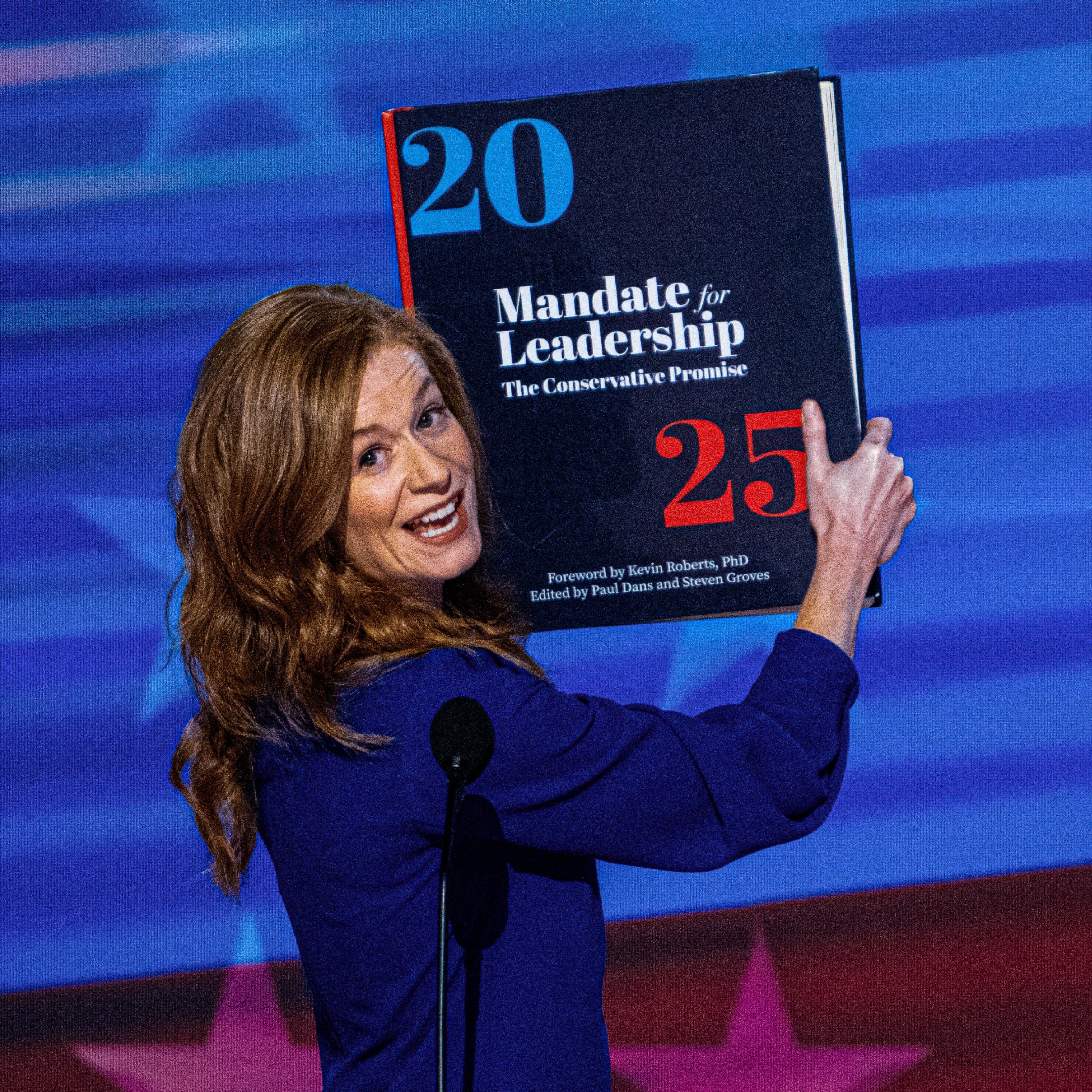
Spearheaded by the Heritage foundation, this 900 plus page document was was a roadmap for consolidating executive power under a future conservative president. Democrats warned it would lead to authoritarianism. Some Republicans tried to steer clear of it. Even then, candidate Donald Trump claimed he didn't know anything about it. But Project 2025 has endured, and today many of its ideas and policies, like mass deportations, the replacement of federal workers with Trump loyalists, and the elimination of DEI initiatives, have been embraced by the president. Today's guest is David A. Graham, a staff writer at the Atlantic who's gone deep reading and analyzing Project 2025. His book is called the How Project 2025 is Reshaping America. David, thank you so much for being here today.
- [03:08]
David A. Graham
Thank you for having me.
- [03:09]
Host
So what was the impetus for Writing Project 2025?
- [03:13]
Al Letson
And had anything like this been done before?
- [03:16]
David A. Graham
There have been things like this. So, in fact, the Heritage foundation has been doing things almost every four years when they put together a document that became really important for the Reagan administration, sort of setting the government shrinking, deregulatory agenda for Reagan. But I think this one is different. It's different in its ambition. It's different in the way it also has a big sort of personnel component outside of the document. And I think where it came from was this sense in the time after Trump left office in 2021 that the right had squandered a big opportunity. On the one hand, they saw in Trump's election proof that you could really win with an agenda that was much to the right of what anyone thought was possible, but also implementation execution for Trump, one had been a mess. And so they felt like if they got back in office, they wanted to be able to take advantage of the moment and be much more effective and push through these ideas that they suddenly found were politically possible if you had a good plan to make them happen.
- [04:19]
Al Letson
So when I think about Project 2025, it feels like it's sort of about dismantling American institutions. I don't know if you would agree with that, but it feels like maybe that's not the actual goal, but that's what's happening.
- [04:35]
David A. Graham
I think that is also an explicit goal. I think at the heart of all of this is a vision of society. They want this Christian conservative vision of society, and the way that they want to achieve that is by dismantling the many of the institutions of government as we know them and then using what's left and sort of reorienting it to create that Christian society that they envision.
- [04:56]
Al Letson
When Trump was campaigning in 2024, he said he had nothing to do with Project 2025. Why do you think he was trying to distance himself from it instead of embrace it? Because that's the thing he's doing right now. Right?
- [05:08]
David A. Graham
Right. I mean, I think there's two things. One is vanity. Trump hates the idea that somebody else is in charge, and whenever there's sort of that implication that someone's the puppet master, he to get upset. We saw this when he fired Steve Bannon in 2017. But I also think the bigger problem is it was a political liability. When people Learned about Project 2025 and the things in it, they didn't like.
- [05:32]
Al Letson
It so why has he embraced it? Because I can't speak to whether Trump or not is actually a Christian. But what I can speak to, the fact is that I would say that he doesn't actually live his life in a moral fashion. And so therefore, the idea of deconstructing American institutions with the ultimate goal of creating this, I don't know, Christian nationalist state, I don't understand why he would want that, because it doesn't really seem like he's in line with that way of thought.
- [06:09]
David A. Graham
Yeah, totally. I mean, if you look at somebody like J.D. vance, I think he's much more aligned with the kind of ideas here. I think it's a symbiosis thing. Trump cares about very few things. He cares about tariffs, he cares about immigration. He cares about retribution. And everything else I think is not really that important to him. And they care a lot about those other things. And so they both get something in Trump. They get somebody who will bring them into the mainstream and allow them to achieve these things. What Trump gets is control over the Justice Department, revenge on the deep state, the ability to get a lot of things done that he felt like he couldn't do in the first term. And he gets people who are really loyal to his agenda in the White House, which is something that he felt he was really lacking in the first time. So they both kind of win. He gets the short term win, and they're thinking on a longer schedule.
- [06:58]
Al Letson
What do you think is the most significant part of Project 2025 that they have been able to implement so far?
- [07:04]
David A. Graham
I think the kind of attack on the government as we know it, the sort of grab for the executive branch attack on the administrative state, has been really incredibly successful. So we've seen the Justice Department acting basically as a political wing of the White House, going after political opponents. We saw in December the Supreme Court hearing a case basically on whether Trump can fire anybody at regulatory agencies like the ftc, fec, fcc. And we don't know where that will land exactly, but already the court has allowed him to do a lot of those things. We've seen him moving to close the Education Department again, with the Supreme Court basically allowing that. We've seen mass layoffs of civil servants. So just across the board, he's taking control of the executive branch, getting rid of the things he doesn't want, and that allows them to flex a lot of political muscle for the rest of his term.
- [07:55]
Al Letson
It's interesting because as you bring all of that up, basically when you look at the Supreme Court and you look at who is on the Supreme Court and the Heritage foundation standing behind all of these candidates. And I'm thinking about Amy Comey Barrett, I'm thinking about Samuel Alito, Brett Kavanaugh, all of those Supreme Court judges. The Heritage foundation was behind them and pushing them.
- [08:19]
David A. Graham
So I think there's two things. On the one hand, there is this long running conservative push to create a Supreme Court and lower courts that will, you know, work alongside a conservative agenda. And so that's really important to these things working. And in the text of Project 2025, you have this kind of embedded assumption that the Supreme Court is going to approve the things they want to do, or this idea where there are laws that prevent things they want to do, they want to challenge the laws because they think the Supreme Court will rule them unconstitutional. So that I think is a really long term project. There is an interesting shift that I think is important, which is, you know, even 20 years ago, you saw the Heritage foundation being concerned about executive power, being concerned about big government, being concerned about sort of coercive government. And what I see in this is an embrace of really coercive government. You know, this is not Ronald Reagan stuff. It's how can we seize the government and make people do what we want, you know, achieve our social goals, force cities and states to do what we want, force the Congress to do what we want. And so that embrace of power, I think is a little bit new. And what we see is that, you know, the malleability of the conservative movement, where those judges who they have been working to get in place for a long time are now, for the most part rubber stamping these things.
- [09:36]
Host
So when Musk was leading doge, we saw agencies and departments be completely eliminated or diminished. I'm thinking, for example, usaid, Centers for Disease Control, Health and Human Services, when it comes to Project 2025, what was the end goal by stripping down these departments?
- [09:56]
David A. Graham
I think that they, they end up in the same place through a little bit different approaches. I mean, in the case of usaid, the concern is they want to pull back from the world. They don't think that the US should be spending money abroad. And I should say there's an element of Project 2025 that says we should keep us aid, but we should use it more strategically to push goals like anti abortion planning outside the US for example, and to counter China. But generally they want to reduce that stuff because they don't think we should be as involved in the world. They want to attack the cdc. I mean, it's a Couple things. There's a little bit of concern about, you know, revolving door between pharma companies and regulators, but I think a lot of it is this trauma from the pandemic where they're really, really furious that the CDC closed churches on Easter in 2020. And that has just, like. It's not something that I feel like I hear a lot about, but it's clearly a really important thing for them. And then hhs, I mean, I guess one line through this is a terror about wokeness. So they talk a lot about wokeness and dei, and they don't define what they mean by wokeness, but clearly they see, like, reaching out outside the US to underdeveloped nations. That is wokeness. Pushing for trans rights, that is wokeness. Allowing abortions. That is wokeness. All of these things fall under this umbrella, and they want to do anything they can to push back on that because they're, you know, they see the America that they. They imagine sort of slipping from their grasp.
- [11:29]
Al Letson
That's so interesting about the pandemic, Easter and the rage about that, because I'd never heard that before. Yeah. So you think the architects of Project 2025 were really affected by that? Yeah.
- [11:42]
David A. Graham
I mean, the guy who wrote the chapter on HHS is this guy, Roger Severino, who worked in the Trump administration and had previously worked at Dojo, and he writes with a lot of passion about this. I mean, this sense that public health authorities were interfering with the exercise of religion is something that they find really effective.
- [12:04]
Al Letson
It's like they don't really believe what science is telling us is happening with our bodies and also with the environment that we live in.
- [12:14]
David A. Graham
Well, and with the environment, it's not only that they don't believe it, it's that they don't want science to be telling us those things.
- [12:21]
Al Letson
Right.
- [12:22]
David A. Graham
I mean, there's this, like, you know, attack on scientific funding, you know, in the private, like federal funding for education, you know, for universities doing research. But also they want to cut back on research done by the federal government. They want to, you know, drastically reduce what the federal government does to track weather, to research weather, to find things. And it's because they object to research on climate change.
- [12:44]
Al Letson
Fundamentally, I think that there was a time when there was a moment, like five years ago where you saw people on the right saying that climate change is real. They disagreed about where it came from, but they said climate change was real. And now it feels like we're just not there anymore. We've taken steps backwards.
- [13:04]
David A. Graham
What I find really weird in the way they talk about it is they don't outright deny it, they just kind of ignore it.
- [13:09]
Al Letson
Yeah.
- [13:10]
David A. Graham
And there's this sort of like hand wavy. Like well, if it's real, it's a better problem for the private sector to handle. We think businesses will take care of it and the government shouldn't be in the business of handling that, which is a pretty wild way to think about a global issue.
- [13:25]
Al Letson
The other thing that's shocking to me is the cuts to Noah. And also like, I understand that for some reason, like there's always been a weird line of anger towards fema, but yeah, like these cutbacks to these two organizations that keep Americans safe, that help us understand like what is weather wise, like what's coming. And then after it's come with FEMA helping us recover from it. What do you think is behind that?
- [13:56]
David A. Graham
I think Noah ends up sort of at a bad intersection. And you know, female. You know, I, I am a generally defender of FEMA per se. I understand they're often unpopular. Noah's really popular. But what happens here is there's two things. One is they object to NOAA producing forecasts that deal with climate change. They feel things like the National Hurricane center are basically like climate change activism. And also it intersects with a long running right wing desire to privatize a lot of parts of the government. So there has been a push on the right for years now to get the government out of the business of doing forecasts. So, you know, we have these forecasts. They are done on the public dime. They're made available to the public and they would like these things to be done privately for profit.
- [14:49]
Al Letson
So much of Project 2025 and a lot of the talking points on the right around privatization is really about taking public money and moving it into private hands.
- [15:06]
David A. Graham
Yeah, I mean, I think the, the best example of that is education, where they understand that federal funding for education is really important. But they believe that the Education Department is a bloated bureaucracy and that it's pushing wokeness and that it's, you know, doing all of these things. And so they would like a system where the federal government sends money to states and states can spend that on education however they want. And what they really want is to get the US out of public education. They would like a system that's publicly funded for private education. Whether that's religious, private, whatever it is, that is the system that they want. But you see that kind of privatization I think in other places too.
- [15:44]
Host
Coming up on more to the story. Will a future Democratic president be able to undo Project 2025.
- [15:51]
David A. Graham
I think a lot of it is not reversible. I think that a Democrat is going to have to rethink the way the government works.
- [16:00]
Host
More on that in just a moment.
- [16:01]
Al Letson
But first, I want to remind you.
- [16:03]
Host
That there is a really easy way that you can keep up with all the important work we're doing here at Reveal. You can sign up for our free newsletter. Just go to revealnews.org newsletter to receive your weekly email reminding you about all of our good reporting. We have to stay connected now more than ever. Okay, we'll be back soon with my guest, David A. Graham. This is more to the story. I'm Al Letson, and I'm back with writer David A. Graham. So immigration and border control are major pillars of Project 2025, and we're now seeing the mass deportations and ICE is now a huge law enforcement agency. What is the end game here?
- [16:53]
David A. Graham
The end game is a whiter America, I think, fundamentally. And this is something you see not just in Project 2025, but in, you know, other associated things in the Trump national security strategy that came out at the end of the year also, you see this sort of thing. There's this idea that we need to keep American culture pure or purer. And so they would like to keep people out who are not don't fit with their vision and not just keep them out, but also push out the ones who are here. So it's, you know, you want to close the border, you want mass deportations, and you want to make it harder to come in on other visas, whether those are humanitarian visas or educational visas, whatever it is, they just want to sort of like close off the borders.
- [17:37]
Al Letson
I mean, is it, is it fair to call Project 2025 a guidebook for white supremacy?
- [17:44]
David A. Graham
You know, they would object to that.
- [17:47]
Al Letson
They'd object to this whole conversation.
- [17:49]
David A. Graham
But some of it they would, and some of it they wouldn't. I mean, I think that there are things where they'd say, yeah, no, that's what, you know, we want a Christian nationalist society. You know, there's this the way that Russell Vogt was in an interview a couple years ago said, yeah, I mean, the left calls me a Christian nationalist. They mean that as a pejorative. But I own that. I think that's an accurate description. And there are places where they talk about policy that would be more race neutral. But you look at their immigration policy, you look at the obsession with wokeness and DEI and you see not only those obsessions but like a desire to push back on the entire kind of civil rights apparatus in this country. So to take the Equal Employment Opportunity Commission and turn it into a vehicle for complaints of anti Christian discrimination, to get rid of gender discrimination and racial discrimination claims, you see a desire to take the civil rights section of the Justice Department and turn it away from enforcing voter suppression laws and use it instead to pursue bogus claims of voter fraud. So across the board, I mean, it's not just these. They talk about supposed overreach from the left in recent years, but it's very clear that their agenda for dismantling civil rights protections and creating a venue for white supremacy goes back decades.
- [19:04]
Al Letson
Yeah. So what impact did Project 2025 have on the big beautiful bill? Like, what are the changes to health, welfare and social services policy that come straight from this handbook?
- [19:17]
David A. Graham
You know, the general approach here is, as it has been on the right for a long time, to cut down on what the government provides. They want to make Medicaid skimpier and more private. They want to reduce Medicare, certainly. And so you see so many of those cuts in the one big beautiful bill, it's a drawdown on benefits. And not only for, you know, some of these things, I think, very clearly target their political opponents. Some of these things are targeting the kinds of people who voted for Trump. I mean, there's reductions to rural health. We're seeing hospitals closing in places all over the place because of the one big beautiful bill. We're seeing people unable to get services because of these cuts. And that is part of, I think, the, you know, the long term goal of dismantling the sort of social safety net that has existed since the 60s.
- [20:03]
Host
I mean, that's just so interesting to me, because poor white Christians will also be greatly affected by cuts to social services.
- [20:15]
David A. Graham
That's exactly right. And again, they sort of hand wave that they want private institutions or churches to take that work on. But I don't think there's any evidence that that is a no, that's not gonna fill a hole. I mean, this is one reason some of these things were unpopular. And one reason Trump needed to distance himself from them is that they were unpopular not just with Democrats and independents, they were unpopular with people in his base. This is a guy who ran for office in 2016 promising to protect things like Social Security, Medicare and Medicaid. And so these cuts are maybe not a surprise, but they do go back on what he ran for office saying.
- [20:53]
Al Letson
You just said that, like, all of this was unpopular before he was elected. And now that we are seeing the plan implemented, it feels like they're even more unpopular, that the citizens of America are seeing the destruction of their institutions and the safety net and are feeling like, yeah, no, this is not working for me.
- [21:19]
David A. Graham
Yeah, that's right. I was really fascinated looking at polling in the fall of 2024 where people hated the things in Project 2025, but just didn't believe that Trump would actually do them. Like they seemed too far fetched or too politically unpopular and they just didn't think that they would happen. And now we see them happening and people do hate it. And I mean, honestly, I think they still, I don't think a lot of these things are well understood. Direct cuts to things like entitlements are visible. People are feeling that people are seeing immigration raids. I don't think that the effects of having regulatory agencies under the thumb of the White House as political arms. So many of these agencies go directly into the way we live our lives. They're like what we see on tv, they're how we interact with people in our workplace. They affect things like union rights, they affect campaign finance. There's all these really direct effects and we haven't really felt those yet because the legal battles are ongoing. But we're going to see Trump seize control over those things and start reaching into people's lives. And I think it will become even more unpopular once people see that.
- [22:27]
Al Letson
If you know that all of these moves you're making are going to be really unpopular, what's your game plan for staying in power if you turn most of the populace against your agenda?
- [22:41]
David A. Graham
Right. They have this really apocalyptic vision of the world. You know, they think that we're, they say we're living in a post constitutional moment. They say that we're in the last stages of a Marxist takeover, which is not what it looks like to me. But, but that's the sense they have. And I think that that leads them to do things that are sort of, you know, they lead them to drastic measures. So they're like, we know these things are unpopular, but we have to do this to save America. And, and it's our last chance at the Christian America.
- [23:11]
Al Letson
We want this plan, Project 2025. Did they plan to use it with Trump or was this an idea? Was this like a white paper that would be pulled out when they had another, like, let's say in four more years. J.D. vance is the guy and they can apply this to him. Cuz JD Vance would be disciplined about it. I think that pulling this in and you Give it to Trump. You're gonn a lot of the things that you want, but Trump is also gonna freestyle and do what he wants.
- [23:43]
David A. Graham
Totally.
- [23:43]
Al Letson
You can't control that.
- [23:44]
David A. Graham
Yeah. When they wrote it, Trump was not yet the nominee and in fact he looks a little bit like he might lose. But it's hard to imagine it working as well as it has for Trump. Just cuz Trump has this hold over Congress, this ability to bully Republicans and make things happen. But they are thinking on a much longer schedule than Trump. I mean this is not a four year thing. And I think Vance is the, the person who maybe most embodies their kind of ideas. You know, it's Christian nationalism, pronatalism. I think Vance is a much more ideological non interventionist than Trump is, as we've seen from the sort of neo imperialism in the first year. And so I think they would love to see somebody like a Vance as president and that would kind of be the ultimate realization of their goals.
- [24:27]
Al Letson
Yeah. What percentage of Project 2025's goals do you think have been achieved so far?
- [24:35]
David A. Graham
I have struggled with this one, like how to quantify it. There's such a mix of tiny little mechanical things and huge sweeping ideas. There's a lot of things they haven't done. I think about something like abortion, where they have a really aggressive plan to get rid of abortion or get as far as they can along that. We haven't seen anything along those lines. If you look in some of the kind of lesser known departments, you don't see the things they're doing. You don't see the Fed being abolished, you don't see the gold standard. Their progress in taking control of the executive branch and dismantling the administrative state has been so fast that I think it will allow them to do a lot of the things they want to do in the coming years. So that kind of big conceptual idea I think is so important. I think it's maybe ahead of where they thought they would be at this stage when they wrote the plan.
- [25:24]
Al Letson
And it seems like because Trump is doing whatever he wants to do with his edicts that he puts out and it seems like the Supreme Court is lining up to give him even more power. I don't know for the long term of this country. And if you're in politics, the long term, that doesn't seem very smart because eventually we will have a Democratic president that comes in and he gets to use all those tools as well.
- [25:50]
David A. Graham
Exactly. Yeah. It's very strange to see the two other branches giving up their Checks and balances basically willingly. And it does feel really short sighted. I still don't totally understand how, how the architects of Project 2025 thought about that and, and you know, what they expect would happen. Some of their arguments for presidential power are based in these, you know, very constitutional arguments. You know, it's like, it's not about politics. It's about the principle that anything in the executive branch should come under the control of the President. And you're like, that is on face a really nonpartisan argument, but you're really going to hate that with a Democrat. And you know, we saw the kind of fury, I mean, just to take a really minor example, Joe Biden trying to forgive student loans, we saw the kind of fury we saw on the right over that. And we see much more aggressive uses of executive power coming with just a shrug.
- [26:42]
Al Letson
Yep, yep. That being said, what is in your opinion, from the things that have been implemented in Project 2025, what is reversible? What's gonna happen when a Democrat comes into power and he's got in his eyes this mess that 2025 has created?
- [27:06]
David A. Graham
It's a really good question. I think a lot of it is not reversible. I think that a Democrat is going to have to rethink the way the government works. If the president has control over regulatory agencies, then they need to function a different way. And that's, you know, that's a problem for Congress. Congress. If the laws that have enabled agencies to function independently are unconstitutional, then Congress needs to write new laws to do that. It's relatively easy for a new president to, for example, reestablish the independence of the Justice Department or to add funding to some of these departments that have been cut. But rehiring tens of thousands of civil servants, I mean, these programs are gone. These people who've moved on to new jobs, they're not going to trust that the government is a reliable employer anymore. So I think these are really long term things and I think they're gonna force a rethinking no matter who comes to power next. There's no going back to January 19, 2025. It has to be more forward looking.
- [28:04]
Al Letson
Is there any sort of blueprint being written on the left in response to Project 2025?
- [28:10]
David A. Graham
You know, there are a bunch of people who are talking about how to create like a progressive project 2029, for example. And my impression has been that they are not on the same scale. I mean, I think there's a couple things that makes this notable. One is it's kind of politics blind. You know, we talked about how these things are unpopular and many of the left to center ideas are focused on like who are the voters we need to win rather than starting with a worldview and like how you build from that. So it's a little bit backwards in that sense. I think it's really important that any response is not just what are the policies we want, but how do we achieve them? Because that is one of the things that worked so well here. They had a bunch of policies, but they also had a plan for making them happen and they have been really successful in that. So I think any response has to take those things into account and has to think about it more from a sort of again, what is the worldview that we want rather than who are the voters we want to win?
- [29:07]
Al Letson
Finally, what parts of Project 2025 haven't happened yet that you think might be coming up in 2026?
- [29:15]
David A. Graham
I still have my eye on abortion and it's been a little bit pushed to the side, both because it's not a priority for RFK Jr. And Trump has decided that it's not politically expedient. But it's just so important to the authors. They would like a national ban on abortion. Failing that, they want to withdraw, you know, approval for medical abortion pills. They want to make it impossible to send them through the mail. They want a sort of massive surveillance operation for abortion at the state level. All of these things are, you know, they're going to keep pushing for that because it's so important to them. I think there is still work they would like to do on cutting taxes. Further, there is work they would like to do on opening up more oil and gas drilling and cutting back on renewable energy. Those are the kind of the places that I think are most likely to happen soonest. Those are the ones I would look for.
- [30:06]
Al Letson
David A. Graham is a staff writer at the Atlantic. David, thank you so much for coming on and talking to me today.
- [30:11]
David A. Graham
Oh, thank you. I really appreciate it.
- [30:16]
Host
That was David A. Graham. You can read more of his work at the Atlantic. His book is the how Project 2025 is reshaping America.
- [30:24]
Al Letson
If you liked this episode, you should.
- [30:26]
Host
Check out the reveal episode, the EEOC's Identity Crisis. It features some of those people who.
- [30:32]
Al Letson
Were fired by the Trump administration and what the anti DEI movement meant for.
- [30:37]
Host
The agency that historically protected them.
- [30:41]
Al Letson
Lastly, we are listener supported. That means listeners like you, you can.
- [30:45]
Host
Help us thrive by making a gift today. Just go to revealnews.org gift again. That's revealnews.org gift and thank you. This episode was produced by members of the Justice Society, Josh sanburn and Kara McGurk.
- [30:59]
Al Letson
Allison Taki Telenides edited the show theme music and engineering, helped by Fernando, my.
- [31:04]
Host
Man Yo Aruda and Jay Breezy. Mr. Jim Briggs.
- [31:07]
Al Letson
I'm Al Letson and you know, let's do this again next week.
- [31:11]
Host
This is more to the story.
- [31:29]
Al Letson
From prx.