Loading summary
Transcript36 lines
- [00:02]
Dr. Ibram X. Kendi
Ultimately, we should be striving to be anti racist, which is to say we should be actively seeking to confront the structure of racism while recognizing that if we do nothing in the face of the status quo of racial inequity, then that racial inequity and injustice will persist.
- [00:22]
Al Letson
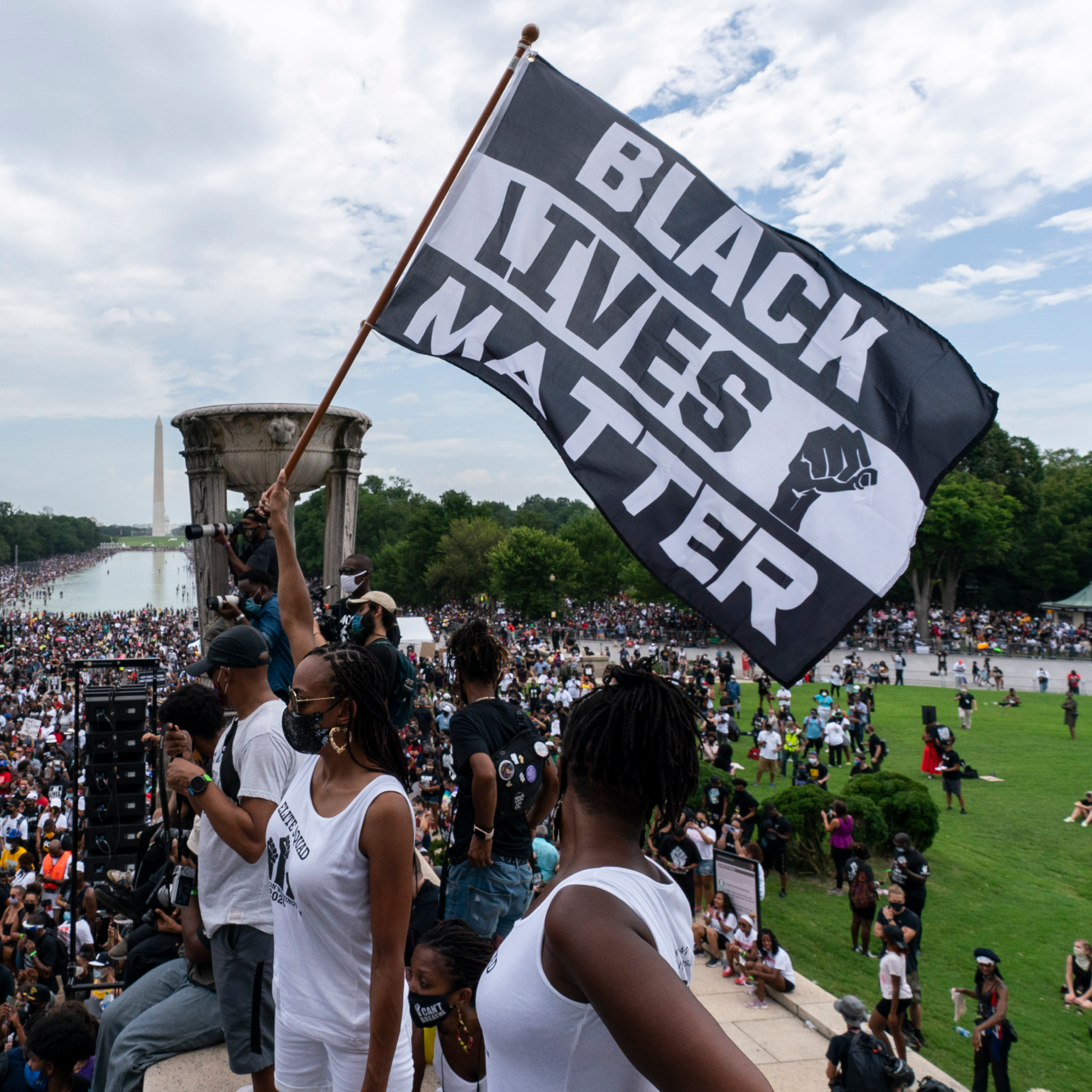
Coming up on More to the story. Dr. Ibram X. Kendi, author of the popular book how to Be an Anti Racist, joins me to talk about the persistence of racial inequality, his upcoming work with Howard University and sharing the story of Malcolm X with young readers. Don't go anywhere. This is More to the Story. I'm Al Letson. It was just a few years ago when Dr. Ibram X Kendi seemed to be everywhere. At the height of the Black Lives Matter movement, Kendi became a sought after voice on racism and particularly anti racism. But as a backlash grew over DEI initiatives and critical race theory, the movement itself came under attack. And so did Kendi. In particular, he was accused of financially mismanaging an anti racism center he founded at Boston University, which raised $55 million by but closed its doors. Last month. He was cleared by the university of any wrongdoing. Later this year, Kendi will head up another academic project, this time at Howard University, and he's responding to some of the criticism he's faced head on. Dr. Kendi, how are you doing?
- [01:44]
Dr. Ibram X. Kendi
I'm well. How are you?
- [01:45]
Al Letson
I'm good. I'm good. I'm really excited to talk to you.
- [01:48]
Dr. Ibram X. Kendi
Thank you for having me.
- [01:49]
Al Letson
So I was first introduced to your work when I read your 2019 book, how to Be an Anti Racist. Now, I had never heard that term anti racist before. It was a new way of looking at how to address racism. For those who haven't had a chance to read it, what does it mean to be an anti racist?
- [02:06]
Dr. Ibram X. Kendi
Well, the book and what I try to show through my research is that the true opposite of racist is not racist. It is anti racist that historically and even in our moment, typically people who self identify as not racist, they do so largely after they just did or said something that was racist. It's also the case that the term not racist is a term that's widely used without a definition. So I actually have yet to see somebody actually define clearly what it means to be not racist. And then thirdly, the reason why anti racist is the true opposite of racist is because most people understand, for instance, that a racist idea is a notion that suggests racial hierarchy, that a particular group, racial group is superior to another racial group or inferior. What's the opposite of Hierarchy, equality, there's a true opposite. And anti racist ideas suggest racial equality, that no racial group is superior or inferior. If a racist policy is yielding racial inequity between groups, what's the opposite of that? A policy that yields racial equity? It's a clear opposite. And so I've tried to show that we should be supporting anti racist policies that lead to racial equity. We should be expressing ideas, anti racist ideas about racial equality. And ultimately we should be striving to be anti racist, which is to say we should be actively seeking to confront the structure of racism while recognizing that if we do nothing in the face of the status quo of racial inequity, then that racial inequity and injustice will persist. And those who are seeking to conserve that status quo want the rest of us to do nothing. Like that's literally the goal of racist ideas, to convince us that there's no problem other than, let's say, black people. And so that's why being anti racist is an action, it's an active term, it's an active sort of practice. While being racist could be active or even passive, you just do nothing and allow racism to persist.
- [04:41]
Al Letson
I guess the thing that I'm thinking about a lot is when you talk about race in America, what triggers a lot of white people, at least the white people that I've spoken to specifically on this topic, is that they feel like they have worked extremely hard for the things that they have. And when you tell them that there's another group of people who have had it harder and some of them have come from very hard circumstances, like I remember someone talking years ago about, like, try explaining white privilege to people who are living in Appalachia with nothing. And so I'm wondering, like, how do we bridge that gap?
- [05:22]
Dr. Ibram X. Kendi
One of the ways in which those of us who study racism, one of the findings and one of the things we've tried to show in recent years, and I certainly showed this in a chapter called White in my book how to Be an anti racist. Heather McGee has written about this in a book called the. There's another book called Dying of Whiteness by Jonathan Metzl. And the through line between these three sort of books is really showing through evidence the ways in which it is the case that white people benefit more, let's say, than peoples of color from racist policies and practices. But what we've also shown is that white people would actually benefit even more from anti racist policies and practices. In other words, white people are less likely to be disenfranchised because of the series of voter suppression policies that have been instituted in this country in the last few years, frankly, since the undermining of the Voting Rights act, you know, in 2013, it's less likely for them to, you know, struggle to vote. But that doesn't mean that there are not white people that are still struggling to vote, particularly white people who are students, particularly white people who are poor, particularly white people who are senior citizens. And so a truly equitable and anti racist electoral policy that would make it easy for all of us to vote would actually make it easier for more white people to vote, just as it would make it easier for people of color to vote. The current system benefits white people more than it does people of color, but an actual truly equitable policy would benefit us all. One of the things we're trying, let's say, to show white people is that Donald Trump is not an aberration, which is to say a person who is trying to say to white people, I am your defender when his actual policies are harming the majority of white people and people of color is not an aberration. That's racism in and of itself.
- [07:44]
Al Letson
Yeah. So I wanna move on to your work and where it's been and where it's going. And you founded the center for Anti Racist Research at Boston University and you just closed up shop. So there have been reports that there was some mismanagement and the university said that the investigation found no evidence of wrongdoing. Can you kind of walk us through what happened? Because it was a really big deal when you opened up the center.
- [08:12]
Dr. Ibram X. Kendi
Well, I mean, what happened is we created a Center for Anti Racist Research and it was founded in 2020 and in the middle of the pandemic, in the middle of the so called racial reckoning. And so of course, we had really ambitious ideas for our center and we started receiving resources and hiring people and pursuing projects. And by 2021, especially 2022 and 2023, a lot of the support we were receiving had started to get dried up. And at the same time, the attacks on so called critical race theory and so called wokeism and so called DEI was picking up tremendously. And of course we as a center became the subject of that. And frankly, if you're a black leader, chances are somebody have claimed that you mismanaged something, because apparently black leaders, we can't manage anything. And so, you know, it wasn't surprising that for me or anyone who sort of studies racism, that those allegations surfaced. And just as it wasn't surprising to us when ultimately it was investigated and I. In our center, there was really no wrongdoing.
- [09:36]
Al Letson
Can you talk to me about, like, what it feels like to be in the center of the storm? I've actually, like, on social media at times, like, been the subject of conversation, but nowhere near the amount of being in the eye of the storm that you've been in. And I imagine having a center like this in a time when basically we're at the start, at least when you're saying what's going on. It was at the start of what I consider a blacklash, where people were tired of hearing about anti racist policies. They were tired of 16, 19, and they're tired of it because they're being pushed by provocateurs to look at this as like it's a bad thing and it's harming the country. So what is it like to be in the center of the storm while that's all going on?
- [10:27]
Dr. Ibram X. Kendi
I think ultimately the biggest challenge of being at the center of a storm is not taking it personally that ultimately.
- [10:39]
Al Letson
Oh my God, how do you do that? Like, I don't know how to do that.
- [10:42]
Dr. Ibram X. Kendi
Yeah, I mean, it's incredibly hard to not do. But ultimately, even by 2020, the major talking point that emerged to really undermine those of us who were engaged in anti racist work was actually an old white nationalist talking point, which essentially was that anti racist is code for anti white. And so those of us who were striving for racial justice, who are striving for equal opportunity, who are striving for equity, we were misrepresented as striving to somehow arm white people or take away opportunities, you know, or resources for them. And that was purposeful because there was an attempt to anger white Americans and to manipulate them into somehow seeing that all these efforts are going to harm them as opposed to, as we talked about earlier, help them, just as it was going to help, you know, peoples of color. And so I became one of the. The sort of faces of that. And again, I had to figure out a way to know that this had nothing to do with me, that even as my name was being used, my image was being used. Anyone who had read my work could know that I was being misrepresented. And so at the time, I really had to trust readers. I had to trust people who consumed my work. And I had to also, again, not take it personally. But it was very difficult because there was people who hated me who never read my work. And it was pretty obvious by the things that they said. The other part of it that I think is less talked about is so there's not only a lot of these attacks coming from people who want to conserve racism, but then there's also people who, who have been challenging racism, who personally want to be the person in the spotlight and they take issue with anyone who is in the spotlight. There's a certain level of envy there as well. And so when you're in the spotlight, particularly in this context, you not only get attacked, bad faith attacks by people who want to conserve racism, but even bad faith attacks by people who claim they want to challenge racism because they didn't enter this arena truly committed to the eradication of racism. They entered the arena because they're interested in fame and resources. And then those who are in the spotlight, they project themselves onto those people. So that's also incredibly difficult. And it's particularly difficult when those persons I'm speaking about are black.
- [13:38]
Al Letson
Coming up, Ibram says, we are in a battle for the future of the United States.
- [13:42]
Dr. Ibram X. Kendi
And the battle is, you know, between equality and inequality, you know, between justice and injustice, between democracy and dictatorship. And we all have to figure out what side of that battle that we're going to be on.
- [13:58]
Al Letson
Before we get back to. More with Dr. Ibram X. Candi, the reporting we do here at Reveal often points out systematic injustice. We do that because we believe the world can be better and we're trying to give you the tools to make it so, whether it's through our in depth reporting or sharing thoughtful conversations. I hope since you're listening, that you've come to appreciate that now one of the ways that you can show your support is by going to revealnews.org gift again, that's revealnews.org gift gift. We couldn't do this without you. All right, thank you. And more with Dr. Ibram X Kendi. Coming up.
- [14:40]
C
Following the Project 2025 playbook to the letter, the Christian nationalists wielding government power are systematically erasing millions upon millions of us from federal laws, government programs, and any other form of basic recognition. While these outrageous attacks add up daily, it's important to know organizations are fighting back to defend every individual's rights and freedoms. Americans United for Separation of Church and State is one of those organizations. AU is doubling down on fighting back against Christian nationalism in the courts and the public square. And this summer, they need your help more than ever. During the month of July, one of AU's progressive supporters created a dollar for dollar match for their Freedom Without Favor fund. This fund was established to support au's legal and policy work over the next four years as they continue the fight to end Christian nationalism and support every individual's right to live as they choose, so long as they don't harm others. Join the fight by donating today. Visit au.org reveal to become a member of AU and fight back.
- [15:59]
Dr. Ibram X. Kendi
Hi y'.
- [15:59]
Al Letson
All, My name is Nadir Hamdan and I'm a producer here at Reveal. Reveal is a non profit news organization and we depend on support from our listeners. Donate today@revealnews.org donate and thanks. This is more to the story. I'm Al Letson and I'm talking with Dr. Ibram X Kendi. So now you're heading back to D.C. you're going to Howard University and you're launching a new institute there. So what are you hoping for with this new institute?
- [16:40]
Dr. Ibram X. Kendi
Well, I'm just first and foremost, I feel like this is a full circle moment for me personally, because I really started my journey to be an intellectual at Florida A and M University, you know, at an historically black university. And I don't know if I would have embarked on that journey if I had not been in that space. And so to be able to return to Howard University, to be able to work very closely with Howard faculty and students and alumni, to be able to be in a space where there's a long history of nurturing scholars like me who study racism is something I'm incredibly excited about. And to be there with other again, scholars whose work I've studied and admired for a long time, I'm just really excited about the prospects.
- [17:47]
Al Letson
Yeah. So I grew up in Jacksonville, Florida, so I'm a big Rattlers fan. So going to Howard University and your work primarily is in anti racism, I'm just wondering how do you adapt that for a school that is celebrating their blackness? I think that the beautiful things about HBCUs is that in many way the world of America, the world that like rejects blackness, is on the outside of those campus walls. Right. And on the inside of that campus is nothing but, you know, love and nurturing for these young black minds moving forward. And so like anti racism is definitely something to be talked about there, but it's different than being at bu, isn't it?
- [18:35]
Dr. Ibram X. Kendi
So I think the way that I have conceived of being anti racist and let me actually even return to how to be an Anti Racist, most of that book, which is largely a story of my journey, my journey of internalizing anti black racist ideas and ultimately how I was able to begin to liberate myself from those ideas and strive to be anti racist Most of that book is actually set in black spaces, is actually set in which I'm interacting with other black people. And there are multiple chapters in that book on FAMU and in which sort of I talk about how at FAMU I experienced and witnessed colorism. How, you know, at FAMU I experienced and witnessed beliefs that certain groups, ethnic groups, black ethnic groups, were better or worse than others. And how I went on to another black space in African American studies and found that there were certain views that black men were better than black women or had it worse. And so I mention that because even within black spaces, there may be a general consensus that there's nothing inferior about black people in general. But that doesn't necessarily mean there's a recognition that there's nothing inferior about any group of black people, whether they're dark skinned black people or black women or black poor people or Haitian Americans or African Americans. And so I've always, through my work on being anti racist and ensured that being anti racist was something that black people most importantly needed to do. And so I'm excited to really show that and convey that and codify that in a black space like Howard.
- [20:47]
Al Letson
Yeah. I want to take a few minutes to really dive into your new book. So let's talk about Malcolm Lives. How important was it to introduce Malcolm X to young readers for you? I would tell you that for me personally, reading the autobiography of Malcolm X literally changed my life. I remember when I read it, I was in middle school, the book had been around. I don't know if you remember, but the book had, the autobiography had a painted cover with a black background of Malcolm X on it. It was such a beautiful book. And I remember seeing it around the house. And I picked it up one day and just started reading it and it literally shifted the trajectory of my life. So when I heard that you were writing this new book, Malcolm Lives for Young Readers, I was just immediately excited.
- [21:39]
Dr. Ibram X. Kendi
Yeah. And frankly, what's striking about Malcolm is so many people like you have been completely transformed by reading his autobiography or others of other people have been transformed by people who were transformed by reading about the autobiography. And so Malcolm's story is truly transformational. And why should young people have to wait until, let's say they're in high school to be able to be transformed too, by Malcolm's story, by Malcolm's ideas. And so that's one of the reasons why I thought it was critically important to write Malcolm Lives and to write it for young people so that they can be transformed, just like we have.
- [22:28]
Al Letson
Yeah, I still remember going to see Spike Lee's movie Malcolm X, which I will argue with anybody, is the greatest American biopic ever. And that's all I have to say. But again, watching his life and taking in the lessons and the turns that his life made, it sounds like your book is kind of concentrating on his life after he came back from his trip to the Middle east and Africa, is that right?
- [22:59]
Dr. Ibram X. Kendi
So it certainly, you know, it narrates certainly its transformation, you know, after coming back from Mecca, after recognizing and realizing that there was that Nation of Islam theology that white people could not be Muslim and that they were inherently evil, that that simply was not true because he came across many white Muslims, you know, in Mecca and came across white people who treated him equitably and equally. And so him realizing racial equality, obviously, and narrating how he came to that and also how he came to the importance of Pan African, global black solidarity through meetings that he had with leaders of African states, newly decolonized African nations, was absolutely pivotal. And I think it was also pivotal in Malcolm Lives to show the ways in which, as a young person, everything that he went through, which you can't really understand Malcolm as an adult, you can't really understand Malcolm as this revolutionary who's become so clear and audacious in his challenge to global white supremacy and racism without understanding the ways in which he was impacted by those structures as a young person constantly and consistently. And so I also wanted young people to see that and learn about that.
- [24:31]
Al Letson
I mean, yeah, you can't understand Malcolm X unless you understand Malcolm Little. And than understanding El Hajj Malik El Shabazz. It's like the whole trajectory of it.
- [24:42]
Dr. Ibram X. Kendi
Definitely.
- [24:43]
Al Letson
Last question for you, and this is a big one. Given that you are a historian, a public thinker, you've studied these movements for a very long time. Where do you think we're going?
- [24:56]
Dr. Ibram X. Kendi
So I think we're headed for. I think this moment is actually quite similar to moments like the 1870s or even the 1920s in American history. And these are moments in which you had very powerful racist forces who were seeking to eliminate policies and practices and ideas that had been created to bring about more democracy and equity and equality. And so we're literally right now in a very pitched battle for the future of justice in the United States and frankly, around the world. And so it's hard to say where we're going, but I can say what the battle is. And the battle is between equality and inequality, between justice and injustice, between democracy and dictatorship, and we all have to figure out what side of that battle that we're gonna be on.
- [26:03]
Al Letson
Yeah. Dr. Ibram X Kendi, thank you so much for coming in and talking to me today.
- [26:08]
Dr. Ibram X. Kendi
Of course. Thank you for having me.
- [26:14]
Al Letson
That was Dr. Ibram X Candi. We'll leave a link in our show notes to his new book, Malcolm Lives. If you like this episode, I think you should check out the reveal episode Black in the Sunshine State where I return to my hometown in Florida to find out how much things have really changed after Governor Ron DeSantis so called war on Woke. Lastly, to keep up with everything we're doing here, sign up for our free newsletter by going to revealnews.org newsletter and we'll send you the latest from our newsroom in a weekly email. That's revealnews.org newsletter. This episode was produced by Josh Sanburn and Carl McGurk Allison, edited by Taki Telenitas and the theme music and engineering help by Fernando My Man Yo Aruda and Jay Breezy. Mr. Jim Briggs, I'm Al Letson and you know, let's do this again next week. This is more to the story.
- [27:18]
Dr. Ibram X. Kendi
From PRX.