Loading summary
Transcript182 lines
- [00:01]
Podcast Host / Narrator
Today's episode is sponsored by Strawberry Me. Let's be honest. Are you happy with your job? Like, really happy? The unfortunate fact is that a huge number of people can't say yes to that. Far too many of us are stuck in a job we've outgrown or one we never wanted in the first place. But still, we stick it out and we give reasons, like, what if the next move is even worse? Or I've already put years into this place and maybe the most common one. Isn't everyone kind of miserable at work? But there's a difference between reasons for staying and excuses for not leaving. It's time to get unstuck. It's time for Strawberry Me. They match you with a certified career coach who helps you go from where you are to where you actually want to be. Your coach helps you get clear on your goals, create a plan, build your confidence and keeps you accountable along the way. So don't leave your career to chance. Take action and own your future. With a professional coach in your corner. Go to Strawberry Me Future to claim a special offer. That's Strawberry Me Future. This show is supported by Blueland. You've probably heard that most of us are eating a credit card's worth of plastics every week, but you probably don't know that you're cleaning with microplastics every day. It's time to make the switch to Blueland. Blueland is on a mission to make it easy for everyone to make sustainable choices, from cleaning sprays and toilet bowl cleaner to dishwasher and laundry detergent tablets. Blueland's formulas are 100% microplastic free, made with certified clean ingredients and free from chlorine, bleach and harsh chemicals. All Blueland cleaning products are safe to use around your family, your pets, your plants. Plus, Blueland was named an EPA's Safer Choice Partner of the Year, so they're good for the planet as well. Blueland is trusted in over 1 million homes by people who love not having to choose between the safe option and what actually gets their home clean. Blueland has a special offer for listeners right now. Get 15% off your first order by going to blueland.com prx make the switch to Blueland now by going to blueland.Com prx for 15% off. That's blueland.com prx to get 15% off.
- [02:20]
Al Letson
Hey, this is Al, and I'm sure it is no surprise to you that President Trump doesn't like us very much. He called the press the enemy of the people. Credentialed journalists have been banned from press briefings just for asking tough questions. Trump personally sued news networks, demanding billions. And now, at his urging, Congress has voted to gut all, all federal funding for public broadcasting. And I think I know why. I think we all do. It's because real journalism brings sunlight, scrutiny, accountability. When power feels threatened, it lashes out. And that tells you just how vital independent reporting is. Right now here at Reveal, we don't answer to billionaires or politicians or special interests. We only answer to you, our listeners. But we can't do this alone. Stand with us. Support fearless independent journalism that refuses to back down. Donate today. Just visit revealnews.org fearless again. That's revealnews.org fearless. Thanks. From the center for Investigative Reporting and PRX, this is Reveal. I'm Al Ledsen. Chelli Moyes was expecting this call.
- [03:35]
Ted Genoese
Hey, Chellie, it's Ted Genoise.
- [03:37]
Chelli Moyes
Hey, man, how's it going?
- [03:39]
Al Letson
Ted is a reporter with the Food and Environment Reporting Network, and he's been trying to reach chelli for almost 24 hours, ever since he heard the news out of the Trump administration.
- [03:50]
Chelli Moyes
I can tell you, honestly, this is. This is the first time I feel like, you know, this is really happening for real.
- [03:58]
Al Letson
Chelli is Haitian and has what's called Temporary Protected Status, or tps. It gives Chelli the right to live and work in the US Legally because Haiti is considered too dangerous to go back to. But on February 20, all of that changed.
- [04:13]
Ted Genoese
Now, despite the ongoing violence in their home country, the Trump administration is canceling an extension of Temporary Protected status for half a million Haitians.
- [04:23]
Al Letson
Haiti has been in turmoil for centuries. It's suffered through colonialism, harsh dictators, natural disasters, including a devastating earthquake in 2010 that it never fully recovered from. Food and water is still scarce, and over the last several years, more than 15,000 people have been killed in gang violence. It's led many Haitians to flee the country. Chelli was one of them. He nearly died after being shot in the chest during a robbery. The situation in Haiti felt dire.
- [04:54]
Chelli Moyes
So I was thinking maybe because they know what is going on in Haiti, it's not logically possible to just, you know, cancel TPS for the Haitians.
- [05:02]
Al Letson
Jelly says he doesn't know anyone who is planning to leave the country, at least not willingly.
- [05:07]
Chelli Moyes
I don't think no one is going to get on a plane and say, hey, I'm going back home. I don't think this is going to happen. I think people are going to try everything but live in this country unless they get arrested.
- [05:18]
Mackensen Remy
By ice.
- [05:20]
Al Letson
Chelly knows a lot of Haitians. That's because he's a union representative for workers at one of the largest meat packing plants in the country. It's owned by jbs, the largest meat producer in the world. At one point, not so long ago, the union says the plant in Greeley employed more than 1200 Haitian migrants, just over a third of the workforce. The company has been accused of trafficking these workers, luring them in with a promise of good jobs and a place to live. Instead, the work was dangerous and the living conditions harsh.
- [05:53]
Ted Genoese
Immigrants at a meatpacking plant in Greeley say they were victims of a bait and switch scheme.
- [05:59]
Al Letson
Shelley says he saw firsthand how people were being treated. It's why he left JBS and started working at the union that represents the workers to try and fight back and improve conditions. And they had made some gains bringing national attention to the situation and forcing the company to respond. But now, after going through all of that, the workers are among the more than 300,000 Haitians who could be forced out of the U.S. we're talking about.
- [06:26]
Chelli Moyes
Haitians that had TPS since 2010.
- [06:29]
Al Letson
We first told you about these Haitian workers back in February, when President Trump had just taken office for his second term. And so much has changed since then that we decided to revisit that episode and update you about what's happened to start. Ted Genoaes of the Food and Environment Reporting Network reminds us how these people ended up working at a meatpacking plant in the first place.
- [06:54]
Ted Genoese
It all started with a TikTok video.
- [06:59]
Mackensen Remy
I said good news for good news because I got an assurance when you're coming, you're gonna have a job.
- [07:07]
Ted Genoese
The man in the video is Mackenzie Remy. Mackensen is originally from Haiti. He's in his 30s, with braided hair and a thin beard. He's been living in the US for almost a decade now and moved to Colorado in 2023. At that time, he began making TikTok videos about job openings in the area for his few followers, mostly other Haitians. None of them got that much attention until this one. The video opens with Mackensen driving through the parking lot of a huge meat packing plant, speaking in his native creol. There are industrial truck beds, people wearing hard hats and reflective vests, and a giant red and white logo on the side of the building reads, JBS that job.
- [07:52]
Mackensen Remy
They pay good. They pay like 22 and $23 an hour.
- [08:01]
Ted Genoese
Meatpacking work is hard, and Mackensen makes it clear in the video. He tells his followers to this isn't a job for lazy people or people who don't like the cold, he adds. Speaking English is not a job requirement. And if his followers come, MacKenzie says he even knows a place for them to stay. So if you're interested, I say you.
- [08:30]
Mackensen Remy
Can text me, tell me when you want to come, because I already know if you come, you can have a job.
- [08:36]
Ted Genoese
Mackensen posted the video that night, and when he woke up the next morning morning.
- [08:40]
Mackensen Remy
The video has been viral.
- [08:43]
Ted Genoese
It had gone viral. Less than a year after posting that video, Chelli's union, the United Food and Commercial Workers Local 7, would issue a formal complaint to the government accusing Mackensen and JBS of human trafficking. I've found that to keep its profits high, JBS has a track record of recruiting new immigrants who are desperate for work in the United States. And over the last 20 years, the company has been the subject of more than 100 lawsuits, EEOC complaints, and government investigations over its working conditions. Mackensen says he didn't know very much about JBS when he made the TikTok video. Everything he shared with his followers, he says he learned from Edmond Iba.
- [09:34]
Chelli Moyes
My name is Edmond Iba. I'm from Benin, West Africa. I work at JBS plant in Greeley in Colorado.
- [09:42]
Ted Genoese
This is a promo video of Edmund posted to the JBS Facebook page.
- [09:46]
Chelli Moyes
There is nothing I can say make my world hard because I'm happy to do what I'm doing.
- [09:52]
Ted Genoese
Lots of soft focus and slow motion. It cuts from scene to scene. Edmund driving a van. Edmund walking through the plant. Edmund making coffee. Then it ends with Edmund sitting in an office.
- [10:04]
Chelli Moyes
I played to HR cause I speak seven languages and I can help people come to work for dbs.
- [10:13]
Ted Genoese
The video fades to white text appears saying quote, edmund has helped more than 30 people find a new life path with JBS USA now, speaking seven languages is never not an asset for any job. But it's especially useful at JBS because nearly all the people Edmund has hired are immigrants. There are over 3,000 employees working at the plant in Greeley, and the union representing those employees says between 80 and 90% are immigrants. JBS is hardly unique. Nationally, the meatpacking industry is overwhelmingly dependent on immigrant labor. But Mackensen didn't know this. He says he was even a little surprised when he first met Edmund.
- [11:01]
Mackensen Remy
So when I meet him it's like I think he's a white guy. He's like, oh you look at my people? He said, yeah, so I'm from Benin. I Said, oh, nice. I'm from Haiti.
- [11:12]
Ted Genoese
Mackensen met Edmund the same day he made the video, and Edmund told him they had 60 jobs on the line available. Job slaughtering, butchering, and packaging the meat. He's also the one who told Mackensen about the pay, the benefits, and the fact that workers didn't need to speak English. MacKenzien's other videos on TikTok got maybe a few dozen views at most. The one he posted about the JBS job had 35,000 views the next day. And the messages started pouring in. This was way more people than expected. And there are only 60 positions available. So he texts Edmund.
- [11:56]
Mackensen Remy
I sent this screenshot for him, show him how many people watch the video.
- [12:00]
Ted Genoese
But he says Edmund didn't seem at all fazed. He just gave Mackensen a new number of available positions.
- [12:08]
Mackensen Remy
He said even like 100 or 200 people, he can help them out.
- [12:14]
Ted Genoese
This surprised Mackensen, but it doesn't surprise me. Turnover in the meatpacking industry is incredibly high. An estimated 40% each year. That's because the work is grueling and extremely dangerous. That's been the case since the earliest days of industrial meatpacking at the turn of the 20th century. People burn out and are injured all the time. But the Haitians who responded to Mackensen needed work and were enticed by the high pay. Plus, Mackensen had said he could help them find a place to stay. But he had never expected this kind of response.
- [12:52]
Mackensen Remy
I just scared because when I see a lot of people text me, and I didn't know where they're gonna live.
- [12:58]
Ted Genoese
So soon he gets a text from Edmund promising that the new hires will be staying at a motel near the plant for two weeks free of charge.
- [13:07]
Mackensen Remy
So after I remember, he called me, he said, hey, listen, we got a place for them. Don't worry. Let them come. Let them come.
- [13:17]
Ted Genoese
And so they came.
- [13:19]
Mackensen Remy
Hey, my boss. I'm with the guy. I'm waiting for the other one. I'm at the airport right now.
- [13:24]
Ted Genoese
This is a voice memo Mackensen sent to Edmund from the Denver airport. It was December 2023, and he was picking up some of the first Haitians to arrive.
- [13:34]
Mackensen Remy
Boss, you see the last guy I sent it to? This is him. Ticket. He's already booked the ticket.
- [13:40]
Ted Genoese
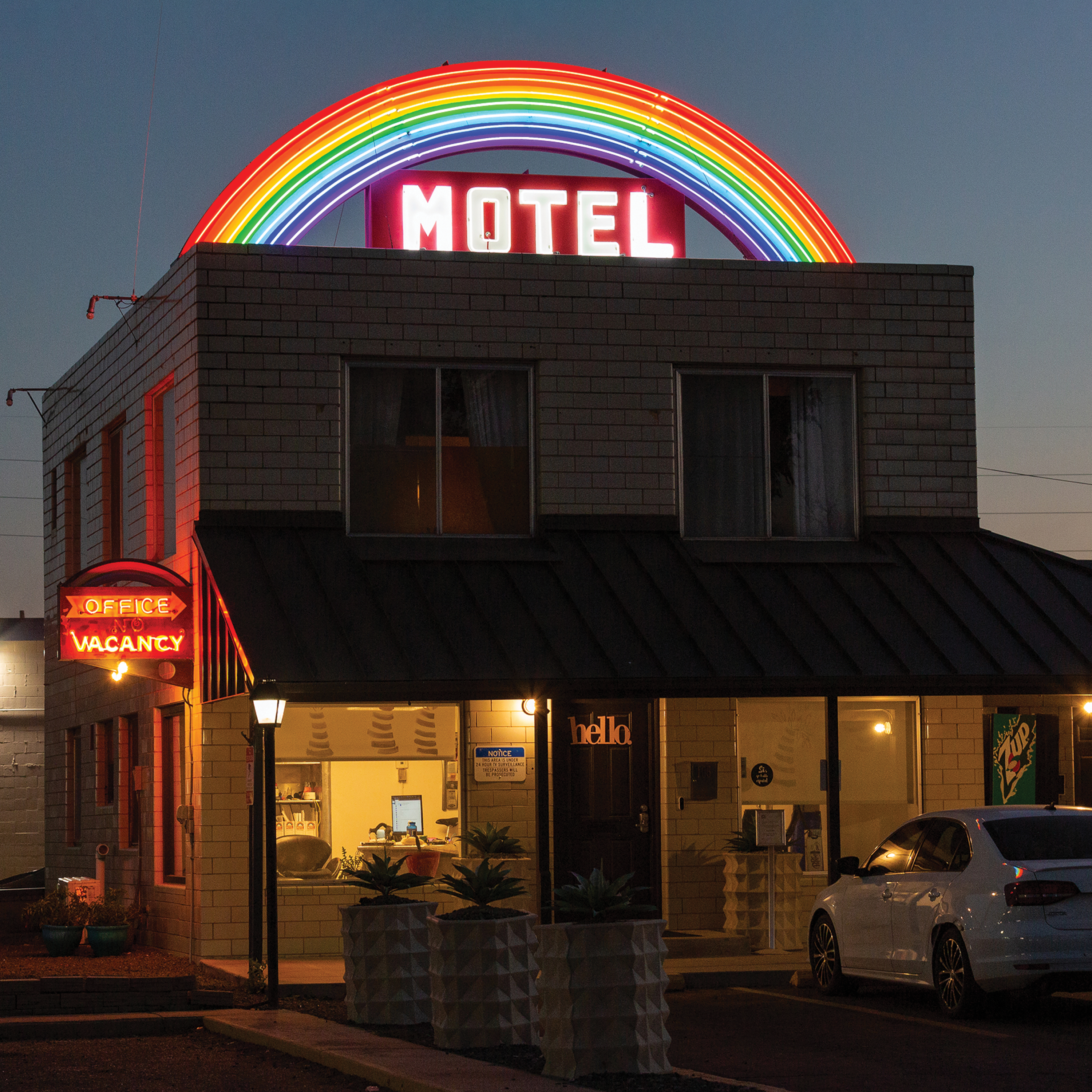
Edmund directed him to bring everyone to a place called the Rainbow Motel. It sits right off a highway about a mile from the JBS plant. Much like other budget motels, there's not much to it. Tiny rooms, mismatched furniture, some Plastic chairs out front, no pool, but there is a fenced off square of Astroturf. And yes, there is a neon rainbow on the roof. There were dozens of Haitians who came to Greeley that first month. And Mackensen quickly became their point person for almost everything. Mackensen says he would sometimes stick around Greeley for a few days to drive people to get anything they needed. Food from Walmart, coats from Goodwill. It was becoming a lot, boss.
- [14:25]
Mackensen Remy
This quake is hard for me, boss. It's hard. I have to explain everything with them.
- [14:32]
Ted Genoese
Here's another one of those voice memos to Edmund.
- [14:34]
Mackensen Remy
A lot of people want to come in this job, man. I got people, boy. I told you I'm an influenceable. That's why they trust me, bro. They really Trust me, bro.
- [14:45]
Ted Genoese
MacKenzie says he would charge each person he picked up at the Denver Airport $120 to make the two and a half hour trip from Greeley and back. He also charged for the rides to Walmart and Goodwill. But Mackensen said what he really wanted was to be hired by jbs. And he asked Edmund to connect him with his boss.
- [15:04]
Mackensen Remy
He said, okay, no problem, be patient. When the second group came, I talked to him about the same thing. He told me the same thing. You have to be patient.
- [15:16]
Ted Genoese
And were you being paid by jbs?
- [15:19]
Mackensen Remy
Nothing. JPS never paid me for anything.
- [15:22]
Ted Genoese
And still people kept coming. A hundred, two hundred more. Even though Mackensen was frustrated with Edmund and jbs, he kept telling himself that at the end of the day he was doing something good. Helping his fellow Haitians find a better life. People like Auguste, that's not his real name. We've given him an alias because he's worried about retaliation from JBS. Auguste came to the US from Haiti in 2023. He calls it an epic experience. And by all accounts it was. He first flew to Brazil in March 2023 and set off north, traveling across 10 different countries. The journey included crossing the Darien Gap, a 60 mile expanse of thick rainforest at the Colombia Panama border. Auguste walked thousands of miles. He says he slept on the jungle floor, woken up by the sounds of wild animals in the night. August tells me he was always on guard because people warned him of armed thieves along the way who would rob people or worse. And then of course, there were the dead. August says he saw bodies along the way of people who would never finish the journey. It took a month, but he finally made it to Mexico, whereal Ghost immediately applied to enter the US legally via temporary protected status. Tps for short. It's a rigorous process. He was fingerprinted as part of a background check. His cheek was swabbed for medical screening. Finally, his application was approved. August entered the US in the spring of 2023. Today there are more than 200,000 Haitians in the US under TPS, making them one of the largest groups with that status. Auguste spent six months waiting for work authorization, often going hungry. But Auguste tells me it's easier to live without food than it is without hope. Then he heard about Mackensen's video.
- [18:05]
Chelli Moyes
Do you want to do an anti talk?
- [18:07]
Ted Genoese
He was living in Baltimore and struggling to find work. A friend of his already moved to Greeley and got hired by jbs. He told Auguste the job was legit. So Auguste decided to go to. When he arrived in Colorado, he was taken straight to the Rainbow Motel. The room was pretty small, just big enough to walk around. A full size bed, one bathroom, no closet, a mini fridge. And to his surprise, owgoost learned he would be sharing this room. He tells me there were five, six, seven, sometimes eight people in one room. August was sleeping on the floor. He tells me it was hard to live this way. And when was that?
- [19:04]
Chelli Moyes
December 2023.
- [19:06]
Ted Genoese
That's celly translating for Auguste. We're sitting together in an office at the union. Celi never lived at the Rainbow Motel, but he saw what was happening there.
- [19:18]
Chelli Moyes
Well, me, I wasn't, I would say not a victim of the process, but I was a direct witnessed to the process.
- [19:25]
Ted Genoese
It's part of the reason he left his job at JBS and went to work for the union instead.
- [19:31]
Chelli Moyes
This is very. This is extremely bad. When you go to the Rainbow Motel and you have eight people inside of one little motel room with one bed, one bathroom, women and men at the same time. So no privacy. And when people have to use the bathroom, it was a very bad situation.
- [19:52]
Ted Genoese
There was also nowhere to make food. The motel was off a busy highway with no grocery stores, no restaurants, nothing around for miles.
- [20:02]
Chelli Moyes
We've had people saying I was starving for two to three days because I don't know where to go get food.
- [20:10]
Ted Genoese
The people brought to live in the Rainbow Motel were in a strange place with little to no money. Many didn't speak English. Plus it was December and freezing outside. Chelli says people felt stranded. The motel has 17 rooms, and at the peak, Mackensen counted over a hundred Haitians staying there at once. It got so packed at one point that Chelli says Edmund was forced to rent a house nearby. But conditions there weren't any better.
- [20:39]
Chelli Moyes
And there were around 40 people living inside of the house. I'm seeing people sleeping on the floor, on a blanket, people everywhere. And at some point, they didn't have electricity in the house. And it was winter.
- [20:53]
Ted Genoese
August was one of the people living there. After a week and a half in the motel, he spent five months in this unfurnished house. People living there were charged $60 to $70 a week. But he says at least in the house, they had a kitchen. There may be a line of people waiting to use it, but at least it was there. Meanwhile, Auguste and his housemates were still expected to go to work. These jobs are essentially like working on a disassembly line, like a standard factory run in reverse. The whole cow walks off the back of a cattle trailer and is slaughtered, then broken down into steaks and roasts and ribs and hamburger meat. This work is done with things like power knives and bone saws, tools meant to cut flesh and bone. It's no surprise that this can lead to injuries. I've talked to dozens of people over my career who have lost fingers or had hands crushed by grinders. I remember one man who was a gut snatcher, which is exactly what it sounds like. The gut snatcher pulls all the guts out of the animal, while the spine splitter cuts through the vertebrae with a bone saw. But this time, they got out of sync. The spine splitter went too soon, and the gut snatcher lost four of his fingers. Stories like these are common across the industry. According to data from the Occupational Safety and Health Administration, osha, jobs at meatpacking and poultry companies are consistently among the most dangerous. Workers at JBS and their union say the speed of the line make serious injuries like amputation more commonplace. But the profits that companies like JBS make depend on how much meat they remove and how fast. Around the same time this new crop of Haitian workers was hired, JBS had introduced its aptly named White Bone program.
- [23:01]
Kim Cordova
This is a program where the company is trying to do is get as much of the meat and product off of a bone. It's literally like a white bone.
- [23:11]
Ted Genoese
This is Kim Cordova, president of UFCW7, the Greeley plant union. She says the white Bone program meant more cutting, more repetition, more exertion, and all at a dizzying speed.
- [23:23]
Kim Cordova
The line speeds were really increasing to line speeds we had never seen before.
- [23:28]
Ted Genoese
Almost all of the Haitian workers were put on the same evening shift from about 2 to 11pm B shift. And Chelli says B shift had faster speeds than the day shift.
- [23:40]
Chelli Moyes
Way fast. I mean we have people that have been working at the plant for 10, 15 years and they can tell us they have never seen any change.
- [23:47]
Ted Genoese
Speed going over 390, that's 390 head of cattle per hour. Typically, workers on the day shift rarely saw speeds above 300 per hour.
- [23:59]
Chelli Moyes
But right now you're having 420. At some point we had 430.
- [24:04]
Ted Genoese
That's roughly 35,000 cows a week.
- [24:08]
Kim Cordova
And workers are really put at risk for their safety because it is so fast.
- [24:16]
Ted Genoese
Kim says people were getting injured. Union members were going to JBS management almost every day telling them to slow things down because this wasn't safe.
- [24:28]
Chelli Moyes
And sometimes they would, you know, bring it from 4:20 to 4:10, which is still unacceptable.
- [24:34]
Ted Genoese
And it wasn't just the chain speed.
- [24:37]
Kim Cordova
This new group of workers were being forced to sign documents in languages that they don't speak in English actually that waived their rights or abandoned their injury claims.
- [24:49]
Ted Genoese
Workers medical cards were being kept from them.
- [24:51]
Kim Cordova
Medical bills not being paid.
- [24:53]
Ted Genoese
Workers mail was being withheld.
- [24:55]
Kim Cordova
The supervisor had total control of their US mail.
- [24:59]
Ted Genoese
Haitians were being treated differently than other workers.
- [25:02]
Chelli Moyes
If I ask for a break to go to the bathroom, I will not get it.
- [25:06]
Ted Genoese
Meanwhile, Auguste and his fellow Haitians would go back to a so called home with little to no food, a line for the bathroom and only the floor to sleep on. Algos tells me every day at work he couldn't help but notice that each cow had its own little cage. But he was expected to share a tiny space with 5, 6, 7, 8 of his co workers. It was darkly ironic, but he found himself thinking the cows had it better. What does that make you think as you see that the cows are treated better than the workers.
- [26:06]
Chelli Moyes
See, I mean he even made me think about the past. I feel like I was being treated as a slave. If we need to take a break, we can.
- [26:21]
Al Letson
Coming up, JBS is forced to respond.
- [26:24]
Ted Genoese
I mean they told the union that they'd never heard the name Mackensen, that they didn't believe that there was such a person.
- [26:32]
Mackensen Remy
So they lie. They lie.
- [26:35]
Al Letson
That's up next on Reveal.
- [26:51]
Podcast Host / Narrator
This show is supported by Uncommon Goods. Uncommon Goods makes holiday shopping stress free and joyful with thousands of one of a kind gifts you can't find anywhere else. So shop early, have fun and cross some names off your list today. To get 15% off your next gift, go to UncommonGoods.com revealed. That's UncommonGoods.com revealed. For 15% off. Don't miss out on this limited time offer Uncommon goods. We are all out of the ordinary.
- [27:25]
Ted Genoese
Hi, y'. All.
- [27:25]
Podcast Host / Narrator
My name is Nadia Hamdan, and I'm a producer here at Reveal. Reveal is a nonprofit news organization, and we depend on support from our listeners. Donate today@revealnews.org donate and thanks.
- [27:46]
Al Letson
From the center for Investigative Reporting and PRX. This is Reveal. I'm Al Letson. In September 2024, JBS made national news. The Wall Street Journal published a story about a new wave of Haitian workers at JBS and the terrible living conditions they found in Greeley, Colorado. The headline read, life for Haitian immigrants, jobs nobody wants, and sleeping on the floor. Makissin Remy was featured heavily throughout alongside allegations of exploitation from the very Haitians he thought he was helping.
- [28:23]
Mackensen Remy
Those Haitians, most of them, they hate me. They think I make money from them.
- [28:30]
Al Letson
Some workers allege that Maguson was working for JBS and getting paid for how many people he brought to Greeley.
- [28:38]
Mackensen Remy
Some of them, they said, GBS, give me $3,000 for each of them. Each of them.
- [28:43]
Al Letson
Maguson denies all of this.
- [28:45]
Mackensen Remy
I charge people to take them at the airport, and I charge people if they need services. I didn't charge anyone for job. No, I'm not a criminal.
- [28:58]
Al Letson
MacKenzie says he was following directions from Edmund Eba, the HR supervisor with JBS. Edmond was the one who told him to bring people to the Rainbow Motel. Mackenson doesn't deny knowing how many people were packed in each room, but he says he never heard anyone complain, at least not to him. But dozens of complaints were made to the UFCW 7, the union representing the JBS plant in Greeley. And now Mackenson's name was in the news alongside all those allegations.
- [29:34]
Mackensen Remy
I just like doing that for my people. I didn't get money from anyone. You know, when they see me, they talk very bad about me. It's very stressful for me.
- [29:48]
Al Letson
Ted Genoese, a reporter with the Food and Environment Reporting Network, has been covering the meatpacking industry for over a decade. In that time, he's watched JBS get sued again and again for allegations of workplace discrimination, wage suppression, and unfair hiring practices. All the while, JBS continues to grow dramatically. The company made $77 billion in 2024. Here's Ted again.
- [30:20]
Ted Genoese
The union had raised concerns to JBS about the squalid living conditions long before the Wall Street Journal article came out. JBS had told the UFCW7 that it was investigating, but the union didn't hear anything for months. But now, with these allegations made public, JBS was forced to respond. So, as I'm sure you know, JBS claims that they had no knowledge of this system.
- [30:48]
Chelli Moyes
I've seen that.
- [30:49]
Ted Genoese
This is Chelli Moyce again, the Union rep with UFCW7, the spokesperson from JBS.
- [30:55]
Chelli Moyes
That said, any allegation are completely unacceptable. This is the exact word that I think I've seen online.
- [31:03]
Ted Genoese
Here are the exact words that a spokeswoman for JBS sent in an email to the Wall Street Journal. She said the company found, quote, reports about living conditions unacceptable and alarming.
- [31:15]
Chelli Moyes
What exactly is unacceptable? Is it the allegations or the actual situation that was going on in that.
- [31:22]
Ted Genoese
Same email to the Wall Street Wall Street Journal, JBS says it wants all of its employees to have access to safe housing. The company fired the two HR managers above Edmund, and Edmund was moved to a different facility. The company says it also put in new training programs to teach employees about proper recruitment. JBS maintains that their leadership didn't know what was happening at the Rainbow Motel, something Chelli finds really hard to believe.
- [31:50]
Chelli Moyes
It is really hard for anyone from JBS to deny what was happening when they had someone from that plan supervising those people every day, assigning them room, and, you know, filling our application for them. It's really hard for you to deny when you're directly involved like that.
- [32:07]
Ted Genoese
I've seen the texts to Mackensen that prove at least Edmund knew.
- [32:12]
Mackensen Remy
If GBS said they didn't know anything about the motel, they lie. I got the text message from Edmund.
- [32:20]
Ted Genoese
Edmund asked Mackensen, who was being checked into the Rainbow Motel. Mackensen replied with five, six names to a room. At one point, in January 2024, Mackinson sent a list of nearly 50 people staying in nine rooms. But after the Wall Street Journal article came out, Edmond abruptly cut ties with Mackensen. I tried to reach Edmund many times, even dropping by his house. Edmund, I'm Ted Genaways. This is my wife Maryann. We were just hoping to talk to you for a few minutes if you've got time.
- [32:57]
Chelli Moyes
I gave you a text message. I'm gonna respond to you.
- [33:00]
Ted Genoese
Trust me.
- [33:00]
Chelli Moyes
We will have a conversation.
- [33:03]
Ted Genoese
He never got back to me and instead directed me to a company spokesperson. JBS did eventually send me a short email in response to the many questions I sent them from my reporting. Their statement repeats much of what they sent the Journal. They want all employees to have access to safe housing. They've hired new HR leaders and put in place new recruitment training programs. The company says they've taken the situation very seriously, but ultimately deny Any involvement. JBS says it conducted two separate investigations and, quote, no substantiated evidence was provided that tied Edmund, EBA or company leadership to the claims outlined by the union. They did not respond to the fact that I've seen the text messages and phone calls between Edmund and Mackensen. JBS just underscored that Mackensen never worked for the company. And after the, quote, alarming allegations came out, they say they banned him from the plant in response to the reports of dangerously fast line speeds. JBS simply said it follows the law. The email ends with quote, at jbs, we have best in class workforce eligibility, safety and compliance standards. But the union is still demanding answers. Here's Kim Cordova again, President of the UFCW 7.
- [34:29]
Kim Cordova
We have been dealing with what we believe is human trafficking and exploitation of these workers.
- [34:36]
Ted Genoese
In 2024, the union filed complaints with the Occupational Safety and Health Administration, OSHA and the National Labor Relations Board alleging exactly that. Kim says these Haitian migrants at JBS were brought here under false pretenses. They were promised a job and a place to stay. But the job wasn't just hard, it was unsafe. And this wasn't proper housing. They were sleeping on the floor of a tiny motel room with a bunch of strangers sharing one bathroom and little to no food. The complaint calls this abuse of workers. And it says that JBS investigations into this treatment were a whitewash. And Kim believes she knows how we got here.
- [35:21]
Kim Cordova
I mean, the one thing Covid did was shed the light on what I call the dark secret of the packing industry. You know, it exposed everything.
- [35:30]
Ted Genoese
Back during the pandemic, US Meatworkers were considered essential. After meatpacking plants across the country were forced to close, then President Trump ordered them to reopen. And so, even though the JBS plant in Greeley didn't have Covid safety protocols in place, it brought workers back to the line. OSHA fined JBS for, quote, failing to protect employees from exposure to the coronavirus. If you watched last week tonight, you probably heard John Oliver talk about it back then. After six workers from a JBS plant in Colorado died from COVID the company's total fine was just $15,000. But $15,000 was just.00003% of the company's revenue at the time. And if you find a company a fraction of a percent of their profits, don't be surprised when they carry on only giving a fraction of a about the welfare of their workers. Kim says this started a huge fight between the company and its workers.
- [36:33]
Kim Cordova
We started to see workers Mobilize, stand up, fight back. There were walk offs, not just here, but around the country. Workers were not going to die for their job.
- [36:44]
Ted Genoese
This not only led to more personal protective equipment, it also led to a new contract. The union had pressed the CEO for higher wages and better benefits and won.
- [36:55]
Kim Cordova
And workers got stronger, in my opinion, and I think that that's what has sparked some of the change.
- [37:02]
Ted Genoese
Kim says shortly after they renegotiated that contract with the CEO, he retired and was replaced. Then came a wave of firings among union workers. Then came the White Bone program and hundreds of brand new Haitian workers. The UFCW7 complaint to the Department of Labor says the plant increased chain speeds to dangerously unsafe levels. When these workers occupied the line, you.
- [37:29]
Kim Cordova
Know, in our opinion, they needed a new group of workers to come in so that they had more control over them, especially to work at this high speed.
- [37:39]
Ted Genoese
Chelli says he thinks the company just saw an opportunity and took it.
- [37:43]
Chelli Moyes
Big companies like that, one of the first goal is to make money. And unfortunately, most of the time, it doesn't matter how this money is made, it doesn't matter what cost.
- [37:58]
Ted Genoese
August still works at jbs. After about six months, he was able to save enough money to move into his own place with his own bed and bathroom. But it all comes with a cost. As far as we know, the White Bone program is still going on. And Auguste told me he can no longer fully close his left hand, an injury he believes is a result of his work being too fast and too repetitive. Despite everything, though, August says he's still glad to be here because his life is stable now and he just hopes things continue to get better. Then came the second Trump administration.
- [38:48]
Al Letson
We will begin the largest deportation operation in American history.
- [38:53]
Ted Genoese
On the campaign trail, Trump promised to deport an unprecedented 15 to 20 million people and said he would direct federal agencies to go after undocumented immigrants. But he also promised to go after immigrants here legally by ending programs like temporary protected status. So you would revoke the temporary protected status?
- [39:15]
Al Letson
Absolutely, I'd revoke it and I'd bring them back to their country.
- [39:19]
Chelli Moyes
Going back to Haiti is a death sentence. Really. The biggest issue is not the deportation itself. The biggest issue is what is going to happen after the deportation. Because most of us, not to say all of us, we left the country obviously because it was very bad. And, you know, you're talking to some members at the plant and they are telling you, man, my cousin just got killed today, and my family members, they just burned some house. So. So it's getting worse every day. You really don't know where it's going to get. It's really bad.
- [39:51]
Ted Genoese
The New York Times has been tracking deportations and has found that the Trump administration is on pace to deport more than 400,000 people this year. While that's far less than Trump's campaign trail promise, the government's tactics are disrupting communities across the country. And a lot of what's happening is unprecedented. There have been aggressive immigration raids in the recent past, but they usually focused on workplaces like meatpacking plants. Federal officials said today that yesterday's immigration raids at six meatpacking plants were the largest workplace crackdown ever. In May of 2006, then President George W. Bush addressed the nation with promises of a new immigration policy. Part of that policy was to find and deport undocumented workers. And on December 12th of that year, he made good on that promise. Immigration and Customs Enforcement carried out a coordinated raid of meatpacking plants across the middle of the country. They were all run by Swift and Company, the world's second largest beef producer at the time. Armed ICE officers arrested and deported nearly 1,300 undocumented workers, workers at these plants. Here's Mark Lauritsen, then vice president of the ufcw, speaking with PBS at the time. One small community, the school district still held 25 children, some as young as 6 years old, because their parents were not around to pick them up. They were in a bus someplace to points unknown. The Swift plants were located all across the country. Places like Cactus, Texas, Grand Island, North Nebraska, Marshalltown, Iowa, and Greeley, Colorado. In the Greeley plant alone, two hundred and twenty undocumented workers were detained. After the raid, production came to a screeching halt. And though they were able to get things moving again, it was never back at the level it was before the raids. Within a year, Swift was forced to shut down and sell the plant. The buyer, jbs. And now you have to wonder, will JBS and the thousands of immigrants it employs meet a similar fate?
- [42:06]
Kim Cordova
This workforce is an immigrant workforce.
- [42:09]
Ted Genoese
Union president Kim Cordova. Again, she says at one point, there were 57 languages spoken at the Greeley plant alone.
- [42:17]
Kim Cordova
JBS is the largest food producer in the world. The industry would would collapse without these type of workers.
- [42:24]
Ted Genoese
The Trump campaign promised it would lower grocery prices, but deporting the workforce that meatpackers depend on would halt processing at every stage of the supply chain, from feedlots to the packing house floor. This would drive up prices for Big Macs and Outback steaks. But also for chicken breasts and pork chops at grocery stores. That's why deporting all these people doesn't make any sense.
- [42:48]
Chelli Moyes
I feel like us, the immigrants, we are a good part of the economy. Like I say, most of the jobs that we are doing, people who are born in this country are not in line to do those jobs. I mean, they're not actively looking to do those jobs.
- [43:04]
Ted Genoese
This is why Chelli says he's confused. If mass deportations hurt not only jbs, but the economy as a whole, why do it? He says he's left with only one answer.
- [43:16]
Chelli Moyes
I think it's just hatred against people with different skin color because that's the only logical thing that I can actually see deporting everyone. I don't see how he can benefit. Honestly, I don't see.
- [43:33]
Al Letson
Up next, we fast forward to the present day to see how ending TPS is impacting Chelli and the other workers.
- [43:40]
Chelli Moyes
I'm coming here to work, so there is definitely some frustration as far as, you know, why this is happening to me.
- [43:47]
Al Letson
That's coming up on reveal. From the center for Investigative Reporting and prx, this is reveal. I'm Al Edson. Today we're returning to a story we first brought you in February, back when President Trump was weeks away from fulfilling a promise to not just go after undocumented immigrants, but to also target people living in the country legally.
- [44:18]
Ted Genoese
It's a really scary time for the Haitian community as the federal government has set a deadline for deportation. The pressure is now on to find answers and do them fast.
- [44:27]
Al Letson
Haitians with temporary protected status were told to leave the US by August 3, but a federal judge intervened and extended that deadline to February 2026. This is the second time the Trump administration has attempted to end TPS for Haitians. During Trump's first term, the White House claimed Haiti was once again safe and people could return. Several groups sued, arguing that Haitians were being racially targeted and TPS remained in place. This time around, the administration says it's ending TPS because Haitian gangs could be using the program to enter the US and threaten our national security. Only the Department of Homeland Security has offered no proof this is happening. And once again, several groups are suing the government to keep TPS in place. Chelli says all of this is frustrating because not only are people like him not in gangs, they came here to get away from the gangs.
- [45:26]
Chelli Moyes
We are not really criminals. I mean, a lot of us are in this country. We've never really had not even a speeding ticket. I'm coming here to work. So there is definitely some frustration as far as, you know, why this is happening to me.
- [45:41]
Al Letson
Ted Genaways of the Food and Environment Reporting Network has been keeping up with the Haitian workers at jbs, and he's joining me now to update us on where things stand. Welcome back, Ted.
- [45:52]
Ted Genoese
Thanks, Al.
- [45:53]
Al Letson
Okay, so first things first. What's happening with the workers at the plant in Greeley, Colorado? Do they still have their jobs?
- [46:02]
Ted Genoese
So Chelli was telling us that since February, JBS has fired somewhere between 300 and 400 workers at the plant in Greeley. The union says that's about a third of the Haitians hired in the last year or so.
- [46:15]
Chelli Moyes
The company called them in, and they let them know that, unfortunately, we have to stop working.
- [46:21]
Ted Genoese
The union says the workers were given 30 days to give the company documentation that proves they could continue to legally work in the U.S. well, if not.
- [46:31]
Chelli Moyes
They would have no option then to fire them.
- [46:34]
Ted Genoese
Many of these people ran to Chelli asking where else they could find work.
- [46:39]
Chelli Moyes
What else can I do to make money? Can I apply for Uber? Can I do doordash? This kind of stuff?
- [46:47]
Al Letson
But wait, if TPS doesn't expire until February, how is the company able to fire all these people already?
- [46:55]
Ted Genoese
Well, when you're working on TPS or other immigration programs, you're given the right to apply for a work permit. Then once you get the permit, you have to keep renewing it. And some of these workers had let their permits expire in the past, the company probably, probably wouldn't have been as aggressive about enforcing that paperwork. But because the Trump administration has put Haitian workers under scrutiny, companies like JBS are being more vigilant and asking more questions. It usually goes something like this.
- [47:27]
Al Letson
HR reaches out to me to say.
- [47:28]
Ted Genoese
Hey, listen, we're covering our here. This is Bryce Downer. You're going to have to provide us with evidence of your authorization to be able to be employed. Otherwise, you'll have to be terminated. Bryce is an immigration lawyer with Novo Legal and has been working on cases for these workers. In theory, he says an employer could allow time for these employees to figure out their work status. But the company risks being hit with penalties. And Bryce says companies like JBS simply aren't willing to do that.
- [47:57]
Al Letson
It is a very difficult time right.
- [48:00]
Ted Genoese
Now for immigration attorneys that are counseling these employers because, generally speaking, they're incredibly conservative, right? Zero liability, zero risk.
- [48:10]
Al Letson
But I mean, losing 400 workers in just a few months still seems like a big problem, right? I mean, isn't that impacting production?
- [48:19]
Ted Genoese
Yeah, I actually asked JBS about the number of Haitian workers that were fired, and they said they don't track workers based on national origin. But in a written statement, a spokesperson said that the company is focused on hiring people legally authorized to work in the United States and would continue to follow the guidance provided by the government. As for the workers that were fired, JBS said that if people can prove their status has changed, they would be eligible to be rehired. And the company said, at this point in time, our facilities are operating normally and our production levels remain unchanged. When I read that last line to Celley, he didn't argue with it.
- [48:58]
Chelli Moyes
I would say that this is exactly right because, you know, before they let someone go, there's already someone there to replace them. So production is not really affected.
- [49:10]
Ted Genoese
According to the union, JBS has mostly been replacing Haitian workers with Somali workers, another immigrant population whose TPS is still active, at least for now. Bryce says the industry has always turned to immigrant populations because, for the most part, Americans are just not willing to take these jobs.
- [49:31]
Al Letson
And so who's the next most vulnerable community in line?
- [49:35]
Ted Genoese
Basically, JBS has been jumping from one immigrant group to another for years. And as we heard in our original story, the way the company treats these workers has been under a lot of scrutiny. And complaints over unsafe working conditions at the plant continue.
- [49:52]
Al Letson
Well, yeah, let's talk about that. What happened with the complaint Chelli's union filed, the one accusing JBS and Mackensen of human trafficking?
- [50:03]
Ted Genoese
Right. So the National Labor Relations Board is the government body that was supposed to be investigating this complaint. But in January, right after taking office, Trump fired two members of the board, leaving them without a working quorum, effectively killing any investigations. He finally announced new appointees just recently, but they haven't been confirmed yet. So even if the nominees are appointed, it's possible that the Haitians in Greeley could be scheduled for deportation before any investigation can even be completed. For its part, JBS has continued to insist that it thoroughly investigated and found no evidence that showed its employees were involved in trafficking Haitian workers.
- [50:50]
Al Letson
So, Ted, oftentimes these companies justify using immigrant labor like this as, you know, a way to keep grocery prices low. It's something that President Trump even promised to do when he was on the campaign trail. So I can't help but to wonder what this all means for the price of meat.
- [51:10]
Ted Genoese
Right. So the price of beef has increased 14% since August of last year. It's such a steep increase that consumers are actually starting to cut back on buying beef, which historically just never happens. At the same time, jbs, along with three other companies, are being sued for allegedly manipulating the market. The claim is that big beef packers like JBS have a monopoly on beef and are artificially inflating prices. I think this underscores just how much big and powerful JBS really is.
- [51:46]
Al Letson
And I guess when you're this big, it's pretty easy to fire a few hundred Haitians. Just like that.
- [51:52]
Ted Genoese
Yeah, just like that. But, Al, that hasn't been the story for everyone. August and Chelli are both still working in Greeley, and it looks like they will be able to continue for the foreseeable future.
- [52:06]
Al Letson
How so?
- [52:07]
Ted Genoese
US Immigration law is confusing always, and it's especially confusing right now. But when your livelihood depends on it, you get pretty savvy pretty fast. August and Chelli got new work permits, but those will expire in February when TPS is supposed to end for Haitians. So they also did something else. They applied for asylum, which means that even if TPS gets rescinded, they may still be able to stay in the US as they want, wait for their asylum cases to be decided. It's a bit of a gamble because the Trump administration has been trying to limit the rights of asylum seekers, but in theory, it's another shot at a green card and even citizenship. Now there are so many Haitians who don't have that kind of second chance. Chelli has spoken to many of them, and he says some tell him they will try to go to Canada, but most of them plan dos. Just lay low and wait for another job, another court ruling, or even another president.
- [53:09]
Chelli Moyes
I can only wait, and I can only hope things get better. You know, we hope something better comes.
- [53:17]
Al Letson
It's such a tough situation. Ted, thanks so much for updating us about what's happened since you first reported that story.
- [53:23]
Ted Genoese
It's good to talk to you, Al.
- [53:26]
Al Letson
That was Ted Genoese, a reporter with the Food and Environment Environment Reporting Network. Our lead producer for this week's show is Nadia Hamdan. Field production in Greeley, Colorado was done by Marianne Andre. Jenny Costas and Cynthia Rodriguez edited the show with help from Matty Oatman. This story was produced in collaboration with the Food and Environment Reporting Network. Special thanks to Florence Russier for help with translation. Chasity Hale did the fact check. Legal review by James Chadwick and Victoria Baranetsky. Our production manager is the great Zulema Cobb. Score and sound design by the dynamic duo Jay Breezy, Mr. Jim Briggs and Fernando Mamano Arruda. That help from Claire C. Note Mullen. Our deputy Executive Producer is Taki Telenides and our Executive producer is Brett Myers. Our theme music is by Camarado Lightning. Support for Reveals provided by listeners like you and the Reeva and David Logan foundation, the John D. And Catherine T. MacArthur foundation, the Jonathan Logan Family foundation, the Robert Wood Johnson foundation, the park foundation, the Schmidt Family foundation, and the Hellman Foundation. Reveal is a co production of the center for Investigative Reporting and prx. I'm Al Letson and remember there is always more to the story from PRX.