Loading summary
Transcript112 lines
- [00:01]
A
This episode is brought to you by Progressive Insurance. You chose to hit play on this podcast today. Smart choice. Make another smart choice with Auto Quote Explorer to compare rates from multiple car insurance companies all at once. Try it@progressive.com, progressive Casualty Insurance Company and affiliates. Not available in all states or situations. Prices vary based on how you buy. A corpse explodes inside the Vatican. A papal doctor who hides behind lies and illicit photographs. For decades, the scandal surrounding Dr. Ricardo Gailazilisi lay buried in shame and silence. It's a staggering story, one that takes in a foiled plot against Hitler inside the Vatican. Occult fixers, pseudo scientists, corruption scandals and a chain of events stranger than fiction. Now, after years of archival research and work with declassified records, the full truth is coming to light. Spanning Nazi occupied Rome to the shadowy dawn of the Cold War, Ricardo, the Man who Blew up the Pope is a true crime investigation grounded entirely in documentary evidence. It blends history and espionage to reveal one of the strangest scandals. The church tried to forget the desecration of Pius XII and the betrayal that followed. Listen to Ricardo, the Man who Blew up the Pope wherever you get your podcasts.
- [01:30]
B
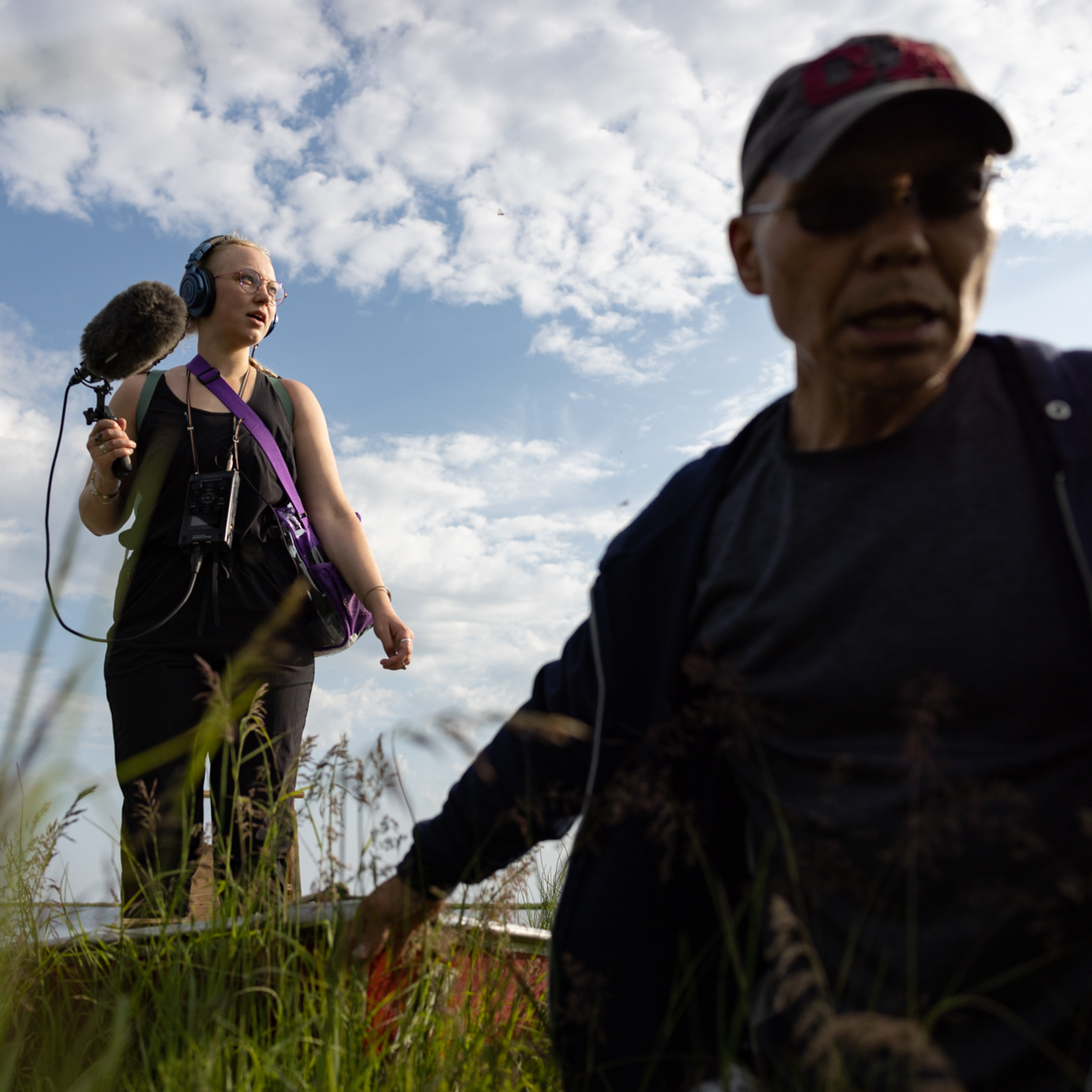
From the center for Investigative Reporting and prx. This is Reveal. I'm Al Letson. Julia Jimmy lives on the western edge of Alaska, where indigenous villages dot the banks of two massive rivers. I'm from Tundituliak. If you go by boat, it's two hours away, but if we take a plane, it's 20 minutes, 20 minutes from Bethel, the biggest town in this remote part of Alaska. Julia is Yup'.
- [02:00]
A
Ik. By listening to me speak, you can tell English isn't my first language.
- [02:06]
B
Yugtun is Julia's first language. It's the first language of many people that live in the region. And Julia is a familiar voice on the radio, even though she never expected to be.
- [02:17]
A
One morning, my sister called me.
- [02:21]
B
She said, angela Denning is going to call you. Do you know who she is? I said, yeah, she's the English news director at kyuk. Now, this is a small town where a lot of people know each other. She said, she's going to ask you to do the news today. And I said, I'm not going to go on the radio. The radio station Kyuk is a media staple in these parts, especially when there's a weather emergency. And Angela, the news director, wanted Julia to translate the news. I told her I have my baby with me, I don't have a babysitter, and that's why I'm jobless and only if I can bring him in with me. And she said, sure, bring him. So that's how I started. I brought my one year old at the time, sitting on my lap, translating, recording Yupik News. KYUK is a small, scrappy bilingual station. It's an NPR affiliate that airs the big national stories of the day.
- [03:37]
C
This is MORNING EDITION from NPR News.
- [03:39]
B
I'm Laila Falden. But also it's a hyper local station. Good morning Bethel and the YK Delta. You're tuning into KYUK 640, where people live and die by the weather.
- [03:50]
C
Scattered rain showers mixing with snow.
- [03:52]
B
After 10pm the station has its own local talk show.
- [03:56]
C
This is Coffee at kyuk.
- [03:58]
B
Come in and have a cup. Native drums fill music breaks. Here is this week's Yupik word of the week. And the search and rescue team often does a station id. Hi, this is Norman Japhet from Bethel Search and Rescue. If you get lost or your snow machine or car breaks down, stay calm and don't panic. You're listening to KYT 6:40am That's a little oscillo. It costs around $1.8 million to run KYUK each year. 70% of that money came from the Corporation for Public Broadcasting. CPB is a nonprofit that distributes government funds to public media stations across the US and it's been under threat Republicans for decades. President Trump has been targeting CPB since the first time he took office. We don't need it and it's a waste of money. And this summer, in a partisan vote, Congress clawed back over a billion dollars of federal funding that had already been approved for cpb. After more than six decades, the Corporation for Public Broadcasting will be shutting down operations. The news hit the KYUK staff extremely hard.
- [05:17]
C
The emotional weight of trying to continue to do your job and do a public service when that's being actively fought against and deprioritized, it's emotionally tiring.
- [05:30]
B
Through conversations with the KYUK news team, our first story today will take you inside the station as the staff tries to make sense of the moment.
- [05:40]
C
It just feels like if anyone were to come here and see it and understand it, they wouldn't be making these.
- [05:46]
B
Choices and grapples with how to keep what's essential on the air. The level of responsibility that I feel coming on is massive. KYUK news director Sage Smiley is gonna take it from here and help us understand the role that this one public radio station plays in this often overlooked part of the country, a place defined by stark, beautiful.
- [06:12]
C
The sky in Bethel is bigger than anywhere else I've ever been. You know, it exists between the Kuskokwim river and the Yukon river. And so it's filled with lakes and tributaries and is very open and full of tundra. And then you talk to people who live in the villages and they say, oh, no, Bethel's so crowded. And you realize that when you go out to a village that it really is just such wide open space. There's water and a little bit of land and sky. Bethel is about 400 miles west of Anchorage, and there's no road connecting us, so the only way to get in and out of Bethel is by plane. Most of the population here is indigenous. The vast majority of people are Yupik. There are also some Chupik communities. And then upriver we also have Athabascan communities. And as indigenous people, the people of this region maintain a very strong cultural and spiritual connection to the land and to the process of subsistence.
- [07:15]
B
We make a living by hunting and fishing.
- [07:19]
A
We pick berries, we gather wild greens and roots.
- [07:25]
C
This is Julia again.
- [07:26]
B
In some of our villages, the Yupik language is still our first language.
- [07:33]
C
The Yupik language is integral to everything that we do. We were created as an indigenous station.
- [07:40]
B
The whole newscast Monday through Friday is translated. All the weather alerts are translated. So that's my daughter. She works here.
- [07:57]
A
Iris.
- [08:00]
B
When she's making announcements on the radio, she introduces herself with her, you pick name, Chung Aoya.
- [08:08]
A
I'm proud that she can speak Yupik.
- [08:13]
B
I think it's because she works here that we have a special bond. And yeah, she does a good job.
- [08:29]
C
At Kyuk, there's this built in community. There are people who have worked at the station for decades, and so many people in town have worked in some capacity or other at Kyuk. So maybe they hosted the Yupik language news in high school, or they were a basketball announcer, or they worked in the newsroom. And there's a camaraderie to working in such a rural place. We're all co workers, but we're also really good friends. My name is Samantha Watson. I'm a news reporter here at Kyuk. It has been my first full time job as a reporter. I think it was my first week on the job. I was sitting at my desk and I was like, looking for a broom. I couldn't find a broom, but I could find a chainsaw. There was just a chainsaw sitting on a desk. I was like, all right, that. That kind of makes sense. I'm a general assignment reporter and get to, you know, report Everything from return of the salmon community stories to breaking news. Communities out of power, out of water on a daily basis.
- [09:31]
B
My name is Evan Erickson. I'm a reporter at KYUK since May 2023. I work with news director Sage Smiley and my co reporter, Samantha Watson here in Bethel. This hub community serves dozens of villages that otherwise would be not clued into what's happening and what the levers of power are doing here in Bethel. Far from where they live.
- [09:58]
C
The Yukon Kuskokom Delta is a region of extremes. Temperatures in summer can get into the 80s, and then in the winter, with the wind chill, it'll be down into the negative 50s or 60s. Headphone cables or XLR cables. When it's that cold, they can just snap in half.
- [10:16]
B
If you haven't been out to the Yukon Kuskokwim Delta, you haven't really gotten the full picture of what Alaska really is.
- [10:23]
C
I think a lot of places shut down a bit for the winter, and it's almost the opposite in the Yukon Kuskokwim Delta, because the winter is when we can establish the ice road. The Kuskokwim is like a highway. When it freezes, we plow an entire highway. There are road signs and everything, but obviously it's ice. So it can shift and change as the weather shifts and changes, as snow accumulates and ways down the road or there's a brief thaw or whatever. And people all over the region keep watch and report on what they're seeing. And they call into our show called Riverwatch.
- [10:59]
B
We have our first caller, Alan from Antioch. Good afternoon. Hey, good afternoon. Now, you know, right across Antioch, on the end of the Runway, there's been an open hole. It never froze. You know, it's still wide open.
- [11:20]
C
Our hosts are search and rescue volunteers. And before going on the air, they'll often fly over the river and look at the holes so they can give people the most updated information about where it is and isn't safe. On the river ice, they have gotten.
- [11:34]
B
Noticeably smaller, but they're still long ways from being frozen over. All the open holes that we saw today, Long ways. And I guess one of the. One of the highlights of this morning's flight, flying just at the right time of the day, you know, right after sunrise. The moose. Holy cow. The moose from Bethlehem up. Yeah, they're coming down because of the snow. Yeah. Herds.
- [12:07]
C
The work that we do in terms of public safety, communication literally does save lives. When someone does go through the river ice. We're in constant communication. Communication with the Search and rescue teams. But also, there's so much more here than the dynamic physical environment or the unique dangers of travel. The cornerstone of what we do is preserve and amplify the voices of this region, the generations and generations of indigenous communities and their culture and tradition. There are so many stories that are meaningful. One is the premier sled dog race of the Yukon Kuskokwim Delta, which is the Kuskokwim 300. That's a 300 mile sled dog race from Bethel upriver to Antioch and back. We spend, you know, 18 to 20 hours a day in the station doing live coverage, trail reports, live interviews with finishers. Do you want to answer some questions? They're shy. Today, Kyuk won an award in the best humor category for our dog interviews, which involved a lot of snuffling into the microphone and was well received by everyone. Are you a good dog?
- [13:23]
B
Oh, yeah.
- [13:24]
C
Oh, yeah, you're a good dog. I think when we first started to hear real rumbles of potential rescission of previously committed funds for public media, I think I maybe felt too much hope. But as it got closer to the July 18 deadline, it started to feel less and less safe. Towards the end of the day, we had just kind of all crowded around one screen. There was like some senator who was wearing like a hot dog shirt because it was like, also national hot dog day. Public media is about to be slaughtered. Someone's wearing a hot dog shirt. And I think it was like one of those things where, you know, it's painful to talk about seriously what is actually happening. So we're just gonna talk about the outfit choices in the room. The three of us, like, sitting around the computer and just kind of watching it unfold. I think when it finally came, it just felt like there was like this quiet of like this thing that we kind of couldn't believe what happened had happened. It was just sitting with this, like, now giant question mark of what happens to us after that. It felt kind of like shell shock a little bit. A station like Kyuk fulfills a singular function within the media system of the United States. Nobody else is broadcasting Yupik language news on a daily basis or even covering the Yukon Kuskokwim Delta in any sort of a reliable way. And to think of the potential loss for the communities of this region, it's horrifying to think of all that going away. It is just so bizarre because we look at ourselves and we're like, are we. Were we doing something wrong this whole time? Were we doing a Bad job were we, you know, like, why. Why are we losing 70% of our funding? Why are we being decimated? In some ways, I think it was a bit of a blur to continue to do work after Congress passed this rescission Act. I'm glad that we recorded some of our news meetings in those days surrounding rescission. The agenda of this week's news meeting is whatever feelings you're feeling about the precision of public broadcasting funds. I think I wrote it on. Wait, I'll pull up the agenda.
- [16:04]
B
What did I write on? If it comes down to it and we're furloughed or whatever, are we able to. Is there anything that bars us from, like, volunteering hours because we want to tie up, you know, little pieces and leave things, right?
- [16:17]
C
Well, yeah. I mean, I think on like a. Your work should be paid basis, I would discourage that, but I think, you know, this is a small and mighty newsroom that really, really believes in the mission. We're still parsing our way through what the next few months look like. Kyuk is going to be fundamentally changed at the end of the year, and it's a daily conversation and a daily recalibration of how we do the most good we can with the time that we still have here. I think many journalists are used to working on a deadline, but not a final one at this point. Money is so tight, and it's looking like we may only be able to keep one reporter after the end of the year.
- [17:13]
B
It sounds like there may be just enough funding to keep me on as a solo newsroom. And the level of responsibility that I feel coming on is massive. There's a sense out here with the remoteness and with the number of communities that we try in earnest to cover, there's this sense that anything can happen at any moment.
- [17:38]
C
You can see the high winds already moving in from Unalaska, pushing all the way up. We have around the first week of October, we had a pretty significant storm glance off the YK Delta. And in talking to the National Weather Service at that time, they started to raise a flag, but they didn't know really where it was going to hit. That's also why we have so much flooding, because these winds are hitting almost. And within the final 36 hours before the storm hit, it took a really sharp turn and really hit the northern part of the Kuskokwim Delta coast head on.
- [18:15]
B
I've lived here all my life. I've never seen anything like this.
- [18:19]
C
Communities in this region know bad weather. They expect flooding, they expect High winds on the coast. It's just a factor of life living on the Bering Sea. But every community member we've spoken to said they've never seen a storm like this storm. And it flipped a house all the way over onto its roof.
- [18:42]
B
I just went into prayer mode because it was so scary. It was pitch black outside. This took people into peril where folks were swimming, floating, trying to find debris to hold onto in the COVID of darkness.
- [18:56]
C
At nighttime, flood levels were exceeded. Dozens and dozens of houses floated off their foundations, crashed into each other, were taken out to sea.
- [19:06]
B
It's wiped out the weaker houses. Older houses are just gone, they're demolished or just gone. The stronger houses, newer houses, they floated.
- [19:19]
C
They could have flowed forever away into the ocean.
- [19:22]
B
But they hit the cliff edges and that's where they are now.
- [19:25]
C
The state of Alaska says that this is the biggest airlift operation in state history. And it involved the Coast Guard, the National Guard, the state troopers, private aircraft, military aircraft. We've spoken to so many people who basically didn't know if they were going to make it through the night, found themselves in their homes floating away.
- [19:52]
B
I'm tilting now, I'm starting to tilt.
- [19:54]
A
Oh my gosh.
- [19:55]
C
What will happen if you tilt all the way or like that's so. That's really scary.
- [20:01]
B
I think I'm on a creek, so that's why I'm tilting.
- [20:05]
C
I think in some of these hardest hit communities, part of what's so devastating to people is understanding that their community may never look the same, that they may never be able to return to what was. And how do you process that when you also had to leave with only the clothes you were wearing, didn't even get to grab your ID and don't know where you're going to be. There are 27 public media stations in Alaska. And I think a huge part of the way that we've been able to respond is because we've been able to lean on colleagues on the radio network that exists within Alaska because of the storm, because of the reporting that we've been doing. We've received tens of thousands of dollars in donations from all over the country over the last week. And I think Sam's position is gonna be able to stay for one more year. That doesn't solve the problem. That doesn't address the fact that long term public media has been defunded. We've lost the stability. KYUK and its newsroom may never look the same. Yes, it impacts me personally, but frankly, there are other jobs. I will find another job. I am not wrecked by recession, but what is wrecked is this media legacy on the YK Delta is the ability to of this region to be properly covered by journalism. And so it's personally devastating, but not because it's my job, but because I care so much about this beautiful, incredible, unique region of the United States that doesn't have a backup.
- [22:07]
B
The Yukon Kuskokwim Delta continues to recover from the typhoon. The storm displaced an estimated 1600 people. The majority of them remain in temporary housing. As for Kyuk, the station plans to lay off about 40% of its staff. Samantha, Evan and Julia will keep their jobs at least through next year. And Sage is moving to Aspen, Colorado for a new job. Coming up, I talk with Republican Senator Lisa Murkowski, who went against her party in the partisan fight over public media.
- [22:40]
A
It was awful and it was, some of the words that were used were really offensive to me.
- [22:47]
B
That's ahead. You're listening to Reveal. Josh. This is Josh Sanborn, producer at Reveal. This episode is made possible by support from nrdc. The Trump administration is gutting environmental protections on a scale never seen before. It's eliminating protections for endangered wildlife, opening wilderness to oil and gas drilling, and sacrificing the safety and beauty of the planet that future generations will inherit. What we stand to lose can never be replaced. But the Natural Resources Defense Council is fighting back, leveraging the full power of the law to defend our environment. Backed by 3 million supporters, NRDC's team of over 700 lawyers, scientists and advocates has blocked harmful oil and gas pipelines, stopped toxic mines and protected endangered species through hard hitting lawsuits. They won nearly 90% of cases filed during the first Trump administration. And they continued continue to win, including a recent case defending climate science. Now, as their caseload grows, they need your support. Join the movement that's defending our environment for future generations. Donate@nrdc.org reveal and your gift will be matched five times. Hello listener. My name is Najeeb Mamini and I am a producer here at Reveal. Reveal is a non profit news organization and we depend on support from our listeners, listeners like you. Donate today@revealnews.org donate. It helps fund the stories that we tell and helps me feed my cat. So thank you. From the center for Investigative reporting in PRX, this is Reveal. I'm Al Ledson. In July of 2025, as the U.S. senate gathered to vote on a bill that would end funding for public media, Republican Senator Lisa Murkowski got a text message about conditions off the southwest coast of Alaska. A major earthquake had struck the area the day before. And now there were tsunami warnings directing people to tune in to public radio station KUCB for more information. And as the Senate prepared to vote, Murkowski made one final plea to preserve federal funding for public media.
- [25:21]
A
And I said to my colleagues, as we speak, people are listening to their public radio stations to determine whether or not they need to move to higher ground.
- [25:32]
B
It didn't work. Two years of funding that had already been appropriated was clawed back. Murkowski, along with Susan Collins of Maine, were the only Senate Republicans to oppose the bill. I sat down with Senator Murkowski to ask her why she went against her party on this and what the future looks like for public radio in Alaska. Senator Murkowski, thank you so much for joining us.
- [25:56]
A
Thank you, Al. Good to be on.
- [25:58]
B
So why did you vote to keep funding for public media?
- [26:03]
A
Well, for me, this is kind of an easy question. I have long been a supporter of public broadcasting. I see the value in real time. In my state. We have so many communities that are not connected by Road. Over 80% of our communities are not. So you have families that are kind of cut off. And one of the things that I've learned is that people connect by listening to the public radio. So they get the birthday greetings, they get the updates about what is happening in neighbor communities. They get the emergency warning about a tsunami that might be coming their way, about the ice that may be breaking up upriver and potentially causing flooding in your area. People rely on public media perhaps differently in Alaska than they do in other parts of the country. Internet is still wickedly expensive in many parts of the state. And so for me, the value has never been questioned. And there's been a lot of debate about political bias within npr. You know, if you don't like some of the programming, we can address some of that. But don't undercut the value that comes to communities, particularly to rural communities of our public broadcasting system.
- [27:23]
B
I've spent some time in Alaska and beautiful state, good people, but definitely a very different way of life from the way people in the lower 48 live. And that extends into public media. Like in Alaska, it feels like public media is a lifeline.
- [27:40]
A
I think that that's really an apt description. We just had a very significant and damaging typhoon. And as I was talking to many of the people who were evacuated from their communities in the aftermath of that typhoon, so many were saying that they were getting their updates about what was coming from their public radio stations from KYUK.
- [28:08]
B
So you've been a senator for Alaska since 2002, correct?
- [28:13]
A
Yep. Long time.
- [28:15]
B
And I have been in public media since about 2007. And I would say as long as I've been in public media, that there's always been this partisan fight. Why has it always been such a partisan fight, especially given what we just talked about, how it is a lifeline to rural communities?
- [28:35]
A
I, too am mystified about that. And it may just be that there are those who say, look, we don't need to have government support for something like radio or tv. There's lots of private entities that come in and they're very successful. So why do we need to have that government assistance? And those are absolutely legitimate debates to have. But again, when you think about some, some of the things that public media is able to offer that you don't necessarily see through other outlets, it is the emergency warning systems. It is things like early childhood education that comes with things like Sesame street and so many of the other great children's programming that we have seen over the years. It comes with a more community service perspective. Maybe you can say it is, it's, it's more of a, of a fiscal or budgetary constraint. And Republicans are trying to say less government is better, less spending is better. But in recent years, it really does seem that what we've seen, and particularly in this last fight over this recession, it was awful. And it was, some of the words that were used were really offensive to me when they were calling, calling these programs as, as radical and woke and run by, you know, radical leftists. And, and again, I'm, I'm listening to people at KUCB in Unalaska who are, are trying to get the word out about a tsunami warning. And I'm thinking to myself, there is nobody in False Pass or Sandpoint or Kodiak who is thinking that this is about some radical leftist agenda. This is about my lifeline, as you have pointed out. And so I get really frustrated about the partisan overtones or undertones, whatever word choice you want to ascribe to it here. When we were working through that rescissions package, it was Mike Rounds from the state of South Dakota, again, very, very red state, very rural state, who said, hey, we have got to make sure that our tribal stations are not impacted. And in order for me to back off my opposition to this, we need to see some help. And so he was able to facilitate a path forward for one time, funding for the tribal stations. About half of Alaska stations are going to see benefit from that. But again, it's a one year Funding band aid to get these stations through this next year. It's not a long term solution.
- [31:31]
B
In this country, political debate has become about enemies. How do we get back to a place where we're able to talk and have debates about things of this importance without coming at each other with knives all the time?
- [31:47]
A
It's a great question, Al. I don't know that there's an easy answer for it, but we're becoming a country where people seem to be more comfortable if they're around people who think and act like them, people who don't necessarily challenge their thoughts. In parts of the country, people are looking around and saying, well, I'm relatively conservative, but it seems like the schools around me, the neighborhoods around me, my local government, everything is becoming more liberal. And instead of engaging and offering a different perspective so that we can help educate one another, I say I'm leaving. I'm going to go to a place where I'm going to be more comfortable because I'm going to be around people that all kind of think like me.
- [32:38]
B
Think, look, talk, everything like me, talk.
- [32:41]
A
And, and that's not the best of America, I can guarantee you. When we are able to embrace the extraordinary diversity of who America is, not only in what we look like, but how we think and how we embrace the opportunity for free speech. And yes, sometimes it is uncomfortable, but every now and again, if I allow my mind to be open to that, I might maybe have just learned something.
- [33:12]
B
Do you think there's a world where CPB can come back with maybe a more focused mandate that's specifically helping rural stations and something a little bit more narrow that could pass through a very divided Congress?
- [33:31]
A
I do think so. And again, that's, that's part of what is being explored right now. There are so many good things that we would seek to continue, but I think we recognize that in the short term we have to keep everybody alive. We have established a community driven fund to help Alaska public media. At this point in time, it's been, it's been a little over, well, about three and a half million dollars has been raised. That's going to be helpful. We're relying on the generosity and the good grace of private donors. It shows the level of commitment that the public has, the loyalty and the support. And I think that that gives us incentive to try to work on this longer term. Fix that again, to your point, may be more narrow in focus, but still provide what most are seeking.
- [34:31]
B
Do you feel comfortable that given where we are, the infrastructure is there when the next disaster Hits for right now.
- [34:41]
A
The answer to that is yes, because most of the stations that I have talked with are telling me that they've got enough reserves to get them through the end of the year. Some are able to extend it just a little bit longer with the tribal funding that has been committed to. That's going to help again, half of those stations. But we're already seeing stations with layoffs, and that means that you have even fewer people to deliver what these small stations have been doing within their communities. So it's really hard because one of the great things that we get is from these small stations is the local content. And when you no longer have. When instead of three people, you only have two people now you're not able to go out and get that local content. So to fill it, you have to go get the national stuff, which is maybe not what the community necessarily wants, but it's also to the point of those who have opposition to, you know, the broadcasting that comes out of NPR that they think is biased or unfair or what have you, that hasn't necessarily gone away. You've just lessened your opportunity to be more responsive to the local communities.
- [36:00]
B
Yeah, it's a serious loss. When I. Public media brought me to Alaska, and I still remember interviewing a native artist who basically does her art from the bones of elks. And she told me, and she's a little lady, I think at that time in her 60s, every year she'd go up in the summertime, I guess, kill an elk, and she'd drag it home. I have no idea how she'd drag it home. She'd eat the meat all winter long and make her art with the bones. I would never experience that in the lower 48. You know, like, it's such a unique and beautiful place. But I worry that, like, you know, cutting funding means that we never get those stories in the lower 48. And it leads to us not understanding each other. It creates more division in the sense of, like, there's less empathy created because you don't know how these people live their lives and they don't know how you live your lives.
- [36:54]
A
Well, and that's why I'm. I'm very grateful for the reporting that was done about Typhoon Ha Long and the impact on. On communities like Kipnuk and, and like Quiggillangak. Again, places that, that most people in this country will never, ever, ever go to. But for those who call these places home and have for hundreds plus years, the lifestyle that they live is very different. It's very complex. And so to be able to share what that means to people on the outside is vitally important. We're all one big America. And the more we understand one another, the better.
- [37:38]
B
Senator Murkowski, it was an absolute pleasure to talk to you today. Thank you so much.
- [37:42]
A
Come back to Alaska.
- [37:44]
B
I will.
- [37:45]
C
Okay.
- [37:46]
B
All right.
- [37:46]
A
Take care, y'.
- [37:47]
B
All.
- [37:47]
A
Thank you.
- [37:51]
B
That was Senator Lisa Murkowski from Alaska. Up next, we're going inside the trenches of the decades long fight over public television. It's me, Big Bird, Big Yellow, a menace to our economy. You're listening to REVEAL.
- [38:10]
C
Foreign.
- [38:19]
B
From the center for Investigative Reporting and prx. This is Reveal. I'm Al Letson. Let's go back to 1961. Television is blowing up. 90% of Americans have TV sets in their homes. People are hooked, especially kids. The chairman of the Federal Communications Commission at the time is a guy named Newton Minow and he's concerned. So at an annual meeting of the national broadcasters, he gives a fiery speech and challenges them to watch their own stations for a day. Without a profit and loss sheet or a rating book to distract you, keep your eyes glued to that set until the station signs off. I can assure you that what you will observe is a vast wasteland. Minow thinks bad TV is bad for people, especially children. Is there no room for a children's news show explaining something to them about the world at their level of understanding? He says, sure, TV can entertain, but let it teach something too. As you may have gathered, I would like to see television improved. But how is this to be brought about? By voluntary action by the broadcasters themselves, by direct government intervention? Or how? The how came seven years later when Congress created the Corporation for Public Broadcasting, or cpb. It was the start of an era that would lead to decades of award winning children's television shows like Sesame street, the Electric Company, Reading Rainbow. And of course, Mr. Rogers neighborhood. It's a beautiful day in this neighborhood. A beautiful day for a neighbor. Wouldn't you be mine? Fred Rogers, the man in the cardigan sweater, was launched into national stardom with the birth of public television. And he became its most famous defender. Through his story, we're going to look back at public media's decades long struggle to hold on to federal funding and survive Washington politics. Michael Schiller takes it from here in the Steel City. Won't you please, won't you please, please, won't you be my neighbor?
- [40:41]
A
Hi.
- [40:44]
B
I was Mr. Rogers, real life neighbor. I grew up in Pittsburgh in the 1970s near where he lived with his wife and Kids back then, the city was a lot different than his show's Neighborhood of Make Believe Pittsburgh in the 70s was more like Eddie Murphy's Saturday Night Live spoof. This is how you answer a door. In my neighborhood, the real city was struggling with crime, polluted air and segregation. Mr. Rogers neighborhood of Make Believe was not. It was a place for kids to process the harsh realities of life and the emotions that come with it. Did you ever know any grownups who got married and then later they got a divorce? Fred helped me make sense of my own parents divorce. And those children cried and cried. You know why? Well, one reason was that they thought it was all their fault. But of course, it wasn't their fault. I loved his show. Walk up our miniature staircase. I'm walking into WQED, the place where the Mr. Rogers show was filmed. We moved into this building in 1970. WQED President and CEO Jason Jedlinski gives me a tour of the station. It feels and smells like a classic 70s public TV station in here. Musty, but in a good way. Layered with history. I'll take you up to the studio if you want to take a picture with the tree or the castle. Oh, you know I do. Of course, the influence of Mr. Rogers show never left me. But I've never been inside the station until today. The famous studio A WQED with a great picture of Fred Rogers. This is so fun. Look at this. Can I just take a peek at the stage? Of course, the stage is empty this afternoon except for some ladders and stacked chairs. There are people who think it should be a museum. And I'm actually very proud of the fact that it's still actively used and frequently used to experiment and create art. Wqed opened in April 1954 as the first community sponsored educational television station in America. WQED exists for the sole purpose of offering education. They even had a show that reached thousands of steelworkers who were able to earn the equivalent of a GED by watching classes from home. And that notion of the high school of the air, that's what it was called in 1954, really stemmed out of community leaders saying, how do we take this new medium that is coming into people's living rooms and use it to achieve something other than a laugh or to sell a carton of cigarettes? This is the incubator where Fred Rogers show emerges. He draws on philosophies about early childhood education to craft thoughtful episodes that become popular on wqed. And once the Corporation for Public Broadcasting is formed, the show's able to go national. The year is 1968.
- [43:49]
C
It's this year of major turmoil. You know, starting off the Tet offensive.
- [43:54]
B
Emily Ruby is a curator at the Heinz History center in Pittsburgh, where the show's original sets and props live.
- [43:59]
C
You have all of this kind of racial unrest, and then you have the assassination of Martin Luther King and Robert Kennedy.
- [44:08]
B
In the days after the assassination of RFK, Mr. Rogers airs this show where his puppet Daniel Tiger asks, what does assassination mean? It was groundbreaking tv.
- [44:25]
A
Well.
- [44:28]
B
It means.
- [44:31]
A
Somebody getting killed in a sort of surprise way.
- [44:39]
B
Now, you might think show sponsors might say, fred, what are you doing? But the opposite happens. Emily reads a note from Sears and Roebuck, a big funder at the time.
- [44:49]
C
We have been gratified by the spontaneous public reaction to a television personality who, in a time of violence, speaks quietly about coping with violence.
- [44:57]
B
It's a hit. People all over the country are tuning in. But less than a year later, the show and CPB are already facing a crisis. Richard Nixon has just become president. The Vietnam war is raging, and he wants to cut CPB's $20 million budget in half. So Fred Rogers goes to Congress to testify. All right, Rogers, you got the floor. Senator John Senator Pastore, a Democrat, was the subcommittee chair. He had never heard of Fred show and was known to be socially conservative. Senator Pastore, this is a philosophical statement and would take about 10 minutes to read, so I'll not do that. Fred is young, he's handsome. He's dressed in this black suit, and he sits up in his chair and speaks directly to lawmakers. He tells him his show costs the equivalent of what it costs to make two minutes of cartoons. Two minutes of animated. What? I sometimes say bombardment to Fred. The cartoons of the day, like Looney Tunes, are filled with needless violence. We don't have to bop somebody over the head to make him to make drama on the screen. We deal with such things as getting a haircut or the feelings about brothers and sisters and the kind of anger that arises in simple family situations. As Pastore listens, you can see his demeanor starting to change. And I feel that if we in public television can only make it clear that feelings are mentionable and manageable, we will have done a great service for mental health. By this point, Pastore has kind of melted. I'm supposed to be a pretty tough guy, and this is the first time I've had goosebumps for the last two days. Well, I'm grateful not only for your goosebumps, but for your interest in our kind of communication. Fred ends his remarks with lyrics to a song about anger. What do you do with the mad that you feel when you feel so mad you could bite? When the whole wide world seems oh, so wrong and nothing you do seems very right the whole testimony is only six minutes. He's so calm, and by the end of it, Pastore is obviously moved. I think it's wonderful. I think it's wonderful. Looks like you just earned the $20 million. In the years after that meeting, Nixon became more and more antagonistic towards the news shows on pbs. He wanted his critics off the air. That didn't happen. And Congress eventually decides to fund CPB two years in advance to protect it from political headwinds. But it doesn't take long for that to get challenged, too. In the 80s, President Ronald Reagan tried to claw back half of CPB's budget. It was an early attempt at rescission. No government ever voluntarily reduces itself in size. So government programs, once launched, never disappear. Congress compromises by cutting CPB's budget by 20%. In the 1990s, when Newt Gingrich becomes Speaker of the House, one of his first moves is to try to eliminate CPB funding completely. Why is there this small elite group at the Corporation of Public Broadcasting that gets to spend money they didn't earn?
- [48:31]
C
Newt Gingrich said something about it being an elitist form of television.
- [48:35]
B
That's historian Emily Ruby.
- [48:37]
C
Again and again, Fred's reiterating that this is something that's reaching all kids of all income levels. It's the opposite of elitist.
- [48:44]
B
Gingrich fails. The irony is Fred was a registered Republican, and he never wavered from his support for public television. He passed away in 2003. And in the two decades since, Republican lawmakers made several more attempts to wipe out CPB. Mitt Romney pledged to cut it during his 2012 presidential run, calling out Big Bird at a debate. Barack Obama's campaign loved it. It's me, Big Bird, Big Yellow, a menace to our economy. Mitt Romney knows it's not Wall street you have to worry about. It's Sesame Street. I'm gonna stop the subsidy to PBS this time around. Fred Rogers wasn't there to save public media. I could not have foreseen how much damage this would do as quickly as it's done. Julian Wiley is a reporter for Current magazine. His beat is public television. You know, hundreds of people laid off at different stations that we know of, millions in cuts in programming. It's just hard to find an adjective for how bad this is. Each station will feel the cuts differently. At WQED, the station that gave us Mr. Rogers neighborhood, they had to lay off a third of their staff, cbb. It just got caught up in the culture war, basically. In a way, public media was kind of just a bystander for the bigger problems in politics, I guess Public media used to be considered so wholesome that people made fun of it. And yet somehow this year in the halls of Congress, it was portrayed as salacious and deviant. At a hearing on public media in March, Georgia Congresswoman Marjorie Taylor Greene accused PBS of liberal bias. And then she took it further. There was a larger than life photo print of a drag queen behind her that she pointed to and said, as a mother, if I had walked in.
- [50:33]
C
My living room or one of my children's bedrooms and seen this child predator and this monster targeting my children, I would become unglued.
- [50:45]
B
The person in the photo she was talking about was part of a literacy program where drag queens read books to kids. Greene's remarks were so far afield from Fred's message of universal love and acceptance. I feel like the world needs the spirit of Mr. Rogers now more than ever. And I'm wondering if there are any of his ideas or teachings that you think are worth reflecting on in this moment.
- [51:11]
C
Oh, so many.
- [51:12]
B
Emily Ruby, Again, I don't want to.
- [51:14]
C
Speak for him, but, you know, I do feel like he would. He would be really disturbed by what was happening and the thing that he would always do that I love. Anytime he would speak publicly, many, many times when he would speak publicly, he would say at the end, think about the person that loved you into being.
- [51:34]
B
Special ones who have loved us into being. This is Fred Rogers accepting a lifetime achievement award at the Emmys. Would you just take along with me 10 seconds to think of the people who have helped you become who you are, those who have cared about you and wanted what was best for you in life. 10 seconds of silence. I'll watch the time. The camera scans the room, the audience is in tears. This man knew how to help people tap into their better selves, how to help them choose kindness over hatred, and, yes, how to be good neighbors. Won't you please, won't you please, please, won't you be my neighbo? Did you have a good weekend? Glad to see you. Our lead producer for this week's show is Michael I. Schiller, with help from Anianci Diaz Cortez. Cynthia Rodriguez edited the show, thanks to the staff of KYUK. Also thanks to Kara McGurk, Allison and Josh Sanborn from Reveals. More to the story for their contributions to this week's show. Ana Rogers is our fact checker. Victoria Baranetsky is our general counsel. Our production manager is the great Zulema Cobb. Score and sound designed by the dynamic duo Jay Breezy, Mr. Jim Briggs and Fernando My Man Yo Arruda. Taki Telanides is our deputy executive producer. Our executive producer is Bret Myers. Our theme music is by Camerado Lightning. Support for reveals provided by the Riva and David Logan foundation, the John D. And Catherine T. MacArthur foundation, the Jonathan Logan Family foundation, the Robert Wood Johnson foundation, the park foundation, the Schmidt Family foundation and the Hellman Foundation. Support for reveals provided by you, our listeners. We are a co production of the center for Investigative Reporting and prx. I'm Al Letson and remember there is always more to the story. It's a beautiful day in this neighborhood A beautiful day for a neighbor Would you be mine? Could you be mine? It's a neighborly day in this beauty wood A neighborly day for a beauty from prx.