Loading summary
Transcript32 lines
- [00:03]
A
We have to call it like it is. There are many Iranians in the diaspora who are looking at this moment as a moment that could bring more modernization and more change to Iran, while at the same breath, I want to say that there's also many who believe that it's all illegal.
- [00:23]
B
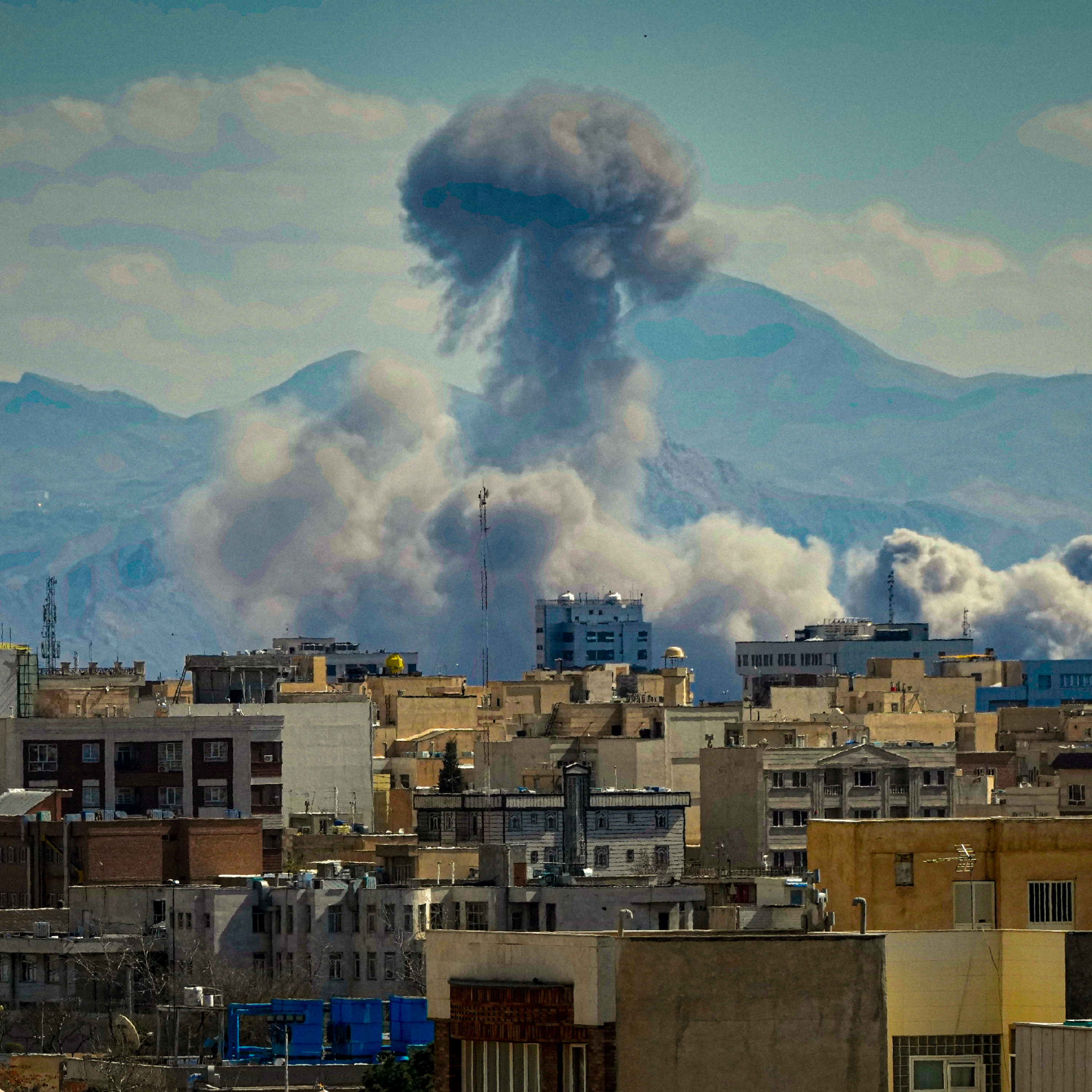
On this week's MORE TO the story, veteran journalist and author Devar Adelon in the aftermath of the US Attack on Iran, we talk about this new chapter of violence for the country, how the widening conflict is shaking the entire Middle east and what might be next. Stay with us. This is more to the story. I'm Al Letson. Over the weekend, U.S. and Israeli military forces attacked Iran, killing several of the country's top officials, including Iran's longtime supreme leader, Ayatollah Ali Khamenei. The strike ushered in a new and unpredictable era in the Middle east and sparked a conflict that's spreading through the region. Within hours, Iran retaliated, striking U.S. allies across the Persian Gulf, including U.S. embassies in Saudi Arabia and Kuwait. At least six U.S. service members have been killed. The Trump administration announced plans to send more troops and fighter jets to the Middle east, but the end game for Iran and how long military action will continue is unclear. Meanwhile, on the ground, days of military strikes have reportedly killed hundreds of Iranians, including dozens of girls at an elementary school. Today's guest knows Iran inside and out. Davar Ardalan has lived in Iran under both the shah's regime and that of the ayatollahs. And for more than two decades, she was a journalist at npr, where she produced major stories about the country. She's also the author of a book, my Name Is Iran, a memoir that highlights three generations of women living in both Iran and the US during times of revolution. Devar, thank you so much for coming onto the show.
- [02:19]
A
Absolutely. Thanks for having me.
- [02:21]
B
So you spent years living in Iran and your family has generations of history there with communications in Iran. Be in spaati. What have you heard from your friends and family?
- [02:34]
A
A lot of fear, a lot of exhaustion, a lot of uncertainty. As you can imagine, communications, like you said, are fragmented. They're WhatsApp groups that I connect with where diaspora communities are sharing news from loved ones. We have heard from family, and they're fine, but of course, nobody's really okay. Parents are looking for food and fuel. And, you know, there's 90 million people in Iran with different reactions. Some are grieving because, of course, their homeland is at war. Others are hopeful because they think they're, you know, this Crack might be a sign of light, a sign of change within the government. And then of course, there's always fear, because war doesn't really care who you voted for. It brings bombs. It, you know, the Internet is dark. It's impossible to know what's going on. And whether you're a loyalist to the regime or you want reform, you don't know what the country is demanding of you right now. So there's a lot of uncertainty, a lot of fear, and many people are scared.
- [03:47]
B
One thing when I think about Iran and I think about the Middle east and what's happening there right now is when we as journalists kind of tell these stories, a lot of times we just kind of skip to what's happening right now. And I think it's really important that we rewind the clock and kind of look back at how we got here. And so I keep going back to the mistakes that the United States made in Iran many years ago that kind of set us up to be in this place. Can you kind of walk me through that history a little bit?
- [04:23]
A
Absolutely. So, you know, going Back to the 1800s, Western powers have vowed for different influence over Iran, whether later it became the oil or natural resources. And back in 1953, there was a government by Prime Minister Mossadegh that was democratically elected. There was a CIA coup that removed him. There's a lot of wounds around that. Where Iranians felt that perhaps they would be able to exercise their democratic muscles. There was also the 1906 Constitutional Revolution, which was short lived. And so if you look back at the last 120 years or so, Iran has been an exercise of revolution, war, and then of course, later sanctions. So it's been in a lot of turmoil and a lot of that has to do with Western influence, whether it was the British or later the United States.
- [05:23]
B
Do you think the Iranian people were surprised by the attack this weekend?
- [05:28]
A
I don't think that they were surprised because there's been so much instability in Iran going back decades. There was also a sense from know, from a policy standpoint that at some level Iranian people were looking to the west to intervene in some way and help them. There were, there was, you know, obviously two schools of thought or many schools of thought in Iran. One of them is that there's, you know, time for this Islamic regime to go. There's a reckoning that it has hijacked Iran. Iran was modern before the 1979 revolution, but at the same time, again, there's 90 million people in Iran with different reactions. And so you know, there's also this, the sense that it was inevitable. If you look back at what happened in Iraq with Saddam Hussein, taxi drivers in Tehran would tell some of our reporters that they thought that Iran would be first, not Baghdad, that Tehran would be first. So it's interesting. But at the same time, when war happens, it's shocking. And there are many people who are divided, especially in the diaspora. So again, some see this as a reckoning and others call it illegal and want the United States to go back to diplomacy.
- [06:48]
B
So Ayatollah Ali Khamenei was known as Iran's supreme leader and he was killed this weekend in strikes. It seems to me like some people in Iran are mourning his death, while others are celebrating how popular was he.
- [07:03]
A
So he was the spiritual leader and he ruled for 36 years. And for devout Muslims in Iran who were loyalists to the hardline, you know, Iranian regime, he was the leader who even represented God. And so it is definitely a time where you see seas of people in the famous square of Isfahan demanding revenge. And you also see millions of Iranians who are cheering, celebrating his demise, throwing down his statues and really wanting to end this five decades long exercise of theocracy in Iran.
- [07:46]
B
Davar, I'm curious, do you have any idea how Iranians view President Trump?
- [07:52]
A
I think that Iranians at times have thought that he speaks his mind, in which case they know where he's coming from. And that perhaps is an easier foe to work with than previous administrations, that perhaps intentions were not always shared. So, you know, President Trump is somebody who has been very vocal in terms of what he wants to see in that region. But at the same time, we can see in the past few months, just in terms of the rhetoric that has come out, that it has been inconsistent. And so it's very interesting, a certain group of the population who again, want to see regime change, perhaps do see him as a savior. And this is important because Reza Pahlavi, who is the son of the late Shah of Iran, does, you know, very much rely on us And Israel to bring force to forcibly change this regime. And so to some extent, in the diaspora, there's a incredible amount of goodwill when it comes to President Trump because he actually has been able to use this kind of brute force, some would call it illegal force, to change the regime inside of Iran. So it's very complicated. And I think that we have to be honest with the fact that in the diaspora, many were hoping that the US at some level in the past 50 years, would intervene to bring a Change in Iran and for President Trump to do it is seen again as perhaps a savior and a leader who will open up opportunities for Iran to rebuild. There are very well known Iranian American technologists in Silicon Valley who are backing Reza Pahlavi, who have what they call the prosperity plan that includes how to go in and what to do in the first hundred days, how to rebuild Iran's infrastructure. These are Iranian Americans who built Uber. These are Iranian Americans who know how to hardest scale. They understand markets. They also understand President Trump because they're business people. And so they come at this, not from the vantage point of politics, but from the vantage point of, you know, for 45 years they've contributed to, to this country growing and now it's time for them to go back and help Iran grow again. Very complicated scenarios, but we have to call it like it is. There are many Iranians in the diaspora who are looking at this moment as a moment that could bring more modernization and more change to Iran. While at the same breath I want to say that there's also many who believe that it's all illegal.
- [10:42]
B
So Reza Pahlavi, he has not lived in Iran for many decades. Do you think that he would be able to get win the support of Iranians, not the diaspora, but Iranians that are living there right now?
- [11:00]
A
Well, they do see him as a transitional figure inside Iran. He does have a symbolic link to pre1979 statehood. And of course, ultimately, as you said, real power has to come from within Iran. But they are chanting his name. We have to also understand that his mother, the late Queen of Iran, is a much beloved figure, even though the Shah was controversial. Farah Pahlavi is a beloved figure who helped Iran grow in many ways, but in terms of the culture and the arts, and again, she has incredible goodwill with the people of Iran, believe it or not. And so the fact that her son would say that, listen, I can be the transitional voice. I believe in a national referendum. I want for us to bring Iran to the modern world. We need to have new relations with the West. We don't need to be, you know, make enemies of Israel. So all of these things do ring very well to a certain segment of the Iranian population who want to see an authority take over, who's going to take Iran in a direction that is going to modernize it.
- [12:20]
B
Iran has retaliated by firing at US Military installations and targeting other Gulf states. I was surprised by it because it seems like they are firing on countries that have been trying to remain neutral and also broker peace between them and the United States. Were you surprised by that action?
- [12:39]
A
I think it comes down to Iran preparing itself to outlast the US And Israeli airstrikes and this war. So what does that mean? That means that they have to be defiant and also to be able to show that Iran remains again, defiant in its position and that it has a right to its own national integrity and that at this moment in time, they want to be able to send a message to the neighboring countries to say that even though we're neighbors, that you're siding with the west. And this is what you get. So it's very difficult to tell what's going to happen.
- [13:24]
B
Do you feel like the Iranian people are prepared for an extended war?
- [13:28]
A
I think if you think about those who believe this is a reckoning and that they want regime changed, they are willing to be in this for the long haul. But then there are also those, of course, who don't want any outside influence to be able to change the course of Iran from the Islamic Republic. And again, for those, it'll also be they're willing to be in this fight for the long haul. So it's very interesting. Whether you are there to prepare to rebuild Iran or you're there to prepare to outlast any Western influence, there are forces who would say on both sides they're willing to see this war be extended. But I think the other part of it is, you know, how long will the region be able to take this kind of bombing and this kind of impact that is having in the region? I think that's the bigger question is that will the regional powers in the Middle east demand for the war to end sooner?
- [14:38]
B
More with author Davar Ardalan in a moment, but first I want to remind you there is a really easy way that you can keep up with all the work we're doing here at Reveal. You can sign up for our free newsletter. Just go to revealnews.org newsletter to receive your weekly email reminding you all about our good reporting. We have to stay connected now more than ever. This is more to the story. I'm Al Letson, and I'm back with author Davar Ardalon. So you were born to Iranian parents here in the States, but then you went back to Iran when you were a child, A baby, right?
- [15:24]
A
That's right, yes.
- [15:25]
B
How long were you there?
- [15:26]
A
I was there until I was 16 years old, so right before the revolution. And it was, you know, an incredibly magical childhood. My mother was my Girl Scout leader, the international school. I went to was owned and operated by Dr. And Mrs. Irvine. My uncle Sirus, you know, introduced me to James Taylor. My grandmother Helen, who was from Boise, Idaho, taught me how to make fudge. My parents were architects and writers. They wrote the book the Sense of Unity. Our childhood was piling up in our Land Rover, wearing our cowboy hats from, you know, Texas, and traveling throughout Iran as my parents did their research on the Sense of Unity, which was all related to the Sufi origins of Persian architecture. So we, you know, traveled throughout Iran. We had, you know, some of the best years of our life, learning about Persian culture, seeing the tombs of Hafiz and Ferdowsi, and learning about Persian gardens and waterways and wind towers. And, you know, it was something that felt like walking through history. And then all of that was shattered by 1978, 79, when the revolution happened.
- [16:47]
B
What do you remember about that?
- [16:49]
A
We live near Tehran University. And so at the time, my mother had a publishing company and she started hearing about protests that were going on. Eventually, universities closed and newspapers stopped publishing. Electricity was cut, and I remember audios, cassettes circulating of the ayatollah Khomeini. By January 16th of 1979, the Shah left Iran, which was surreal. It was weeks later that Khomeini came back to Iran after being exiled in Iraq and France. So there was a lot of confusion and fear. You know, I was 14, 15, 16 years old. Eventually, around us, we started hearing about executions. The parents, fathers of my friends were executed. We did go to an international school and our friends left the country. There was financial uncertainty. And so before we know it, we're living through a revolution. So many, many mixed emotions from that time. And again, it really just suddenly you woke up and you were in a revolution, because as a teenager, you really aren't political. Right. And imagine that you had already lived in that magical time before the revolution when you were young and you were immersed in the culture and in the towns and learning about the history and then waking up and seeing revolution in front of you.
- [18:28]
B
Yeah, you have such a unique experience because you often move between the US and Iran. You attended schools in both countries, you were a fashion model, entered an arranged marriage, and then became a journalist. How do you reconcile what it means to be a modern woman in both societies?
- [18:50]
A
I mean, it's very much like living a split screen. Raised in the east, you believe in the concept of qismat, which means destiny. And so you're learning to bow your head down and listen to what is expected of you. That fate and destiny are in fact what are going to draw and determine your future. And then on the Western side, you're learning about having agency and defining yourself. So there's this contradiction between living, between surrender and self determination. And I think I very much felt that personally. So in Brookline, as you said, I was dabbling in modeling and trying to learn about reinventing myself as a teenager and listening to Michael Jackson and, you know, wearing my Calvins and then stepping into Iran in. In 1983 and getting into an arranged marriage and really being shaped by the Islamic Republic and life that I really was very unfamiliar with. And then all the while, my birth name is Iran. Right. So I was born Iran Tavar Erdogan. And so it's almost like you're meant to embody the country's contradictions. That's what you think about as a teenager. You're like, who am I supposed to be? Am I Iran of pre1979? Am I Iran of post 1979? And so that contradiction between glamour and fear and pop music and prayers, Friday prayers, and the idea of having freedom and agency and being fearful is. Is very disorienting. But I think it's really important to share that. What was grounding to me was my ancestors. My ancestors were systems thinkers. My great grandfather modernized Iran's judicial system. In 1927, he closed down Iran's justice system and he revamped it. He did away with the law of retribution. He Westernized Iran's laws, and he reopened it after four months. And to some extent, he had the clerics take off their robes and he put judge robes on him and trained them about what it's like to have the penal code and how to modernize the judicial system. My grandmother, Helen Bakhtyar, was part of President Truman's point four mission in the 1950s to rural Iran. So she drove her own Jeep to the Chahar Mahal Bakhtiar region of Iran, and she taught women about healthcare. Remarkably, they loved her so much that they named an entire environmental region after her. And years later, we realized that UNESCO has sanctioned it as a environmentally protected region. And you can look it up on Google Earth. It's called Kuhe Helene. These are the shoulders that I stand on. And so even though I was going through so much contradiction and being embarrassed to be named Iran, at the same time, knowing that I came from a legacy of change makers and memory makers and systems thinkers, and I carry that with me today throughout my life.
- [22:30]
B
Yeah. In regards to the Iranian people, what would be the best possible outcome given what's happened in the last few days and years.
- [22:39]
A
I mean, I think that the best outcome is for an Iran that is accountable for institutions and Iran that is not chaotic, an Iran that doesn't erase its 2,500 years of history and favor a single ideological chapter, an Iran that is a country that respects women and that women aren't the ones that bear the brunt of political confrontation, which is what has happened for centuries in Iran. And that there's a transition with minimal bloodshed. And, you know, there's an Iran that emerges, that can make its own decisions and that even if the diaspora is going to help it modernize, that it would be within the context of an Iranian solution and not necessarily something that imposed from the West.
- [23:39]
B
Devar Adelon, thank you so much for coming on to talk to me today.
- [23:43]
A
Absolutely. Al, thanks so much for including me in this coverage.
- [23:51]
B
That was author Davar Ardalan. Devar is currently the director of AI and Strategic Initiatives at the BAI Group. If you like this episode, you should check out our recent More to the Story episode, Jeffrey Goldberg on Signal Gate, Pete Headseth and the Risk of World War iii. That's my conversation with the Atlantic's editor in chief. We talked about the possibility of Trump attacking Iran and the Middle east spinning out of control, not unlike what's happening today. Lastly, a reminder that we are listener supported. That means listeners like you, you can help us thrive by making a gift today. Just go to revealnews.org gift again, that's revealnews.com and thank you. This episode was produced by members of the Justice Society, Josh sanburn and Carl McGurk. Allison Taki Telenides edited the show, theme music and engineering helped by Fernando My man Yo Aruda and Jay Breezy. Mr. Jim Briggs, I'm Al Letson and you know, let's do this again next week. This is more to the story. From prx.