Loading summary
Transcript92 lines
- [00:01]
A
This episode is brought to you by Progressive Insurance. Fiscally responsible financial geniuses, monetary magicians. These are things people say about drivers who switch their car insurance to Progressive and save hundreds. Visit progressive.com to see if you could save Progressive Casualty Insurance Company and affiliates. Potential savings will vary. Not available in all states or situations.
- [00:24]
B
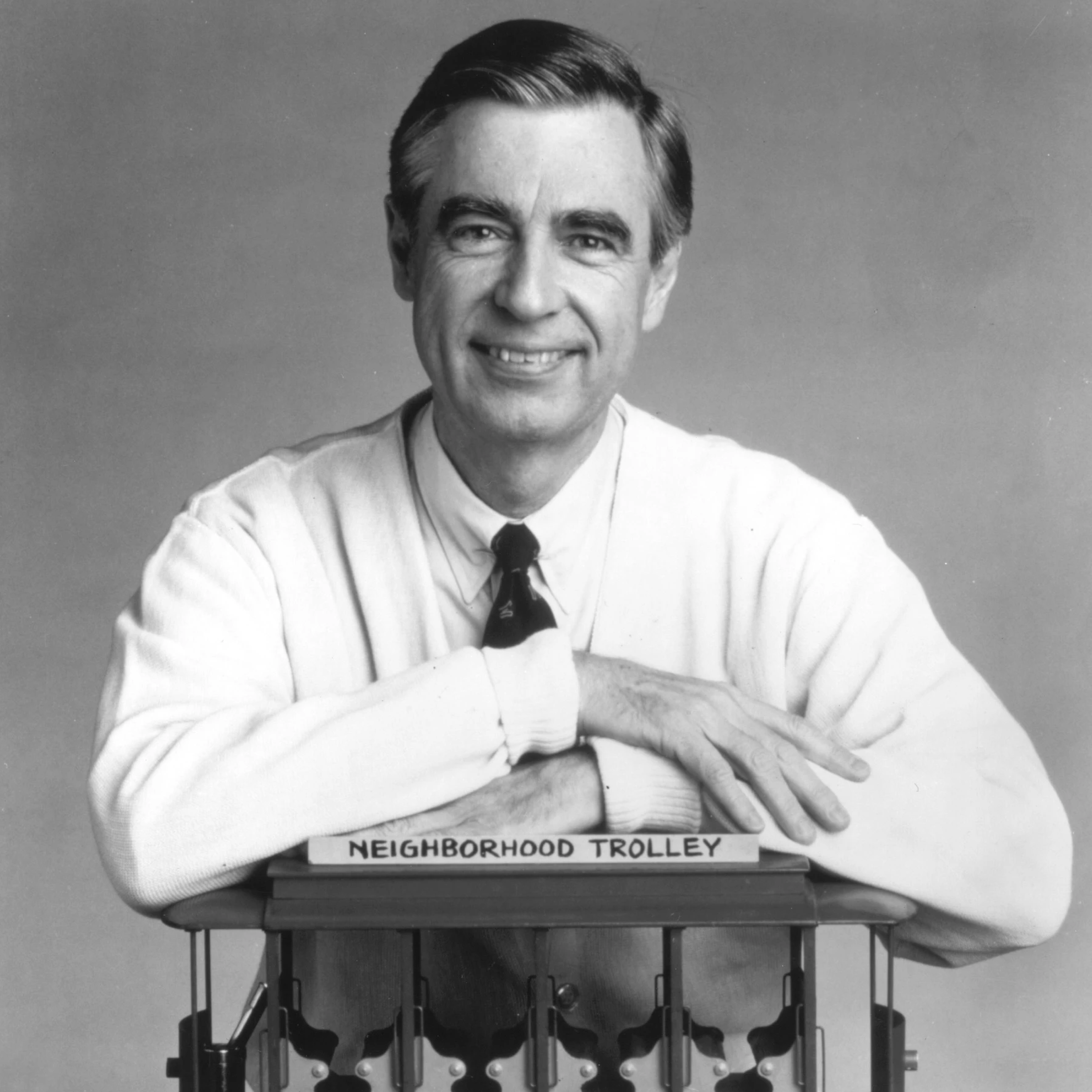
Hey, it's Al. Friday is the birthday of Fred Rogers, the incomparable host of the TV show Mr. Rogers Neighborhood. A true public media icon. And to celebrate his life and work, we're bringing you a special bonus episode. It was originally part of a show that came out last November. I hope you enjoy it. Okay, here it is. From the center for Investigative Reporting and prx, this is Reveal. I'm Al Edson. Let's go back to 1961. Television is blowing up. 90% of Americans have TV sets in their homes. People are hooked, especially kids. The chairman of the Federal Communications Commission at the time is a guy named Newton Minow. And he's concerned. So at an annual meeting of the national broadcasters, he gives a fiery speech and challenges them to watch their own stations for a day.
- [01:20]
C
Without a profit and law sheet or a rating book to distract you, keep your eyes glued to that set until the station signs off. I can assure you that what you will observe is a vast wasteland.
- [01:32]
B
Minow thinks bad TV is bad for people, especially children.
- [01:37]
C
Is there no room for a children's news show? Explaining something to them about the world at their level of understanding?
- [01:44]
B
He says, sure, TV can entertain, but let it teach something too.
- [01:48]
C
As you may have gathered, I would like to see television improved. But how is this to be brought about? By voluntary action by the broadcasters themselves, by direct government intervention?
- [02:02]
D
Or how?
- [02:04]
B
The how came seven years later when Congress created the Corporation for Public Broadcasting, or cpb. It was the start of an era that would lead to decades of award winning children's television shows like Sesame street, the Electra Company, Reading Rainbow,
- [02:26]
C
a Reading
- [02:26]
E
Rainbow
- [02:29]
B
and of course, Mr. Rogers neighborhood.
- [02:32]
D
It's a beautiful day in this neighborhood. A beautiful day for a neighbor. Would you be mine?
- [02:38]
B
Fred Rogers, the man in the cardigan sweater, was launched into national stardom with the birth of public television. And he became its most famous defender. Through his story, we're going to look back at public media's decades long struggle to hold on to federal funding and survive Washington politics. Michael Schiller takes it from here in the Steel City.
- [03:01]
D
Won't you please, won't you please, please, won't you be my neighbor? Hi.
- [03:12]
E
I was Mr. Rogers, real life neighbor. I grew up In Pittsburgh in the 1970s, near where he lived with his wife and kids. Back then, the city was a lot different than his show's Neighborhood of Make Believe Pittsburgh in the 70s was more like Eddie Murphy's Saturday Night Live spoof.
- [03:28]
F
This is how you answer a door in my neighborhood.
- [03:31]
E
What is it? The real city was struggling with crime, polluted air and segregation. Mr. Rogers neighborhood of make believe was not. It was a place for kids to process the harsh realities of life and the emotions that come with it.
- [03:46]
D
Did you ever know any grownups who got married and then later they got a divorce?
- [03:51]
E
Fred helped me make sense of my own parents divorce.
- [03:53]
D
And those children cried and cried. You know why? Well, one reason was that they thought it was all their fault. But of course, it wasn't their fault.
- [04:08]
E
I loved his show.
- [04:11]
G
Walk up our miniature staircase.
- [04:17]
E
I'm walking into WQED, the place where the Mr. Rogers show was filmed.
- [04:22]
G
We moved into this building in 1970.
- [04:25]
E
WQED President and CEO Jason Jedlinski gives me a tour of the station. It feels and smells like a classic 70s public TV station in here. Musty, but in a good way. Layered with history.
- [04:37]
G
I'll take you up to the studio if you want to take a picture with the tree or the castle.
- [04:43]
E
Oh, you know I do.
- [04:44]
C
Of course.
- [04:46]
E
The influence of Mr. Rogers show never left me. But I've never been inside the station until today. The famous studio A WQED with the great picture of Fred Rogers. This is so fun. Look at this. Can I just take a peek at the stage? Of course, the stage is empty this afternoon except for some ladders and stacked chairs.
- [05:08]
G
There are people who think it should be a museum. And I'm actually very proud of the fact that it's still actively used and frequently used to experiment and create art.
- [05:20]
E
Wqed opened in April 1954 as the first community sponsored educational television station in America.
- [05:27]
C
WQED exists for the sole purpose of offering education.
- [05:34]
E
They even had a show that reached thousands of steelworkers who were able to earn the equivalent of a GED by watching classes from home.
- [05:41]
G
And that notion of the high school of the air, that's what it was called in 1954, really stemmed out of community leaders saying, how do we take this new medium that is coming into people's living rooms and use it to achieve something other than a laugh or to sell a carton of cigarettes?
- [06:00]
E
This is the incubator where Fred Rogers show emerges. He draws on philosophies about early childhood education to craft thoughtful episodes that become Popular on wqed. And once the Corporation for Public Broadcasting is formed, the show's able to go national. The year is 1968.
- [06:17]
H
It's this year of major turmoil. You know, starting off the Tet Offensive,
- [06:22]
E
Emily Ruby is a curator at the Heinz History center in Pittsburgh, where the show's original sets and props live.
- [06:27]
H
You have all of this kind of racial unrest, and then you have the assassination of Martin Luther King and Robert Kennedy.
- [06:36]
E
In the days after the assassination of RFK, Mr. Rogers airs this show where his puppet Daniel Tiger asks, what does assassination mean? It was groundbreaking tv.
- [06:53]
D
Well, it means somebody getting killed in a sort of surprise way.
- [07:07]
E
Now, you might think show sponsors might say, fred, what are you doing? But the opposite happens. Emily reads a note from Sears and Roebuck, a big funder at the time.
- [07:16]
H
We have been gratified by the spontaneous public reaction to a television personality who, in a time of violence, speaks quietly about coping with violence.
- [07:25]
E
It's a hit. People all over the country are tuning in. But less than a year later, the show and CPB are already facing a crisis. Richard Nixon has just become president. The Vietnam war is raging, and he wants to cut CPB's $20 million budget in half. So Fred Rogers goes to Congress to testify.
- [07:43]
I
All right, Rogers, you got the floor.
- [07:47]
E
Senator John Pastore, a Democrat, was the subcommittee chair. He had never heard of Fred show and was known to be socially conservative.
- [07:55]
D
Senator Pastore, this is a philosophical statement and would take about 10 minutes to read, so I'll not do that.
- [08:05]
E
Fred is young, he's handsome, he's dressed in this black suit, and he sits up in his chair and speaks directly to lawmakers. He tells him his show costs the equivalent of what it costs to make two minutes of cartoons.
- [08:16]
D
Two minutes of animated what? I sometimes say bombardment to Fred.
- [08:24]
E
The cartoons of the day, like Looney Tunes, are filled with needless violence.
- [08:28]
D
We don't have to bop somebody over the head to make him to make drama on the screen. We deal with such things as getting a haircut or the feelings about brothers and sisters and the kind of anger that arises in simple family situations.
- [08:49]
E
As Pastore listens, you can see his demeanor starting to change.
- [08:52]
D
And I feel that if we in public television can only make it clear that feelings are mentionable and manageable, we will have done a great service for mental health.
- [09:09]
E
By this point, Pastore has kind of melted.
- [09:12]
I
I'm supposed to be a pretty tough guy, and this is the first time I've had goosebumps for the last two days.
- [09:20]
D
Well, I'm grateful not only for your goosebumps, but for your interest in our kind of communication.
- [09:27]
E
Fred ends his remarks with lyrics to a song about anger.
- [09:31]
D
What do you do with the mad that you feel when you feel so mad you could bite? When the whole wide world seems oh, so wrong and nothing you do seems very right?
- [09:43]
E
The whole testimony is only six minutes. He's so calm, and by the end of it, Pastore is obviously moved.
- [09:50]
I
I think it's wonderful. I think it's wonderful. Looks like you just earned the $20 million.
- [10:08]
E
In the years after that meeting, Nixon became more and more antagonistic towards the news shows on pbs. He wanted his critics off the air. That didn't happen. And Congress eventually decides to fund CPB two years in advance to protect it from political headwinds. But it doesn't take long for that to get challenged, too. In the 80s, President Ronald Reagan tried to claw back half of CPB's budget. It was an early attempt at rescission.
- [10:35]
C
No government ever voluntarily reduces itself in size, so government programs, once launched, never disappeared.
- [10:42]
E
Congress compromises by cutting CPB's budget by 20%. In the 1990s, when Newt Gingrich becomes Speaker of the House, one of his first moves is to try to eliminate CPB funding completely. Why is there this small elite group
- [10:55]
C
at the Corporation of Public Broadcasting that
- [10:57]
E
gets to spend money they didn't earn?
- [10:59]
H
Newt Gingrich said something about it being an elitist form of television.
- [11:03]
E
That's historian Emily Ruby.
- [11:05]
H
Again and again, Fred's reiterating that this is something that's reaching all kids of all income levels. It's the opposite of elitist.
- [11:12]
E
Gingrich fails. The irony is Fred was a registered Republican, and he never wavered from his support for public television. He passed away in 2003. And in the two decades since, Republican lawmakers made several more attempts to wipe out CPB. Mitt Romney pledged to cut it during his 2012 presidential run, calling out Big Bird at a debate. Barack Obama's campaign loved it.
- [11:38]
B
It's me, Big Bird, Big Yellow, a menace to our economy. Mitt Romney knows it's not Wall street you have to worry about, it's Sesame Street.
- [11:47]
E
I'm gonna stop the subsidy to PBS this time around. Fred Rogers wasn't there to save public media.
- [11:54]
J
I could not have foreseen how much damage this would do as quickly as it's done.
- [11:59]
E
Julian Wylie is a reporter for Current magazine. His beat is public television.
- [12:04]
J
You know, hundreds of people laid off at different stations that we know of. Millions in cuts in Programming. It's just hard to find an adjective for how bad this is.
- [12:14]
E
Each station will feel the cuts differently. At WQED, the station that gave us Mr. Rogers neighborhood, they had to lay off a third of their staff.
- [12:22]
J
Cbb. It just got caught up in the culture war, basically. In a way, public media was kind of just a bystander for the bigger problems in politics, I guess.
- [12:33]
E
Public media used to be considered so wholesome that people made fun of it. And yet in the halls of Congress, it was portrayed as salacious and deviant. At a hearing on public media, Marjorie Taylor Greene accused PBS of liberal bias. And then she took it further. There was a larger than life photo print of a drag queen behind her that she pointed to and said, as
- [12:55]
C
a mother, if I had walked in my living room or one of my children's bedrooms and seen this child predator and this monster targeting my children, I would become unglued.
- [13:10]
E
The person in the photo she was talking about was part of a literacy program where drag queens read books to kids. Greene's remarks were so far afield from Fred's message of universal love and acceptance. I feel like the world needs the spirit of Mr. Rogers now more than ever. And I'm wondering if there are any of his ideas or teachings that you think are worth reflecting on in this moment.
- [13:35]
H
Oh, so many.
- [13:36]
E
Emily Ruby, Again, I don't want to
- [13:39]
H
speak for him, but, you know, I do feel like he would be really disturbed by what was happening and the thing that he would always do that I love. Anytime he would speak publicly, many, many times when he would speak publicly, he would say at the end, think about the person that loved you into being.
- [13:58]
K
Have special ones who have loved us into being.
- [14:02]
E
This is Fred Rogers accepting a lifetime achievement award at the Emmys.
- [14:06]
K
Would you just take along with me 10 seconds to think of the people who have helped you become who you are, those who have cared about you and wanted what was best for you in life. 10 seconds of silence. I'll watch the time.
- [14:33]
E
The camera scans the room, the audience is in tears. This man knew how to help people tap into their better selves, how to help them choose kindness over hatred. And, yes, how to be good neighbors.
- [14:48]
D
Won't you please, won't you please, please, won't you be my neighbor? Did you have a good weekend? Glad to see you.
- [15:06]
B
Thanks for listening. And a very Happy birthday to Mr. Frank Fred Rogers. That story was produced and reported by Michael I. Schiller and edited by Cynthia Rodriguez. Ana Rogers was our fact checker. Sound designed by Jim Briggs and Fernando Arruda. Reveal is listener supported. That means without generous donations from listeners like you, we would not exist. So if Reveal matters to you, to help support the work, make a donation. Just go to revealnews.org gift it could not be easier. That's revealnews.org gift don't go anywhere. We got a brand new show for you tomorrow. I'm Al Letson. And remember, there is always more to the story.
- [15:56]
F
It's a beautiful day in this neighborhood A beautiful day for a neighbor Would you be mine? Could you be mine? It's a neighborly day in this beauty Would a neighborly day for a beauty Would you be mine? Could you be mine?
- [16:12]
K
I have always wanted to have a
- [16:14]
F
neighbor just like you I've always wanted to live in a neighborhood with you so you'd be mine could you be mine? Always wanted to live in a neighborhood with you so you'd be mine could you be mine? Would you be mine? Could you be mine? Say for a neighbor you be mine? Could you be mine?
- [16:59]
D
From prx.