Loading summary
Transcript197 lines
- [00:01]
Josh Sanborn
This is Josh Sanborn, producer at Reveal. This episode is made possible by support from the US Climate Action Network. The fight for our planet is too big for anyone to tackle alone. That's why the US Climate Action Network acts as a backbone for the climate movement. From convening strategy sessions to ensuring frontline communities are at the decision making table. Together with their members and listeners like you, USCAN is building a collective force for justice that's far greater than the sum of its parts. Find your place in the movement@usclimatenetwork.org
- [00:36]
Sponsor Announcer
this
- [00:36]
episode is brought to you by Progressive Insurance. Do you ever think about switching insurance companies to see if you could save some cash?
- [00:42]
Progressive makes it easy to see if
- [00:44]
you could save when you bundle your home and auto policies. Try it@progressive.com, progressive Casualty Insurance Company and affiliates. Potential savings will vary. Not available in all states.
- [00:57]
Jane Butcher
Want to make a lasting difference to Reveal and protect independent journalism? Right now, it won't cost you a thing. Hi, it's Jane Butcher from Boulder, Colorado. I've spent my life fighting for justice, which is why I'm a longtime supporter of Reveal and the center for Investigative Reporting. I'm stepping up to protect the future of fearless independent journalism and you can too, by joining CIR's Legacy Challenge. Just let Reveal know you're going to include them in your legacy plans. Provide some basic information, and here's the really exciting part. A generous donor will contribute up to $10,000 now to fund Reveal's essential reporting in honor of your gift. Your legacy gift of any size makes an impact not just in the future, but right now. If you'd like to join me or want to learn more, please reach out to giftsevealnews.org again, that's giftsrevealnews.org the Legacy Challenge is only available for a limited time. Stand up for the Truth today.
- [02:11]
Al Edson
From the center for Investigative Reporting in prx, this is Reveal.
- [02:15]
Al
Al.
- [02:15]
Al Edson
I'm Al Edson. The year is 1974. The number one song on the radio is the Way We Were by Barbra Streisand. It's the same year Muhammad Ali fights George Foreman. It's an era of epic moments and wild controversies. The same year Nixon resigns in the fallout from Watergate.
- [02:39]
Nate Halvorson
Therefore, I shall resign the presidency effective at noon tomorrow.
- [02:45]
Al Edson
Something else happened in 1974 that was a lot more low profile. A new weed killer came onto the market. It had a newly patented chemical called glyphosate. You likely know it by its brand name, Roundup.
- [03:02]
Nate Halvorson
I'M a loving husband and a real
- [03:04]
Al Edson
good dad, but weeds just make me rattlesnake mad.
- [03:06]
Nate Halvorson
Now Roundup has a new sharpshoot wand. I'm sending them weeds to the great beyond.
- [03:14]
Al Edson
Roundup was marketed as an easy way to keep your lawn looking tidy. Roundup's creator, Monsanto, said it was safe when used as directed. But there have been dozens of studies that suggest otherwise. In 2015, the World Health Organization designated it a probable carcinogen. Still, Roundup and glyphosate continue to have advocates. One was an environmental scientist named Patrick Moore. The same year as the WHO announcement, he appeared in a French documentary claiming glyphosate is so safe that you can drink it.
- [03:49]
Nate Halvorson
You can drink a whole quart of
- [03:51]
Josh Sanborn
it and it won't hurt you.
- [03:52]
Al
You want to drink some?
- [03:54]
Nate Halvorson
We have some here. I'd be happy to, actually. But not. Not really.
- [03:57]
Al
But not really.
- [03:58]
Nate Halvorson
I know it wouldn't hurt me if.
- [03:59]
Al
If you say so.
- [04:00]
Nate Halvorson
I have some glasses. No, no. I'm not stupid.
- [04:02]
Joe Van Meter
I'm not an idiot.
- [04:07]
Al Edson
It's been more than 50 years since it came out, but the debate over glyphosate's safety continues to rage in the media, in scientific journals and in civil courts. A few years ago, glyphosate was removed from Consumer Roundup, the kind that's sold on store shelves. Its maker says it's because of the lawsuits. There have been roughly 180,000 legal claims against Roundup, leaving the manufacturer on the hook for. For more than $12 billion. And then this February, the legal landscape changed.
- [04:44]
News Reporter
An ingredient found in Roundup weed killers getting some national attention after the President signed an executive order protecting the national supply despite its potential cancer causing properties. The decision inflamed advocates of the Make America Healthy Again movement, which have pressed for more regulation.
- [04:59]
Al Edson
President Trump signed an executive order giving immunity to companies that make glyphosate. The move sparked pushback across the political spectrum, from environmentalists to maha moms.
- [05:11]
Nate Halvorson
I was outraged.
- [05:12]
News Reporter
I was actually sick to my stomach when I saw this executive order.
- [05:16]
Nate Halvorson
It was basically a love letter to glyphosate.
- [05:20]
Al Edson
Two days after the executive order was signed, Republican Congressman Thomas Massie introduced a bipartisan bill called the no Immunity for Glyphosate act.
- [05:29]
Lobbying Expert
They spent over $9 million lobbying the executive branch and the legislative branch so that they don't have to be liable for any damages that their herbicide causes.
- [05:41]
Al Edson
2026 is shaping up to be a big year for Roundup and glyphosate, maybe the biggest since it came on the market. The Environmental Protection Agency is expected to make a determination on whether or not the chemical causes cancer or other health problems. And there's also an ongoing legal case that's made it all the way to the Supreme Court.
- [06:04]
Craig Thomas
The Supreme Court has agreed to hear arguments concerning claims that the weed killer Roundup causes cancer.
- [06:10]
Nate Halvorson
Tens of thousands.
- [06:11]
Al Edson
SCOTUS is expected to rule in the coming months on whether or not people can continue to sue Roundup's manufacturer in state courts. And while all this is playing out, glyphosate is being sprayed across the country. There's actually a surprising place that is being used more than ever before. That's what my colleague, reporter Nate Halvorson, discovered. He starts in the Northern California wilderness, where he stumbled upon this story.
- [06:41]
Nate Halvorson
For the past 10 years, the Lassen National Forest has been my happy place. I bought an old hunting cabin here and fixed it up. I spend a lot of time up here. It's where my body resets. The big city anxieties melt away. It's also where I get to do one of my favorite things. Mushroom foraging. It's kind of like investigative journalism, except instead of uncovering misdeeds, I uncover edible treasures with my dog Lily at my heels. Okay, girl, come on,
- [07:15]
Lee Johnson
let's go.
- [07:20]
Nate Halvorson
And for a long time, this was like paradise. And then in 2021, the area and the people who live up here were devastated by the Dixie fire.
- [07:31]
News Reporter
Thousands of firefighters are working around the clock, scorching 5,000 acres an hour, fueled by bone dry conditions, gusty winds, and the hottest summer on record.
- [07:44]
Nate Halvorson
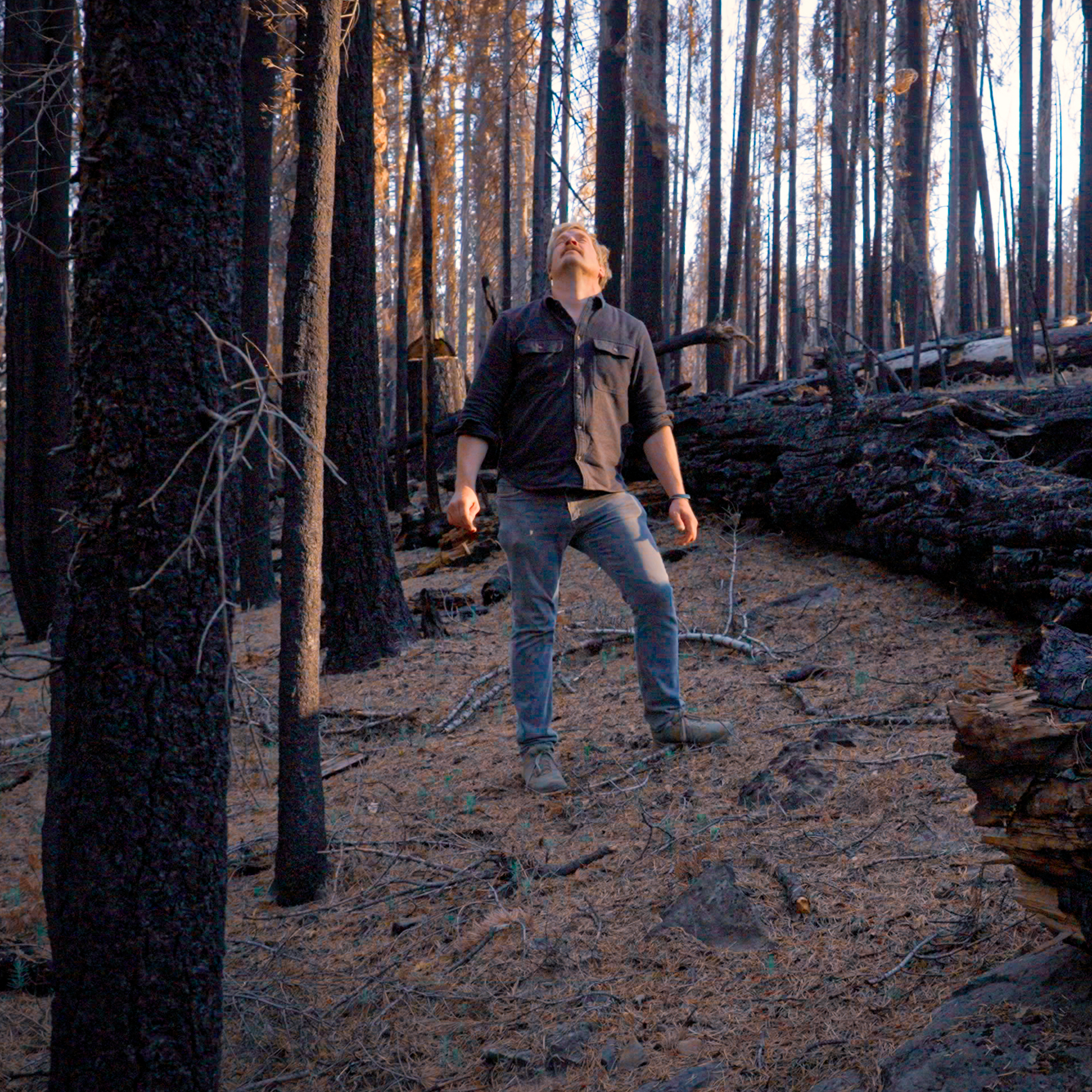
Dixie was the largest single fire in California state history, scorching nearly a million acres of public and private forest land. And then, just three years later, came the Park Fire, burning another 430,000 acres. On a personal level, both blazes got uncomfortably close to my cabin. After the fires, when they led us back into the area, my heart sank. So many of the places I loved had burned to the ground. But after a few years, life began returning to the land. Eventually, ashes gave way to flowers and shrubs and even little trees. And that's when I noticed something was off. As a mushroom forager, my eyes are always scanning the ground and looking around. There were places where the forest still seemed dead. I think I actually said out loud one day, why is nothing else growing on the forest floor? I'd eventually go out and start recording what I was seeing, what's remarkable.
- [08:59]
Craig Thomas
Now, as I'm driving, everything on my left is brown and dead. And on my right, the bushes are green and they're vibrant. It's like night and day.
- [09:07]
Nate Halvorson
I pull the car over to the side of the road. On the right side, you look on
- [09:11]
Craig Thomas
the ground, it's covered, of course, with the bushes, but there's flowers. I can hear a bee buzzing right in my ear right now.
- [09:18]
Nate Halvorson
The other side is a different story.
- [09:20]
Craig Thomas
All of these once verdant green bushes have turned this rust color brown.
- [09:28]
Nate Halvorson
What was happening? I got my first big clue in the mail in the form of a letter from the US Forest Service, basically saying that the area near my cabin is part of a big fire recovery project. Their plan is to clear out old dead trees and replant new ones. And then I came across the word that opened my eyes to what's happening. Herbicides. The government's plan is to spray herbicides, namely roundup, across about 10,000 acres of forest Service land. And on top of that, other places were being sprayed, too, like those areas that I'd been seeing where nothing was growing on the ground. It wasn't Forest Service land. It was all private timberland where the spraying had already begun.
- [10:14]
Craig Thomas
So now we're standing out in an area that's no longer alive. They have sprayed this whole field with herbicides, and it's all to make way for the little pine trees you see poking up here and there. The idea is that by killing these bushes, you're giving all of the light to the trees, all of the water to the trees, all of the nutrients to the trees, and the trees can grow up faster.
- [10:36]
Nate Halvorson
The timber companies are treating the forest like any other cropland, killing off emerging plants and anything that could compete with the baby trees. Near my cabin, there are huge tracts of private timberland. And the company that owns the biggest chunk of it and that's doing the most spraying around here is Sierra Pacific Industries. Its founder, a guy named Archie Red Emerson, is worth billions. Sierra Pacific is the largest private landowner in California and the second largest in the entire United States. If they own that much land and they're spraying here. It made me wonder, where besides Lassen, are they spraying? And here is where I caught a break. California maintains the most extensive records of pesticide spraying in the country. So I began requesting public documents, and what I got back was more than 5 million records. All of the reports that companies and government agencies have to file when spraying glyphosate in the state, going back 30 plus years. It was so much data, it crashed my computer. So I called up our data guru, Melissa Lewis, to help me make sense of it.
- [11:49]
Melissa Lewis
Yeah, I mean, it is an enormous data set. Most of my ebooks are around like one and a half megabytes. So it's like the equivalent of 1,000 books, this data set.
- [12:02]
Nate Halvorson
Wow. What did you think when I first brought you this stuff?
- [12:05]
Melissa Lewis
I guess I was mostly astonished by the sheer range of applications. I didn't realize that it was widely applied in forests, so that was pretty surprising.
- [12:16]
Nate Halvorson
Melissa shares a map of where glyphosate products like Roundup are being sprayed across the state. What it shows is that the use of glyphosate in the forests of California has more than quadrupled over the past 20 years. Turns out my cabin near Lassen Volcanic national park is surrounded by some of the most heavily sprayed forest land in the state. And the other hotspots, well, they might even sound more familiar to you. I mean, this is getting sprayed around some of the biggest tourist destinations in California. Yosemite Valley, Lake Tahoe. And it looked like when I was looking at your data, I mean, those actually, those two places have some of the heaviest or the heaviest spraying in the state, right?
- [12:56]
Melissa Lewis
Yeah, they do, like, orders of magnitude greater than the average for forestry application. I checked, and in 2023, about 270,000 pounds of glyphosate were sprayed in forests in California. I don't know how much that amounts to. Sounds like a lot to me.
- [13:16]
Nate Halvorson
It is a lot. In fact, Melissa's database shows it's a record amount. Spraying in the forest has increased every year for nearly a decade, meaning that almost every year has set a new record for the amount of glyphosate sprayed in California's forests. I expected this kind of spraying in the croplands of California Central Valley. But I had thought of the forest as a sanctuary where wildlife was safe from pesticides. The data shows that's just not the case. Scientific studies have shown glyphosate can harm the ecosystem and wildlife and could have lingering impacts for years. So that leads me to my next big. Why do regulators say this is okay?
- [14:07]
Al Edson
Next up, how the US Forest Service got hooked on Roundup.
- [14:11]
Al
They're addicted to herbicide use and glyphosate, and we need to get them into rehab.
- [14:17]
Al Edson
That's ahead on Reveal. Don't go anywhere.
- [14:34]
Sponsor Announcer
This show is supported by Odoo. When you buy business software from lots of vendors, the costs add up and it gets complicated and confusing. Odoo solves this. It's a single company that sells a suite of enterprise apps that handles everything from accounting to inventory to sales. Odoo is all connected on a single platform in a simple and affordable way, you can save money without missing out on the features you need. Check out odoo@o d o o dot com. That's o d o o dot com.
- [15:03]
Josh Sanborn
This is Josh Sanborn, producer at Reveal. This episode is made possible by support from League of Conservation Voters. April is Earth Month, a time to honor the natural wonders that define our home and sustain our future. Our public lands should be a living legacy, accessible for generations to come. But right now, they're at risk of being sold off to business for profit. That's why the League of Conservation Voters is fighting to safeguard these treasures. LCV is dedicated to safeguarding our environment for Future Generations. Visit LCV.orgMotherJones to donate today and help keep public lands in public hands.
- [15:41]
Lobbying Expert
Storms, floods and fires are ever more extreme. And yet the Federal Emergency Management Agency is fighting for its life.
- [15:50]
Nate Halvorson
I've never been a big fan of FEMA.
- [15:51]
Naomi Oreskes
FEMA's a disaster.
- [15:52]
Nate Halvorson
FEMA's a dirty way. People are waking up in droves to the FEMA camps.
- [15:56]
Lobbying Expert
Can the agency survive the stories that have been told about it? And can we survive without fema? The Movement to Kill FEMA is a brand new series from WNYC's on the Media. Listen wherever you get your podcasts
- [16:14]
Nate Halvorson
from
- [16:14]
Al Edson
the center for Investigative Reporting and prx. This is Reveal. I'm Al Edson. Joe Van Meter and his wife Jillian live in the shadow of Mount Lassen in Northern California.
- [16:27]
Joe Van Meter
And we've got 12 acres. We're in the middle of Lassen National Forest, just up really close to Lassen Volcanic National Park. I mean, as you see, we've got little slice of heaven here.
- [16:38]
Al Edson
They run a small family business, the Mill Creek Resort. It's where they rent cabins, RV sites and campsites and where they raise their three daughters.
- [16:48]
Joe Van Meter
We had our first daughter, Sonora, and then we've had two daughters since then. Ayla, who's two and a half, and Rosalyn, who's two months old.
- [16:56]
Nate Halvorson
Dude, congrats.
- [16:57]
Joe Van Meter
Yeah, thanks so much, man. This is the dream for us to raise our family in the woods and, you know, get to call this place their backyard.
- [17:06]
Al Edson
Reporter Nate Halverson and Joe are taking a walk through the trails behind the property.
- [17:12]
Joe Van Meter
The trees are beautiful. We have, from my understanding, some of the oldest growth trees in all of Lassen National Forest are in the Mill Creek Canyon. So even on our property, we've got, you know, ponderosa pines hundreds of years old, big cedar trees hundreds of years old.
- [17:28]
Al Edson
It's Joe's year round. Home and his day job through the harsh, snowy winters and the busy, hot summers. Mill Creek isn't fancy or expensive to stay at, but it is a very beautiful and peaceful place. Nestled beneath a canopy of pine trees. Joe has plans to make it more whimsical still. He's digging a wishing well and working on another renovation for his girls.
- [17:52]
Joe Van Meter
I'll show you our fairy garden in progress. Having three daughters, they're at a. They're at a fairy face. And they, they love it. So we, we kind of started to. To curate this little area. We got this great walking path right here.
- [18:04]
Al Edson
The whole place came very close to burning down a few years ago.
- [18:08]
Joe Van Meter
It's a miracle. It's a miracle that we're. That we're standing here talking.
- [18:11]
Craig Thomas
And how close from right here did the fires get?
- [18:15]
Joe Van Meter
Right there, really? To the. To the edge of our property.
- [18:20]
Al Edson
Mill Creek survived both the Dixie Fire in 2021 and then the Park Fire in 2024. And now the land is a part of the U.S. forest Service's ambitious plan to help the Lassen area recover. Part of that plan includes spraying glyphosate and on about 10,000 acres of federal land surrounding the campground. Glyphosate is the controversial herbicide that Nate has been investigating for the better part of a year.
- [18:47]
Joe Van Meter
It doesn't feel. It doesn't feel reassuring to me that they're going to spray and then it should be harmless.
- [18:56]
Al Edson
Nate drove to Mill Creek to talk to Joe and other folks in the area about the Forest services plan. Here's Nate.
- [19:06]
Nate Halvorson
Joe and Jillian Van Meter and their kids have been my neighbors for about 10 years. When we walk the property together, Joe takes me to a stream that flows into Mill Creek, the waterway. Their campground is named after the same stream where visitors come to fish for salmon, trout and largemouth bass.
- [19:24]
Joe Van Meter
This little stream right here that runs through our property is fed from a stream spring just up the hill, probably about a couple hundred yards away.
- [19:33]
Nate Halvorson
Joe worries about the rain that when the Forest Service sprays roundup on the hillsides around his property, it will get
- [19:40]
Joe Van Meter
into the watershed that is the water source for our whole community. So the Resort and the 100 plus homes that are here in Mill Creek.
- [19:50]
Nate Halvorson
Joe's read the studies. He knows about the billions of dollars in cancer lawsuits and settlements, plus the emerging body of research that shows glyphosate might cause a host of other health concerns, from kidney damage in children to brain inflammation in adults.
- [20:07]
Joe Van Meter
I've got great concerns about the use of herbicide anywhere near water. I Mean, it's, you know, there's no need for it. On our hillsides near community water springs, near water springs that flow into to pristine waterways like Mill Creek, there's no need for it at all.
- [20:28]
Nate Halvorson
Beyond concerns about tainted water, Joe worries about his daughters playing on land doused in Roundup. He worries about the public lands, essentially his backyard, where guests go to explore, forage, and hunt. Mill Creek is surrounded by hundreds of. Of thousands of acres of undeveloped forest. Joe walks me down to the edge of the property line through winding trails that connect the cabins with the campsites. Then we head back to the lodge.
- [20:58]
Joe Van Meter
We can go back up this way. Are we going to go to the lodge?
- [21:02]
Al
Yeah.
- [21:03]
Nate Halvorson
The needle that Joe and others from his community are threading is the mega fires from the past few years have been devastating. Something needs to be done to help the area recovery and prevent future fires. He appreciates that the Forest Service has a plan to do this. When you saw the plan, were there things in there that you thought, great, yeah, yeah, yeah.
- [21:22]
Joe Van Meter
So they have a huge fuels reduction program, which is great if you see the landscape in this area. They've had crews in there that are. That are thinning out larger trees along some of the roads and corridors that we have so that they actually have a chance to fight these fires moving forward into the future. All of that is, is 100% needed. And we see the people that are doing this work are dedicated and passionate about what they do.
- [21:48]
Nate Halvorson
There's a lot that Joe likes about the plan. That it will thin the overgrown forest, reducing potential fuels for future fires. That it will allow logging companies to harvest timber. That it will improve tree diversity, bringing back more hardwoods like black oaks and aspens. It all makes sense to them except the. The Roundup spraying.
- [22:07]
Joe Van Meter
I'm not trying to save all the trees. I'm not trying to feel like, oh, this is. We can't use herbicide, so let's do nothing. We need work to be done. And so I want to see that work done, but I want to see it done without the use of toxic chemicals.
- [22:25]
Nate Halvorson
After Joe and others complained to the Forest Service, the agency agreed to slightly reduce spraying, specifically near homes in the Mill Creek headwaters. But for Joe, that's not enough. He wants new trees to be grown without herbicides. Can it be done without Roundup? To answer that question, I drive deeper into the woods to meet Craig Thomas.
- [22:46]
Craig Thomas
Hey, Craig.
- [22:48]
Al
Nate. Nice to see you.
- [22:49]
Craig Thomas
Yeah, thanks for coming up and meeting with me. It's kind of. You've seen it many times, but it's wild coming through all this burn and just seeing.
- [22:56]
Al
I've been driving through way too much of this and the last 20 years. Yeah.
- [23:01]
Nate Halvorson
Yeah. We're standing in an area that was burned by the park fire not far from Joe's place. The blackened trees around us look like giant burnt matchsticks. The ground under our feet crunches. It's like we're standing on charcoal. Few people know more about fires and recovering from them than Craig. He runs a nonprofit called the Fire Restoration Group.
- [23:25]
Al
Group.
- [23:26]
Nate Halvorson
Lately, he's been helping Californians recover from the mega fires, and he served on the federal Wildland Fire Mitigation and Management congressional commission in 2023.
- [23:37]
Craig Thomas
Do they need glyphosate to reforest this?
- [23:39]
Al
No. No. It's damaging to people. It's damaging to biodiversity. And the system operated for thousands of years without it.
- [23:50]
Craig Thomas
You know, when you see how much herbicide they're using, plan to use right around here, you know, what's your reaction?
- [23:58]
Al
Well, my reaction is that Smokey's got a very deadly serious chemical addiction, and I really mean that. They're addicted to herbicide use and glyphosate. We need to get them into rehab.
- [24:13]
Nate Halvorson
He's talking about Smokey Bear, the Forest Service's spokesman for the past 80 years. Remember, only you can prevent forest fires. The Forest Service also plans to spray Roundup here, where Craig and I are standing, as part of their reforestation plan.
- [24:30]
Craig Thomas
Everything around us looks dead, but if you look closer, we're now starting to get, you know, these little ferns that are growing back. And what happens to these when they come in with glyphosate?
- [24:41]
Al
They kill them. And if you look close on the ground, you'll see little seedlings everywhere, little trees coming back.
- [24:47]
Craig Thomas
Absolutely, yeah.
- [24:48]
Nate Halvorson
There is one key reason the Forest Service uses Roundup. It's cheaper. One agency report says it costs three times as much to do the work by hand, tearing out bushes and clearing the land without herbicides. But here's the thing. It's totally possible to do it manually and get the same results. That's what the Canadians do in Quebec, which is one of the top timber producers in North America. And you know what they found? Even though it costs more, it creates jobs for locals instead of sending money to the chemical companies.
- [25:24]
Al
The wedding of the chemical industry and the Forest Service has got to be seriously and deeply looked at, and, I would argue, incredibly inappropriate. And, you know, chemicals, on a personal level, I think they're way more riskier than EPA or the people that make the chemicals Monsanto would like us to believe. They say, oh, if you follow the instructions on the label, everything will be fine. Well, how come the people that live adjacent to a field that's been sprayed have got glyphosate in their urine and their kidneys and liver, and the spraying people are getting Hodgkin's lymphoma? Explain that to me because I, you know, I'm not buying the safety factor.
- [26:13]
Nate Halvorson
I mentioned earlier that I sifted through millions of records for this project, including work site inspections of workers spraying herbicide in the woods. One thing I found was a photo of a group of men in the Eldorado Forest near Lake Tahoe. They're refilling their spraying backpacks with Roundup, which is dripping all over their equipment, including on a lid, which one man holds with his bare hands.
- [26:37]
Craig Thomas
You can see his fingers are covered in purple, which means glyphosate. So these guys are covered.
- [26:43]
Al
That's what I mean is what's happening to that workforce. My guess is they don't get told how dangerous that is.
- [26:51]
Craig Thomas
Matter of fact, they even cite here
- [26:52]
Nate Halvorson
that they're not trained.
- [26:53]
Al
There we are. When was this?
- [26:57]
Craig Thomas
2021. And when you see stuff like these, these guys covered in, in herbicide and glyphosate, what do you think here in, in the US Forest system?
- [27:06]
Al
What I think is the Forest Service responds to me when I bring that very thing up and they go, well, we've never had any records of anybody being hurt back on the job, doing it. And I'm like, no. They die of non Hopkins and lymphoma 15 years later.
- [27:23]
Nate Halvorson
Non Hodgkin lymphoma is a type of blood cancer. That's the type of cancer Dwayne Lee Johnson developed. His skin was similarly exposed to Roundup while he was working as a school groundskeeper in the San Francisco Bay Area. He would go on to file the first lawsuit against Monsanto in 2016. Last week's California court decision awarding $289 million in damages to a dying man who claims Monsanto's Roundup weed killer gave him cancer. Here's Johnson speaking publicly, warning about the risks of glyphosate.
- [27:55]
Lee Johnson
This is something that has definitely changed my life. It didn't happen right away. And that's what I think, that people really get it confused is it didn't happen right away. I've been through radiation, I've been through chemo, I've been through pills. I've been through all kind of treatments, and they still can't Figure out what to do with this cancer.
- [28:12]
Nate Halvorson
A jury found that Monsanto acted with quote, malice and disregarded cancer risks.
- [28:19]
Naomi Oreskes
Would ordinary consumers have recognized the potential risks? Answer no.
- [28:26]
Nate Halvorson
The court ruled that Johnson's exposure to Roundup caused his non Hodgkin lymphoma. Johnson's case is one of more than 180,000 legal claims related to glyphosate based products. As a result, the manufacturer is on the hook for more than 12 months billion dollars. In Johnson's case, the court determined that Monsanto wanted people to believe there is no chance that Roundup could make people sick. But the truth is the science isn't that cut and dry. Some reputable scientists think it likely causes cancer and others don't. And this debate has played out in court. Glyphosate verdicts are split nearly down the middle. In about half the cases, juries sided with plaintiffs like Johnson and the other half sided with the manufacturer. But Monsanto didn't want the public to think this question of safety was even up for debate. And what came out in all these court cases was that years before the company had launched a secret plan. Let me explain. From the beginning, Monsanto marketed Roundup as a safe go to herbicide for lawns.
- [29:50]
Lee Johnson
Roundups can be used where kids and
- [29:52]
Nate Halvorson
pets will play and breaks down into natural materials. Since Roundup kills the root, what's not coming back, Bob the weed. By the late 90s, studies came out showing that Roundup might damage DNA which raised cancer concerns. Monsanto knew it had a problem with public perception. So employees launched a secret plan. They would orchestrate their own scientific studies that emphasized that glyphosate was safe and pay independent scientists to be the public face of those papers. Their whole plan became public after Lee Johnson filed his lawsuit in discovery. Company executives emails were exposed in that case and the lawsuits that followed. Monsanto employees were forced to answer questions during depositions like this one.
- [30:47]
Lawyer
And you knew that it would be more powerful if it was looked like it had been written by outside authors, right?
- [30:53]
William Haydens
That's not correct.
- [30:53]
Lawyer
Let's see what it says here. You say it was noted this would be more powerful if authors by non Monsanto scientists.
- [31:04]
William Haydens
Oh yeah, I see that. So I sort of misunderstood your question.
- [31:08]
Nate Halvorson
That's William Hydens getting grilled by a lawyer during a deposition. He was a Monsanto employee and a chief architect of this company plan. Heydance helped identify the scientists and then coordinated with them. As the studies were being written in the published papers. The authors made a point to write that they Were quote unquote independent, not recruited by Monsanto and that no one from the company reviewed their work before it was published. None of that was true. The lawyer confronts hidens about one of those studies.
- [31:39]
Lawyer
You did in fact review the article before it was published.
- [31:43]
Lee Johnson
True,
- [31:45]
William Haydens
I received, there was times I remember that I received them but I never provided comments. I asked for for changes of any content. I basically never responded. I received them and just filed them off because I did not want to be part of influencing this project at all.
- [32:04]
Lawyer
Dr. Hayden, you wrote 28 proposed edits this paper before it was published. That's the truth, isn't it Sir, I
- [32:11]
William Haydens
don't know if that number is correct or not. My recollection was the only information that I there is at work. One point in time when the the different scientists actually started reviewing each other's work and they were commenting on each other's work and there's at one point in time that I recall that I made some comments on some of their comments.
- [32:36]
Nate Halvorson
Haydn's own emails show he not only reviewed the paper, he even drafted an early version of it. Whole paragraphs of his draft are in there verbatim.
- [32:45]
Lawyer
And the truth Dr. Hayden is you ghost wrote that report, isn't it?
- [32:51]
William Haydens
That is not correct.
- [32:53]
Nate Halvorson
We reached out to Haydns but didn't hear back. In 2018 the German company Bayer acquired Monsanto and with it Roundup. When I reached out for comment they sent me a statement that said quote Bayer stands behind the safety of our glyphosate based products which had been tested extensively, approved by regulators and used around the globe for more than 50 years. As for those scientific studies, the company says Monsanto did nothing wrong, that what happened was not ghostwriting. But not everyone is buying that, including Harvard professor Naomi Oreskes. She dove deep into those Monsanto records in a recent research paper.
- [33:39]
Naomi Oreskes
So a lot of people have asked well how do we know it's ghostwritten? And the short answer is because they say so. Right? Because these emails they discuss ghost writing as a strategy.
- [33:49]
Nate Halvorson
Naomi studies how corporations influence and corrupt scientific research and she read through the Monsanto emails to understand how employees shaped the seemingly independent studies. She reads to me from one of those email exchanges we would be keeping
- [34:06]
Naomi Oreskes
the cost down by us doing the writing and they would just edit and sign their names so to speak. Recall that is how we handled Williams Crows and Monroe.
- [34:17]
Nate Halvorson
Williams Crows and Monroe is one of the studies that came out of Monsanto's secret plan. The full name of the paper is Safety Evaluation and Risk Assessment. Of the herbicide Roundup and its active ingredient glyphosate for humans. But it's often referred to by its shorter name, the Williams paper. It asserts that Roundup does not cause cancer. And that report is still being used by government regulators to say the chemical is safe 26 years later.
- [34:46]
Naomi Oreskes
This paper, the Williams et al 2000 paper, was one of the most cited papers ever written on glyphosate safety. So right from the get go, it was clear this paper mattered and that the integrity of this paper was really central to the integrity of the entire debate over glyphosate safety.
- [35:04]
Nate Halvorson
Naomi co authored a peer reviewed paper in 2025 that lays out how Monsanto's efforts shaped the public perception of glyphosate for decades to come.
- [35:14]
Naomi Oreskes
We have regulators making decisions based on scientific papers. The assumption is that those papers are valid, that they're not fraudulent, that the scientific paper debate has not been consciously and deliberately manipulated. But if we have evidence that it has been manipulated, that's really, really worrisome for the regulatory framework.
- [35:33]
Nate Halvorson
There are a number of studies, independent, peer reviewed studies, that Monsanto did not pay for or orchestrate. These studies show that glyphosate damages cells in a way that can cause cancer. It's the findings from studies like these that led the World Health Organization's cancer research arm to classify glyphosate as probably carcinogenic to humans. The 2000 Williams paper denies that there is even a possibility it causes cancer. Let me just read the last line of the Williams paper. There is no potential for Roundup herbicide to pose a health risk to humans. And this is where it connects back to the forests of California. This paper is still cited all the time as evidence that glyphosate is safe. I dug through hundreds of pages of government regulations and guess what I found? The US Forest Service relied heavily on the Williams paper when deciding whether or not glyphosate is safe to spray. It is the most cited journal article in their glyphosate risk assessment report. I drive out to meet Russell Nickerson, district ranger for Lassen National Forest.
- [36:54]
Russell Nickerson
My district's over 500,000 acres.
- [36:57]
Nate Halvorson
What does a district ranger do? What are your responsibilities?
- [37:00]
Russell Nickerson
So I'm the decision maker for the district. So for that land base overseeing the wildlife biologists, botanists, all the specialists, and
- [37:09]
Nate Halvorson
the fire program, we're in the U.S. forest Service office, A plain building in the heart of the small mountain town of town Chester, California. A biologist by training, Ranger Nickerson leads the Forest Service's restoration plan. And I'm here to ask him why he thinks it's safe to spray glyphosate as part of this plan.
- [37:28]
Russell Nickerson
I think in our plan, we do talk about only utilizing it one time, and that's for the initial planting and growth of those trees. And so then the trees get up tall enough that they will out compete the brush and shade it out and compete.
- [37:44]
Nate Halvorson
Well, I think I read in the plan you'd come back in and spray again once the trees were established.
- [37:48]
Russell Nickerson
Yeah, you have to get out there in advance of brush showing up. So that's the hard part with this and timing wise, and then planting and then you could have one more treatment after you plant.
- [38:00]
Nate Halvorson
And is it safe to use?
- [38:08]
Russell Nickerson
I mean, really, if you want to talk more herbicide details, it's probably our Washington office that you would talk to on that.
- [38:15]
Craig Thomas
And if you see what I highlighted there, it says 93% of the species they look at will be adversely impacted by glyphosate.
- [38:24]
Nate Halvorson
You're a biologist.
- [38:25]
Craig Thomas
Does that give you pause?
- [38:29]
Russell Nickerson
Still gotta talk to our national office on that one. Sorry.
- [38:31]
Nate Halvorson
I ask him why I should talk to the national office, and he says it's their decision to make the call if regional offices like his can use glyphosate. Nickerson says the agency is relying on its glyphosate risk assessment report to make that decision, the one that cites the Williams study more than 25 times.
- [38:51]
Craig Thomas
So I looked into this study and it turns out that Monsanto sponsored and paid for this study in that in an internal email, they even claimed one of their employees that he had basically ghostwritten it. And it turns out that that Williams one is the most cited peer reviewed study in the report. And so when this is what you're basing your decision off of, does that information give you pause?
- [39:21]
Russell Nickerson
Some you'd have to talk about with our national office.
- [39:25]
Nate Halvorson
After this interview, I reached out to the national office and requested an interview with Tom Schultz, head of the Forest service in Washington D.C. schultz declined to speak with me despite Ranger Nickerson's referrals. But I did receive a statement from the Forest Service saying, quote, the department supports the use of glyphosate when used according to the product label and adding that the agency is relying on, quote, gold standard science. The agency now plans to use the chemical on a massive amount of land near Lake Tahoe that was burned by the 2021 Caldor Fire. They plan to spray it near ski resorts, around trailheads, and even in campgrounds, according to state records. It will be the Forest Service's largest ever use of glyphosate in California. In fact, just this one project near Tahoe could amount to more than all of the spraying that happened in all of California's forests in all of 2023, which was already the biggest year on record. And which report is helping the agency say that all that spraying is safe? You guessed it, the 2000 Williams paper.
- [40:41]
Al Edson
Up next, Roundup and glyphosate make headlines again.
- [40:45]
Naomi Oreskes
If they poisoned the well of scientific debate, maybe they actually poisoned our literal wells as well. Because honestly, if this product was as safe as they said, then why did they feel they needed to manipulate the scientific literature?
- [40:58]
Al Edson
That's coming up after a quick break. You're listening to Reveal.
- [41:15]
Sponsor Announcer
Support comes from Wise the smart way to manage the currencies you need around the globe. Fed up with losing out to hidden fees when you send your money abroad with your everyday bank? Choose the smart way Wise. You can count on the exchange rate you'd usually find on Google. No unwelcome surprises. Plus, ditch that where's my money feeling. Most transfers arrive in under 20 seconds. Join millions saving billions on hidden fees. Be smart, get wise. Download the WISE app today. Ts and Cs apply. This show is supported by Blueland. We hear a lot about microplastics in oceans and food, but they can also come from products we use every day at home, including cleaning products. Blueland is on a mission to make it easy for everyone to make sustainable choices. Blueland believes that hard working clean products can be the norm, not the exception, so that you can do better for your family and the planet at the same time. From cleaning sprays and toilet bowl cleaner to dishwasher and laundry detergent tablets, Blueland's products are independently tested to perform alongside major brands and the formulas are free from dyes, parabens and harsh chemicals. You'll love not having to choose between the safe option and what actually gets your house clean. Blueland is a certified B Corp and Leaping Bunny Cruelty Free certified. Their formulas are EPA Safer Choice certified and many products have also earned Cradle to Cradle's Gold Material Health Certificate. If you're looking to make a small change in your routine, you can get 15% off your first order at blueland.com prx get 15% off your first order by going to blueland.com prx blueland.com prx.
- [43:01]
Al Edson
From the center for Investigative Reporting and prx, this is Revealed. I'm Al Letson. This hour we've been following Reporter Nate Halvorson as he digs into the controversial chemical glyphosate. He was able to trace the impact of one scientific paper that was cited again and again as proof that the herbicide was safe. It was originally published in a scientific journal called Regulatory Toxicology and Pharmacology. That was more than 20 years ago. And this past December, the study made headlines.
- [43:35]
News Reporter
A highly influential research article supporting the safety of a popular weed killer was retracted by its publisher.
- [43:43]
Al Edson
The paper is known as the 2000 Williams Crows and Monroe Report or the Williams paper for short. And it was retracted because of another paper, this one co written by Harvard professor Naomi Oreskes. The same nail me Nate spoke to earlier this hour.
- [43:59]
Naomi Oreskes
I think retraction is a very serious thing. So I don't think journals should retract a paper just because someone disagrees with it. That's not what this is. We're saying it should be retracted because it's fraudulent.
- [44:11]
Al Edson
Naomi and her co writer reached out to the journal editor with their findings and asked them to retract the Williams paper. The whole process took a few months.
- [44:21]
Naomi Oreskes
I'm really happy that the journal did the right thing, the editor did the right thing, and I think we actually now have a model of what an appropriate retraction can look like.
- [44:31]
Al Edson
Before Naomi started investigating the Williams paper, she spent much of her career studying how industry manipulates science for profit. She co wrote a book about it called Merchants of Doubt. Naomi sat down with Nate to talk about the Williams paper and her work tracking the ways that companies push misinformation to muddy science and help their bottom line. Here's Nate.
- [45:01]
Nate Halvorson
Hey Naomi, thank you so much for joining me.
- [45:03]
Naomi Oreskes
For sure.
- [45:04]
Nate Halvorson
So based on everything you researched and read, how influential was the Williams paper? I mean, like how important was it in shaping and crafting regulators and the public's perception about glyphosatean? And not just here in California, but everywhere.
- [45:18]
Naomi Oreskes
I do think that our paper shows that this paper played a very important role, that it was highly cited, it was highly discussed, and that the people citing it are making a good faith assumption that because this paper was published in a respectable peer reviewed journal that it was a legitimate paper and that its findings were valid. And what we've shown is that it was not a legitimate paper, that it was an orchestrated move on the part of Monsanto to deliberately to manipulate the scientific conversation and thereby the regulatory conversation and to persuade people of the safety of a product that in fact there is significant scientific evidence to raise concern. And I want to underscore that point. We're not claiming this paper being retracted proves that glyphosate is scary dangerous. What we're saying it proves that Monsanto poison the well of scientific debate. They poison the well of public understanding of science. And as a person who studies scientific integrity, that profoundly offends me. But also it's crucial because it means we can't trust what they say. And if they poison the well of scientific debate, maybe they actually poisoned our literal wells as well. Because, honestly, if this product was as safe as they said, then why did they feel they needed to manipulate the scientific literature?
- [46:40]
Nate Halvorson
When you see that scientists put their name to a paper that was, you know, that Monsanto's employees even say they ghost wrote, what do you think is motivating these scientists to do that?
- [46:54]
Naomi Oreskes
Well, I don't like to reduce everything in the world to money, but in this case, I think the answer is pretty simple. I mean, scientists do this for money. And sometimes the amounts of money that change hands are shockingly small. Some of these scientists, it looks like they got paid, you know, $1,000, $1,500, maybe $5,000. And, you know, our joke is, well, we could buy some scientists, you know, I could take my, you know, my book royalties and buy a scientist. Right.
- [47:22]
Nate Halvorson
But can I ask you this? This is what just profoundly affects me, to be totally honest, is that it is not that much money to be putting a chemical out in the world that some scientists think might be really hurting people.
- [47:36]
Naomi Oreskes
Yeah, I know. And it's kind of a tragedy. You know, scientists are humans, and some of them are corrupt. I mean, that's just the bottom line. And I don't think we'll ever eliminate corruption in science completely any more than we would eliminate corruption in any other field. But this is why you have to have stringent safeguards. And this is why part of the work I'm doing now is asking the scientific community to step up to the plate. Because if we want the public to trust our work, we have to make sure that the work is valid. Because for me, the hardest, most upsetting part of this story is not actually that it happened. I feel like no system is perfect. There will always be fraud. What you can do is put mechanisms in place to detect it and to punish it. And I think that the scientific community hasn't really done either of those. And I think the proof of that is that this paper was published in the year 2000. It took 25 years for this fraud to be exposed and corrected. And that's just not Acceptable.
- [48:33]
Nate Halvorson
Help me pull back a little. Like, how do the tactics you've seen Monsanto now bear use in protecting glyphosate compare to what other industries or other companies have done in the past, like tobacco?
- [48:46]
Naomi Oreskes
Well, it's similar in the sense that part of what the tobacco industry did was to corrupt the scientific literature. So one of the major strategies that the tobacco industry used was, was to fund scientific research that was designed to exonerate tobacco from harm and then to promote those studies with the media, with the press, et cetera. But by the 1950s, the scientific evidence was clear that the ingredients in tobacco smoke caused cancer in laboratory animals. And by the 60s, the epidemiology was clear that it caused it in people as well. And the US Surgeon General then issues a set of reports in the 1960s saying this. If we had acted on that science right away in the 1960s, millions of lies could have been saved by people quitting smoking. But the tobacco industry spent decades fighting the science, trying to convince the American people and people in other countries as well, that we didn't really know for sure that the science was unsettled. And so millions, tens of millions, hundreds of millions of people kept smoking. And it wasn't until Congress finally gave the FDA the authority to regulate tobacco. So that's a delay of, you know, 40 years between when the science was clear and when our government took steps to protect us from this deadly product.
- [50:10]
Nate Halvorson
How are we in the same playbook? If we've been here before with tobacco with lead, how do we keep finding ourselves in the same place?
- [50:19]
Naomi Oreskes
Well, in a way, this is the subject of my book with Eric Conway, Merchants of Doubt. The. The discovery that Eric and I made was that the same arguments were being used to cast doubt on climate science that had already been used to cast doubt on science in a number of other areas, including the harms of tobacco. And it was that pattern that made us think, oh, there's something fishy going on here. And so we wrote that book, and that's the book that elevated us from being just academics living our lives to having conversations like this with you. So I think part of the problem has to do with specialization, that scientists tend to be highly specialized. Very often scientists are not aware of what has taken place in a different field. And that was definitely the case in climate science. All of these climate scientists were being attacked, and they had no idea that the people who were attacking them were the same ones who had attacked scientists who had worked on the ozone hole and acid rain and tobacco. So showing those Connections was really important for the scientific community and also the public to be able to say, oh, this is not a legitimate scientific debate. This is a PR campaign. And then the public, of course, you know, people are busy, people are living their lives. You can't really expect ordinary citizens to be tracking the science of glyphosate. Right. So these things go on and, you know, activists might know about them, some scientists might know, some lawyers might know. But, you know, we're all busy and we're in this saturated media landscape where we all feel overwhelmed by the amount of information coming at us. And we also don't know who to trust. So it makes it really hard, I think, for people to see the big picture.
- [52:03]
Nate Halvorson
One of the things I see when scientists take a stand against powerful interests like the chemical companies or tobacco is they get attacked. Right?
- [52:12]
Naomi Oreskes
Yeah. And so that's why a lot of scientists don't want to do this work. A lot of scientists would like to just do their science quietly publish in peer reviewed journals and not become involved publicly. And I understand that, and I don't really fault those people. They're scientists, they're trained to do science. They're not trained in public relations. But on the other hand, I do think it's important for the scientific community to understand what we're up against here and that there are people out there who will willfully and knowingly misrepresent the scientific evidence. And for that, I think scientists do need to speak up, because who's more credible defending science than real scientists? And scientists are also much more credible pointing out the lies of the fake scientists or the scientists who claim to be, you know, fighting disinformation. And in this case too, I mean, we're really in a crucial moment here with glyphosate because you see the depths to which the defenders of glyphosate are going. I mean, even as we speak, the President of the United States is trying to protect this chemical by invoking the Defense Production act, which was something that comes out of World War II. I mean, this is completely insane. And it shows the depths to which this current administration will go to defend a toxic product in the interest of crony capitalism. But being aware of these issues gives us the tools to at least potentially fight against them.
- [53:36]
Nate Halvorson
Thanks for talking with me, Naomi. I appreciate it.
- [53:38]
Naomi Oreskes
Thank you. Likewise.
- [53:44]
Al Edson
That was Harvard professor Naomi Oreskes in conversation with Reveal's Nate Halvorson. There's so much more to this story. For a deeper dive, you can read Nate's investigation in Mother Jones magazine. Or check it out online@motherjones.com where you can see the data for yourself along with photos and an interactive map. And before we go, I want to remind you there is a really easy way you can keep up with all the work we're doing here at Reveal. You can sign up for our newsletter by visiting revealnews.org newsletter. We'll send you a weekly roundup on our reporting so you never miss a story. Our lead producer for this week's show is Michael I. Schiller. He had help from artist Cheriscus. Melissa Lewis provided data reporting. Jenny Casas edited the show. Special thanks to Scott Anger for field recording and David Richard for help with archival tape. Artist Juriskis and Cheyenne McNeil fact checked the story. Victoria Baranetsky is our General counsel. Our production manager is the great Zulema Cobb. Score and sound designed by the dynamic duo Jay Breezy, Mr. Jim Briggs and Fernando Mame Man Yo Aruda. They had help from Claire C. Note Mullen. Takitel Anitis is our Deputy Executive producer. Our executive producer is Brett Myers. Our theme music is by Camarado Lightning. Support for reveals provided by the Reva and David Logan foundation, the John D. And Catherine T. MacArthur foundation, the Jonathan Logan Family foundation, the Robert Wood Johnson foundation, the park foundation, the Schmidt Family foundation and the Hellman Foundation. Support for Reveal is also provided by you our listeners. We are a co production of the center for Investigative Reporting and prx. I'm Al Letson and remember there is always more to the story.
- [55:39]
Naomi Oreskes
From prx.