Loading summary
Transcript248 lines
- [00:01]
Narrator/Host
20 years after Hurricane Katrina, the storm still lingers. Join Mother Jones, Capital B and the.
- [00:08]
Reporter/Interviewer
Texas observer for the lingering storm 20.
- [00:11]
Cecilia Lazott
Years after stories of hope and action. Live from Houston and streaming online, this powerful event features Soledad o', Brien, Garrison Hayes, Adam Mahoney and local change makers reflecting on climate displacement and resilience. Watch the livestream@motherjones.com stream on Wednesday, September 10, 7 to 9pm Central. Let's honor the past and build a more just, resilient future.
- [00:44]
Interviewer/Producer
This episode is brought to you by Progressive Insurance. Do you ever find yourself playing the budgeting game?
- [00:49]
Narrator/Host
Well, with the name your price tool.
- [00:51]
Interviewer/Producer
From Progressive, you can find options that.
- [00:53]
Narrator/Host
Fit your budget and potentially lower your bills. Tryitogressive.com, progressive Casualty Insurance Company and affiliates Price and coverage match limited by state law.
- [01:03]
Interviewer/Producer
Not available in all states.
- [01:05]
Al Letson
What if your perceptions about the past were wrong?
- [01:09]
Reporter/Interviewer
Throughline is a podcast that takes you.
- [01:11]
Al Letson
Back in time to uncover the parts of the story that may have gone unnoticed.
- [01:17]
Narrator/Host
It effectively turned day into night and.
- [01:20]
Reporter/Interviewer
How it shaped the world.
- [01:21]
Narrator/Host
Now time travel with us every week.
- [01:25]
Reporter/Interviewer
On the Throughline podcast from npr.
- [01:29]
Al Letson
From the center for Investigative Reporting and prx, this is Reveal. I'm Al Letson. There have been videos circulating lately that I just can't get out of my mind.
- [01:39]
Narrator/Host
If you have an idea to Morrow.
- [01:41]
Narrator/Producer
Of course you can take her.
- [01:42]
Cecilia Lazott
Excuse me?
- [01:42]
Narrator/Producer
Oh, oh, oh.
- [01:43]
Al Letson
No one shows this petite young woman holding onto a tree, gripping it with everything she has while this older man, a guy with silver gray hair, grabs her arm twist, twisting it behind her back.
- [01:55]
Cecilia Lazott
Are you kidding me, old man?
- [01:56]
Narrator/Producer
What you're doing is legal. What you're doing is kidnapping.
- [02:00]
Interviewer/Producer
What you're doing is kidnapping.
- [02:01]
Al Letson
The older guy has a mask on. He's wearing black sunglasses. He's got a gun and a utility belt, but no uniform. And he's using everything he has to try and peel the woman off that tree.
- [02:14]
Interviewer/Producer
What you're doing is getting back.
- [02:15]
Narrator/Producer
What the is wrong with you?
- [02:16]
Reporter/Interviewer
Get the back.
- [02:17]
Interviewer/Producer
Are you kidding out they're trying to grab Are you?
- [02:20]
Al Letson
She must understand this is a losing battle for her, but she's holding on for dear life. The older guy isn't alone. There are others. They have guns and they're also wearing masks.
- [02:30]
Narrator/Producer
They're kidnapping her. Kidnapping her.
- [02:32]
Al Letson
Eventually, the masked people get the woman off the tree and manage to push her into the back of an suv. Her red apron stays on during the whole ordeal. She's wearing an apron because she'd been selling food by Home Depot when federal agents chased her down and arrested her. According to ice, the woman is a migrant without legal Status in the U.S. arrests and confrontations like this one are surging across the country.
- [03:00]
Interviewer/Producer
We will begin the process of returning.
- [03:03]
Narrator/Host
Millions and millions of criminal aliens back to the places from which they came. A shocking ICE arrest was caught on video.
- [03:11]
Reporter/Interviewer
Now on the ground.
- [03:14]
Al Letson
Some protests are breaking out in response.
- [03:17]
Interviewer/Producer
President Trump has a clear message for those that are in our country illegally. Leave now.
- [03:23]
Reporter/Interviewer
Stay indoors when possible and know your rights. Do not go out unless necessary. Stay at home and do not open the door to strangers.
- [03:32]
Al Letson
There are roughly 60,000 people in ICE detention. According to NBC, less than a third of them have criminal convictions.
- [03:39]
Narrator/Host
No, they just smash the window of.
- [03:42]
Al Letson
That SUV and then they force this man out of the car onto the ground. ICE is arresting people in front of their kids, at school drop offs, on the way to church and at routine check ins at immigration offices. And it's only the beginning. The Trump administration's mega spending bill will grow ICE's budget from $8 billion a year to nearly 28 billion, more than many large nations spend on their entire military. ICE raids are remaking the country.
- [04:11]
Interviewer/Producer
New census data shows that the foreign.
- [04:13]
Narrator/Producer
Born population in the US has declined.
- [04:15]
Interviewer/Producer
By 2.2 million people from January to July. That's the biggest six month drop on record.
- [04:22]
Al Letson
The thing is, those numbers, they're not just numbers. Every single one of them is a person. For years, lawmakers on both sides of the aisle have tried and failed to pass the kinds of immigration reforms that could have created a pathway for many of these folks to remain here legally. Instead, they've been vanishing with little to no due process. Who are they? And what happens to the family, jobs and communities they leave behind? We begin at Loganville High School in the suburbs of Atlanta. In May, the school held its graduation ceremony. There were speeches from the valedictorian and the principal, an impressive rendition of the Star Spangled Banner, and of course, the handing out of diplomas. But one graduate wasn't there to receive his. Josue Trejo Lopez had been deported just two weeks before the ceremony, along with his brother. Producer Katie Mingle has the story.
- [05:27]
Narrator/Producer
Let me introduce you to these brothers. There's Josue the graduate and his brother Jose, who's older, but just by a year. Their mom wanted them to have similar names, they told me, because she always liked the idea of having twins. She also had them wearing matching outfits all through their childhood and well into their adolescence until finally it occurred to them that it might be nice not to do this anymore.
- [05:52]
Reporter/Interviewer
We were like, you know what? Why are we dressing the same?
- [05:57]
Narrator/Producer
This is Jose. He's the older one.
- [05:59]
Reporter/Interviewer
And I told her brother, I want to dress differently than you. I don't want people to see that we are wearing the same shoes, the same shirt, the same pair of pants. I want to have a different style. It was like around the age of 15 to 16, and I told my mom, and she was like, okay, that's fine. If that's what you want, you can do it. So my mom started buying, like, different type of clothes. It was like the same, but it was like a different color. At least. At least it was a different color. We were not looking the same.
- [06:28]
Narrator/Producer
Now the brothers are 19 and 20, and they look different. Jose has glasses and Josue doesn't. Josue has recently been sporting a long handlebar mustache that Jose is always telling him to trim. But still, they're very close.
- [06:44]
Reporter/Interviewer
Like, something happens to him. Well, I will care about it. I'm there for him. If something happens to me, he's there for me.
- [06:51]
Narrator/Producer
That's Josue. And Jose has something to add.
- [06:54]
Reporter/Interviewer
Well, what he's basically trying to say is that we are really supportive to one another. I would recall our brother relationship, like best friends. We are always together. And, like, if I buy a pair of shoes and he doesn't buy one, I don't buy mine because I'm like, you know what? I feel bad.
- [07:13]
Narrator/Producer
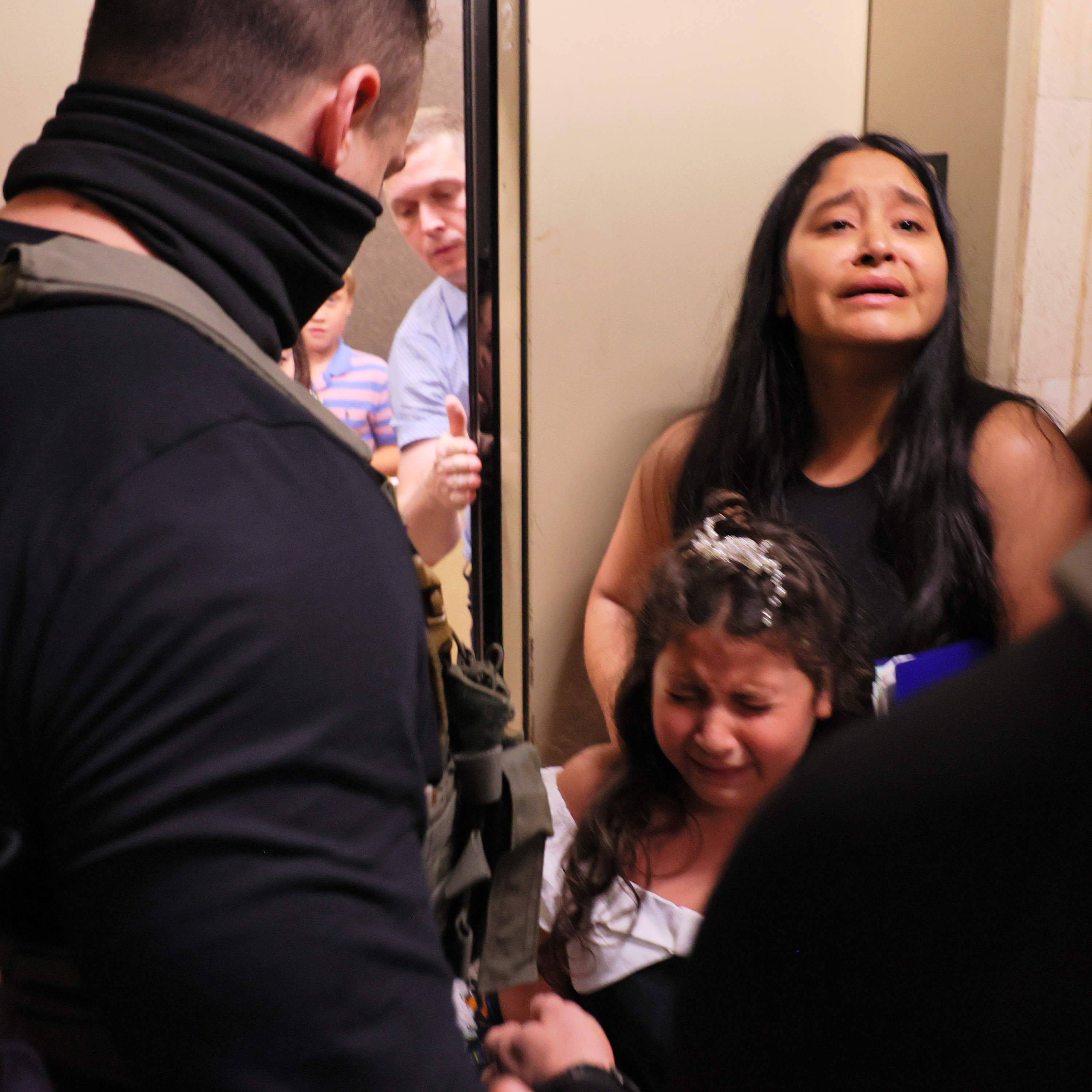
Josue and Jose left El Salvador with their mom when they were 10 and 11. It was 2016, and El Salvador had recently recorded the highest murder rate of any country in the Western Hemisphere. Jose told me gang members had started approaching kids at school, offering them cell phones to join up. The boy's mom wanted to bring her sons to a place where they'd be safer and have a chance at a better future. Plus, a lot of their relatives were already in the U.S. so the family took a long journey through Guatemala and Mexico, crossing the border into Texas and eventually making their way to Georgia. Their aunt was living in a suburb of Atlanta, and they moved in with her and her kids. Jose remembers how different it felt from.
- [07:57]
Reporter/Interviewer
El Salvador and now going to a country where you see kids playing basketball, playing soccer, playing or riding a bike in the street. You see all those beautiful houses. Even the grass, you know, the green grass, the landscape. It was so beautiful to me. And I was like, dude, I love this. I really like this type of life.
- [08:20]
Narrator/Producer
School was a different story, though. A foreign country in and of itself. The brothers didn't know what their teachers were saying. Jose said he used Google Translate to try to do his homework. Not speaking English was such an immense barrier that it sometimes felt to Jose like the only barrier.
- [08:38]
Reporter/Interviewer
And I remember I used to tell myself, hey, when I learn the language, I'm not going to have, like, bad grades. I'm going to have, like, A's and B's.
- [08:45]
Narrator/Producer
Their cousins told the boys to download duolingo, and they did. They also watched TV and movies in English. And slowly they got better at the language and started to fit in.
- [08:56]
Reporter/Interviewer
At the end, I was like, dude, this is what, like, basically feeling an American is like having friends graduating from high school, good grades in their early.
- [09:08]
Narrator/Producer
Years in the country, an attorney had encouraged the boys and their mother to apply for asylum. In 2018, their claim was denied, and Josue, Jose, and their mom, Alma, all received deportation orders. Since coming to the U.S. alma had given birth to a third son, Mateo, a U.S. citizen with significant disabilities. Alma didn't believe Mateo could get the healthcare he needed in El Salvador, so she kept her family in the US and began looking into other pathways to remain here legally. In the meantime, they always went to their check ins with ice, even when they interfered with other things.
- [09:47]
Reporter/Interviewer
I remember one time that we had a check in during the finals, and I was like, what can I do about it? Like, how am I gonna, like, deal with these two things going on at the same time? If I miss the final, I'm gonna get a zero. If I miss the check in, I'm gonna be in a big deal with ice. I went to the check in. I missed my final.
- [10:11]
Narrator/Producer
Jose graduated from high school in May of 2023 and moved to New York City to live with a family friend. Josue should have graduated in the spring of 2024, but he was behind on credits. He was determined not to have to do a whole extra year of high school, though. And his teacher told him he'd need to do a bunch of extra credits on top of his regular load of classes to be able to finish in December.
- [10:36]
Reporter/Interviewer
She told me, look, you need to do 11 credits. I was like, Jesus, 11 credits. But I told myself, yeah, I don't do this.
- [10:43]
Narrator/Host
I'm never going to get out of here.
- [10:45]
Reporter/Interviewer
I even started playing video games. I just focus in school.
- [10:50]
Narrator/Producer
I did three credits in one month. Josue told me he worked harder than he'd ever worked, and he did it. He finished all of his high school credits in December of 2024, and he joined his brother in New York. His Plan was to return to Georgia to walk in his high school graduation ceremony in May of this year. But that's not what happened. In March, the boys went to a routine check in at an ICE field office in Manhattan. Their mom had traveled from Georgia to go with them. When they got there, they were told that the building was full and they'd have to send an email requesting another check in. And then an ICE officer said something strange to Jose.
- [11:31]
Reporter/Interviewer
He told me, good luck. And I was like, wait, that's kind of strange to me because during this whole time that I have go to check ins, never an ICE officer had told me to block.
- [11:42]
Narrator/Producer
The boys were hoping their next check in would be in maybe six months or a year. But when they got the email, it said they should report back in two days. This is the point where some people might have chosen not to show up, just lay low and hide out. But Jose told me they never considered this. They wanted to follow the rules. When they returned to the ICE office two days later and were called up to the counter, the officer asked if they knew they had a deportation order.
- [12:09]
Reporter/Interviewer
You know, I was like, yes, I know. And he was like, okay, and are you doing something about it? And I was like, yeah, yeah, I have all my papers that my attorney gave me. It was like a. Like. Like this big. It was for the especially juvenile status.
- [12:24]
Narrator/Producer
The previous year, in 2024, the boys had begun the process of applying for special immigrant juvenile status. If they got it, this status would allow them to remain in the country legally. Theirs was exactly the kind of situation that didn't used to be a priority for ICE in previous administrations. Even in Trump's first term, it was generally the case that if you had a deportation order but you could prove you were pursuing some kind of legal remedy, ICE wouldn't detain you. This was especially true if you didn't have a criminal record. And Jose and Josue have never been in trouble with the law. But none of this seemed to matter to the ICE officer who was looking at their paperwork.
- [13:07]
Reporter/Interviewer
He only looked at the first page. And then he was like, this is not going to help you. This is worth nothing, basically. And gave it back to me. And he was like, okay, give me a minute. I'm going to talk to my supervisor.
- [13:18]
Narrator/Producer
The boys went to sit down. They were nervous. Eventually, the officer came back and asked Jose and Josue to follow him to another area, away from their mom and little brother, who they'd come with.
- [13:30]
Reporter/Interviewer
And then he told me, okay, you're being detained by ice and you're going to be put in, removing proceedings. If you have anything that you want to give it back to your mom, your phone, your wallet, give it to me right now so I can bring it to her. I look back and my brother was in handcuffs. When they put the handcuffs in me, I was like, is this really happening to us? Like, we had never been put in handcuffs because we had no, like, problems with the law. I couldn't express the feelings that I was feeling at that moment because I felt like a criminal.
- [14:04]
Narrator/Producer
Just like Jose and Josue. More than half of all people arrested by ICE in New York City in the first five months of the Trump administration had no criminal record, according to data gathered by the New York Times. And according to federal data, half of those arrested were detained just like this during routine check ins and court appearances.
- [14:25]
Reporter/Interviewer
They didn't let us say at least bye to our mom, not to our little brother.
- [14:31]
Narrator/Producer
The boys were taken to a detention facility in Buffalo, New York.
- [14:35]
Reporter/Interviewer
And I told the ICE officer, hey, can you keep us together at least? Like me and my brother together in the same. To the same detention facility on the same unit. He was like, yeah, I'mma try. But I guess he didn't try because we were separated when we. As soon as we got to the detention facility.
- [14:52]
Narrator/Producer
After a couple weeks, their lawyer filed a petition and they did get to be together. Jose, with the authority vested in his single extra year on this planet, tried to be strong for his younger brother.
- [15:03]
Reporter/Interviewer
Basically, I was the pillar. I was the one holding everything. At that moment. I told my brother, hey, bruh, like, don't cry or don't, like, act up. Just relax. We're gonna go through this either way. If we don't like it, we're gonna go through it.
- [15:21]
Narrator/Producer
Jose only cried once. He told me alone in the bathroom where Josue couldn't see. Josue, for his part, tried to keep the mood light.
- [15:31]
Reporter/Interviewer
Be honest, I was just trying to make this guy laugh.
- [15:38]
Narrator/Producer
On May 7, both boys were deported back to El Salvador. They hadn't been there in almost 10 years, and they had no close family or friends still in the country. Their mom, Alma, is still in the us it's possible she's been spared from deportation thus far because she's the sole caretaker for her disabled son Mateo. I asked Alma if, knowing what she knows now, she regretted bringing Jose and josue to the U.S. she told me she doesn't. Her sons had so many more opportunities here than they would have had in El Salvador. But she told me that she does regret allowing them to go to that final check in appointment with ice. A distant family friend who the boys had never met, picked them up from the immigration office in El Salvador and let them live in his house for their first few months in the country. His name is also Jose, which is maybe why they always call him the old man.
- [16:37]
Reporter/Interviewer
Well, he's an old man. He's already 69 years old, so he's old.
- [16:41]
Narrator/Producer
It was from the old man's apartment near the capital city of San Salvador that Josue watched his high school graduation ceremony on a live stream.
- [16:50]
Al Letson
We made it.
- [16:51]
Cecilia Lazott
From freshman jitters to senior celebrations, we.
- [16:54]
Interviewer/Producer
Have navigated some of the most defining years of our lives.
- [16:59]
Narrator/Producer
Josue had planned to be there with his friends. He already had his cap and gown. Instead, he watched on YouTube as his former classmates names were called and one by one they walked across the stage to get their diplomas.
- [17:13]
Reporter/Interviewer
Congo. Nor just watching to see my friends walking. I did that. They're not going to call my name.
- [17:20]
Narrator/Producer
But then they did call his name.
- [17:23]
Cecilia Lazott
Josue Neftalita Trejo Lopez.
- [17:29]
Narrator/Producer
Older brother Jose was in another room and he could hear Josue watching the live stream.
- [17:35]
Reporter/Interviewer
I was hearing him like watching him watching the. The ceremony. And then here they call his name. And then he came out. I have a video of it because I was like, I'm going to record it just to have like as a memory that this happened to us.
- [17:48]
Narrator/Producer
Jose holds up the phone, selfie style, and films while his brother lays his head on his stomach and sobs. Did they say your name at the graduation? Jose asks his brother. The good thing is that you got your diploma, Jose tells him. You managed to graduate. That's good.
- [18:17]
Reporter/Interviewer
LOL. Yeah, tranquilo.
- [18:34]
Narrator/Producer
@ the end of the graduation ceremony, a student speaker emphasizes that it isn't just the end of one chapter, it's the beginning of another. It's time to embrace the changes ahead, she tells the crowd, and walk confidently toward the future. But when I ask Jose to imagine what a future might look like in El Salvador, he's at a total loss.
- [18:56]
Reporter/Interviewer
I have no. Like, I don't have an answer to that yet or soon, because it is hard. It is hard to think about. I don't know if we're going to start looking for jobs. I don't know. We're going to start thinking about future in here first because it's just going to be me and my brother, right? Being separated from our family is actually one of the biggest trauma that we have right now, because you know, who is going to be supporting us? Who's going to be directing us in this country when we don't know how the system works? I really want to go back to my family. I want to go back to the country that I call my home.
- [19:38]
Narrator/Producer
Before they were deported, Jose and Josue both imagined they might attend a trade school of some kind, become mechanics or welders, help support their mom and their little brother, and eventually have families of their own. Now they're just hoping some way, somehow, they get back to the country where that future still exists.
- [20:09]
Al Letson
As schools across the country start a new school year, teachers and administrators are bracing for what ice's continued expansion could mean for students, including how it might affect attendance. Last spring, some California school districts saw attendance drop by more than 20% because of fear over immigration risk. That story was produced by Katie Mingle. When we come back, we'll meet a restaurant owner trying to figure out how to keep her business open after her brother is detained by ice.
- [20:41]
Cecilia Lazott
It's becoming almost like it's not sustainable for me to just keep operating the way I'm operating. Like I did not include my brother being picked up by ICE in my business plan.
- [20:52]
Al Letson
You're listening to Revenue Reveal.
- [21:03]
Narrator/Producer
Hi, y', all. My name is Nadia Hamdan and I'm a producer here at Reveal. Reveal is a non profit news organization and we depend on support from our listeners. Donate today@revealnews.org donate and thanks.
- [21:24]
Al Letson
From the center for Investigative Reporting and PRX. This is Reveal. I'm Al Letson. Like a lot of restaurants these days, the Nigerian restaurant Suya Joint in Boston has an Instagram account. Scrolling through the last few months of their posts is a mouthwatering experience. Pictures of stir fried tofu and jollof rice, glistening fried plantains, pineapple upside down cake. But in late June, there's a different kind of post. The owner of the restaurant, Cecilia Lazott, has written a note to her followers that begins, dear Suya Joint family, help us bring Paul home. The note goes on, Being forced apart like this is tearing through the heart of our home and community. Cecilia's brother Paul, the manager of the restaurant, had been detained by ICE on his way to church. The news over the last few months has been full of stories about restaurant employees being picked up by ice. And when Mother Jones reporter Julia Lurie saw Suya Joint's news on Instagram, it made her wonder what it's like for the people left behind, what it's like to run a restaurant or any business really? When a key employee who happens to be your brother suddenly disappears.
- [22:42]
Interviewer/Producer
I went to eat at Suya Joint for the first time in May with a reporter friend of mine who'd been raving about. Was just a few weeks later when I saw the post on Instagram. The owner, Cecilia, would later refer to it as a cry for help. And that's what it seemed like to me. Her post was basically saying, I'm not sure if I can handle this. It made me want to know more. So I headed back to Suya Joint.
- [23:03]
Cecilia Lazott
So I see that this is where all of us have a. Hi.
- [23:06]
Narrator/Host
Hi.
- [23:06]
Cecilia Lazott
Hi.
- [23:07]
Interviewer/Producer
Hi. Yep, that's Cecilia greeting a kitchen full of cooks prepping for dinner.
- [23:12]
Cecilia Lazott
It smells so good in here. Thank you. Thank you so much.
- [23:16]
Interviewer/Producer
Cecilia learned to cook from her grandmother, who ran a little restaurant in central Nigeria. After she came to Boston in 1999, she started catering out of her home, which eventually led to opening Suya Joint as a brick and mortar. Now she has two locations and a food truck. And last year, Cecilia was a semifinalist for the prestigious James Beard Award. Maybe inside just gets a little quieter. We duck into a storage room away from the commotion to talk about Paul.
- [23:41]
Cecilia Lazott
Don't mind the mess.
- [23:43]
Interviewer/Producer
No problem. Cecilia and her brother balance each other out. Cecilia is the outgoing one. Loud, chatty, wears chunky jewelry and bold colors. Paul, meanwhile, is quiet, attentive, the go to guy for critical behind the scenes jobs. It's Paul who picks up ingredients from New York, who comes in to fix the plumbing in a pinch or waits tables when Cecilia is short staffed.
- [24:07]
Cecilia Lazott
When I see him coming through the door, it's like, I feel really, really safe. It's like, yes, you're here.
- [24:13]
Interviewer/Producer
Paul was on his way to church on Father's Day when he was picked up by ice. When I asked ICE about Paul's case, a representative said that he'd been, quote, unlawfully residing in the United States since August 2019, when he violated the terms of his lawful admission. Records show that Paul came to the US on a visitor visa in 2019 and applied for asylum later that year. When he was arrested, his case was ongoing. He had a Social Security number and work authorization that's valid until 2029. Under previous administrations, people like Paul wouldn't have been a high priority for ice. But things are different now. When he was arrested, Paul asked the officers if he could make a phone call to his sister.
- [24:55]
Cecilia Lazott
I felt like someone just sucked my blood, my air. Anything like, how do you live?
- [24:59]
Interviewer/Producer
Yeah, right. There's not a playbook for Someone in your situation?
- [25:02]
Cecilia Lazott
No, there's absolutely not a playbook. You wake up one day, you feel energized, and then within a twinkle of an eye, it's almost like, where do I throw up? Like, it's, it's that bad. It's like, it's terrible.
- [25:15]
Interviewer/Producer
There's an eerie familiarity to Paul's detention. The year before he came to the States, he was kidnapped by Boko Haram. The militant group was targeting journalists, and at the time, Paul was working as a crime reporter for the Nigerian Television Authority. Paul talked about the kidnapping in a BBC documentary back in 2019.
- [25:35]
Narrator/Host
I was scared.
- [25:36]
Reporter/Interviewer
I was really, really scared because I.
- [25:41]
Al Letson
I started to imagine the trauma my family members were going to go through.
- [25:47]
Interviewer/Producer
Paul and Cecilia's mom got the call from Boko Haram telling her he'd been kidnapped. Cecilia says her mom was literally speechless, kept fainting because of the news. The family scrambled to come up with the nearly $13,000 to free him, according to Paul's asylum application. They even sold most of their property to make it happen. After four hellish days, Paul was released. Nigerian police told him they couldn't guarantee his safety, advised him to leave the country. In his asylum application, Paul wrote, this is why I'm here in the United States, where I can feel safe and have my freedom guaranteed.
- [26:24]
Cecilia Lazott
And now in Boston, in America, literally right now, as we speak, I just feel like here's another second kidnapping. He's been picked up, and here we are at the mercy of everybody.
- [26:41]
Interviewer/Producer
When I met with Cecilia, Paul had been sitting in a detention center in Dover, New Hampshire for two weeks. She seemed to be running on adrenaline, moving a thousand miles a minute. I had the sense that talking to a reporter was just one more item on her mile long to do list, which in a way it was. She had to collect character statements for Paul's upcoming hearing. She had to be there for her daughters, for her staff, for her relatives in Nigeria who were distraught about what was happening. And then there was Paul's lawyer who could call at any moment looking for documents.
- [27:10]
Cecilia Lazott
Like, before they can finish asking the question, I already know kind of the answer, and I know exactly where to find. And then, here you go, here you go.
- [27:18]
Interviewer/Producer
Right now, Cecilia's top priority is getting ready for the bond hearing, when a judge will decide if Paul can be released from detention. While his asylum case is ongoing, Cecilia knows he faces an uphill battle. Last year, Paul was charged with two misdemeanors for operating a vehicle under the influence. Both times, he was found sleeping in his stopped car keys in the ignition. According to police reports, Cecilia says he was in a dark place at the time, grieving the sudden loss of their mother and pulled over to sleep. In both cases, a judge sentenced Paul to a year long probation. He also had to pay a fine and complete a program for impaired drivers. Typically, if you complete the terms of the sentence in a case like this, the charges can be dismissed.
- [28:02]
Cecilia Lazott
We all have our own dark, whatever moments that we're living with. This guy came out and he's like, okay, you know what? This is not it. And he's been like, in therapy. He has done so much extensive things to make sure that he's doing the right things.
- [28:22]
Interviewer/Producer
When I left the restaurant, Cecilia seemed overwhelmed, but also focused. She had a mission, which was getting ready for the bond hearing. We agreed we'd check in after it was over. On the day of the hearing, I call Cecilia. No answer. No response to text either. A few days later, I call again and she picks up sounding exhausted. Paul's bond was denied. Paul's lawyer told cecilia that the DUIs had come up in the hearing and the judge wasn't convinced Paul should be released. So how are you doing with this news?
- [28:53]
Cecilia Lazott
Thank you. It's crazy.
- [29:01]
Interviewer/Producer
How, how is it for you to be working? Like, I'm, I'm imagining it would be kind of hard to be. Yeah, it is, you know, like positive and stuff like that around. Around customers.
- [29:12]
Cecilia Lazott
I know. No, this is very, very difficult. And I think like when I met with you, I was hopeful I was doing okay. But then as time goes on, I'm just getting more and more defeated. Just very, very much getting sick, like mentally, emotionally, it's becoming almost like it's not sustainable for me to just keep operating the way I'm operating. Like, I did not, I don't think anybody, like, say, okay, when I'm writing a business plan included this. So I did not include my brother being picked up by ICE in my whole entire business plan. I'm not able to operate the establishment basically because it's just, it's crazy.
- [29:50]
Interviewer/Producer
Cecilia told me she's having trouble sleeping, she's crying a lot. And this sounds like a bad metaphor, but it's actually quite literal. Cecilia, the award winning chef, has lost her appetite.
- [30:01]
Cecilia Lazott
Like, it's just little nibbles, like cat. And I'm like, no, this is not good.
- [30:06]
Interviewer/Producer
One of the many things weighing on Cecilia are all of the expenses. There are the legal retainers. $2,500 for the bond hearing, $13,000 for the asylum Hearing. And then there's all the cost of living that Paul normally would have paid for himself.
- [30:21]
Cecilia Lazott
We are now left with paying all his rent, insurance, car payments, phone bills. It adds up. It piles up.
- [30:33]
Interviewer/Producer
This may sound naive, but I never really thought about all the recurring normal life expenses that pile up when a person suddenly disappears. It's not like when someone dies and there's no question you cancel their rent and their phone bill. This is different. Cecilia has to decide, does she keep paying his $1,300 rent in hopes that he comes back, or does she go clean out his apartment? And Paul, of course, hates that she's been put in this position.
- [30:58]
Cecilia Lazott
He was very, very devastated, upset with the fact that all those things that now is put on the family is something that he is strong, capable of doing what she's been doing all this time. So he's very much distraught.
- [31:13]
Interviewer/Producer
Ever since news broke of Paul's arrest, donations have poured in. Within two weeks, a GoFundMe for Paul's legal expenses raised $32,000. Sometimes customers leave little notes of support in the delivery instructions of takeout orders. Cecilia shared one with me that said to leave the order in the lobby and then went on. I am so disgusted to hear about Paul Dama. I'll do anything to help. Thank you for being my comfort food for the last five years.
- [31:39]
Cecilia Lazott
And we've been receiving a lot of support from customers that we've never seen before, based on what they've heard, maybe on the news or they've read on the newspaper, just to make sure that the establishment is sustained and it's going. But me, the owner, is breaking in.
- [31:57]
Interviewer/Producer
Moments when she's feeling down. Cecilia seriously considers abandoning the life she's built here, closing down the restaurant, going back to Nigeria. Even though she's a US citizen, her daughters and employees hate when she talks like this. They're holding on to her and they want her to stay strong for them. But Cecilia's like, I'm trying to stay strong, but without Paul, who am I holding onto? Cecilia talks to Paul almost every day. During one of their recent calls, a friend Paul made in detention got on the phone.
- [32:29]
Cecilia Lazott
Then he explained to me how, like, Paul is almost like they call him the President. Like, they're like, you're our president. Any question they have, go to Paul. Anything that they're anywhere for them to feel some sense of a comfort, go to Paul, go to Paul. I was joking with Paul. Like, you can't leave because you have a lot of, like, almost like followers that are looking up to you for to make this whole entire thing make sense.
- [32:58]
Interviewer/Producer
Cecilia, of course, knows exactly how they feel.
- [33:07]
Al Letson
That was from Mother Jones reporter Julia Lurie. You can't talk about the federal government's deportation efforts without talking about Los Angeles. Trump famously activated the National Guard on LA streets. And ICE has been targeting the city for months. But a tiny LA newsroom that used to be focused mostly on tacos has been tracking ice and fighting back.
- [33:31]
Memo Torres
I've been going through hundreds of DMs where they're being spotted, so be careful. Mi raza. Keep your bootstraps tight.
- [33:38]
Al Letson
That's next on Reveal. Stay with us. From the center for Investigative Reporting and prx, this is revealing. I'm Al Ledson. Today we're telling stories of people rounded up as part of the Trump administration's mass deportation agenda. Our last story takes us to Los Angeles, where since June, thousands of people have been swept up in aggressive raids. ICE and Border Patrol are raiding car washes, Home Depots, outdoor markets, places where undocumented immigrants work and hang out. Federal agents have no arrest warrants and they're picking up random individuals. Then in July, a federal judge just.
- [34:22]
Narrator/Producer
Ruling ICE and the Border Patrol must stop their aggressive tactics immediately, saying there is a mountain of evidence the feds are in fact breaking the law.
- [34:32]
Al Letson
The judge said federal agents may not go after people based on their race or ethnicity or because they speak Spanish or work in a particular industry. That same day, border czar Tom Holman came on Fox News and acknowledged that that is basically what the government is doing.
- [34:50]
Reporter/Interviewer
They just got through the observation, get articulable facts based on their location, the occupation, their physical appearance, their actions.
- [34:58]
Al Letson
For Holman, it's how agents establish reasonable suspicion. For the judge, it's profiling. The Trump administration appealed the judge's order and lost. And now they've appealed, appealed up to the Supreme Court. The Department of Homeland Security continues to claim that the raids do not target Latinos and are based on investigations. Officials say they're going after criminals. But according to an analysis of government data, agents arrested just over 4,300 people in June and July in Los Angeles. About 86% were Latino, and less than a third of the people arrested had a criminal conviction. People are scared and angry, and they're turning to a tiny newsroom called La Taco for information about where ICE raids are happening. As you might have guessed from the name, La Taco writes about food. But since June, it's been using its deep roots in Los Angeles to set the record straight and expose What ICE is doing in the communities it covers. Reveal's Steven Rascon spent time with La Taco to learn how it ended up in the trenches of one of the biggest civil rights moments in the country's recent history. Stephen takes it from here.
- [36:20]
Narrator/Host
A cook pulls a fish fillet out of the fryer, lays it over some tortillas and tops it off with some diced tomato, then hands it to to a customer. It's lunchtime at Tacos Baja in East Los Angeles.
- [36:34]
Memo Torres
The go to order here is the Baja style fish taco.
- [36:37]
Narrator/Host
I'm gonna get that Memo Torres knows his tacos well and so does his colleague Javier.
- [36:43]
Reporter/Interviewer
My name is Javier Cabral. I'm the editor in chief of La Taco.
- [36:46]
Narrator/Host
Javier and Memo have been reviewing places like this for years. They even won a James Beard award for their food coverage. I actually grew up coming here with my parents on Wednesdays cuz they're like super cheap tacos. They used to be a dollar. I think right now they're, they're 159 now, so.
- [37:01]
Al Letson
So taco inflation.
- [37:03]
Narrator/Host
That's not bad. That's not terrible.
- [37:04]
Reporter/Interviewer
Not bad. They're not letting people inside right now.
- [37:06]
Narrator/Host
Which I think is interesting. Tacos Baja. Serving tacos, but behind locked doors. They also have this sign. Check it out.
- [37:13]
Reporter/Interviewer
Aquito bienvenidos.
- [37:15]
Narrator/Host
Except everyone is welcome here except ICE. U.S. immigration and Customs Enforcement. And it says private property. No trespassing.
- [37:25]
Al Letson
Federal agents.
- [37:25]
Narrator/Host
Prohibited without a judicial warrant with ICE Cross out. The signs are up because this past June, ICE agents raided a local food truck called Jason's Tacos. Jason, the owner, posted this video to Instagram after the raid. You can see the truck is empty. Garna saw that. Left sizzling on the grill.
- [37:46]
Reporter/Interviewer
Wow. There's no joke, guys.
- [37:48]
Al Letson
They took all my employees.
- [37:49]
Reporter/Interviewer
All of them. It's crazy.
- [37:51]
Narrator/Host
Within like two minutes, Jason's Tacos is just one of hundreds of taqueros that La Taco has written about over the years. ICE was now targeting them. Javier and Memo know these people. It was personal.
- [38:07]
Memo Torres
Where our taqueros, our beloved taqueros are closing now.
- [38:10]
Narrator/Host
Memo made a video about it for La Taco's Instagram Folks are scared, and rightly so.
- [38:15]
Al Letson
After.
- [38:16]
Memo Torres
Especially after seeing Jason's Tacos, two taqueros get abducted and four of his clients. That's wild.
- [38:24]
Narrator/Host
If there ever was such a thing as a perfect crisis for La Taco to be ready for, this was it. Years of reporting on local businesses had created trust and a big online following. And that trust was starting to Pay off because people were now sending memo tips about what ICE was doing.
- [38:44]
Memo Torres
I've been going through hundreds of DMs where they're being spotted, and it's a pretty general theme. The theme is working Latinos, so be careful. Me raza. Keep your bootstraps tight.
- [38:56]
Narrator/Host
Memo was swamped with information, so the team decided that the raids should take priority over their taco coverage. And soon La Taco's Instagram became a daily journal for ice activity across Los Angeles.
- [39:11]
Memo Torres
It's June 20th, and this is your daily memo as to what's been going on in LA today. And boy, has it been busy. ICE has been everywhere. It's Tuesday, June 24th. It's Wednesday, June 25th. And these are your ice recaps for a lake. June 27th, the 22nd straight day of the Ice Siege here in Los Angeles. They were at the Home Depot and a car wash in Huntington park, downtown on 16th Grand. Taking people went back to the Walmart in Pico Rivera.
- [39:36]
Narrator/Host
As Memo speaks, videos run behind him showing men in masks, carrying rifles, wearing tactical gear, just like they're going to war. ICE is everywhere and people feel targeted.
- [39:50]
Cecilia Lazott
This is the property of the church.
- [39:52]
Narrator/Producer
This is Downey Memorial Christian Church, and.
- [39:54]
Interviewer/Producer
We are not okay with you being on our property.
- [39:57]
Narrator/Host
We before resharing a video like this one, the first thing Memo does is find the person who shot it.
- [40:04]
Memo Torres
Either I or somebody on the team will reach out to them directly and be like, hey, hey. So we heard that they were at your taqueria. We heard that they were at the school.
- [40:11]
Narrator/Host
He needs to make sure the video is accurate. And Memo gets a lot of videos.
- [40:17]
Memo Torres
Like sometimes I have like 43 different videos and pictures that I'm like, okay, how I'm going to fit all this into a three minute video for him?
- [40:23]
Narrator/Host
Carefully documenting what's happening in communities is a way to fight against the Trump administration's false narrative.
- [40:31]
Memo Torres
They want to portray this picture as ICE being heroes and Border Patrol being heroes and out here being brave men. Yet in the same light, it's like we have to show what are they actually doing. Old men are getting tackled at bus stops. They shot at a kid in a truck. They brutalized this tiktoker who was recording them. You got to show the brutality criminalization of just people that are working. Street vendors, people that are day laborers, people that are at their jobs gardening.
- [40:57]
Narrator/Host
We reached out to the Department of Homeland Security to ask why so many Latinos without criminal records were being targeted. We shared the numbers with them. A senior DHS official wrote back and did not dispute the data and instead continued to claim without proof that, quote, america's brave men and women are removing murderers, Ms. 13 gang members, pedophiles and rapists. We also asked about several incidents that were violent, and the official said in each case, the agent's actions were justified. Throughout the summer, Memo keeps documenting and he's noticing US Citizens are getting swept up in the raids.
- [41:43]
Al Letson
They said that they came looking for.
- [41:44]
Reporter/Interviewer
Immigrants, and the only person that they.
- [41:46]
Al Letson
Got was a US Citizen.
- [41:48]
Narrator/Host
This man, Javier Ramirez, was working at a tow yard when Border Patrol agents arrested and detained him at a federal detention center. And there was Jobe Garcia, the US.
- [41:58]
Memo Torres
Citizen that was arrested at the Home Depot in Hollywood and then transferred to.
- [42:03]
Narrator/Host
The same federal detention center after he filmed a raid and told a group of men not to respond to ICE agents. Around the same time, border Border Patrol arrests another US Citizen after he tries to protest a man being detained. He spent three days in federal detention. A reporter named Aisha Wallace Palomares discovered the story.
- [42:26]
Reporter/Interviewer
I was like, oh my God, like, this is huge, you know, like a US Citizen detained by federal immigration agents.
- [42:33]
Narrator/Host
At the time, Aisha was a freelance reporter covering the ICE protests outside the federal building. It's where ICE processes the people it plans to deport.
- [42:44]
Cecilia Lazott
Tear gas has been deployed here over the past few days, and there's still remnants of those.
- [42:53]
Narrator/Host
One day, she notices a family standing outside of the detention center.
- [42:58]
Narrator/Producer
They didn't look like protesters.
- [42:59]
Reporter/Interviewer
They kind of looked out of place.
- [43:01]
Narrator/Producer
And I was like, hey, you know.
- [43:02]
Reporter/Interviewer
Like, what's going on? Being a nosy reporter.
- [43:05]
Narrator/Producer
And they were like, our son was taken today.
- [43:08]
Reporter/Interviewer
And I said, your son was taken today?
- [43:12]
Narrator/Producer
Taken by who?
- [43:13]
Reporter/Interviewer
And they said that he was taken by ICE and that he was a US Citizen.
- [43:19]
Narrator/Host
Aisha sticks around. She talks to the dad, and he.
- [43:22]
Reporter/Interviewer
Said, yes, and I have a video of it. And I had actually recognized the video because it had come up on my feed earlier that morning. It had gone viral already by that.
- [43:31]
Narrator/Producer
Point because of the brutality.
- [43:36]
Narrator/Host
The video shows a thin 20 something year old Adrian Martinez wearing a blue Walmart vest, yelling at the agents for detaining a janitor. He cleans the plaza where Adrian works. The agents tackle Adrian, grab him by the neck, throw him into a Border Patrol vehicle, and take him away along with the janitor.
- [43:58]
Reporter/Interviewer
And so at that point, I decided I needed to like, step away from them for like, at least a few minutes because I needed to like, send an Instagram DM to La Taco. And I was Just crossing my fingers, hoping that they would see it and be interested in the story.
- [44:14]
Al Letson
Louisiana.
- [44:15]
Narrator/Host
Taco DMs back. And by that night, Adrian's story is on the Daily Memo.
- [44:21]
Memo Torres
Adrian, according to his family, is a U.S. citizen. But this is just hard to watch, guys. I mean, he's a 20 year old.
- [44:28]
Reporter/Interviewer
I think within like an hour or two, is already at like 600,000 views.
- [44:32]
Narrator/Host
The video creates outrage online. Major news outlets are picking up the story. NBC, CNN, LA Times. And a few days later, Border Patrol Assistant Chief David Kim comes out with a different story on Fox News. The narrative right now is just a.
- [44:49]
Al Letson
US citizen was arrested for no reason.
- [44:52]
Narrator/Host
But that subject punched two agents. We asked Border Patrol whether they had any proof of this, because the videos Aisha and Memo looked at show that Adrian definitely confronts ICE agents, but he never throws a punch. They didn't get back to us. My name is Oscar Preciado. Oscar was there that day and also didn't see Adrian throw a punch. He recorded the original video that went viral. I do photography for music events, and then I also do Instacart on the side. Born and raised here in east la. So that day I was working Instacart at the Pico Rivera Walmart. And that's where we saw them pull up to a janitor that was out there cleaning, doing his job. And that's where everything just got pretty crazy. Oscar's video shows Border Patrol agents driving into a parking lot. People are honking their horns at them. Two men run when they see them. One of them is the janitor. When I turn back around, recording, that's where Adrian shows up. Adrian pulls up in a black sedan. He approaches a Border Patrol agent. What the.
- [46:14]
Cecilia Lazott
What is he doing?
- [46:18]
Narrator/Host
That's Adrian cursing and saying he's a hard worker.
- [46:22]
Reporter/Interviewer
I felt like, why are they doing that?
- [46:24]
Narrator/Producer
Like, they're mistreating him.
- [46:25]
Reporter/Interviewer
Like, he's like, clearly an older man.
- [46:28]
Narrator/Host
We interviewed Adrian about a month after he was arrested, and he told us he stepped in because he felt like it was the right thing to do.
- [46:36]
Reporter/Interviewer
When I heard him say, like, get him, I didn't think they were going to get me because again, I was like, just speaking up.
- [46:45]
Narrator/Host
It's clear from the video that Adrian isn't the only one upset. People try to block in the agents with their cars. Oscar is trying to capture as much as he can on his phone. I'm not doing shit.
- [46:57]
Interviewer/Producer
Hey, what the fuck, dude, you can't be doing this.
- [46:59]
Narrator/Host
The guy smacked the phone out of my hand. I picked it Back up. Kept recording.
- [47:02]
Narrator/Producer
Here's my civil right.
- [47:03]
Narrator/Host
I can fucking record you if I want. Oscar keeps recording. Through a cracked screen, he captures three agents restraining Adrian.
- [47:11]
Reporter/Interviewer
Why you guys putting your hands on.
- [47:12]
Narrator/Host
Homie, look at all these little bitches. Oscar and Adrian didn't know each other, but when they saw the janitor get taken away, it felt like an injustice to both of them.
- [47:26]
Reporter/Interviewer
I feel like that's kidnapping. You can't just go to their job and like, oh, I'm taking you. Like, it's not right.
- [47:31]
Narrator/Host
So you're upset about what's going on and what they've been doing to the communities and anybody that's of color, any brown person they see. Since June, ICE has detained at least seven U.S. citizens. Some were let go and charges were dropped, but Adrian was indicted. Federal prosecutors are charging him with conspiracy to impede a federal officer.
- [47:58]
Reporter/Interviewer
Like, I sympathize with Adrian.
- [48:00]
Narrator/Host
Pedro Chavez is an immigration lawyer. He runs an organization called Fear of Return. And he's become a bit of a TikTok sensation for his legal advice. And he's been following Adrian's arrest.
- [48:12]
Reporter/Interviewer
He looked at this, this man that has been abducted by ice, and he probably saw his uncle or he saw his dad in that man. It's like I can feel his emotion.
- [48:22]
Narrator/Host
Pedro says Adrian's conspiracy charge is something the government has been using on people who stand up to ice. He says federal prosecutors would have to prove that what happened at the Walmart wasn't spontaneous, but planned. And that's a stretch because it's clear.
- [48:38]
Reporter/Interviewer
That they didn't meet beforehand.
- [48:41]
Narrator/Host
Instead, he says, they reacted in the moment and were outraged at what they saw. ICE driving around looking for someone to pick up.
- [48:50]
Reporter/Interviewer
They didn't have arrest warrants, they didn't have search warrants. They had nothing. It was a roving patrol and they admitted in the complaint.
- [48:56]
Narrator/Host
Roving patrols are what a federal judge ordered the government to stop doing because they lead to racial profiling. Memo is still getting videos showing they're happening this.
- [49:07]
Memo Torres
Law enforcement is not obeying laws. They're not obeying the restraining orders. And then these people are masked. They don't want to identify themselves. They're roaming around doing whatever they want.
- [49:18]
Narrator/Host
He says this is what's driving the anger across la.
- [49:22]
Memo Torres
How can you not be angered at the. The cruelty of it, the. The barbarianism of it.
- [49:28]
Narrator/Host
And LA Taco is committed to covering this story for the long haul.
- [49:34]
Memo Torres
LA is currently very traumatized, I'll tell.
- [49:37]
Reporter/Interviewer
You that right now.
- [49:38]
Memo Torres
People are traumatized. These people, these immigrants, they're not criminals. They're our neighbors.
- [49:49]
Al Letson
After the ICE raid started back in June, tens of thousands of Angelenos took to the streets to express their anger. Trump deployed Marines and the National Guard to tamp down protests and even use soldiers during raids. This month, a judge ruled that it was illegal and said the president violated a federal law that bans the military from being used to do domestic policing. The Trump administration is expected to appeal the judge's decision. That story was reported and produced by Reveal's Stephen Rascone and Anianci Diaz Cortez, with original reporting by Aisha Wallace Palomares. Aisha will soon become a full time reporter for La Taco. Our lead producer for this week's show is Katie Mingle with help from Michael La Schiller. Brett Myers and Cynthia Rodriguez edited the show. Thanks to Susan Beatty, Priya Patel and Lauren Markham for their help with the show and to UC Berkeley's Deportation Data project. Artist Cheriscus is our fact checker. Victoria Baranetsky is our General counsel. Our production manager is Ulema Cobb. Score and sound design by the Dynamic dynamic duo Jay Breezy, Mr. Jim Briggs and Fernando My Man Yo Arruda. That help from Claire C. Note Mullen. Taki Telenides is our Deputy Executive producer. Our executive producer is Bret Myers. Our theme music is by Camerado Lightning. Support for Reveal is provided by the Riva and David Logan foundation, the John D. And Catherine T. MacArthur foundation, the Jonathan Logan Family foundation, the Robert Wood Johnson foundation, the park foundation, the Schmidt Family foundation and the Hellman Foundation. Support for Reveal is also provided by you our listeners. We are a co production of the center for Investigative Reporting and prx. I'm Al Ledson and remember there is always more to the story.
- [51:50]
Cecilia Lazott
From PRX.