Loading summary
Transcript164 lines
- [00:01]
Sponsor/Announcer
This episode is brought to you by Progressive Insurance. Do you ever find yourself playing the budgeting game? Well, with the name your price tool from Progressive, you can find options that fit your budget and potentially lower your bills. Try it@progressive.com, progressive Casualty Insurance Company and affiliates. Price and coverage match limited by state law not available in all states.
- [00:22]
Lauren Ober (Reporter)
Every day, doctors use medical devices to monitor a patient's health. But what if the device is flawed and gives the wrong vital sign reading because of the color of someone's skin?
- [00:33]
Narrator/Commentator
Everyone needs to be warned.
- [00:34]
Lauren Ober (Reporter)
Every hospital emergency department because relying on this device is killing people. To hear all episodes of the Race Equation from the New England Journal of Medicine. Subscribe to Intention to Treat
- [00:48]
Jane Butcher
Want to make a lasting difference to Reveal and protect independent Journalism Right now, it won't cost you a thing. Hi, it's Jane Butcher from Boulder, Colorado. I've spent my life fighting for justice, which is why I'm a longtime supporter of REVEAL and the center for Investigative Reporting. I'm stepping up to protect the future of fearless independent journalism. And you can too, by joining CIR's Legacy Challenge. Just let Reveal know you're going to include them in your legacy plans. Provide some basic information. And here's the really exciting part. A generous donor will contribute up to $10,000 now to fund Reveals Essential Reporting in honor of your gift. Your legacy gift of any size makes an impact not just in the future, but right now. If you'd like to join me or want to learn more, please reach out to giftsevealnews.org again, reveal. That's giftsrevealnews.org the Legacy Challenge is only available for a limited time. Stand up for the Truth today.
- [02:01]
Al Letson (Host)
From the center for Investigative Reporting and prx, this is Reveal. I'm Al Letson. A couple of months ago, Jessica Grove was at her son's middle school basketball game watching her kid shoot around with his coach during pregame.
- [02:16]
Jessica Grove
And this guy walks in and my heart immediately skips a beat because I instantaneously know who it is. And he does not have a child on the other team. He does not have a child on my son's team. And I was like, what the fuck is he doing here? Like, I started to sweat, my blood pressure started to rise.
- [02:46]
Al Letson (Host)
In Jessica's mind, this guy had no business being at the basketball game or really any community event. So Jessica did something about it. She walked across the basketball court and
- [02:58]
Jessica Grove
I said, you are never, ever to be anywhere near any of my family members under any circumstances.
- [03:07]
Al Letson (Host)
Now this might feel Extreme. The guy is just sitting watching hoops. He wasn't bothering anybody. But that wasn't how Jessica saw it. This guy was Jessica's former county elected official. But she didn't want him here. Not after he broke a critical campaign promise.
- [03:24]
Jessica Grove
The fact that he can go into a room and smile at people like he's still on the campaign trail, like, vote for me. I'm doing great things. No, you're destroying everything you touch.
- [03:39]
Al Letson (Host)
Jessica lives in Northern Virginia, right outside of D.C. and this guy who filled Jessica with such dread, she voted for him. Now she's accusing him of swooping into communities, trying to buy thousands of acres of property, including her mom's house and her brother's house, for data centers. But not just one or two data centers. If this guy succeeds, the neighborhood where Jessica grew up will instead morph into a part of the largest collection of data centers in the world. The only word Jessica can think of to describe this guy and the industry he represents is predatory.
- [04:16]
Jessica Grove
You don't know what he's coming for. You don't know what neighborhood he's going to go after next. It's like he somehow holds the power to take everything you've ever worked for and everything you've ever dreamed of away because he's got money behind him somehow.
- [04:37]
Al Letson (Host)
For the last couple years, we've been hearing a lot about the downsides of data centers. They're making electricity bills go up. They're destroying the environment, sucking all the water. And we've been hearing about how unprecedented investment in growth in AI is supercharging data center development. But this hour, we're going to show you how this explosion of data centers is happening not in the rural parts of the country, but in populated areas near cities where the world's wealthiest companies are buying up acres of private homes and land in residential neighborhoods with almost no transparency or accountability. But slowly, local communities have started to fight back. And we're going to take you to one fight right outside our nation's capital. Lauren Ober reports from Northern Virginia.
- [05:32]
Lauren Ober (Reporter)
It's hard not to like Elena Schlossberg the minute you meet her. She laughs hard, drives fast, and makes the most delicious muffins you've ever put in your mouth. Plus, she's kind of a superhero.
- [05:43]
Elena Schlossberg
My superpowers are I love to talk, I hate injustice, and somehow I seem to be able to convince people to be hopeful. Well, and it's worth fighting.
- [05:53]
Lauren Ober (Reporter)
One more. You have amazing hair. That is true. And I have really good hair. Before she became perhaps the most Recognizable anti data center activist in Virginia, Elena did hair and makeup for TV news. Then she became a middle school counselor, and God love her for that. Elena lives in Prince William County, a bucolic expanse of Virginia suburbs 35 miles outside of Washington, D.C. elena loves where she lives. She and her husband built their home on 10 acres of rolling land, and nothing disturbed her rural paradise. Until the data center started creeping in more than a decade ago. It started with a proposed transmission line that threatened her property.
- [06:38]
Elena Schlossberg
And I'm like, oh no. Oh no, no, no, no, no. You have f ed with the wrong person.
- [06:45]
Lauren Ober (Reporter)
And before you go thinking that Elena is just a NIMBY with good hair and too much time on her hands allow her to disabuse you.
- [06:53]
Elena Schlossberg
There's NIMBY and there's note, and note is not over there either,
- [07:01]
Lauren Ober (Reporter)
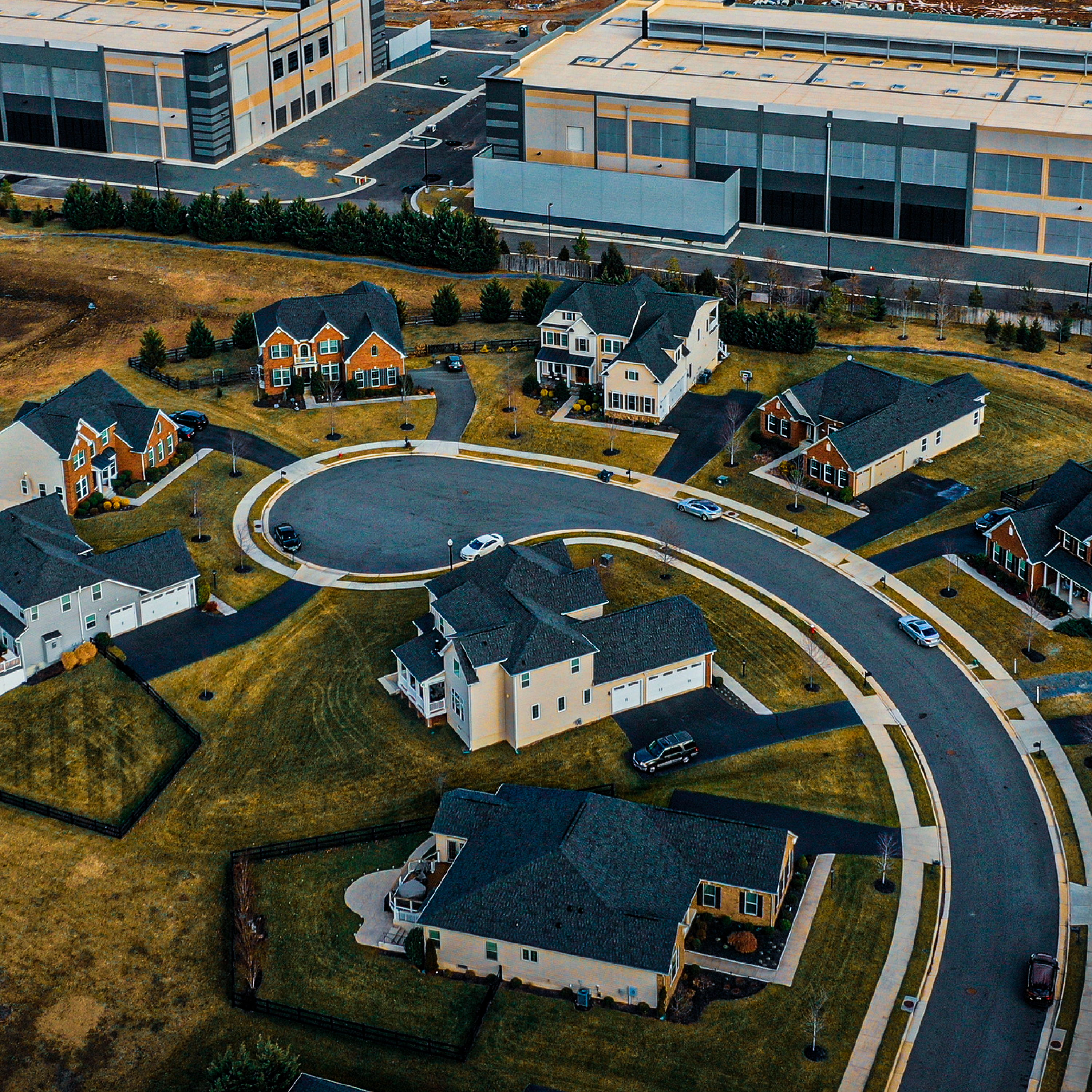
meaning she doesn't want data centers in anyone's neighborhood. Alena first remembers seeing them creep into her backyard in 2014. The Chrysalis days of the data center boom. Today, there are more data centers in Northern Virginia than any other place in the world. I'm guessing that, like me, you are incredulous. Northern Virginia, really? And in order to understand how just the mere mention of data centers can make a local's blood pressure spike, you have to know a bit about the history of the Internet. Let's see if I can do it in 30 seconds or less. You might think Silicon Valley invented the Internet, but it was actually the Department of Defense in Northern Virginia. Take that, Tech Bros. In the late 1960s, the Defense Advanced Research Projects Agency, or DARPA, created a precursor to the Internet. As a result, a number of commercial tech companies set up shop in this area. And it quickly became a hub of connectivity. Fiber optic exploded along the east coast, and soon a sort of highway interchange for the Internet was built just outside of the capital. Combine all that with proximity to the feds, free flowing electricity and tech friendly local governments, and by the 21st century, Northern Virginia's bazillions of data centers account for more computing capacity than anywhere in the world. Okay, done. Did I do it? I think I did. But what exactly is a data center? It's basically a giant warehouse loaded with it infrastructure, servers, routers, hard drives, the cloud. And with the whiplash growth of artificial intelligence, modern computing requires bigger and better and faster and noisier data centers. And those data centers they need to go somewhere. Virginia might be for lovers, but more recently, it's for data Centers. More than 275 across the state to be exact. And I Know that because chatgpt told me so. Just kidding.
- [09:12]
Elena Schlossberg
They're gonna squeeze out every last bit of Virginia. That's what I believe.
- [09:19]
Lauren Ober (Reporter)
I Live in Washington D.C. i knew we had some data centers in the region, but I didn't really have a clue where or why. So I asked Elena to give me her standard tour from the cockpit of her very fast Tesla.
- [09:33]
Elena Schlossberg
Even this car is zero to 60 in four seconds. Yeah, I'm just saying. I do enjoy that.
- [09:39]
Lauren Ober (Reporter)
First, Elena shows me an array of four data centers right next to a retirement community. It's owned by Amazon Web Services.
- [09:47]
Elena Schlossberg
This is the beginning of what everybody is fighting about right now. They just don't know it when I
- [09:53]
Lauren Ober (Reporter)
tell you that it's so close, I could throw a baseball from the neighborhood's parking lot and hit it. Believe me. Where are we going now?
- [10:00]
Elena Schlossberg
Okay, so now we are going to Data Center Alley. You're going to see the highest concentration of data centers in the world.
- [10:07]
Lauren Ober (Reporter)
It's like a glimpse into our AI powered future. Data Center Alley is home to 157 data centers spread over many miles. Giant 2,34-story monoliths topped with colossal chiller units and ringed by many dozens of diesel generators. After the pandemic, there seemed to be a gold rush mentality around data centers. More and more people were working remotely, there was more E commerce than ever, and consumer applications for AI were skyrocketing. Data center developers couldn't build fast enough. These largely anonymous hulks of data center ally are run by companies with wildly inventive names like Digital Realty Powerhouse and Databank. Also Google, Microsoft, and the aforementioned Amazon Web services. Together they make up miles and miles of bland looking, windowless boxes, buzzing and whining, consuming the horizon.
- [11:11]
Elena Schlossberg
I mean, the amount of surface land that is being displaced by data centers and everything that goes with that, I don't think people understand what's really happening.
- [11:22]
Lauren Ober (Reporter)
Our drive through Data Center Alley ends in a place you would never find if you weren't looking for it.
- [11:28]
Elena Schlossberg
So where we're going now is Tippett Cemetery, a historic African American cemetery that is surrounded by data center development. Oh,
- [11:42]
Lauren Ober (Reporter)
this is gonna bum me out. Tippetts Hill Cemetery sits on land that used to be a plantation. The oldest grave markers date back to the 1700s. There are 16 unmarked fieldstones used to identify the graves of formerly enslaved people.
- [11:58]
Elena Schlossberg
And this is still an active cemetery. Yeah, there are people that are still.
- [12:03]
Lauren Ober (Reporter)
Yeah, but it's surrounded on four sides.
- [12:07]
Elena Schlossberg
Yeah.
- [12:07]
Lauren Ober (Reporter)
We pass a freshly filled grave site covered in a spray of dark red roses. Ms. Shirley M. Shields died this past January. Her loved ones had to send her to her great reward as the data centers rumbled not 200ft away.
- [12:23]
Elena Schlossberg
Oh, you hear that Whine?
- [12:26]
Lauren Ober (Reporter)
Yeah.
- [12:29]
Elena Schlossberg
This is what I want people to understand. Like, what are we willing to sacrifice? And how many people are we willing to sacrifice? This is happening to communities, and it's happening next to national parks. It's happening next to battlefields. It's happening everywhere. There is no place that is sacred.
- [12:52]
Lauren Ober (Reporter)
Over the years, folks in this part of the county have been able to beat back commercial development of all kinds. A racetrack, a mega mall, and a Disney theme park promising to celebrate American history. And the main reason, the Manassas National Battlefield Park. Right plop in the middle of this rural landscape. And if you're not up on your Civil War history, I have a buddy who can help you out. I'm not a historian, but I'm a history buff, and my background here in my office in D.C. is just bookshelves up on bookshelves. David Duncan is president of the American Battlefield Trust. He says that Manassas National Battlefield is actually one of the more unique places in America in that two major battles of the American Civil War were fought pretty much on the same ground. And the people of Virginia thought the first battle was going to be like, no big deal, like a short little skirmish in a short little war. You had an air of, let's not miss it. Let's pack up the family and go watch. And that literally happened. People packed their picnic baskets and got in their wagons and brought grandma and the kids and, you know, let's go see this thing.
- [14:13]
Al Letson (Host)
The Northern army fell apart. The retreat soon became a rout as Union guns became entangled with the carriages of fleeing spectators.
- [14:27]
Lauren Ober (Reporter)
Over two major battles, more than 3,000 soldiers lost their lives. At Manassas in 1940, the battlefield became a national park. Now it's being threatened by the single largest collection of data centers in the world.
- [14:42]
Nils Buell
Even though we were aware of the data center threats in general, we probably
- [14:48]
Lauren Ober (Reporter)
naively thought we were going to be okay. That's in part because the community pushed back hard, including a guy named Pete Candlon.
- [14:57]
Pete Candlon
I believe that that historic area along Page Lane needs to be protected.
- [15:03]
Lauren Ober (Reporter)
At the time, Canlon was the local elected official for Pageland Lane, the battlefield's western boundary.
- [15:09]
Pete Candlon
That Manassas Battlefield means something to me because of the history of our country and what that means to all of us.
- [15:17]
Lauren Ober (Reporter)
And so in order for the data center companies to get the zoning change from farmland and residential to industrial. They would have to go through Candlon. And Candlon, the most senior member of the county's Board of Supervisors, didn't seem too keen on data centers.
- [15:34]
Pete Candlon
I do want to be very clear at least my perspective on things. We don't owe the data centers anything. I don't care if we run out of data center land in Prince William County. It's not my job to find them more places for data centers.
- [15:50]
Lauren Ober (Reporter)
Canlin wasn't the only public person who was outspoken. Filmmaker Ken Burns wrote an impassioned letter to county officials about his opposition to the digital gateway, imploring them to change course and save our fragile heritage from the, quote, ravages of progress. Mr. Mayor and members of the town council. The late Oscar winning actor and Northern Virginian Robert Duvall was also staunchly against data centers in the region. He spoke up about the issue at a 2023 town council meeting. I would like to add that my wife and I have lived in this area for 27 years and my wife said at one time that I will always remember that Virginia is the last station before heaven. Let's keep it that way.
- [16:53]
Al Letson (Host)
It was probably the most star studded data center debate ever and up until that point, the biggest battle in the war against data centers in Northern Virginia. It seemed like this battle had all the components needed for a win. Public opinion, manpower, righteousness, even a battle hymn, sort of.
- [17:14]
Lauren Ober (Reporter)
Don't it always seem to go that you don't know what you've got till it's gone? They paved paradise. Put up data centers.
- [17:23]
Al Letson (Host)
That's next on Reveal.
- [17:36]
Sponsor/Announcer
This show is supported by Odoo. When you buy business software from lots of vendors, the costs add up and it gets complicated and confusing. Odoo solves this. It's a single company that sells a suite of enterprise apps that that handles everything from accounting to inventory to sales. Odoo is all connected on a single platform in a simple and affordable way. You can save money without missing out on the features you need. Check out odoo-o o.com that's o d o o.com this show is supported by Blueland. We hear a lot about microplastics in oceans and food, but they can also come from products we use every day at home and including cleaning products. Blueland is on a mission to make it easy for everyone to make sustainable choices. Blueland believes that hardworking, clean products can be the norm, not the exception, so that you can do better for your family and the planet at the same time. From cleaning sprays and toilet bowl cleaner to dishwasher and laundry detergent tablets. Blueland's products are independently tested to perform alongside major brands and the formulas are free from dyes, parabens and harsh chemicals. You'll love not having to choose between the safe option and what actually gets your house clean. Blueland is a certified B Corp and Leaping Bunny Cruelty Free Certified. Their formulas are EPA Safer Choice certified and many products have also earned Cradle to Cradle's Gold Material Health Certificate. If you're looking to make a small change in your routine, you can get 15% off your first order at blueland.com PRX Get 15% off your first order by going to blueland.com PRX blueland.com PRX
- [19:15]
Narrator/Commentator
for years, gone south has been a podcast about crime in the American South. But for our new season, we're widening the lens. Through deeply reported narrative driven stories, we're digging into the myths, scandals and power structures that still shape the south and in a lot of ways, the country itself. Follow and listen to gone South Season 5 An Odyssey podcast, available now on Apple Podcasts, Spotify or wherever you get your shows
- [19:47]
Al Letson (Host)
from the center for Investigative Reporting and prx, this is Reveal. I'm Al Edson. This hour we're in a rural part of Northern Virginia just outside of Washington, D.C. watching data centers and residents battle for land and resources. These battles are shockingly local. That's because there is little to no regulation on data centers. Where they can be built, how big they can be, how much energy and water they can use. And politicians in Virginia have been reluctant to pump the brakes on the data center gravy train. The state's General assembly is debating ending tax breaks for data centers, which cost the state more than $2 billion in lost revenue in 2025. But the data center boosters say the move could slam construction to a halt. Even Abigail Spanberger, a Democrat, when she was campaigning to be Virginia's governor, was hesitant to come down either way on data centers.
- [20:45]
Lauren Ober (Reporter)
You feel like you need to put
- [20:47]
Al Letson (Host)
your stamp on this and say, like, look, we have enough of these.
- [20:49]
Lauren Ober (Reporter)
They need to be brought under some
- [20:52]
Al Letson (Host)
kind of supervision by the state government.
- [20:54]
Lauren Ober (Reporter)
No, I think it is about ensuring that location. I mean, that localities have the tools that they need to make good decisions. And frankly, if those are the one to raise their hand and they want to welcome data centers that some of the bigger companies that may be coming to Virginia know where to go.
- [21:10]
Al Letson (Host)
But it's not just that one town wants a data center and the next one doesn't the feelings change block by block, farm by farm? And these debates are ripping through the very heart of communities. Lauren Ober picks up the story.
- [21:28]
Lauren Ober (Reporter)
Oh, there's a polo farm. Let's see, what does that say? Battlefield Park? Polo. Sadly, I don't see any horses. What other farm do we have here? We have Chestnut Run Farm. And then it says, welcome to Manassas Battlefield Park. And Pageland Lane cuts through the official perimeter of the park. In the last five years, a country road called Pageland Lane has become a major flashpoint of all of Northern Virginia's data center anxieties. Because this is where developers want to build the Prince William Digital Gateway. Now, I've already told you this place would be the biggest data center complex in all the land. But how about some hard numbers? The proposed complex would cover more than 22 million square feet, feed over 2,100 acres. I know that's hard to conceptualize. So Instead think of four Disneyland resorts or 61 Pentagons, or because this is America, 382 football fields. And in order to build 382 football fields, you need land, a lot of it. In order to find that much open land, the developers of the Digital Gateway had to get creative. They had to try to buy people's homes. People like a woman. I'm going to call Lynn.
- [22:55]
Lynn
I love my house. I love this area. I love being able to see cows out front, my neighbors out back. It's just like this is our dream home.
- [23:03]
Lauren Ober (Reporter)
We are not using her last name because the Digital Gateway developers made her sign an NDA. Lynn, her husband and their teenage son live together in a modest brick rambler set on three acres. Out the back windows, there's nothing but fields and trees.
- [23:20]
Lynn
We work very hard and this was kind of our prize for all that effort. And this is now our retirement home. And it's exactly what we want. I love to cook. I have a gourmet kitchen.
- [23:29]
Lauren Ober (Reporter)
The family never considered moving, ever. This was absolutely their forever home. But a few years ago, Lynn's neighbor told her about the eye popping amounts of money data center developers were paying for individual properties up and down Pageland Lane.
- [23:47]
Lynn
It was pretty point blank. I mean, she said, we're going to sell our property to data centers and we're going to get 450 an acre.
- [23:54]
Lauren Ober (Reporter)
That's $450,000 an acre to sell your house to a developer who will demolish it and build data centers in its place.
- [24:04]
Lynn
And of course I was really upset because I'm like, well, there's Going to be a data center right there, and I have no say in this matter at all.
- [24:10]
Lauren Ober (Reporter)
Lynn's neighbors are being collected into what's called an assemblage. That's when a group of property owners agrees to collectively sell their land to developers for data centers. And these developers come armed with a seemingly bottomless reserve of money. For example, one of the developers of the digital gateway is a company called qts, which is owned by Blackstone. And Blackstone is the trillion dollar investment titan with a portfolio that includes Spanx, Legoland, and the dating app Bumble. So, yeah, they have some cash. I reached out to QTS for the story, but they declined to comment. Lynn's neighbors would have never been part of an assemblage were it not for one woman, Marianne Gadban. Gadban grew up in the county and lives on Page and Lane. She also happens to be a real estate broker. When the data center explosion began, Gadban saw an opportunity. After repeated emails and an in person request, Gadban declined to talk to me. But here's what's publicly out there. Gadban and her husband own more than 55 acres on Pageland Lane. At that time, QTS was offering $550,000 an acre. So if you do some quick math, that means Gadban was looking at a $30 million windfall. But that payday would only happen if there was a critical mass of residents also willing to sell. So in 2021, Gadban started approaching her neighbors. The pitch was that data center developers paid way more than market rate. So even if you sold your dream home, you'd be able to get an even dreamier home with all your extra cash. What perhaps was not part of the pitch was that Gadban, according to court documents, was also set to make a tidy commission for each property she bird dogged into the assemblage. One day in the fall of 2021, one of Lynn's neighbors approached her about potentially selling her own property, her dream home, to the data center developers.
- [26:25]
Lynn
He pulled me in and he said, listen, I'll talk to Mary and Gab and I'll get your property in on this deal. And I said, well, what about these two neighbors? Because I'm friends with them and what about the people across the street? And he's like, well, work it out.
- [26:37]
Lauren Ober (Reporter)
These assemblages had a way of mushrooming, and Lynn wanted to make sure her neighbors were taken care of, which was nice of her. But she and her family still had a decision to make. Keep Their home and live next to the biggest data center complex in the world, or sell and leave.
- [26:55]
Lynn
Unfortunately, we have to move as a group. I can't be the outlier and say, nope, I want out because they're going to still build. I'm going to be stuck in a sea of data centers.
- [27:04]
Lauren Ober (Reporter)
So she sold. The promises data centers make to a community are often huge. We will create so many new jobs. You get a job, and you get a job, and you get a job, and we will net you so much tax revenue for schools, roads, emergency services, that your county will basically be backstroke in all that cash. However, a recent report from the Brookings Institute pokes some holes in those promises. The authors claim that, quote, the standard data center development model, speedy dealmaking and opaque negotiations deliver short term construction jobs and revenue, but little durable economic upside. By the end of 2021, the developers eyeing page and lane had a critical mass of folks willing to sell. And the municipal hurdles, like changing the zoning for thousands of acres of private residential property to industrial, were pretty easy to clear. During a board of supervisors meeting just before a new board chair was about to be seated, the digital gateway came up for its final vote. Hundreds of residents, for and against, signed up to speak. And the meeting was epic. Like 26 hours long epic. Elena schlossberg and her very vocal cohort begged the board to vote on the side of the environment.
- [28:31]
Elena Schlossberg
This has ignited a fire to require this industry to finally start paying attention to the impacts on the amount of land they take. Climate change, water.
- [28:47]
Lauren Ober (Reporter)
Marianne Gadban appealed to the county's economic needs. Within two years, new revenue from increased real estate taxes will be realized, and it will grow significantly over time. Schools can be better funded, the dreaded meals tax can go away, and our
- [29:04]
Elena Schlossberg
public workers can get more competitive pay.
- [29:06]
Lauren Ober (Reporter)
The meeting felt like it would never end. People got loopy. One person showed up dressed as a civil war soldier. Another wore a grinch costume. Still another delivered her grievance in song with apologies to Joni Mitchell. Don't it always seem to go that you don't know what you've got till it's gone? They paved paradise, Put up data centers. Stop, Stop, stop, stop. Ooh, stop, stop. In the end, the lame duck chair cast the tie breaking vote. The board of supervisors voted to approve the project 4 to 3. Absent from the vote, the most senior member of the board of supervisors, Pete candlon, who years before had been so outspoken against the digital gateway.
- [29:54]
Pete Candlon
I do want to be be very clear at least my perspective on things we don't owe the data centers anything.
- [30:01]
Lauren Ober (Reporter)
Before this vote, Canlon had made a surprise move. He signed onto the Pageland assemblage. He would be selling his property to the data center developers. His spokesman told a local newspaper that Candlon felt compelled to sell, quote, due to the distinct possibility that his home would be an island in a sea of data centers, end quote. If he didn't join in, Candlon was forced to recuse himself from any official discussion of the digital gateway. He ultimately ended up resigning from the board of Supervisors rather than face a recall. I reached out to Canlon for the story, but he never responded. For Lynn, joining the assemblage triggered a rezoning of her property from agricultural slash residential to industrial. That immediately made her property taxes spike by $5,000, which would have been fine if the deal had gone through and she had been paid for her house. But the digital gateway has been held up by lawsuits since 2022, and no one gets paid until all legal challenges are exhausted. What's for you right now? The most preferred outcome?
- [31:15]
Lynn
It all just goes away. It never comes back, honestly. But realistically, I don't think that's gonna happen.
- [31:22]
Lauren Ober (Reporter)
It's been nothing but four years of uncertainty for Lynn and her family. Her taxes nearly quadrupled from $4,000 to 15,000 in two years. Not to mention the tens of thousands of dollars of deferred maintenance.
- [31:37]
Lynn
I'm not sure if I'll ever get to a point where I'm like, okay, let's put $40,000 into fixing the floor. Let's put $20,000 into fixing the driveway. I mean, even the AC unit, we're limping that along. That's from 2007. So it's. It's at its life's end. So we're trying to avoid just doing all that. But I'm not sure when the time is to where we say, okay, let's put the money into the house. Because if they don't come back in six months, they might come back in four years. Because I don't believe that they're going to go away. I think they're going to come back and try this again.
- [32:06]
Lauren Ober (Reporter)
Why do you think that you won't be just sort of left in peace?
- [32:10]
Lynn
Because they're going after bigger land groups, my friend, that lives on the mountain. You know, we always sound like they'll never build on the mountain. It's a mountain. But, no, they have people reaching out to them.
- [32:23]
Lauren Ober (Reporter)
That mountain Lynn mentioned, that's potentially the site for an even Larger data center project and Jessica Grove. At the very beginning of the story, she grew up there. It's not exactly a mountain, but it's hilly and quiet just north of the battlefield. Jessica's dad helped develop the neighborhood in the 1960s. She showed me the original brochure with a mounted soldier on the COVID It's really selling the battlefield concept. It really is like, what do you think they're trying to capitalize on?
- [32:59]
Jessica Grove
I think that it couldn't be developed. I think that it was. This is parkland. This can never be changed.
- [33:08]
Lauren Ober (Reporter)
Jessica's 83 year old mother still lives in the house Jessica grew up in. Her brother, Nils Buell lives a couple miles down the road in a tidy ranch house on three acres of land. What appealed to you about it?
- [33:21]
Nils Buell
Well, there are a couple of reasons. Number one, it has water on it, and I would drive by it every day on the way to school. So I've seen this since I was a kid.
- [33:29]
Lauren Ober (Reporter)
When Nils bought the house in 2010, a major selling point was the peace and quiet. But a couple of years ago, a neighbor talked to him about selling well,
- [33:39]
Nils Buell
because there was a certain party involved who used to be on the board of county supervisors. And he was attached to this.
- [33:46]
Lauren Ober (Reporter)
That would be Pete Candlon.
- [33:48]
Nils Buell
It was suspect from the get go because he was subsequently employed by pro data center groups. And so anything that this person was touching became damaged goods for lack of a term.
- [34:05]
Lauren Ober (Reporter)
This assemblage that Canlan was helping to organize was for a data center development that would likely eclipse the digital Gateway. This project, the Dulles South Innovation center, is in the very early days, so not much is known about it, including who the developer is. What is known is that the project's proxies were offering up a lot of money to homeowners, way more than the Digital Gateway. What kind of money were they offering up this way? Per acre?
- [34:38]
Nils Buell
Well over a million an acre.
- [34:40]
Lauren Ober (Reporter)
Oh, my God. What? That's so nuts. Nils offer is double what Lynn got. And if you do that math in your head, that's more than $3 million that they offered him. Nearly four times what his property is worth. Did you consider like they're. They're offering me a decent amount of money. Did you think maybe I'll do it?
- [35:04]
Nils Buell
I did consider it because I don't think anybody wants to be that outlier. But if you look at it from the perspective that you don't want to be complicit in the degradation of the community, I couldn't in good conscience go with It, I mean, what happens, happens, but I'm not intent on caving here.
- [35:26]
Lauren Ober (Reporter)
After initially turning down the offer, Nils got a letter from a lawyer working for the data center. It read, we remain fully committed to thoughtfully designing the project around your property. In layman's terms, if you don't sell, we will surround you with data centers. Of the more than 250 homes in this new assemblage, Nils says that at least 90% have signed an agreement to sell. A little more than a year ago, Jessica's mom got a letter inviting her to a meeting. It was about creating yet another assemblage, and it was run by Pete Candlund.
- [36:06]
Pete Candlon
Just to kind of get it out of the way. I'm under an NDA. I can't share who the developer is.
- [36:11]
Lauren Ober (Reporter)
After Candlon resigned from the Board of Supervisors, he started working for a consulting firm that acted as an intermediary between homeowners and the data centers. Basically, he gauged neighbor interest in assemblages by organizing community meetings like this one that our friend Jessica went to.
- [36:31]
Pete Candlon
I have begged them, because you're not the first ones to ask me who the developers. I beg them. They're not interested in sharing that information. They are very skeptical about Prince William county and what opposition groups have done with developers. I try to be as transparent as I can. I completely understand if that's a deal breaker for some people.
- [36:52]
Lauren Ober (Reporter)
So the folks at the meeting knew that someone wanted to buy up all their homes. They just didn't know who. Canling continued, I can tell you right
- [37:01]
Pete Candlon
now, some folks are interested, some folks aren't. And so that's fine. It's really not a big deal to the developer. It's not a big deal to me. It's just whatever you all want to do, I'm here to facilitate that, whether it's, hey, let's move forward or hey, leave us alone.
- [37:19]
Lauren Ober (Reporter)
Jessica's mom is definitely in the latter category, not least because at this point in her life, where else would she go? Jessica brought up that point to Candlen.
- [37:30]
Jessica Grove
Yeah, but where are you going to go after that? Where in Prince William county can any of us go? Where we would get anything remotely similar to this?
- [37:40]
Pete Candlon
That's a good question.
- [37:41]
Lauren Ober (Reporter)
It is something that you're going to.
- [37:43]
Pete Candlon
Everyone's going to have to answer that question for themselves to see if it's something that does it make sense for them. Does your lifestyle here make sense to you? You and that. That's an individual question for each one of you to.
- [37:55]
Lauren Ober (Reporter)
To. To consider so remember, at the top of the story, Jessica described her outsized reaction to seeing Pete Candlon at her son's basketball game. His answer here is one of the reasons why. He's basically telling Jessica that her octogenarian mom has to decide whether to leave the house where she raised her kids or stay and live. With the spectre of being hemmed in by data centers or power substations or whatever these developers want to build, there doesn't seem like much of a choice. But data centers haven't won yet. In March, the Virginia Court of Appeals ruled in favor of a group of neighbors and battlefield representatives. The underdog group of plaintiffs hit on a technicality and it worked. The decision halted the digital gateway for the moment. And in April, the Prince William Board of County Supervisors voted unanimously to withdraw its support from the digital gateway, which means the data center developers will have a near impossible time advancing the project. This isn't the end yet, but it's a small victory. And when you're at war with billion dollar Goliaths, you take your wins where you can.
- [39:16]
Al Letson (Host)
That story is reported and produced by Lauren Ober with support from the Fund for Investigative Journalism. Coming up, if there's anyone who can predict what our AI future will be like, it's Sam Altman. And by the sound of it, we're in for a bumpy ride.
- [39:33]
Narrator/Commentator
I think society will very quickly say, okay, we gotta have some new, some new economic model where we share that and distribute that to people.
- [39:42]
Al Letson (Host)
That's next on Reveal.
- [39:52]
Sponsor/Announcer
Most people don't realize how much of their personal information is being bought and sold every day. Data brokers are making billions, pulling details about you from public records and the Internet, then packaging and selling it, usually without your consent. That's how your information lands in the hands of scammers, spammers, even stalkers. It's why you get endless robocalls and why ads seem to follow you everywhere. That's where Aura comes in. Aura actively removes your data from broker sites and keeps it off. They also instantly alert you if your information shows up in a breach or on the dark web. But Aura goes beyond data protection. With one app, you get a vpn, antivirus, password manager, spam, call protection, dark web monitoring, and even up to $5 million in identity theft insurance, all backed by 24. 7 US based fraud support. Other companies might sell just credit monitoring or just a vpn. Aura gives you all of it together at the same price. Competitors charge for just one service. Start your free trial today@aura.com safer protect yourself now@aura.com safer.
- [41:07]
Al Letson (Host)
Hey, hey, hey. Listen, we've been working on an episode about the 250th anniversary of American independence, and we'd like you to be a part of it. For a chance to have your voice appear on the show, leave us a voicemail letting us know what patriotism means to you. At this moment in our nation's history, we want to hear from all kinds of people, young, old, and from all across the political spectrum. To leave us a voicemail, just call 415-321-1776. Again, that's 415-321-1776. Thank you, and we look forward to hearing what you have to say. From the center for Investigative Reporting and prx, this is Reveal. Hi, I'm Al Letson. While our country stares down an epic data center revolution, the fights and conversations about how it should happen and what it should look like are surprisingly local. Town hall after town hall, people voice fears about how these projects will change their community. The air, the water, the noise. Others champion the construction jobs and the tax revenue. And then there are the boosters who want you to think big picture. Like former US Senator Kyrsten Sinema, who was paid by a data center company to show up to a meeting in her home state of Arizona.
- [42:33]
Lauren Ober (Reporter)
Our country is facing an AI revolution. We will dominate. We will defeat China. We will have American AI as the dominant force in the globe. And Arizona is one of five states in the country that is perfectly poised to lead this revolution.
- [42:50]
Al Letson (Host)
It's like the famous line from Star Trek, resistance is futile. But if this is a revolution, what do the tech lords leading the charge really want? Our reporter Tim Murphy has been trying to figure that out.
- [43:06]
Tim Murphy (Reporter)
I went to Texas to see where the Chatbots live. It is 99 degrees in Abilene. Abilene, where one of the biggest data centers in the country is being built. I feel like you've heard that a lot this hour. The biggest, the fastest, the ist. And that's because the companies behind these projects are not just drawing up blueprints, they're selling a story. Everyone is competing for investor cash and attention. Well, I can't see it yet. Well, I can see some cranes. Well, this is maybe a better view. Now I'm getting some barbed wire. What I'm looking at and almost seeing is a cluster of data centers being built for OpenAI, the company behind ChatGPT. Like a lot of these new projects, it has a codename, Project Ludicrous, as in Spaceballs.
- [43:55]
Lauren Ober (Reporter)
Prepare ship for light Speed. No, no, no. Light speed is too slow. Light speed too slow. Yes. We're gonna have to go right to ludicrous speed.
- [44:04]
Narrator/Commentator
Ludicrous speed, sir. We've never gone that fast before. I don't know if the ship can take us.
- [44:08]
Lauren Ober (Reporter)
What's the matter, Colonel? Sam.
- [44:10]
Tim Murphy (Reporter)
That would make Sam Altman dark helmet. In this analogy, he's been called worse. Project Ludacris is one part of a 500 billion dollar partnership with Oracle called Stargate. Also a movie reference. Once it's finished, the Abilene campus will be the size of Central park and it will buzz with information training large language models to speak and write and work like us. Or at least that's the plan. The heads of these tech companies don't just present themselves as businessmen selling a product for cash. They act like techno founders, making society altering choices for the rest of us. And they keep trying to explain to us why they're building what they're building. Elon Musk says he's protecting the light of of consciousness. Mark Zuckerberg promises that his super intelligence will unlock a new era of personal empowerment. And then there's Sam Altman, the CEO of OpenAI. Altman has long portrayed his company as an altruistic alternative to its big tech rivals. And back in 2021, he wrote a whole manifesto called Moore's Law for Everything. The title is a reference to the belief that computer computing power doubles every two years. Moore's Law. Altman describes the pitfalls and possibilities of an AI future. Yes, everything will change. AI and machines will do a lot of the work people used to do. But that means that labor costs will drop, so everything will get cheaper. Housing, education, food, clothing. And what about us, you know, the people who used to do these jobs? Altman's manifesto has an Tax companies tax the value of land and redistribute the money. A universal basic income we can use to pay for stuff. He calls it a floor for everyone. Altman writes that he's been influenced by a 19th century thinker named Henry George. And what's so interesting about that is what influenced trains.
- [46:12]
Richard White (Historian)
What immediately struck me is all this stuff I was finding in the 19th century seemed to have immense parallels what was happening all around me in the Silicon Valley.
- [46:23]
Tim Murphy (Reporter)
This is historian Richard White. He's a professor emeritus at Stanford. He wrote a book about the transcontinental railroads. And he says the parallels to the AI revolution are striking. The railroad was this new game changing technology. It moved people and stuff unbelievably quickly from one place to another. It transformed how we thought of time, and it sped up the displacement of Native Americans across the West. What were the first parallels that you saw between the transcontinental railroads and Silicon Valley?
- [46:59]
Richard White (Historian)
The first thing was the incredible amounts of hype.
- [47:03]
Tim Murphy (Reporter)
You can imagine the hype, right? The promise of the iron horse coming to your town, how these companies were going to create little New York cities all across the country in Montana, Nevada, Wyoming.
- [47:16]
Richard White (Historian)
They come to believe their own hype, and they begin to say that if we build and if we build fast, the rest is going to fall into place. And the second thing was that the people in charge of them did not know what they were doing.
- [47:31]
Tim Murphy (Reporter)
The heads of the railroads, Richard says, built their train lines with government subsidies and government land grants and very little thoughts to what they were creating. They built train lines that had no traffic to towns with few people. But Richard says people at the time reveled at the power of the railroads.
- [47:49]
Richard White (Historian)
They regard the technology initially as miraculous. All the metaphors we took for the Internet, we borrowed from the railroads in the 19th century. The railroads have erased space, that they've simply made everything into a single moment.
- [48:02]
Tim Murphy (Reporter)
People knew that if they were going to create a business, they needed the railroad.
- [48:06]
Richard White (Historian)
But you also realize in the same way that the Internet works today, you absolutely depend on them. And you begin to realize more and more that your dependence on them has delivered control over to the railroads.
- [48:20]
Tim Murphy (Reporter)
The railroads were racing against each other, and when these projects collapsed, they took the entire economy with them.
- [48:26]
Richard White (Historian)
And this happens not just once, not twice, but three times.
- [48:30]
Tim Murphy (Reporter)
But the owners of the railroads, they were rich, they declared bankruptcy, walked away, and they were hated for it.
- [48:38]
Richard White (Historian)
These are all people who are seen as milking the public, as pretty much passing off the risk to others and taking the profit to themselves.
- [48:48]
Tim Murphy (Reporter)
The parallels between the age of the railroads and this historic AI construction boom feel too obvious to ignore. Big promises, big personalities, and something else. A cozy relationship between the titans of the industry and the politicians in a position to help them expand their empires.
- [49:07]
Lauren Ober (Reporter)
We do have President Donald Trump at this dinner that we were told would be closed press. But as you can see, we do have cameras. Mark Zuckerberg right there, seated next to the president.
- [49:16]
Tim Murphy (Reporter)
Last September, President Trump gathered two dozen AI leaders for a dinner at the White House. And then, one by one, Trump called on these moguls.
- [49:27]
Lauren Ober (Reporter)
Bill, would you like to say a few words?
- [49:30]
Tim Murphy (Reporter)
That would be Bill Gates.
- [49:32]
Nils Buell
The work being done by the people
- [49:34]
Lauren Ober (Reporter)
at this table is changing the world. It's, you know, coming fast. So it's great.
- [49:39]
Tim Murphy (Reporter)
Sam Altman was also at the table.
- [49:41]
Lauren Ober (Reporter)
Sam, you're a big leader of a very new industry at a very young age. You're a young guy. Do you want to tell us about your, what you're doing? You told me things before that are absolutely unbelievable. So what are you doing?
- [49:54]
Narrator/Commentator
Thank you so much for getting us all together and thank you for being such a pro business, pro innovation president. It's a very refreshing change. We're very excited to see.
- [50:02]
Tim Murphy (Reporter)
You know that old saying, there's no such thing as a free White House dinner. Some of these companies had cut checks for Trump's inauguration or his ballroom, or settled lawsuits for tens of millions of dollars. And Trump had prizes to offer, too, government contracts and deregulation. Most importantly, he offered his blessing. This scene, a bunch of masters of industry palling around at a fancy dinner table and patting each other on the back, feels a bit different from the utopia we were promised. And if you listen to Sam Altman, the industry's soft spoken avatar, he sounds a bit different too. Last spring, Altman published another manifesto, that Gentle Singularity. And in it, his vision transformed. Instead of talking about utopian ideas, he talks about how ordinary this transition will feel. Sure, we'll have robots, but people will still love their families. He says, we probably won't rewrite the social contract all at once. We'll be living on an exponential curve, but it'll feel smooth. And to promote his company and this new vision, he sat down with the comedian Theo Vaughn on the this past weekend podcast.
- [51:20]
Lauren Ober (Reporter)
Today's guest is, well, dude's a straight up tech lord, let's be honest. He started OpenAI, which is known for having chat GPT. Today's guest is Mr. Sam Altman, and I'm very thankful for his time.
- [51:37]
Tim Murphy (Reporter)
Theo Vaughn seems to know that he's talking to someone who will play a major role role and what his future will look like. Vaughn rubs his hands on his jeans. He seems to be trying to ask some version of the question, how long do I have?
- [51:50]
Lauren Ober (Reporter)
How will society, like societal members, still be able to financially survive? Will there still be money? What is that? Does it make any sense?
- [51:58]
Narrator/Commentator
That question totally makes sense.
- [51:59]
Lauren Ober (Reporter)
Okay, sorry, I don't know.
- [52:00]
Narrator/Commentator
Neither does anybody else. But I'll tell you my current best guess. Okay, well, I'll say two guesses. One, I think it is possible that we put, you know, GPT 7 or whatever in everybody's chatgpt. Everybody gets it for free and everybody has access to just this like, crazy thing such that everybody can be more productive, make way more money. It doesn't actually matter that you don't like, own the cluster itself, but everybody gets to use it.
- [52:25]
Tim Murphy (Reporter)
A cluster is a data center. So Altman is saying that even if you don't own the data center, you'll still get access to it to do whatever you want, play around, write a novel, make money, almost like a free utility.
- [52:38]
Narrator/Commentator
There's another version of this where the most important things that are happening are these systems are discovering new cures for diseases, new kinds of energy, new ways to make spaceships, whatever. And most of that value is accruing to the cluster owners, us. Just so that I'm not dodging the
- [52:55]
Tim Murphy (Reporter)
question here, us means people like himself or Mark Zuckerberg. Big tech companies will be raking in the profits.
- [53:02]
Narrator/Commentator
And then I think society will very quickly say, okay, we gotta have some new, some new economic model where we share that and distribute that to people.
- [53:12]
Tim Murphy (Reporter)
Back in 2021, when Altman penned that first manifesto, he would have said that part of that new model would be a universal basic income funded through taxes on companies and land. And officially, OpenAI still supports this floor for everyone. But 2025, Altman offers a twist that's really revealing.
- [53:30]
Narrator/Commentator
And I think if you just like say, okay, AI is going to do everything and then everybody gets like a, you know, dividend from that, it's not going to feel good. And, and I don't think it actually would be good for people. So I think we need to find a way where we're not just like, if we're in this world where we're not just distributing money or wealth. Like actually, I think what people really want is the agency to kind of co create the future together.
- [53:58]
Tim Murphy (Reporter)
Did you hear that? The agency to co create the future. There's a lot about this future that's still tbd. But in that interview, he hit on something key. It's the thing that alienated so many people in the age of the railroads. This sense that they are losing control, that all these big decisions about their future are in the hands of someone else. And the institutions that were meant to defend their interests or at least listen to their concerns are just along for the ride. Here's how one resident put it at a town meeting about data centers in Port Washington, Wisconsin. When a government fails to be responsive to the needs and concerns of the people they're supposed to represent, something has
- [54:44]
Lauren Ober (Reporter)
gone terribly, terribly awry.
- [54:47]
Tim Murphy (Reporter)
Altman's aware there's a conflict here. His idea of agency is that everyone will get a little piece of the computing power they're building in Abilene in places like it. Or maybe that the machines will figure out what we really want and just give it to us. But I don't think that's what people are really clamoring for right now. They want their backyard and their forever home. They want fresh air and clean water. They want more than just a token in someone else's cluster. They want a say.
- [55:23]
Al Letson (Host)
That story was reported by Tim Murphy and produced by Ashley Kleek. Ashley also edited the show with help from Taki Telenides. Thanks to editor Dan Schulman for his help with this hour. Arch Cheriskis and Jeffrey Kelly fact checked the show. Victoria Berodetsky is our general counsel. Our production manager is the great Zulema Cobb. Score and sound design by the dynamic duo Jay Breezy, Mr. Jim Briggs and Fernando My Man Yo Arruda. They had help from Claire C. Note Mullen. Our executive producer is Bret Myers. Our theme music is by Camerado Lightning. Support for reveals provided by the Riva and David Logan foundation, the John D. And Catherine T. MacArthur foundation, the Jonathan Logan Family foundation, the Robert Wood Johnson foundation, the park foundation, the Schmidt Family foundation and the Hellman Foundation. Support for reveal is also provided by you our listeners. We are a co production of the center for Investigative Reporting and prx. I'm Al Edson and remember there is always more to the story.
- [56:27]
Tim Murphy (Reporter)
From prx.