Loading summary
Transcript178 lines
- [00:00]
Warby Parker Narrator
Every idea starts with a problem. Warby Parker's was simple. Glasses are too expensive. So they set out to change that. By designing glasses in house and selling directly to customers, they're able to offer prescription eyewear that's expertly crafted and unexpectedly affordable. Warby Parker glasses are made from premium materials like impact resistant polycarbonate and custom acetate, and they start at just $95, including prescription lenses. Get glasses made from the good stuff. Stop by a Warby Parker store near you.
- [00:31]
Al Letson
This episode is brought to you by Progressive Insurance. Do you ever find yourself playing the budgeting game? Well, with the name your price tool from Progressive, you can find options that fit your budget and potentially lower your bills. Try it@progressive.com, progressive Casualty Insurance Company and affiliates. Price and coverage match limited by state law. Not available in all states.
- [00:55]
Narrator/Host (Reveal)
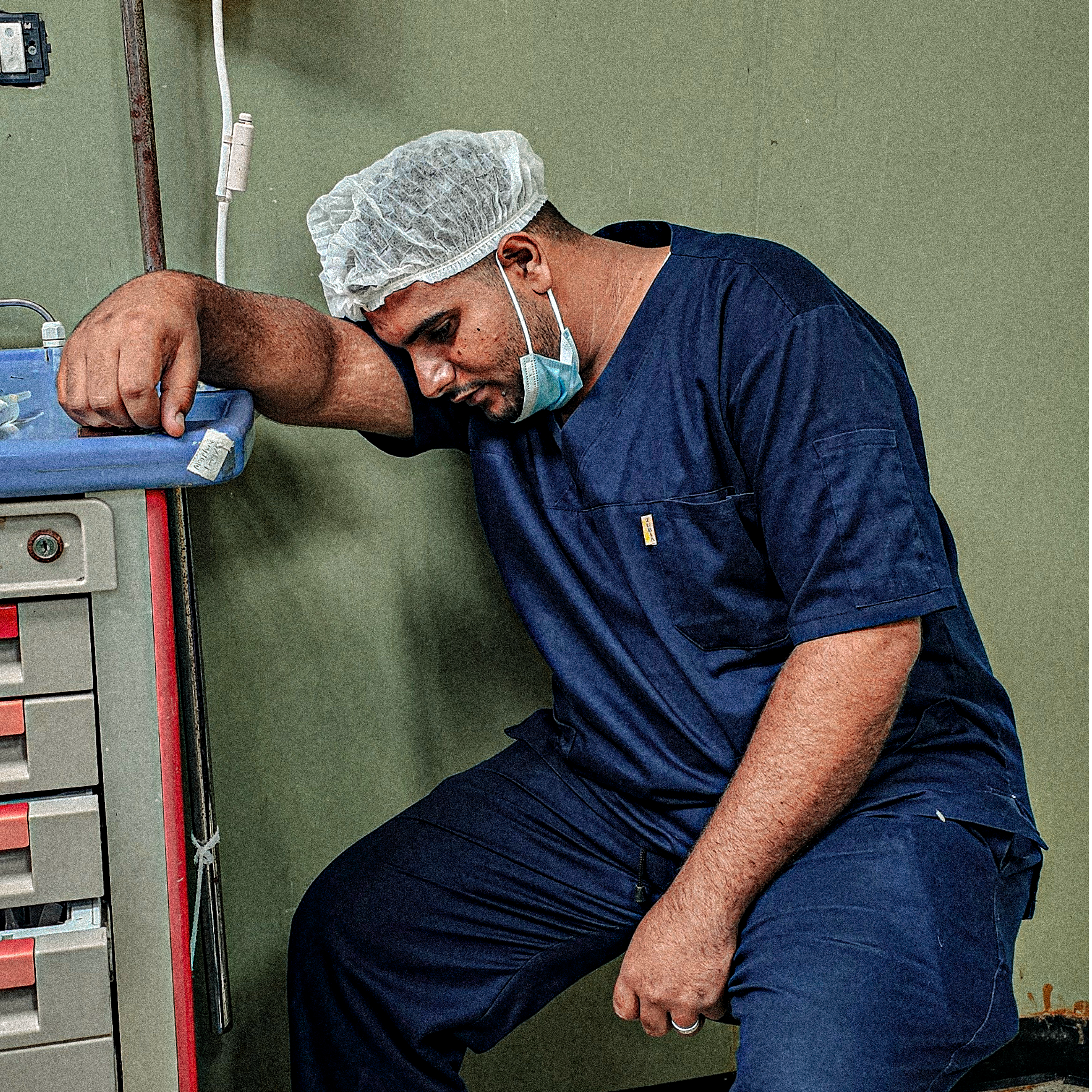
From the center for Investigative Reporting and prx, this is Reveal. I'm Al Letson. Roughly a week ago, President Donald Trump ordered military attacks on Iran. It seems ironic because just a few weeks before, in mid February, Trump held his first board of peace meeting. It was largely focused on rebuilding Gaza. In it, his administration promised an opulent vision of a new Gaza with futuristic buildings and coastal tourism. But the reality on the ground is much darker. Millions of tons of debris have yet to be cleared away. Nearly one and a half million Palestinians are still displaced or living in tents. More than 600 people in Gaza have been killed by Israeli strikes since the ceasefire in October, according to local health officials, and Gaza's health care system remains devastated. Ramita Navai and Ben Duper have been reporting on Israel's attacks on hospitals and healthcare workers in Gaza since April 2024. They began soon after the Israeli military completed a two week raid of the largest medical complex, Al Shifa Hospital. According to the Geneva Convention targeting hospitals and medical personnel intentionally, that violates international law and it could be a war crime. And as the weeks went on, Israel appeared to be doing this more and more. Ramita and Ben are veteran journalists. They wanted to get a team on the ground in Gaza to see what was happening to healthcare facilities and get it out to the world. So they partnered with the BBC to produce an hour long documentary film which would give the story a huge audience. This is Ramita.
- [02:41]
Ramita Navai
At the time I absolutely believed in the BBC. There are great people at the BBC and I still believe in it as an organization. Really, really believed in it fully.
- [02:52]
Narrator/Host (Reveal)
Then Israel doesn't let outside reporters into Gaza. So Ramita and Ben started to reach out to local journalists who could help Them report there. And sources like doctors and medics, all
- [03:04]
Ramita Navai
these Palestinians told us that they thought the BBC would never run our film. And we really had to try and persuade them to talk to us because they didn't and don't trust the BBC. And I really persuaded people. You know, there was a case where I. I got on the phone to persuade someone we were in the west bank and I said, listen, I'm going to pass you over. And Ben spoke to him, what, 45 minutes an hour, telling him there was no way the BBC would not run his interview.
- [03:35]
Ben Duper
He was convinced the BBC never would.
- [03:37]
Narrator/Host (Reveal)
This, of course, is Ben.
- [03:38]
Ben Duper
And I was quite shocked he felt that way, but actually he was 100% right.
- [03:43]
Ramita Navai
They all were.
- [03:46]
Narrator/Host (Reveal)
Over the last couple years, big media organizations have been hit with criticism from both the left and the right over coverage of the war in Gaza. But it's rare to get a chance to peel back the curtain and see what exactly was happening on the inside of those organizations and whether political pressure played a role in journalistic decision making. Today on Reveal, we're partnering with the KCRW podcast Question Everything to tell the story of two journalists who briefly back evidence of war crimes in Gaza. But the BBC refuses to air the film. Reporter Sophie Kazis has the story.
- [04:28]
Al Letson
I've been following how journalists have been covering Gaza for a while. And one day, while scrolling on social media, I came across a post from Ben about the documentary he produced with Ramita. He asked, why is it so difficult to make documentaries about the biggest and worst assault on civilians this century? The BBC had dropped their film and I wanted to know why, what that process looked like from the inside. Ben and Ramita had both worked in news and documentary for decades, racking up awards and accolades. Ben's a British journalist who worked at top outlets, including for 10 years as news editor at one of the BBC's main competitors, Channel 4. Ramita is a British Iranian journalist who's reported from over 40 countries, often in hostile environments. She's a big enough deal that she appeared as herself in a scene with Mandy Patinkin in an episode of Homeland.
- [05:27]
Ramita Navai
Come on, Saul, make some news. It's been three weeks. At least. Give us a sense of how it's going so far.
- [05:33]
Ben Duper
It's going, from what I understand.
- [05:35]
Al Letson
So they're both long in the tooth, as Romita puts it, which helped them get reluctant sources to talk to them.
- [05:41]
Ramita Navai
The Palestinians who were mistrustful of the BBC, the reason they gave interviews ultimately was because they trusted us as individuals.
- [05:51]
Al Letson
They started Reporting on the ground. A year ago, in September 2024, Ramita, the lead reporter and narrator of the film, and Karim Shah, the director, went to Egypt, Israel and the occupied west bank. And they partnered with two Palestinian producers who were in Gaza, Jabba Badouan and Osama Alashi. Jabba and Osama both worked on a previous film for Ben's company, earning Jabba six awards for this new film. Jabba and Osama start going inside hospitals and interviewing doctors who are working under some of the most difficult and frightening conditions imaginable. There are shortages of medicine and other basic supplies, not to mention fuel, food and clean water. Sometimes hospital staff work in complete darkness with bullets flying, bombs falling all around them.
- [06:44]
Ben Duper
We are in the theater and operating room full of darkness, no water, no electricity. But we have a hero. Surgeons in Gaza.
- [06:56]
Al Letson
Jabba and Osama, the Palestinian producers in Gaza, are working in these same conditions, risking their lives. To gather the footage, the team starts observing tactics that the Israeli military is repeating at after hospital. Here's Ramita.
- [07:15]
Ramita Navai
One of the first things that happens when the Israeli army sets its sights on this hospital is that it goes for the infrastructure. So solar panels will be hit, all the facilities containing oxygen canisters will be hit. They'll go for the energy supplies. Specific wards will be hit. You know, they're very targeted.
- [07:34]
Ben Duper
They attacked a very populated area. Dead bodies of these children see massacre,
- [07:41]
Ramita Navai
massacre, quadcopters and drones. Armed drones would target anyone in scrubs inside the hospital.
- [07:52]
Al Letson
And Ben and Ramita, they started getting other very disturbing tips.
- [07:57]
Ramita Navai
We heard that doctors were going missing. Soldiers were taking Palestinian doctors away from checkpoints, sometimes by name. They were taking them away from hospitals in Gaza. There were cases of doctors being taken from operating theaters.
- [08:16]
Al Letson
And who were you hearing that from?
- [08:19]
Ramita Navai
It was a group of international workers who have been working in Gaza for very many years, who have helped train Gazan doctors. And they were being told by their colleagues that doctors and healthcare workers were going missing.
- [08:34]
Al Letson
So their team starts trying to verify this.
- [08:37]
Ramita Navai
I remember I was having a conversation with a Palestinian doctor who had recently returned from Gaza to London, and he had been at the Netsim checkpoint and he had witnessed anyone in scrubs being taken aside. He was really quite scared.
- [08:59]
Al Letson
They get interviews with several doctors who describe being detained by Israeli forces, some for as long as four months, but none ever get charged with any crimes.
- [09:10]
Ramita Navai
Another very clear pattern. Every single one of them was tortured.
- [09:15]
Al Letson
The journalists find that some healthcare workers have been held in detention for more than a year. Others have died in detention, like orthopedic surgeon Adnan Albert. Ramita spoke with a doctor who'd been detained alongside Albersh.
- [09:31]
Ramita Navai
What did you think when you heard Adnan had died in prison
- [09:36]
Ben Duper
and Hamish Gilbert died?
- [09:38]
Narrator/Host (Reveal)
He was murdered. He was killed,
- [09:44]
Al Letson
He says, I don't like the word died. He was murdered. He was killed. In one way or another, it was as a result of torture. Israel claims that armed Palestinian groups were using the hospitals for military purposes and that's why they targeted the facilities. Hamas has denied those allegations and the United nations found there's not enough evidence to support Israel's claims. In fact, in December 2024, while Ben and Ramita were working on their film, the UN released a report showing Israel's attacks on the hospitals were part of a pattern that they replicated across Gaza, destroying almost every hospital there. But official reports, they're not as visceral and personal as the documentary team's footage. And by that December, when the UN report comes out, they have a first cut, they show it to their editor, everything seems fine, they make some changes and get a second cut ready. It's all very standard. The next phase is script edits. They say that's when they start noticing the first signs of trouble.
- [11:04]
Ben Duper
When we got into the edit, there was quite a lot of pushback on some of the sharper points of the journalism.
- [11:12]
Al Letson
Ben and Romita worked with editors, producers and other journalists, plus a guy representing BBC's editorial policies. They don't want to give those names because they say those people were just following orders from above. We'll get into that later.
- [11:28]
Ben Duper
They started saying, well, that's a very strong thing to say. What would Camera say about that? And what would a guy called David Collier think?
- [11:37]
Al Letson
Camera is a media watchdog that aggressively calls out reporting it deems to be anti Israel. Same with David Collier, a vocal pro Israel critic of the BBC. Ramita and Ben were shocked that their editors mentioned these names.
- [11:53]
Ben Duper
And I said, well, why do we care about what they think?
- [11:56]
Ramita Navai
It was the first time in my 22 year career of covering dozens and dozens of countries that ever in an editorial meeting a lobbyist is named or a lobby group has been named. And really, I found it extraordinary that the BBC were allowing pro Israel lobby groups to influence and inform their journalism.
- [12:22]
Al Letson
Do you have any examples of those words or phrases they didn't want you to use?
- [12:27]
Ramita Navai
Well, we fought over the word ethnic cleansing, even though it was attributed to the un. They had an allergic reaction to experts using the word genocide. There was another word.
- [12:44]
Al Letson
Let me forced disappearance, enforced disappearance of Doctors. And what did they want you to say instead?
- [12:54]
Ben Duper
Missing.
- [12:55]
Ramita Navai
Yeah, missing. Missing.
- [12:56]
Ben Duper
Yeah. And then they started saying, we don't really like using Amnesty anymore.
- [13:03]
Al Letson
Amnesty International, the human rights group. During her reporting, Ramita had interviewed an Amnesty expert on Israeli black sites in Gaza. Ben and Ramita say the BBC did not want them to cite Amnesty as a source.
- [13:17]
Ben Duper
I was like, what, you don't trust them? You don't trust Amnesty International? No, no. It's just easier if we don't use them. And then ultimately, in one meeting, they said, we don't view the UN as an independent organization anymore. And at that moment, I said, I'm sorry, what did you say? And then I Googled BBC and UN reports, and there were hundreds of reports of Bangladesh, India, you know, China, whatever. I said, well, you do trust them on this. And I think what's happening here is Israel doesn't trust the United Nations.
- [13:49]
Al Letson
They also say they had to push to include Palestinian experts. One of many fights in the editing room.
- [13:56]
Ben Duper
The discussions and the arguments and the painful reworking of the same script over and over again took three times as long as any other film I've ever done. You had to fight for every line and had to justify every line, and it strained every sinew of our relationship with the BBC to get there as well.
- [14:18]
Al Letson
But for Ben, the most striking issue had to do with what's called right to reply. That's giving people or groups a chance to defend themselves against public criticism or allegations made in reporting in the uk. It's a legal obligation under their broadcast code, but it's not unique to Britain. It's standard practice in journalism. I've done it for this story. I reached out to the BBC with the details of Ben and Ramita's account, and in a bit, I'll let you know what they told me. I've also reviewed documentation to corroborate what Ben and Ramita told me.
- [14:51]
Ben Duper
Having run a national News program for 10 years, I was very across when you have to use the right to reply.
- [14:58]
Al Letson
Ben knows the rules of right to reply up and down. He and Ramita say they sent Israeli authorities every allegation made in their film, specific questions about hospital strikes, tactics used to target Palestinian doctors, and the answers they got back weren't substantive or backed by evidence. It was a lot of blanket statements like this one, which essentially dismisses the premise of the film. We act in full accordance with international law and outright reject the allegation of deliberately targeting medical facilities and medical personnel. Ben and Ramita say the BBC wanted them to include rebuttals like this from Israel over and over again.
- [15:40]
Ben Duper
And what was happening was that the BBC would say, well, they said. They responded here. And I said, we've already said that three times. We can't be saying this five times, because actually, that's not balance. The balance is shifting towards the Israeli side here because you're just giving them free airtime to spout whatever they want to spout.
- [16:01]
Ramita Navai
The extent to which the BBC would accept Israeli military statements as fact, unquestioningly in the name of right to reply.
- [16:14]
Al Letson
The BBC considers itself the world's most trusted international news broadcaster because it's the
- [16:20]
Narrator/Host (Reveal)
pursuit of truth that gives us our calling.
- [16:23]
Al Letson
And they really lean into that in their promos.
- [16:25]
Narrator/Host (Reveal)
The fight for truth is on.
- [16:28]
Al Letson
Despite the branding, for years, the BBC has gotten a lot of criticism, both for being too pro Israel and for being not pro Israel enough.
- [16:38]
Ben Duper
The BBC would say, neither side trusts us. We're attacked by both sides. Israel says that we are pro Palestinian in our coverage. Palestinians say we're pro Israeli and say, therefore, we must be doing something right.
- [16:53]
Al Letson
I've heard a lot of journalists say the same thing, often as a source of pride. But independent researchers at Glasgow and Cardiff universities looked at 20 years of BBC coverage and found that the BBC consistently favored Israeli narratives over Palestinian ones.
- [17:11]
Ben Duper
They have been intimidated. They have been frightened of being called anti Semitic, they have been frightened of the fear of not being balanced. And they have been bullied by bosses in the news industry who, frankly, know better. And they're doing it at a time when the rate of killing and the atrocities are off the scale.
- [17:33]
Ramita Navai
And I would say in really simple terms, our job as journalists is to tell the truth, to get the truth out. And journalists are becoming too scared now to do that.
- [17:45]
Al Letson
And when you're in these meetings, you're presenting the script like, what relation do they have to your film?
- [17:53]
Ben Duper
Well, look, I have to say this, that the people who are saying it in the room, I don't think they're saying it themselves. You have these weird arguments with people in a room, would get very heated, then you go down the pub and they'd say, you're right about absolutely everything. Of course, I don't believe that, but I know what I have to do to get this through. And so I did feel for some of the people who were arguing that.
- [18:16]
Al Letson
But.
- [18:16]
Ben Duper
But it was really the dissonance between what people actually personally feel and what they are being forced to say here at the BBC is just shocking. It felt like these were people representing views from above. They were carrying out the orders of others because they weren't convinced by what they were saying.
- [18:36]
Al Letson
I asked Ben who he's talking about when he says views from above.
- [18:41]
Ben Duper
That guy is Tim Davy. He was the head of PR at the BBC. At the moment. The BBC is not run by a journalist.
- [18:48]
Al Letson
Tim Davey, the BBC's director general and editor in chief. He's been at the organization since 2005 in various roles including director of marketing, communications and audiences.
- [19:00]
Ben Duper
And before that, he used to be the head of PR at Pepsi and is otherwise known in the industry as Pepsi Boy.
- [19:11]
Al Letson
Pepsi Boy, a moniker he got because of his time as VP of marketing at the soda company. As the top guy at the BBC now he. He's the person who has to answer for criticism. He's faced questions in Parliament about how the network covers Gaza and met with pro Israel lobby groups, which infuriates Ben. Ben says with Davy at the top, the BBC is more concerned about PR than journalism.
- [19:40]
Narrator/Host (Reveal)
After months of fighting for their journalism, Ben and Ramita find themselves in a showdown with the BBC over the film.
- [19:48]
Ramita Navai
Ben said, this is the maddest effing meeting of my effing career.
- [19:53]
Narrator/Host (Reveal)
That's coming up on Reveal. Don't go anywhere. From the center for Investigative Reporting and prx, this is Reveal. I'm Al Letson. Today we're partnering with the KCRW podcast Question Everything to bring you the story of two veteran journalists, Ramita Navai and Ben Diper, who partnered with the BBC to investigate Israeli strikes on hospitals inside Gaza. Their film exposed evidence of potential war crimes, but getting it to air was proving increasingly difficult. Reporter Sophie Kazis has the rest of the story.
- [20:38]
Al Letson
Finally, Ben and Ramita's film Doctors Under Attack is slated to air after rounds and rounds of fact checks, bites over language and sources, the BBC's legal and compliance reviews, plus another review from Ben's own lawyer. Just in case. The documentary is set to run in February 2025. But just when Ben and Ramita think it's going to be released, the BBC decides to put out another film. First, how to Survive a War Zone, about children living in Gaza. The BBC airs that film on February
- [21:16]
Ben Duper
17 and almost immediately it was identified as having an omission from it.
- [21:21]
Al Letson
The omission Ben's talking about has to do with the narrator, a 13 year old boy living in Gaza. It turns out he's the son of an agricultural minister in Gaza's Hamas run government. That information was not in the film when it was released and it becomes
- [21:37]
Ben Duper
an absolute shitstorm in this country like no other story would. The ministers talk about it in Parliament
- [21:44]
Al Letson
with Tim Davy, the BBC's director general, in the hot seat.
- [21:48]
Ben Duper
As far as you can go, it's fair to assume if the family of a senior mass leader is paid, that that money goes into the. Let's just deal, let's deal with the facts. The independent production company to represent, they have written to us very clearly that they say no money has gone to Hamas.
- [22:10]
Al Letson
The BBC pulls that other film off its digital platforms and launches an internal investigation. Ben and Ramita are worried that this will delay their film again at a time when the situation in Gaza is getting worse, with Israel bombing more hospitals, killing and detaining more healthcare workers. So they go to the number three guy at the BBC and ask him not to delay their film while this other film is being investigated. His name's Jonathan Monroe, the global director of BBC News.
- [22:46]
Ben Duper
And they immediately started saying, no, absolutely not, that's not going to happen. This is an important film and it's a vital piece of public interest journalism is what they kept saying. And it'd be like, oh, great, yeah. And then we'd go to the pub and have a pint of beer.
- [23:01]
Al Letson
Those pints of beer are premature. Their film gets delayed.
- [23:07]
Ramita Navai
Now we need another round of checks
- [23:09]
Ben Duper
and delayed, yes, we need to go through the script again.
- [23:12]
Al Letson
As they wait for final sign off,
- [23:14]
Ben Duper
someone's going on holiday to Yorkshire and that person's really vital or someone's at the dentist that week.
- [23:21]
Al Letson
The BBC says the film never received final pre broadcast sign off. But Ben and Ramita say the film was scheduled to run six different times. All the while, Ramita is messaging their collaborators and sources in Gaza saying, it's going to run soon. I promise it's going to run soon. And Ramita really believed it was going to happen when she says Jonathan Monroe gave them word that it would run at the end of April.
- [23:47]
Ramita Navai
I had to go back into the recording studio to do the last minute rereads. That's when I really thought, okay, it's happening now. This time it's really happening.
- [23:57]
Al Letson
Then Ben says he gets a call from Jonathan. The somewhat bizarre message.
- [24:03]
Ben Duper
They called us and said, we know that we've told you that your film has not been delayed because of the other film of the investigation. That is still the case that it wasn't delayed because of that, but it now is delayed because of the investigation. At which point we laughed and so did half the people from the BBC.
- [24:24]
Al Letson
I emailed Jonathan for comment, and the BBC sent a response on his behalf, saying they weren't going to get into the details of who was involved at which stage. And by the way, the investigation into the other film ultimately found that while it did violate the BBC's editorial guidelines by not disclosing that the narrator was the son of a Hamas government official, overall, the omission did not influence the content of the documentary in any way.
- [24:56]
Ramita Navai
Ben started emailing all the bosses saying, we demand that you either release our film as soon as possible as a matter of urgency. This is an investigation into war crimes, or release the film back to us.
- [25:11]
Ben Duper
As a documentarian or someone in news. You are really taking on the most painful part of someone's life, and they are trusting you that you're going to tell the world. And that was really our point to the BBC, that you cannot delay this film because it contains such searing testimony. You don't have the right to do that because of some other film.
- [25:36]
Ramita Navai
In the end, I stopped emailing and whatsapping and sending messages to our contributors because it was so awkward having to time and time again say, I'm really sorry it's been delayed. How can I say your stories have been delayed because the BBC is worried about the reaction to another film that has nothing to do with you. I mean, it was just madness. It was just unethical and immoral. And also, journalists found out that our film had been put on hold, and so journalists started snooping around and started asking questions. Right, Ben?
- [26:15]
Unnamed Panelist/Commentator
Yeah.
- [26:16]
Ben Duper
The story was reported. The BBC gave a statement saying we would get this film out as soon as possible. It's an important film.
- [26:25]
Al Letson
Hundreds of industry figures, including Susan Sarandon, write a letter to the BBC calling for the immediate release of Ben and Romita's film and accusing the BBC of. Of political suppression. By now, it's May, three months after the film was initially supposed to air in February. And finally, Ben says they get called in for a meeting with Jonathan Monroe and a few others. He and Ramita go to the meeting.
- [26:51]
Ramita Navai
They turned around to me and they said, listen, there is a way forward. Ramita, hear us out. We're going to take you off as the reporter, and you're going to become a subject in the film. You will become a contributor to be interviewed alongside Palestinians so you can explain your journalism for full transparency. And at that point, I was so shocked. And I remember looking at Ben, and Ben was laughing because, I mean, it's such an absurd idea. And I said, do you realize how insulting this is? Do you realize what you're asking me to do. And then I think they then thought that they would try to appeal to my ego. They said, but Ramita, we're going to have you on all sorts of radio programs. They said, which, first of all, you do that anyway. When a film comes out, you have a whole PR team that gets you on all these programs. So I was stunned that they thought that that would be enough to placate me. At that point. Ben said, this is the maddest effing meeting of my effing career.
- [27:59]
Al Letson
When asked why they were suggesting this, Ben says the execs in the meeting explain they're worried about narrators who aren't BBC employees because of the controversy with the 13 year old narrator of the other film. So they suggest hiring an actor instead of Ramita to narrate the documentary.
- [28:18]
Ramita Navai
I said, so you're comparing me to a child who is the child of a member of the Hamas government. And they actually said, ramita, we, we assure you, we are not comparing you to a Hamas child. I'm laughing now, but I was really, really angry. You know, this is the first time in my career I've ever encountered this type of prejudice, I would call it, because there's no way if I was, you know, a purely English, white, let's say middle aged man, I mean, with my level of expertise and my standing in the industry, there's no way they would have asked for that person to become a subject in his own film. I mean, there's just no way.
- [29:15]
Al Letson
They also brought up Ramita's Twitter posts, saying some appeared one sided. Ramita says the BBC had already gone through all of her social media and asked her to remove some retweets about human rights abuses from international organizations like Amnesty and Human Rights Watch. She says the retweets didn't violate BBC policy, but she agreed to remove them anyway.
- [29:39]
Ramita Navai
I've never been asked to un retweet tweets about the Taliban in Afghanistan or against the Iranian regime. You know, this was quite extraordinary. And I also reminded them, I knew what was at play, that they were worried about the optics of an Iranian woman who they presumed to be Muslim, investigating Israeli war crimes. I knew that was happening. And in the meeting I reminded them that the Iranian regime has called me an imperialist Zionist spy, that I've spent over 20 years of my career investigating Islamist groups such as ISIS and different Shia militias across the region. So this is absurd that all of a sudden I'm seen as partial right at the end of the meeting, when Ben kept pushing them, Ben kept asking them, have there been any complaints made against her? No. Ben just exploded and said, we're not changing a thing,
- [30:44]
Ben Duper
by the way. There were people I'd known to one person I'd known for two decades and used to work alongside. So when we were walked out of the building, the person who'd been part of the meeting was apologizing previously, saying, I'm sorry, that was a really ridiculous idea and we shouldn't have ever presented it.
- [31:00]
Al Letson
So then what happened after that meeting?
- [31:03]
Ramita Navai
After that meeting, I wrote a letter. I thought, right, first of all, I want this on record. I want on record what happened in that meeting. I was so angry.
- [31:21]
Al Letson
Ramita sends her letter all the way up the chain to the top two people at the BBC, Director General Tim Davy and to the CEO of News, Deborah Turness. She demands to know why the BBC would demote her from reporter to interview subject. Two days later, they hear from the bosses.
- [31:42]
Ramita Navai
It wasn't long after that letter that Ben received an email saying, we agree, now you can have the film back.
- [31:54]
Al Letson
The BBC was telling them they were not going to run the documentary. It was a huge blow, but Ben and Romita could have the rights back and hopefully air it someplace else.
- [32:05]
Ramita Navai
And they had conditions.
- [32:07]
Al Letson
One, the documentary could not be shown in the uk, though the BBC would reserve the right to show clips and to interview Romita for their news services. And two, they were asked to sign what Ben called a gagging clause limiting what they could say about the film.
- [32:24]
Ben Duper
I, or anyone who bought the film, would not be able to say that it had been a BBC film, even though we had been making it with the BBC for a year. And also they would not be able to say that the BBC didn't run it. I just thought, why would a journalist sign an NDA? Why would I sign an NDA, which is palpably, provably and openly untrue.
- [32:47]
Al Letson
In the middle of these negotiations, Ben's speaking on a panel at the Sheffield Documentary Festival and he goes public about what's happening with their film. There's no recording, but people wrote about it. Ben said the BBC has utterly failed. The best journalists in the world are working inside the BBC and they are being stymied and silenced. That same morning, Ramita is a guest on a BBC radio show. She was invited on as an expert to discuss Israel's 2025 bombings in Iran.
- [33:19]
Ramita Navai
I was asked how Iranians are feeling about this, so I updated everybody on the situation and what was actually happening on the ground. And then I gave my analysis and I told the reporter, I said, iranians are pretty fearful because they're seeing what Israel is doing in Gaza and it's killing Palestinians, it's ethnic cleansing and it's behaving like a rogue state. Something along those lines.
- [33:49]
Al Letson
The recording of this is not available online, but we found a transcript, and her precise words were that Israel had, quote, become a rogue state that's committing war crimes and ethnic cleansing and mass murdering Palestinians.
- [34:03]
Ramita Navai
And the presenter tried to correct me and said, you're just giving your opinion. And so I told him, no, this isn't my opinion. I've been investigating this for nearly a year and a half for the BBC. This is based on my work.
- [34:17]
Al Letson
Why was that a problem?
- [34:19]
Ramita Navai
Well, good question. Why was that a problem? I was giving a comment as an expert in this field, giving analysis. After 22 years of covering the Middle east and covering Iran.
- [34:33]
Al Letson
The next day, the BBC issues a public statement saying it's dropping the film. The BBC wrote yesterday, it became apparent that we have reached the end of the road with these discussions. But Ben and Ramita say it wasn't yesterday. They'd been negotiating for weeks to get the rights to their film back. The BBC statement went on to say, we have come to the conclusion that broadcasting this material risked creating a perception of partiality that would not meet the high standards that the public rightly expect of the BBC. So I want to pause on the phrase perception of partiality. What are we supposed to make of
- [35:14]
Ramita Navai
that perception of partiality? They're literally saying they care more about how people perceive what's being said rather than the truth. That's madness.
- [35:28]
Ben Duper
It shows that they can no longer recognize what partiality is. And it actually means that its interpretation of impartiality actually obstructs the truth and constructs a different truth.
- [35:41]
Al Letson
I sent the BBC a long list of questions after my interviews with Ben and Ramita, I gave them their right to reply. Questions like, did any BBC editor or lawyer advise against citing Amnesty International or the un? And were the filmmakers asked to replace terms like ethnic cleansing and genocide? Their spokesperson said it's not uncommon for presenters to point out that genocide has a legal definition and that Director General Tim Davy was not involved in discussions about language choices for the film. Many of my other questions they didn't answer. Instead, they focused on Ramita's comments on the BBC's radio show, writing, in part that after she called Israel a rogue state that's committing war crimes and ethnic cleansing and mass murdering Palestinians, it was Impossible for the BBC to broadcast the material without risking impartiality. They go on to say, quote, the BBC holds itself to the highest standards of impartiality, and it would never be acceptable for any BBC journalist to express a personal opinion in this way. We believe this is one of the reasons we're the world's most trusted news provider. We were left with no choice but to walk away.
- [36:56]
Ramita Navai
They said that they were dropping the film because of my comments.
- [37:03]
Al Letson
What did you tell the journalists in Gaza? You were working with your sources, the medical professionals whose stories you were telling. What were those conversations like?
- [37:14]
Ramita Navai
Osama and Jabba, two producers. They weren't surprised. They just shrugged it off. This is what they always thought would happen anyway, so I was working up to this moment of like, I'm so sorry, and, yeah, there's no reaction. They just weren't surprised. One of them, who was sending me messages last night, who's in Gaza City right now, aside from who's really living in fear of his life, he thinks he's gonna die. So, yeah, so me texting them, telling them, oh, I'm. I'm really sorry, I don't know if the BBC is gonna run it. I don't. You know that at this point, like, who gives a shit? That was their. That was their reaction and their sources.
- [37:58]
Al Letson
Some were really angry. Others, like, one doctor just said, told you so.
- [38:04]
Ben Duper
The mistrust of the BBC in Gaza was now sort of absolute.
- [38:09]
Al Letson
After seven months of battling the BBC, Ben and Romita did get the rights to their film back in full. They did not sign the gag clause, and on July 2, their film aired in the UK, not by the BBC, but by its competitor, Channel 4, where Ben had worked as news editor for a decade and. And where Ramita had spent much of her career. It's also available internationally through Mehdi Hassan's new outlet, Zateo.com that's where I watched it. Ben says they haven't received a single claim of inaccuracy or complaint. How did you feel when the film finally aired?
- [38:48]
Ramita Navai
We went round to Ben's house to watch. Was quite emotional, wasn't it, Ben?
- [38:56]
Ben Duper
And you know what the best thing was? It actually. It was actually a good film when all you've been doing is fighting about the subjects in the film rather than the substance.
- [39:06]
Al Letson
And it.
- [39:06]
Ben Duper
Ultimately, it went out in the right place, I suppose. But I would have loved that film to go out on the BBC, and the BBC should have run it. And somehow the BBC has tangled itself up and it will hang its head in shame.
- [39:22]
Al Letson
You both co wrote a piece about this whole experience for the observer and you ended by writing. As news and current affairs journalists, we do not want to be on the right side of history. We want to be on the right side of. Now I'm wondering if you could tell me what that means to you.
- [39:44]
Ramita Navai
That's Ben's brilliant line.
- [39:45]
Ben Duper
Thanks, Ramita. That's quite nice of you to. A lot of people use that phrase quite glibly now, I think to say you're on the right side of history means that history will decide whether this is a terrible thing. You can, you know, it's a terrible thing because you can see it. And so I just found it an annoying phrase because this isn't a film we've made for people to watch in the future and say, oh, you were right. It's a film for people to say, my God, this is happening.
- [40:20]
Ramita Navai
I also think we will look back in horror at how we have covered this.
- [40:32]
Al Letson
When Ben and Ramita started making their film, around 500 healthcare workers had already been killed in Gaza. By the time the film came out, six months later than it was originally meant to, that number had risen to over 1500. Today, it's over 1600 and there's not a single fully operational hospital in all of Gaza.
- [41:02]
Narrator/Host (Reveal)
Sophie Kazis is a producer for the KCRW podcast Question Everything. After Ben and Romita's documentary was axed, more than 100 BBC employees signed an open letter to management decrying the decision and saying they'd witnessed bias in favor of Israel. In the newsroom, they wrote, all too often it is felt that the BBC has been performing PR for the Israeli government and military. Coming up, more fallout at the BBC.
- [41:34]
Dez Friedman
The resignation of two of the most senior figures inside the BBC was based on a report that was in itself far from impartial.
- [41:43]
Narrator/Host (Reveal)
That's up next on Reveal. From the center for Investigative Reporting and prx, this is Reveal. I'm Al Ledson. Just days before the 2024 presidential elections, the BBC investigative show Panorama aired a documentary called A Second Chance. And in it, they played a clip from the now infamous speech the President gave to a crowd on January 6th. We're gonna walk down to the Capitol and I'll be there with you. And we fight. We fight like hell. And if you don't fight like hell,
- [42:24]
Ben Duper
you're not gonna have a country anymore.
- [42:26]
Narrator/Host (Reveal)
But it turned out the clip was edited by splicing together two pieces of the speech that were almost an hour apart. The edit was without A doubt misleading many people, including then Director General of the BBC, Tim Davy, agreed it should not have happened. But instead of issuing a correction and standing by the rest of the reporting, the BBC pulled the documentary from all its platforms. And Tim Davy and CEO Deborah Turness resigned reveals. Nadi Hamdan is here to help us understand what the BBC's reaction to this Trump documentary and Ben Ramitz say about power and how it's influencing the media in this moment. Hey, Nadia.
- [43:11]
Nadia Hamdan
Hey, Al.
- [43:12]
Narrator/Host (Reveal)
So what am I supposed to take away from this? Because it seems like there are pretty strong voices decrying the BBC as biased from both sides.
- [43:22]
Ramita Navai
Right.
- [43:23]
Nadia Hamdan
So I spoke to a few journalists and media experts covering the BBC, and if I had to boil it down, it's that, yes, we live in a very polarized world, and yes, the BBC is getting accused of bias from both the left and the right. But the difference is that BBC leadership doesn't seem to respond to each side with the same weight.
- [43:45]
Dez Friedman
I think it's quite clear that ordinary journalists and senior editors and senior managers inside the BBC, they are much more nervous of voices from the right.
- [43:58]
Nadia Hamdan
This is DEZ Friedman, a professor of media and communications at Goldsmiths, part of the University of London.
- [44:04]
Dez Friedman
They are much more nervous of those people than they are of this diffuse left.
- [44:11]
Narrator/Host (Reveal)
So I'm curious, having a front row seat to what just happened with public broadcasting in the U.S. does some of the BBC's nervousness just kind of come down to that?
- [44:24]
Nadia Hamdan
The short answer is yes. The BBC is the world's largest public broadcaster. There's really nothing else like it. The closest comparison in the US is NPR and pbs. But unlike public broadcasting here, the BBC is paid for by license fee.
- [44:42]
Unnamed Panelist/Commentator
So every Brit pays a fee to the BBC to have a universal service.
- [44:48]
Nadia Hamdan
This is Alan Rusbridger, former editor in chief of the Guardian, and he says because the British people are paying about 200 pounds a year for the BBC, it has certain legal obligations.
- [45:01]
Unnamed Panelist/Commentator
One of them is to be impartial. And of course, the moment you declare something has to be impartial, people then attack it for not being impartial.
- [45:10]
Nadia Hamdan
Most British newspapers are privately owned by billionaires like Lord Rothmere and Rupert Murdoch, which most people will know is the owner of Fox News. Here in the us, much of the UK press, as they're known, skew heavily to the right and are not held to the same standards of impartiality. And Allen says these newspapers have been attacking the BBC's perceived liberal bias for decades.
- [45:37]
Unnamed Panelist/Commentator
I can't think of a news organization that doesn't make mistakes. And yet if the BBC makes a mistake, it becomes front page news. So I think there has been a culture of caution.
- [45:49]
Dez Friedman
The real cause of the BBC scrapping the documentary is that they lost their nerve.
- [45:57]
Nadia Hamdan
Dez Friedman again talking here about Ben and Ramita's documentary. Dez thinks the BBC's decision had more to do with the fallout from that other Gaza documentary, the one where the filmmakers failed to identify the child narrator as the son of a low level Hamas official. Des believes the BBC just got cold feet.
- [46:18]
Narrator/Host (Reveal)
Okay, so take me back to that botched clip of Trump. How did that end up being the straw that broke the camel's back?
- [46:26]
Nadia Hamdan
So the complaint over that clip became part of a large report, one that was written by a right leaning author with ties to a right leaning BBC board member and then leaked to a right leaning newspaper. The Trump clip blew up from there, getting tons of coverage in the UK press, and eventually Trump sued the BBC for $1 billion. But Allen and Dez tell me when a credible report came out alleging conservative bias at the BBC, the UK press almost completely ignored it.
- [46:59]
Narrator/Host (Reveal)
And like you mentioned, being a public media organization, that makes them a big target.
- [47:05]
Nadia Hamdan
Exactly. The BBC exists by royal charter and that charter is up for review by the government every 10 years. One is actually happening right now. And there is significant political pressure from the right to get rid of the license fee that pays for the BBC.
- [47:24]
Unnamed Panelist/Commentator
That I think explains why the BBC is much more sensitive to the noises from the right because they feel they have a real power, an existential power, to affect the future of the BBC and to create over time an atmosphere in which the BBC is delegitimized.
- [47:43]
Narrator/Host (Reveal)
Yeah, really sounds similar to the fight that we're having with our own public broadcasting. But the stakes are just much higher because the BBC is so big and relies so heavily on government funding.
- [47:55]
Nadia Hamdan
Yeah. And Al, I spoke to five journalists and media experts for this story and they all agreed on one thing. They believe institutions like the BBC should exist. That is institutions that have a formal commitment to truth telling and balance even when they fall short, which they will. It's not about getting rid of them, it's about pushing them to do better.
- [48:20]
Dez Friedman
What I want to see is a public media system that actually does the job that it claims that it's doing, which is to hold power to account, to represent all communities without fear or favorite.
- [48:34]
Nadia Hamdan
And despite its faults, DEZ Allen and other experts say the BBC is still a widely respected news organization that on the whole is getting it right.
- [48:44]
Unnamed Panelist/Commentator
I'M trying to describe an organization that is simultaneously enormous, trusted, robust and yet
- [48:51]
Nadia Hamdan
wobbles reporter Daniel Trilling has been doing a lot of reporting on the BBC and he synthesized things really well. In an article he wrote for Equator magazine. He says, quote, as our global order decays, jettisoning universal values for something more nakedly violent, nationalist and anti democratic, the BBC has the unenviable task of narrating the collapse while also being subject to it.
- [49:20]
Narrator/Host (Reveal)
That is poetic and depressing and exactly where we are at this moment.
- [49:26]
Nadia Hamdan
And I would argue that media organizations here and all over the world world share that same unenviable task.
- [49:36]
Narrator/Host (Reveal)
Nadia, thank you so much.
- [49:37]
Nadia Hamdan
Thank you Al.
- [49:43]
Narrator/Host (Reveal)
That was Reveal's Nadia Hamdan. Nadia helped produce today's show along with Sophie Kitz from our partners at the KCRW podcast Question Everything. They've got a new two part series out right now reported by Sophie about a journalist and one time Trump supporter who was deported after covering ice raids. Thanks to Question Everything's host Brian Reed, Executive Producer Robin Simeon, Managing Editor Kevin Sullivan, producer Zach St. Louis, contributing editor Jen Kinney and Associate Producer Emily Maltaire, Marissa Robertson, texter and artist Cheriscus Fact Check today's show. Victoria Baranetsky is our General Counsel. Our Production manager is the great Zulema Cobb. Score and sound designed by Brendan Baker and Matt McGinley with help from Jay Breezy, Mr. Jim Briggs and Fernando My Man Yo Arruda. Our deputy Executive Producer is Taki Telenides. Our Executive Producer is Bret Myers. Our theme music is by Comorado Lightning. Support for reveals provided by the Riva and David Logan foundation, the John D. And Catherine T. MacArthur foundation, the Jonathan Logan Family foundation, the Robert Wood Johnson foundation, the park foundation, the Schmidt Family foundation and the Hellman Foundation. Support for Reveal is also provided by you our listeners. We are a co production of the center for Investigative Reporting and prx. I'm Al Letson and remember there is always more to the story.
- [51:18]
Ben Duper
From prx.