Loading summary
Transcript172 lines
- [00:01]
Lisa Schachter
Did you know you have the power to inspire future generations with the same impactful reporting you trust and believe in right now? I'm Lisa Schachter, and I manage the Legacy Society program at the center for Investigative Reporting. When you include Reveal in your will or other legacy plans, you are passing along your values of truth and integrity. It won't cost you anything right now, and you don't need to be wealthy to make a difference. A gift of any size through your will or from your retirement plan, life insurance plan, or other financial account can ensure that Reveal's meaningful, factual reporting continues for decades to come. For more information about making a legacy gift to Reveal or to notify us that you already have, give me a call at 415-321-1706 or send an email to giftsevielnews.org again, that's 415-321-1706 or giftsvealnews. Please consider creating your legacy of truth today. Thank you.
- [01:09]
Al Edson
From the center for Investigative Reporting in prx, this is Reveal. I'm Al Edson. In the late summer of 2021, a young family is camping in Wyoming. They're staying at a campsite that looks out at a pristine mountain lake. They even see antelope.
- [01:27]
Jade Doss
We saw a few of those, and that was cool. I didn't think there was antelop in the United States, but there is. Apparently.
- [01:35]
Al Edson
Jade Doss, her boyfriend Ryan Benaze, and their baby girl are spending their days listening to music in the tent, fishing and eating peaches from a farm stand.
- [01:46]
Jade Doss
It was just fun, relaxing. And at night, we would look at the stars and kind of just cherish each other's company.
- [01:53]
Al Edson
After a week or so, the family packs up their Ford Explorer and leaves the mountains of Wyoming. Next stop, South Dakota. They stay in a house on a farm. But then one day, Jade sees two police cars driving down the long, dusty road towards the farm.
- [02:11]
Jade Doss
I don't know how they even found out that we were there.
- [02:15]
Al Edson
This is not just a family road trip.
- [02:18]
Jade Doss
Later, I come to find out that they were tracking the cell phone. And so stupid to not have gotten rid of it. But we didn't think it was that serious. We didn't think that our case met the qualifications justifying that big of a manhunt.
- [02:35]
Al Edson
About a month before, this young family fled their home in Arizona out of fear they might have to give up custody of their child. They crossed half a dozen states, drove over a thousand miles that day. At the farm, Jade hid from the police. But afterwards she and Ryan head east with the baby towards Iowa. After a long day of driving, they park their SUV for the night in a Sam's Club parking lot in Sioux City. A few hours later, Jade wakes up to blinding lights. She squints and sees a gun. Get your hands up. Get your hands up. Do not move unless you're told to do so. Do you understand me? Their daughter is seven months old and has just started to say papa. We're not using the baby's name to protect her privacy. Jade is hugging her, telling her she loves her, when an officer yanks open the door. Jade raises her arms in the air and prays her baby won't fall. Can you put your baby somewhere?
- [03:36]
Ryan Benaze
I'll take the baby.
- [03:37]
Shoshana Walter
Don't fall out.
- [03:37]
Al Edson
When you open the door, roll your window down farther. One officer takes the baby. Another clicks a pair of handcuffs on Jade.
- [03:45]
Shoshana Walter
Sit down.
- [03:48]
Al Edson
She pleads with them.
- [03:49]
Ryan Benaze
You don't know what's going on.
- [03:50]
Al Edson
You ain't supposed to have this child, they tell her. She knows she's not supposed to have this child. What did this family do to justify this manhunt? It all started because Jade was taking a prescribed legal medication. The drug is called Suboxone. Suboxone is a treatment for opioid addiction. It prevents withdrawal and curbs cravings. It's considered the gold standard for millions of Americans in recovery, including pregnant mothers. Jade took it when she was pregnant, but it's one of a number of legally prescribed medications that in many states can trigger a child abuse or neglect investigation. That's what happened to Jade and eventually turned her family into fugitives. Today, we're bringing back a story from reporter Shoshana Walter. We first aired in the summer of 2023. Shoshanna spent a year looking into cases of new mothers being investigated for taking medication to addiction during their pregnancies. Medications like methadone or Suboxone. She found thousands of them, including Jade.
- [05:04]
Shoshana Walter
I was on Facebook reading through posts from parents who were dealing with child welfare cases, and I stumbled upon this post by Jade. She was looking for advice on how she could fight her case and get her baby back. So In March of 2022, about six months after the police took her baby and arrested Jade, I go to visit her in person at her trailer home in Apache Junction, which is about 45 minutes outside of Phoenix.
- [05:30]
Jade Doss
Hi.
- [05:33]
Shoshana Walter
How are you? I'm good. How are you?
- [05:35]
Jade Doss
I'm good, thank you.
- [05:36]
Shoshana Walter
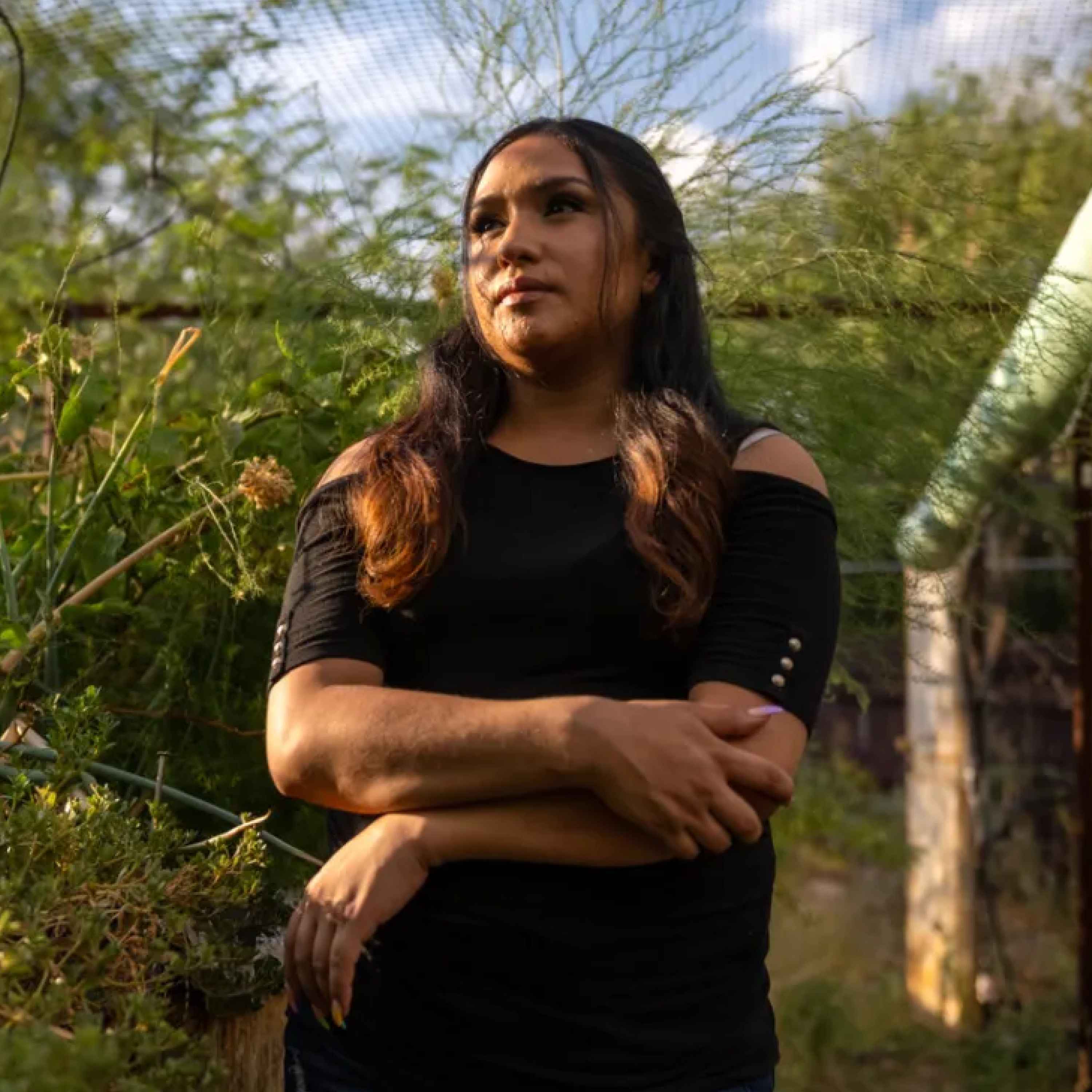
Jade walks out to greet me. She's a shy person, more comfortable hiding behind layers of makeup. But today she's not wearing any. She's in her late twenties, but looks younger. Her long brown hair dangles down her back and she's wearing socks and sandals. Tell me where we are for a moment, Jade.
- [05:55]
Jade Doss
Yeah, so this is where I live. Works for us for now.
- [06:00]
Shoshana Walter
The trailer is tidy and cozy. There are two La Z Boy chairs in the front room and we sit down. Ryan is there, but he doesn't want to talk. Jade wants to tell her story.
- [06:12]
Jade Doss
There's all this light that we have to deal with.
- [06:15]
Shoshana Walter
Jade grew up in Phoenix with her younger sister and her parents. She's Native American, South Asian and white. She didn't know her extended family for the most part, and for short stretches of time, she was in foster care or lived with her grandma and her aunt. Her parents were neglectful and sometimes abusive, and her mom struggled with addiction.
- [06:37]
Jade Doss
So I suffered with abandonment from my mother at a very young age, and I know my mother suffered from rejection.
- [06:46]
Shoshana Walter
From her mother, Jade learned to withdraw into herself. She liked the company of books and birds more than people. As she got older, she occasionally got into trouble with the law. Then, in her early 20s, she met Ryan on a dating app.
- [07:02]
Jade Doss
I told him what was going on with my family and my past, and he said, well, if you ever need to come here, just stay with me whenever you want to and just come hang out.
- [07:11]
Shoshana Walter
They got serious fast. Soon they were living together. Jade wasn't used to Ryan's quiet, stable life, but she liked it.
- [07:21]
Jade Doss
He helped me to get a job, so I got my very first job as a waitress, a server at Hot and Juicy Crawfish. It's like super hipster place. It's where all, like the ASU kids go to party.
- [07:34]
Shoshana Walter
At first, Jade and Ryan just partied together on weekends, enjoying their new life as a couple. Eventually, they started using tiny blue pills they thought were oxycontin. It turns out those pills were Fentanyl and very difficult to stop. Soon they lost their jobs and after their money ran out, they lost their apartment.
- [07:58]
Jade Doss
I just went downhill fast. We just became homeless quickly and.
- [08:07]
Shoshana Walter
Just.
- [08:07]
Jade Doss
Consumed us for like a year.
- [08:09]
Shoshana Walter
One night in 2019, they were in a drug induced haze when Jade became convinced someone was following them. They broke into a nearby house where a resident held them at gunpoint until the police arrived and arrested them for trespassing. After getting out of jail, Ryan and Jade were done. They went to rehab and got on Suboxone. The basic idea behind Suboxone is that it helps people get off opioids by eliminating the physical and Mental symptoms of withdrawal. Instead of cravings, you can just focus on whatever you need to resume a normal life. But Jade and Ryan were having trouble finding a place to live and they were having trouble holding down jobs. They didn't have a car and ended up at a horse farm where they worked for housing, but no pay. Jade was arrested a few times for shoplifting.
- [09:01]
Jade Doss
We just were not in a good place. And that was. It was very unsettling to me.
- [09:10]
Shoshana Walter
And then Jade discovered that she was pregnant.
- [09:14]
Jade Doss
We were both unemployed, living in this bedroom, but at the same time, like, I just felt kind of qualified, I guess. I don't know if that's arrogant to say, but, like, I just felt like I would be a good mother.
- [09:28]
Shoshana Walter
When Jade learns she's pregnant, one of her first thoughts is, should she stay on Suboxone?
- [09:34]
Jade Doss
My main concern was, is this safe? And is it ideal even to take while pregnant? Is it going to cause serious complications or any complications at all?
- [09:46]
Shoshana Walter
So she starts doing research. She reads studies. She talks to a couple of healthcare providers who tell her, yes, pregnant women can take Suboxone. Arizona's Medicaid agency and the CDC both urge women to take treatment meds. And studies show this leads to the best outcomes for both mothers and babies. In fact, it's extremely dangerous to stop taking Suboxone mid pregnancy. Stopping can cause miscarriage or very premature birth. I talked to several doctors who backed all of this up. Jade determines she should stay on it. And she and Ryan turn their attention to more pressing problems. Even though they're sober, they're still struggling. When Jade is around, seven months pregnant, Ryan's dad wires them money. They buy a car and drive to Sedona, where Ryan quickly finds a job. They move into a campground where a bunch of other low wage workers live. They start saving money to buy a more permanent home, an rv. They're still living in the car when Jade goes into labor.
- [10:57]
Jade Doss
All of a sudden, I just felt this rush of liquid on my legs and I knew right away that my water broke.
- [11:05]
Shoshana Walter
Ryan drives quickly to the hospital. Jade is scared. What if the hospital treats them like they're homeless? She wants to put on a full face of makeup, fix her hair so she doesn't look so scrubby. But Ryan's like, no, we don't have time for that. Let's go. Jade goes through the intake process. She tells the nurse that she's on Suboxone.
- [11:27]
Jade Doss
She just wrote it down on her computer. And then at some point, she had me take a drug test.
- [11:31]
Shoshana Walter
They take her to the delivery room, she gets an epidural.
- [11:36]
Jade Doss
And then the nurses came in and they just said, start pushing. So I did.
- [11:44]
Shoshana Walter
She delivers a baby girl, and they.
- [11:47]
Jade Doss
Handed her to me. She was making baby noises, not like a full on cry, but she was like. And then when they put her on my chest, she immediately quieted down.
- [12:01]
Shoshana Walter
Jade feels an overwhelming feeling of love.
- [12:05]
Jade Doss
I remember looking at her and thinking, like, how tiny and precious she was. Like a part of me. Like if someone took my heart and like it was now separated from me and I could see it over there.
- [12:20]
Shoshana Walter
She and Ryan are totally enamored with their daughter. Her jerky little movements and her wrinkly skin. They're just staring at her and feeling really complete, like a complete family. Hospital staff note that Jade is attentive and bonding well with her daughter. That the baby is comforted in her mother's arms. Jade has no idea that her prescribed medication could tear her family apart. The drug urine test she takes shows that Jade is not taking any illegal drugs. The Suboxone worked. She delivered a healthy baby and she stayed sober. The hospital even prescribed it to her while she was there. Still, state law requires hospitals to report any baby born exposed to controlled substances, including Suboxone. The first time Jade realizes something might be wrong is when a nurse comes into the room a couple hours later. The nurse tells them they might have to take the baby and transfer her to another hospital if she shows significant signs of withdrawal. Jayde had read about the effects Suboxone can have on babies. The medication can sometimes cause withdrawal symptoms, but they're temporary and treatable. So far, studies show the medication doesn't have any other side effects for babies. And the best thing is for mom and baby to stay together.
- [13:59]
Jade Doss
We were just totally against it. We just did not like that idea. I wanted to breastfeed her. She's a newborn and she just needed to be with me.
- [14:12]
Shoshana Walter
After some time, the nurse comes back and says, okay, we'll keep the baby here for monitoring. But just so you know, we're going to be calling dcs, the Arizona Department of Child Safety. Jade is so relieved that she doesn't really think about what the nurse said. The hospital calls the department's Child Abuse and Neglect reporting hotline, and within about two hours, Jade's case is assigned to an investigator. At first, Jade assumes DCS is concerned about their housing status. But when she gets on a video chat with the investigator, Jade says the first question is not about that. It's about Jade's own history in the child welfare system.
- [14:56]
Jade Doss
As a kid, her next question was, so why are you taking Suboxone? And I didn't know how to answer that.
- [15:09]
Shoshana Walter
Jade quickly concludes that the investigator's main concern is is not housing. It's about her Suboxone and whether or not she's abusing drugs. She's worried about telling the truth about her past addiction. So she tells the investigator it all started when she took pain pills for a back injury. She thinks that she can solve this problem by simply showing the investigator her prescription. So Ryan brings in a prescription bottle which has her name on the label. But that's not enough. Every detail seems to count as a ding against them. After Ryan goes back to work, the investigator has a hard time reaching him and describes him as absent. A nurse tells the investigator that Jade's demeanor seems flat, that she wasn't holding the baby constantly while she slept. To Jade, it's like the investigator is viewing everything going on in her and Ryan's life through the worst possible lens.
- [16:08]
Jade Doss
I was freaked out about these people. Their odd behavior and of their accusatory tone was just very off putting.
- [16:19]
Shoshana Walter
Jade is scared and withdrawn. She feels like she's being attacked and questioned for no reason. And when Ryan is told to take a drug test, he calls the drug testing employees Nazis and accuses them of trying to help steal his kid. The investigator calls his behavior bizarre and erratic. All of these details, plus the fact that they're homeless, make their way into the agency's report. And on February 8, 2021, a week after the baby is born, the investigator comes into the hospital room and hands Jade a court order requiring her to turn the baby over immediately.
- [17:02]
Jade Doss
I was trying to call Ryan, I was trying to call my dad. No one was picking up. So I did that for like 10 minutes, trying to make calls frantically.
- [17:10]
Shoshana Walter
She's doing whatever she can to stall them. And then finally she thinks this is a total misunderstanding. I'm just taking a prescription medication. They'll have to see that and they'll return her to me.
- [17:26]
Jade Doss
And then I teared up and I said I'm really sorry. And I was crying and I told her I'm sorry.
- [17:36]
Shoshana Walter
So she gives her newborn over to the nurse and the investigator and they walk out of the room.
- [17:43]
Jade Doss
It was just like pure despair. I don't even know how to explain it.
- [17:54]
Al Edson
Jade is in shock that her Suboxone has set off a chain of events that leads to the state taking her baby. And Jade is not alone. How we got here. Next on Reveal. Hello, listener. My name is Najeeb Momini and I am a producer here at Reveal. Reveal is a nonprofit news organization and we depend on support from our listeners, listeners like you. Donate today@revealnews.org donate. It helps fund the stories that we tell and helps me feed my cat. So thank you from the center for Investigative Reporting and prx. This is Reveal. The Hi, I'm Al Letson. And today we're bringing back an investigation about how prescription medications taken by pregnant women can trigger investigations by Child Protective Services. J. Doss baby was barely a week old when the state took her away. Arizona's Department of Child Safety, known widely as dcs, accused the parents of using illicit substances. The investigator handed Jade a custody notice with a long checklist of allegations, including some completely unrelated to their case.
- [19:24]
Jade Doss
They said the caregiver is unable to perform essential parental responsibilities due to substance use, mental illness, physical impairment, cognitive limitations.
- [19:34]
Al Edson
But Jade was taking Suboxone, a legally prescribed medication to treat opioid addiction. And it was working. She hadn't relapsed, and her baby was born healthy, almost seven pounds with a near perfect APGAR score, a measure of newborn health.
- [19:50]
Jade Doss
She was born a healthy weight. She was eating. She was doing what babies do. She appeared and was behaving perfectly healthy.
- [20:00]
Al Edson
But DCS claimed Jade's baby would be in danger in her custody, alleging that her use of illicit substances could result in severe injury to the child or even death.
- [20:11]
Jade Doss
I just couldn't believe it that people would act like this, like how they couldn't see, like it's like you have no humanity if you're gonna take someone's baby.
- [20:24]
Al Edson
Reporter Shoshana Walter wanted to understand how common this was and discovered Jade was one of thousands of women across the country who'd been reported to Child Protective Services for taking treatment meds like Suboxone and methadone during pregnancy. The reason why has to do with a series of drug laws that go back decades, Sho explains.
- [20:51]
Shoshana Walter
It's the 1980s, and the crack epidemic is starting to spread all across the country.
- [20:56]
Al Edson
The epidemic is so new that scientists.
- [20:58]
Ryan Benaze
Don'T know much about the long term.
- [21:00]
Al Edson
Effects of crack before birth.
- [21:02]
Shoshana Walter
One of the first major studies about newborns exposed to crack came from a Chicago pediatrician in 1985. Dr. Ira Chasnoff's study claimed that these babies were less interactive and moodier than newborns whose mothers hadn't used the drug. When it was published, it was all over the news. And that's when a new term spread across the country. Crack babies. These children suffer brain damage, are often.
- [21:27]
Al Edson
The 110 crack babies are born every day. We we've seen so many pictures of.
- [21:32]
Ryan Benaze
These crack addicted babies hooked up to respirators trying to fight their way through those first critical days after birth.
- [21:38]
Shoshana Walter
But new studies soon showed the plight of so called crack babies had been wildly overstated. Within a few years, we learned that it was actually poverty and a child environment that had a greater impact on their overall development. Still, the damage was done. Law enforcement started arresting hundreds of women for using drugs during their pregnancies. States began passing laws that made drug use during pregnancy a form of child abuse. Child welfare agencies now take newborns from their mothers and place them in foster care.
- [22:10]
Dorothy Roberts
The crack baby was a made up monster that was then used to develop this extremely punitive and novel approach to the public health problem of drug use during pregnancy. It was treated for the first time as a crime and it only was treated as a crime as a crime because the women targeted were black women.
- [22:34]
Shoshana Walter
Dorothy Roberts is an author, sociologist and law professor at the University of Pennsylvania. She spent decades investigating structural racism within the child welfare system.
- [22:45]
Dorothy Roberts
The women who were being prosecuted were black women, even though in the study the white women were slightly more likely to use illegal substances, while pregnant Black women were 10 times more likely to be reported to authorities by their doctors.
- [23:05]
Shoshana Walter
The nation's overall response to the crack epidemic was punishment. But when the opioid epidemic hit in the mid-90s, this is probably the worst.
- [23:14]
Dr. Stephen Patrick
Drug situation in our country in decades.
- [23:17]
Shoshana Walter
If not a century, the response was vastly different. The opioid epidemic began with the introduction of highly addictive prescription painkillers such as oxycontin.
- [23:30]
Al Edson
America's addiction to opioids is playing out right down the street. In its grip, every type of person you can imagine. Successful people, funny people, Moms, dads, grandparents, injured athletes, cancer patients.
- [23:48]
Shoshana Walter
White Americans had greater access to insurance and prescriptions far more than people of color. So white communities were soon flooded with addictive pain pills. Suddenly, news coverage struck an entirely different tone.
- [24:02]
Al Edson
Chances are greater than ever, you know, someone directly affected.
- [24:07]
Shoshana Walter
This time, lawmakers reacted with something closer to compassion. Congress passed the Drug Addiction Treatment act in 2000. Lawmakers were no longer describing addiction as a crime or a moral failing. Now they were talking about it as a treatable disease.
- [24:24]
Al Edson
It does not solve all the problems that keep individuals and families enslaved and encumbered by addiction, but it makes a start.
- [24:32]
Shoshana Walter
The act paved the way for new addiction treatment medications like Suboxone.
- [24:37]
Al Edson
Treatment with Suboxone can reduce withdrawal symptoms and lower the risk of overdose.
- [24:42]
Shoshana Walter
Now, instead of going to jail. People like Jade, struggling with opioid addiction, could receive treatment out of a doctor's office with a prescription they could take at home. Suboxone soon became the standard, and the country's concept of what's good for mothers and babies began to change. Researchers found that pregnant women with opioid addiction Fared better on treatment medications, and so did their babies.
- [25:07]
Dr. Stephen Patrick
So for mom, she's less likely to relapse, have an overdose, and die. And for the infant, they're more likely to go to term and have higher birth weights. So we know that medications work.
- [25:17]
Shoshana Walter
Dr. Stephen Patrick is the chair of the department of health policy and management at Emory university. He's published dozens of studies on the topic and consulted for the federal government on laws related to addiction and infant health. He and other researchers have found that keeping babies with their mothers Also leads to better outcomes for both of them.
- [25:39]
Dr. Stephen Patrick
So if we're really trying to have healthy moms and babies, we want a mom in treatment who's doing well, a baby who's in the hospital as short a period of time as possible that we treat appropriately and then is discharged and goes home with their biological mother.
- [25:52]
Shoshana Walter
But even with new addiction treatments, the opioid crisis kept getting worse. From 2000 to 2014, overdose deaths tripled. Federal officials felt they needed to do more. So in 2016, Congress passed the Comprehensive Addiction and Recovery act, or CARA for short. CARA addresses the opioid epidemic by expanding prevention and education, and it also promotes the resources needed for that treatment and recovery. The law expanded access to medications like suboxone, but it also had unintended consequences for pregnant women and new mothers on addiction treatment medication. Under federal law, states had long required hospitals to identify newborns affected by illegal drugs like crack or heroin or meth. But the opioid epidemic involved legal prescription drugs like painkillers. So congress decided to scratch the word illegal. Now, under cara, hospitals would have to notify authorities anytime a baby was born affected by any substance, legal or illegal.
- [27:03]
Dr. Stephen Patrick
It was really this modification from cara that really escalated things.
- [27:09]
Shoshana Walter
Congress said their intent was to flag parents addicted to opioids and connect them to services and treatment. But the law didn't spell out how states should do that or that efforts should be made to keep families together. This left it up to states to decide how to intervene when prescription meds were found in newborns. In Arizona and other states, child welfare agencies were already set up to treat drug use during pregnancy as child abuse or neglect. And now many states started treating prescription drugs the same Way. In effect, this law created a dragnet that's trapped thousands of new mothers across the country. Mothers like Jade, mothers doing the right thing by taking their prescribed medications to treat their addiction.
- [27:56]
Dr. Stephen Patrick
What it does by default is just reports more people into the system. Well, the system can't actually handle that. What it ends up being is just the same thing that we've always done with child welfare. It's not actually connecting people to treatment. At least what I see, the same.
- [28:11]
Shoshana Walter
Thing that we've always done with child welfare in this case means putting more families under investigation. No one has ever tallied just how many families have been affected by this policy. That is until I started working with a team at Reveal, including data reporter Melissa Lewis, to send out public records requests to every child welfare agency in the country. Almost every agency fought back. But after extensive negotiations, some states sent over usable data. Eight in total, plus the District of Columbia. And in just those places, we found nearly 3,700 women reported for taking addiction treatment medications like Suboxone or methadone, another medication for opioid addiction. We also found women reported for taking other prescription drugs during pregnancy, including antidepressants, ADHD, and anxiety medications. Some women even for the fentanyl they received in their epidurals. Often, referrals prompt little more than a quick evaluation of the family's circumstances and maybe a connection to services like housing. But other times, they lead to a wide ranging investigation that puts a family's entire life under a microscope. And sometimes child welfare agencies end up taking the baby. I found at least 40 babies put into foster care after their mothers were reported for taking addiction treatment meds during pregnancy.
- [29:46]
Unnamed Mother
When they first took him, I could not understand. I did not understand how it happened. Like, how did this happen? I hadn't failed a drug test in three years prior to having it. I went to visit him, and I go up there to visit him, and he was gone.
- [30:06]
Shoshana Walter
He wasn't there.
- [30:08]
Unnamed Mother
Less than two hours after he was born, a social worker came in the room and she said, so is this one going with your mom in Myrtle beach too? Because you know there's no chance he'll ever be coming home with you.
- [30:20]
Shoshana Walter
Across the country, women told me they were pressured by their caseworkers to stop taking Suboxone. In Arizona, one investigator told me she was taught very little about Suboxone, except that it's another drug that she's required to investigate. I've spent months trying to get a hold of Jade's caseworkers and higher ups at Arizona's Department of Child Safety. I wanted to ask about their practice of investigating and separating newborns from their mothers. The only person who agreed to a recorded interview was Mike Foust.
- [30:56]
Ryan Benaze
I am the former director for Arizona's Department of Child Safety.
- [31:00]
Shoshana Walter
Mike spent more than seven years in the agency and was the director at DCS as Jade's case was moving through the system. He says that DCS always aims to keep families together and that although medication assisted treatment, or mat has been proven to be effective, the agency's hands are tied by state statute. He says if a health care provider reports a mom, they have to investigate it.
- [31:26]
Ryan Benaze
I think this is where child protection systems sometimes there's misunderstandings of how it works. Ultimately, the department's job is to go out and do an assessment to ensure that the parents are capable of meeting the child's needs and keeping them safe.
- [31:43]
Shoshana Walter
Is it appropriate for DCS to be removing infants from parents who took nothing but legally prescribed medication assisted treatment during pregnancy?
- [31:57]
Ryan Benaze
I mean, I would be. So I don't want my. I'm not going to give you a yes or no. So I don't want you to take that as a deflection. The end of the day, the key is to conduct a safety assessment and ultimately determine if parents have the protective capacities to protect the child if there's no other prevailing concerns out there other than they're taking an mat to me, that would never rise to the level of a safety concern, that shouldn't rise to the level of an intervention requiring out of home care.
- [32:35]
Shoshana Walter
And then I asked Mike about Jade's case. Is that how these cases are supposed to go?
- [32:41]
Ryan Benaze
Under DCS policy, I cannot comment on specific cases. And there is no. I don't have any specific information that would even permit me to speak on this. I mean, I can't comment on any one specific case.
- [32:56]
Shoshana Walter
After my interview with Mike, a DCS spokesperson did get back to me by email. He wouldn't discuss Jade either, but he said the agency only opens investigations involving addiction treatment meds when there are other concerns that might include behavior that suggests active addiction or if the hospital can't confirm the mother's prescription. In cases such as Jade's, the agency will try and place the baby with family members. But neither of Jade's parents were viable options because of their own involvement in the child welfare system. So in order to get their one week old daughter back, Jade and her boyfriend Ryan would have to plead their case in court.
- [33:44]
Al Edson
In a moment, Jade and her boyfriend go before a judge who will decide if they get to keep their baby or if she'll stay in foster care.
- [33:54]
Jade Doss
We figured that they would return her because we thought they were gonna be reasonable about it. You know, she's a newborn baby and she needs to be with her mother.
- [34:02]
Al Edson
That's next on Reveal. From the center for Investigative Reporting in prx, this is Reveal. I'm Al Edson. The Department of Child Safety takes custody of Jade Doss and Ryan Bonet's baby just one week after she's born. Jade and Ryan leave the hospital with all their supplies. A car seat, a bassinet, diapers, but not their little girl. Now they have to convince a judge to let them keep their baby. Jade thinks all of this must be a misunderstanding. She's taking a prescribed medication. Surely the judge will see that. A few days before the hearing, they buy a new home, an rv, and are feeling confident. But the judge decides to keep the baby in foster care. To get her back, Jade and Ryan have to complete what's called a case plan. If they don't, in six months, they could lose their daughter forever.
- [35:14]
Jade Doss
It terrified me. Like, I freaked out when I heard that. I was like, how could they even say something like they're gonna adopt my daughter away? Like, take my child permanently.
- [35:29]
Al Edson
Shoshana Walter takes it from here.
- [35:34]
Shoshana Walter
The case plan ordered by the judge includes regular drug testing, counseling, parenting classes, home inspections. A caseworker will monitor their progress, make note of every misstep or mistake. And a lot of the cost is on Jade and Ryan juggling work hours to visit their daughter, paying gas for their visits. It's almost a three hour round trip, even a monthly fee to the state, sort of a reimbursement for foster care. Basically, they have six months to prove themselves to Arizona's Department of Child Safety. In the meantime, Jade rereads DCS's report to the judge. It explains why the agency took her newborn. And it's filled with major errors, including many the judge repeated in her order to keep the baby in foster care. For example, mother is neglecting the child.
- [36:26]
Jade Doss
Due to substance abuse. I don't know how they could say that.
- [36:30]
Shoshana Walter
Jade and her baby take multiple drug tests. The only thing found in their systems is the Suboxone prescription. The judge's order also states that the baby was harmed because she suffered from withdrawal.
- [36:44]
Jade Doss
The child exhibited withdrawal symptoms from Suboxone at the time of birth and had to be hospitalized for same.
- [36:50]
Shoshana Walter
But hospital records show the baby was healthy. She didn't seem to have any significant withdrawal symptoms. Even if she did, withdrawal symptoms are Temporary and treatable. And then Jay notices the records keep referring to a law that she hasn't heard of, the Indian Child Welfare Act.
- [37:10]
Jade Doss
I was looking at the checklist thing, like the initial paper that she gave me and it said, has the tribe been contacted? And then I just made note it's not checked off. But I was like, wait a minute, the tribe, why would they contact them?
- [37:29]
Shoshana Walter
Jade is a member of the Gila River Indian community, but she didn't grow up with the tribe. She Googles the law. Essentially, it's a federal law passed in 1978 in response to states taking a huge number of Native American children from their homes, up to one in three. This law was supposed to ensure that child welfare agencies removed children only in the most extreme circumstances and not due to poverty or substance, substance abuse alone. And if the state still decided to remove a child, they had to tell the tribe and try to place the child with family. Jade felt like DCS and the judge were ignoring these requirements and violating the law.
- [38:14]
Jade Doss
And I just got super excited and hopeful, like it would help solve all of these things and help me to get my daughter back.
- [38:23]
Shoshana Walter
So instead of complying with the case plan, Jade decides the best way to get her baby back is to fight it. Now, almost everybody I talked to said this is a bad idea. Child welfare agencies have near unilateral power. Disagreeing, being evasive, not cooperating are viewed as more evidence that you don't have good judgment, that you're hiding something, that you're an unfit parent. But Jade is convinced she hasn't done anything wrong. Agreeing to the case plan would be like pleading guilty to a crime she didn't commit.
- [38:58]
Jade Doss
If I wasn't taking illicit drugs, then why do I need to take drug counseling? So it just didn't make sense to me. And I thought, like, if I started doing that stuff, it would prolong the case.
- [39:10]
Shoshana Walter
She does the drug tests, she gets her Suboxone treatment records, she attends monitored visits with her daughter. But otherwise, Jade rejects the case plan. And the months go on. Jade and Ryan file legal motions to dismiss the case, but the judge continually denies the requests. And as the six month deadline approaches, it seems more and more likely that Jade's parental rights will be terminated. Finally, the tribe makes a motion to transfer the case.
- [39:42]
Jade Doss
She told me that they would be taking the case and I was just relieved. But then I was wanting to know what was the next step.
- [39:54]
Shoshana Walter
That relief is short lived. Tribal Social Services does not see Jade as a fit parent because she still has open charges, including for misdemeanor shoplifting. When Jade and Ryan finally appear in tribal court, the judge returns the baby to Ryan, not to Jade. Jade's not even allowed to live with.
- [40:14]
Jade Doss
Her, and the judge stated that if I were to get arrested, it would traumatize her. So therefore I could not be around her unsupervised.
- [40:24]
Shoshana Walter
Jade feels betrayed. I wanted to talk with tribal social services, but a spokesperson said they couldn't discuss Jade's case because of confidentiality laws. The tribe's decision means Jade can't be alone with her own kid. But Ryan works and can't always be around to supervise her, and they can't afford daycare. So Jade starts taking care of her daughter alone. She knows she's not supposed to. The caseworker suspects that the couple is violating the case plan and demands to see the baby. Jade gets spooked.
- [41:00]
Jade Doss
We were just panicking and we thought they were going to take her again.
- [41:05]
Shoshana Walter
And so they decide to run.
- [41:08]
Jade Doss
It's like we were being chased by, like, a monster or something. Like we just threw everything in the car and ran.
- [41:15]
Shoshana Walter
They pack up the car and leave the RV behind. They tell the caseworker they're on their way. A few hours later, the caseworker realizes they're not coming. She texts, where are you? Jade ignores the message, and they cross state lines.
- [41:32]
Jade Doss
I don't know, we just thought they would leave us alone, kind of leave it at that. But that didn't happen, of course.
- [41:40]
Shoshana Walter
At first, Jade tries to pretend like they're on some fun family road trip.
- [41:45]
Jade Doss
I remember the landscape started to change, and we started to see more trees and gotten to kind of higher elevation.
- [41:53]
Shoshana Walter
They drive to this town in Wyoming surrounded by pine trees, and they stay at this campground on a lake.
- [41:59]
Jade Doss
I remember the water was, like, crystal clear when you would go on the beach and, like, you know, put your feet in.
- [42:06]
Shoshana Walter
They go for walks into town and see other families with their minivans. People comment on how cute the baby is.
- [42:12]
Jade Doss
I had a little carrier for her, like, you know, the little where she was, like, strapped onto me, and we would just take walks like that.
- [42:20]
Shoshana Walter
For the first time, Jade feels like she's being looked at as a mother. And other families are looking at her and Ryan and the baby, and they're seeing a family. She feels seen. It's a wonderful feeling for both me.
- [42:36]
Jade Doss
And Ryan is definitely one of the better times in our lives that we shared together.
- [42:43]
Shoshana Walter
But at the same time, Jade is terrified. Every time they see a police car, they worry about getting caught and losing Their daughter again, and they're running out of money. So Ryan finds a farmhand job and they head to South Dakota. The farmer offers them an old wooden house to stay in, and they start settling in.
- [43:03]
Jade Doss
Yeah, I was just cleaning up the yard, cleaning up the house, and just trying to make it like a home.
- [43:10]
Shoshana Walter
But Jade's fears don't go away. One day, she looks out the window and sees two SUVs turned down their dirt road. She hears men step out of their cars and come to the door. She doesn't answer. They start walking around the house, and she can see them peering through the window.
- [43:32]
Jade Doss
My heart started racing and pounding, and I was like, this can't be real.
- [43:38]
Shoshana Walter
She hugs the baby and presses herself flat against the wall. She holds her breath.
- [43:44]
Jade Doss
They started looking through the window, and they were talking amongst themselves. They were like, hey, do you see anything? They were like, yeah, I see the baby formula right there. And I was looking at her like, don't talk. Please don't talk. Please don't say anything.
- [44:07]
Shoshana Walter
Eventually, the officers leave, but Jade knows they can't stay. So they wait until nightfall, get in their car, and head out of town. They start driving toward New Jersey, where Ryan's dad lives. They make it as far as Sioux City, Iowa, where they pull into the parking lot of that big box store.
- [44:26]
Al Edson
Get your hands up. Get your hands up.
- [44:29]
Shoshana Walter
You may remember what happens next.
- [44:31]
Al Edson
Let me see your hands in the vehicle. Out the window. Do not move unless you're told to do so. Do you understand me?
- [44:39]
Shoshana Walter
Jade and Ryan had crossed six states, driven over a thousand miles. They've been gone for a little over a month, and now they're arrested for child endangerment and their baby is taken again.
- [44:55]
Al Edson
You don't know what's going on. You ain't supposed to have this child.
- [44:58]
Shoshana Walter
And this all started because Jade took a prescribed medication during pregnancy. Jade spends almost two months in jail. She pleads guilty to misdemeanor child endangerment to get out. She fears she'll never see her daughter again, that the tribe will terminate her parental rights. But when she calls the caseworker, she's relieved to learn they're giving her a second chance. In December 2021, Jade and Ryan return to Arizona. Their daughter is now 10 months old. They meet in the parking lot of a Phoenix library.
- [45:42]
Jade Doss
On our first visit, when we got there, she started, like, just bawling her eyes out as soon as she saw us, as soon as she saw me. And so I just picked her up out of her car seat and I hugged her and I told her how much I missed her and how good it was to see her. And I just held her for a really long time.
- [46:06]
Shoshana Walter
To get their baby back, Jade and Ryan have to take parenting classes, attend counseling, do random drug testing, and supervised visitations. They have to resolve all criminal matters and fines. This time, Jade decides she's not going to fight it. She's just going to do whatever they ask and enjoy the limited visits she has with her daughter.
- [46:29]
Jade Doss
She is just the cutest baby I've ever seen in my entire life. She doesn't really open up till the end of the visit, but she loves music. She likes to dance. I've heard her sing a little bit.
- [46:44]
Shoshana Walter
As time passes, Jade has some victories, but many more setbacks. Completing the judge's case plan is not going to be easy. Two of her shoplifting charges are resolved, but she picks up a probation violation in Iowa for leaving the state. She sees a counselor who determines she doesn't need counseling, but the caseworker tells her she has to do it anyway. Her car breaks down. The plumbing in the rented trailer breaks. Everything is taking so long. And meanwhile, Jade only gets to see her daughter four hours a month.
- [47:22]
Jade Doss
She's missing so much milestones, first words, first haircut, just. Yeah, I've just missed so much of her. Her firsts. It's not just like depressing or sad. It's like this deep brokenness that I have to live with every single day. All my life, I really looked forward to being a mother, and I feel like I'm having that, that basic human experience taken from me.
- [48:01]
Shoshana Walter
Jade becomes depressed and starts sleeping a lot. In February of 2023, her daughter turns 2. A month later, Jade goes to court to resolve one of her outstanding probation violations. She thinks it's just a formality, but the judge sentences her to six months in jail. A couple weeks later, I connect with Jade online through the jail's video visitation system.
- [48:33]
Jade Doss
There you are. Hi. Hi. How are you? I'm good.
- [48:39]
Shoshana Walter
How are you doing?
- [48:42]
Jade Doss
I'm okay.
- [48:43]
Shoshana Walter
Jade tells me she's received some bad news. Her dad says it looks like the tribe isn't going to give back her baby, at least anytime soon. Jade started out thinking she was doing the right thing by taking Suboxone during her pregnancy. This is what a good mother would do, she thought. After the state took her baby, she fought back as hard as she could and made decisions she knew would look bad, all so she could be a mother, a better parent than the ones she knew. But over time, the case has worn her down. Now, instead of blaming the child welfare agency for removing her daughter or the state law or the hospital, she's blaming herself. Maybe the state was right after all. Jade is now thinking maybe she's not fit to be a mom.
- [49:38]
Jade Doss
I just messed up so much that it's been this hard for me to get her back, and I'm not doing as good of a job as I could have been doing.
- [49:49]
Shoshana Walter
Jade wanted something different for her daughter. She wanted to be a good mother. And for now, she's losing that chance.
- [50:06]
Al Edson
After this story first aired, federal lawmakers introduced a bill that would have barred states from acquiring hospitals to report mothers on addiction treatment medications to child welfare authorities. The bill did not pass, but last year a similar proposal in Massachusetts did. Mothers there are no longer automatically reported to CPS for taking prescribed medications. Inspired by Jade's story, a similar bill in Arizona was introduced this year but did not pass. Activists vowed to try again next session. Shoshana has turned some of her reporting for Reveal into a book about the addiction treatment industry. It's called An American Scandal. It comes out this month. Najib Amini and Iktries Khandaraja produced this week's show. Taquitelnides and Nina Martin were editors. Reveals. Melissa Lewis provided data, reporting and analysis thanks to researcher Deco Moldowney and legal fellows Derek Gray and Sean Musgrave, who spent months filing public records requests and pushing back when state agencies said no. Also thanks to Ala Mustafa Anianci, Diaz Cortez, Farah Altohami, Austin Fass and Rahad Nadif of the New York Times. Nikki Frake is our fact checker. Victoria Baranetsky is our General counsel. Our production manager is the great Zulema Cobb. Score and sound design by the dynamic duo Jay Breezy, Mr. Jim Briggs and Fernando My Man Yo Arruda. This week they had help from Claire C. Note Mullen. Our executive producer is Bret Myers. Our theme music is by Camerado Lightning. Support for reveals provided by the Riva and David Logan foundation, the John D. And Kathryn T. Mobile MacArthur foundation, the Jonathan Logan Family foundation, the Robert Wood Johnson foundation, the park foundation, the Schmidt Family foundation and the Hellman Foundation. Support is also provided by you our listeners. Reveal is a co production of the center for Investigative Reporting and prx. I'm Al Letson and remember there is always more to the story.
- [52:15]
Jade Doss
From prx.