Loading summary
Transcript85 lines
- [00:02]
Anna Maria Barry Jester
Everyone, especially in South Sudan, wanted to know if the US really had cut off aid. It was easier for them to believe that, like the aid organizations were lying to them than to think that the United States would do this. And people just kept saying to us repeatedly like the US doesn't have to take care of us. They know that their government should do it, but their government wasn't doing it.
- [00:22]
Al Letson
On this week's More to the Story, ProPublica journalists Brett Murphy and Anna Maria Barry Jester. We talk about their on the ground reporting from South Sudan and Kenya. Chronic how President Trump's dismantling of USAID has led to devastating, even deadly outcomes there. Stay with us.
- [00:50]
Progressive Insurance Announcer
This episode is brought to you by Progressive Insurance. Do you ever think about switching insurance companies to see if you could save some cash? Progressive makes it easy to see if you could save when you bundle your home and auto policies. Try it@progressive.com, progressive Casualty Insurance Company and affiliates. Potential savings will vary. Not available in all states.
- [01:09]
Anna Maria Barry Jester
Every day, doctors use medical devices to monitor a patient's health. But what if the device is flawed and gives the wrong vital sign reading because of the color of someone's skin? Everyone needs to be warned. Every hospital emergency department, because relying on this device is killing people. To hear all episodes of the race equation from the New England Journal of Medicine, subscribe to Intention to Treat
- [01:35]
Jane Butcher
Want to make a lasting difference to Reveal and protect independent journalism? Right now, it won't cost you a thing. Hi, it's Jane Butcher from Boulder, Colorado. I've spent my life fighting for justice, which is why I'm a longtime supporter of Reveal and the center for Investigative Reporting. I'm stepping up to protect the future of fearless independent journalism, and you can too, by joining CIR's Legacy Challenge. Just let Reveal know you're going to include them in your legacy plans. Provide some basic information, and here's the really exciting part. A generous donor will contribute up to $10,000 now to fund Reveal's essential reporting in honor of your gift. Your legacy gift of any size makes an impact not just in the future, but right now. If you'd like to join me or want to learn more, please reach out to giftsevealnews.org again, that's giftsevealnews.org the Legacy Challenge is only available for a limited time. Stand up for the truth today.
- [02:56]
Al Letson
This is more to the story. I'm Al Ledsen. Last year, when Elon Musk's DOGE went looking for government agencies to ax one of its first targets Was the United States Agency for International Development, or usaid, Established during the Cold War to counter Soviet influence, USAID spent billions of dollars on food aid, pollution, public health, and emergency relief for some of the world's most vulnerable populations. In return, the US Hoped to gain allies and goodwill. Call it a decades long exercise in soft power. But since President Trump returned to office, soft power is out. And with it usaid, which has been slashed and reorganized. The Trump administration is trying to close down the agency altogether by September. This has led to some horrific consequences for the people who relied on USAID to get by. Recently, ProPublica journalists Brett Murphy and Anna Maria Barry Jester spent weeks in South Sudan and Kenya to see firsthand how aid cuts are threatening the very survival of the people who live there. Earlier this month, their reporting was recognized as a finalist for the Pulitzer Prize. Guys, thank you so much for coming on today.
- [04:13]
Brett Murphy
Thank you for having us.
- [04:14]
Anna Maria Barry Jester
Yeah, thank you.
- [04:16]
Al Letson
So I was reading one of the articles that came out recently and I was just blown away and felt like I really needed to have you on the show. Mostly because I think it's underreported the effects of what DOGE did in cutting USAID and how many people are affected by this. Was there a burning desire in certain parts of conservative politics to get rid of this agency? I mean, was it like on a checklist somewhere? Cause when the Trump administration 2.0 came in, it felt like they were checking off things that they wanted to get rid of. I just wasn't aware that USAID was a part of that.
- [04:57]
Anna Maria Barry Jester
Right. Getting rid of USAID was not something that had been talked about. It was a controversial agency in the sense that every time a new administration came in, they would make kind of dramatic shifts to what it was doing. Different administrations had very different views on how we should be spending aid and development money. But this idea of completely getting rid of it had not been proposed. Even in the Project 2025 document, which was sort of ended up being a bit of an outline for the Trump administration, they talked about reforming the agency but not dismantling it altogether.
- [05:30]
Brett Murphy
There were some quarters of the right who had long questioned the agency what it was doing. There was previously a fringe thought which had become more mainstream this year, that USAID was engaged in fraud in way that the programs where U.S. taxpayer money was going were not completing worthwhile missions. They were not doing what they were saying they were doing. So this belief, like I was saying, you know, was previously fringe but had moved to the mainstream and it started to underpin I Think a lot of what was happening earlier last year.
- [06:10]
Al Letson
So the Trump administration comes into power, Elon Musk forms Doge, and President Trump kind of gave him carte blanche to do whatever he wants. And it feels like USAID was the first target, if not the very first, at the top of the list. Can you describe what happened after he went after it? What was his method to take it down?
- [06:31]
Anna Maria Barry Jester
It was pretty chaotic in those first days. So on day one of the presidency, Trump signed an executive order that paused all new foreign aid. And no one quite knew what that meant. In the days that followed, they basically made clear that that applied to existing foreign aid programs and basically just stopped all foreign aid. They stopped all payments. They sent out letters to NGOs and people working all over the world saying, stop the work you're doing. I mean, in many cases this was work where clinics that were feeding malnourished children that were getting emergency care, and they received letters that said they needed to stop their work. The administration at the time was saying that they were keeping life saving aid, but one of the things we found early on was that that was not true.
- [07:18]
Brett Murphy
Yeah. And at the same time they were doing that, DOGE had been kind of deployed to many government agencies, including usaid. Originally it was sort of as a IT infrastructure modernization. So when they went to usaid, the first. One of the first things they needed was access to the internal IT systems at aid so they could do exactly what Anna was just describing, which was send out these communique en masse around, around the world to aid organizations telling them to stop working. They could start laying people off en masse and they were able to cut off payments, kind of halt the systems entirely because DOGE had acquired access to those IT systems.
- [08:06]
Al Letson
So what does that mean in real world terms as far as the AID that was given out? Like, how did it affect people on
- [08:14]
Brett Murphy
the ground, as Anna was just describing? We quickly learned that the aid organizations on the ground were not allowed to continue working. Their stop work orders were not reversed, their money was not coming in. And this was started for days and then weeks, and for some of them, months and still today. And what we saw originally happening right in the beginning of February, end of January, beginning of February, is there are some groups, there was one we wrote about where they were providing medical care to malnourished children in Sudan. And this was a situation like if they don't come to work, if their doors don't open, those kids die. Right. So if they're not allowed to continue working, then it's catastrophic. And this is just one example. There were dozens or hundreds happening at the same time. So they had to make a decision. Do we ignore this legally binding order we just received from the US Government to stop working to save the kids, or do we stay in legal compliance and let the kids die? So they were faced with that sort of decisions. They chose the kids. And that's why we started writing about organizations like that.
- [09:20]
Al Letson
Just just to be clear, when you say they chose the kids, what does that mean?
- [09:25]
Anna Maria Barry Jester
They kept operating. They kept the clinics open. They used funds that they had, you know, from either other sources or that they had had as an organization. They kind of did everything they could to keep the clinics up and running. Well, the thing that's so tricky about this is so, you know, the Secretary Rubio was saying a couple of things publicly, but they were getting no communication from usaid. So, you know, there was a person assigned to each programs responsible for running it. And all of those people were told they could not communicate with the NGOs, that they could not communicate with these organizations. So they're trying to figure out what to do in a total vacuum of information. So many of these really emergency aid programs, they kept running, especially in those first weeks, but it was very confusing
- [10:13]
Brett Murphy
what they were supposed to do and then others weren't. Others couldn't continue. And this is the reporting we followed in the weeks and months after that kind of first wave. We started identifying the ones who were not in a position to continue operating, didn't have their own money, couldn't find other funding, and were forced to kind of close their doors.
- [10:34]
Al Letson
You wrote about a July 2025 dinner in Africa that was attended by Trump's foreign aid advisers. It strikes me as really poignant. What was the purpose of the meeting in Kenya? Who was there, and what were the results?
- [10:49]
Brett Murphy
This is at a critical time. This is when there was supposed to be this big changeover of programs from the almost dead on life support USAID over to the State Department. And people were in this mode. The last remaining officials of usaid, like the ones who were literally closing, shutting off the lights, they had these meetings, a series of meetings. Some senior officials, including this guy named Marcus Thornton, Ken Jackson at usaid, who were kind of instrumental in the dismantling of the agency, went on this world tour. I forget how many countries, and maybe like eight different countries over about a month or so where they were meeting with officials at the embassies in those countries, including the outgoing USAID folks in Nairobi, the embassy officials Put on a day of scheduled events where they showed them the formerly funded programs by usaid. Kind of the impacts, the local impacts was having around Nairobi. They wanted to get them up to Kakuma, but they couldn't. Up to the refugee camp we were at, they didn't do that. So they had a dinner. They had a dinner at the Tribe Hotel, kind of this fancy hotel in the diplomatic Quarter. And at the dinner was a senior official from the World Food Program. Senior official brought with her these props. It was like Tupperware containers full of rice and lentils. And each Tupperware had, like, a smaller amount of rations in it until eventually there was like an empty container. This was supposed to signify to the group, this is what the ration system currently looks like in around large swaths of Africa. We are dropping it so severely that some people are getting nothing at all. This is true of hundreds of thousands of people in Kakama who were receiving no rations throughout the summer. Zero food she was trying to impart on them. Like, this is how serious and severe the situation is right now. This is why funding is so important. Hoping to make like this, you know, this impassioned case with. With visual demonstrations. In response, though, she was kind of met with. With, you know, all shoulders, just either a polite, okay, thank you for the presentation, or in the case of Thorin, you know, sources told us that he was just looking at his phone, the whole thing. So this is. This was kind of indicative, I think, to a lot of people about how they were met repeatedly throughout the year, how their pleas were met, and what the response typically was when they were trying to make impassioned cases for. For funding.
- [13:26]
Al Letson
Just so we can kind of give reference to the numbers for the audience. How much of the United States budget was USAID taking up?
- [13:35]
Anna Maria Barry Jester
Foreign aid is less than 1% of the budget, and that foreign aid is spent across multiple agencies.
- [13:41]
Al Letson
So I've seen a lot of numbers floating out there about how many people died because USAID shut down. You guys have done such extensive reporting on this. I don't want to ask you to give me the number, but do you feel comfortable in saying that? Absolutely. People died because this agency was shut down?
- [14:03]
Anna Maria Barry Jester
Absolutely. I mean, we met many people who lost family members as a direct result of a clinic shutting down or a program closing.
- [14:10]
Brett Murphy
Let me give you an example. To answer that. There was a man, his name was Tor Taub. He lived in this kind of isolated, remote part of South Sudan, surrounded by floodwaters. In his community, I think something like, I don't know. 30, 50ft away from his house was a health clinic. Very bare bones health clinic. But it has something really important. It had IV bags. IV bags are critical in South Sudan when we were there because there was a historic cholera outbreak kind of rampaging through the country. Cholera requires hydration. That's how you survive. If you get an IV bag, you live. If you don't, you die. It's kind of that simple. When we stopped funding, when the US Stopped funding the health clinic that was in his community, it was World Relief. That was the name of the aid organization. They had to close that clinic. They literally padlocked the doors. The next closest one was hours away by canoe. Tortob's mom contracted cholera. He put her into a canoe. They were on, I think it was like an eight hour journey to the hospital nearby. She died at hour three on the canoe ride. He turned around and buried her at home. If that's not someone dying as a result of the aid cuts, I don't know what it is.
- [15:30]
Al Letson
When we come back, Brett talks about the long term ripple effects of freezing
- [15:34]
Brett Murphy
humanitarian aid if we take away USAID's ability to provide emergency support and health services in those communities. The big concern, of course, is that in the vacuum, the extremist groups will return and it becomes then a national security threat to the US but before
- [15:53]
Al Letson
we come back, we do our best every week to bring you the kind of stories and conversations that you expect from Reveal. But we can't do it without you. Now I'm gonna ask you to do your part by helping other listeners find our show. So here's how you do it. Grab your phone, go to your favorite podcast app. Search Reveal. Now scroll to the bottom. Right there, right there. Tap those stars. 5. Please write a review. Go ahead. I'll wait. Let others know how much you really appreciate the journalism, the conversations, and obviously how much you love the hosts. And there you have it. Okay, more with journalists Brett Murphy and Anna Barry Jester in just a moment.
- [16:40]
Progressive Insurance Announcer
This show is supported by Odoo. When you buy business software from lots of vendors, the costs add up and it gets complicated and confusing. Odoo solves this. It's a single company that sells a suite of enterprise apps that handles everything from accounting to inventory to sales. Odoo is all connected on a single platform in a simple and affordable way. You can save money without missing out on the features you need. Check out odoo-o o dot com. That's o d o o dot com. This show is supported by Blueland. We hear a lot about microplastics in oceans and food, but they can also come from products we use every day at home, including cleaning products. Blueland is on a mission to make it easy for everyone to make sustainable choices. Blueland believes that hardworking, clean products can be the norm, not the exception, so that you can do better for your family and the planet at the same time. From cleaning sprays and toilet bowl cleaner to dishwasher and laundry detergent tablets, Blueland's products are independently tested to perform alongside major brands, and the formulas are free from dyes, parabens and harsh chemicals. You'll love not having to choose between the safe option and what actually gets your house clean. Blueland is a certified B Corp and Leaping Bunny Cruelty Free certified. Their formulas are EPA Safer Choice certified and many products have also earned Cradle to Cradle's Gold Material Health Certificate. If you're looking to make a small change in your routine, you can get 15% off your first order at blueland.com PRX Get 15% off your first order by going to blueland.com PRX blueland.com PRX
- [18:20]
Gone South Podcast Narrator
for years, gone south has been a podcast about crime in the American South. But for our new season, we're widening the lens through deeply reported narrative driven stories. We're digging into the myths, scandals and power structures that still shape the south and in a lot of ways, the country itself. Follow and listen to Gone South Season 5, An Odyssey podcast, available now on Apple Podcasts, Spotify or wherever you get your shows.
- [18:53]
Al Letson
This is more to the story. I'm Al Letson and I'm back with ProPublica journalists Brett Murphy and Anna Barry Jester. You went to Kenya and South Sudan. Who was on your team and how did you gain access to the locals at the refugee camps?
- [19:13]
Anna Maria Barry Jester
Yeah, in Kenya. Before we went, we were able to work with an NGO who was running the only hospital in what is it's one of the largest refugee camps in the world. There's over 300,000 people who live there. And there's one place that you would call a hospital that could do surgeries. Had a doctor there and they agreed to let us come and meet patients at this hospital. We worked with a local journalist who is a refugee himself, just an incredible guy and he helped us both meet people in the community and talk to community leaders and find families of people who'd lost kids to malnutrition. Right. Their kids had starved to death.
- [19:56]
Brett Murphy
Yeah. His name is Yale Awat. He's this great local reporter who He's a refugee himself. He lives in the camp. We also worked with a photographer from Nairobi named Brian Otieno who is phenomenal. He grew up in the slums outside Nairobi and he was kind of this brilliant photographer who was with us every day in the scorching heat in South Sudan. We worked with our photojournalist colleague, Peter DeCampo. He traveled with us and we again embedded with that aid organization irc and we worked with a local translator and a couple other folks as we were moving around. But bas the sitch, it's very open there. It's like you walk up to whoever you want. People know exactly what's going on. The refugees are very attuned to when their life saving support is cut off and they have just as many questions for us as we have for them. So it was open dialogue in both countries.
- [20:53]
Al Letson
I'm sure as the thorough and good reporters you guys are, that you've read a lot and talked to a lot of people before you got to the refugee camps. I guess I'm curious if you were prepared for what you actually saw. Like, it's one thing to read about it and to research it. It's a whole different thing to be in the middle of it.
- [21:16]
Anna Maria Barry Jester
Yeah, I mean, no, I don't think we were prepared. We had done a ton of, like you said, we talked to everyone we could who'd worked in the camps or who was there at the time, anyone we could get on the phone. We'd tried to understand the situation. So we knew that things were pretty desperate. But there was, there were just surprises everywhere. I mean, when the first day we arrived at the hospital in Kakuma, we're talking to the only doctor who was there on duty. I mean, the doctors also had had their. They'd had to work more days and longer hours. There were fewer of them there. So, you know, they were suffering honestly as well. And they're showing us around the hospital and talking to us about everything. And we knew we were going to go to this malnutrition ward. But the first day they were like, you know, the other group that's really struggling here is pregnant women. Like we have all these women who do not have anywh near enough to eat. And they are giving birth to babies early, they're having really tiny babies, they're very sick. And they open the door into this little room where there were several women who'd had very, very tiny premature babies that they were trying to help gain weight so that they could leave the hospital and Go home. And I think it was that when a community doesn't have enough to eat, there are consequences. Just kind of across the board. So there was, you know, this. With these women who were suffering, and then there was also. This is, like, a very peaceful place. It's a refugee camp that's been there since the 1990s. It's a very peaceful community. But there had been some violent uprisings. The police had shot at people. Some of the young men had burned down the tent where the World Food Program kept, you know, food historically, because they were so upset. I mean, when people are hungry, they get really desperate. And so you could see the effects of this kind of across the camp.
- [22:59]
Brett Murphy
There's just little moments, I mean, that you just can't understand, really, when you're on the phone, like, it. You don't know what it. Right. Until you go there, you don't know what it feels like to hold, like, a malnourished toddler or baby. Right. Likewise. In South Sudan, we went to this one camp. It's a little difficult to describe because I think it's unlike any place on earth. It's. It's completely surrounded by floodwaters, and there's UN Pumps that keep the water out of the camp. It's. It's a huge square.
- [23:34]
Al Letson
Where is this. Where's this camp at?
- [23:35]
Brett Murphy
This is in Bentu in South Sudan. It's a. It's a very remote part of the country, completely flooded, surrounded by floodwaters. And if not for these pumps, the place would be underwater itself. It has this sort of elaborate drainage system where all the. All rainwater pulls into and then they pump it out. And one of the aid. There was actually several USAID contracts that were specifically devoted to keeping these places habitable and sanitary, clearing those drainage culverts, cleaning the latrines, but we canceled that work, too. And the place just became this open sewer. And the smell alone, I mean, these people are living. And layers of human feces surrounded by them in the middle of a cholera outbreak. So Anna and I were. I mean, we were ankle deep, knee deep in this stuff, walking between these people's houses and the smell alone. And the people live, living like this. And it's completely inhumane in a way that I don't think I could have possibly appreciated before I had been there.
- [24:46]
Al Letson
I want to go back a little bit and ask you about you reporting on the maternity ward. Can you give me a description of, like, what it was like to be in Kakuma?
- [24:57]
Anna Maria Barry Jester
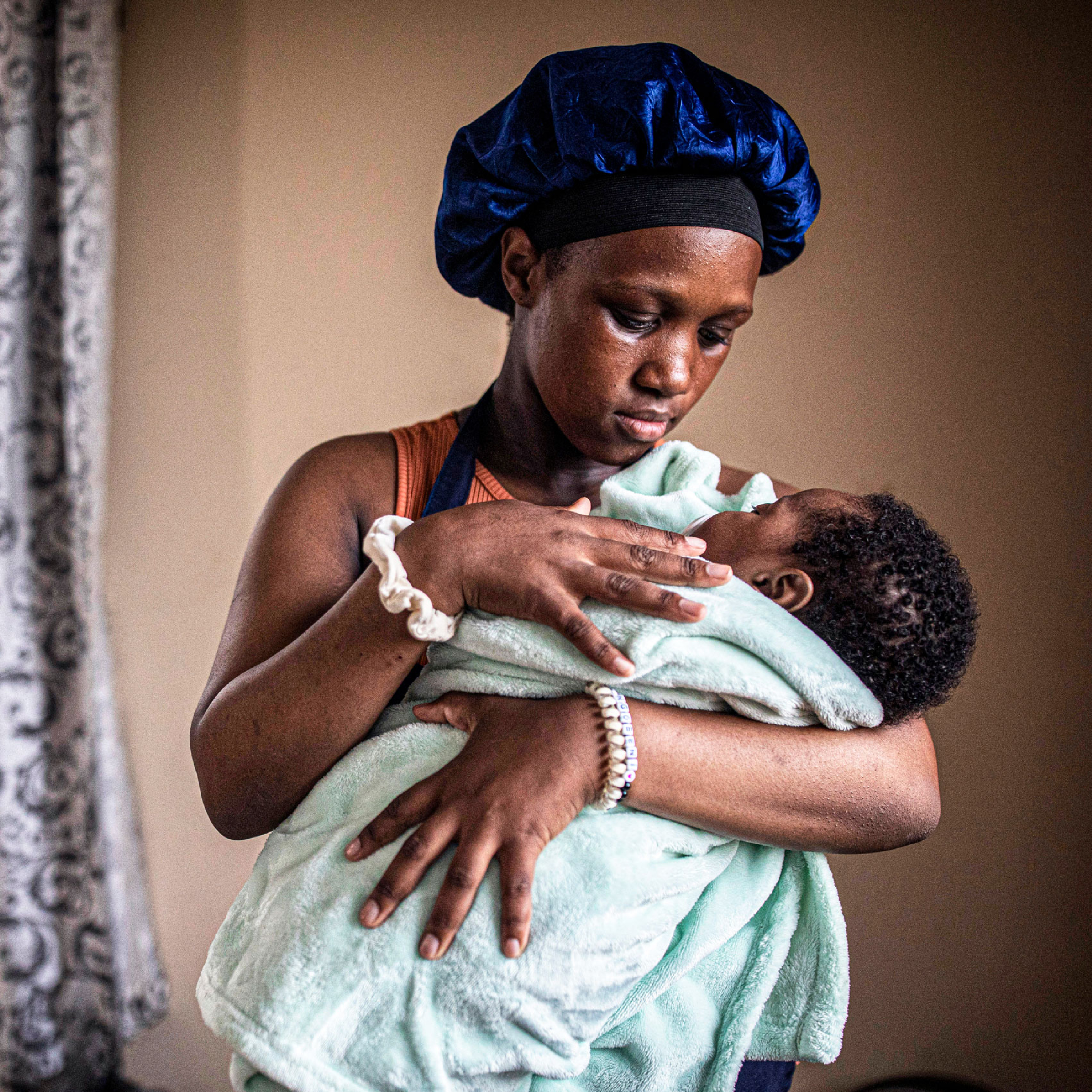
Yeah, Kakuma is a really Interesting place. It's in the desert in the north of Kenya. It's, you know, really kind of in the middle of nowhere. You take a main road and then you pull off of it through dirt and go several miles to kind of get to the camp. We spent a lot of time at this one, at this hospital there run by this organization called irc. They had a maternity trinity ward that was very busy. There are, you know, like I said, There are over 300,000 people who live in this camp. And so there's babies born all the time. Every day, dozens and dozens of women would line up to have their prenatal care, prenatal checks done. They had these little books. Everyone was kind of keeping track of their pregnancies. And the doctors told us that there had just been this crazy uptick in premature births and low birth weight babies and you know, babies just born really small and really struggling. It was very clear to them that it was because the moms had not had enough to eat during their pregnancy, which unfortunately just coincided by chance with this cut, these cuts that the US had made. So spent a lot of time in this, what they call the kangaroo room. There's this kind of care where you put skin to skin contact moms and babies have their naked skin together. And there's a lot of science that shows this helps babies grow. And so they were in this room and really needed to kind of get their weight, the baby's weight up before they could leave. But the moms were struggling to produce milk. I mean, the hospital also did not have great food supplies. The babies were really struggling to gain weight. They kept getting sick. Moms, one of the moms got malaria while I was there. You know, these are people with real hopes and dreams. They, they really, they'd all been in the queue for a long time to try and become, you know, move to the United States. They were mostly from the Democratic Republic of Congo. It was a place they couldn't go back to. And their, their hope for the future was, it was like the next step was, was the US So they were devastated about what was happening to their kids, but also this idea that they didn't have anywhere to go from here, like that this might be where they were stuck now. They were doing weigh ins every couple days to try and see how much the babies weighed. And the women were all just like so funny. You know, they got together, they got to know each other, they're telling each other jokes, keeping their spirits up and stuff. But you could see with these weigh ins, they'd get super anxious beforehand, and then after they would happen, pretty much always disappointed, like, they were not. The babies were not gaining weight. It was really sad for these women. I mean, they're new moms, you know, just trying to bring their kid into the world.
- [27:27]
Brett Murphy
Some were so desperate for calories, they were eating mud to try to gain weight. I mean, the. The anemia, kind of like epidemic at the camp when we were there was. Was just really bad. These were very unhealthy, expectant mothers.
- [27:44]
Al Letson
Listening to you, I am feeling the pain for the people that were there or who are still there living with it. But also, as a journalist, I just know that those type of sounds and sights and smells, they don't leave you. They stick with you long after you've left the assignment.
- [28:07]
Brett Murphy
Yeah, I mean, I think that's true. But. But it's also important to remember we are like tourists in other people's nights.
- [28:14]
Al Letson
Yeah, yeah, yeah, Abs. Absolutely.
- [28:17]
Brett Murphy
We get to go home and, like, our. We got to go to, you know, back to a UN camp, and we ate. And it was. It was one of the. One of the harder things was, like, actually leaving and knowing that they, you
- [28:30]
Al Letson
know, leaving and knowing that there's not a whole lot you can do about it except report the story.
- [28:37]
Anna Maria Barry Jester
I mean, the people there, it was really interesting. They. First of all, everyone, especially in South Sudan, wanted to know if the US really had cut off aid. It was easier for them to believe that, like, the aid organizations were lying to them than to think that the United States would do this. And people just kept saying to us repeatedly, like, the US doesn't have to take care of us. They know that their government should do it, but their government wasn't doing it. And, yeah, as Brett said, I mean, I think it felt like a real privilege to be able to go there and do this. I mean, there was not a lot of coverage. Our media ecosystem in the US Is really diminished and struggling. And so making a big trip like this is not easy for most news organizations. And I think that was the whole time I just felt really lucky that we could meet people, talk to them, and tell this story.
- [29:25]
Al Letson
One of the things that I think about when it comes to USAID is that it's not just about helping people. During the Cold War, we were investing in these places to kind of get a foothold, so to speak, in those places. I remember going to Africa about a decade ago. I was in Malawi, and when I was in Malawi, almost all the infrastructure projects that I saw happening in the country were being funded by the Chinese government. And I remember thinking to myself that they were definitely putting a footprint here so that, you know, in the future they were going to be more likely to ally themselves with the Chinese versus allying themselves with the United States. So it seems to me that it's not just a question about helping people, but it also seems like a national security issue.
- [30:21]
Anna Maria Barry Jester
Yeah, I think that that has been a long time argument of usaid. It's soft power. I mean, you'll hear colonels and military people say every dollar spent on aid is a bullet I don't have to buy. So there's those kind arguments around war and conflict. And then as you said, there's also this argument that this is the way we help countries become trading partners. They prioritize the United States because we've helped them along the way. That is the ideology that underlies this, that there's a soft power and is very much a part of everything that was happening with usaid.
- [30:54]
Brett Murphy
We saw a lot of internal State Department cables, communications, other records discussing this exact point. And the point here is that in countries where there are extremist groups who are providing the only sort of support and assistance for a lot of communities, the way the Pentagon and State have historically operated, is that the military will help those countries or do it themselves, drive extremist groups out of certain areas. Right. It's how we kind of get rid of ISIS right behind them. After that happens those communities where ISIS had previously been providing the bread and the water and the electricity, then it's incumbent on the coalition forces to provide that sort of help and support.
- [31:42]
Anna Maria Barry Jester
Right.
- [31:43]
Brett Murphy
If we take away USAID's ability to provide emergency support and health services in those communities. The big concern, of course, is that in the vacuum, the extremist groups will return and it becomes then a national
- [31:58]
Al Letson
security threat to the U.S. domestically, USAID brought about $2 billion in crops annually from U.S. farmers. What does the shuttering of USAID mean to those farmers and domestically?
- [32:14]
Anna Maria Barry Jester
Yeah, so for most of last year, we just didn't make purchases of food from US Farmers. And they were. We talked with, you know, many agricultural groups and they were getting a bit antsy because they rely on that for purchases, especially of certain kinds of crops. That whole program was transferred to the USDA and they purchased some food. But this is also just like a politically kind of controversial thing. I mean, people, especially Republicans in the middle of the country, deeply supportive of this program. There are aid experts who think we should spend cash, not send us grown food around the World. But there was a big hit to the agricultural sector by not having these purchases. It's like specific crops that they tend to buy, like wheat and sorghum and these other things. And so there was a collective effort from a lot of these agricultural groups to put pressure on Congress to return to making those purchases, which they have to some extent, but nowhere near what they were purchasing before some of the
- [33:13]
Al Letson
funds were released to keep at least some rations going through this past March. Have you followed up on that like what's happened since then?
- [33:21]
Anna Maria Barry Jester
Yes, they have continued to provide some aid. Everything has been completely reorganized. So instead of we are funding the World Food Program, which was the primary mechanism through which we gave away, you know, did food aid before. There is still some funding for the World Food Program, but they've also just completely transformed how they're doing things. So I think there's a lot of questions about what money is going where at this point there is aid money flowing. But it is not clear what these programs look like and what their future is.
- [33:56]
Al Letson
What do you think recovery looks like in places like Kenya?
- [34:00]
Brett Murphy
I mean, they've been talking a lot about what the future of foreign aid is, and they will point to what they call bilateral agreements. We'll give money to countries that are willing to invest money themselves. So we went to the State Department with all this reporting and we said, like, we asked them that very question, what happens now for refugees in places like Kakuma? And they said, well, look, don't, you know, look at this other thing. This other thing being we just gave a bunch of money to Nairobi's health sector because they invested in it themselves. And this is what I think they are imagining as the future of foreign aid, where it's more transactional. There has to be investment from a home government if they are willing to invest U.S. taxpayer dollars. Problem is there are countries that are simply unable or unwilling to do that. Like Anna was saying before South Sudan, the government there does not invest in its people. The government there has been plagued by corruption since the country existed, which is not very long. Right. So places like that, they don't have much to offer. There's no transaction that can benefit the US in some way.
- [35:10]
Anna Maria Barry Jester
Yeah, and this transactional nature, I mean, they've been very open, very clear that if they're going to give the money, they also expect to get something in exchange. And that can look like a lot of things. It's data critical, minerals access, investment in American companies. There's a range of things that they're asking for from governments. But they've been very clear that in order to get global health money that countries are gonna have to give something in exchange.
- [35:35]
Al Letson
Brett Murphy and Anna Barry Jester, thank you for your reporting. I encourage everybody to go read it and I just thought it was amazing and heartbreaking. Thank you so much for your work and coming onto the show.
- [35:47]
Brett Murphy
Thanks, Elle.
- [35:48]
Anna Maria Barry Jester
Thank you.
- [35:52]
Al Letson
Brett Murphy and Anna Maria Barry Jester are journalists at ProPublica. You can read all their incredible reporting at prop.propublica.org Also, if you like investigative reporting podcasts, and I know you do because you're here, you've got to check out ProPublica's brand new podcast, Paper Trail. Stay tuned after the credits for a sneak peek. And while you're at it, check out our More to the Story episode, How Project 2025 is Reshaping Our Country. That's my conversation with the Atlantic's David A. Graham. It's all about how dogeous cuts to agencies like USAID are remaking the federal government to reflect a conservative, even Christian nationalist version of America. Lastly, a reminder. We are listener supported. That means listeners like you, you can help us thrive by making a gift today. Just go to revealnews.org gift again, that's revealnews.org gift and thank you. This episode was produced by members of the Justice Society, Jos sandburn and Carl McGurk. Allison Brett Myers edited the show, theme music and engineering, helped by Fernando my man Yo Arruda and Jay Breezy. Mr. Jim Briggs, I'm Al Letts and this is More to the Story. And stay tuned for tease for ProPublica's new podcast, Paper Trail.
- [37:16]
Jessica Lenhop
Hi, I'm Jessica Lenhop and I'm a reporter at ProPublica and the host of a new podcast called Paper Trail. On this new show, we're going to show you that investigative journalism is powerful. And here's how I know that. Many years ago, I was working as a reporter at a tiny newspaper in Missouri and I got this crazy tip about a man in prison. He'd been convicted of armed robbery when he was in his 20s and sentenced. But then the government made a huge mistake. They never actually sent him to prison. They just forgot about him. By the time they realized their mistake, 13 years had passed and he'd become this pretty upstanding guy. Wife and kids. He didn't even like to swear. Even the victim of the robbery told me this guy shouldn't have to go to prison after all this time. But instead of dropping it, they arrested him in front of his family and locked him up. I was already a pretty cynical person at the time, and this story was not helping. But I published a story anyway, and the case wound up getting a bunch of attention. A while later, he gets a new court hearing. I walk in, his wife is there. She's all dressed up. And I'm like, this is going to suck. This is just going to be some kind of pointless procedural thing where they're just going to confirm he's completely screwed. Instead, the judge gets up there and starts talking, and he lays out the facts of the case and some of the details I thought had to have come from my story. And then he concludes that putting the guy in prison now serves no purpose. And he says to the guy, you can go home, like, right now. He walks out hand in hand with his wife. And I got into my car. I was like, I do not understand what just happened. I am not. And everything happens for a reason, kind of. I was not even particularly optimistic. And this was the closest thing to a spiritual experience that I have ever had. It felt like magic. Investigative journalism is an act of optimism. And it's all we do at ProPublica. We're an independent, nonprofit investigative newsroom, and we focus on corruption and abuse of power.
- [40:09]
Al Letson
We look under rocks for secrets.
- [40:11]
Jessica Lenhop
What's not being told on this show? We're going to bring you inside a new investigation. Every episode, we're going to call out things we see that are wrong, things that affect your life and my life.
- [40:24]
Brett Murphy
This could happen to anybody.
- [40:26]
Anna Maria Barry Jester
The loss patently unfair.
- [40:28]
Gone South Podcast Narrator
That's just a system that's not humane. It's not sustainable, and it's not right.
- [40:36]
Jessica Lenhop
Because when the public knows the truth.
- [40:39]
Al Letson
A BombShell report by ProPublica reveals just
- [40:42]
Gone South Podcast Narrator
how little the wealthiest Americans have been paying in taxes.
- [40:45]
Anna Maria Barry Jester
Those are just some of the lavish gifts that Justice Clarence Thomas has been given by wealthy benefactors. According to a new investigative report by
- [40:51]
Gone South Podcast Narrator
Population Uncovered serious problems with some prescription
- [40:54]
Al Letson
medication produced in foreign countries.
- [40:57]
Jessica Lenhop
Not always, but more often than you'd think. Things change. The Supreme Court has adopted its first code of ethics. Intuit, which owns TurboTax, was ordered to
- [41:09]
Anna Maria Barry Jester
pay $141 million to roughly 4.4 million people.
- [41:14]
Jessica Lenhop
Laws get passed. State representatives gave initial approval to the
- [41:18]
Anna Maria Barry Jester
Life of the Mother act, clarifying when doctors can perform abortions.
- [41:22]
Jessica Lenhop
Powerful leaders are held accountable.
- [41:24]
Brett Murphy
Breaking news here.
- [41:25]
Anna Maria Barry Jester
Homeland Security Secretary Kristi Noem fired.
- [41:28]
Jessica Lenhop
People walk out of prison, and cynics like me turn into optimists. I'm Jessica Lesnop, and I'll be your guide. This is paper trail.
- [42:03]
Brett Murphy
From prx.