Loading summary
Transcript50 lines
- [00:03]
Sam Semberis
People will get discharged from the hospital, they will get released from the jail, and they'll be back out on the street. And the thing will be going in a circle again. The only way to end homelessness is to provide housing.
- [00:18]
Al Letson
On this week's More to the Story, I talk with Sam Timberis, a clinical psychologist who created a new way to approach homelessness in America. And it worked. Now that approach is under attack by the Trump administration. Stay with us.
- [00:40]
Lisa Schachter
Did you know you have the power to inspire future generations with the same impactful reporting you trust and believe in right now? I'm Lisa Schacter and I manage the Legacy Society program at the center for Investigative Reporting. When you include Reveal in your will or other legacy plans, you are passing along your values of truth and integrity. It won't cost you anything right now. And you don't need to be wealthy to make a difference. A gift of any size through your will or from your retirement plan, life insurance plan or other financial account can ensure that reveal's meaningful, factual reporting continues for decades to come. For more information about making a legacy gift to Reveal or to notify us that you already have, give me a call at 415-321-1706 or send an email to giftsevielnews. Or again, that's 415-321-1706 or giftsvealnews.org Please consider creating your legacy of truth today. Thank you.
- [01:56]
Al Letson
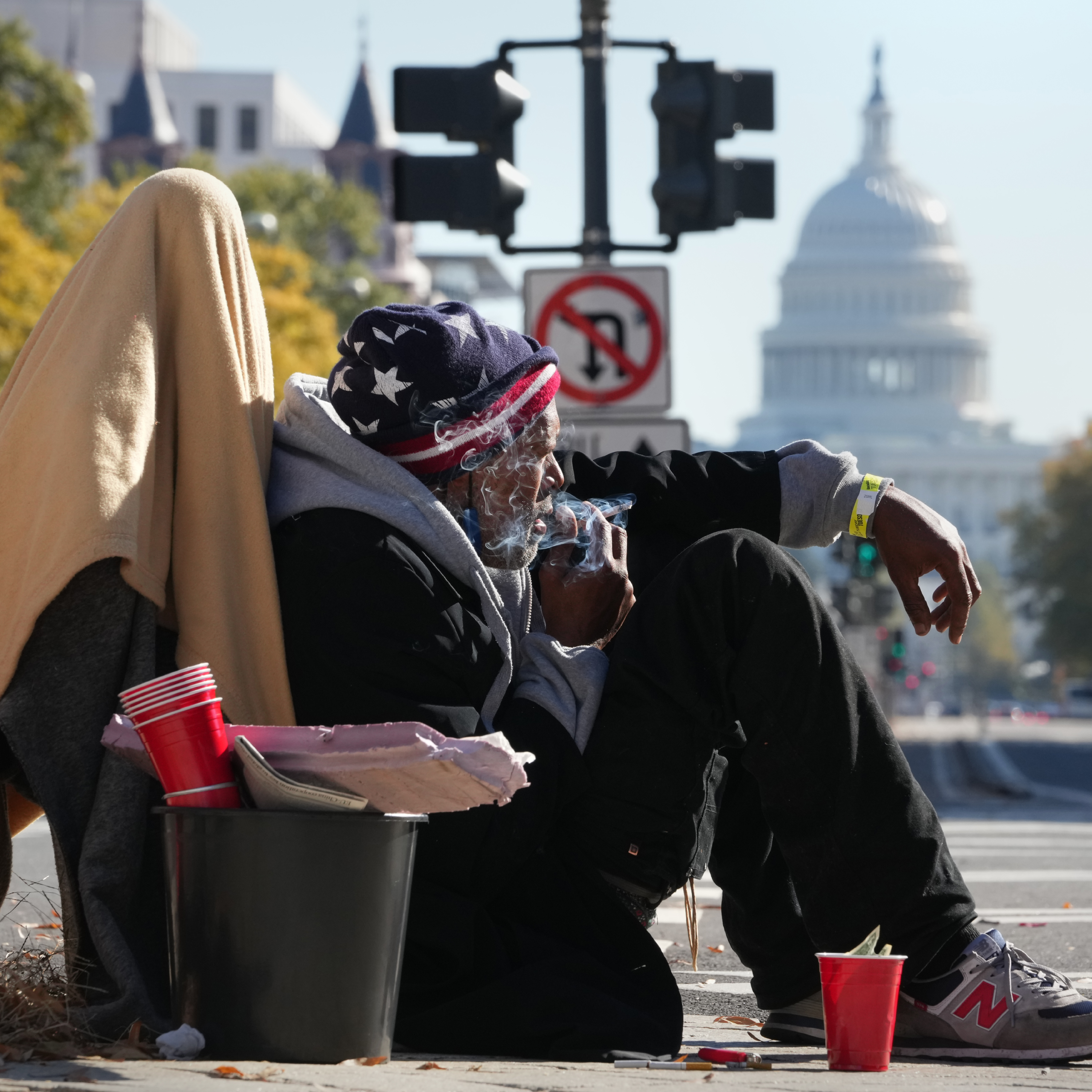
This is more to the story. I'm Al Letson. Back in the early 1990s, Sam Timberis was a clinical psychologist in New York City tasked with getting people who lived on the streets into hospitals for treatment. But he quickly noticed something. Those same people ended up back on the streets, sometimes just weeks later. That's when a light bulb went off. The way the country approached homelessness was completely backwards. Sam soon developed a new concept called housing first, housing before Treatment, and founded a nonprofit using that model. It proved so successful where it was tried that it became the way the federal government addressed homelessness around the country. The program helped reduce homelessness by almost a third during the George W. Bush administration. But now the Trump administration is abandoning housing first and adopting a more aggressive approach. Earlier this week, President Trump announced that his administration was eliminating homeless camps around Washington, D.C. telling people who live on the streets there to, quote, move out immediately. The overall shift in policy could have far reaching consequences for the hundreds of thousands of Americans who still live on the streets every night. Sam, how are you today?
- [03:17]
Sam Semberis
Hi, Al. Good to be with you.
- [03:19]
Al Letson
Let's Talk a little bit about how you came up with the idea for the Housing first program. Like, exactly what is that and when did it originate?
- [03:30]
Sam Semberis
The Housing first program is a program that helps people who are homeless and have mental health and addiction problems and often health problems as well. The program originated in response to this era of homelessness. You know, we've had homelessness in America at an increasing level for the last 40 years. So this has been around for some of the people that are listening, I imagine their entire lives. A whole generation has grown up thinking homelessness is part of the landscape. But homelessness really started in the early 80s, right after the Reagan administration took office and introduced policies that were supply side economics, they were called. And they had this idea about trickle down theory. You know, give tax breaks to the wealthy and to corporations and they will create jobs for the rest of the population. And let's cut government spending because there isn't a lot of tax revenue because corporations and very wealthy people aren't paying taxes. So you have to reduce the size of government. One of the things that they did was they cut out, essentially cut out the public housing program, which was housing for people who needed a rent subsidy. That very soon, right after that, we began to see people on the streets of every major city in America. That was homelessness. That was disaster. Many of the people looked like they had disabilities, mental health issues. The shelters were filled and there was a struggle in getting people into housing at that time, because in order to get housed, if you had a mental health or addiction problem, you needed to take care of the mental health issue and the addiction issue before you would get housing. And some people were successful in that, but many tried and couldn't. Mental illness and addiction are relapsing conditions. So you can do okay for a while and then you relapse and back to the start. So there was a group, a growing group that wasn't managing in the existing system of care, in the treatment then housing system. So that's a, that's a lot of background to say that we needed a different approach, we needed to do something else. And that's where housing first came in.
- [06:07]
Al Letson
So the Trump administration signed an executive order that will make it easier to remove homeless people from the street and called for ending support for Housing first. Policies that don't promote treatment, recovery and self sufficiency. Can you talk about, like, what's the clash between what they're doing and what you do?
- [06:28]
Sam Semberis
What they're doing is they are insisting that people go to treatment or else they get Arrested and go to jail. It sounds like they're doing something actually other than the immediate removal of someone from the street to go to a hospital or to a jail. This is a very expensive and completely ineffective approach to homelessness because people will get discharged from the hospital, they will get released from the jail and they'll be back out on the street and the thing will be going in a circle again. This is what it was like in the 80s when Reagan started all of this and we had that same cycling. The only way to end homelessness is to provide housing. Unless you provide housing, you're going to have people going in and out of jail. Hospital shelter. Jail, hospital shelter. They say that they believe in treatment, recovery and self sufficiency. It absolutely flies in the face of what then they are proposing for their policy. There is no recovery in jail, there is no recovery in a hospital. You'll take care of an immediate illness, but recovery is a long term process that requires support in the community.
- [07:52]
Al Letson
It feels like their idea of recovery and homelessness is not based on reality, is based on the things that they would like to see. Like all of us would like to see people who are unhoused and who are having mental challenges get the help that they need and become self sufficient. But that's not an easy path. Like, you know, the reality of it is that it takes a while for these things to happen. And sometimes you may never get the outcome that you want. But if that's the case, do you just throw people away because they can't get to that goal that you have set? That is an unrealistic goal.
- [08:32]
Sam Semberis
You know what I find amazing about the language in the executive order is that they have taken the very language of housing first and twisted it into making it sound like this is what they want. Housing first is about treatment and recovery and self sufficiency. That's what living in an apartment by yourself with supports is all about. They have done the same thing with dei. They've taken diversity and inclusion and made it into discrimination. You know, like there's. I mean, there's a sinister quality to this. Like the language choice and the. And calling up, down and left, right, and just confusing people with it is there's a sort of a sinister quality to it. You know, the thing that is to be determined, I would say, is the extent to which this executive order will actually translate into actual policy. You know, like this is an executive order. It's not the Budget for Housing and Urban Development or Health and Human Services or the Veterans Administration. I think where the rubber hits the road on these policies will be determined about where the money is allocated. I mean, are they really going to stop funding housing and rent subsidies? What about the thousands, probably hundreds of thousands of people now that are housed and the government is paying rent for them? Are they going to pull those rents? I doubt that that is going to be welcomed even by this party taking such a strong stance specifically against housing. First program reverses the policy that's been in place for at least the last 10 or 15 years. The question is, will the funding follow the policy? And if it does, it would be quite disastrous.
- [10:39]
Al Letson
So as someone who was around when Ronald Reagan put these policies in place that helped create the homelessness problem, we're seeing today, you know, the ideas of trickle down economics. Are you now feeling a sense of deja vu watching what the Trump administration is doing on this issue?
- [11:02]
Sam Semberis
Absolutely. A parallel in policy, although I would say that the first version there was still a veneer of politeness about the thing. Somehow this is the gloves off and we got to get these people off our street. They're a hazard to us. Any trace of compassion about people suffering is really gone from this administration's policy. There's a punitive tone to getting people out of the citizens ways, get people out of parks, get people off the streets, like Reclaim the Cities, which is understandable from the point of view of we've had homelessness for a long time and why haven't we solved it? Because I think there is a solution. I have that same frustration. But from that frustration, this administration is going to punitive measures like arresting people or demanding involuntary treatment for people, basically to move them from the streets into jail or hospital, as opposed to something more compassionate like help them get housed, and that's it's cruel.
- [12:22]
Al Letson
Do you think that through the eyes of the administration just going off of their policy stances that they look at poor people, unhoused people, people with mental disabilities, as sort of like it's a moral failing that is like you did something wrong and so now you have to pay the consequences and it's not on us to fix it.
- [12:52]
Sam Semberis
Yes, that was the policy. I don't know if you recall, Reagan used to talk about welfare queens and people taking advantage of the system. And then about homelessness, he's quoted saying that, well, some people are just out there by choice and always pointing to individual failings, because if you don't point to individual failings, you have to acknowledge that we have an out of control real estate system, that the rents have been Increased and minimum wage has barely increased at all. So you have people falling into homelessness all the time, not because they're not working hard. You have people in shelters that are working one or two jobs and can't get that first month's rent and first month's security together. You know, everyone is doing the best they can, but the system is stacked up against you. If you are not making enough money, if you are a member of a minority group. In every single state that we count, homeless people. In every single state, minorities, blacks, Latinos, or indigenous people are always overrepresented. So these are structural issues that preclude people getting the good jobs, getting into housing. And then you see the representation on the street, and you're blaming the individual for a game that's stacked against them.
- [14:29]
Al Letson
Yeah. Can you give me a sense of how many people are homeless in the US at any given night?
- [14:36]
Sam Semberis
On the last count for 2025, we had about 775,000 people that were homeless on that one night. But, you know, it's a very narrow window. Right. They count in January. So all of the northern states are quite cold. So, I mean, that's the minimum number. And these are people who are both in shelters and on the streets.
- [15:01]
Al Letson
So with this new executive order from President Trump, what do you expect to happen to that number?
- [15:07]
Sam Semberis
I think if you remove the funding from housing and put money into going into hospitals or jails, it's gonna be much more expensive and there are gonna be many more people homeless.
- [15:19]
Al Letson
Let's talk about that a little bit, as in, like, the expense of it. Because on the surface, it would seem that they are creating this new path as a way to save on the budget. It's in the spirit of doge and trimming the government down. But you think it's going to actually cost the government more in the long run?
- [15:42]
Sam Semberis
Well, it cost about, on the low side, about $1,500 to $2,000 a day for a hospital bed. If you put someone in a hospital for a month, you have basically spent, let's say, a $2,000 a day. You've spent $60,000 for a month of hospitalization, and then at the end of that month, the person is discharged back out into homelessness for $60,000. You could pay someone's rent for three or four years, depending on where they're living. This is not saving anyone any money. It's costing a fortune for these very expensive acute care services and doing nothing about ending the homelessness, whereas that investment, just skip hospitalizing people Skip arresting people, put them right into housing. You would save a lot more money and you would house and end homelessness for a lot more people.
- [16:41]
Al Letson
When we come back, Sam talks about what inspired him to approach homelessness in a completely new way.
- [16:47]
Sam Semberis
We went to the people themselves that were on the street. Was very much a ground up kind of a program developed. And we said, how can we help you? And they said, isn't it obvious.
- [17:00]
Al Letson
Before we get to that somehow summer is almost over. I know I'm shedding tears as I'm saying this. Maybe you're planning one more cookout, one last vacation, one more pool party that you should totally invite me to. I would come. Can I put one more thing on your summer to do list? Tell your friends about Reveal. Come on. Give us a rating or review before the leaves start falling. And help others discover Reveal's award winning reporting. Let's make it official. Tell people about us. You know you want to. Okay. So don't go anywhere. More with Sam Cemberis in just a moment. What do you think makes the perfect snack? Hmm, it's gotta be when I'm really craving it and it's convenient.
- [17:46]
Lisa Schachter
Could you be more specific?
- [17:48]
Al Letson
When it's cravinient.
- [17:49]
Sam Semberis
Okay.
- [17:50]
Al Letson
Like a freshly baked cookie made with real butter, available right now in the street at am, pm Or a savory breakfast sandwich I can grab in just a second at am, pm. I'm seeing a pattern here. Well, yeah, we're talking about what I crave, which is anything from am, pm. What more could you want?
- [18:03]
Sam Semberis
Stop by AMPM where the snacks and.
- [18:05]
Al Letson
Drinks are perfectly craveable and convenient. That's cravenience ampm. Too much good stuff. Hi y', all, My name is Nadir.
- [18:15]
Lisa Schachter
Hamdan and I'm a producer here at Reveal.
- [18:18]
Al Letson
Reveal is a nonprofit news organization and we depend on support from our listeners. Donate today@revealnews.org donate and thanks. This is more to the story. I'm Al Letson and I'm back with clinical psychologist and CEO of Pathways Housing First Institute, Sam Simbaris. So talk to me about how you got into this work.
- [18:52]
Sam Semberis
Well, I got into this work out of complete frustration and failure in trying to bring people to the hospital, ironically enough. Cause I thought that was the right thing to do. I was trained as a psychologist. I saw people on the street that had mental illness and I would try and persuade them that it's for their own good to go to Bellevue and get some treatment and things will be better, I naively thought. And some people did go and other people we actually had to bring involuntarily to the hospital. I was one of those people that worked in one of these involuntary treatment programs that are being proposed now. And what I saw both as an experience, but we were also keeping data on it, is that the majority of people ended up returning to the street and actually being more wary of engaging in treatment because it didn't go well for them that first time. And that's ultimately what got me to thinking, hey, we gotta do something else. Because what we're doing is not only not effective, but it's actually alienating people. And we went to the people themselves that were on the street, was very much a ground up kind of a program developed. And we said, how can we help you? And they said, isn't it obvious? Isn't it obvious? We need a place to live? And we began to bring people literally from the streets into apartments. And then we had a team of case managers, social workers, psychiatrists, people with lived experience that would make house calls after the person was housed. And we thought, okay, we had now at least another alternative for those who couldn't get clean and sober to get into housing. People got into housing, and then they got, you know, well, they got better. 80% of the people assigned to housing first would be housed and stay housed, and about 40% of the people that needed treatment first and then housed would get housed. So we were onto something, I thought, very, very effective. We published it. And then people began to say, maybe there's something to this, you know, and why don't you think it'll work over here? Why don't we try it over here? Would you be willing to come and show us how to do it? And I think the gradual implementation of the programs, with the success that it delivered, it began to be more widely accepted.
- [21:30]
Al Letson
So here's what I'm trying to wrap my head around. A decade ago, this approach was widely celebrated and received bipartisan support. The George W. Bush administration was even first to make it a centerpiece of their federal approach. So when did things start to change? What happened?
- [21:47]
Sam Semberis
It was during the first Trump administration. They appointed somebody in what used to be the United States Interagency Council on Homelessness that the DOGE people have actually now eliminated as an agency. But that was the federal agency in charge of setting federal policy. And the first Trump administration appointed someone that was anti housing. First they were saying housing fourth. You know, first is treatment and sobriety, and then employment and then housing maybe, but they weren't in power long enough to actually do anything about it. Project 2025 did a lot of work in between those two terms. And when they hit the ground running this time, it wasn't Housing Fourth, it was Housing Last. And now we have the executive order that says actually don't do Housing first at all.
- [22:44]
Al Letson
So Housing first definitely has its critics. Homelessness in the US has been rising. Some say that Housing first doesn't adequately address the underlying mental health and addiction issues that often contribute to homelessness. What do you tell people who say this approach doesn't work?
- [23:02]
Sam Semberis
Homelessness is rising because of the structural factors that contribute to homelessness. The rents are too high and the salaries and the benefits are too low, and there's a racial discrimination. That's what contributes to homelessness. We have more people falling into homelessness every year that we've been counting. Homelessness. With a few rare exceptions, the numbers keep going up. Housing first is a program that works for people who are homeless and have mental health and addiction problems everywhere. Where the program is implemented properly, it solves homelessness for 80 or 90% of the people it's working with. These programs serve a couple of hundred people. We don't have a national Housing first program, but we have a national homeless count. So because the national homeless count is going up does not mean that the hundreds of Housing first programs serving people are not working. They are absolutely working. But we've never taken Housing first to a national scale. You know, we've never tried to house 770,000 people. You know, not all of them would need Housing first anyway. Most of the people who are homeless just need a housing voucher. But we've never taken Housing first to scale. So to say that it hasn't solved homelessness is accurate, but it's also disingenuous. It's totally disingenuous. Right. Because it's never been scaled up to try and solve homelessness. It only solves pockets of homelessness in the cities where it's tried.
- [24:40]
Al Letson
Yeah, you've been working on this for a really long time. How does it feel seeing something you've developed get dismantled this way?
- [24:53]
Sam Semberis
You know, I haven't given up that it's being dismantled, actually. But the attack. The attack, I have to say, is completely new. And it's just such a disservice to homelessness. And the irony of it is that Housing first is probably the most successful program that has been used by the two federal agencies that have actually embraced it. HUD and the Veterans Administration have used Housing first over the last 10 years to house Veterans that are homeless and they have reduced Veterans homelessness by 56%.
- [25:36]
Al Letson
Do you think this executive order is going to threaten those programs?
- [25:41]
Sam Semberis
It appears as a threat to all Housing first programs, and I don't know exactly how it's going to be implemented.
- [25:50]
Al Letson
Yeah. What are you doing to try and keep these, your policies, Housing first in place? Is there anything you can do?
- [25:57]
Sam Semberis
Well, you know, the thing that I think we can do is sort of the same thing we've learned from people that were running DEI programs and other programs that have been pushed out by this administration. We are basically providing people with housing and supports. I think that maybe we get less pushback if we say we're housing people and we're providing support services for them. You don't have to call it Housing first. You don't have to call it anything. You know, you can call it helping people who are homeless. You know.
- [26:31]
Al Letson
Yeah. It's like figuring out ways around the roadblock by not calling attention to it.
- [26:38]
Sam Semberis
Exactly. Exactly.
- [26:40]
Al Letson
If the Democrats get back in power, what are the moves that you think that they should be taken? I guess the question is that Ronald Reagan was in office for a set amount of time, and when he got out, we never went back to fixing the policies that clearly weren't working. So what is the work for the next administration that wants to get this right?
- [27:06]
Sam Semberis
I'm not sure that as a country we inhabit or embrace the kinds of values it would actually take to fix poverty in this country. If you recall after Reagan, Clinton came in and did away with welfare. So people who are poor have been beaten up on by both parties because both parties are somewhere in the middle of the political spectrum between left and right. I mean, we're way over on the right now. But even if the usual Democrats get back in, I don't know that they are willing or able to go back to building public housing, guaranteeing healthcare for all, which are the kinds of things we would need to have to begin to deal with the damage that has been done since Reagan and what this administration will also contribute to significantly. We have to move way over to a much more a society where we believe that every member of our society needs to be taken care of.
- [28:23]
Al Letson
Sam, thanks so much for coming on and talking to me today.
- [28:25]
Sam Semberis
No, great to talk with you, Al. Thanks for having me.
- [28:32]
Al Letson
That was Sam Semberas, CEO of Pathways Housing First Institute. If you like this episode, you should check out the reveal episode, the Churn. It's about the rising numbers of people experiencing mental health crises on America's streets. And how it's fed a political narrative that us cities have fallen into chaos and decay. Lastly, just a reminder, we are listener supported. That means listeners like you, you can help us thrive by making a gift today. Just go to revealnews.org gift again, that's revealnews.org gift. Thank you. This episode was produced by Josh sanburn and Karl McGurk. Allison Taki Telenides edited today's show theme music and engineering, helped by Fernando, my man, Yo Arruda and Jay Breezy. Mr. Jim Briggs, I'm Al Edson. And you know, let's do this again next week. This is more to the story from prx.