Loading summary
Transcript68 lines
- [00:01]
Progressive Insurance Announcer
This episode is brought to you by Progressive Insurance. Insurance isn't one size fits all. That's why drivers have enjoyed Progressive's Name youe Price Tool for years now. With the Name youe Price Tool, you tell them what you want to pay and they'll show you options that fit your budget. So whether you're picking out your first policy or just looking for something that works better for you and your family, they make it easy to see your options. Visit progressive.com find a rate that works for you with the name your price tool. Progressive Casualty Insurance Company and affiliates Price and coverage match Limited by state law
- [00:33]
Al Edson
the critics have spoken. World War II with Tom Hanks is a must watch.
- [00:38]
Bryan Stevenson
It is on a scale no one's ever seen before.
- [00:40]
Al Edson
An enormous accomplishment.
- [00:42]
Bryan Stevenson
The world turned upside down.
- [00:45]
Al Edson
It's global history on the grandest scale.
- [00:48]
Bryan Stevenson
All wars changed the world, but none of them like the Second World War did.
- [00:52]
Al Edson
Unlike any World War II docuseries before World War II with Tom Hanks new episode Monday at 8, only on History Next day on the app. Hey, it's summertime and I know you have some plans. Maybe it's going to the beach and catching some rays or getting back to nature and camping. Or maybe you're taking that family vacation to your favorite amusement park. Wherever you go. Before you go, did you donate to Reveal? Well, what are you waiting for? Investigative journalism doesn't take a summer break. The eye opening storytelling you hear on our show is something you can't find just anywhere. It takes listeners like you to make it possible. Before you head out for your summertime fun, please head over to revealnews.orgsummer and donate today. Again, that's revealnews.orgsummer and thanks. From the center for Investigative Reporting and prx, this is Reveal. I'm Al Edson. This year marks America's 250th anniversary. It made me think a lot about the last big anniversary, the bicentennial in 1976. I know, I know. I'm dating myself. I was so young I barely remember. Just the excitement seeing the number 76 everywhere.
- [02:21]
Bryan Stevenson
Last night the Statue of Liberty and the sky around her were set aglow with great splashes of reds and whites and orange fireworks.
- [02:29]
Al Edson
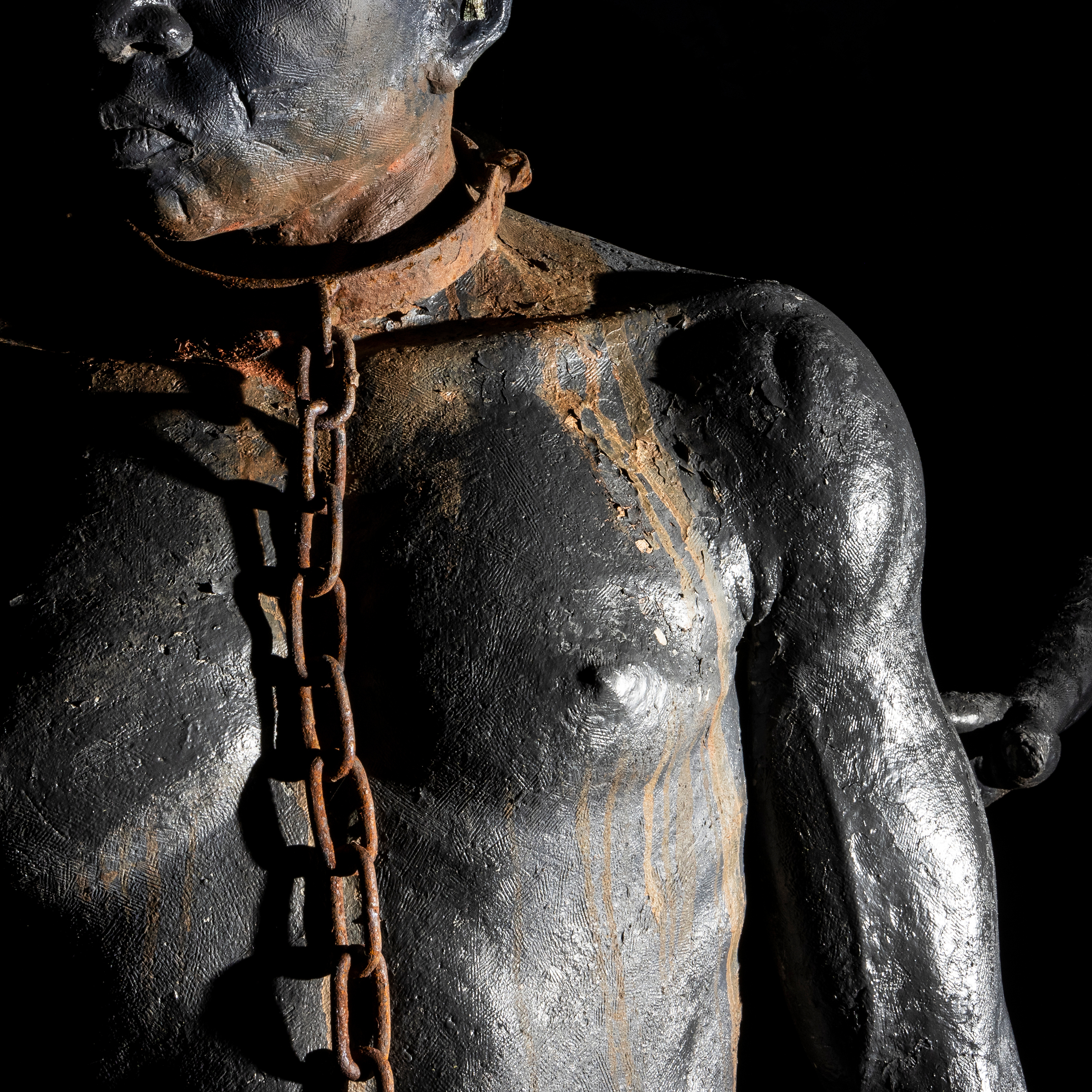
And my father, he was a military man and I have this hazy memory from around that time of sitting on his lap watching tv. Now back then, TV went off air late at night. I know, crazy, right? But before it went to static, sometimes patriotic images appeared on the screen. There was one with an eagle flying in a blue sky and Another of Mount Rushmore. My dad told me he wanted to see it and that one day we would go. Now, we went to a lot of different places, but we never made it to Rushmore. When I was older, I was in the area and so I figured I'd go take some pictures and send them to my dad. But going to Rushmore broke my heart. When you live thousands of miles away, it's just a sculpture chiseled out of a mountain. An impressive feat to see, but when you're there, if you're open to it, you can see America's sins carved right there in the rock. The Black Hills where Rushmore stands is sacred to the native population. White settlers claim the land for themselves anyway in the name of freedom. Freedom. Many of the men who stare out of the monument's face professed high minded ideals like all men are created equal. But what they really meant was all white men. Not Native Americans, not people of color, not women. Looking at those massive faces staring off into the distance, I couldn't help but think that my dad's America was looking at the monument from a thousand miles away and appreciating its majesty. But my America is the one up close, where the dark truth lies in the shadows cast by the sculptures. For me as we mark America's 250th birthday, I can't ignore those dark truths. And there's one place that acknowledges the honest history of this country better than any place I know. The National Memorial for Peace and Justice. And in Montgomery, Alabama. It's a site where victims of lynching are remembered. So right now I am in the memorial and I'm walking through and there's a lush green lawn in front of it. There are statues made of iron of enslaved people in chains. And then you walk up a pathway to the full memorial itself and it is breathtaking. More than 4000 race based lynchings are documented here from as early as 1870 to about 1950. There are rows and rows of monoliths with names of the dead that seem to stretch forever. Clay county. Roscoe Smith, July 6, 1913. Duval County. Bowman Cook, September 8. John Marine, September 8, 1919. Benjamin Hart, August 24. Edgar Phillips, 1923. Eugene Berna, December 30, 1920. As you walk through the memorial, it gently lowers you under the monoliths down to another floor. One floor, one of the walls tells the stories of some of the victims. Arthur Jordan was lynched in Warrington, Virginia in 1888 for eloping with a white woman. George Briscoe was Lynched in Annapolis, Maryland, in 1884 for an alleged robbery. As you get closer to the bottom, there is a waterfall, like, going down the wood.
- [06:17]
Interviewer
It's beautiful.
- [06:19]
Al Edson
And there is an inscription on top of the wood. It says, thousands of African Americans are unknown victims of Rachel Terror lynching, whose deaths cannot be documented, many whose names will never be known. They are all honored here. For me, it's just sitting with it, right? Like, understanding what this country has done and what has been lost. And also, if we didn't have monuments like this, we wouldn't know or remember. I feel very much like this is sacred holy ground. Today we're doing something special in honor of our nation's 250th. We're spending the entire episode focused on one conversation. A conversation between me and the visionary behind this place, Bryan Stevenson. Bryan has built a series of one of a kind sites to preserve our nation's darkest history. He's also the founder and executive director of the Equal Justice Initiative, which provides legal representation to people who are marginalized and incarcerated. His book about this work, called Just Mercy, was a bestseller and later became a movie. My conversation with Brian is an expanded version of one we first produced for our interview podcast. More to the story.
- [08:02]
Interviewer
Brian, thanks so much for taking the time to talk to me today.
- [08:05]
Bryan Stevenson
Absolutely.
- [08:05]
Interviewer
You know, I consider myself a Southerner, and when I got off the plane here, the humidity gave me a warm hug and I felt like I am home.
- [08:17]
Al Edson
I am home.
- [08:18]
Interviewer
I am home. But I also was thinking on the drive to the hotel, you know, what a contradiction that is in a lot of ways, being a black man who was raised in the south and all the experiences that that come with being a young black man being raised in the south, but then also feeling like when I am here, that this is home. When I think about the memorial and the legacy sites that you have built here, it feels almost impossible or a miracle. If you had asked me, a young man growing up in Jacksonville, Florida, that was supposed to go to Nathan Bedford Forest High School, if I ever thought that there would be something like this anywhere in the South, I would have told you, you're absolutely crazy. So I guess my question is, how did you make what has happened here in Montgomery happen?
- [09:18]
Bryan Stevenson
Well, first of all, I so appreciate you giving voice to that dynamic where the south feels like home and the humidity embraces you. When I think about the black experience in America, it is predominantly a Southern experience. At the end of the civil, the 4 million people who were emancipated were all in the deep south. 90% of the black population lived in the Deep South. It's only during the 20th century, in response to mass violence and terror, that we begin to see this exodus of 6 million black people going to the Midwest and the west and all of these different places. But they carried a cultural awareness, an environmental sensibility, if you will, that was entirely Southern, and those traditions stayed. So I think it's important to acknowledge that when we talk about the history of race or we talk about the history of African Americans, and there is a contradiction, there is a kind of tension in that. And I certainly lived that and experienced that. And so when I moved Here in the 1980s, there were 59 monuments and memorials to the Confederacy, and you could not find the word slave, slavery, or enslavement anywhere in the city landscape. In the absence of any acknowledgement of that history bothered me. I saw it as a problem, but it wasn't a priority then. It wasn't a focus then. I was focused on trying to get people who were innocent out of prison, focus on getting people free from wrongful convictions, sparing people who had been sentenced to death, helping children, all of that. And Then probably about 15 years ago, I remember a really fitful night trying to sleep and waking up, and I began to worry we were moving into an era where we might not be able to win Brown versus Board of Education. And today I'm quite heartbroken that we probably would not win Brown versus Board of Education. I don't think our court today would do something that disruptive on behalf of a disfavored group of people. And what that just made me realize is that we were going to have to get outside the courts and change the narrative environment to make it possible to restore a priority, a primary commitment to the rule of law and protecting the marginalized, the vulnerable, which is what I'd been trying to do my whole career. And in thinking about how we change the narrative environment, confronting the legacy of race, in the absence of any honest discourse about race, just rose to the top. And it was a gradual process. I'd gone to the Apartheid museum in South Africa and saw a powerful cultural institution that did not shy away from the horrors of apartheid. They have two entrances. One says white, one white. One says college. You buy a ticket, you have to go through the door that corresponds to your ticket. There was a room in there with nooses hanging from the ceiling. And I just remember thinking, we don't have any institutions in America like that. Then I went to Berlin and saw a cultural landscape that was so intent on reckoning with the history of the Holocaust. You can't go 200 meters in Berlin without seeing monuments and memorials and stones to Stoppelstein are everywhere. And the absence of any kind of iconography. There are no Adolf Hitler statues in Berlin. There's no monuments to the perpetrators of the Holocaust. There's a commitment to teaching people about the Holocaust. You can't graduate from high school without a demonstrated knowledge of the Holocaust. And the absence of that in America really began to kind of influence the way I thought we needed to create a new landscape. I mean, Germany was a villain of the 20th century, and now they're our most trusted or one of our most trusted allies. And so to me, it was a path to redemption that we just had not taken up. Now, of course, a black majority took over in South Africa. So there was a change in power. The Nazis lost the war. Change in power. And there really hasn't been a change of power in this country. So we knew we were going to have to take it on, and we. We just did it incrementally. We first put up markers in the city that just acknowledged the history of slavery. In Montgomery, we began identifying the buildings and the streets where people were being trafficked. And that generated such a powerful emotional response, particularly in the black community. When we put up our first marker, people came out and were literally weeping. And it. It impressed me, the power that that had. And then we decided, after we did the research about lynching, to put up markers at lynching spaces and saw power there. And that's when we made the decision to create the national memorial. And of course, you can't understand this history of lynching and terror, violence without understanding slavery and the legacy of slavery. And so then we built the legacy museum, and now we have these four sites, and it's just taken intentionality. We see them as narrative spaces. We're trying to tell a story about America. We don't see these as black museums. We see these as American museums that focus on the history of race, because obviously, black people didn't lynch themselves. They didn't enslave themselves. This is an American story that needs to be understood. And it's been fascinating to get where we are now. And I didn't fully see it. You said, if somebody had asked you, would there be a place like this? When you. If somebody had asked me 10 years ago, I would have said, not likely, not possible. But now I'm really proud that we have made Montgomery, Alabama, arguably the most truthful space in America. When it comes to confronting the legacy of slavery and the legacy of lynching. This was once and. Yeah. And was acknowledged as the cradle of the Confederacy. And what excites me about doing something like this here, if we can lift up truth in the cradle of the Confederacy, if we can lift up truth in the heart of Dixie, then there's not a place in America that can say, well, they can do that there, but we can't do it here. And to me, that is the power of creating a new cultural landscape in a city like Montgomery.
- [15:39]
Interviewer
I've done a lot of research in the past about lynching. And, you know, I think I came into it because I started researching Ida B. Wells.
- [15:50]
Bryan Stevenson
Yeah.
- [15:51]
Interviewer
And once you start researching her, like, it just kind of cracks it all open.
- [15:54]
Tonya Mosley
Sure.
- [15:55]
Interviewer
And so before I came here for the first time, I thought I understood how many lynchings had happened in America. I had a book that, you know, categorized a lot of the lynchings in America. And then I came here and I was just.
- [16:13]
Al Edson
The only word I can put to
- [16:15]
Interviewer
it is overwhelmed at the amount of people who have been lynched in this country. And the fact that it is not something that we talk about in our daily lives. The number is just incredible. And so what's, to me, amazing about the memorial is that, like, first of all, as soon as you get to the memorial, you're confronted with how many people we're talking about here, and then you walk through it and experience it. It's a life changing moment. How did you think about the design, bringing people in and all of that?
- [17:01]
Bryan Stevenson
Well, thank you. I think the first thing we realized when I went to Berlin to see the Holocaust memorial there, which sits in the center of the city, it's very powerful. But there's just these concrete rectangular slabs, and you enter them and then they become dense and they kind of. And there's no narrative about the Holocaust. They trust people to come to Berlin with an understanding of the Holocaust so they can step into that memorial and be impacted by it, because they. They trust people to have that history, that knowledge. I knew we could not do that with regard to the history of lynching. And so we knew we had to create a space that, again, took people on a journey. And I wanted people to walk briefly through the history of slavery, because without enslavement, we wouldn't have had 100 years of mob violence directed at black people. And so we give them that narrative. The first thing you see when you come to the memorial is this sculpture by quote, of enslaved people in chains and what was important to me about that was it. It depicts the brutality of slavery, but it also depicts the humanity of the enslaved as a mother holding her child while she's reaching for the man in front of her. The Memorial Square was important because, you know, I wanted something that represented people. Most people in this country can't name a single black person who was lynched between 1870 in 1950. Just say, name one. They can't do it. That's how little we've talked about this history. And so for that first quarter, I wanted people to kind of see the names, to see the lives and to see the dates. You know, our legal system is organized by counties. Our criminal justice system, our public safety system is organized by counties. And that was the reason why we organized the Memorial county by county. And some counties have dozens of lynchings. Some counties have two or three. But to get that orientation that we're talking about, people at the first level is important. And then we begin to elevate the monuments. Because the truth is, is that lynching in America could have been done in darkness. It could have been done where the bodies were immediately buried under the ground, where you didn't see much evidence of it. But their intention wasn't just to kill people. Their intention was to terrorize black people, to torment, to taunt, to force black people to commit to and submit to racial hierarchy and Jim Crow. So these bodies would be left hanging from trees and hanging from telephone poles and hanging from high structures, sometimes for days. The family would come and try to cut the body down, and they wouldn't let them. They would take bodies sometimes through black neighborhoods and force people out on the steps to witness this brutality. And that's why we call it racial terrorism, because the intent very much was to terrorize the entire African American community. And so we wanted something that gave people some appreciation for how this history of terror, violence, this history of brutality hung over the entire black community. And that's what we want people to experience when they go through the memorial. And then we wanted them to understand what this was about. It was not about law and order. It was not about crime. They were lynched for social transgressions. They were lynched for not calling a white person sir, not getting off the sidewalk when white people pass, going to the front of the door instead of the back of the door. They were lynched for asserting their human rights and their dignity. Mary Turner, eight months pregnant, was lynched because she complained about her husband's lynching, and the mob came to her house and lynched her, mutilated her body. And so we have in the third quarter those narratives because we think it's important for people to understand that this is not about public safety. This is not about law and order. This is about terrorizing people. And so that was very much important in terms of how we conceptualized it. And then of course, we document over 4,000 lynchings at the memorial, but there are thousands more that we can't document. And that's what the water wall is there to remind people. There are thousands more people who have been lynched than we'll ever be able to detail.
- [21:41]
Al Edson
Coming up, more from my conversation with lawyer and racial justice activist Bryan Stevenson. He tells me that in order for America to move forward as a nation, we have to have an honest accounting of our past.
- [21:53]
Bryan Stevenson
We are in the midst of a narrative struggle. That is, I think, the challenge that our generation must confront.
- [21:59]
Al Edson
You're listening to Reveal. Don't go anywhere.
- [22:13]
Bryan Stevenson
You're never just one thing. You're the boss.
- [22:16]
Progressive Insurance Announcer
Hey, Google, when's my next meeting?
- [22:17]
Bryan Stevenson
The athlete that class wrecks me and their mom.
- [22:21]
Progressive Insurance Announcer
Everyone in the the all new Mazda CX5 more to move every side of you. Learn more@mazdausa.com Google is a trademark of Google LLC.
- [22:27]
Bryan Stevenson
Sequences shortened and simulated.
- [22:31]
Tonya Mosley
This is Tonya Moseley, co host of Fresh air. You'll see your favorite actors, directors and comedians on late night TV shows or YouTube. But what you get with FRESH Air is a deep dive. Spend some quality time with people like Billie Eilish, Questlove, Ariana Grande, Stephen Colbert and so many more. We ask questions you won't hear asked anywhere else. Listen to the FRESH Air podcast From NPR and WHYY.
- [23:00]
Al Edson
From the center for Investigative Reporting and PRX, this is Reveal. I'm Al Edson. It's America's 250th birthday and to mark the anniversary, I recently traveled to Montgomery, Alabama to talk with Bryan Stevenson. He's built a series of groundbreaking historical sites there, acknowledging the dark truth of America's past. We talk just steps from the National Memorial for Peace and justice, which commemorates America's history of lynching.
- [23:29]
Interviewer
I'm curious how you see modern day tragedies as fitting into lynching. And when I think about that, I'm thinking specifically about George Floyd, Breonna Taylor, Ahmaud Arbery. Like, will their names go into the memorial? How do you weigh that out?
- [23:50]
Bryan Stevenson
Yeah, well, I see the modern day challenges as a manifestation of the underlying narrative of racial difference, of racial bigotry that we are still fighting Against. And that's why I spend so much time talking about the narrative problem that we have inherited. For me, the great evil of slavery in America wasn't the forced labor, wasn't the brutality, wasn't the violence. All of those things were horrific. I think the greatest evil of slavery in this country was the narrative we created to justify enslavement. Because people who enslaved other people didn't want to think of themselves as immoral or indecent or unchristian. And how do you think of yourself as moral and decent when you're pulling a mother away from her screaming children, knowing that that mother will never see those children again because you're treating her as property? Well, you need a narrative. And in this country, a false narrative was created where it was said that black people are not as good as white people. Black people are less capable, less worthy, decent, more dangerous, need more control. And that narrative is what sustained slavery for 246 years. And it's the reason why the Civil War ended chattel slavery, but did not end the torment and terror that black people faced. I often argue that the north won the Civil War, but the south won the narrative war because those ideas of racial hierarchy, of white supremacy continued after the Civil War. And that's what creates this century of terror, violence. And so if somebody's being lynched because they didn't say the word cert, that's about this narrative that says you have to challenge anybody who asserts this. And that continues throughout the first half of the 20th century. Then we get into the civil rights era, where people begin to tear down the legal architecture of Jim Crow and segregation. And we made progress. I'm a product of that progress. But that narrative, it still continued. And that's what I see as connecting the murder of George Floyd, the murder of Ahmed Arbery, the murder of Breonna Taylor and so many other people to this history. And for me, it's important to acknowledge the differences, right? So that people don't misjudge what the challenge is. Right? You don't have to be killed to be the victim of a presumption of dangerousness and guilt by a police officer. And because I'm getting older, I can tell you that when you have to constantly navigate a presumption of dangerousness and guilt, when the burden is on you, when you're stopped by the police, to have to make sure that you come out of that safely, when you have to keep confronting presumptions of incompetence because of your color, it's exhausting and so I see violence rooted in that narrative as a manifestation of this larger historical problem. It's as connected to the legacy of slavery as it is to lynching, as it is to Jim Crow and segregation. I mean, 6 million black people fled the American south during the first half of the 20th century. We have a wealth gap in America today rooted in this forced exodus of millions of black people, some of whom left lands that they own so they couldn't give wealth to their children and grandchildren because of terror, violence that's a consequence of lynching.
- [27:16]
Interviewer
It's interesting that you bring that up, because I think a lot about the quote, unquote, great migration. And when I was in school, it was taught to me, like, you know, oh, black people are leaving for better opportunities. And I believe that for a very long time until, you know, Isabel Wilkerson's book came out. And then it shifted the way I looked at everything. But I feel like we are moving back into that space where history is being rewritten and forgotten intentionally.
- [27:50]
Bryan Stevenson
Absolutely.
- [27:51]
Interviewer
And so kids in school, like in my home state of Florida, they have changed the narrative. And now kids in school are being taught things like slavery benefited some of the enslaved people. It feels like we move forward, and then we move back five steps.
- [28:11]
Bryan Stevenson
Well, we are in the midst of a narrative struggle. That is, I think, the challenge that our generation must confront. And I really want to try to bring that into focus for people, because if we don't understand that that's what we're now contending with, we're going to not make the progress that we need to make. When you're enslaved, you have to focus on freedom. I can't blame our enslaved ancestors for not worrying about narratives. Frederick Douglass and others were trying to do that. Booker T. Washington, W.E.B. du Bois. But when you're enslaved, you have to focus on freedom. When you're being terrorized and lynched, you have to focus on security. It's only when you get to a level of security that you can then focus on civil rights, which is what people did in the 1950s and 60s. The right to vote, the right to be treated fairly and equally. But here in the 21st century, we're in a narrative struggle. We have to now fight to correct the historic record, to have an honest accounting of what happened to our parents and grandparents and their parents. Because without an honest accounting, we will not make it to the next step. And the next step for me is repair. It's reconciliation, it's restoration, it's recovery from. It's what you See happening in Germany what you see happening in other places where there's been transitional justice. And, yeah, we have to really see the kind of manipulation of these historical narratives as big a threat to the future of a healthy America, a healthy community, a healthy nation, as Jim Crow laws were, as lynching was, as enslavement was. And the difficulty we have, as I said earlier, is that we have to do it without the kind of power you typically have when you're kind of writing the story. And so, sure, a lot of people would be comforted by the idea that slavery was a good thing for black people, but it's just not honest. Yeah, it's just Dishonest. There were 13 million victims of a violent crime, kidnapping, that were on the continent of Africa. And then on top of being kidnapped, they were trafficked, and then they were enslaved, and then they were brutalized, and then they were subjected to all of these things. And that went on for decades.
- [30:25]
Al Edson
And.
- [30:25]
Bryan Stevenson
And if we don't acknowledge the criminality of these things of enslavement, then we're going to be vulnerable to narratives like that. Oh, it benefited black people. It was not that bad. And people who enslaved other people weren't that bad. And I just think that has to be seen as the essential struggle of this era.
- [30:48]
Interviewer
A couple years ago, after the horrific massacre at Mother Emanuel in South Carolina, Breed Newsom climbed on top of that flagpole, pulled the Confederate flag down. Soon after, the state of South Carolina pulled down all of the Confederate flags. And I have to tell you that as a black man growing up in the South, Bree's action did not anger me, but the state taking it down made me angry. And the reason why it made me angry is because they were taking down the symbol, but not taking down the behavior that the symbol stands for. The thing that I tell people about the south is that in many ways, I think the south is one of the most honest parts of the country, because, you know, whereas, like, in California, I don't know, people know how to hide it a little better. But I do think in the time sense, I've grown a little bit in my thought process in the fact that taking down those flags may have been a part of the beginning of changing the narrative. I'm just curious what you think about all of that.
- [32:06]
Bryan Stevenson
Yeah, well, I mean, I totally understand what you're saying. And we still have a landscape littered with all of this iconography. And it is a signal, although it's also painful that you're surrounded by people who express these really hateful things, with impunity, with confidence. It was a gesture, but it wasn't honest. It would have been more honest to say, we have been flying this flag because we have been trying to stay aligned to these narratives that we inherited from those who tried to defend slavery, that tried to defend these ideas of racial hierarchy. And part of the problem that I see us facing now is that we make it too easy for people to do something performative, to make a gesture that doesn't get to the core of the problem. A lot of companies in this country embrace DEI after 2021, they said black Lives Matter, but it wasn't rooted. I wanted those companies to say, okay, for decades in this company, we have denied promotions, we have denied opportunities to black people and women because we didn't feel comfortable putting black people and women in leadership positions. The black people and the women were the most qualified. They were the most capable. They were denied these opportunities unfairly. That's what we did. And so we're now going to acknowledge that for decades, we have denied that the most capable, most qualified people promotions and leadership roles because of their gender and their race. And we're not going to do that anymore. We're going to commit to a more diverse leadership community based on merit. We're going to now not give in to bigotry and fear based on gender bias, et cetera. We're going to change all of that. And if that's what they had said, then it would be unacceptable now to just eliminate your DEI program. It'd be unacceptable now to just take that down. But because we didn't root it in truth and honesty about the why, we weren't prepared for a counternarrative that come back and says, we don't want you to do that.
- [34:19]
Interviewer
How do you respond to people? Like, the first person that comes to mind for me because I'm a floridian is Ron DeSantis. Governor Ron DeSantis, when he basically says the reason why he does not want children to be taught these things is because he doesn't want white kids to feel bad about what happened in the past. Like, what's your response to that?
- [34:42]
Bryan Stevenson
I just think it's not healthy. We teach people not to steal. We teach people not to kill. We teach people not to use words that are hurtful. We teach people not to hit you, teach children not to do things that are wrong. And when they do something wrong, we want them to feel bad about the wrong thing that they did. That is the way we get to a better place to. It's interesting. In the American south, people are taught about the Civil War. Hundreds of thousands of people were killed. You should feel bad about that. But we don't not teach them about it. We teach them about the Holocaust. You should feel bad about that. And so I think every American should feel bad about slavery. It's so interesting we're having this conversation last night. I'm digging deep into this genealogy stuff, and I'm just discovering these things and turns up, my great great great grandmother was raped by a white overseer. And it just breaks my heart, you know, but it should break anybody's heart, right? Do I want to know it? Absolutely. Absolutely. Do I want to think about what that meant for her? Because she loved the child, my great grandfather, despite the fact that that child was a product of rape, she could have said, I don't want nothing to do with this child. But despite the violence of slavery, despite the horrors of slavery, my great great grandmother chose to love in the midst of agony, in the midst of suffering. And that tells me something about her character. And what I realize is that in my DNA is, yes, this history of violence, but there's also this history of powerful love. Powerful love. And I think that's what we can help people understand. The purpose in teaching people about it is to not make you feel bad, but to make you prepare yourself to create a world where we never again tolerate racial bigotry. And the governor and others are creating a generation of people who are indifferent to racism and bigotry, as we're seeing play out now, who are indifferent to language that is offensive and derogatory, who are indifferent to all of these things. And so that's what I think we're creating by this refusal. And what's interesting to me, again, I think Germany is a powerful example. Like I said, you can't graduate from high school in Germany without demonstrating a detailed knowledge of the Holocaust. And they don't have people saying, oh, we can't teach our children about the Holocaust. That might make them feel uncomfortable or ashamed. It's the opposite. They're building a society that is better prepared to never again have fascism create the kind of authoritarianism that led to the murder of millions of people who were different. And we haven't done that.
- [37:42]
Al Edson
Coming up, the final part of my conversation with Bryan Stevenson. He talks about how he views his own identity within the larger American story as the country marks its 250th birthday.
- [37:54]
Bryan Stevenson
I'm not going to let somebody tell me that I'm less of an American or I'M a marginal American or I'm some other kind of deficient American. I feel like I am an essential American.
- [38:06]
Al Edson
This is Reveal. Stay with us.
- [38:20]
WeatherTech Announcer
WeatherTech is made right here in America and it's perfect for an American made summer. Because we cannonball into summer, hike all over it, slide down it, camp in it. It's one ice cream covered, sandy, soaking wet mess of a season. Which is why WeatherTech floor liners and seat protectors are a must. We are road tripping, beach going, lake jumping Americans and that's just how we summer WeatherTech made in America. For an American made summer visit weathertech.com today.
- [38:50]
Bryan Stevenson
Hot summer days deserve cool, comfortable nights. The Tempur Breeze mattress pulls heat away from your body to help you sleep cool. Shop our July 4th sale and save up to $500 on Breeze Mattresses at Tempur pedic.com
- [39:06]
Al Edson
from the center for Investigative Reporting and PRX, this is Reveal. I'm Al Edson. Recently I traveled to Montgomery, Alabama to interview Bryan Stevenson, a longtime lawyer and racial justice activist who's built a museum and memorials there that compel us to look squarely at America's darkest chapters. As the Trump administration attempts to erase black history at the nation's museums and national parks, these sites, which commemorate American slavery, lynching and racial terror, are more vital than ever. So as America celebrates its 250th year, I wanted to talk with Brian about what this American anniversary means to him and what his hopes are for the country's next 50 years.
- [39:52]
Interviewer
I think as a storyteller, I've been thinking about this a lot lately. I have been told, pounded into my head, the three act structure. Right. So you start off with an inciting incident, something like sets the story off. You move into the beginning of the second act and our hero is on the journey. The second act complicates everything. It gets harder. You don't know how the hero is going to win. And then the third act is the hero wins. Right. Like that's the structure that we all have. And I think that structure works against us when we are talking about the struggle for civil rights and justice because it tells us that there is an end.
- [40:33]
Bryan Stevenson
Yes.
- [40:34]
Interviewer
You know, and like when I, when I come here all the time, it's a reminder to me that there is no end.
- [40:40]
Bryan Stevenson
That's right.
- [40:40]
Interviewer
That the story is never ending and the fight for justice is going to keep going. Like we're never going to get to a place where we can say, like, this is done. We have handled this because the Forces that are against peace and justice. Because there's always going to be an opposite. That opposite is going to continue fighting.
- [41:00]
Bryan Stevenson
Sure. No, that's absolutely true. I mean, just look at America five years ago and look at America today. And so, yes, people ask me all the time, what is justice? I say justice is a constant struggle. You have to be willing to struggle. It's like being in a boat rowboat. If you don't stroke, if you don't work, you're going to flow backward. It's just the way currents work. But you shouldn't be burdened by that because it means that you get to commit. There's so many people, I've heard them say this. Oh, I wish I would have been alive during the time of slavery. I would have been an abolitionist. I would have been able to do great things as an abolitionist. Oh, I wish I could have been working with Ida B. Wells. I would have been an anti lynching crusader man. I wish I could have been on the Edmund Pettus Bridge with Dr. King in 1965. I would have been marching right there. Well, if you're alive in 2026, you have the same opportunity as the abolitionists of the 19th century, as the anti lynching crusaders at the first half of the 20th century, as the Civil Rights Committee, to stand up and say the things that need to be done, to do the things that need to be done, to struggle for justice. And your children will have that opportunity. And the nature of the issues may shift, they may change. I mean, nobody was talking about climate change in the way that we need to be talking about it today. Nobody was talking about the plight of people who are undocumented the way we have to be talking about that today. Nobody was talking about gender violence and a whole host of things that we now need to talk about when we talk about justice work. So that will always be with us. But rather than seeing that as a burden, I see that as an opportunity to never get to the point where you can't be required to do justice and love mercy just like your foreparents.
- [42:45]
Interviewer
I've been to the memorial twice now and every time I go I am hit with a, a deep, deep sadness that very quickly turns into anger. Once I work through, like, my sadness, my anger, I do feel triumphant. I do feel like. And still we are here. You know, I feel that. But I'm curious how you get a society full of people who just want comfort and convenience to actually engage with something that is truly hard and difficult.
- [43:29]
Bryan Stevenson
That is the essential question. It is Absolutely essential question. Because I think every American should feel what you feel. Every American should feel heartbroken, should feel angry that we allowed lawlessness and mob violence to kill men and women and children, that we tolerated torture and brutality in places and spaces that are considered places of justice. Every American should be heartbroken by this history of mob violence. And then we should appreciate why we can never again tolerate that kind of behavior, that kind of thinking, that kind of conduct. You know, we've got hundreds of Holocaust museums all around the world. I think we need them. But they exist so that every person who leaves them is prepared to say, never again, no matter what their background, no matter what their ethnicity, no matter what their religion. And we've never created institutions in this country that have encouraged people, that push people to say, never again should we tolerate. And so, yes, I think every American, every citizen of the world should have that same emotional reaction. And then we should understand that there's something extraordinary about the community of people who survived this. There's something extraordinary about the strength of people who nevertheless committed to more. I mean, most of the people in that memorial, their children and siblings, many of them fought for America during World War I and during World War II. They've committed to this country. And I just think that reality is important. I think we should be hopeful that we can create spaces now that talk honestly about this history. And I think we should be energized by that. And that really is, very much, for me, part of the vision at each one of our sites. We want people to understand the harm and to grieve that harm, be impacted by that harm. And then we want people to understand the opportunity we have to do something about it, to change the future, to create a world where no child in this country is presumed dangerous or guilty because of their color. No one is presumed incompetent because of their ethnicity or their race or their gender. That's the hope. And if we get people to appreciate the harm of not committing to that, then I think we can actually be hopeful about what we can achieve.
- [46:05]
Interviewer
We are coming up on the anniversary of America's birth.
- [46:11]
Al Edson
What does that mean to you?
- [46:13]
Bryan Stevenson
You know, I've been thinking about this a lot more because I've been thinking just about my own identity in this weird way, because as you get older, you just start thinking about, like, the first half of my life. I never talked about my grandparents. I never talked about my great grandparents who were all enslaved. But now I find myself talking about them more and more. And if I take a DNA test I show up in about like 18 different countries in Africa. I don't have an identity that I can articulate on the African continent. I'm descendant of African people. And what has made me realize is that I'm an American. It's the only identity I can claim. It's the only identity I have. And so I'm going to fight for my identity as an American. And I'm not going to let somebody tell me that I'm less of an American, or I'm a marginal American, or I'm some other kind of deficient American. I feel like I am an essential American. And as I understand the history of this country more clearly, it's my enslaved foreparents that built this country in this South. It's our labor that created the wealth, that created the opportunities, that created the industry. It's our efforts that created the success in the 20th century. And I am proud of that commitment, despite all of the obstacles. At the same time, I feel like I am increasingly obligated to protect and defend those who've come before me. And so what I think about, as I think about the 250th anniversary is I think about having to represent the 10 million black people who were enslaved for 246 years. When people try to eliminate their narratives, erase their histories, minimize their struggle, take away their stories, I feel an obligation to represent the immense suffering and constant sorrow that they endured. I feel a need to represent the millions of black people who had to deal with terror, violence, mob violence and lawlessness throughout the first half of the 20th century, who left this region to go to Chicago and Cleveland and Detroit, where they weren't embraced. They were put in equivalent of refugee camps on the south side of Chicago and East St. Louis and South Central LA and Oakland. I feel a need to represent the people who came before me in this community who would put on their Sunday best and go places to push for the right to vote and get beaten and battered and bloodied, go home and wipe the blood off, change the clothes and go back and do it again. I feel the need to represent their strength, their character, their struggle, and not let anybody minimize it, take it away, censor it, eliminate it. And that is the 250th anniversary moment that I am having, which is that I have to be even more committed to lifting up the honest truth of our history, to lifting up the people, because they lifted me up. It was their courage that made it possible for me to get to that public school, to get to college, to get to law school. I never met a lawyer. When I got to Harvard Law School, all my classmates were talking about how they were the sons and daughters of grandsons and granddaughters of lawyers. I realized I had. Not only was I not related to her, I'd never even met one. And at first I felt diminished. And I remember calling my mom, I don't think I belong in this law school. And my mom said, what are you talking about? She said, you belong wherever you go. She said, you're the smartest person in the world. You can do anything you want to do. Now you tell those kids why you're really at that law school. And I went back and told some of them. I said, I'm at this law school because my great grandfather, who was enslaved in Caroline County, Virginia, learned to read, even though it was against the law for people who were enslaved to learn to read or write. He risked his life to learn to read in the 1850s. He didn't know a civil war was coming the next decade. But he had a hope of freedom so powerful, he was willing to risk his life to learn to read. He was way more courageous than I am. Showing up at Harvard Law School, I didn't have to worry about being arrested or killed by trying to get a law degree. And then you start to realize that, yes, there's this history of trauma and violence and pain and suffering that we have to manage, but there's this history of resilience and strength and character and love and tenacity. And that's when I feel like, you know, we got this. We gonna do something here. I feel that. That's the way I feel. I mean, I feel like, you know, it's. Even as I'm getting older, I have a lot more to do. Can do, will do, hope to do. God gives me grace. But that is, I think, what I hope this moment becomes is a moment of reckoning with the work that lies ahead. I want, when we get to the 300th anniversary, to be able to imagine something better. I want the people coming after me to Talk at the 300th anniversary differently than I'm talking now. That's gotta be the hope.
- [51:15]
Interviewer
Bryan Stevenson, thank you so much for your time.
- [51:17]
Bryan Stevenson
Of course, of course, of course. Yes. Thank you.
- [51:24]
Al Edson
Just outside, Brian's memorial is filled with the names and stories of thousands of people who were lynched for the crime that their skin was the same color as. As mine. You walk on the bottom floor. You are literally walking under the names of the dead. Another inscription says, for the hanged and beaten the shot, drowned and burned. For the tortured, tormented and terrified for those abandoned by the rule of law. We will remember with hope, because hopelessness is the enemy of justice. With courage, because peace requires bravery. With persistence, because justice is a constant struggle. With faith, because we shall overcome. Our lead producer for this week's show is Josh Sanburn with help from Steven Rascone and Joanie Binder. Carl McGurk Allison edited the show. Field production by Bob Miller and Garrett Lee Car. Thanks to the staff at the Equal Justice Initiative. Artis Cheriscus is our fact checker. Victoria Baranetsky is our general counsel. Our production manager is the great Zula Macabre Score and sound design by the dynamic duo Jay Breezy, Mr. Jim Briggs and Fernando My Man Yo Arruda. They had help today from Cameron Smith. Taki Telenides is our deputy executive producer. Our executive producer is Bret Myers. Our theme music is by Camarado Lightning. Support for reveals provided by the Reva and David Logan foundation, the John D. And Catherine T. MacArthur foundation, the Jonathan Logan Family foundation, the Robert Wood Johnson foundation, the park foundation, the Schmidt Family foundation and the Hellman Foundation. Support for reveal is also provided by you our listeners. We are a co production of the center for Investigative Reporting and prx. I'm Al Edson and remember there is always more more to the story. From prx.