Loading summary
Transcript87 lines
- [00:02]
A
Like, I'm a guy who did a pretty terrible thing. I shot a man 10 times. I was deeply immersed in this lifestyle. I reckon with that on the page. And people read my stuff and there's a way that I connect with them and count for what I did.
- [00:21]
B
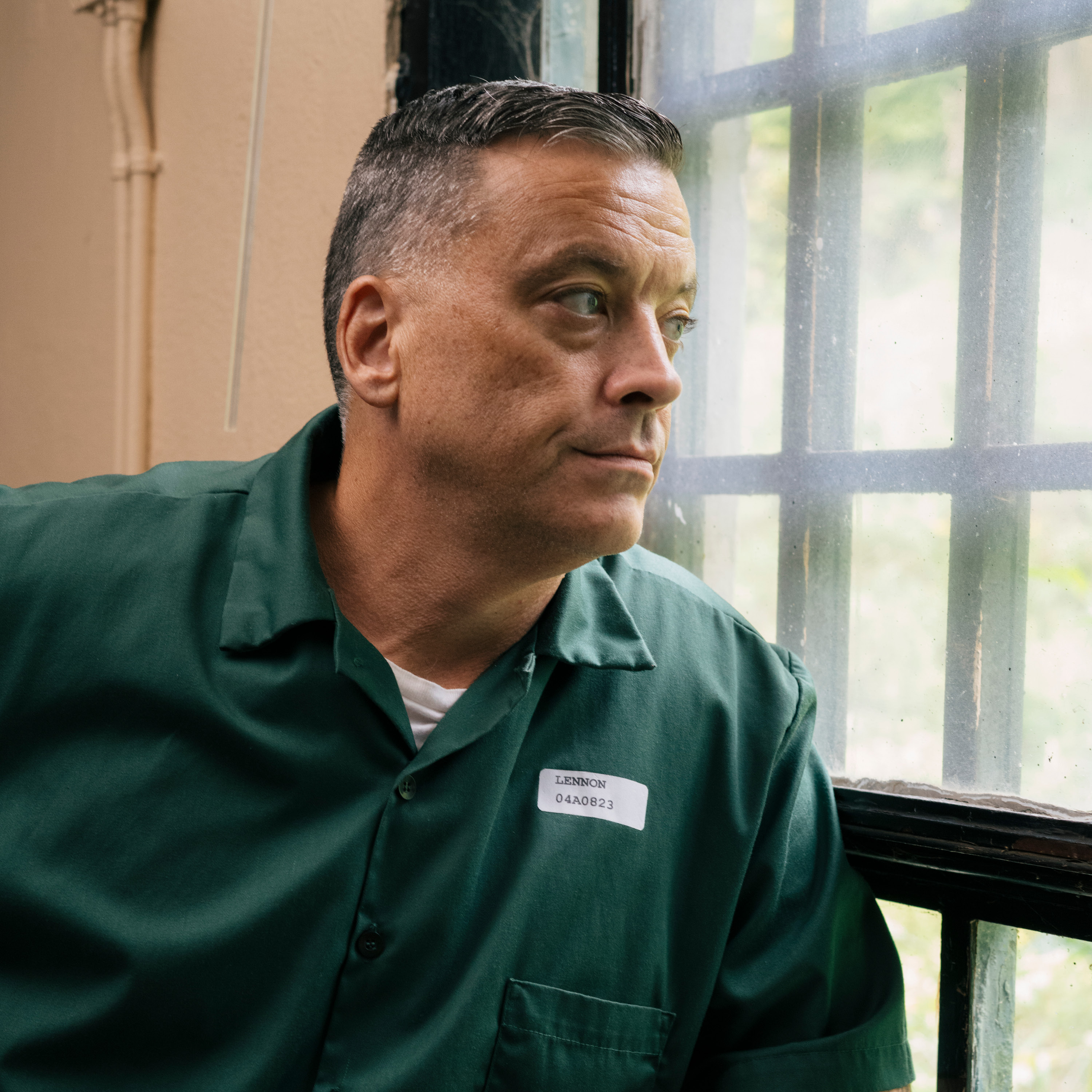
Coming up on More to the story. As true crime remains as popular as ever, journalist John J. Lennon argues the genre too often capitalizes on tragedy. And he should know. He's not only a writer but is currently serving time in Sing Sing Correctional Facility for homicide. Stay with us. This episode is brought to you by Progressive Insurance. Do you ever think about switching insurance companies to see if you could save some cash? Progressive makes it easy to see if you could save when you bundle your home and auto policies. Try it@progressive.com Progressive Casualty Insurance Company and affiliates. Potential savings will vary. Not available in all states. Big news Wayfair's Black Friday sale is here early. Right now at Wayfair, get up to 70 off everything you need for the season ahead. Save on kitchen and dining, bedroom furniture and mattresses, holiday decor, and way more. Now is the time to score big, from seasonal finds to favorites you'll use all year long. Plus, with Wayfair, enjoy fast and easy shipping with delivery and time for the holidays. Save up to 70% off early Black Friday deals. Shop now@wayfair.com Wayfair Every style, every home. This is more to the story. I'm Al Letson. John J. Lennon is a journalist currently serving his 24th year in New York's Sing Sing Correctional Facility. Convicted of murder in 2004, John was sentenced to 25 years to life. He was already serving three years on other convictions while he was in prison. He reckoned with his crime and discovered his voice through journalism. Over the last decade, he's written for the Atlantic, Esquire, and the New York Times Magazine, all while being behind bars. From inside, he watched as Americans became infatuated with stories like his. And the growing genre of true crime tragedy, he believed, was too often being turned into entertainment. John's first book is the Tragedy of True Four Guilty Men and the Stories that Define Us. It's a brutally honest account of murderers, including himself, told from the perspective that only another incarcerated person could write. And through that lens, John challenges readers to question our national obsession with true crime. John joins me from a phone in Sing Sing, where he's allowed to talk for 30 minutes at a time. So, John, how are you this morning?
- [02:58]
A
I'm good. Thanks for inviting me.
- [03:01]
B
Yeah. So you're in Sing Sing. Can you kind of like give me a picture of like where you're at and what it's like for our listeners who can't see?
- [03:11]
A
Yeah, for sure. I'm on a tier right now in cell block and Sing Sing and it's actually convenient right now because it's quiet on the tier because it's yard time and I stayed back in to talk to you and I'm in a phone booth, so it's quiet and a tier with metal picnic tables and mustard colored walls and that kind of vibe.
- [03:37]
B
So I want to back it up just a little bit. Can you tell me how you ended up in Sing Sing and all about your time there?
- [03:44]
A
Yeah, for sure. I mean, I'm From Brooklyn and 2001, at 24, I was involved in a criminal lifestyle selling drugs and shot and killed a man on a Brooklyn street. And I was sent away with it, 28 years to life sentence. And yeah, I mean, along the way I, I found myself. I guess the turning point for me was getting stabbed in a prison and transferring to another prison, finding a writing workshop. And I was like around 2010, my first piece published in 2013 and just kind of like found journalism just as something to help me with my, just my identity. Just, you know, I just helped me sort of get a life and place where you could really feel frankly like, like a loser. Like you've screwed up your life and hurt a lot of, a lot of people along the way. So kind of journalism, help me with my identity.
- [04:46]
B
I just kind of want to break it down a little bit. So, you know, you were a part of a criminal lifestyle in Brooklyn for a while. And so correct me if I'm wrong, but like in the state of New York, if you got, I think you said 28 to life, is that was, Am I correct in that?
- [05:04]
A
Yeah. So I was convicted of. I was already serving time for selling drugs and I was already serving another sentence for possessing a gun. So I had a whole host of criminal charges and I'm on my 24th year and now and I'll go to the parole board in about 3ish years.
- [05:24]
B
Yeah. So how long into your time in jail did the, the stabbing happen?
- [05:32]
A
Yeah, so that was probably, it was around 2008 for me. That was like the turn in my story. I started at Sing Sing, went to other different prisons. You know, in your first years, you're, you're kind of finding yourself and, you know, honestly perpetuating that kind of behavior. I was perpetuating the kind of behavior, that kind of got me doing drugs, selling drugs, just up to no good, gossiping in the yard. Prison was where I belonged in the beginning, you know, and for me, like, that point, it was that point where I got stabbed pretty bad in the yard. It was retaliation for the man I killed in Brooklyn. I mean, I knew the guy who stabbed me was his friend. And yeah, at that point, I got hit pretty bad. And you know, you're like, wow, I got hit in the lung. And I was, you know, I was just like, this is. No, everyone knew I was getting hit but me that day in the yard. And I was just like, this is a disgusting place, and I'm a disgusting person. I just want to. Just want to be better. It was just, you know, at that point, I transferred to Attica. Things in the worst prison in New York State. I got sober, and I joined that writing workshop, you know.
- [06:43]
B
Yeah, I think it's, like, really incredible.
- [06:45]
A
That.
- [06:47]
B
You know, you came from the street, you're in prison, and you're just kind of doing what you've always done, just trying to survive in there. And then this moment where you. You get to kind of reflect on your life. And in probably one of the worst places in the world, a place that I, you know, I think nobody ever wants to go, you. You realize that you have to make change. I mean, making change in those circumstances has to be really hard.
- [07:17]
A
Yeah, you know, it was ground zero. You know, I was. Had fantastically failed in life. And Attic is a tough joint. But I had a great, like, 12 step meeting, though. Like, these, like, really cool volunteers. And if anything's going on in prison, it's always through the volunteer programs. People with a lot of decency that come in this nasty place and just, like, try to show us some love. And, you know, I got sober around the same time that another volunteer came in, and he's an English professor, and he came in and started showing us, you know, start tossing us some Best American essays and started reading some of these pieces. And, you know, and it was probably around that time, you know, it was like, it was probably helpful that I was getting sober, like around the time that I was learning to write, because it kind of like, maybe edified even my voice a bit, or at least gave me some clarity with my thoughts, and I was doing some work on myself, so.
- [08:15]
B
So how did you gravitate towards journalism?
- [08:18]
A
There was these pieces, like, again, there was these essays that I would write and that I would. That we were reading, and I would see where these essays were published in these Best American essay collection and best American magazine writing that the professor would give us these books. And I, and I. And I just started. Started reading these pieces where. And I started subscribing to those magazines. And it worked for me because I had a bit of a learning disability too. Like I wasn't a great reader.
- [08:45]
B
Yeah.
- [08:45]
A
But I liked. I loved story and I loved story and magazine writing. And my mom would subscribe all to these different magazines and these, these different, you know, the Atlantic, Esquire, gdq, all these different magazines and. Interesting. That's the kind of writing I took to initially. So it was by reverse engineering and then sort of. And I also knew, like I was self aware enough to know that I had like some personality issues. I was just. I was a mess.
- [09:13]
B
So tell me about that first piece. Like the idea that someone who's currently locked up could become a journalist and get published in the Atlantic, you know, one of the most prestigious magazines in the country. How did it all take place?
- [09:27]
A
You know, I think if you have to feel like you have something to say. I remember it was like 2013 at the time, and there was this horrible shooting at Sandy Hook. And I remember I had used the same gun in my crime. And everyone was talking about gun control. And I was just like, I know how to get guns easy. They don't even know what they're talking about. So I mean, I felt like I had something to say. You know, it just clicked for me from the beginning. I knew that had a lot of conflict. Right. But I knew sort of to lean into that. And if I could sort of write about this in a sober way, in an accountable way, then I think people would listen to what I had to say.
- [10:06]
B
So after the shooting at Sandy Hook elementary happens, you feel like you have something to say. So what was the process of writing the essay and submitting it for possible publication?
- [10:17]
A
I wrote it myself. I was workshopping it every like two, two weeks to workshops sometimes every month. You're sort of like hanging on the red ink, hanging on the words of the, of the professor. His name was Doran Larson. He was a Hamilton College professor. He would come in and, you know, it was like five or six of us in the group and we would, we would hang on to his words, but he would give me some red ink and I would go back and I would, you know, and sort of work it. I mean, eventually it looked clean and I kept reading it out loud in my cell. I'd read other op eds, see how they read. It was a Lot of reverse engineering. And. And I sent it out, a whim, to the Atlantic even. He was like, you know, good luck. You know, you're shooting for the stars there. And I got a letter back from David Graham, who's, you know, a writer today for the Atlantic, and he said, man, I'd love to publish this piece. My life changed after that. Wow.
- [11:13]
B
And so did you send it out to anybody else or just the Atlantic?
- [11:16]
A
Just one shot. The Atlantic.
- [11:19]
B
Wow. That's excellent. So, all right, so you. So you write this piece, The Atlantic publishes it. Talk to me about that second piece. Dying in Attica. Like, what was that about? And how did. How did it come about? Because this is the first true reported.
- [11:34]
A
Piece that wasn't really my second piece. I wrote actually, like, a piece on. On Nick Kristoff's blog. So it was like another gun piece, but, like, instructor was like, will you be, like, the gun guy? Like, you know, write something else?
- [11:49]
B
Yeah.
- [11:50]
A
So I, I. You have one minute left. I wrote this piece about this guy Lenny. He was dying of colon cancer on my tear. And it was just so difficult for him because he had. He had, like, a colostomy bag. And I was just like, wow. And I. This is around the time that I got diagnosed with Crohn's. And my mother was always in my ear saying, that's a terrible disease. I actually have a mild case of it. But back then, it was on my mind, and I was. And it kind of. I was thinking of this guy, and I was, like, seeing how he lived, and I was seeing how people, like, were holding their nose. Changed his bag because he was a few cells down, and it's just a terrible place, you know, prison, to live with any kind of illness. I was just like, if I could capture that, and that would be kind of cool. And then I kind of. Thank you for using Securus. Goodbye.
- [12:39]
B
This is Megan.
- [12:40]
A
He'll call right back.
- [12:41]
B
That's Megan Pasco, John's publicist, who's listening in on the call and helping us connect to the prison phone.
- [12:48]
A
All right, we are back.
- [12:50]
B
Okay. John, you there?
- [12:51]
A
I'm here, Al.
- [12:53]
B
Okay. So we left off. You were talking about writing that piece for the Atlantic. After you were finished with that piece. I mean, I'm sure, like, that just lit a fire and you just wanted to do more of this type of journalism.
- [13:08]
A
Yeah, absolutely. I didn't really realize how significant it was, but somebody said, like, you know, you could do something with this. You know, I kind of felt like they gave me the rock and I was in the game, and I was just like, I have to. I have to do something with. I started writing more, and it was. It was good timing that the Marshall Project opened at that time. You know, Bill Keller, who's this, like, he runs the New York Times in 2014, shifts to open up the Marshall Project. I read that in one of my subscriptions my mom gave me. I'm connecting the dots. I'm like, oh, this is big, you know, like. Like, this could be something. And I'm like, I reach out to him and. And, you know, and then I write that story about Lenny the bank robber who. That was like the. The first piece that. It wasn't like. It was like I jumped in a little bit with, like, relating to him, but I really made it about him. And if I was relating to him, it was about, like, my own reflections. I mean, it's not like I was incapable of empathy, but it's just like the work itself boosted sort of like this idea of healing for others. And, you know, because prison's a place where you mind your business and, you know, journalism transcends that, you know?
- [14:19]
B
Coming up on More to the Story. John tells me what he hoped to get out of becoming a journalist.
- [14:24]
A
I never went into this, like. Like thinking, like, writing would be a passport to freedom, you know? You know what I wanted? I wanted to just to get a life, not be a loser.
- [14:37]
B
Before we get to that, we're doing our part bringing you the kind of stories you expect from Reveal. But we can't do it without you. Now, I'm going to ask you to do your part by helping other listeners find our show. So here's how you do it. Grab your phone, go to your favorite podcast app, maybe Apple podcasts. Search for Reveal. You know where it is. You're listening right now. Then scroll to the bottom. Keep going. Wait, wait, wait, wait, wait. That's too far. Right there. Tap those stars. Write a review. Let others know how much you really appreciate independent journalism and the incredible hosts. And there you have it. Thank you, thank you, thank you. All right, now, we're coming back with more from journalist John J. Lennon in just a moment.
- [15:29]
A
Hello, listener.
- [15:30]
B
My name is Najeeb Momini, and I.
- [15:32]
A
Am a produce here at Reveal.
- [15:35]
B
Reveal is a nonprofit news organization, and.
- [15:38]
A
We depend on support from our listeners. Listeners like you.
- [15:42]
B
Donate today@revealnews.org donate. It helps fund the stories that we.
- [15:48]
A
Tell and helps me feed my cat. So thank you.
- [16:00]
B
This is more to the story. I'm Al Letson, and I'M back with incarcerated journalist John J. Lennon. He joins me from a phone in Sing Sing. I give this disclaimer whenever I talk about true crime, but I think that true crime disconnects us from what you were just talking about. I think it just disconnects us from empathy. Because true crime is not what I think good journalism is, which is an exercise in empathy.
- [16:34]
A
Right.
- [16:34]
B
It's like connecting to whoever the subject is, be they good or bad. But great journalism really tries to understand it and get to the root of it and connect us to our humanity. And I think the true crime is really about entertainment, and that is the. The ruler I use for myself. I don't judge anybody else. Look, if people love true crime, have at it. Good for you. I say all that to say that your book is titled the Tragedy of True Crime. Four Guilty Men and the Stories that Define Us. Can you tell me a little bit about, like a. How you came to think of true crime as a tragedy and then also just like, about these men that you have talked to and written this book about?
- [17:20]
A
Yeah, so. So we were talking about, like, the kind of work that I was doing initially, right. Which I thought. And what you frame this, like, you know, I appreciate the way. But it was just. Was just like, you know, substantive journalism. Right. And I even took it further and I started writing, you know, long form features like in magazines and Esquire, you know, advice. And by 2018, I had transferred from Attica to Sing Sing. And you know, around that time, Bill Keller and I just, just wrote a piece in New York magazine and about a man who was suffering from schizoph, you know, actually in this block. And so, like, I was like making my rounds like, you know, like, who wants to talk on, you know, maybe I could talk about this crisis on, on the, on the radio. And we actually did. We did talk on the radio. I had reached out to somebody I knew at, at cnn, but I didn't know that they were working at hlm. And ultimately they had sent. I told them, you know, I wanted to talk up this, like, crisis. She kind of lined me up with her colleagues and told me, and they had come to see me and they wanted to do a show about my redemption. They told me in this career that I built for myself, it was a bait and switch. It was all a lie. It came up and it was really the show. They told me the show was called Inside, There's Cuomo. And it was. The first season was. But the second season was called Inside Evil. And the third Season was the one that they were sort of grooming me for. And they said it was. It wasn't going to be inside evil. They said it was going to be about our stories of redemption. And I was like, oh, wow, this is great. You know, I'm so glad you thought of me. And by the time they came up with Chris Cuomo, it wasn't about that at all. So that was my experience, right. That I had. And I didn't walk out on Chris Cuomo because, you know, like, well, he's Chris Cuomo. Yeah. And it's like his brother's the governor.
- [19:12]
B
Right.
- [19:13]
A
It was just a lot, you know.
- [19:14]
B
So, yeah, there's a big power imbalance there. I mean, like, you are a prisoner. Chris Cuomo is a celebrity. CNN at the time guy, and his brother at the time was the governor of the state that you are currently in prison. You know, I mean, tell me if I'm wrong, but isn't it's possible that at the time, the governor Cuomo could have pardoned you? Right?
- [19:38]
A
Absolutely. And he was pardoned. Like, guys, I knew. I'm talking about guys in the block that didn't sell blocks. I've seen guys right next to me, like, walk right out. What happened was they showed me that they saw me as a murderer and not as a journalist. And the reason why I wrote this book was to show, well, twofold. You know, personally, you know, I had a chip on my shoulders and I felt like I had something to say. It's the first kind of similar feeling that I had when I started writing. Right. And I thought, you know, I could tell better stories than this dude, like, and I have better access. I'm not telling these stories from a perch. I could tell fuller stories about. About the men I live with. And the fuller stories, Al included the punishment thing. You mentioned these other sort of true crime shows, these podcasts, I mean, they're structured the same way. Every story you watch one, you watch them all. Bang, bang. Police take nine. One one calls, drop back, meet characters. I inverted that whole. That whole structure with the tragedy of true crime. So I write about three men. I introduce you to them where they are in prison with me at different timelines, and you get to know them before you learn about their crime. I don't shy away from their crime. I describe their crime, but I deliver it to the reader. A different structure than traditional true crime.
- [21:04]
B
Do you feel like the structure is what separates what you're doing from true crime, or is it. The structure is sort of born out of the idea that you're doing something different than true crime.
- [21:18]
A
Well, that's one of the things. Voice and agency is obviously the other. Right. You know, I write about three men who've also killed, But I would argue that the three men that I write about, one of whom is. That's been sort of the villain his whole life. And he hasn't really. He hasn't known how to overcome that. I was talking about Robert Chambers. Another one is a gay man named Michael Shane Hale, who. He was just a. You know, he's an amazing person and killed his lover. And then the third is Milton Jones, who, at 17, killed two priests. This is different crimes. Right. But ultimately, I use my own agency to sort of put myself. I don't judge them. I put myself. I tell their stories without sort of, like. I would say, like a lot different than how, like, say, for example, Chris Cuomo told. Told my stories and told the stories of other people on that show Inside Evil. Right. Is an ability to sort of tell a story. I come clean about my own crime, and I try to be candid with it with the reader. And that enables me to be a trusted narrator with that, I'm able to tell the stories of these other men, not judge them, and at times put myself beneath them in terms of, like, you know, just explaining, like, hey, I'm actually more culpable than Michael Shane Hale, who I call Shane. But why does. Why does Brooklyn decide to execute him? Why is he the first man selected in 95 when New York brings back the death penalty? Execute. Like, what's that about? You know, And I sort of unpack that and, you know, explain what happened in each of these cases. But you asked the question about, like, voice and the narrator. I'm a narrator that's. That's done this as well. And it's pretty. It's pretty unusual. Right. When you think of a trusted narrator, you don't think of a guy in prison who's killed a man. Right. So I have to reckon with that. But I try to do that early on in the book, and I tell the story with my own woman's girl.
- [23:21]
B
Yeah. So let me ask you, like, I think one of the complicated parts of talking about people's stories, especially people that have killed somebody, is really, you know, that with that is the victim. Right. And what the victim's family has gone through as well, and how you handle both parts of it. Like, there's a story about redemption which is, you know, everybody wants to hear. I think that redemption stories are so Powerful, because we all want redemption. Right? So I think that when you hear redemption stories, it pulls you in. On the other side of that redemption story, though, is a family who lost a family member. And I'm wondering, like, how do you balance those two?
- [24:08]
A
Yeah, I mean, it's difficult. Look, I mean, I knew going into this I was going to. This. This book was going to be more about, you know, me having access to these guys in here and showing you what the punishment side is. I do reach out to, you know, I think doing the work. Right. At a certain point, when we think about three of the men I write about, I reach out to the family members, people that they killed.
- [24:32]
B
What about the family of the man you killed? Have you been able to reach out and talk to them?
- [24:40]
A
You know, it's one of the. It's one of the toughest parts of, you know, of my. Of my career. Yeah. Like, I have, you know, I wrote a piece in Washington Post years ago about just trying to come to terms on my own of writing an apology letter. It's, you know, the sister of the man I killed. You know, she rejected it, and she asked in a letter to the Washington Post, did I not use his name in my writing that would, you know, sort of serve her better than my apology. So I, you know, I've respected her wishes, and that's why don't refer to him by name in the piece. But look, I don't pretend to. I understand what brings me pride writing. I mean, it may cause her and her family more pain. Look, that causes me shame. But that whole equation, at least for me, is this idea of remorse. Right. Because it's their conflict. There's no easy answers to that.
- [25:40]
B
Yeah, no, I mean, you know, on one side of it, you should be able to talk about your story and the things that you've gone through. On the other side of it, there's a family who lost a loved one.
- [25:53]
A
And.
- [25:55]
B
You know, I think it's fair that they don't want to hear it.
- [25:58]
A
No easy answers.
- [26:00]
B
So, John, I want to go back a little bit and talk about true crime. I'm wondering, in your opinion, how has the genre influenced how we view crime and the people who commit those crimes?
- [26:13]
A
I think with true crime, yeah. It creates this thirst for punishment. I sort of. I started critiquing this stuff before I wrote the book out. You know, I started developing these ideas, critiquing other writers of true crime, New York Review of Books and in the New York Times Magazine and, like these. I started really, like, Clocking, like, the way we consume true crime and even critiquing, you know, Dick Wolf and Rolling Stone. I had a big piece with critiquing him. You know, it's just about, like, who's telling our stories and how are they telling them. That's one of the themes that runs through the tragedy of true crime. You know, you zeroed in on, I think, a fair observation. Like, wait, dude, you're, you're like, you're a murderer. And it's like, what if the people that like, kill, like the guy you killed, like his family is not really digging this? What, what does it mean when you're, when, when people that are so disconnected, crimes are the ones that, that are telling, that are shaping the narratives. What does Big Wolf know up on the Upper east side? Like, like, like what is Chris Clone? Like, this guy grew up in the Governor's, actually. That's who y' all are relying on. What if I can, you know, sort of develop my voice and be fair minded about it, kind of give it to you guys real and also be accountable? I'm just saying that, like, that's not. I'm not an activist, you know, I'm a journalist. That's not what I'm doing. I want to create an experience, right? But I want to just offer an experience. I'm a narrative journalist, right? Like, I'm a guy that did a pretty terrible thing. I shot a man 10 times. I was deeply immersed in this lifestyle. I reckon with that on the page and people read my stuff and there's a way that I connect with them and count for what I did. And I'm not blaming the system.
- [28:11]
B
Do you wrestle with the possibility that you're a little too close to these guys to write about them objectively? Is that something that you're constantly thinking of as you're writing it?
- [28:24]
A
You know, I'd be lying to myself and the reader if I'm saying that I'm an objective journalist. You know, I think we come to life and to our work with our life experiences, and I'm writing about men in prison and I'm all who live behind bars. And I also go to sleep behind bars. So I think I'd be kidding myself and the reader to say I'm 100% writing you writing an objective story. This is a first person, you know, immersive, gonzo personal journalist. You call it what you want. It has as many names as, you know, Al, like, you know, I don't know, was Hunter Thompson being asked, like, do you Think you're at a. You know, an objective journalist, like this guy. This guy's riffing about all kinds of stuff like. Like, you know what I mean? But his work had value. Right. And he had so many flaws. You have one minute left, as do I.
- [29:19]
B
Well, we. We've only got a minute left, so I. I'll say I can call you.
- [29:23]
A
Right back and put a button on it to shut up if you want.
- [29:26]
B
Yeah, let's do the callback.
- [29:28]
A
And.
- [29:28]
B
And there's a. I just have a couple more questions for you, and we can kind of button it.
- [29:31]
A
Yeah, okay.
- [29:33]
B
Okay.
- [29:34]
A
The caller has hung up. Hello. I would just. Can I just say something else about the objective?
- [29:41]
B
Yeah, please. Please do.
- [29:42]
A
Go ahead. I would also like to think I'm being objective, you know, with, like. With scenic writing and with these rifts and these digressions that I do in the book. Like, for example, there's a scene in the book where God just offers me some drugs. I deny it. I don't want it. You know, I relapsed after I got sober, you know, and it's always a struggle to sort of, like, stay sober in prison and, you know, prison. You know, the heroin now in prison has fentanyl in it. I remember, like, another guy, he was just stuff going around in a cell block, and, like, there's this guy that overdosed, and the CEOs are running to his cell, and the whole block is silent. And they're. And they're going to work on this guy. Like, the COs, like, the guards, they're CPR everything. They're running in, and the whole block is silent. And everyone knows there's. There's drugs in the block, and everyone knows that it's probably fentanyl. But it's just this culture that we live in. It's awful. We're foul. Like, there's parts of us that are foul in here. And I acknowledge that in the book. These CEOs are, like. They're working. They're busting their ass trying to save this guy's life. And it's just like they're contending with this foul culture, and it's just awful. And that's. And that's the culture that we live in. And, you know, and I think when you create those scenes that you show what it is. There's a lot going on right there from that scene. Right? There's a lot.
- [31:13]
B
Yeah. How do you rise above that kind of culture? Like, if. If everything you just described sounds really hard for somebody to figure out how.
- [31:24]
A
To navigate that, you know, it's harder at the end, Al. It's harder at the end when, you know, you've, you know, like, I'm on, you know, I'm. I'm doing this interview with you. I'm outlining a piece for the New York Review of Books. I'm like, you know, and there's just, like. It's just. It's just suffering, and there's a mix of just stupidity and suffering. Difficult to, like, not get angry at it and then just to, like, to have, like, empathy. It's really difficult when you can't shake it. Like, you can't, like, you can't get away from it. You know, it's hard. Alice, at the time gets, like, really hard at the end. Like when you transcended this place and it's just tough. I mean, it was so much easier. Like when I. When we started this interview and I came in and I was just like, wow, I am. I belong here. I'm a low life. Like, this is where I belong. But, like, you know, fast forward 24 years and, like, where I am today. This. This is the toughest time.
- [32:24]
B
You're up for parole soon, two years from now. How are you feeling about it? Like, as. I mean, you. You must know a lot of people who have gone through the. Through the parole process in the past. So, you know, what are your thoughts going into it?
- [32:40]
A
I think one of. One of my concerns is, like, this. It's this idea that, you know, I think society wants us to come to prison, you know. You know, get our lives together, just. Just not be criminals and get out. Just, like, go get a job. Like, don't be bad, you know, I never went into this, like. Like thinking, like, writing would be a passport to freedom or anything like that, you know. You know what I wanted? I wanted to just to get a life, not be a loser. I'm just, you know, I had some green lights along the way, and this has become, you know, I found some success and I'm grateful for that, but I just hope I'm not resented for that. That's what I fear.
- [33:20]
B
John, thanks so much for talking to me today.
- [33:24]
A
Oh, thanks for having me, Al. This was a blast.
- [33:29]
B
John J. Lennon is a journalist currently serving his 24th year in Sing Sing Correctional Facility. He's the author of the Tragedy of True Four Guilty Men and the Stories that Define Us. So if you liked this episode, I think you should check out our reveal episode in a Mississippi jail. Inmates became weapons. It's the second part of our story on abuses in the Rankin County Sheriff's Department, this time involving inmates empowered to be a part of a violent team of enforcers. Lastly, a reminder. We are listener support supported. That means listeners like you, you can help us thrive by making a gift today. Just go to revealnews.org gift again, that's revealnews.org gift and thank you. This episode was produced by Josh sanburn and Carl McGurk. Allison Brett Myers edited the show, theme music and engineering, helped by Fernando, my man, Yo Aruda, and Jay Breezy. Mr. Jim Briggs, I'm Alex. And you know, let's do this again next week. This is Bright. More to the story.
- [34:46]
A
From prx.