← Revenue Builders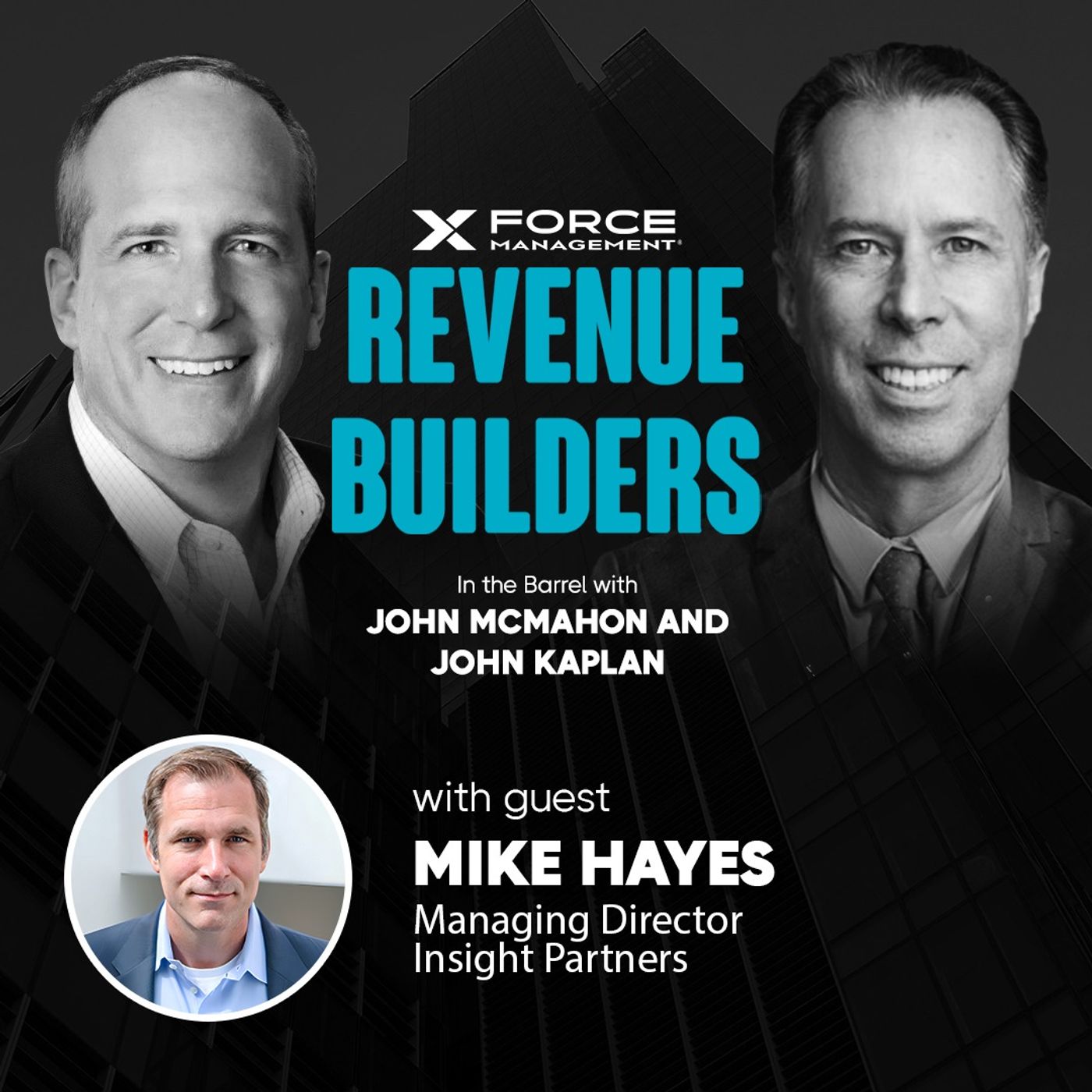
Revenue Builders
Mission Driven Leadership with Mike Hayes
01:08:56
In this episode of the Revenue Builders Podcast, our hosts John Kaplan and John McMahon welcome back Mike Hayes, former Navy SEAL and current sales leader at Insight Partners. They discuss Mike’s new book, Mission Driven: The Path to a Life of Purpose, and how its lessons apply to sales success and leadership. Mike emphasizes the importance of rooting your work in alignment with personal values and goals, which leads to not only greater outcomes and accomplishments but a sense of fulfillment. Mike also shares insights from his 20-year government career and his transition to the private sector as a sales leader. This episode is an essential listen for anyone seeking to align their personal values with their professional journey. ADDITIONAL RESOURCES Buy Mike’s book, Mission Driven: The Path to a Life of Purpose: https://www.hachettebookgroup.com/titles/mike-hayes/mission-driven/9780306836534/ Support the 1162 Foundation’s mission of helping Gold Star families: https://givebutter....
Loading summary
Transcript119 lines
- [00:05]
A
Welcome to the Revenue Builders Podcast, a weekly show featuring B2B sales leaders and executives. Hosted by five time CRO John McMahon and Force Management Co Founder John Kaplan, the show goes behind the scenes with the people who have been there, done that, and seen the results. If you enjoy our content, please subscribe, rate and review the show to help us reach more people. Revenue Builders is brought to you by Force Management. We help companies improve sales performance, executing the growth strategy at the point of sale. Find us@Force Management.com Enjoy today's episode.
- [00:44]
B
Welcome.
- [00:45]
C
To the Revenue Builders Podcast. Our special guest today is Mike Hayes. Mike served 20 years as a Navy SEAL where he was Commander of Seal Team 2 and was deployed overseas 12 times. After being commander of Seal Team 2, Mike was selected from thousands of people to be a White House Fellow where he worked in the Office of the Secretary of Defense and was on the Joint Chiefs of Staff, contributing to the U.S. national Security and strategy under both President Bush and President Obama. Mike co founded the 1162 foundation to support military veterans and and their families who lost loved ones. Those families are known as Gold Star families and Mike's 1162 foundation uses funds from his book and public speaking engagements to pay off the mortgages for Gold Star families. Mike was also Chief operating officer at VMware, where he drove operational excellence and strategic growth for VMware. He's currently a Managing Director at Insight Partners, which is a venture capital and private equity firm. And Mike is the author of two influential books. We had Mike on the podcast two years ago to discuss his first book, Never Enough A Navy SEAL Commander on Living a Life of Excellence, Agility, and Meaning, and there Mike shared lessons from his SEAL and corporate experiences on leadership, resilience and purpose. The proceeds from Mike's book went to the Gold Star Families that lost loved Ones and he paid off the mortgages for 12 Gold Star families. Today we have Mike back to discuss his second and new book, which was pre released on September 2, Mission Driven the Path to a Life of Purpose. Mike holds a Bachelor's degree from the College of Holy Cross in International Relations from the Fletcher School at Tufts University and an MBA from the University of Connecticut. He is also a graduate of Harvard Business School's Advanced Management Program and Mike serves as a board member for the National Medal of Honor Museum.
- [03:08]
B
Mike, I downloaded your book last night. Your new book, Mission the Path to a Life of Purpose. It was a pre release so the audience knows. So it was only available last night so I downloaded it on my Kindle and it's Your second book. We had you on the podcast about two years ago when you wrote your first book, Never Enough, which was very well received by our audience. But before I get into your new book, Mission Driven, I think it's important for you to tell the audience about your 1162 foundation and what you do for Gold Star families. First of all, what a Gold Star family is and what you do for Gold Star families with the proceeds from your book and a lot of the public speaking engagements that you do.
- [03:59]
D
Yeah. So John and I'll just, you know, I can't help but say Mac and Cap, you know, two best friends. Like, I just, I just want to say thank you for having me here. Thank you for the continued impact that you've had and for this great nation and for all the people that you positively influence Every, every time you guys speak. The thing for me is like you just mentioned is how do you create value and impact and go do great things? I've been, you know, privileged to be a Navy Seal for 20 years, to work in two white houses, both Presidents Bush and Obama, to run or attend hundreds of meetings in the White House situation Room. And so I've really seen like the far ends of the spectrum, like at the highest national policy levels and then the pointiest end of the spear on dark, scary miss and the Navy Seals and everything in between. And so with that, you know, like every SEAL of my era, I've buried 75 friends, you know, probably 15 or 20, like real, real, real brothers of mine. And that is something that I live with my whole life. And so I've, I've my. One of my mission and my purpose is to, to really besides elevating society through things like technology and impact and whatnot, is to really think about the very day to day lives of the Gold Star families. Those are the families of the fallen who have died in combat or died by suicide afterward. Those individuals gave their last measure for the nation. But their spouses, their children, they go on living that ultimate sacrifice every single day. And so I founded the 1162 Foundation. Kennedy started the seals on 11 62. That's the secret behind the name. And it is an organization with no employees, no fanfare, no website really other than like a give butter fundraising website. It's very hard to figure us find us on the net. We are IRS approved and everything as a 501C3. And what we do is we very quietly pay off Gold Star widows mortgages. I've been privileged so far to pay off 12 of these mortgages in my life so far. And John. And John with Mission Driven, I hope to continue to do another 12 and 12 after that and just keep on rolling and continue to make a positive difference for the world.
- [06:08]
B
Amazing. Amazing. So you took a break from being the chief operating officer at VMware. Right. And then you decided to write Mission Driven. Can you talk a little bit about why?
- [06:22]
D
Absolutely. Well, first of all, I was really fortunate. I helped transform VMware. We sold into Broadcom for, I say, $69 billion. Because as soon as I said that, Michael Dell, who chairs our board, quickly reminded me, Mike, it was 94 billion. He's right, I'm wrong. It was, you know, market. While we went through 18 months of, I'll just call it politely, regulatory process around the globe, there are much less polite ways to say that. But as we went through that process, we basically increased in value thanks to the Broadcom AI chip era. Beginning of the chip era, macro tailwinds. And so anyways, as I decided to exit VMware after the sale and I had three months of hey, call me if you need me kind of thing, and I didn't get any calls from Broadcom. They were talented and did the integration. And so post closing, I had three months, and I used that three months to write the very vast majority of Mission Driven. And I wrote it because I've had a lot of conversations after never enough came out that were things like, hey, Mike, how do I really think about meaning? What does meaning mean? What is purpose? But how do you get real with it? What is the. What does it really mean? Like, it's great to have this high in the sky cloud kind of level answers, but how do you really bring it to life? And so that's kind of the main reason that I wrote it. But of course, as I just spoke about, which you very politely teased out, is that it's not just to go help all the readers, but it's also to help pay off mortgages and create what I see as like a win, win, win, win, win, win situation.
- [08:01]
B
Yeah, well, one of the key lessons in the book is not what you want to be, but who you want to be. So you state in the book that your who is formed by the principles that guide you. It's the aspirational person that you're hoping to be, the one you see, the one you want to see in the mirror when you. When you look on the mirror. Can you talk or expand a little bit on that?
- [08:27]
D
Absolutely. Thanks for asking. It's really one of the key points in the book and kind of weaves through the first half of the book. I kind of had this, I don't know, epiphany or aha moment when our daughter was much younger. She's 24 now, but when she was growing up, my wife and I never asked her what do you want to be when you grow up? We would always say who do you want to be? Because the who is that deeper you. Let's not connect self esteem or I say success in air quotes based on a what in a title and a position. Think about the deeper who. What's your orientation to helping others? What's your work ethic? When people are mean, are you able to go, become calmer and help defuse a situation, you know, whatever. I could go on and on, but the values that deeper who transcend your whole life. I'm somebody who's moved roles a lot in my life, but you know, the who is very common and thematic to our lives. I'm privileged to be 54 years old now and through my 54 point something years of my life, I've always been working on that foundation. And I think that to me is the most important thing. Because if we have our who figured out, then we can map back and compare what we're doing and say is what we're doing giving us energy and meaning and reward in however we define it. And the last thing I'll say on this is that, you know, a lot of people when they give advice, their answer says basically, in essence, you should do what I did because I'm the smartest person I know, I'm the coolest person I know, therefore you should do what I did. And there's nothing that could be further from the truth. Like what I chose in my life isn't what's best for anybody who I'm giving advice through. So, so in Mission Driven, what I really tried to do, hopefully successfully, the readers will determine that. But, but was to, to really draw out, you know, do you know who you are and because that like what I think for you doesn't matter. What matters is what you think for yourself.
- [10:35]
B
Yeah, you see it at all stages of life though too, Mike. You know, Johnny and I see it a lot with people that their who's attached to their what it's attached to their title, their position, you know, their identity. You know, I'm, I'm a Navy seal, I'm a football player, I'm a C level executive. And then when they lose that or move away from that title or that what their ego has a really hard time trying to figure out, like, who am I really? That's. And that's a difficult transition for a lot of people. And I think you even talk about it in a book, you know, say when you did make the decision to leave the seals, you were faced with a bunch of different choices and you had to figure out, who's the person that I really want to be in this world.
- [11:24]
D
Yeah, it's such a. It's a struggle. Look, I mean, there's no exaggeration. There's. We're all human and to some degree we all want to be appreciated and have the world see us as successful. It's just that sometimes we need that, you know, seven, seven word description of who we are because the world can't get past the seventh word. And so that we. When I got out of the seals and I went to Bridgewater Associates, I went from running a 2,000 person task force, my own jets and planes and automobiles, and when I said jump, people were already on their way up and saying, how high, sir? You know, and like, I'm exaggerating, of course, but you know that then I went to Bridgewater and I had no direct reports and I had to go get my own pencils and whatever. And that was such a. So amazing and awesome because it kind of taught me a lesson. I was 41 at the time, but, like, taught me a lesson about, like, do I really care? And I didn't care for me. But I will say, like, like a lot of veterans, as they get out of the military, wrestle with. With that. What. But the thing is, my. Who has never changed. And while in the SEAL teams, my, my. I'm a person who. I was a person and still am. A person who just wanted to create impact in the world and help other people to be successful. And. And I've seen that same thing in my career, my career in the private sector now for 13 years. And so it's thematically exactly the same. And a lot of people say, Mike, how do you compare the SEAL teams to business? There? It's exactly the same. I mean, you're trying to create an outcome. You're figuring out what resources and risk do you, you know, throw in the mix to go achieve the outcome. And it's really no different in business than in the seals.
- [13:04]
E
Yeah, you start off this conversation with the importance of who you want to be. In the book you talk about, one of the first things you talk about is who you want to be. And I think what you just did with this conversation is when you show up to that question, you cannot answer that question of who you want to be if you're not honest with who you are. And who you are is a, a conglomerate or a, a series of experiences, good and bad and relationships, good and bad. And, and I, I've always found that the people that want to be somebody, that understand who they are and why they are who they are, not that you can't change, they're much more successful in that exercise, if that makes sense to you. And I had, I'm just speaking from experience. I spent a lot of time in my life focusing on who I want to be. And I realized a lot of times who I wanted to be was heavily influenced by who I was and whether I liked that or not. And, and so without getting too heavy on it, I think if you're going to do the exercise, you might as well go all in. You know what I mean? If that makes sense.
- [14:34]
D
It makes a ton of sense. I totally agree with you, John. And if you think about those like those Myers Briggs tests we, or whatever personality test that you go take, the biggest error in those is whether you are answering who you actually are or who you wish you were when you're taking the test.
- [14:51]
B
Right.
- [14:52]
D
Like I always come back as this like estj, like classic leader. Well, is that because I want to be that or because I am it? You know, I, I don't know, but that's like that.
- [15:02]
B
Those tests get pretty good. Now, Mike, there's some that Johnny and I have given to some, you know, salespeople when they come into companies and it actually asks the question so many different ways that there's a distortion index and it tells you, you know, whether or not the person's answering it the way they are or the person that they want to be.
- [15:21]
D
Yeah, yeah. And, and what's interesting is you can you actually see a real gap in integrity when you get that diff? Right. Because if you align really, if around the who and you can answer like that, then those kinds of factors end up really, really converged.
- [15:37]
B
Yeah, I went.
- [15:38]
E
When you, when you. Sorry. When you've led people in the past, Mike, this was a self reflection for you. But if you could turn it on the other ear on leadership, when you meet people at different stages, when they're either dealing with who they've been or who they want to be and there's that successful transition of understanding who you are and where you've been and where you want to go. Did you see any correlation in the seals in, in business, any, any advice that you could give people that, that you know on how to do that exercise and do it really well and do it honestly? And, and, and, and is there a correlation to people that do that well, that, that are higher performers? I've read some statistics, I don't want to offend, but I've read some statistics that when they did some personality studies on some of the seals in the early days, that there was a very fine line between like, I don't, I forget without being offensive, like, not psychotic behavior, but like, can you help me with that? You'd probably know what the studies say. Like, it's like that's, there's. Those are rare individuals to not, to not be able to feel some of that stuff.
- [16:58]
D
No, it is the tensions that we have in the SEAL teams is we are trying to create the world's most potent warriors and with that comes like, you know, second order consequences. That is like we're not, we're not raising librarians, with all due respect to librarians, but like, you know.
- [17:20]
E
Yeah.
- [17:21]
D
And so with that comes, you know, sometimes discipline, challenges or habits. It's a very hard line to walk. But, you know, we are in the seals. I describe our job as becoming world class at stopping bad people from doing bad things. Yeah, good people. See, but you intrinsically have to be a good person to go recognize what is good and bad and then to have the, the ability to step into a hard situation and stop those bad people from doing those bad things. And that at the foundation, that's what being a SEAL is, you know, And I think the. What's, what's. Well, let me pause and see if that makes sense before I go.
- [17:59]
E
It totally, it totally makes sense. And I'm sorry, I didn't mean to put that on the defensive. But my point was those people that have the ability to understand where they are and where they want to go, and then from a leadership perspective, how you spot that and help people, because I think there's people that are not. They don't have the right glasses on and they're either trying to be somebody for the wrong reasons, or they're telling themselves they want to be something and they really don't want to be something. They want to be it for somebody else. Can you talk about the leadership implications?
- [18:32]
D
Well, I think what you, at its core, what you're hitting on is the concept of feedback, right? And so I can give myself feedback. Like, like whenever something goes wrong, I am either 99, 100% wrong or 1% wrong, but it's never zero. And so let's say that all of us were on a team, whether it's the Seals or in business, and we're trying to go achieve something. We are either going to be wildly successful. Well, let me simplify the model. We'll either be successful or not. If no matter what, there are great, there's great learning to be had on keeping the successful things going and stepping in and being that force to help the bad things from, to change, to improve the ability to succeed. Now I've grown up being pretty good at giving myself feedback. Not far from perfect, but pretty good at being reflective after the fact and saying whether I was 100% wrong or only 1% wrong and saying, what could I have done better? Most people on the planet very quickly point externally.
- [19:31]
E
Yeah.
- [19:31]
D
And then maybe they don't even ever point at themselves. But I think that's the one trait that really, really differentiates in the situation you're talking about is can I give, can I get, give myself feedback on what could or should I have done differently in a situation with. With no, like, emotion and no judgment either? Just say, look, we're all imperfect. I'm just going to try to do better the next time. And then, John, like, the other part is like, if we're on a team, the two of you know me better than I know me because of, like, we've just worked so closely. And so how do I go to you guys and say, hey, like, listen, I just want to hear it. Like, let me have it. Like, what do you have for me that's. And I know you guys are trying to help me grow. You're not trying to tear me down, you're trying to help me grow. And so what is it that I can and should be doing better? And that's where you take that bias like we were talking about with the Myers Brigger the tests. Like, I can answer how I want to be or how I. Or how I think I am, but irrespective, if I can get people who know me really, really well to also give me my input, that brings it to life. And that is what I weave throughout Mission Driven are these little, A couple, two or three little exercises that you can either pass by as you read them or you could turn it into a really long session and say, you know what? I'm going to take a day to think about that.
- [20:49]
E
Yeah, I really like that.
- [20:51]
B
And just going back to the what and the who. There's nothing wrong with trying to get to the what you want as long as you know, you're focused on who you are. But one of the things that I found in my life, Mike, is when I do along the journey of getting to the what that I want, it does because of the experiences, the challenges, the frustrations, the disappointments. It getting to the what actually has changed the who I am.
- [21:23]
D
I agree with you, and you're bringing up a really good point. It's one I've wrestled with in my life, is. Is to say the. Just to keep all the W's, throw them all in. Is say the why. You know, sometimes we optimize for things that. That on the surface look like we're trying to make ourselves look really large and awesome and cool and successful and whatnot. And the thing is, sometimes those are the things that actually unlock your ability to have more impact later. Let's use, for example, earning money. Like, you know what? A lot of people like to earn money for different reasons. But what we all strive to do is get to a point where we move beyond our paycheck to paycheck or year to year kind of life and have some sort of savings and then ideally to figure out, what do you use that savings for. And the thing is, once you make a certain amount of money, really all you're doing is thinking about impact in the world and be able to donate money or be charitable or help quietly help people. And so on the surface, like, I might care a lot right now about comp. And that could be perceived as like, oh, that guy's just a money grubber, you know? Or you could say, no, no. Like, what it is, is, actually, I'm trying to create freedom and optionality for my future. You know, I don't know what my future is. I don't know my family's future is. And I don't know what impact I want to have from a charitable perspective. But in all cases, earning more money now gives me more options and ability to go help other family members. Other. I'm droning on to say the same.
- [22:56]
B
It could go away the other way. Like, you tell a great story. Tell the Dan Hurley story.
- [23:02]
D
Yeah. Well, first of all, Dan Hurley has become a really good friend of mine. He is a good friend of mine. I met Dan after he read Never Enough. Dan reached out and said, hey, Mike, we have a bunch of friends in common. We haven't met. He just called me out of the blue, like, hey, Mike, this is Dan Hurley. I coach the UConn basketball team. I'm like, dude, I Know who you are. You don't need to. You don't need to. You don't need to do the rest of that sentence, you know, and, but. But I'll tell you, this was before they had won any of their recent national championships. And he's like, listen, man, I'd love for you to come in and talk to my team about, you know, leadership culture. What does it mean to be elite? What's it mean to be a real team?
- [23:34]
E
And.
- [23:35]
D
And it was. It's so fun. I've done it. The, the. I'll tell you, the mistake I made was they were like 8,000 to 1 odds preseason to win the championship. I failed to put a hundred bucks on them, but. So that's my big investment miss, one of my many big investment misses in my life. But, but I, you know, really, I could go on and on about what did I tell the team, but there were lots of things. One of them was like, think about in this team of 15 people in this small little room with three coaches, 18 people in the room. Think about the person in this room who you like the least. You know, don't say the name out loud, but, like, you know, there is an answer to that question. And it might not be that you dislike somebody. It might be. But it might be that you just. Who do you. Who's the last person you would gravitate to, to spend free time with when that teammate calls you and says, hey, I need. Does that person even need to finish their sentence? The answer, if you're a real teammate, is you don't need to finish your sentence. Like, when either of you call me and you're like, hey, Mike, I need some help. I don't need to listen to the rest of the sentence. My answer is yes. And that's how I approach every single person in my life. And I think that when you pour energy into people like that, then when you do need help or you need something, it just comes back to you. That's what. That's how I think.
- [24:48]
B
And so it creates more of a team environment. But going back to Dan Hurley, the piece I wanted you to talk about, which was along the lines of what we were talking about earlier, is the offer he got from the Lakers.
- [25:01]
D
Oh, yeah, yeah. No, like, so Dan had a. So this is exactly the purpose of writing. Mission driven like Dan Hurley is, wins back to back college basketball championships. First time in years that that had happened.
- [25:15]
E
And.
- [25:15]
D
And he's of course, getting coveted and the Lakers offer him. I think it was like 60 or 80 million bucks a year or something like that. Like, or a contract and like an absurd amount of money. And the thing is like, like talking to Dan was like, let's like I don't have like Dan, I don't have your answers for you. What I have are the questions you need to ask yourself. Like, how much do you care like about coaching 28 year old multimillionaires versus 18 year old very shapable, very influenceable younger people who, who still have a. Or more moldable. Like they're like those are two very different things. That's just one dimension of that question. And so I just, without replaying the whole conversation, but like with Dan, I'm sure he'd be fine with me sharing most of it. But, but, but the headline is you think about all of these different, you know, we all make pros and cons lists and things like that. And like I don't have your answers. I just have the questions. And I remember hanging up with Dan on Sunday night. I knew what he was going to do. But Dan told me even like this conversation has been incredibly helpful and I'm still not totally sure what my answer is tomorrow morning. And I'm like, Dan, don't tell me your answer. I don't want to be a person who's been officially like told before the news comes out. But I know your answer. You know, because like the way that you have the conversation, you can hear what motivates people and what gives them energy and what gets them fired up.
- [26:40]
B
Yeah. And what's cool about that story is later on in your book in chapter nine. Because Dan, the story for everybody on that's listening to the podcast is Dan decided to stay at the University of Connecticut and try to go for a third consecutive championship and turned down a amazing offer from the Lakers. But in chapter nine you talk about and this could, could apply to Dan or not, you could fail at the what but still be the who you.
- [27:08]
D
Want to be that like that You've really done your homework. I'm not, I'm not surprised, but I am always impressed by you guys. The is exactly the point because who cares that he didn't win the third back to back to back championship because the fundamental who is unchanged. Dan is a tremendous human being. I tell you this from being like, I have infinite respect for the guy, just like I do a lot of my friends. But he really knows who he is and what makes him tick and what gives him energy. And I think that we as humans should count ourselves fortunate when we really do have the answers to that. And that's what Mission Driven is intended to do, is to help people tease that out for themselves.
- [27:54]
E
Well, I like, I like in this example that you guys have been talking about with Dan and, And with others, it's like there's a concept in psychology called hedonic adaptation. And what that means is no matter what the what is, it's never going to stay with you. And they've, they've done studies on this. So what you think you're going after, it's why there's so many examples of people that climb the mountain and then they're struck with, well, what's next? It was, it was who they were in the process of pursuing a what that always lasts longer. And it's just this. We're not set up that way as society. But you can ask, you can just ask your friends. You can ask yourself, you know, when you bought that car, when you bought that property, when you bought those clubs, when you bought. When you bought the what, the stuff. When you got the stuff. Or you achieved the what. It's fleeting.
- [29:02]
D
But the who.
- [29:03]
E
The who in the process, without getting too, you know, philosophical, the who doesn't fleet. The who stays with you. And that's a, that's a tough lesson to learn if you're one of those people that are, you know, jumping from mountain to mountain and you, you know, some people can use it for positive. I'm going to go to the next mountain. I'm going to go to the next mountain. Well, when the mountains run out, are you, you know, do you ever look at who you are during that process or just there's no more mountains?
- [29:32]
D
You know, it's. I'm smiling and laughing. I'm reminded of a friend of mine who I won't name on, on this publicly. He runs one of the larger financial services institutions in New York City. And he's a very benevolent person who really just thinks about impact. An amazing, like a brother to me, but like, like a good, a good bit, you know, 15, 20 years older than me. And, and we were on his plane going to an event to go do lots of great things. But he said, he joked, he said, hey, Mike, you know the difference between cocaine and flying private? You can quit cocaine. You know, I'm not saying he's ever done cocaine, but, but say like, once you, like, like it's your hedonic. Whatever that big word that I didn't.
- [30:18]
B
Yeah.
- [30:18]
D
Was, was like the, the, the point is, like, as you get used to more and More in your life. It's the next thing that matters. And the next thing that matters and it's that like, yeah, where does it stop?
- [30:30]
B
But you have to know who you are. So I, I was at a company as I was the chief revenue officer. We got, we got acquired by a very big company for a lot of money. And three months later, the ex CEO asked me to go play golf. So I went to play golf, came home, my wife said, well, how's he doing? And I said, he sounds so unhappy. She said, what do you mean? And I said, he told me how he bought a condo in Florida, he bought another house near where he lives. He bought another house and down at the end of the cul de sac to store cars. He bought two motorcycles, he joined three golf clubs. And I just thought when I was listening to him, like, wow, you still don't know, like, who you are. You just buying stuff to get this like, rush for like a week or two and it's over.
- [31:19]
D
I couldn't agree more. Like, you know, I. That's why that. Who really matters. When I hire people, I like to describe really just three circles. It's what gives you energy, what are you good at, and what does the business need. And when I'm the hiring manager and I look at those three circles, the thing that people usually don't know is what gives them energy. They'll tell you all day long at what they're good at. They'll be right and wrong about different parts of that. I know what we need as a business, otherwise I wouldn't be in that conversation. But the circle about what gives you energy is the thing that people can't describe. And the thing that I know is the closer we can align what gives you energy to the role, the more, the less it's going to feel like work to you.
- [32:02]
B
That's very great point, Great point.
- [32:04]
E
It's such a great point and I think a great way to tease that out because I'm a big favorite of that. I find that the most successful people in the world are the ones that wake up in the morning and they believe that, you know, not, not only what they do matters, but that, you know, like, for me, I say that, you know, I'm doing exactly what I'm supposed to be doing and I feel like that. And so I have the energy and I wanted to try to figure out how to do that, like in interviews, like ask people. And here's what I found. I love to ask people about, Tell me about the job that you like, the most. And I ask them so they can tell me. They can all tell me about the job they like the most. And then I asked them why. But, man, I got to tell you, when I. When I get some incredible information, when I say, tell me about the job that you like the least and why, or when I see employees today in my company, what do you like most about what you're doing and what do you like least? I always ask them like most because it's people bubbly and talk about it. But I'm telling you, what you really find is it's basically what they're telling me is this stuff gives me energy, so I can do it in my sleep or I can do it like it doesn't take any energy to do it. As a matter of fact, it gives me energy, and this stuff sucks the life out of me. And again, what I love about getting back to your book, you've brought these unbelievable principles into two big things, the long game and the short game. You can't play golf without a long game and a short game. You can't play life without having a long game and a short game. And when you bring those two together and you understand how they. How they coexist, I think that. I mean, that's what I just love about your book, is that it's purposeful. Like that's in the book. It's talking about being purposeful. But the long game is some of this stuff that we've been talking about. And then the short game for me, in some of your examples is it's the work. It's a muscle. You got to feed it. So if I'm. If I have a situation here that's sucking the life out of me, I got to figure out how to minimize the suck of that, and I got to figure out how to point myself. Like you said, where's the need? Where's the opportunity? Where's my energy? Could you give those three circles again? Because I thought that was awesome. Give those three energy.
- [34:33]
D
What gives you energy? What are you good at? What does the business need?
- [34:36]
E
Huge.
- [34:37]
B
Yeah, Huge.
- [34:40]
E
So I love how you brought those two together in the book.
- [34:43]
B
Yeah. You also talk about meta skills, and also in the book, and also you talk about meta plan. But let's talk about meta skills and attributes that a lot of people have. One of the things that you talk about, and Johnny and I are big on this when we were hiring people, is you talk about the fact that change is a constant. Right? And so career plans can change. You'll change, society changes, your product changes, the market changes, the competition changes. And you just see people in life many times that just can't adapt. They can be coached. They'll say, yeah, yeah, I got it, I'm ready to go. And then. And they don't change, they don't adapt, and they kind of get left behind. And you see that in sales a lot when the products change, competition change, prices change, messaging changes, who you call on changes. And it's neat. And you need to. Your what your book says you need to develop new skills and you need to adapt.
- [35:40]
D
It's the. That was one of the things I really Learned in the seals from age 21 on up. Like. Like we first talk about what's the outcome we're trying to achieve. You know, a lot of people confuse activity with outcome. They think activity is work. Like, actually, I want to be a build a team that does the least amount of work to achieve the goal, because then we can either be off and have leisure or go work some more and go achieve more. And I think that that adaptability Mac that you're talking about is the most important thing, because as long as we're agreed on the outcome, the situations on the ground are going to change so much over. Whether it's over an hour during a mission or over a week in the markets, or a month or six months, the thing you know, is it's going to change. And that ability to kind of be what you need to be in the moment to go achieve the goal is. Is the. That is the one of the meta skills that matter. As I wrote about.
- [36:34]
E
Were they still teaching you the Von Molke back in the day with the no plan survives contact with the enemy. Was that still being taught in the Academy?
- [36:42]
D
Well, it was, but the thing is, like, that was the starting point. Like, we just knew that we created and that, you know, I write about, like, I've spoken about, like, you need one plan. It's the meta plan. Like, you could create a thousand plans. But the thing that I'm sure of is that as soon as you create N plans, you're gonna get hit with the N plus 1th thing, you know, so. So it's really what are the fundamental attributes that. That make up all the different plans? And so how do you in the moment say, okay, we're gonna laser focus. Here's what the. On. On the outcome. Do we all agree on the outcome? Yes. Okay, how do we identify as many paths to the goal as we can? Okay, here are five different ways we could do it. All right, now let's weigh the pros and cons of each of those. How do we have a process that lands us on which one of those paths is going to, that we're going to pursue to get us there? Because what we're going to do is mitigate away as much risk as we can on all of those paths, and we're left with one decision. It's really risk versus reward, you know, and to say what risk or what resources do we need to put into the equation to achieve our outcome? That's the, that's the, the, the Moki thing is really like to already know that the plan is going to change is what enables your success.
- [37:54]
E
I think that's what I love about that part that you're making in your book, in mission driven individuals or mission driven, is that for the human condition, I mean, we're purpose built for change. We are purpose built for change, but psychologically, I mean, we're as a species, it's amazing adaptation, right? But psychologically, the impermanence of change, people suffer with that. And for me, what I found is, is that most people suffer with that knowledge that nothing stays the same. Everything's going to change. I mean, the ultimate is we, we're. We're going to die. Nobody gets out of here alive. And like, how many people, when you go, we go through our lives and what we're going through is like, you'll deal with people, including myself, a few years ago that, that just absolutely did not want to talk about, you know, whether you're going to die or what's going to happen or what you believe or. I don't want to go down that path. But it's this, it's, it's a constant reminder of we as humans resist change psychologically. But I found that the people that are, again, are the most elite are the ones that, I don't want to say, like, embrace change, but they're aware, they're prepared for change. And again, in your book, the Long Game and the Short Game, the long game is the plan, and the short game is having skills to deal with the change.
- [39:23]
D
Well, if you think about, I love what you're saying. If you think about why are people afraid of change? It's usually because we're afraid of how we're going to look to our friends, teammates, colleagues, et cetera. And we overestimate the negative perception that our colleagues and friends and teammates are going to have when something doesn't go well.
- [39:43]
B
So good.
- [39:44]
D
That's the reason that we get afraid of that. And the thing is, if you can step back and say, wait a minute, you know what, I'm going to go try this super hard thing. My friends are going to think less of me if I try a super hard thing and fail. If fear of failure is, is the thing, is the really where what, what we're get the element of what we're getting to. And in the SEALs, that's where like SEAL training, my class starts with 120 guys. 19 finish. The 19 have in common that every day were being thrown some sort of a thing that you think you probably can't do, but then you have to tell yourself, no, I'm sure I can do this. Tie your hands and your feet behind your back and go survive in the 15ft of water for an hour, you know, and like that's a real thing. Like, okay, that's just one day, that's an hour of SEAL training. Like some people can't do that. They freak out or whatever. But like when that whole thing is done, you say, okay, I actually, sure, I learned how to like bob up and down in a 15 foot pool and breathe for four seconds as my head comes out of the water. But that's not actually the thing you're learning. What you're learning is I'm going to try this really hard thing and I'm going to get better because I'm going to be, be better in a hard situation and be better with asymmetric or imperfect information.
- [40:54]
E
That's what I love about the SEALS training. I love this about corporations that understand. Like, I can't remember who it was, whether it was Netflix or. I know that our guy over at Shopify talked about like Monkey Day or whatever that is where, and I think Netflix did it too, where they just showed up one day and the company purposefully, it was like a Navy SEAL move. The company purposefully like threw wrenches into the system so it's not going to work. You know, like in flight simulators and things like that, people put people into situations to prove to themselves that not only are you adaptable. And what I love about companies that say at the end of the day, they kind of look at each other and say, your purpose built for this. See, See, like you're doing this. And it's not just, it doesn't have to be so extreme as the seals. I would say to companies right now, what are you doing to put your people in that environment to kind of force change and with an outcome of people feeling great about their capability to get to another level.
- [42:00]
D
Well, it's, let's, okay, let's take it in the sales world to deal diagnosis to win and loss diagnoses. We very rarely diagnose things that we, we won because we won and we don't want to spend on that. But like to spend time as an individual or a sales team and say, what did we do? Right? And identify the five or ten reasons why we won, that's important. But more important is when you lose, do you have the good hygiene as a team to really have honest conversations of why we lost? Every salesperson is going to say it's because of the product. And every product person is going to say it's because of the sales team. You know, and the thing is like, how can you rise a level above that and be really like emotionlessly agnostic about really saying what's best for the organization? Not just like what, what could we as a sales team have done better? And those are hard conversations. It's no different than a SEAL platoon coming off of an operation and, and, and saying, here's the 100 things we could have done better. Does, do we do that as sales, as individual sales, you know, individual, you know, processes, if you will, or just your own self reflection, or do you do it as a team? I think it's one of the most important things that will help you get better in that long game.
- [43:13]
B
Yeah.
- [43:13]
E
And I don't know if that's a. Sorry, Johnny. I don't know if that's a, if I saw it on one of those SEAL shows or whatever, but I thought they called it like a hot wash is like right after a mission they get together and they're still bleeding. They still have stuff all over them. They still got the dirt over them because they want to get to the closest time to the feedback. And I just found that so refreshing. And I actually, I had a broker of mine after one of the, one, one of the times when I was losing my. The impermanence of change in the stock market was not, was not helping me. And we talked about the hot wash. Like, I want you to remember this moment because we're, we're, we're discovering, John, your threshold of risk. We're discovering your threshold of, you know, pain or anxiety. And so we called it like a hot wash. And it was like, okay, what is it that you don't like about the situation? What do you want to do differently? And I thought that that was, I thought that that was, you know, really, really powerful. And I like to do it like, like you said, I think people do a pretty good job of loss analysis, except I think that every loss is an orphan. Johnny and I talk about this and every win is like, has a thousand parents. But the wins I think are huge because, you know, when you go back to the customer, you go back to a customer and talk about losses, it's going to be like a Senate hearing. They're going to put their hand over the microphone and ask what they can say and then say, hey, was like 50, you know, it was 51, 49. It was so close. You guys were awesome. But the win reviews, when you go to a customer and you say, tell us where we're better than we think we are. And that's cool. And I think the most important ones is tell us where we're not as good as we think we are. Like in a competitive situation. Like, where did you see us not being realistic about our difference between us and the competition? I've gotten such incredible information from customers after the fact because they've already made the decision for you. You have to be successful in their eyes. They're going to tell it to you straight. So I, I would just encourage people to do that.
- [45:31]
D
It's all in how you ask the questions, right? And it's like we all as humans have one thing perfect, which is a radar for when people are building us up and when people are trying to tear us down.
- [45:42]
E
That's so good.
- [45:44]
D
So like that is where, like that is the most important thing in those lost conversations and in the seals, like, we don't let you get away with missing that accountability. There's no orphan. It's, you know, every single thing can be traced back to a person. And so you have to connect the bad outcome, the bad thing that happened to one or however many individuals are accountable or caused that bad outcome. A lot of times those are the harder conversations. But when you do that in a manner that builds people up, that's where the magic is, you know, and this is one of the things I tried to teach younger seals as we were doing these debriefs is like, be real, be like, like say everything you've got to say, but do it in a forward looking manner that is, that is fixing the future, not a backward looking manner that is just making you feel good because you're getting to tear an ounce of flesh out of a guy who's, who's just made a mistake.
- [46:42]
B
Yeah, you talk about that in the book about communication and you say there's an age old seal team saying where platoons are made of 16 men and you say when 15 men are wrong, look in the mirror.
- [46:56]
D
Yeah, yeah, I. I've had to look in the mirror more than once.
- [46:59]
B
You haven't spoken up, you haven't said. You say, yeah, yeah, that's.
- [47:03]
D
That's how you learn to grow, man.
- [47:05]
B
Yeah.
- [47:05]
E
You guys were talking earlier.
- [47:07]
B
Go ahead, Johnny.
- [47:08]
E
The. The trip before that, you were talking about those life skills. I didn't want to miss this because I thought this was powerful. So we're talking about the long game and the short game in the book, and when, you know, we talked about change and who you want to be, if you're striving for becoming who you want to be constantly. And I don't think we're ever really whoever we want to be. I think the healthiest people are the ones that are trying to, you know, continually to improve themselves. But what you're going to see is you're going to see that change creates an adaptation of skill sets. Now, it's always amazing to me, like my friends over at the shift group, J.R. butler, give a little plug for J.R. butler and the shift group that they hire former military and former athletes. And sometimes it's amazing to me is that this is a population of people that has such incredible adaptable skills, but they're the last ones to know it, if that makes sense. And the reason why the shift group is so good is they get these individuals, they know what those skill sets are, they know what they've been through, and they connect those people back to that understanding of that adaptability, get them comfortable and confident to talk about those skills. And I just thought, man, that's good for not just seals or football players or baseball players or what have you. It's good for all of us because adaptive transferable skills and foundational skills that are transferable are really, really powerful in accordance and also with learning a bunch of new skills. But in life, it's more the. I find that it's more the adaptability of skills and then the openness to learn new skills. But if you don't have those traits, you're going to get stuck.
- [48:58]
D
Couldn't agree more. And I don't know, you know, JR at the shift, but like a group, but like, who y' all check them out.
- [49:04]
E
Dude, you probably got a lot of friends or a lot of young people that are exiting the military, and I'll, I'll connect them to you. They're. They're. The results are incredible. They're killing it in the business world.
- [49:15]
D
It sounds like he's closed.
- [49:16]
B
The what?
- [49:16]
D
Like the biggest problem with, with transitioning out of the military is to connect the vernacular between the business world and the, the military world. You've got the, the foundational attributes that who again doesn't change. You've got, you know, thousands of people getting out of the military every year who have the, the discipline, the work ethic, the drive. But this is really one of the reasons I wrote Mission Driven because I talk about having, you know, I love positively impacting people. I know, but, but frankly I've been asked so many times, I get hit on LinkedIn all the time. Can you talk to this 16 year old person or my niece or my nephew wants to this that I can't do everything that I'm asked to and I feel bad. I wish I could. So the, the, the acid test, I think for a life well lived is how many people who you've never met have you positively impacted? John positively impacted somebody that you.
- [50:13]
E
Tell.
- [50:13]
B
Them the John Connor story.
- [50:15]
D
That's. And that's the story I don't want. Like that's. I laid that out in the book and I tell you I was, I remember, you know, standing at this podium like really struggling to hold it together but knowing that I, because Mrs. Connors was like in the front row and I don't want to. I know everybody listening is like what? But like I was at a. John Connors was a Navy SEAL who was killed in Panama in 1989 on the Runway of Patia. I had never met John. The quick version is I attended his funeral. He went to the college that I went to and seeing that the SEAL community rally around and in this hard situation I thought there's something special here. And I learned more about John and I had never met his family, but John, even though I never met him, influenced me to be a SEAL. And so I don't know, 30 years later I'm at a fundraiser because there's really another great human is building a team of people are building a statue to John in his hometown of Scituate, Mass. And they're raising funds and I spoke at a fundraiser and I was able to stand at that podium and say, you know Mrs. Connors, like I am here because your son John had such a positive impact on me and I never met him. So like, like to me that's the, that's the power. And so back to the book. Like I think about all these seals that are getting out who, who I get referred to and I say like hey Mike, it's thanks for taking the 30 minutes or a call with me. All I want to do after I leave the seals is to have impact. I want to work with a team that's really cool. Cool and mission driven, etc. Like, I can't work with that. Like, like that's just not like, granular enough to like, help you find that next step. And that's why I've got this kind of framework which is too long to go into right now, but that's what's in the book. And some of those exercises that help tease that out and think, what do you go do? As you know, you're. Who.
- [52:12]
B
Awesome.
- [52:13]
E
Do you have Johnny? Are you, Are you still going? Are you, Are you? Because I got another question. I can't read your face.
- [52:19]
B
I just want it like, because our audience, you know, try. We always talk about, you know, hiring traits more than skills that somebody has or the knowledge. And Mike says that, you know, if you hire somebody with the right traits, you could. They're transferable into any other, you know, arena. And that's something that you and I always believe. And he talks about four, you know, really key traits, agility or adaptability, which we already spoke about. But he also speaks about resilience, being intentional with your emotions and then work ethic. You know, you call it drive, hunger and curiosity. I always call it a PhD, persistence, heart and desire. And I always say, I want to hire somebody with a PhD. So can you talk a little bit more about resilience and tension with your emotions? Those types of things?
- [53:07]
C
They're so important.
- [53:08]
B
Yeah.
- [53:08]
D
You know, resilience, I think is, is the, the art of getting up after you've been kicked down. You know, and I don't know, I've never said it that way, but like, you know, my grandfather was at Pearl harbor on 12-7-19, and he imparted so much wisdom on me before he left the Planet in 2009. But his spirit is still deeply in me and the things that I've learned anyways with the resilience point. He told me, mike, when you're having a hard day, the best thing to do is go find somebody who's having a harder day and go help him or her. And what it really does is it gives you perspective that your problems are not as bad as you think they are, no matter what. Like, it's. I know there are a lot of people with a lot of problems. You know, we, we could what. We could list a plethora of problems, but it's that age old Classic thing of, like, if you could bag up all your problems, put them in, put them randomly in the center of a room with 30 people, would you take the random bag of problems or would you take your problems? You know, we generally would all grab our own bag. We don't want somebody else's problems. We know how to size them, how to think about them. And so I think that with resilience, it's a matter of turning our problems into opportunities. And that is a mental thing. I know it isn't easy, but the thing we were talking about earlier around mindset and making a difference, it's me. Like, I've buried 15 very dear friends. I wake up way too early on a lot of mornings. I'm reminded on Instagram or LinkedIn almost every day of some sort of an anniversary or one of my friends daughter's graduation because she's now through college. And when she was 11, when he, when he left us, you know, like, this is every freaking day for me and, and it is really hard. I might seem somewhat normal to the audience. I carry a ton of weight and, and my weight that I carry is I'm so fortunate to be here. Do I live a life worthy of my friends who are not here, who are not here anymore? And am I doing enough for their families? Am I doing enough for them? You know, and I'm blessed to be here and be able to do that, but, you know, I could either feel sorry for myself and cave and look down and in and, you know, crumble, or I could say, hey, you know what? I'm going to try to get after it. I'm imperfect, but I'm going to go write a book. I'm going to donate all my profits to charity. I'm going to pay off mortgages. Like, those are the choices you have in front of you. And trust me, it might sound easy because the book's published, but like, man, when I was reading the Audible, like, I don't want, I won't give this story away on the podcast, but in the very last chapter, I've got a letter in there that was written to me that even when I read the Audible, I, I, I couldn't get through it. I had to stop like three times and be like, we got to retake this. I just couldn't do it, I'm sure. So anyways, but that's resilience.
- [56:06]
E
Well, what about now? You know, just hearing your emotion and, and thank you for being so real intentional with your emotions. This is a, this is a, a really Critical one. I want to hear your. I want to hear your. Your philosophy on this, please.
- [56:26]
D
I think it's simple. It's always being able to control. Where do you set the dial on the emotion? For example, you know, when I Commanded A. The 4A Special Operations Task force in Afghanistan, I very, very vividly remember exactly the two times that I came in and I raised my voice to someone or people in the room. And what I did before walking in just to be that way was I told, like, my second in charge, Rocky Russell, amazing human being. Like, I said, hey, listen, here's what I'm about to go do. Like, so the ability, like, are you always controlled and measured? You know, I thrive or I pride myself on being in really hard situations. And that makes me calm, calmer. You know, like, I slow things down and I say and I. And it's. It's. Part of it is training. I'm sure a lot of it is, like, what I've been through or whatever. But the way that you. The way that you create intentionality, it's important because that's what maximizes the probability of success. You become unhinged and deviate from your ethics, your. Your. Your way you want to communicate with people. You deviate from your morals or your. You make bad, bad decisions. Like, that's when things break down. And so those you can. Those situations of. Of. Of that intentionality are opportunities for us. You know, think about any time we've been. Like, like, think about road rage situations. Like, let's all admit it. Like, we've all at one time in our life had road rage. You know, like somebody's cut us off or different degrees of road rage. I mean, I actually had somebody pull a gun on me on 95 about a week ago. Like, like, like I was like, whoa. Like, this is crazy. Like, it wasn't on. Honest to God, it wasn't me.
- [58:04]
E
And what you pull out? What'd you pull out?
- [58:07]
D
I stayed totally calm. I called the cops. Why? I gave him the phone number. Like. And I'm like, okay, I've been shot at. Like, this. This gun, it's not pointing at me. It's being brandished at me. But, you know, this was a guy that pulled up behind me and I wouldn't move out. I couldn't, couldn't. And then he went around and, you know, it's just like, does this knucklehead know who he's dealing with? You know, like.
- [58:26]
E
Anyways, well, what's amazing to what you're saying is being intentional with Emotions. I mean, Johnny and I talk about this. We have different personalities. And Johnny's. I think he does a really good job of being intentional with his emotions. And I'm still learning. I'm 62 and I'm still learning. This is, you know, who I want to be is I got a little, I got a little road to go. But what I found is in kind of like the long game, in the short game. In the short game, what I'm realizing is when emotion comes into play, it takes up space in my prefrontal cortex, which is my decision making. And that is fact. I went and studied that. That is fact. The minute that you can't regulate your emotion, it draws from other parts of your brain and it draws from the decision making part of your brain. That's why in the seals, they try to put you in all those situations to help you lower the emotion because that increases the capacity, the blood flow and think to your thinking brain. So when I read that part of your book here, it just meant. So I think our listeners, if you can do anything out of this, in those characteristics and you can figure out a way to. I'm not talking about being devoid of emotions, but if you can figure out a way, if you happen to be emotional and outcomes don't happen for you the right way, it's probably because you're making some decisions that are compromised by the emotion. And I just think that's a. I think I loved it when I read it and I think it's really powerful advice.
- [60:03]
D
Well, it's like think, think about. In those hard sales situations, the customer says something that you, that they shouldn't say or you get or that they should say, and it's news you don't want to receive. Like, your ability to kind of stay calm and collected and hyper logical is, is only going to serve you better because you can quickly say, okay, how can I, how can I keep, how can I stay in the mix here? How can I not get, you know, get, not get X'd out of the, of this potential deal? How can I, like, how do I, how do I win still? Like. And that is really important because also at the end of it all, all you're ever really doing is selling trust. No one is actually selling technology. What you're actually doing is selling trust. And, and, and, and are you somebody who the customer wants to be around and wants to have on your side? You know, that is way more important than anything else. And I think when you're that person that like amplifies Your. Your probability probabilistic ability to win massively.
- [61:11]
B
Let's leave with a little bit of a fun story, Mike. So let's. We've been talking about pushing teammates, being driven, having fun, and also how life changes. Tell us the story about you racing a new seal named Will Pipkin. Let's leave it with that, if that's it. Sounds like it was a fun story to read.
- [61:31]
D
It was fantastic. You know, so we got to Iraq. This is a Iraq deployment from April of 07 to. No, October, November, something like that, of 07. And I was the deputy commander, second in charge of all sorts of special operations in western Iraq. That's Anbar province, Fallujah, Ramadi, beautiful places like that you. Some people have heard of. But when we arrived in April, the, the heat of the day was about 110, 115 degrees. But we knew in the summer it would get up to 135, 140. And so it's like, you've got to like, start acclimating. And so one of the things that, that we, we did was like, we just, we didn't have a lot of gym equipment, but we had some. And we created this little weight belt with a chain and with this big, huge freaking military tractor tire that felt like it weighed 3,000 bajillion pounds. And we did a one mile race with that thing. And so we were like, all right, who. Who's in? And there was a group of, like, there were a group of six young, younger seals that, that had showed up. And I'm like, listen, hey, here's the deal. Like, all the older guys can opt in or opt out at their will. Everybody's going to do their own thing. You new guys, you fngs, you know, effing new guys are absolutely, I'm opting you in. And so we went back and forth. The quick version of the story is we kept a leaderboard of what people's times are. And that way when you had some new guy who was doing the thing in like 19 minutes when the rest of us were doing it in like, I don't know, 12. I'm making up numbers right now, would we can make fun of that person and it makes the person stronger.
- [63:02]
B
Sorry.
- [63:03]
D
You know, public shaming is actually like, I know I talked about, you know, tearing people down or building them up. There's also humor in the whole thing. Like every. This, this is just like fun stuff, right? And, and I was like, I'm going to go win this thing. And so we went back and forth on the leaderboard. And myself and this other guy, Will were constantly like, like moving in front of each other by like seconds at a time. And then it was the day before we, or the day we were coming home. Like that, that, that evening I said to myself, okay, I'm going to go one last time. I've been trying to get back on top of Will's time and take first place for like two weeks. I couldn't do it. And I was like, I'm done. Like, this is like Will's better than I am and I just know it down deep. But I'm going to give it one last try and do everything I can. Long story short, I did it. I came in first place by like a couple of seconds or something like that. I took over the leaderboard and I was like, awesome. Now we get to get on the plane back home to America in, you know, eight hours or whatever it is. And, and I'll be talking all kinds of trash to all of the new guys. How's this 40 year old, like, you know, seal beating all these 23 year olds, you know, and, and so we got on the, on the plane and I got all the guys around. I'm like, hey guys, listen, like, I gotta tell you, like, and I start reading them like just poking them in the ribs really hard. And I got, I got news for you. Like I effing one, you know, and then Pippi, Will Pipkin goes, hey, sir, not so fast. Like, what do you mean? He, he actually packed the leaderboard like with us on the plane with his name on the front. He goes, I got up. I knew you were gonna go out last night. And so I timed it so that I would do my last thing. Literally about 40 minutes ago, right before we went to the plane, I did my last thing and I beat you by 12 seconds, you know, and so he's got this big. Will, big up in on position of number one. And it was such a great, such a great, such a great story of going back and forth.
- [65:00]
B
Fantastic story.
- [65:01]
D
Humility. Humility.
- [65:02]
B
Thank you, Mike, for sharing everything that you shared in this book and, and your former book, Never Enough. But this book, brand new book, just came out last night, right?
- [65:14]
D
Yeah, Yesterday. Absolutely.
- [65:16]
B
Mission Driven the Past to a Life of Purpose by Mike Hayes.
- [65:21]
C
And.
- [65:23]
E
Mike is there.
- [65:24]
B
Thank you for what you do for, you know, your 1162 foundation and the gold Star families. I think it's just amazing this, the stuff you do, putting a lot of pressure on yourself. But I'm sure there's A lot of people out there that are very grateful that Mike Hayes is around.
- [65:40]
D
Well, go ahead, John.
- [65:41]
E
Yeah, sorry. I mean, you know, you talk in the book about, you know, living a life of purpose and since meeting you, I've just been so impressed with that purpose of your life. I heard it in your emotion. I know our audience heard it in the emotion of you talking about those gold star families and of your, of your 15 close buddies and, you know, 60 more that you lost. And so I would just encourage people, first of all, this is a great freaking book. Both of those books are great freaking books. So you should buy the book and learn something fantastic. If you heard any of this today, you're just going to learn some. The more time we hang around you, Mike. We just learn more and more. Mike, is there a way outside of the book? Can we as an audience do more? Like we'll buy a book and can we do more? Can we go to a website that has a 501C3 number? Can we donate there outside of the proceed of the book? Or how does that work?
- [66:48]
D
Yeah. First of all, thanks to both of you. Even for the opportunity. I feel, I cringe when you're saying that I'm the one who's so impressed by the two of you and fortunate to call you both friends and teammates in life here. And so thank you for the incredible platform and impact you've built. So, yeah, absolutely. Look, you can follow me on LinkedIn or follow me on Instagram as thisis Mike Hayes. X's. This is Mike Hayes. No.in the middle there. But. But then if you Google I'll go on to the give. There's a Give Butter site.
- [67:21]
E
Yeah.
- [67:21]
D
And so I actually should have been prepared with this show notes.
- [67:26]
E
But go ahead.
- [67:26]
D
But we'll put it butter and Google the 1162 Foundation. That's the 1162 Foundation. You won't see much about descriptions or no pictures of women. We've helped none of that. All it is is like three sentences of what we do and there's a, there's a cute like a QR code or whatever. So you. Or a way to donate a dollar $5 100 whatever. Whatever somebody desires. That is. That is one way we can, we can help. But then also honestly, at this point, like getting the book out there and getting Mission Driven out and getting the flywheel going, it. It elevates the conversation. It helps in so many different ways. And all of my profits from Mission Driven go straight to the 1162 foundation and, and please Amazon reviews believe it or not, Amazon reviews matter a ton. And so being, you know, going in and going back into that orders tab in the far upper right corner, clicking orders, finding the book, and then there's, like, a way to, like, rate this product or whatever it is, that. That's super helpful.
- [68:26]
E
Awesome. Yeah, awesome. You're amazing, dude. Well done.
- [68:31]
B
Thank you, Mike Hayes. Thank you, John Kaplan. And thanks to everyone for listening to another episode of the Revenue Builders podcast. Best.
- [68:44]
A
Thanks for listening to today's episode. Be sure to check us out at forcemanagement.
- [68:48]
E
Com.