Loading summary
Transcript17 lines
- [00:00]
John McMahon
Foreign.
- [00:06]
Podcast Host / Narrator
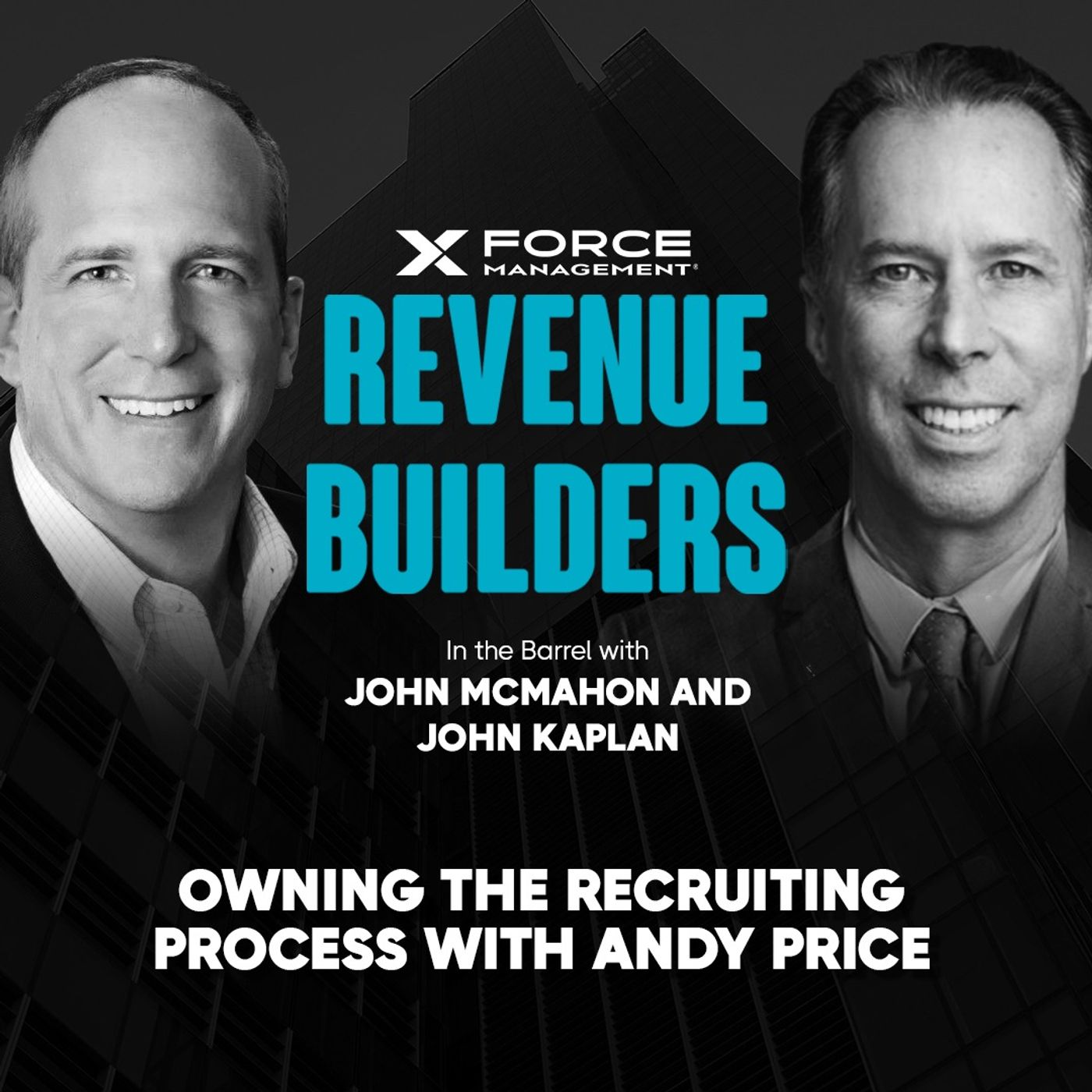
Welcome to the Revenue Builders podcast with John McMahon and John Kaplan. This podcast is brought to you by Force Management. Force's solutions help companies, small teams and individuals accelerate sales performance. Be sure to check out their online platform Accender today a short segment on the importance of owning the recruiting process as a revenue leader. It features Andy Price with artisanal ventures and artisanal talent. He has more than 30 years of recruiting experience and is heavily engaged in the software recruiting industry. John McMahon kicks it off.
- [00:41]
John Kaplan
Hey, one other thing that I've seen in the past, I didn't know if you were going to mention this, that's really seemed to have changed is I've always told my sales leaders like you have to own the recruiting process. You cannot delegate it to anybody else because you're recruiting your own team. And your team, believe it or not, is going to determine your own success and in your own career. And what you're seeing a lot these days is where sales leaders in these companies are delegating recruiting to HR and other recruiting functions inside the company.
- [01:16]
John McMahon
Huge mistake.
- [01:17]
John Kaplan
Have you seen that?
- [01:18]
John McMahon
Oh yeah, totally, totally. It's actually a huge mistake because a nobody ever invests heavily enough in HR to do it successfully. You know, as you know, one of the great CEOs of all time, Mr. Slootman, you know he makes his execs and did the same thing that serves. Now the execs are in charge of their own recruiting. The HR team was sort of a central function. As you know, it was more administrative and compliance and comp and benefits. He kind of, it had that sort of orientation and I love the idea of building your own internal development talent kind of talent acquisition muscle. I think that's a really wise move especially early in the company have your own on site recruiters. But the sales leaders need to drive that process and own it and touch every candidate. I really believe that if they. Cause you know, if you think about a lot of these sales execs go sideways because they what happens is the business is going well, then the economy gets a little questionable like it is lasting a couple of years and I won't name names. The really legendary founder actually called me a couple months ago and said hey, I love my sales exec. We've doubled or tripled the company every year. But I look across the sales organization and I think half of it is good and the other half is not good. And sort of you, you could feel that the sales leader got away from owning the DNA that he really wanted across the board. And as you well know you're only as good as your weakest sales region or your sales rep or your sales process or whatever. And I. What happens is when these founders, when these, I'm sorry, these sales leaders move away from truly owning that DNA, you know, development, or let's say consistency, you know, then I think what happens is you end up with inconsistent talent across the board and things start to vibrate.
- [02:53]
John Kaplan
And why do you think that changed? Do you know where, where that started? Why that mentality of I'll let somebody else do my recruiting?
- [03:00]
John McMahon
No, I think what happened in the Go Go era is that everybody had so many resources. You could just buy more people and just say, you know what? I'm gonna throw a bunch of people at that problem. Okay, I need to recruit a bunch of people. Okay, I'll just have so and so, I'll hire this person, that person. You, you have entire sales teams with their own sales recruiting apparatus. And I think what's happened is it was just sort of a. Unlike the foraging, we had millions of vcs, you know, throwing capital at just about anything. And because of that easy money environment, I think people got lazy. Honestly, I think that's.
- [03:29]
John Kaplan
Yeah, that's also why they burned a lot of money too. When you recruit a bunch of C's and D's, you're gonna burn. Burn through a lot of money. And companies burned through so much money.
- [03:39]
John McMahon
Absolutely. Yeah. And you see a lot of sales leaders, when they fail, you look back and you kind of do a forensic view and you go, all right, what happened Most often, it has to do with. They couldn't hire people. They didn't have people from their own network that understood how they operate, how they think or whatever. And I think that's where you see these random sales execs pop in from, you know, random companies. You don't see any great companies in their backgrounds. You have to wonder who are they going to be able to bring with them and is that a quality group or not a quality group. But I think that's a big determinant of success or failure with sales leaderships is the quality of the network they're able to hire. Because if you have to, if you don't have that network that can follow you, it doesn't have to be 5,000 people. It has to be a good core. As you know, you're going to stall out and you're going to, you're going to end up ramping up even the recruiting costs, you know, end up burning a bunch of capital. And so it ends up being a really inefficient way to build a sales organization, I think. And I think founders get frustrated with that. And so the recruiters, a lot of times they don't ask the candidate, and the founders don't ask them. They forget to ask them, hey, who are you going to bring with you? Let's just start to visualize how you're going to go about building your talent under yourself. And that's. That's where the rest of the really hard conversations get.
- [04:45]
John Kaplan
Yeah. I really want to emphasize this point for the. For the people listening is, you know, when I've recruited sales leaders at almost any level, I'm not only looking, you know, can they sell and can they manage? The biggest question I have is, who are they going to bring? Who are they going to recruit? And if I don't really think that they're going to be great recruiters, I'll do myself a favor and go find somebody that's a much better recruiter. But to your point, it is a sign of whether. Or not, well, we can flip it around, because I've had many different sales leaders, and a lot of them can recruit. And then you're always finding the one or two people that absolutely can't recruit, which almost says, I'm late on this message here, because people are sending me a message from the outside world that they don't think my leader is good enough to work for.
- [05:36]
John McMahon
Right.
- [05:37]
John Kaplan
Because if you're going to go to work for a sales leader, you have to believe that they're going to get you to the next level. And if you don't believe that they're going anywhere, we're going to get you to the next level. If you're an A player, you're just not playing.
- [05:49]
John McMahon
Absolutely. Right.
- [05:50]
John Kaplan
Yeah.
- [05:50]
John McMahon
I mean, you could draw all kinds of metaphors. You could be say, okay, in your go back to World War II, would you follow the general that kept losing battles? Or would you want to say, I'm going to go so and so? I don't want to be part of the army, you know, storming the Philippines poorly. I want to be the Marines taking island by island, and we're going to follow that person to the end of the earth? Because I know that they've got their, you know, what together, and I believe in their approach to the role. And as you know, that's what happens with sales execs. They have to believe in how you're going to orchestrate the function and take care of them at the same time. Hold them accountable and most important, when salespeople want to win.
- [06:27]
Podcast Host / Narrator
For more on owning the recruiting process as a revenue leader, be sure to listen to the whole episode. It's linked in the show notes. Make it a great week.