← Revenue Builders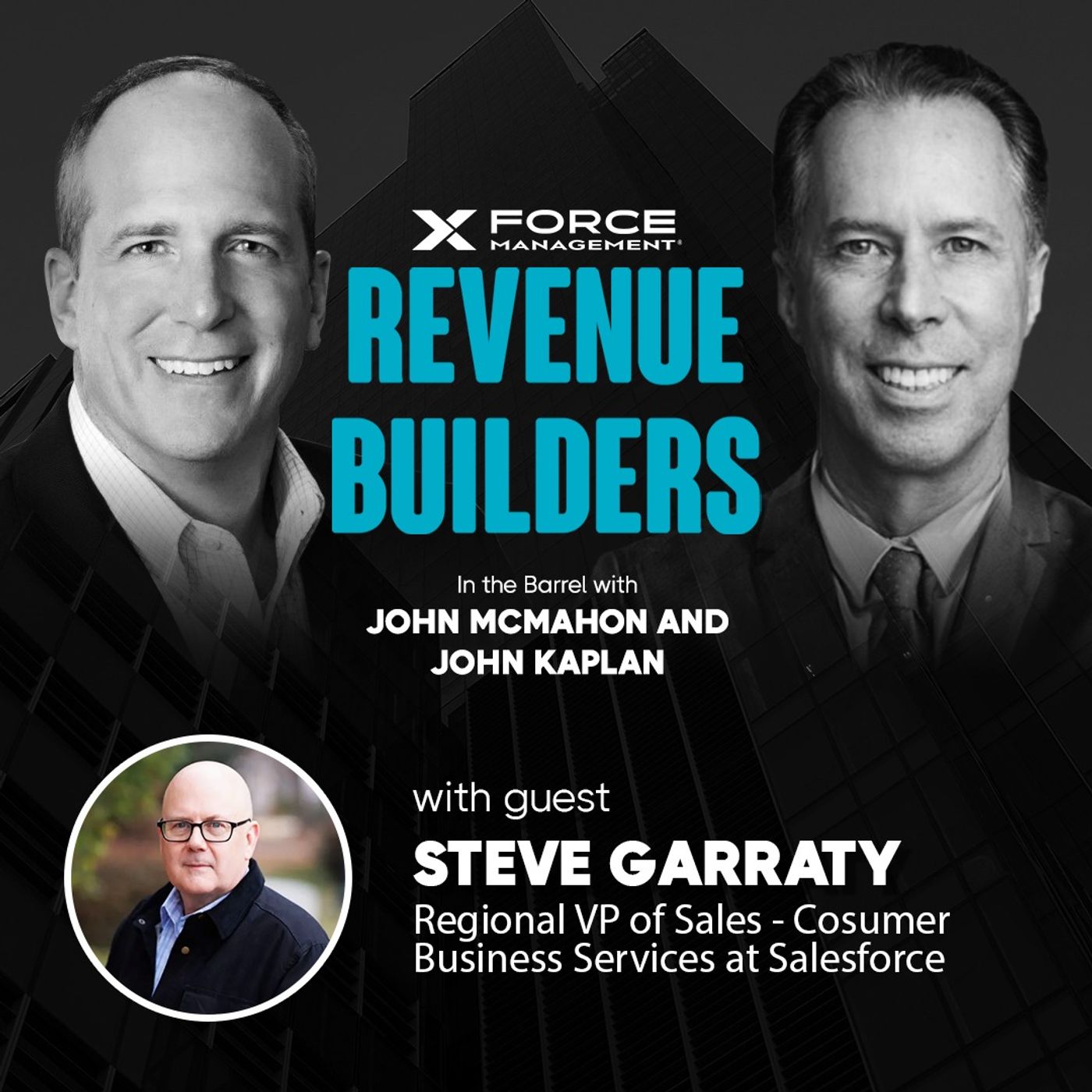
Revenue Builders
Resilience in Sales Leadership: Steve Garraty's Journey from Cancer Survivor to Successful Leader
01:08:16
In this episode of the Revenue Builders Podcast, our hosts John Kaplan and John McMahon are joined by Steve Garraty, a tech sales leader and author who shares his inspiring journey from a troubled teen diagnosed with cancer to a successful career in sales leadership. Steve delves into his incredible story of resilience, how he overcame a devastating cancer diagnosis at 18, and how this battle shaped his personal and professional life. Highlighting key themes of gratitude, empathy, and the power of positive thinking, Steve discusses the impact of cancer on his leadership style and offers valuable advice for those facing personal challenges. The conversation also touches on the importance of relationships and knowing one's story. Steve’s newly released book, Greatfruit, captures these life-changing experiences and provides further insights into his journey. ADDITIONAL RESOURCES Connect with Steve Garraty: https://www.linkedin.com/in/stevegarraty Get Greatfruit at Barnes & Noble: ...
Loading summary
Transcript156 lines
- [00:05]
Podcast Host
Welcome to the Revenue Builders Podcast, a weekly show featuring B2B sales leaders and executives. Hosted by five time CRO John McMahon and Force Management Co founder John Kaplan, the show goes behind the scenes with the people who have been there, done that, and seen the results. If you enjoy our content, please subscribe, rate and review the show to help us reach more people. Revenue Builders is brought to you by Force Management. We help companies improve sales performance, executing the growth strategy at the point of sale. Find us@ForceManagement.com Enjoy today's episode hi, it's Rachel with Force Management. Before we get started with today's Revenue Builders episode, a quick Plug we know a lot of you are planning your SKO and planning for 2026 force has a ton of great resources for you as you strategize. We just put out an ebook on six priorities for driving growth in your organization and have a whole SKO resource page that has helpful insights as you think through making your SKO more than an event. Check it out in the show notes.
- [01:16]
John McMahon
Hello and welcome to another episode of.
- [01:18]
John Kaplan
The Revenue Builders Podcast. I'm John Kaplan and I'm joined today by my coast 5 time CRO and author of the wildly successful book the Qualified sales leader John McMahon and today we're we have an incredible story from an incredible guest who's not only an incredible revenue builder, but he's incredibly resilient and a survivor. Let me give you some backdrop. Steve Garrity was lucky to be graduating high school. He was partying and living a lifestyle that wasn't sustainable. His priorities were upside down. He was running towards the edge of a cliff and unable to stop himself. Then God intervened. He heard the three dreaded words none of us ever want to hear you have cancer. After embarking on chemotherapy and a year of hell. As all of his friends headed off to college, he beat the cancer. He went from victim to victor, from asking why me? To why not me? He ended up not only surviving but end but thriving and having an incredible career in tech sales.
- [02:31]
John McMahon
Today, Steve has been married for more.
- [02:34]
John Kaplan
Than 30 years to his beautiful wife Wendy. They have raised two incredible kids who have both graduated college and begun their own careers.
- [02:43]
John McMahon
Steve has had a successful career in sales and leadership.
- [02:46]
John Kaplan
He's hired more than 250 people in his career. He's coached and developed more than a thousand sales contributors and sales leaders. He cares deeply about helping others and seeing others achieve success and accomplishing their goals. Oddly enough, he views cancer as being the best thing to ever happen to him. It changed everything for the better, as he has. To quote him, he grew from his experience. It set the foundation to be a better husband, father, friend, and leader. He writes to share his experience, to help others alter their perspective and view the glass as full. He is the author of a newly released book called Great Fruit. And we'll talk about that a little bit by. About how he came up with that. How he came up with that name. He reached out to me a few weeks before this podcast and asked me if I would read his book. He and I and John go back to our days of ptc. I said sure. I had a little extra time. I was, I was down in Florida, I think. He sent me the book. I read the book in two days. It was so compelling, so raw and so real that I highly recommend it to everybody in our audience. It's not just a story of beating cancer. It's a story of resilience. It's a story of perspective. And it's a story of just an unbridled passion to be the very best that you can be. Let's listen in.
- [04:31]
John McMahon
So, Steve, great to see you, buddy. We're kind of here. We joked a little bit before McMahon jumped on this thing about, you know, seeing his beady eyes and, and the whisper from the, from the, the days of passive forecast. So don't be alarmed. With their strength in numbers, you and I are here. So it's good to see you, buddy.
- [04:54]
Steve Garrity
I appreciate that. Good to see you.
- [04:57]
John McMahon
So, so, Steve, I, the, the. I thank you so much for reaching out to me. Your story is amazing. I'm sorry that it took me 37 years to, to, to understand it.
- [05:14]
John Kaplan
It's.
- [05:14]
John McMahon
I know that we're going to talk about that like, but, you know, force before we get started, like we were all hanging and banging back in the day. Johnny, at that time, I'm not sure if Johnny was, if you were over what years were you in Atlanta, Steve? I'm trying to remember if John was in the U.S. or he was over in Europe.
- [05:33]
Steve Garrity
96, 97. 98.
- [05:35]
Johnny McMahon
That time I was in the U.S. yeah.
- [05:37]
John McMahon
When did you go? But Johnny, you went somewhere. 98. When did you go to Europe?
- [05:42]
Johnny McMahon
No, like, 90. 90, 94. Came back.
- [05:47]
John Kaplan
I thought you went.
- [05:48]
John McMahon
I thought you went after that, too. Anyways, we, we have a lot of guests on here. This isn't going to be the typical podcast of talking about the old PTC days, although there's nothing wrong with, with talking about that. You know, you, you had a great, impressive career, buddy. But. And when you reached out to me and said, hey, man, I've. I've written a book and if you don't mind, I'd, I'd. I'd like you to read it. I thank you for doing that. I actually read the book in less than two days. It was that captivating. Do you mind just like kind of starting at the beginning. Let's, let's start at the beginning and help and walk our audience into the, into the journey. You wrote a book called Great, Great Fruit and we'll talk more about that. But let's step into the journey.
- [06:45]
Steve Garrity
Sure thing. Where would you like me to start?
- [06:47]
John McMahon
You tell you, buddy, you've been on a lot of talk shows and podcasts and so you what, whatever you think works the best.
- [06:55]
Steve Garrity
Yeah, I guess I'll just give a quick recap of my, my career. Real quick. Yeah, so pretty much a year and a half out of college, I got into sales. I did some sales in college, selling magazines over the phone, but got into sales. And after about, I don't know, few years, several years of doing that, I really wanted to get into leadership. So I did that. I got into a sales management role and that's been most of my career. I'd say over 25 years now. I've been leading sales teams. I've been a second line leader, third line leader. Last 15 years I've been strictly in software sales. Spent a couple years back in the 90s, as you mentioned, at PTC. The last six plus years I've been.
- [07:38]
John McMahon
At a couple years. It's just like what, it's like 20 dog years. We call those like 20 dog years.
- [07:43]
Steve Garrity
Yeah, it felt longer. It certainly felt longer. Yeah. Yeah. Last six plus years, I've been at Salesforce, managing sales teams here.
- [07:53]
John Kaplan
Awesome. Awesome.
- [07:55]
John McMahon
Now all these, like myself, I didn't know you that well. I feel like I know you're really well now. So it's kind of strange doing this podcast. But, you know, you had an underlying story that not only drove your personal life, but drove your business life. And we want to dig into that a little bit. Take us back to the moment where the story of your cancer diagnosis first began. And then let's just start there and see where it goes.
- [08:31]
Steve Garrity
Sure. Yeah. The diagnosis happened on July 4, 1986. It was about a month, two months after I graduated high school. And I had a mass basically growing on the side of my neck. I went in, had it biopsied on the third of July. And on on Friday, July 4, 1986, surgeon called her house, told me I had cancer. They had told me there was a 30% chance of it being cancer. And never thought in a million years at 18 years old, I'd be. I wasn't even worried about it when they told me there was a 30% chance. Obviously, my parents were petrified of that, didn't share that with me, but that's where it started. Was on. Was on that July 4th, and now.
- [09:20]
John McMahon
You had a series of things. Was this just. Was the 30% chance the beginning of your thinking of, well, it's only a 30% chance? Or is that down the line where more stuff like that happened? Was it. Was there anything before that?
- [09:33]
Steve Garrity
I mean, they just told me, you know, like a week, two weeks before, when they. When I saw this, the surgeon and met with him, he said, hey, there's a 30% chance this might be cancer. I think at 18, you know, you feel invincible. You feel like you're going to live forever. So it did not phase me one bit. Not one bit. So I wasn't worried about it. I was actually concerned about going to a party that evening that I couldn't go to. And there's another. There was a party every night back then. So I just wanted to get well quickly so I could get back to my social life.
- [10:06]
John McMahon
And can you set the stage a little bit on that if you're comfortable. I mean, I was. I was drawn to your story. I'm not going to say that we had the same background, but having a little bit of rough edge to me, I definitely. When I was reading your story, I was like, wow. I mean, I. I understand that. Tell us a little bit about the. Give us a little bit more detail about the. About the circumstance, you know, about the. The situation back then.
- [10:36]
Steve Garrity
Yeah, yeah. I firmly believe this was a large part of why I got cancer. But, yeah, I guess I'd start with my reaction to the cancer diagnosis. The surgeon tells me I've got cancer, that I need to follow up with an oncologist, find out how much it had spread. Like, okay, this sucks. He keeps talking about a minute later, he's like, no drinking and no drugs for the next year, maybe forever. And that's what. I was devastated by that. Like, that's what I was upset about. So we sat around the family table. My family's all upset about the cancer. I was upset about the fact that I couldn't party for the next year. So leading up to that, John, the last couple of years in high school, I mean, I had my first. I got drunk for the first time Summer after sixth grade, the night. The next night, I got stoned. So, you know, think about that if you all have kids. Basically, I was 12 years old. My parents had no idea that in one weekend I got drunk and stoned. But that kind of started off a lot of poor choices, poor behaviors, and it really got bad. My junior and senior year in high school, I wrecked my parents car five times under the influence of alcohol. I was headed down a really bad path. So in a lot of ways, cancer ended up being a blessing and saving me and putting me on a bad path or on a better path. But this last two years were. It was the. The physical wear and tear on my body. It was the mental and emotional, all the trouble I got into. But I lived to party. I lived to go out with buddies and get drunk and have a good time. And that kept getting worse and worse, and I kept ramping up the level at which I did that until God intervened and told me, you're sick and you need to. You need to quit doing that stuff.
- [12:31]
John McMahon
So you're a senior. You're going into your junior, was it? You got sick in your senior year, I think, right?
- [12:38]
Steve Garrity
Weren't you okay, right after I graduated.
- [12:42]
John McMahon
And everybody's getting ready to go to college. All your buddies, your girlfriend. Everybody's getting ready to move on, and you're 18 years old and you're like, what?
- [12:54]
John Kaplan
What are you thinking, dude?
- [12:56]
Steve Garrity
I was devastated. I was upset about going to college. I had seen Animal House a number of times. I was ready to join the Greek life, and I couldn't wait to go off to college. All those questions that were in my mind were not the questions somebody diagnosed with cancer should be worried about, but I was worried about the social aspect of it. Like I said, I was devastated. I remember just, how can I not drink anymore? Especially for the next year. And yeah, so it was tough. I mean, the crew that I hung out with back then, they were all about partying. And so a lot of my friends kind of dropped off after that. A lot of people I didn't see again after I was diagnosed. But, yeah, my priorities were out of whack, obviously, if that was my biggest concern.
- [13:43]
John McMahon
Not to be dramatic, but I got to tell you that this part in the book that I will never forget is when you're in the garage, the parking garage of the, I'm assuming, where you're going to get chemotherapy, and you just tell your mom you need a minute. And that minute turned into an hour. And so you do such a good job of Writing brother. Like, I was so impressed with how so for everybody listening, the book is called Great Fruit by Steve Garrity. It's an incredible book. I think it's written so well. And we'll talk a little bit about that at the end. Like, you know how you wrote it and took you 37 years to write it. I think that's an interesting story, but not to be too dramatic, but I want to set the stage. Like, we're not talking about, you know, stubbing your toe here. We're talking about a year of hell. Can you give us the highlights?
- [14:40]
Steve Garrity
Yeah, sure. So after I was diagnosed, went and got all The X rays, MRIs, all that stuff. Found out it was in my. Not only my neck, where they removed the mass, which was the size of a grapefruit, hence the name of my book, which is pretty hard to believe, but the surgeon said it was size of a grapefruit. They also found it in my chest and stomach. So stage three, which meant chemotherapy, which I kind of worried, you know, stage one or two, they usually treat with radiation. Chemotherapy is a lot harder on the body. About two weeks later, after being diagnosed, I was in. Sitting in there, getting chemotherapy. Ended up not getting sick. Kind of got this false sense of security that this is going to be a breeze.
- [15:22]
John McMahon
On the first one.
- [15:24]
Steve Garrity
On the first one, yeah. Second one was I was vomiting, just projectile vomiting halfway through. And each treatment after that got progressively worse. So, yeah, it was the nausea, the sickness that would last about 12 hours. Pretty much hugging the toilet. From when I got home, I was usually puking either at the doctor's office or on the car ride home. And then you're just puking until there's nothing left, and then you're. You're puking up bile. It's pretty miserable. About a month in, I lost my hair throughout. I got pretty intense mouth sores where it was difficult to drink or eat. A lot of anxiety. Each session getting progressively worse. Kind of wore me down mentally. Like I said, my social. Like, me and my girlfriend at the time, we'd been on and off for about two years. We broke up. And so, yeah, it was a pretty lonely year. It was me, my parents, couple, close friends, my siblings, a great nurse that I had that helped me get through it. But, yeah, it was a year of hell and it was pretty tough. I'd say the worst part, though, was the mental part, like having to get in the car and drive down for another session, which I did every two weeks. I didn't sleep for a couple days. Before that. And each one just got more difficult to kind of get the courage to go in and do it again.
- [16:50]
Johnny McMahon
What about your weight? Would you. You must have dropped a lot of weight.
- [16:55]
Steve Garrity
I dropped a decent amount, yeah. Not terrible, though. I. I stayed in pretty good shape, so usually I was kind of out of commission for about two days, the worst being the day I got it the next day. I was usually not feeling so good. And then I'd go about 12 days where I. I took a light load at a community college, actually worked for my dad's company part time, and. And then I would jog. So I did a lot of. I ran track in high school, so I did a lot of running when I could. So, yeah, I was in pretty good shape, but I didn't lose a ton of weight. I don't know if that's because of the treatment I was on or the type of cancer I had, but I might have lost maybe 15, 20 pounds total.
- [17:35]
John McMahon
You did in. In the way you wrote it. Like, I can picture things getting ready to do stuff that I don't want to do, like if I don't want to go work out or I don't want to have a meeting with somebody, or I don't. Like. You don't want to have to do stories where, I mean, they're incomprehensible. Like, every time you're going to this. It's every couple of weeks, right? Every time you're going to this chemo session, you're literally saying, like, on the curb, the way you wrote it in the book. It's like, I don't know if I can. You're 18 years old, and you say, I don't know if I can do it again. Can you take me back to that garage? When you've thought you came to the point where you said, I can't do it anymore. I'm going to go in and just tell my mom I'm done. And then what happened?
- [18:28]
Steve Garrity
Yeah, that was rock bottom. So if you've ever experienced something pretty traumatic and you hit rock bottom, that was it. I probably had. I didn't know it. You don't know it when you're going through treatment. You don't know when the end is near. You go in and you get the tests, and they're trying to see if the cancer's gone. And. And so you kind of know if you're progressing and the tumors are shrinking. And I knew it. I knew they were shrinking at that point, but you don't know when the end's going to be. And yeah, the first chapter, as you said, Kaplan, opens with. I just. I didn't think I could do it anymore. And so my mom went upstairs. She was pretty much in tears, and I just. I had a breakdown. It felt like a mental breakdown. And I was down there for about. About an hour trying to come. You're in the parking garage bawling my eyes out. Yeah. People walking by me asking if I needed help. I didn't respond. I didn't answer them, you know, and I just was. I. I didn't think I could do it anymore. I was thinking about quitting. Obviously, if I didn't get the chemo treatments, I wouldn't have survived. And. And eventually, you know, I just kept praying, and eventually I started feeling a sense of something greater. And I felt like God kind of answered my prayers. And I eventually said, I got to suck it up and go in and do this again. And believe it or not, the couple treatments after that were not as bad as that one. That was definitely my rock bottom. And my mom, I still thank her. Like, she. To her credit, she stayed up there and waited for me for about an hour. I'm sure she was watching out the window somewhere to make sure I wasn't doing anything stupid. But. Yeah, it's just. I needed that hour to kind of have that breakdown so that I could move forward.
- [20:06]
John McMahon
I was wondering to steal a car and wreck it. Like when you were in the go for six. Sorry. Sorry, Johnny. Go ahead.
- [20:14]
Johnny McMahon
When you were at rock bottom, was there thoughts like, I ain't gonna make it. I just don't think I'm gonna make it?
- [20:21]
Steve Garrity
I thought that all the time. Yep.
- [20:23]
Johnny McMahon
Yeah.
- [20:24]
Steve Garrity
Yeah.
- [20:24]
Johnny McMahon
Because they don't give you any indication, Right? So you're like. You really are like a man on an island where you're not. They're just telling you to do the chemotherapy and come back every two weeks, and we'll see. But in the back of your mind, you have to start to think, like, am I gonna make it?
- [20:41]
Steve Garrity
Yeah. Yeah. I just. I was like, I can't do this anymore. I think that's probably the most common thing I was saying in my head was, I just. I can't do this anymore. It was. It was brutal. And I think it would have helped a little bit if they had said, hey, you got two more sessions or three more sessions. But they don't. They don't know that till they do the. You know, until they scan everything and make sure that it's gone.
- [21:02]
Johnny McMahon
And when you hit rock bottom, and you, your girlfriend is gone, so a lot of your friends are gone. Do you have any social life?
- [21:11]
Steve Garrity
Not much. I mean, at 18, who wants to hang out with a cancer patient with no hair going through chemo? I had two really good friends that stuck by me and they were, I mean, they went above and beyond the call of duty. They were both groomsmen in my wedding. Still friends to this day. They were awesome. Yeah. I mean, most people, John, headed off to college and experienced the, you know, the joys of, of especially back then college. I think we, I think today's generation or our generation had a lot more fun back then in college than today's kids. But yeah, they all went off to have a great time. And I had a couple buddies that, that were there for me. But for the most part, people didn't want to hang out with a cancer patient at the age 18. And I get it.
- [21:58]
Johnny McMahon
Well, you had a couple good buddies though.
- [22:01]
Steve Garrity
Yeah, absolutely.
- [22:02]
John McMahon
I want to come back to that on the buddies because it, you know, such an important part of your story is the realization of what true relationships are. And that's impacted you in your career, in your personal life. In this first part here, like you, there's a quote that I wrote down. Blessings can be found amidst the tragedies. And your life begins to kind of take on this perspective. Tell me a little bit about what, what you meant by writing that quote. Blessings can be found amidst tragedies. Where in the world are blessings when you're projectile puking and like, where are the blessings?
- [22:46]
Steve Garrity
Yeah, it took me. It was a gradual process, right? It was. There was no one point where I felt that way. I think as I was going through treatments which lasted about nine to ten months, I didn't. I never viewed it as a blessing at all. I think in hindsight, probably the day that started was the day I was. We went in for a normal visit. I thought I was going to be getting another chemo treatment. Oncologist came in with my most recent scans, was like, I got great news for you. I think I felt blessed the day that I was told I was cancer free. And then I went off to college, had the funnest four years of my life. I think over time I started looking back at the experience, but I would say one Kaplan is that I was headed down a path. I was either going to fail out of college or I was going to end up drinking and driving and killing myself or killing somebody else or going to jail. I have no doubt I would not have graduated from college so really headed down a bad path. So, number one, I think I quickly realized cancer put me on a better path. I can go off to college now. I can be more responsible. I've got the fear of my health hanging over me, but I can still go and be responsible and have a good time. And then over the years, I would say in my 20s, there were a lot of things that caused me to look back and. And view how cancer, how the experience made me a better person, eventually made me a better husband, made me a better father, made me a better friend, and I think made me a better business leader. I think it affects the way I lead all the time. But, yeah, I would say that's eventually, over time, how I came to view it as a blessing.
- [24:36]
Johnny McMahon
As far as making you a better leader or better person or better friend or better husband or better anything.
- [24:45]
Steve Garrity
How is that what you said?
- [24:46]
Johnny McMahon
Can you talk just a little bit about some of those things? Because it's all perspective, right? Because you're probably, like you said, looking back and then you're changing and you're adapting to your new life, you know, without drinking, without drugs, and. And understanding. Like, this is a new opportunity, a new chance for me.
- [25:07]
Steve Garrity
And. Yeah, what.
- [25:08]
Johnny McMahon
What did that perspective bring you?
- [25:11]
Steve Garrity
Yeah, I think, John, you just said the magic word. Perspective was. Was probably the start of it. Perspective is what. Is how I came to a lot of the conclusions that it was a blessing. But one of the things the oncologist told me, and I can remember it like it was yesterday and it was back in 1986, he said, hey, if you had gotten this cancer 16 years ago, in 1970 or before, I'd be telling you to get your things in order because there wasn't. There wasn't a cure for this. And so I think that, number one, gave me a perspective that every day is a gift that I've had. I'm up to. I calculate this every once in a while. I've had 14,250 days since. Since he told me that. And so, you know, I'm. It's often that I think about the fact that I'm, hey, I'm fortunate. I've got another day. And so I think that helps with perspective. John, around. I mean, if I'm having a bad day now, I always go back to compare it to that, compare it to my best day during that year. There's no comparison. If I'm stuck in traffic and I'm complaining, I try. I'm not always great at this, but I try to pinch Myself and say, hey, you're fortunate to be here. And so I think that's. That's one. You know, it made me appreciate my wife. It made me appreciate my kids. I saw what my parents went through. I'd say empathy is something that really was strengthened in what I went through. You never know what people are going through. John, I think you said it when we talked last week. Everybody's got a story. And that is so true.
- [26:47]
John McMahon
Yeah.
- [26:47]
Steve Garrity
And so, you know, I think empathy is one of the biggest characteristics or traits that really was enhanced or sharpened, however you want to say it. From my experience with cancer, I think an appreciation for life and appreciation for people that. Those relationships, that's. That's how. That's how I try to live my life differently now. As far As a leader, McMahon, you asked about that.
- [27:15]
Johnny McMahon
Yes. Yes.
- [27:16]
Steve Garrity
Yeah, I think it's. I just have such a deep appreciation for the people that helped me get through that year. There was a nurse that was a hero in my book who didn't know me from Adam, and she went above and beyond the call of duty. And I think I just exited cancer feeling like I want to help other people. And that, I believe, is what got me into leadership. And so the way I lead, I think one of my number one principles is I want to help people achieve success. Not for me, but for them. And I want to help them get. Get to a point in their career where they want to get to, even if that means I'm going to lose them. Right. So if we promote people pretty quickly where I'm at now, and that's not always a great thing to develop a superstar, and then they leave you. But I think if your heart's in the right place, that's why that principle is important to me. I want to help people get to where they want to be. And I think a lot of that is people help me get healthy and get through the toughest year of my life.
- [28:15]
Johnny McMahon
Well, it's the greatest sign of leadership is when your people don't need you anymore. It says that you did an excellent job of recruiting and developing their talents so they. They don't need you anymore.
- [28:25]
Steve Garrity
That's.
- [28:25]
Johnny McMahon
That's a great sign of leadership.
- [28:27]
Steve Garrity
Yeah.
- [28:28]
John McMahon
And what I was struck by in the book is what you just described, like that nurse, and I think even asked you, hey, where's the girlfriend?
- [28:39]
John Kaplan
Where.
- [28:40]
John McMahon
You don't have to elaborate on any of that stuff, but where's the nurse? Where's the. So, like, these impactful in your life, and then I'm Realizing that, man, the people that are the most together and centered in their life understand that people come in and out of their lives. Like, in business. I used to be devastated, man, when somebody. I lost a boss or I lost, you know, one of my people or. And then, you know, it's like dealing with the impermanence of life, meaning that there's constant change and people just kind of come in and out, and that's life. Like, I was struck by that because, remember when I called you, one of the first things I asked you is, hey, what happened to this person? What happened to that person? You had to remind me, hey, the names that I was calling them, they're not actually the same names, but I thought that you did a great job of. You didn't say it in the book, but it's clear you understood that.
- [29:35]
Steve Garrity
Yeah, yeah, I do understand that. But I think I also. On the flip side of that, it made me appreciate relationships to the point where I definitely have a reputation for probably trying to maintain friendships more. You know, it's very easy to. I mean, there were probably people at PTC we all knew and were friends with that maybe we don't keep in touch with anymore. I go out of my way to try to Try to avoid that.
- [30:01]
John McMahon
Talk a little bit about that. Because you and I talked about that. Like, when we were talking about the people in Atlanta, I was saying, hey. And you were like, well, let me give you the pop up. You knew everybody, what they're doing, where they are. Tell me a little bit about that.
- [30:17]
Steve Garrity
Yeah, I just, you know, like I said, I work hard to try to stay in touch with people. My kids make fun of me. They're like, dad, why are you having dinner in Atlanta with your neighbor from 1992? And I'm like, you know, you haven't lived near him. You haven't been friends with them. You haven't seen them in forever.
- [30:33]
John McMahon
The.
- [30:33]
Steve Garrity
The name of my book actually came from a guy I worked with right out of college for one year. We both went to each other's weddings. We hung out, like, a lot on the weekends before we got married. Great guy, great friend. We talked maybe every three, four years. I reached out to him. I was struggling with the title for the book. That's not why I reached out to him. But I was in Atlanta. I said, let's go have drinks. And I'm telling him all about the book. He knew. He knew about my experience with cancer. He's like, send me the book. I majored in marketing. I'm Pretty creative. I'll come up with something. And he came up with the name based on the mass that came out of my neck and the fact that it ended up being a blessing. But, yeah, that's just an example of. I don't know. I work pretty hard to. I was in a fraternity in college. I organize kind of a pledge class reunion, and we get together at the lake. I stay in touch with at least a few people from every company I've ever worked for. It's just effort. I mean, but it's.
- [31:31]
John McMahon
To me, that definitely wasn't you at 18. And your mindset of being a lone wolf.
- [31:37]
Steve Garrity
Yeah.
- [31:38]
John McMahon
Is there anything. Do you. Are you taking any lessons from. From that? Because you also tell in the book, which was a bummer, is like, yeah, you got the two buddies, but everybody else. And I'm sure not judging anybody, but I'm sure just like, there's no handbook on how to deal with something like that with your friends or, you know, so I'm not judging anybody, but you got a really early onset of, you know, you know, who your friends are.
- [32:07]
Steve Garrity
Yeah, yeah. There's. Again, I think that's why I work when you have friends, you know, we. We spend a lot of time at work, and so a lot of people. I've just, you know, I've built friendships at every company I've been at. I. I just. I don't want to see those go. And I think having experienced something like cancer, where you kind of see who those true friends are. As one of you said earlier, I want to maintain those relationships, and I want to have as big of a network as possible. And, you know, I've always been social. I enjoy. I enjoy that. But when you leave a company and you haven't seen somebody in a long time, it takes work. And, you know, I use social media a little bit. I know social media gets a bad rap, rightfully so, but I use it to, you know, LinkedIn. I connect with everybody I've ever met. Facebook, Instagram, you know, I'm able to kind of see what people are up to. And I use it to reach out and use it as an excuse to maintain relationships. I've got a call scheduled this Thursday with a guy from high school I haven't talked to since 8th or 9th grade. He bought my book, shot me a note, said, I loved your book. I'm like, hey, let's jump on a call. Let's catch up. It's been 40 years, so it's. It's just. I think it's Important, you know.
- [33:20]
John McMahon
Now, the Harvard did a study which I love. It's the longest study, I think I call it longest study on longevity. But when I went and research it, that's actually not what they called it, but they found out the impact on longevity and they found that, you know, basically, spoiler alert is genes. Your genes and biomarkers are nice, but the quality of your relationships have more to do with how long you're going to live and how well you live than any other factor. Environmental, health, anything. It was really shocking to me. And it sounds like that you just kind of naturally. You just kind of naturally went there. But, you know, you're doing like the healthiest things that you could possibly do on the planet. You can watch your diet. You can. But reaching out and staying connected to solid relationships for long periods of time. The data is shockingly clear on what happens to your life. You're just going to live a better life. So I think we could all take a little lesson out of that. So on the 37 years, the part that, you know, we're talking about these relationships. So when I knew you at ptc, you had already experienced this. I didn't know that you had experienced this. You told me the people in the office that you were working with, they didn't know. You don't have to mention the name. But I love the story about the interview that you had because back in the day, Johnny, remember, they tell you, I don't think you're tough. They would tell us, I don't think you're tough.
- [34:54]
Johnny McMahon
I think you're tough enough. Yeah.
- [34:55]
John McMahon
Yeah. I don't think you're tough enough. Steve, you don't have to give the names, but on the interview, tell us a little bit about when the person said, I don't think you're tough enough for this. And then you had to educate them a little bit.
- [35:06]
Steve Garrity
Yeah, I'm happy to use the names if you don't care.
- [35:09]
John McMahon
No, I don't. I don't care. Yeah.
- [35:10]
Steve Garrity
I have great respect for all these guys. Yeah. So I was hired by Scott Staley. We had a mutual friend or mutual relationship, and so he was my. He was my cheerleader the entire interview process. But the rest of it was, to this day, still the most brutal interview process I've ever been through. Again, I compared that cancer and it was. It was a breeze. But interview was Steve Strahan. He was. He was really tough. Yeah, he was interesting. He acted like a friend until like the last 15 minutes and then, yeah, turned. Used everything I had shared against me. But the interview you're mentioning was Rob Chap Delane. And that was the hardest interview. I think he was running the country. Maybe probably reported to you McMahon directly, I'm assuming at the time, or maybe Dick Underwood and then you. Dick Underwood was my final interview. But I'm sitting there with Rob and he was grilling me. It was hour long interview and I never felt like I had the. Had the sale. I never felt like I had the green light to move forward. And he was wrapping it up and he was like, I don't think you're tough enough for this job. He's like, I don't think you're a good fit here, but I appreciate your time. And he stands up and I'm like, oh, crap. And so again, to your point, Kaplan, I didn't tell fraternity brothers that I hung out with every day that I had cancer. I wanted to go off, live my life, enjoy life. I didn't really want to be the cancer guy. And then I started working and I did the same thing. You don't walk up to people and say, hey, I'm a cancer survivor. And so I just didn't share it. And as I started writing this book, I shared it more. But I definitely back then didn't think it was a smart idea to tell somebody in an interview, hey, I had cancer five years ago. I would think they'd be worried about, is he going to get sick again? Is he going to work as hard? Is he?
- [37:04]
Johnny McMahon
And so good point.
- [37:05]
Steve Garrity
I'm like, screw it. Like I'm this guy is. He's either testing me or he's not interested. But I got nothing to lose. This is either going to go one of two ways. So I didn't get up. I just sat there. And Chapter Land had gotten up, started walking towards the door, and I'm like, rob, can I, can I tell you a quick story on why you're wrong? And he said, sure. And so he sits back down and I told him my story. I spent, I don't know, a few minutes and I was like, hey, listen, four or five years ago, I was puking my guts out. I was like, I hit rock bottom. I lost all my hair. And so I went through all this and I'm like, rob, if you still don't think I'm tough enough, I don't know what to tell you, but I would argue I'm probably tougher than most of your sales organization. And he kind of smiled. Probably the only time I ever saw him smile. And I Drove him to August. I drove him to Augusta for a three, three hour drive from Atlanta for a big meeting. The largest deal I closed at ptc. He, he, he came out, met with the board and the elt. I had a great time driving out there with him. Probably the job he did in front of the ELT was like one of the best I've ever seen. And then I drove him three hours back. Enjoyed every minute of it. But in that interview, Yeah, I didn't care for him in the interview, but he kind of smiled, nodded his head, and then, then, you know, he was like, I'm gonna have you fly up to Boston and meet with Dick Underwood. So. But yeah, it was good. It was good story.
- [38:31]
Johnny McMahon
Great story.
- [38:32]
Steve Garrity
Yeah. Not something I wanted to share in an interview, but it actually, I think, helped me get the job at ptc.
- [38:38]
Johnny McMahon
No, but it was like. It was really. You picked up on it. It was like the acid test. He, he said, I don't think you're tough enough. And he got up and walks away. And if you don't do anything about it, it's over yet.
- [38:50]
Steve Garrity
Yeah.
- [38:51]
Johnny McMahon
So you locked in. Good job. Really.
- [38:53]
John McMahon
Johnny? We always talk about, you know, knowing your story and owning your story and not. And I love how you said it, Steve. It's like, I'm not going to be the cancer guy or I'm not going to be the, you know, the son of the alcoholic or drug addict or whatever. I'm not going to be that person. In my case, I'm gonna, you know, I'm just gonna. I'm just gonna live my life. And I feel like the way you just said that is knowing your story and being audible ready with it and when you need it. Like, if somebody's saying they have a misrepresentation of who they think you are or what have you, or they're asking you why you're a certain way and you're audible ready with your story. It just surprises me, you're so audible ready with your story. And, and I think in the book it actually said you were journaling during the time, but it took you 37 years to write the book. Talk to me about that.
- [39:51]
Steve Garrity
Yeah. When we opened this session, you said something like, I feel bad I didn't know your story over 37 years.
- [39:57]
Johnny McMahon
Yeah.
- [39:58]
Steve Garrity
Yeah, it took me 37 years to write it, which is. Which is much worse. Yeah, my parents had me. It was their idea to write the journal again. It was kind of a lonely year that year. And I struggled a lot of times and my parents Were like. I don't know if they got it from a therapist or what it was, but they were like, hey, we suggest you start writing in a journal. Write down your thoughts and all of that. So I did that, and I had a thick notebook by the time I was done with treatment, just filled with thoughts, you know, feelings, everything I was kind of going through. And I wasn't the type back then to share that with a lot of people, but it was. It was therapeutic to write it down. And so I filled up a notebook with all this, and it wasn't organized. It wasn't. Never thought it was going to be a book. Never had an idea of making it into a book. Like I said earlier, I went off to college, didn't think about cancer much. Certainly didn't write or go back to that journal at all. I wanted to go, have a good time. And then, long story short, I eventually had kids, and I was like, I want to leave my story to my kids. And I took that journal, that notebook, and I basically typed it all out. And then I started trying to put it into a story format, and life kept getting in the way. You know, I've been in sales. I travel all the time I'm on, you know, going here, going there and getting home and spending time with the kids and. And so I just. I didn't make finishing this book a priority. But at some point, I don't know when it was maybe 10 years ago, 15 years ago, I was like, I think I've got a story that people would like and it would resonate and it might help people. And I think it could be something I could market and sell. And so, yeah, then the idea was born. The clincher was Covid, actually. Covid. I wasn't training. I was home. My kids actually had gone off to college. And I was like, I've got every evening. I was working during the day, but I've got every evening at home. And I don't golf, I don't fish. I'm like, I'm going to write this book and I'm going to finish it. And then the other thing which I think relates to sales, right, we know that putting a goal out there and telling people what your goal is, you're putting accountability on yourself. I told everybody, I'm going to finish this book in 2020. I got a lot of. You're writing a book. I didn't know you were writing a book. And what's it about? It's about cancer. I didn't know you had cancer. But I just was telling everybody, I told my team, I told my manager, anytime I got an opportunity, I would share. My goal is to finish this book by the end of 2020. So that's how I went from.
- [42:34]
John McMahon
I like what you're saying there. And I think, John, you actually, when you guys have a similar path a little bit. Johnny, you. I'm not going to say your age, but you're, you're, you're up there, brother. And you had, you know, all these stories and all these great ideas that you had, and then, you know, it just, it just kind of came out. Do you resonate with that, John, on when the time is right to write your.
- [43:04]
Johnny McMahon
Yeah, I mean, I did the same time that Steve did during COVID I would just get up at four or five every morning and I pound out three or four hours and then say, okay, that's enough for today, and go on with my day. Yeah. Something that was always in the back of my mind and people were always telling me, like, you need to read. You know, how'd you say that?
- [43:23]
Steve Garrity
Where'd you.
- [43:24]
Johnny McMahon
Where'd you learn that?
- [43:26]
John McMahon
Did you.
- [43:26]
Johnny McMahon
What book did you read it? I was like, I didn't read it in any book, dude. I got the scars of experience on my back. That's where it came from. But one thing I wanted to talk about a little is you were telling, like, talking about knowing your story. And I think a lot of people kind of know their story, but they don't truly understand their story like Steve does. And then they don't, because they don't really understand their story. Haven't taken time to fully digest their story like Steve has. They then don't understand the effect that their story has on their future life. And what I mean is, like, Steve could have easily chosen to be a victim of what he went through. Instead, he decided, like, I'm going to step up to the challenge of life here, and I'm going to live a full life. But there's plenty of other people, if they don't digest what happened to them, could easily fall into another category. So kudos to you, Steve, for, you know, digesting everything. And.
- [44:32]
John McMahon
Well, I like it too.
- [44:33]
Steve Garrity
When you read the story.
- [44:34]
John McMahon
When you read the story. Everybody, please. I got two great authors here with me. Johnny McMahon's book on the qualified sales leader. And then Steve Garrity, the. The. It's called Great Fruit, a play on grapefruit, which was the size of the. Which was the size of the tumor. But what I love about what both you guys are Saying, is this making sense of the story? And I do a lot of coaching and mentoring of people and I'm constantly telling people to journal. That was given to me a long time ago as a piece of advice and it became so powerful. I'm looking in my office here. I have journals by years, I have journals by events, I have journals by. And it's, it's amazing, you know, doesn't mean you're going to write a book, but it's when you have to write it down and you have to describe what you're experiencing and what you were thinking and you know, what you were faced with. And you know what I love in your book, Steve, is you got all kinds of examples. Like, the way you wrote it was just so authentic. You're like, hey, you didn't write it to be a hero. Because there's some very authentic moments in that book that are just like, holy smokes. I, I wouldn't have said that. I wouldn't have said it that way. Like, you know, you weren't looking to be a hero in the story, and yet by just telling your story, it's incredibly heroic. So I, again, I'm just, I'm, I'm waxing a little bit here, but I thought it was just so well written.
- [46:15]
John Kaplan
So well written.
- [46:17]
Steve Garrity
Thanks. Thanks. I appreciate it. You know, one thing I wanted to say, I'm very thankful today that it took me 37 years to write it. And the reason is. Kaplan, you read it. There's a part one and a part two. Yeah, Part one is the. The what and why it happened. The story of what I went. Part two is how it impacted my life over almost four, four decades. And so part part two is really about how it affected me as a husband, as a father, as a friend, and as a business leader. And that wouldn't have been there at 25 years old. Right. Or 30 years old.
- [46:51]
John McMahon
Great point.
- [46:52]
Steve Garrity
And so I don't think that hit me till recently. It was after I published and somebody had kind of talked about how part two really was, like how it changed my Life. And at 25, I hadn't experienced enough yet to be able to kind of articulate that or even know what all that was going to be. So kind of glad it took 37 years to write it. And I think it makes the book somewhat unique in that 100%. It's a four decade view of how something traumatic ended up being a blessing.
- [47:22]
John McMahon
Can we talk a little bit about mindset and the impact on health? In no way did you know that 37 years ago, but what you know today and what you knew by what the doctors were saying to you about mindset and emotions. And could you talk a little bit about that? Because the data now is very clear that there's a definite impact on what mindset can do to health.
- [47:51]
Steve Garrity
Yeah, absolutely. There was a book I read that my mom made me read. I say made me read. I enjoyed reading it. It's called Getting well Again. And it was kind of ahead of its time. It was like a psychologist. It was an oncologist. It was a third person. It's gone through a few revisions, but basically the whole thing is it was all statistics. Kaplan, on what you just said, on how people with a glass half full mindset would do much better in all these studies that they did. So if you were diagnosed with terminal cancer, there were people that lived years, sometimes got cured, and they found commonalities in the way those people thought. And that book had a huge impact on me. And there were some techniques in that book that I ended up using. Visualization was a big one that I used and I still use today. But yeah, it really. And I looked back at my high school when I say I got in trouble a lot. It caused a lot of friction and stress. And just. I had. I had a troubled junior and senior year in high school. My girlfriend. Girlfriend and I broke up on and off. I did not handle that well. You know, there were a lot of things in those two years leading up to my diagnosis, in addition to the drinking and partying and behavioral stuff that I think made me sick. And so the book really talked about, like, how that type of stress, anxiety, kind of putting yourself through that, how it can get you sick, but then also having a positive mindset and thinking more glass half full. Those people did so much better in the studies that. That, you know, my mom made me read that book. But I think it really got me thinking differently. And there was some techniques, like I said in there, that I used that I think helped me get better and then that I still use today to try to stay positive.
- [49:50]
John McMahon
Expand on the one on visualization, because you hear a lot about that. But what is. What do you actually mean by that?
- [49:55]
Steve Garrity
Yeah, I'll give you a couple quick examples. One was like visualizing. They talked about this in the book. Visualizing your good cells attacking the bad cells and visualizing the chemo kind of attacking the. And coming up using some type of. Could be a cartoon or whatever. Back then, Star wars was big. So for me, I'd go jogging Every day I'd run. Like I said, I was running a lot. And I would think while I was running about, you know, my. My bad cancer cells being Darth Vader. I know this sounds corny. And my good cancer cells being, you know, Luke Skywalker. And I would just picture them attacking the bad cells. And they talk about that, that people who did that in these studies had better results. The second one was my grandmother had gotten some holy water that. That was blessed by a renowned plea priest. And I would put. I would say my prayers every night, use the holy water. And I would visualize. I use the. Like when you put hydrogen peroxide on a cut, it bubbles up. And it's. I was like, that's what it's doing to my cancer. And I would visualize that. And I would say, those are two things that I did back then that I felt like, at least mentally, it was giving me the chemo and the oncologist had to do their thing, but that was outside my control. I just had to go into the office and let them do that. Those visual visualization techniques and thinking positively, I controlled that. I was in charge of that. And I think that gave me a sense of I'm playing a role in my recovery.
- [51:29]
John McMahon
I love that the data's so clear now. Just go to any AI engine, ChatGPT, whatever it is, and just type in the data around positive thinking and actual impact to health. I'm, you know, I'm not gonna overblow this. Like I'm some knowledgeable expert, but I am fascinated by the power of the mind and the body. And you were just kind of before your time on that. And, you know, what the data says now is that you were, you know, your, Your. Your mother and that. That book back then are, Are absolutely right. I think about, like, Victor Frankl, who wrote a book called, you know, Man's Meaning. And it's a. It's a. One of the most powerful books I've ever read. And it's. He was a psychologist and went into. I think he wound up in Auschwitz. But he had this. He had this. He call it like logotherapy or something like that. He was working on this before he actually was imprisoned, but he knew that there was a direct relationship to the mind and the. What the body was able to withstand. And so, you know, that's been. That's a major bestseller for decades. And basically the punchline is, is that like he. There was a difference between people that survived horrible experiences and their mindset, and there's no judgment. It's just, it's just people's mindset. There was no judgment about, oh, that person wasn't tough enough, so they didn't make it, or what have you. But what he found was those people that could think outside of their circumstance for a longer period of time, living for something outside of what their current situation is, those were the ones who survived. So if you, That's a. If you haven't read that book, if you're listening, you haven't read that book. It's one of the most impactful books I've ever, I've ever read. Then General Stockdale wrote something similar when he was in. Or Admiral Stockdale. Sorry. And he wrote about his time in Vietnam when he was in prison for.
- [53:40]
John Kaplan
I think it was like five or six years.
- [53:43]
John McMahon
And he has a very stoic perspective of what happened to certain prisoners that, you know, some that made it and some didn't make it. It was interesting. Optimism was actually one that had a interesting connotation, like if people are overly optimistic than they were. If somebody told you you're going to be out by Christmas, and Christmas came and it didn't happen. Those people just, they, they, they went down and many of them just passed away. So the power of the mind and what it actually means to you, I just think is. And you did a great job. There's so many examples in your book. You did a great job of kind of pointing to that. So I, I really appreciated that. I couldn't put the thing down, dude. I read it in two days. You actually, I called you, right? I sent you a note and you're like, wait, are you done? I called you like, two days later and you said, you're done.
- [54:39]
John Kaplan
Yeah.
- [54:40]
Steve Garrity
Yeah. I'm glad you liked it.
- [54:41]
John McMahon
I loved it. I loved it. Let's talk about impact on sales career. I was thinking when I read this, I'm like, man, when I'm leading people, if I went through experience like this, I'd really have to temper myself because I can imagine I would be thinking, suck it up, buttercup. And if I'm talking to somebody, I've been through what you've been through, and I'm talking to somebody that's like, didn't get a deal or, you know, they can't. They're having some problems somewhere or whatever, I'd be like, isn't that a 2. I mean, on one end, you could be incredibly empathetic. On the other hand, how do you fight the urge to say, suck it up, buttercup? Like, how do you do that when you've been through something like that.
- [55:25]
Steve Garrity
Yeah, that's a great question. You know, I think a few of the themes in the book, right. That I feel like came out of cancer for me, empathy, gratitude, paying it forward. And I think those have served me both in sales, probably more so in leadership. But, you know, in sales you always hear like, you know, you got the gift of gab, you should go into sales. But we know, right? We've been doing this a long time. The best salespeople are asking questions and putting themselves in the customer shoes and helping them get a win. And I think empathy coming out of cancer, as I touched on earlier, I think that helped me in sales, certainly has helped me in leadership, kind of empathizing with the customer's challenges and finding a solution to help them have success and overcome those challenges. I think that's the name of the game in sales. And gratitude, just always showing appreciation. Again, that's probably helped me more in leadership. But the company I'm with now, we do a great job of that. It's kind of a company thing where we start every meeting with a thank you. And I think that's very powerful. And I've always tried to be very appreciative and thankful and communicate that to my spouse, my kids, friends. And I try to do that at work and live that way. But from a grit, resilience standpoint, we touched on that earlier. I think if a customer's last day of the fiscal. Great example. I had this customer. We were doing a renewal. It was a hairy contract. We didn't get it signed until 2am we had till 3am because our company's headquartered on the. On the West Coast. And it was, it was, it was awful. It was just terrible negotiations and it was ugly. And we finally got it done at 2 in the morning. But I had to keep telling myself, this is nothing, right? Like this. This does not compare to my best day during that year. That's always helped ground me. If you don't do that, if your listeners don't do that, I think it's an easy thing to think about. What's the worst thing you've been through? Maybe it's not cancer, but everybody's been through something really challenging. And 95% of what you're experiencing probably today or next week doesn't compare to that. And for me, knock on wood, I haven't had anything in 37 years that have been worse than. Than that year. So that's something I think that helps make me more resilient more grit, you know, be able to handle the rejection and the setbacks that you get in sales. So those would be some of the things I would touch on.
- [58:02]
John McMahon
I love that. Any advice that you have for. I mean, just speak from the heart for people that are going through. I want you to answer from two dimensions for people that are going through really difficult things personally for themselves and then either to be a leader to somebody or a friend to somebody. So advice to the individual going through something and then advice for the person that is sitting with that person, if.
- [58:34]
John Kaplan
You will, from a friendship or leadership perspective.
- [58:38]
Steve Garrity
Yeah, I would say so. On the first part, it's again, I spent nine, 10 months just trying to survive. I didn't see it as a blessing at the time. But I think if you're going through something like that, whatever it is, could be divorce, could be, you know, a disease like cancer, could be a job loss. You know, I would say just try to get through it, Try to attack it day by day. Know that, have the confidence and the faith that things are going to get better. I think that's what got me through was I didn't touch on this earlier, but one other visualization tool is I thought about what my dorm room was going to look like. I thought about joining a fraternity. I thought about dating again. And so that would be one thing is like, try to focus on. Things are going to get better and when you get through this, you're going to look back at it and you're going to learn from it and grow from it if you have the right mindset. So I think that's how you. I mean, for me, that's how I got through something like cancer. That was a big part of it as far as the person helping you. It's. Man. Sometimes it was just listening, right? Like, or just being there. They didn't even have to talk. I had one of my two buddies, I mentioned we got in a stupid fight over something. I didn't have a car at the time. He picked me up every day, drove me to my community college. At one point, he took me to my oncologist for a chemo treatment, sat with me during it. We weren't even speaking. Like, we drive for this in the book.
- [60:07]
John McMahon
That's a great story.
- [60:09]
Steve Garrity
We drive through a drive through. He's like, what do you want? And I was like, I want a hamburger. And that was it. Like, we wouldn't speak the entire time, but he just showed up. You know what I mean? And so I'd say if you're a loved one or a friend of somebody going through something like that, just be there and just listen. And sometimes people all handle stuff like that differently. They may want to talk about it, they may not. But I think you can be the best friend or parent or, you know, caregiver by just being there and listening and, you know, kind of be where they're at, meet them where they're at.
- [60:47]
John Kaplan
That's powerful.
- [60:48]
John McMahon
I. I'm thinking about two things that you said. I just want to translate them from, from, from. For me, if you're going through something tough, the worst possible thing that you can do is isolate. Actually, the best statistic I've read, it's. It's a summation of the statistic. People is medicine. Isolation is death. Basically, you. You. It's all the. All the. But when you're going through something tough, you don't want to be around anybody. And Johnny McMahon and I have a little bond that we'll have for the rest of our lives. And I was going through something tough, and. And, you know, he. He just would not leave me alone.
- [61:29]
Steve Garrity
He.
- [61:30]
John McMahon
And. And then when he got to me being on the other side, he just sat there with me. And so I. My father was a Lithuanian Jew. My mother is Irish Catholic. But what I picked up from my dad's tribe is, you know, they have this concept called sitting shiva. I don't know if you've ever heard that, but it's. It's basically when somebody in the Jewish tradition has a challenge or death, basically you sit shiva. So you go sit with people that have lost a loved one. And the rules are you. You're not allowed to say anything. You just sit next to somebody, and you only get to speak if somebody speaks to you. And I got to tell you, experiencing sitting shiva being. You know, when my father died and people came over and, like, sat around and it was amazing, like, nobody had to say anything. But you're looking around and seeing all these people that love you and seeing all these people that care for you. It's an amazing, amazing thing.
- [62:31]
John Kaplan
And nothing.
- [62:31]
Johnny McMahon
That's the beauty of it, because a lot of times when somebody faces difficulty and you tell someone else, you know, well, it's your friend. You got to go over there and talk to them or just visit them, and they'll say, like, I don't know what to say. Well, don't say anything. Just show up.
- [62:47]
John Kaplan
Just.
- [62:50]
Steve Garrity
So true.
- [62:51]
Johnny McMahon
They get scared by, well, what am I going to say? I don't know what to say. Show up.
- [62:56]
John McMahon
Just show up.
- [62:57]
Johnny McMahon
I love Steve. Did you publish the book through Amazon or do you yourself. What did you do there?
- [63:03]
Steve Garrity
I self published. And so Amazon is, you know, is. You probably know this, you're an author. But yeah, it's just the platform. And so my book's on Amazon, Barnes and Noble. It's on a number of the kind of major platforms. But I did self publish.
- [63:17]
Johnny McMahon
Yeah.
- [63:18]
Steve Garrity
Excellent. Which has been fun. That's been fun in itself. That.
- [63:21]
John McMahon
And are you allowed to talk about the. You don't have to say the name, but you spent the extra money to get somebody to edit the book.
- [63:29]
Steve Garrity
Oh, yeah.
- [63:30]
John McMahon
And I don't know if you're allowed to talk about that, but who. That was a home run, dude. Because I'm telling you, that hook. I know that it opened with you in the garage and I was hooked. With you in the garage, your mother leaving and you sitting there in the garage. And that was actually. Well, not how you wrote it, but it was well thought out and planned by, I think, an editor or a publisher. What were you telling me?
- [63:56]
Steve Garrity
Yeah, so I was a finance major. I don't consider myself a writer. And so every time you say you love the way it was written, John, you have to laugh. But I hired a good developmental editor, and the way I went about that is I read a book called Can't Hurt Me by David Goggins. He's love it. Yeah. And I thought the book was great. It resonated with me. It's not about cancer, but it's about overcoming adversity, and it's about how that adversity made Goggins a better person, a better athlete, a better businessman. And so I just did some research, like, who was his editor? And there's a thing called developmental editing, which is more like the storyline and the plot. And so I found who his editor was. His name's Hal Clifford. And, yeah, I'd highly recommend him if you're. If you're in the need of editing. And I can. I can send you his information. But he. He just re. What one. He cut out about a third of my words. Because, you know, a lot of times people write a book, it's too wordy. And so he. He reduced. He cut out all, you know, 35, 40% of my words. And then the other big thing he did is he moved the story around and it was a little difficult. I think you asked me last week on the phone, Kaplan, like, was that difficult? It is. Because for 37 years, the book opened with something different. And he was like, here's why we're going to do this. And he moved the pieces of the puzzle around, and I think it came out much better. I. I basically had it in a chronological order. And he's like, I get why you wrote it that way, but that's not. He used Star wars as an example. I know I've mentioned that twice, but he was like, you know, it opens at rock bottom, right, for the. For the good guys, and then it goes back in time. I was like, okay, that makes sense. And I was paying him a good bit of money, so I was like, whatever you tell me to do, I'm gonna let you. I hired you for a reason. So I just went with what he told me. And he did those two things. He. He reduced the, you know, the. The length of it and he. Which got more to the point. And then he also moved it around and into a format that I think hooks people quicker. And it just makes more sense the way that he did it. But, yeah, he was great. He was worth every penny.
- [66:06]
John McMahon
Oh, you guys did a great job. I gotta tell you, I. Your. I'm so impressed because people have heard me say this a zillion times on this podcast. The people that impress me the most in life and that are the most successful, I believe, are the ones that understand their own story. You did such a great job of understanding your own story that it impacted my life by reading it. And I can't more highly endorse this book. It's called Great. G r e a 2t.
- [66:42]
John Kaplan
Correct.
- [66:42]
John McMahon
Great fruit. One word. Sorry. Great Fruit by Steve Garrity. G A R R A T Y. Where can they get it? It's on Amazon. Where is it? It's everywhere.
- [66:56]
Steve Garrity
Yeah, if you Google it online. Amazon. Barnes and Noble. Barnes and Noble. It's on online. I'm not in bookstores. Not yet anyways. I'm visualizing. That'll happen. But yeah, you get it online at most book retailers. I also have got a link to it on my website, which is stevegarrity G-A-R-R-A-Y.com and people can read about my, you know, bio and background. And I'm starting to do some speaking events. So, yeah, you can learn my background@stevegarrity.com and then Amazon, Barnes and Noble are probably the two most popular book platforms to buy it online.
- [67:35]
John McMahon
We'll link all that in the show notes. And Steve, thank you for reaching out to me. Sorry that I didn't know the story for 37 years, but the way you just shared it with me and the listeners was just so great. I'm really grateful to you. Well done.
- [67:51]
Johnny McMahon
Thank you so much, Steve. Bless you, man.
- [67:53]
Steve Garrity
Thanks for having me on here. I feel blessed and very grateful. So thank you.
- [67:57]
Johnny McMahon
Yeah.
- [67:59]
John McMahon
And thank you all for listening to another episode of the Revenue Builders.
- [68:04]
Podcast Host
Thanks for listening to today's episode. Be sure to check us out@ForceManagement.com.