
Podcast
Revenue Labs
Hosted by StratNorth · EN
Revenue Labs by StratNorth - Where Enterprise Revenue Stories Surface
Revenue Labs is the weekly enterprise growth intelligence podcast from StratNorth, surfacing the stories that matter most in B2B revenue operations. Every episode traces the unpredictable paths of enterprise companies, breakthrough strategies, and industry-shaping decisions as they drift through experiments, failures, and revenue breakthroughs.
From CRM disasters that cost millions to AI-powered partnership flywheels that unlock billions, Revenue Labs cuts through the noise to deliver forensic analysis on the moves reshaping enterprise sales. We follow the revenue pathways of industry leaders, tracking pipeline transformations, go-to-market pivots, intelligent automation adoptions, and strategic breakthroughs that define competitive advantage in the enterprise.
Whether it's a Fortune 500 renewal near-collapse, a startup's bottom-up enterprise invasion, or an enterprise AI implementation with game-changing implications, Revenue Labs helps founders, CROs, VPs of Sales, and revenue executives stay ahead of the curve. Because in enterprise growth, today's experiment becomes tomorrow's industry standard.
Join us as we surface the revenue stories that matter, decode the strategic implications, and map the neural drift of companies that never stop evolving their growth engines.
Brought to you by StratNorth.com - your intelligence platform for enterprise revenue acceleration and go-to-market strategy.
Format: Three episodes weekly - Monday Postmortems dissect expensive failures, Wednesday Lab Discoveries decode breakthrough successes, Friday Lab Visions predict the future of enterprise revenue. Each episode delivers forensic timelines, replication frameworks, and actionable protocols for immediate implementation.
2episodes
Episodes
Newest firstAll episodes
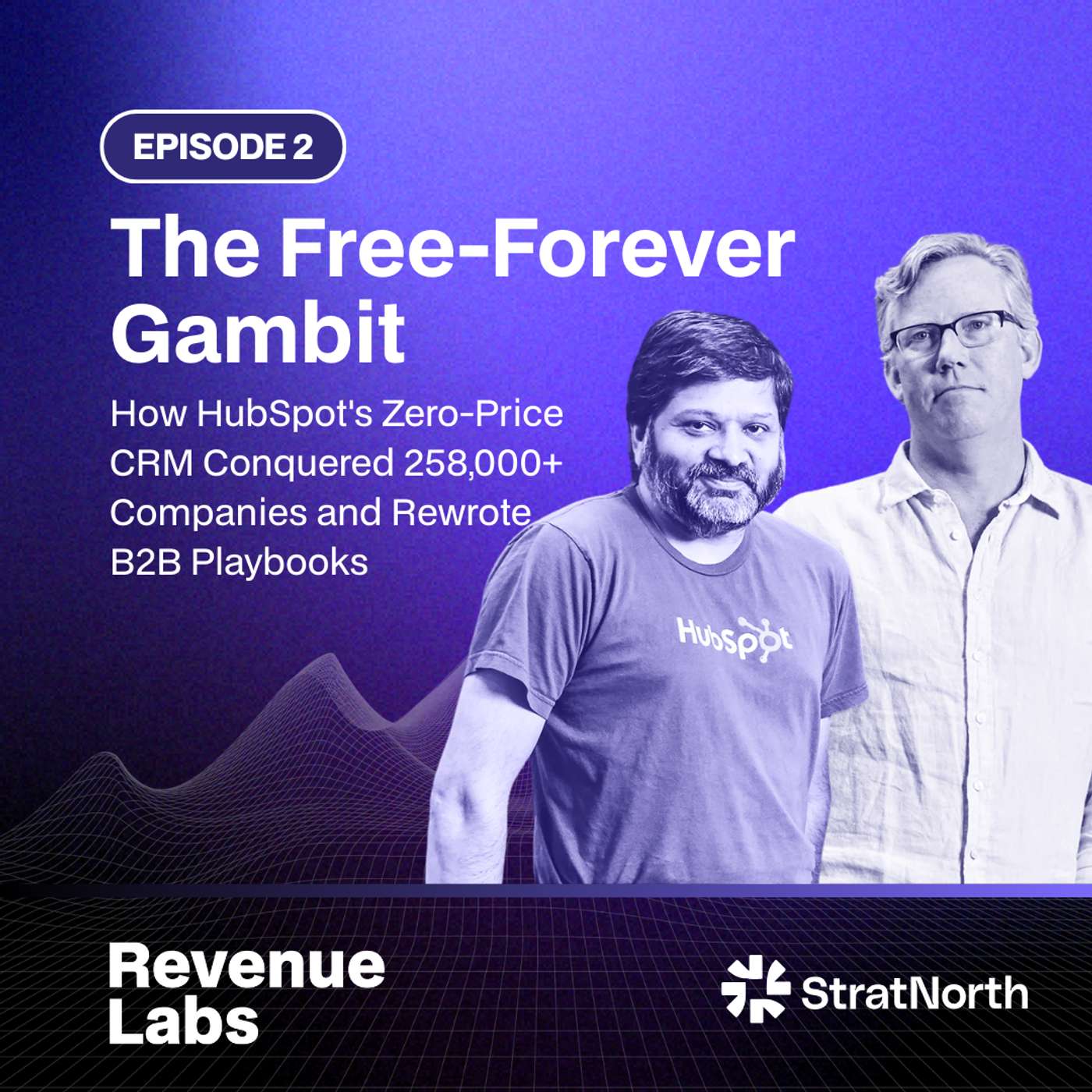
The Free-Forever Gambit: How HubSpot's Zero-Price CRM Conquered 258,000+ Companies and Rewrote B2B Playbooks
Aug 1300:18:52Tap to summarizeWelcome to episode two of Revenue Labs. We dive into the extraordinary gambit of HubSpot's free-forever CRM strategy—a bold bet that giving away their core product would conquer 258,000+ companies and fundamentally rewrite B2B playbooks through product-led growth mastery.In this episode, we explore how Brian Halligan and Dharmesh Shah turned conventional SaaS wisdom upside down in September 2014, stunning the Inbound conference by announcing a zero-price CRM that would drive 80% of new customer acquisitions. We'll decode the friction assassination strategy that eliminated price, UX, and complexity barriers, the four-stage PLG flywheel that created viral adoption loops, and most importantly, the enterprise replication framework that any company can deploy.You'll discover:How the "create value before you extract it" philosophy eliminated traditional sales cyclesThe 5-minute activation strategy that converted spreadsheet users into CRM advocatesWhy behavioral triggers (PQL scoring) outperformed demographic targeting by 60%How bottom-up propagation drove companies from single-user to full deploymentThe community-amplified growth model that scaled through 200+ user groupsKey Revenue Lessons:Adoption velocity beats feature velocity when widespread free usage creates sustainable growthFriction is the silent revenue killer—removing barriers unlocks viral loops traditional sales can't matchProduct-led doesn't mean sales-free—freemium drives acquisition, sales drives enterprise expansionData-driven viral engineering turns product usage into predictable revenue expansionCommunity amplifies product when peer advocacy creates network effects beyond individual featuresThis isn't about giving away value—it's about how removing friction creates more enterprise growth than adding premium features, and why HubSpot's methodology provides the replication blueprint for building growth into your product DNA.
Transcribe →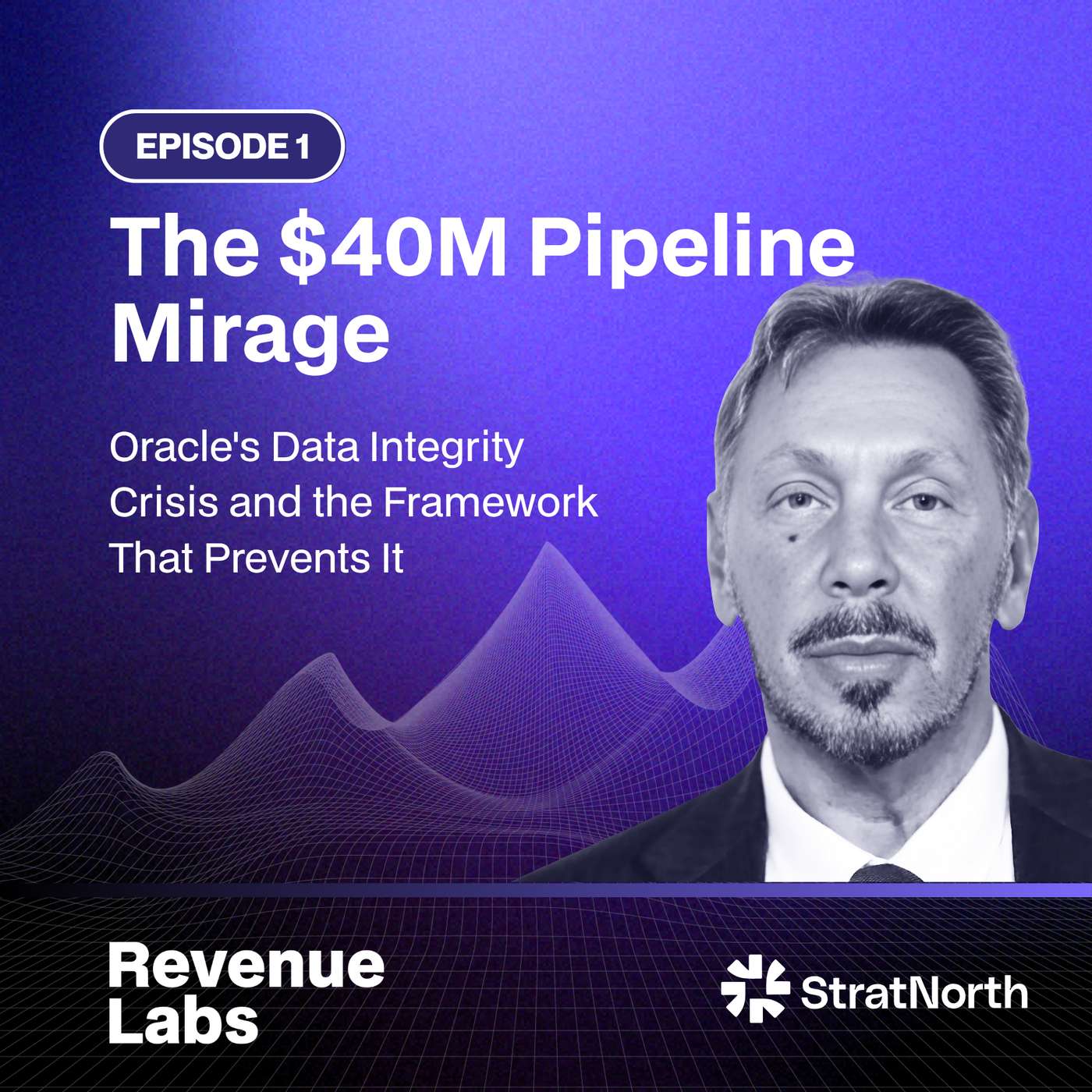
The $40M Pipeline Mirage
Aug 1100:21:50Tap to summarizeWelcome to episode one of Revenue Labs. We dive into the extraordinary cautionary tale of Oracle's $40 million phantom pipeline crisis—a near-death experience that nearly destroyed one of tech's most successful companies and reveals how poor CRM hygiene can fool finance teams, boards, and Wall Street itself.In this episode, we explore Oracle's aggressive "up-front" sales strategy in the early 1990s that created a dangerous accounting time bomb. Sales reps were booking full multi-year deal values in current quarters to boost bonuses, while future revenue was being counted today. We'll decode the forensic timeline of how dirty data created a pipeline mirage, the mathematical inevitability that exposed the fraud, and most importantly, the 5-step data integrity triage playbook that prevents a repeat disaster.You'll discover:How Oracle's lack of CFO and President during rapid growth created fatal blind spotsThe phantom pipeline mechanics that turned accounts receivable into a 160-day nightmareWhy Wall Street analysts and customer complaints couldn't stop the revenue recognition fraudHow Larry Ellison's "incredible business mistake" nearly led to bankruptcyThe recovery team that rebuilt Oracle's financial controls and sales operations from scratchKey Revenue Lessons:Data integrity isn't compliance—it's survival when phantom deals contaminate forecastsAggressive sales incentives without validation systems create systematic fraud riskMathematical inevitability always wins—you can't indefinitely book future revenue as current revenueClean pipelines beat growth hacking when sustainable revenue requires trustworthy systemsFinancial discipline and proper governance separate businesses from elaborate Ponzi schemesThis isn't about accounting errors—it's about how growth-at-all-costs mentality can overwhelm basic business integrity, and why modern enterprises must build resilient validation systems before discovering their own phantom pipeline.
Transcribe →