Podcast
Reversing Climate Change
Hosted by Carbon Removal Strategies LLC · EN
Reversing Climate Change is a podcast that bridges science, technology, and policy with the richness of the humanities. From the forefront of carbon removal and climatetech to explorations of literature, history, philosophy, theology, and geopolitics, we dive deep into the people, ideas, and innovations shaping a better future for the planet and its inhabitants.
If you love the show, please become a paid subscriber on Spotify.
23episodes
Episodes
Newest firstAll episodes

395: Bright Spots in US Federal Policy? Carbon removal as essential American infrastructure—w/ Eli Cain, Carbon Removal Alliance
Apr 1400:35:57Tap to summarizeUS federal carbon dioxide removal policy is a fragment of its former self. But are rumors of its death greatly exaggerated? (Sorry, Mark Twain.) Eli Cain, Deputy Director of Policy at the Carbon Removal Alliance, comes on the show to give a reality check on US federal policy for carbon removal. Where is the action still happening, and what do we have to look forward to?Despite a political environment that looks grim from the outside, Eli makes the case that real progress is happening:$125 million in FY26 appropriationsBipartisan congressional support that tripled year over yearFY26 appropriations: $80 million for DOE R&D and $45 million for the CDR purchase pilot prizeCRA's fly-in day: from 5 Republican congressional meetings last year to 17 this yeara messaging strategy built around industrial integration that is opening doors across the aisle.When enhanced rock weathering can save farmers money, or carbon mineralization can reduce mining waste liabilities, there is a path forward. We also dig into why 45Q survived the reconciliation process, and what it takes to build durable policy in a volatile political moment."Every single carbon removal company in our membership is deploying in partnership with industrial players."- Eli Cain, Carbon Removal AllianceThis Episode's SponsorPhilip Lee LLP: legal resources for carbon removal buyers and suppliersListen to the RCC episode with Ryan Covington from Philip Lee LLP about project financeListen to the RCC episode with Lev Gantly about the history and current status of CORSIAResourcesBecome a paid subscriber of Reversing Climate ChangeSubscribe to the Reversing Climate Change Substack391: How Carbon Removal Loses: The End of "Pre-Compliance"Carbon Removal AllianceCarbon180EMRTAI program for mineralization
Transcribe →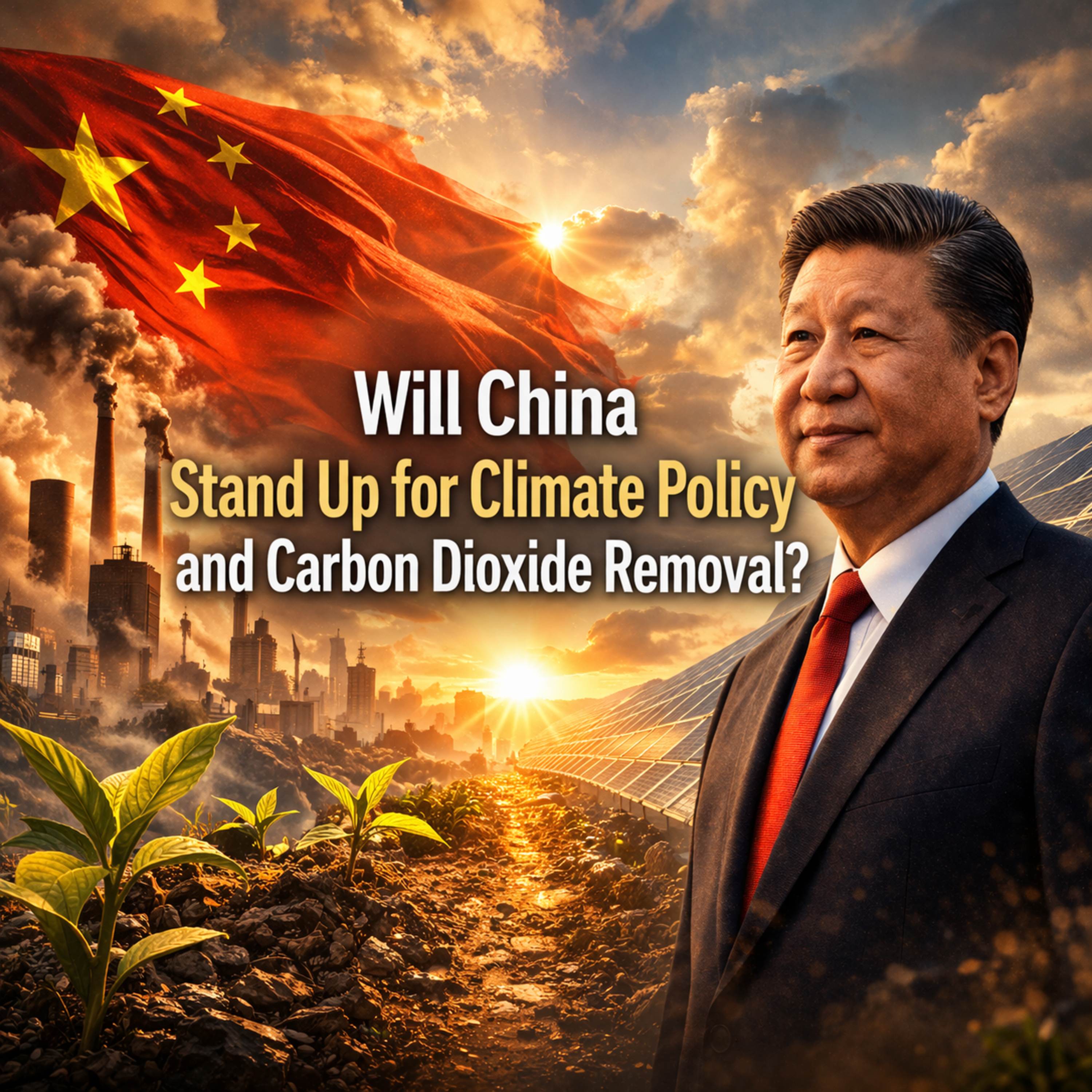
394: Will China Stand Up for Climate Policy & Carbon Dioxide Removal?—w/ Sarah Godek
Apr 900:53:12Tap to summarizeIf the US pulls out of climate action, is there room for China or another country to fill the leadership void? Or without the US, does climate multilateralism fall apart entirely?This episode is a direct response to my recent monologue episode, "How Carbon Removal Loses: The End of "Pre-Compliance"", which walked through the political risks to climate and carbon removal policy in a world where the US pulls back. I looked at Canada, the EU, its various member states, and Japan as possible safe havens. One country I left out was China. So I invited Sarah Godek back on as my "sinologist on call" to help set the record straight.Sarah Godek is a returning guest and very knowledgeable about China. Our previous episode—a conversation about realism and liberalism in geopolitics, born out of a piece she co-wrote with Grant Faber on carbon security—is linked in the resources section and is a useful first step before diving into this one.In this episode, Sarah walks me through China's energy security priorities, the difficult role coal plays in Chinese strategy, Tencent's CarbonX Prize, the absence of a clear institutional home for carbon removal inside the Chinese government, and the much harder question of whether climate multilateralism can survive without American leadership.Listen in to hear more about what the "intangible third thing" of world leadership actually is (Sarah argues it's capability — the ability to make other actors stop) and why the war in Iran is a very different status hit for the US than the war in Iraq was; why a peaceful reunification with Taiwan is still the preferred outcome in Beijing, and what that says about the value of legitimacy; how China's environmentalist movement today more closely resembles the US in the 1960s, and how the principle that "green mountains are gold mountains" shapes Chinese carbon removal policy (heavy on sinks and reforestation, light on engineered CDR); what the 15th Five-Year Plan might or might not change; why China frames historical emissions as a Western problem—"if we didn't break it, why must we buy it?"—and what that means for whether China will ever take the mantle on CDR specifically; and Sarah's closing framing... it isn't that the US leaves a gaping hole the world flounders in. It's that the world will continue on without us, and the risk isn't punishment for not being at the table—it's being on the menu.This Episode's SponsorsPhilip Lee LLP: legal resources for carbon removal buyers and suppliersListen to the RCC episode with Ryan Covington from Philip Lee LLP about project financeListen to the RCC episode with Lev Gantly about the history and current status of CORSIARainbow: a developer-centric carbon removal registry "Why carbon markets need field engineers, not just scientists" on Rainbow"What scientists actually do in carbon removal" on rosskenyon.comResourcesBecome a paid subscriber of Reversing Climate ChangeSubscribe to the Reversing Climate Change Substack338: Carbon Security & the Geopolitics of Carbon Removal—w/ Sarah Godek"Carbon security and the geopolitics of carbon removal" by Sarah Godek & Grant Faber391: How Carbon Removal Loses: The End of "Pre-Compliance"Tencent's CarbonX ProgramChina's 15th Five-Year Plan and carbon—"Carbon Peaking and Carbon Neutrality China's Plans and Solutions"
Transcribe →
S2E13: How Koen van Seijen invests in regenerative agriculture
May 19, 2020Tap to summarizeKoen van Seijen is the host of the Investing in Regenerative Agriculture Podcast, where he talks to pioneers in the regenerative food and agriculture space about putting money to work to regenerate the soil. Today, Koen joins Ross and Christophe to discuss the many different flavors of financing for regenerative agriculture and explain the distinction between investing in regenerative agriculture and what is sometimes called "regenerative financing" which innovates in terms of deal structure and beyond.
Transcribe →