← Rewilding Earth Podcast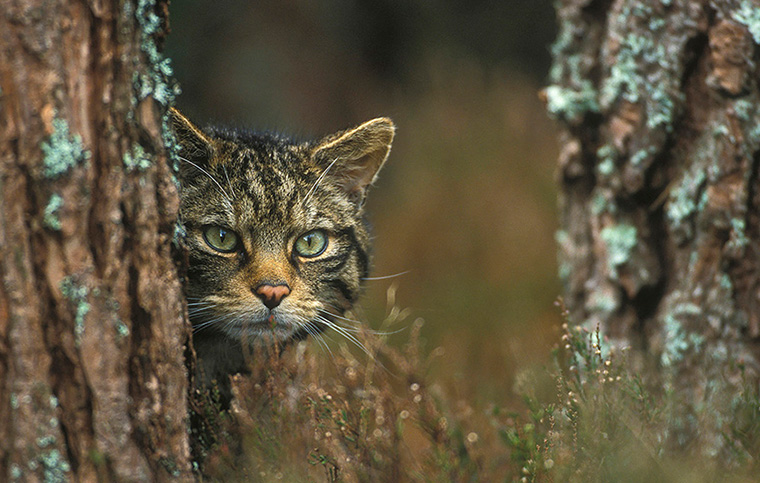
Rewilding Earth Podcast
Episode 167: Paul Lister on Rewilding Scotland’s Highlands at Alladale Wilderness Reserve
00:42:23
Loading summary
Transcript34 lines
- [00:23]
A
Why is it that human beings seem to think they have to have dominion over everything? I mean, it's so arrogant, it's so audacious to think that we are the top dog, but we're not. We're simply not. We are the only species that has managed to attempt to destroy the very home that we live in. I mean, the home that we depend upon. We are hell bent on its demise and we will follow. So it's just so, it's so narrow minded to think, well, granddaddy used to cut a ranch, so I'll do it. Why? It's different circumstances with the 8 billion population. So I think humanity really needs to get a consciousness around our place in the ecosystem and the impact we have on it and the sorts of things we need to do to mitigate that.
- [02:00]
B
You're listening to the Rewilding Earth podcast.
- [02:03]
C
I'm your host, Jack Humphrey.
- [02:06]
B
There's a specific kind of silence in the Scottish Highlands. A heavy, ancient quiet that feels more like an absence than a peace. For centuries we've been subtracting from that landscape, taking the trees for ships and draining the peat for livestock until the land has become a pretty garden instead of a wild ecosystem. My guest today is Paul Lister and he's through with the subtraction. When Paul bought the 23,000 acre Aladale Wilderness Reserve 20 years ago, he didn't just buy a property, he bought a responsibility he calls his life's work making noise for nature. And the volume is finally turning up. We're talking about a large living laboratory where the stats speak for themselves. One million native trees planted, thousands of tiny check dams built to re wet carbon rich peatlands. And a deer population managed down from 2,500 to just 500 to let the new forests breathe. Paul is refreshingly blunt about the traditions he thinks we need to kill. From our obsessions with meat to the arrogance of human dominion. Today we're diving into what it would look like for Scotland to move past the sporting estates of the past and toward a future where biodiversity is the only currency that matters.
- [03:21]
A
I tell people that I do two things every day in my life and that is I make noise for nature and connect people to nature. So there are two things that everything I do leads into one of those two actions. And you know, that's in the foundation. That's what we do. And certainly Annandale, regarding my split of time, I suppose that the European Nature Trust and Annadel Wilderness reserve take up 90% of my time. I have no children. So when you don't have children, you can spend an extraordinary amount of time doing your projects, passion projects or business or whatever it might be. In my case, it happens to be focused on the environment. So people say to me, you've got a lot of projects on the go, Paul. And you know, how do you manage that? And time wise and this other thing when I said if you have no. If you have no kids, it's a huge amount of space you have in your time to do other things. And that's just a personal thing of mine. I'm sure many other people think the same way. So the two things that I do really mainly is try and oversee the operation of Aladel, which is has flourished now actually over the last 20 years into something quite different from what it was when I bought it. And then also the overseeing as a trustee of the European Nature Trust and the projects that we have across Europe and also as it happens in Belize. That's another interesting place that I kind of fell in love with. And I thought it was a place that needed sort of, I could say celebrating in a way because it's very special. It's got a huge amount of its ecosystem still intact and that's the way we want to keep it really. So that's it. Noise for nature and connecting people to nature. And we do that also through people that visit Allerdale, being a tourism operation, we come, we can impact them when they stay with us for an average of five or six nights at a time. And then also through the foundation, we run a series of coexistence adventures where we take people into the wild in Europe with a really well organized, well orchestrated visit to our certain projects that we're involved with. And they get to meet ecologists on the ground, the people that run foundations, the wildlife guides and so on and so forth. And that's real immersion. And that's another way of engaging people. And I think once they've been on these trips, you know, some of the people that go come back and think, well, how can I get further involved? So it's quite a good mechanism also of potentially fundraising as well in the longer term.
- [06:14]
C
There are a lot of things that you could talk about today and of course, this being the Rewilding Earth podcast, we're going to really hit, hit that restoration button as much as we possibly can. And we still won't cover everything that you're into, I'm afraid. You know, the Caledonian pinewood recovery, I think the million trees thing is a really good way to start too, just because that's a lot.
- [06:36]
A
Well, I bought Allerdale in 2003 and the objective there was always to restore wolves to a 50,000 acre fenced enclosure, rather like a South African game reserve. But unfortunately that's not been achieved because scale we don't have enough land. We have 23,000 acres. And to do that really in all the studies I've done, you know, size is very important. And anyway, for whatever reason that's what happened as of yet. I think it will happen in time. But I'm not particularly obsessed about that. What I've done or what we've done I should say and in the meantime is we've kick started this sort of planting of trees and peatland restoration. And I think that to me came years ago before all this peatland restoration and tree planting. It was obvious thing for me to do. What we needed was to bring back forests. And if you have an area that is not got great seed source then you have to augment that and you have to really be proactive in the way you plant trees. You have to be active. You can't just say, well we're reduced here numbers and we'll just let trees grow because if there's no seed source around that's going to be a bit of a problem. So planting trees was something that we kicked off, I don't know, 20 years ago. And we're now doing another round of reforestation this coming spring. I think like 100,000 trees or maybe a bit more. But there's plenty more areas for us to plant up. And the original forest that was planted is now getting away and people can visually see that. It's very obvious. And all the biodiversity benefits of planting trees is now starting to happen. And the other thing that we did was re wet the peatlands. So I don't know, something like 70 years ago, maybe more. The government sort of incentivized landowners to drain their keat so they could put more livestock on it for grazing. But the negative effect of that was that all this dead matter dried up and the carbon escaped into the atmosphere. And so for me it was very obvious that on the basis I wasn't, you know, livestock farming, that I don't need to have these drains in the peatland which not only dry up the matter but also create the potential for very fast runoff of water off hill and making flooding and things like this more of an issue and a soil erosion. So we decided, I don't know, something like about 18 years ago to find some money from a company in the City of London to pay us to have a digger driver up on the hills to block these drains, to put little dams in, a series of hundreds or thousands of little dams, that lets the water build up behind the dam and then go into the pit and reactivate that and start to sequester carbon. So that was kind of rewarding. I don't think anybody at that time was thinking about financial benefits from doing such thing. I mean, we didn't get a lot of money for it. It wasn't great, we just paid for the costs. But nowadays there's obviously a big movement behind peatland restoration, not just in the uk, but across the world. And, you know, I'd like to think that we've kind of got on with that way back in the early days, and we can see the benefits now. We can see the biodiversity uplift, we can see the sphagnum moss coming back to life and so on. So they're the two big initiatives. Of course, the other thing that you do together with this kind of action is you reduce their numbers. So, you know, land traditionally in Scotland, since the Victorian era, has been valued on the amount of salmon fished out of a river, if there is a river, or deer shot on the hill, stags and grouse shot. You know, it was rather weird calculation that, you know, you pay per so much per acre based on the sporting value of the land, and we really have sort of kicked that right into touch and we've now made it sort of valued on its biodiversity uplift, really. And so that's been a big benefit. But to get to that, you have to reduce deer numbers, because deer are simply probably four times as many deer in the UK as there should be. And we've got two native deer species, a red and a roe deer, and we've got four exotics that over the years have escaped from farms and collections and things like this. So that was a big thing. When I arrived at Allerdale, there was like two and a half thousand deer. We're down to probably around about 500. And you'd be surprised, Jack, the effect that has on the ground when you mitigate browsing and some grazing to that level, that you start to see regeneration of vegetation even outside of these forestry enclosures, because all the trees we planted had to be planted behind fences to being able to get some grants to do it and also to safeguard them against the. The deer. So, yeah, there is slowly, surely starting to come back to life, and that's very rewarding to see. And I think our guests observe that when the time they're with us and they start to appreciate the work that's involved, to put back the clock. Because over the centuries, the last couple of 150 plus years, you know, the focus has been on field sports and maybe some timber production in the plantations of exotic species, you know, cyclist Bruce and Douglas fir and things. And now it's changing. The whole way people look at, they look at land in Scotland is changing. I don't think people go up there and buy properties these days based on its sporting value. It's more based on its recreational value and the biodiversity opportunities for upliftment.
- [12:54]
C
It's really promising. I've always wondered, and I always like to engage anyone in discussions about a reverse economy. You know, the economy that drove humanity toward where we are today was based completely on consumption and pretending that we live in an infinite world of resources. And I've always maintained there's got to be a way to, to turn the greed in another direction. You know, when people have to be really primarily focused on money and everything that goes with that, they could be useful tools. If we could make them greedy about biodiversity in some way, you know, and returns on investments and shareholder value. As long as that upholds the tenets of rewilding, I'm cool with that. What do you think about that?
- [13:43]
A
Sure. I mean, so Anadel becomes sort of a model or a demonstration of what happens and when you do these certain things that we've done. And to that end, we've hosted dozens of other landowners across Scotland and the UK and even as far afield as parts of Europe who have come specifically to see the work we're doing and to learn about it. And they then go back to their properties and they do certain actions as well that, you know, I don't follow all these people, but I know that we've made an impact. I know that. Well, they've been more impacted by what they've visually seen. It's easier to do something sort of monkey see, monkey do when you've seen someone else do it. When you're trying to create the wheel, as you know, it's a little bit more challenging. But of course this is great. And I think rewilding or nature restoration or whatever you want to call it is certainly catching on in the uk. I mean, when you think about our history, you think about the biodiversity loss in the uk, I mean, as many of your listeners will know or may not know, is that Britain is one of the most sort of least biodiverse countries on the planet. I mean, we could be alongside Haiti insofar as the way we run our landscape. I mean, primarily due to the British Empire industrial revolution fighting the Spanish shipbuilding and then more recently two world wars. You know, there's 1% of the landscape left as it should be now. You know, so we of course there have been talks about the first rewilding nation. Well, if such barbarity loss, it seems to be only reasonable that we would be the first to want to sort of reverse that and put something back. But also, you know, if you were to fly from London to Istanbul, you know, you'd fly for four and a half hours over a farm. I mean, 95% of Europe has been farmed. And just look out the window of the plane and you'll see a patchwork of fields. And if it's not fields, it'll be, you know, commercial forestry blocks. So there are pockets in Europe that are left and through the foundation, we like to work on those. But the UK is 99% sort of been man made. So it's like a. I call it a pretty garden, Jack, I call it pretty garden. And I don't spend a lot of time in the uk. If I do, it's either London for meetings or such like, or just recovering actually from my trips or it's spending time in Scotland in the Highlands and then, you know, to go in between so many parts of Britain kind of just depressed me when I see the way that we've rerun the landscape. And I think our obsession with meat is a real issue. And I think that's one of the major factors in climate change, is the extraordinary amount of land that's been cut, burned, logged and felled to grow livestock crops or grazing. I mean, I think it's something like it's more than 25% of all the earth's surface. Less ice and desert has been cultivated for cattle and sheep and stuff. So, you know, it's got out of control. And I think we need to understand that. And then we need to rewild unproductive parts of that landscape and put it back to nature for the benefit of every living species, you know, beyond ourselves. So anyway, that's kind of like a very sort of macro view. But of course the other big issue that humanity faces is population.
- [17:32]
C
Let's also talk about the, you know, the very realistic first step we're noticing here in places like Iowa, which is probably also very close to Britain in terms of biodiversity loss. It certainly is one of the most farmed states in our country. And the Opening salvo for rewilding and restoration in those places is along the waterways and what you called unsuitable to begin with, places to farm. Like, we've just really gone into places where our government subsidizes farmers for very risky farming in floodplains and things that have to be tiered because they're so steep. And starting there, a group in Iowa found that there's a potential for 9 million acres of. If we could just retire the marginal stuff. And I imagine that's what you're talking about here too. It's not insignificant if we just start there. And I think that calms down the fears of all the people who would argue against. Because they still don't understand what you're talking about with the livestock versus normal farming that's not supportive of a huge livestock industry.
- [18:45]
A
Yeah, yeah, well, well, for me, tradition is the problem. You know, people are obsessed with tradition. We've done this, we've done that. My, my four bearers did this, they did that, whatever. And for me, tradition is a bit of old nonsense really, because there's 8 billion of us on the planet now. And in Sir David Attenborough's life, you know, the great British natural history TV presenter, you know, in his lifetime, the population has quadrupled. So I'm sorry, tradition, you know, needs to be challenged. And people don't like change. That's the problem with humanity. They kind of get stuck. It's uncomfortable. You know, at the moment I'm trying to get my mum to move from walking around in the house to using a wheelchair. She's resisting it fiercely. But it's for our own benefit, but. And we need to be making changes the way that we as human beings exist on this planet. And the changes are quite severe. They're not just, oh, I recycle, oh, I bought an electric car, you know, oh, I don't travel as much as I used to. It's far deeper than that. And I think that the tradition and the way things have happened, we need to change. So if traditionally we've eaten a lot of meat, well, maybe that was okay back 50 or so years ago. But right now I think we have to think of other ways of farming and other ways of feeding ourselves rather than having to print through another channel like a cow who consumes so much food and water and resource. So it's rather strange to me why we struggle so much. And people sometimes brag to me about how much meat they eat. I mean, from what I remember, we're not really full blown carnivores you know, we're not exactly, you know, a polar bear, you know, so we're omnivores. And I think we need to read, we need to address that issue. And then so much more land could be up for grabs for restoration and recreation.
- [21:00]
C
And even there, I mean, before we get really into it and do what we would currently think is uncomfortable, there is a starting off point of just reducing the number of days per week that you have meat on your plate. You know, that's not really hard to ask anyone to do. But you would think by the reactions of some that you're asking them for their left arm.
- [21:23]
A
Yeah, that's correct. I mean, I don't ask people to stop, I just asked them to reduce 50, 60, 70%, whatever. And I have a lot less suffering as well. I mean, you know, live cattle exports from one part of the world to the other things. I mean, it's just rather strange how we've manifested the industry in such a large scale. And of course capitalism means that companies can sort of have the freedom to brainwash us and just go for bottom line profits. So they not only do they market the hell out of their products, but they also put pressure on their suppliers and the quality will be diminished. So you know, it's not like every burger from McDonald's is grass fed because it's not, you know, it's from a food lot and so on. So yeah, it's a big issue. I mean, the whole thing around capitalism, for me, the very big thing about it all is there's actually very few people on this planet who can make lots of money. It's down to a very few very clever bright people. And most people work for those people and they become multi billionaires. And so you find that the disparity is enormous. And that to me is a problem in itself where 1% of the world's population has 50% of the world's wealth. And so much that money is tucked away in hedge funds and private equity and stocks and shares, gold, whatever it might be. And it could be put to good use. You know, and whether that be education for people to think about reproduction or whether it goes into nature restoration and recovery, I mean, we are part of nature, we depend on nature and without it we won't survive. And I think very few ultra high net worth people really get involved with that. I think if you just step out into nature, if you just take the time to get away from your business activities and get into nature, you'll probably fall in love with it and then find a passion for it. But people sometimes get so wrapped up in their own success. You know, it's what yacht can I buy and what plane can I get and you know, what trip can I go on next? What fancy holiday? And I just think it's a shame that we've ended up with so much wealth being stashed away that's not really being used to a good purpose. And those people that have it all won't be able to do anything with it. I mean, they can't possibly spend it, you know, I mean, it's, you know, how many, how many things can you buy to get to all that money? So. But that's a very macro view on philanthropy.
- [24:09]
C
You know, it's also pretty hard to distribute when you are Jeff Bezos ex wife who has a big philanthropic goal of giving away the money that she has. And she's been in countless articles saying, I work day and night trying to figure out how to responsibly distribute this funding because it's on such a large scale and, and we don't want to make any missteps. According to whatever she says is missteps.
- [24:37]
A
Well, I can surely help out. So if you've got her email, I'll give her a few ideas.
- [24:45]
C
Yes.
- [24:47]
A
How to spend a few hundred million. Not billions, but a few hundred million. There's plenty of land in Europe that has become redundant. Communities have shut down, they moved to cities, and the land has just gone feral, as it were. And those landscapes could be bought by a foundation and they could be accelerated in their restoration efforts and on all sorts of things. Particularly we have one project in Romania where we in the process of building a national park of 200,000 hectares, where we're always looking for donors to get involved with buying up land. And then far more people will be involved in the running of a national park than they would be doing their existing activities, which is really kind of threadbare. But we get involved with a lot of industries around preserving of landscapes and could be food, tourism, could be all kinds of services that go together with bringing visitors into an area. But southern Spain is another region I can think of. So, yeah, I think that people really have to start to travel and visit places and meet people and start, you know, looking at things online. And I'm sure they can find some projects to be involved with. I know that, you know, people like Ted Turner in the States and others like Chris and Doug Tompkins in the Southern cone of South America have done huge, you know, rewilding projects and Hats off to them for realizing the opportunity and taking advantage. Yeah.
- [26:26]
C
And for giving us the rest of the world an example. A really good set of examples of how big thinking is really important. And continental scale thinking in those two cases. They're both famous for that level of thinking. And to the people who have problems figuring out where they're going to put all of their billions, it's you big thinkers that they need to approach because you would have. And also, especially in your case, it's such management is one of the things I wanted to talk about because after you lost your land bridge, I don't know if you remember that it was 6200, I think, something BCE.
- [27:07]
A
Yeah. I think the UK might be large enough to sort of. So if they were left alone, they would have somehow managed themselves in a way. But I mean, they talk about Sweden being an island, but there's only a few hundred wolves. And the Sami reindeer herders of northern Scandinavia is another traditional activity that goes on. You know, just don't tolerate any wolves passing through, you know, the Arctic Circle to, you know, put new bloodlines into the Swedish and Norwegian populations, or wolves or carnivores, full stop. There's sort of zero tolerance in South Africa, people have built game reserves, you know, because South Africa, much like Britain, was completely sanitized for farming and, you know, all the big animals were shot out. And now to rewild parts of South Africa, people have created these game reserves. And now those game reserves are all, you know, thinking, talking about, you know, joining up and creating corridors and such like. So, yeah, I mean, where man has had his hands on, you know, it takes quite a bit of work to put things back. And that's why in areas of Europe that the European Nature Trust focuses on, you know, we like to pick out those areas that have still got great biodiversity, even though they might be small by comparison to the Amazon or something. But they're equally important and they're right on the doorstep of, you know, huge populations. So people in central Italy can live alongside wolves and bears because of their coexistent measures. But I'm sure hopefully in the United States, eventually you can see wolves, you know, repatriating the place and also cougars coming down the Appalachian Mountains and things like this. So, you know, it's just a case of tolerance. I mean, why is it that human beings seem to think they have to have dominion over everything? I mean, it's so arrogant, it's so audacious. Yeah, to think that we are the top dog, but we're not. We're simply not. We are the only species that has managed to attempt to destroy the very home that we live in. I mean the home that we depend upon. We're hell bent on its demise, which. And we will follow. So it's just, so, it's so narrow minded to think, well, granddaddy used to coverage, so I'll do it. Why? It's different circumstances with the 8 billion population. So I think humanity really needs to get a consciousness around our place in the ecosystem and the impact we have on it and the sorts of things we need to do to mitigate that. And of course, the very big question that all loves to go down and talk about is population. You know, everyone goes, oh, you know, they did it in China, they tried it there. Yeah, it becomes, it becomes uncomfortable for a generation or two because people get older and there's an aging population. But yeah, do you want to see a reduced population and long term survival or do you want to hit the proverbial brick wall with an ever expanding population with not enough resources? So for me it's blatantly obvious what we need to do. I think more and more certainly educated people for whatever you want to describe that are thinking twice about having families. And you know, maybe in the past families have served us, but I think in the future we need to think very carefully about having, you know, one or no kids because. But then in that itself, that creates another problem and that is because with capitalism everyone talks about growth and of course if you're going to reduce a population that will mean diminishing growth. So we have a bit of a conundrum and that's, you know, one of the things humanity has to figure out. And otherwise there's all sorts of things that are going to sort of manage us if we can only manage ourselves. It'd be a lot more comfortable long term than it will be when we have to, when we have to deal with all the challenge that we're facing could be climate changing, rising sea levels, fires and so on.
- [31:40]
C
Researching the struggles that you've had, the controversy of some of the things like a vision of having a wolf reserve and 50,000 acres in the fence. And then, you know, people come at you from all sides. The pastoralists come at you, the farmers come at you, the, the biologists come at you. The island biogeography argument comes at you. But what you just did was paint the picture of Earth is an island. You know, they talk about very claustrophobic biological management issues on the island in the UK and Then you're part of that very tiny part of that whole mass, and the goals that you have, which require high management for so many reasons. And then what you just said kind of drew the whole thing back away from that focus on such a small part of what is really a bigger island that has so many pressures from population to the resource use. And I just feel like when you were describing those issues, this whole planet is. Is very pressed in every direction.
- [32:48]
A
Yeah, very pressed. And George Carlin, there was an American comedian who died some years ago, was someone that actually, I love George. George actually spelled it out as it was or as it is, and that he was way ahead of his time. And I think people just can't make those really big decisions that we need to make. It's just too uncomfortable, you know, it's just too uncomfortable. You have one child and then you say, oh, you know, so much is so amazing. I have a second one, and then there's sometimes a third, and on it goes, and on goes the consumption. So, you know, we have to tackle the thing right from the grassroots. And it's really. Education is the first thing, of course, and understanding that a reduced population, we'd all be able to go about the things we like to do and activities and so on, and habits, we could continue them, but not with the level of people that are here now. And so, you know, for me, that's one of the big challenges. But in the meantime, you know, all kinds of rewilding efforts across the world, whether it be even in Australia, you know, I mean, the situation down there with the species that have gone extinct due to man's sort of dumping on them, you know, feral foxes and cats and cane toads and camels and goats and donkeys and rabbits, you know, they've ravaged the landscape. But now the Australian Wildlife Conservancy are doing huge work to reverse that and demonstrate that we can get back a living landscape as opposed to a kind of denuded one. And, yeah, there are good examples all over the world, and I just think those need to be shared. And part of what we do in the foundation is actually we take media into the field with us for, you know, four or five, six days at a time. We don't just take someone for a day, you know, we want the journalist or writer to immerse themselves and really get to understand the project, and then they can report very accurately on what's going on with. All too often, journalists sort of visit an area they don't even visit. They just write something and they have really immerse themselves. So I think organizing press trips for small, medium sized NGOs, which we like to work with, is beneficial because they don't normally have the budget to do that. And if we get out more of these good news stories, the more people want to visit those areas and the more people understand why we got to do more of it. So for good things, I mean, the recovery of the iberian links from 100 animals 30 years ago to probably more like 4,000 now, I mean, that's an amazing story. That's an amazing recovery. So that needs to be shouted about. So we have a PR agent in Madrid and we put together, you know, eight or nine Spanish journalists. We take them into their own countryside and show them the benefits of having these species back in the ecosystem. And the same can be repeated on various other. The brown bears of northern Spain, they made a great recovery from 35 individuals to probably 350 in the last 30 years. So there are good examples and we just need to make sure that those are celebrated. People can understand why we need nature. Why do we have to live alongside these animals? I mean, as I said before, it's very audacious to think that in North America, you know, all those years ago, we wiped out the gray wolf, apart from a little pocket of wolves in Minnesota, say, you know, and why. Why can we not have them back? I mean, are we that unintelligent just to say they're not. There's no place for them here. Just because we want to raise livestock. That's why the livestock industry needs to be looked at. We need to think of different things and different ways of eating. Let's get over our obsession with the need and then we can have more space for nature to come back. And with more, nature becomes more diversity, more biodiversity comes more carbon, sequestration becomes, you know, a better ecosystem, less fires and so on.
- [36:49]
C
The. The PR thing really rings true with me. That's one of the reasons I wanted to start this podcast is I knew there were a lot of stories. I knew a lot of people I've met over the years that would be great to hear their stories and promote that work that they do. And some of them are wildlands philanthropists, others are biologists. And, you know, you get a wide diversity of stories out there and people are really appreciating that. They're like, wow, this is. We should be talking. And it dawns on them, why are. Why don't we have more of this? You know, nature needs a PR team for sure.
- [37:23]
A
Yeah, yeah, so we love that PR aspect and we'd love to do more of it. Of course I was mentioning about, you know, the Americas earlier and the people that have been doing great work there, but also in, in Scotland, I mean, you know, what I'm doing is a small example, but Anders Paulsens of this world and his wife Annie, you know, they brought up quarter million acres in Scotland and are rewilding it and doing work to restore it. So, you know, and that's a great example of an ultra high net worth individual that's realized that biodiversity and nature is his calling. And that's great. And so hopefully more people like him recognize the work that he's doing and they fall in line. I mean, there are some hugely wealthy families in Europe that still yet haven't really woken up to the calling of nature. And I just would love to get myself in front of more of them and to try and show them why it's so important and demonstrate certain things and get their interest. I think you've got to step out into nature, you've got to go for a walk in it to really get affected and spend time. It's not just a quick day trip, you know, you've got to immerse yourself for a week or two.
- [38:37]
C
Yeah, well, you're going to want to when you arrive. I have not set foot on Aladdin yet. I have read and seen and the beautiful imagery and everything that you have@aladel.com is, is enough to tell me that I would be very angry to have to leave within 24 hours. Oh yeah, I feel like I would have missed everything.
- [39:00]
A
Absolutely, Jack. I mean our average day is six nights. I would say 50% of this year's 20, 25 visitors were from the United States. I'd say 50%. And of that 50% probably well over half came on yoga retreats and wellness retreats. We basically been building a wellness business around not just nature restoration, but people restoring themselves also. So that's become a big part of what we do. And you know, a lot of Americans have got, you know, ties with Britain and Europe. So if they're going to come across the pond, why not spend a week with us? We have three lodges we can take anywhere between, you know, a couple right up to a, a multi gen family of 18 people, you know, so yeah, if you want to learn about nature restoration, you want to go for a walk in the. On the wild side. Literally one hour's flight from London. So, you know, it's amazing when you're up at Allerdale. And you look around you and you look at the vastness and there's only five people or six people per square kilometer in Sutherland. You know, that's extremely low number and you just can't imagine you're in the uk. You're in the uk, but we're about four hours drive north of Edinburgh. We are really at the top end. So most people fly into Inverness, which is our regional airport there.
- [40:37]
C
I will have in the podcast page always extra credit because we didn't get to talk about a lot of things like the wildcat breeding program and, and the raptors. I mean, I really wanted to talk about that. The golden eagles and white tailed eagles that have come back. Yeah, you know, there's a lot to talk about. Yeah, yeah.
- [40:55]
A
Well, for those discussions, maybe you need to speak to David Barclay at rznss or you could speak to Roy Dennis, who's been responsible for bringing back three species of raptor back to the uk. So that's food for thought.
- [41:08]
C
Well, everyone listening, let us know in the comments if you'd like to go deeper here. I know what they're going to say and they're going to say yes. So that's a date then.
- [41:17]
A
Yeah, absolutely.
- [41:18]
C
Paul, well, thank you so much for taking time to do this and matching up our time zones and everything that we had to work out to have you here. This has been really great and I do want to keep up with you and maybe one day we'll take you up on that press tour and come over and do some filming and. Yeah, and check all this out. I'm almost tired of looking at the pictures. I need the real thing, Jack.
- [41:39]
A
A hundred percent. Just let me know when and we'll be ready to host you. Thank you for having me on your podcast and I hope that your listeners find it interesting.
- [41:51]
B
Thanks for listening to the Rewilding Earth podcast. We do what we do because of you. This podcast is supported by listeners like you, who long to live in a wilder world. Please consider donating@rewilding.org and subscribe to our weekly news and article Digest. While you're there to go the extra mile, you can follow and share Rewilding Earth on Instagram, Facebook and Twitter. Bonus points for sharing this podcast with your friends.
- [42:15]
C
To listen to past episodes, go to.
- [42:17]
B
Rewilding.Org pod that's rewilding.org pod.