← Rewilding Earth Podcast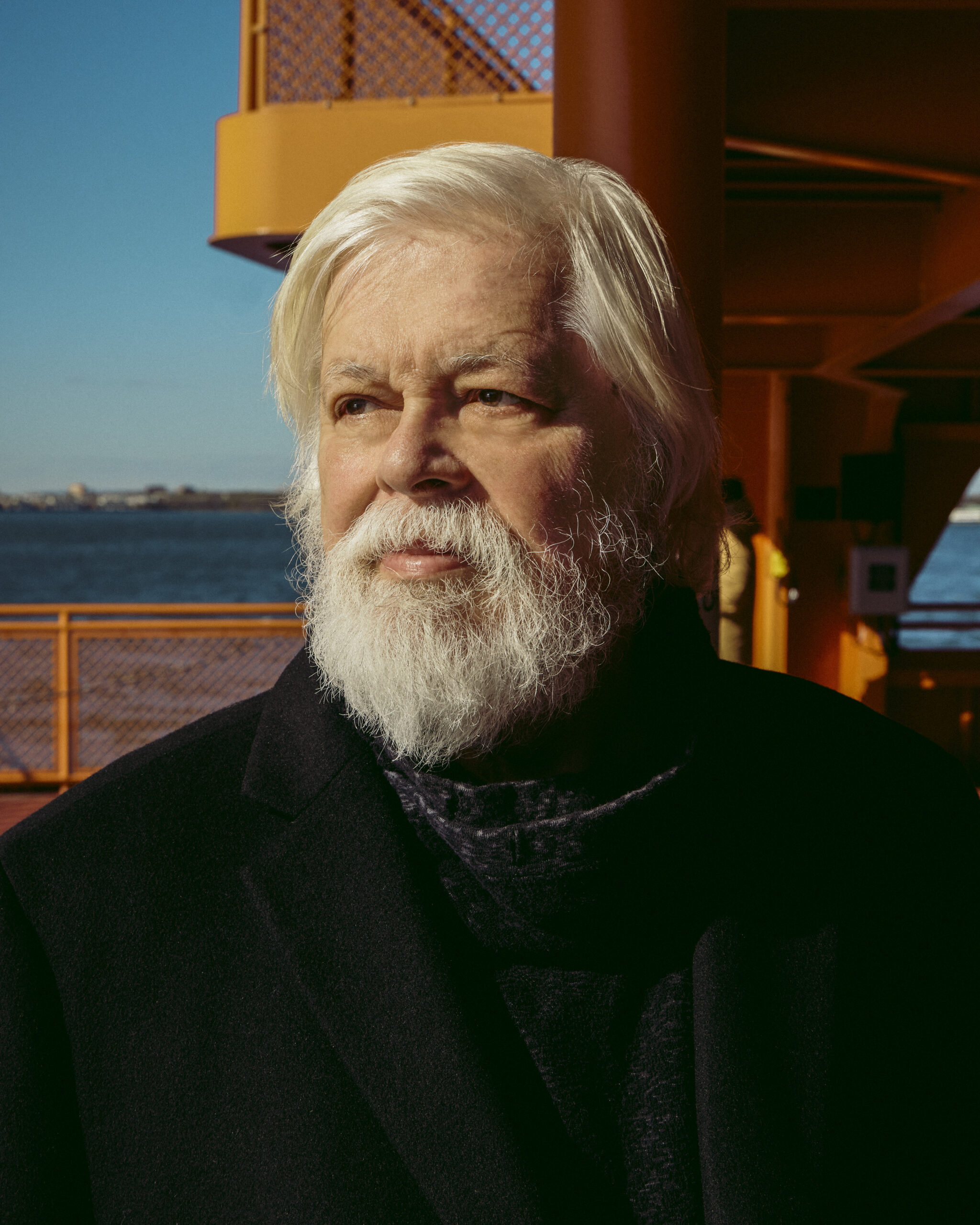
Rewilding Earth Podcast
Episode 170: Paul Watson Defending the Southern Ocean with Operation Krill Wars
00:49:56
Loading summary
Transcript73 lines
- [00:07]
A
You know, there's three basic laws of ecology. The first is the law of diversity, that the strength of an ecosystem is in diversity. The second is the law of interdependence, that all species within an ecosystem are interdependent with each other. And the third is the law of finite resources, that there's a limit to growth because there's a limit to carrying capacity. And when one species steals the carrying capacity from other species, that causes diminishment in both diversity and interdependence, and that leads to ecological collapse. And that's a road that we're on right now. Foreign.
- [01:08]
B
You're listening to the Rewilding Earth Podcast.
- [01:11]
C
I'm your host, Jack Humphrey. Our guest today is Captain Paul Watson.
- [01:16]
B
Paul's been on the front lines of marine conservation for over 50 years. He's a founding member of Greenpeace in the early 70s before leaving to start Sea shepherd, where he spent decades pioneering the kind of direct action enforcement that became a global phenomenon. Now he's leading the Captain Paul Watson Foundation, a new chapter dedicated to the same mission of aggressive nonviolence to protect our oceans. When we last spoke, it was just a day after his release from prison in Greenland. And since then, he hasn't slowed down for a second.
- [01:46]
C
Paul's here today to talk about his
- [01:48]
B
latest mission, Operation Krill Wars. It's a high stakes campaign in the Southern Ocean aimed at stopping industrial trawlers from stripping away the very foundation of the marine food web. Paul explains how these fleets are starving out whales and penguins just to fuel the salmon farming industry. And why his organization is leaning on the High Seas Treaty to intercept them. It's an essential conversation with a living legend to get to the bottom of what it really takes to protect our ocean planet.
- [02:17]
C
Paul, thanks so much for being on the Rewilding Earth podcast.
- [02:20]
A
Well, thank you.
- [02:21]
C
I am really excited to talk to you. We talked. I think it was like a day after you released from Nook Prison. And that just seems like a lifetime ago. But it also seems like yesterday. I was wondering, how's everything been going since then? Because after a much deserved span of time with your family, you said you had a lot of plans.
- [02:40]
A
Well, the time that I spent in the prison in Greenland turned out to be quite an opportunity for focusing international attention on Japan's continued illegal whaling operations, but also for focusing attention on the killing of pilot whales and dolphins in the Danish Faroe Islands. So I don't think that the Denmark really anticipated that kind of backlash. So when I returned to France, I was actually treated incredibly well. They had a big welcome home thing at the Place de Republic, you know, Then they gave me the honorary citizenship to Paris, the Medal of the National Assembly. I've been speaking at the Sorbonne, at the law school in Lyon and everything. But really what it came down to is that under all of this pressure, the Interpol dismissed the red notice against me, which they had against me for 14 years at the request to Japan. And the dismissal was on the grounds, according to Interpol, that it was politically motivated, which is what I've been telling them for 14 years. They finally took it seriously. And so. But that doesn't let me off because Japan has sworn that they're going to continue to chase me, asking, you know, each country I go to to detain me. So in November, I went to the climate Change conference in Brazil, and when I arrived, a couple days after I arrived, the Brazilian Federal Police called and said that they had received a request to detain me. And I said, what are you going to do? And they said, well, we told them that they had submitted their request in English and they have to resubmit in Portuguese before we took it seriously. But they said not to really worry, so there was no problem. So I'm safe in Brazil, I'm safe in Ireland, and I'm safe in. In France, But I can't go to the US or Canada, where I'm a citizen of both countries, because both those countries will cooperate with, or the governments will cooperate with the Japanese and their request for extradition. And this is really all about, you know, because we humiliated, we embarrassed Japan with that Whale wars television show, and they want their revenge.
- [04:41]
C
How does that affect you, then, in doing new campaigns? You're just going to always have to be watching your back. Oh, yeah.
- [04:49]
A
Well, the campaigns are going ahead right now. The Bandera, one of our ship, is crossing the Southern Ocean. It's headed towards the tip of South America to intervene against the krill fishery, a very destructive fishery that's literally stealing the food out of the mouths of the whales and the penguins and other species, all to provide a cheap food base for domestic salmon around the world. So we're going to starve out the whales and penguins so that people can have cheap salmon.
- [05:13]
C
So.
- [05:14]
A
And it's a massive, massive industry. There's Chinese, Norwegian, Ukrainian, you know, all kinds of vessels down there just trying to get as much as they possibly can. They took 625,000 metric tons last year. They want to take 1.2 million metric tons this year. And so it's got to be. We have to intervene. I mean, people go down there, they take pictures and they do videos. But, you know, we have to create an international incident. We have to get attention. The only way to do that is by going down there and confronting them in a very aggressive manner, in the tradition of what I do called aggressive non violence, and provoke them. And that's what we, we intend to do.
- [05:53]
C
How is this going to be different or similar to Whale Wars? You taught us an awful lot about international law regarding the Southern Ocean and that no one was really enforcing it except for you guys. And that that was even a thing that individuals or organizations can do, work that's typically farmed out to government and militaries. So we learned an awful lot from that. And when I see the words Krill wars, of course, I think back on Whale wars and wonder what the similarities and differences in this campaign might be.
- [06:33]
A
It'll be the same approach. Go in there, harass, provoke, intervene. Get the world's attention through confrontation, really. Which is exactly what we did with Whale wars, we thought at the United Nations Conference in the Ocean in June of last year, they ratified the High Seas Treaty on the Protection of Biodiversity Beyond National Jurisdictions. And everybody's patting themselves on the back, oh, wow. We ratify the treaty, we got a treaty to protect the ocean. It doesn't mean anything. It doesn't mean anything. It's a piece of paper unless it's actually used to enforce. And so that's one of the things that we want to do, is say, okay, we're going to intervene with what you're doing. And our justification for doing that is the High Seas Treaty as well as the United Nations World Charter for Nature, which allows us to intervene. And if it goes into court, well, great. Well, then we'll challenge it in court. It'll be an ongoing thing because I've always found through the years that our confrontations, once we get them into court, that's where you can set precedents. That's where things can change.
- [07:36]
C
I'm wondering, tell us a little bit more about the High Seas Treaty and how that comes into play and how you will be citing it as enforcing what's in it. Because this is new to us and we're not really familiar with this one.
- [07:49]
A
Well, we will be citing it, but it is a little more complicated because the organization, the international organization called Kalmar, which sort of regulates exploitation in the Southeast Ocean, has given them a quota and they are therefore it's a legal quota, but we're challenging that. Because there's really no scientific validation for the way they're setting this quota. And it's pretty obvious that they're taking too much and too fast and in certain areas. So we have to challenge that. And I figure that, you know, we challenge it with the High Seas Treaty. We use that as our defense, and maybe we win. We don't, but. But that's how we. The basis for us getting into court. The other thing is it's really a depends out of necessity, because we have to intervene whether something is technically legal or illegal, if it poses a direct and immediate threat to survival of an ecosystem, which we believe that the krill fishery does. So it's really. It'll be a necessity defense. So it's one way. We just have to stir up the hornet's nest and see where everything flies.
- [09:00]
C
I read somewhere, probably on the site at the foundation, that while the quota is what it is, it may be too much. It may be okay, but it's not. But the way that these factory trawlers work could cause localized extinction or very, very low levels of krill for whales in the area. Can you talk a little bit more about that?
- [09:24]
A
Yes. Almost all of these vessels are concentrated in an area just at the tip of the southern of South America, between there and the Antarctic Peninsula. So it's all being done in that area. There's numerous boats. These are massive vessels or factory vessels. You know, they're pulling in nets full of krill the size of, like, each one's probably about five or six busloads, you know, of krill. In fact, there's so much krill they can't even pull in the nets. The nets are pulled up alongside. Then there's a big vacuum tube that's put down into the. Into the nets to suck the krill out of the nets and into the holds of the fish in the fish holes. And then it's then transferred to reefer vessels which take it back to Uruguay and then process it into fish meal. Small percentage is used for krill oil, which is supposed to be some sort of health supplement for omega 3. So, yeah, let's get healthy by making the ocean unhealthy is pretty much the gist of it. So really the. The. Our point is to get out there and expose what they're doing. And the only way to really expose it in the mainstream media is through confrontation. You know, for. Since 2018, Greenpeace World Wildlife Pond, other groups have been down there, they've been filming, they've been taking photographs, and they Made making noise, but nobody pays attention, nobody cares. They only care when you make it dramatic, when you get it onto the mainstream news. And so that's what we're going to try and do.
- [10:48]
C
Well, it's worked in the past, so we're all very excited to see how this all pans out. Is this going to be a possible show again? Is that something you're shooting for, or. I'm sure you're documenting it no matter what.
- [11:04]
A
We have a film crew on board. Just so as Whale wars, we had a film crew on board for the first year, and then we took that film and went to the networks, and that's how we got the show. But maybe this is like the pilot thing that we're doing with it. I don't know, but we'll see where it goes. It's hard to get. It's hard to get television networks involved until you actually have something in the can to show them. So that's what we're. We're working towards. But, you know, the krill industry is certainly very nervous about it, because two and a half weeks ago, I received a letter from Acker Krill, which is one of. One of the big krill companies. They actually offered me a ship. They say, we'll give you a ship so you can come along and watch what we're doing because we're fully transparent and, you know, you can see what we're doing. And I said, well, do we put anybody on board your ship? Oh, no, no. That would cause problems with our operations. But you can. You can tag along and see what we're doing. I said, well, why do I need you to give me a ship to do that? I have a ship. And they said, well, you know, we just want to be cooperative and just, you know, show how transparent we are and how cooperative we were. I said, yeah, well, thanks, but no thanks. They said, well, you know, you can talk to our scientists. They will back up our position as this is a very, you know, sustainable fishery. I said, you know, one of the things I've learned over the last 50 years is scientists that work for governments, scientists that work for corporations. They'll say whatever you want them to say. I even got a name for them. They're biostitutes, scientists for hire. I don't trust any scientist that works for a corporation or works for a government bureaucracy. If they, you know, people like Dr. Daniel Pauly or Dr. Boris Worm, who work for the University of British Columbia, Dalhousie University, these are world experts on fisheries management and Everything. I'll listen to them because they don't depend upon a paycheck or their to make to write their papers.
- [12:57]
C
It just the lack of self awareness in saying the words our scientists. Yeah, that's crazy. So what does the campaign look like right now? Where is everybody? And give us the lay of the water.
- [13:13]
A
Well, the ship right now is halfway across the Southern Ocean. It should arrive Chile in about probably eight or nine days. And then from there move down to the, where the Krill Fisheries, which is only a couple of days away. So it'll go through the Drake Passage and then down to the, you know, just south of the Falkland Islands and intercept the fleet there.
- [13:35]
C
Will that be the only ship ultimately or do you have. I had read somewhere that there might be two in this campaign.
- [13:42]
A
Well, we have two ships that are going to send two ships. But, you know, ever since the hostile takeover of Sea shepherd, it's been very difficult, you know, raising the money to do what we need to do. In fact, I'm surprised we could even do what we've done over the last couple years to get the two ships that we have. Because when they took over this illegally dismissed me from Sea shepherd, they took all our ships and assets and membership lists and even our archives, even my personal archives, just stole it all. So we've had to start from scratch. But I think we've done pretty good. We got two good ships now. In fact, our ships are better than the ships that they'd, that they'd replaced. And so the other vessel, the John Paul dejorie, is in the waters of French Guiana right now working on confiscating poaching nets. And that's been going really good because we've actually formed a really good partnership with a coalition of the French government environmentalist groups in French Guiana, plus, strangely enough, with the fishermen there because their waters are being plundered by foreign fisheries and they want to get rid of them. So they're supporting our efforts to confiscate these nets.
- [14:50]
C
Tell us about the costs of just running these two ships in a campaign.
- [14:55]
A
We try to operate as inexpensive as we can, but it's still every. Each ship is about the minimum of a million dollars every year. In the past, when I was running the Sea shepherd ships, it was about two, two and a half million dollars a year. So we're doing it on about half that budget right now. But we've got some really good volunteers and we good engineers. So I'm really. It's the crew that's making this all possible. Really good crew. And you know, I can't be there, unfortunately, because Japan will have me probably detained in Chile or Australia, wherever I go. So I have to coord from here in Paris. But that's working out quite well. Yeah.
- [15:33]
C
How do you feel about that though? I mean, wouldn't you'd rather be there? And that's the only reason you're not, is just because you have to watch out for Japan. How much does that hurt, not being there on the water?
- [15:45]
A
Well, there's nothing much I can do about it. Just the way it is. I mean, like I said when I was in Greenland, we turned that into a great campaign to focus attention on that and. But here's the problem. If I were to go to rejoin the ship in Chile, then everything will be then on me. The folks will be taken off of the krill fishery and it'll be just a big drama about me, you know, fighting Japanese. And, you know, really there's no need to do that, right? At least not right now. Yeah.
- [16:10]
C
Okay, so whale wars, it's pretty self explanatory. How do you describe the importance of krill and why you're doing this entire campaign based around krill?
- [16:23]
A
Well, when you're talking about krill, you're talking about whales, because this is what sustains the whales. The whales in the Southern Ocean could not survive without the krill. So it's absolutely essential to protect all the krill right across the Southern Ocean. But also, the krill contributes a lot to, you know, mitigating climate change. It sequesters enormous amounts of CO2. And there's also a very, you know, positive connection between phytoplankton and zooplankton, which is krill and the most important species on the planet right now, bar none. Well, other than microbes and insects and things like that. But in the ocean, the most important species are phytoplankton and zooplankton. Phytoplankton provides up to 70% of the oxygen in the air we breathe. And since 1950, there's been a 40% diminishment in phytoplankton populations in the ocean. If phytoplankton disappears from the sea, we die. We do not live on a planet without phytoplankton. It is the basis for life on planet Earth. So it is absolutely necessary to do everything we can to protect phytoplankton. And I say 40% diminishments in 1950 is probably worse than that because that study was in scientific America in 2010. So about 15 years ago. There hasn't been a really good study since then that I've been able to find, but that's quite a reduction of 40% since 1950. And so we have to restore phytoplankton populations. And the reason phytoplankton populations are being diminished is because we're killing off the whales, we're killing off the fishes and the seabirds. And those species provide the nutrient base that are required by phytoplankton, primarily iron, magnesium, and nitrogen. And that comes primarily from the feces of all of these animals. I mean, every day, one blue whale drops 3 tons of manure onto the surface of the ocean. It doesn't sink. It stays on the surface. And it's heavily rich in iron and magnesium and nitrogen. And that's basically the whales are the farmers of the ocean, and the crops that they're fertilizing are the phytoplankton. The ocean ecosystem has worked for millions of years with all of this interspecies connections, everything working in harmony. And we're the one species that has contributed to the decline in that interspecies connection, the decline in. In diversity and biodiversity. And we need to do everything we can to protect that. Because, you know, there's three basic laws of ecology. The first is the law of diversity, that the strength of an ecosystem is in diversity. The second is the law of interdependence, that all species within an ecosystem are interdependent with each other. And the third is the law of finite resources, that there's a limited growth because there's a limit to carrying capacity. And when one species steals the carrying capacity from other species, that causes diminishment in both diversity and interdependence, and that leads to ecological collapse. And that's a road that we're on right now.
- [19:25]
C
Thank you for that. That's a little circle of life thing. And depending on where you are in the circle, what you're observing, this could be about overfishing krill, or it could be characterized as stealing whale poop.
- [19:40]
A
It could be that we need. I've always said we need less cow parts and more whale poop.
- [19:45]
C
Yeah.
- [19:48]
B
We talk a lot on this show about the long game, the decades of work it takes to protect a landscape or bring a species back. Keeping this podcast on the air and growing is part of that long game. We don't have a giant corporate machine behind us. We rely on people like you who understand that these stories and deep Dives into rewilding strategy are essential for the movement. If you find value in these conversations, please consider supporting the show. Your contributions directly fund the production and help us reach more people with the message that a wilder world is possible. Head over to rewilding.org donate. Every bit helps us reach a wider global audience.
- [20:27]
C
Do you think that the main battle right now it's going to be for hearts and minds and getting attention and that's what the campaign is for. But what about consumer demand for all this stuff that we don't really need?
- [20:41]
A
The problem is, is that when, you know, the year I was born, there were 3 billion people on the planet. Now there's closing in on 8 billion people on the planet. Those numbers make put more and more demand on resources, but at the same time the resources are being diminished. So you have diminishment of resources on one hand, the increase in consumption on the other, and that can only lead to a collapse. So that's my primary concern there. So, you know, what do we do about this? You know, I, I try to illustrate just how serious the problem is. I got accused by a bunch of people here a couple months ago. They say, well, Paul Watson wants to kill 8 billion people. Never said that at all. What I said was that if we don't find a way to live in harmony with the natural world, then nature is going to step in and reduce our populations because the environment won't be able to sustain us. And therefore if we don't find a solution somehow, then the laws of nature will kick in and will give us that solution whether we like it or not. And one of the problem is that the planet was never meant for 8 billion fish eating, meat eating primates. It's just a world out of balance. And it's not just that because 40% of all of the fish that's caught in the ocean isn't eaten by people, it's eaten by chickens and pigs and salmon. And you know, that's a real world out of balance chickens right now. And we, I think there's 110 billion of them that we produce every year in slaughter. Chickens right now eat more fish than all of the seals in the ocean. And I mean is a world out of balance. And you know, when you look at pigs and, and chickens as major aquatic predators, that's what they are now, even though they don't live in the ocean, but they're major aquatic predators. And the salmon, domestic salmon, are probably the largest predatory fish on the planet right now from what they eat. And the salmon industry before, while they're trying to get the krill, because they're depleting the fish, because it takes about 70 fish caught from the ocean to raise one salmon on a salmon farm. And in order to keep these salmon relatively healthy, they have to inject them with a massive amounts of antibiotics and a lot of chemicals that they use to control sea lice and things like this. And that's causing a lot of problems, you know, because those antibiotics are getting into the ecosystem. And one of the concentration of these fish populations has resulted in the transmission of viruses, the transmission of viruses to wild fish populations that don't have the antibiotics to, you know, to protect them from this. So everywhere you see fish farms, you see a decline in wild fish populations. And this is proven by the fact up in British Columbia. Well, Alaska is a good example. No fish farms allowed in Alaska and British Columbia. When they've been removing fish farms, they've seen an increase in wild salmon populations. So, you know, in order to restore the wild populations, we need to do this right now. You know, Chile, the salmon farms in Chile are just devastating marine ecosystems there. And these wild salmon are being raised now in Scotland and in Tasmania and Nova Scotia and all, you know, British Columbia, everywhere that they can get a foothold in it. Norway, of course. And it's no. It's no accident that the biggest krill fishing companies are Norwegian, because the salmon farm industry is Norwegian, and this is a way of providing food for that industry. Hmm.
- [24:10]
C
And on the one hand, Earth, you think about it, especially oceans, the size of the oceans, you think, man, this place is really big. And on the other hand, when you talk about us being 8 billion on this planet, it seems like it's so small. And I think about what it must be like to be on the open ocean and think, how in the world could we ever diminish population significantly? And then immediately I remember how big these ships are, how industrial it is out there. Can you give a picture of what it's like to be up next to one of these things? And they're just cities floating on water, right?
- [24:48]
A
Yeah. We went after the tooth fisheries. These are Patagonia toothfish and Antarctica toothfish. People haven't really heard of them, except they're marketed as Chilean sea bass, even though they're not from Chile and they're not a bass. So it's just a marketing term. But we went after the poaching vessels down in the Southern Ocean that were going after these Chilean sea bass, and there were six of them down There we went after them, we actually chased them all out of there. But the longest, the most notorious, was a vessel called the Thunder. And as soon as they saw us, they dropped their nets and ran. And that became the longest pursuit of a poacher in maritime history. It was a 120 day pursuit across the Southern Ocean, across the Indian Ocean, up into the Atlantic to Africa. And when they dropped their net, my second vessel, its job was to retrieve that net. We didn't want to leave it in the ecosystem there. It took 200 hours to pull that net. That net was 2 km deep, it was 72 km long and it weighed 70 tons. One net on one ship and there were six of them down there which were able to shut down at any given moment. There's probably 60,000 kilometers of nets and long lines set in the ocean somewhere. That's enough to go around the world quite a few times. So industrial fishing is what's causing the diminishment of biodiversity in our oceans. Industrial fishing. We need a moratorium. I said this at the Climate Change Conference in Paris in 2021, that we need at least a 50 or 75 year moratorium on heavy, mechanized industrialized fishing to give the ocean the opportunity to repair the damage that we've done to it. And it will, it will be repaired. In the 20th century, there's two periods where the fish populations began to recover, and that was World War I and World War II. We're too busy killing each other. So the fish were able to make a little bit of a comeback, and they made a bit of a comeback during the COVID times. So we just need to give it time. If we, or else there's not going to be any fish at all. There won't be any fishing industry because there won't be any fish.
- [26:50]
C
It's really surprising that the ocean has lasted this long. And it may owe almost completely to those little breaks that we've inadvertently given it. I don't know, I. It seems that only disasters or wars are on the menu for that. It would be nice if humanity would just figure it out and give it a break voluntarily.
- [27:12]
A
The only reason that industrialized fishing exists today is because it's heavily subsidized to the tune of about $100 billion a year from the EU, from the United States, from Asia, from China. That money goes into subsidizing an industry to give it these huge factory ships, these 100 mile long gillnets, 100 mile long long lines, giant purse nets, fish finding aggregating devices, satellite technology that's how they find the fish. Because otherwise it couldn't, it couldn't survive on its own. There's not, there's no sustainable fishing industry anywhere in the world today that isn't, it's all subsidized. And let's take the northern cod fish for example. You know, that was a fish the most, the biggest fishery in the world on the Grand Banks of Newfoundland. People came over from Europe for 400 years to catch these fish ongoing. Never short, it ran short. Always enough fish to, you know, to fill the demand that they had after World War II. They put out these huge draggers, bottom draggers, mid water draggers. They went in there and they wiped it out. And in 1985, I predicted, I said the codfish population, it's going to crash. Now the scientists who work for the Canadian government Department of Oceans and Fisheries said, Watson, you don't know what the hell you're talking about. We have the best scientists in the world. We have the best computer models in the world. You are wrong, sir. You are absolutely wrong. And I was wrong because I predicted it'd be at the turn of the century and it was 1992 when it crashed. It's never recovered. It has never recovered. And the average size of a northern codfish at the turn of the century, 1900, was about 2 meters. Now it's down to 18 inches. You know, these are fish that live a long time. A northern cod could live 100, 150 years. Hell of it lived to be 150 years old. Orange roughy, which was big in the market in the 1990s, everybody knew what orange roughy was then. Nobody knows now. And the reason they don't is this is a fish that was caught off of in the Southern Ocean, close to New Zealand. And that fish takes 45 years to become sexually mature and lives to be about 200 years of age. It couldn't keep up with our demand. So salmon is popular because this is a fish that takes four years to become sexually mature and then dies. So we can't treat every fish like every other fish. At the same time. We don't understand, you know, we got to get rid of the seals because they're eating all our fish. Now let's take a look at 500 years ago, 1535, Jacques Cartier comes over to the New World, throws a basket in the water, pulls up fish, just didn't even have to use a net. No shortage of fish in the 1535. And yet there were 40 million seals in the North Atlantic. At that time now reduced to less than 10% of that today. So it wasn't the seals that wiped them out. In fact, if you want a healthy fish population, you need a healthy marine mammal population, a healthy bird population, because not only do they eat fish, but they contribute through their feces, through their control of other species. The biggest predator of northern cod were things like mackerel and herring and oolicans, and these were the primary food fish of harp seals, example. So when you reduce seal populations, you increase predatory fish populations on other species, which leads to the decline in those species. See, we tend to look at the world as, oh, well, we got humans, we got seals, and we got fish. But if you look at the north western Atlantic Ocean, there's about 795 species there that are all working in interdependence with each other. You can't turn it into just three species and say, this is the solution. We kill off the seals, more fish. It doesn't work that way. And the scientists know this, but that's not what they're paid to say.
- [30:56]
C
Yeah, paid to say, I really get bummed out having to hear the same arguments in this day, in this age that we heard back in the 80s and the 90s, and they're using the same exact script. They're not even trying to change it a little bit, as far as I can tell. There's always a scientist willing to sell their soul to tell you that the ocean is infinite and you're crazy, but everybody knows better. Now, the public has been exposed to your education and education from all over the place. And we know we're being lied to, and they still just do it anyway. It's very, very frustrating because we don't
- [31:36]
A
care if we're being lied to. Every government lies to us all the time, and we know they're lying. I mean, just look at the present situation politically in the world. We know they're lying, but they'll just say the same lie over again. And the same lie over again is that. I think it was Joseph Goebbels who said, if you repeat a lie often enough, people will begin to believe that the lie is actually the truth. Yeah.
- [31:55]
C
And people are believing an awful lot of lies now.
- [31:58]
A
Well, because they want to. There's two reasons why you want to believe in a lie. One, you're getting paid to do it. Your job is dependent upon it. And second, you don't want, you know, it's really depressing if we don't find it. You know, let's just go with it and take what we can while we're here. And that seems to be the attitude I wrote a book was published last month called Biocentrism, which to me is a solution to all our problems in a way, because the predominant ideology of human beings has been for 10,000 years anthropocentrism, which is it's all about us. It was all created for us. We're the only species that matter. We're the only species that is important. And to say anything else is to be anti human. You know, I got a call from a reporter from the Fox News Network a few years ago. He said, did you say that worms, trees, bees and whales are more important than people? I said, yes. I said exactly that. And he said, how could you say something outrageous? I said, well, because they're more important than people. And I'll give it tell you why, because they can live here without us, but we can't live here without them. We don't live in a world without insects, without microbes, without trees, without whales. We simply don't. They are more important ecologically than we are. And we have to accept that if we're going to survive, we have to live in harmony and interdependent with all of those other species. We have to understand that we're not the dominant species. We just declare ourselves to be the dominant species. Every single major revolution in the world is anthropocentric. Every one of them says we're the center of the universe. That is a collective form of mass psychosis. That is delusional on such a level that it's mind boggling that we even believe this stuff. But that's what we have come to believe. All of this nonsense which the. It's all anthropocentric. It's all about us. I think Mark Twain once described, he says, you know, there's a little blister of paint on the top of the Eiffel Tower. And it's right there on the top of the Eiffel Tower. And that blister thinks that the entire Eiffel Tower was constructed just so we could sit there.
- [34:03]
C
Well, it's also had a hell of a marketing campaign over the last couple hundred years. And how do we overcome the brilliant marketing campaign when it touches on the single most important human button of self importance and exceptionalism? I mean, and that's crazy to think about. How do we combat that with the truth when nobody's really willing to hear the truth?
- [34:30]
A
The primary law of evolution is adapt or die. And if we don't adapt to the fact that we're living in a world of diminishment, we're not going to survive. The problem is human beings have an incredible ability to adapt to diminishment. And this served us well 50, 60,000 years ago when we had to adapt to diminishment. But now what we do is we just. As things are reduced in numbers or availability, we just say we just move on to something else and we just forget that, you know, we adapt to things. If 1965. If I were to tell you in 1965 that in 40, 50 years you're going to be buying water in plastic bottles and paying more for that water than the equivalent amount of gasoline, you'd look at me and say, nobody's going to be that stupid. And yet here we are. Water costs more in a plastic bottle than the equivalent amount of gasoline. I was in a hotel in New York. Now you can drink this water right by the bedside. It's $12 a liter, $48.
- [35:34]
C
That's insane. Yeah, I, I'm still not over them putting water in plastic bottles. I still, it feels like yesterday they started doing that. I said, this is stupid. That's never going to take off.
- [35:44]
A
And again, we do what people, what we're told to. Because the. The cleanest drinking water in the United States comes out of the taps in New York City. And that's because it comes through the Alleghenies and through the Catskills, through stone caverns and comes right into the. But people won't drink it. They'd rather buy it in bottles. And in fact, it's so clean that if you go to Los Angeles, you can actually buy plastic bottles of water called New York City Water. You can sell anything.
- [36:11]
C
There's always an angle. There's always a marketer doing something twisted.
- [36:16]
A
You know, I happen to be, you know, I'm 75, so when I was a kid, I could walk the beaches in eastern Canada where I was raised. I could walk for miles and never see a single piece of plastic. It didn't exist. And so we can live in a world without plastic, but we've decided not to. And most of the plastic is turned into things which are absolutely useless, single use pieces of plastic. And that is just useless. And now we've got like, more, almost more plastic in the ocean than fish. And that gets broken down into microplastics and nanoplastics. And now we're finding out that it has adverse effects on the health of all living things, including Our own. You know, you'll find nanoplastics in zooplankton. You'll find nanoplastics, you know, in, in. In vegetables and fish and, and of course, in ourselves. Everybody now has plastic in their bodies, and we don't know what the ultimate consequences of that is going to be.
- [37:08]
C
Yeah, playing a heck of a game of roulette here with our species and the world. It's just nuts and untangling all of that. That's why I think that the, the message of biocentrism really rings true for those of us who are willing to face things and not be economists about infinite world theory and all that stuff. And we're really willing to look. It's. It offers some peace. Just sit and meditate on the good. And what it really means to be biocentric. What does it mean to you?
- [37:45]
A
Well, it means living in harmony with the natural world, living in harmony with other species. You know, understanding that we're part of the. Of everything. We're not lord and dominant over everything else. I'm starting to write children's books because, you know, you can reach children and they seem to understand intuitively what you're, what you're talking about. I wrote a book last year called We Are the Ocean to try and convey to people what the ocean is. Because people, when they think of the ocean, they think, oh, the beach, the sea, you know, surfing, whatever. But what is the ocean? The ocean is water. And it's water in constant circulation. And sometimes it's in the sea, sometimes it's in ice, and sometimes underground, and sometimes in the clouds, and sometimes it's in the cells of every single living plant and animal, constantly moving through all of those mediums. So the answer to the question of what is the ocean? Is we are the ocean. It's flowing through us every single day. It connects us with every other living thing on this planet. Everything is connected by this continuum flow of this element, water. The only thing which. The most important, most valuable element in the universe, and we just take it for granted, really, we don't really think about it. But. So no matter. Where do you live on the. You can live in the, in the Swiss Alps, or you can live in the, in the Death Valley. You're still living in the ocean. It's all around you all the time. It's inside you. It's all around you. And that's what I think that we have to appreciate, is that we are part of the ocean overall. And this is the ocean planet. It's not even the planet Earth. It's the planet Ocean.
- [39:17]
C
You've always been into storytelling. You've been an awesome storyteller, which means that you obviously understand the power of that. And as I'm hearing you describe what is the ocean, I'm thinking there should be a 24.7news channel somewhere that just talks about the miracles on this planet. It feels like everything's moving so fast that we, as a collection of societies, don't have time, time to sit and reflect on the miracle that the Earth is in this quiet little galaxy, in this little weird corner of the universe where we can find no other trace of. Of us or. Or anything like life. And I'm. It's crazy that we get so preoccupied with eating and. And everything else that we don't trip out on Earth every single freaking day. Me, it's crazy to me.
- [40:17]
A
Yeah, we're always distracted. I wrote an article one time called 8 billion monkeys on a Spinning Ball of Mud. And these monkeys are obsessed with balls, throwing them through hoops, knocking them in holes, knocking them here. And I just. I've always found it amazing. You know, you can meet some average guy, can tell you everything of every score of every baseball team for the last 50 years, but he doesn't know the single single thing about the laws of nature. You know, doesn't care. We. We distract ourselves with useless information.
- [40:48]
C
Is it too close to dealing with our short little lives? And. And not knowing what happens? And it. I wonder if. If thinking about nature too deeply, which isn't very deep at all for most people, reminds them that they're part of it and they're going to die or. I just don't know. We also are really preoccupied with avoiding that topic and developing religions and everything around that. Since we could talk. Yeah.
- [41:16]
A
I've always found it very strange that if people believe in an afterlife, why are they so afraid to die? Let's just get on with it, okay? But. Yeah, but I believe biocentrism believes in the continuum of life. That means is that, for instance, if you take an average. An indigenous person, say, in the Amazon, a Kayapo or Yanomani person, and you ask them this question, who was your great great, great, great, great great grandmother's name? Let's go back 500 years. What was her name? They'll tell you the name because they know who she is. And because they know who they came from, they know who they are. And because they know who they are, they know where they're going. So that means a child born 500 years in the future, that's part of their family. They know that. And they know that everything that they do today will impact how life will be 500 years from now. To be an environmentalist, a conservationist, you have to look ahead 100 years, a thousand years, a million years. Because a million years from now, this planet will be defined by what we do today. And so it really comes down, are we going to survive? Because I'll tell you right now, I'm not concerned about the planet surviving. The planet's going to do just fine. We're going to lose a lot of species, we're going to lose us. But 100 million years from now, still beginning to be around who knows what kind of life form, but it's still going to be a planet and it's still going to have life on it. We just have to accept that we're part of that whole thing. We've always been part of the planet, we will always be the part of the planet. The other way I look at it is if you look at the planet as a spaceship, which is what it is, we're on this incredible spaceship. It's called on this Voyage around the Milky Way galaxy. It takes 250 million years to do one revolution, and we've only done it 20 times. But every spaceship has a life support system that gives us everything we need. It provides us with food and oxygen and regulates climate and temperature. And on every life support system, on every spaceship, you have a crew of engineers that keep everything running, you know, and if it isn't for those engineers, the machinery would begin to break down. We humans, we're not engineers, we're passengers. We're having a wonderful time entertaining ourselves. But the thing that we're doing is we're killing off the engineers. We're murdering the engineers. And there's only so many engineers you can kill before that machinery begins to break down. You know, we've had a 35% decrease in insect populations over the last 50, 60 years. Insects are engineers, worms are engineers, trees and fungi are all. Microbes are all engineers. And we're, we're waging war with herbicides and bacteria sides and fungicides and, you know, aquatic plant size. Everything. We're just going after everything, just kill everything we can. And why? Just so we can increase the volume of unnatural things that were our, our selfish bodies desire. You know, usually now it's come down to like genetically modified crops which can't even responsible for your own seeds anymore. You got to buy the seeds, that kind of thing. There's a large section of people who control the world, who want to control everything. They want to control what you eat, what you wear, they want to control how you think. And this has been a trend that has been with humanity for some time, but now it's getting down to a fine art. And we can see it right now because in our modern world, the media is a hundred percent controlled now by the people who run everything. If you can control the media and you control government, you control the world. And that's what's happening right now to the detriment of everything else.
- [44:52]
C
And somehow amid all of that, you have to sneak on to some media with krill wounds and before anybody picks up on the idea that they might not want you there. Well, is it going to be harder this time to get picked up?
- [45:06]
A
Now, there's certain things about the media that are. There's certain. I call them the four elements of media. If you want a story and you want to get that story out of there, you have to have at least one of the four elements. If you have all four elements, you've got a super story. And the four elements of media are simple. Sex, scandal, violence and celebrity. Every single news story you can think of has one or more of those elements. Those are guaranteed. When I brought Brigitte Bardot to the iceflows off Labrador in 1977, and poster cheek with a baby seal that guaranteed us the COVID of every major magazine in the world. Sex and celebrity. Brilliant. When I had Pamela Anderson go to Russia to meet with the Russian government to free orcas and belugas, they wouldn't listen to me, but they did listen to her again. Sex and celebrity whale wars. We had, you know, the sort of pseudo violence. It wasn't really violence, it was confrontations and everything like this. But we had the scandal of Japanese breaking laws and we had all those confrontations. And so, you know, we had those elements in there. And that's. Once you give the. The media those elements, they have a story. They can't resist the story after that. So that's the whole art of storytelling. Dramatize everything and turn it into something that is going to make people interested in listening to it or watching it. A good example, you know, how do you get people's attention? There were dolphins were being killed in fishnets off the coast of France. Here it was out of sight, out of mind. People didn't know. Most people in France didn't even know there was dolphins off the coast. And you could tell them that, but they don't Care nobody's going to listen to it. So I said to my crew, the dolphins are dying on the beach, go pick up the dub bodies, the corpses, pick them up and drop them off at the Eiffel Tower. Drop them off on the stairs of the National Assembly. Put those bodies on the stairs of the European Parliament. That's how we got their attention.
- [46:55]
C
Wow. I think that would do it.
- [46:59]
A
And then the police came up, they're going to arrest us. You know, this is illegal. I said, well then arrest us, that'll be great. We'll go to trial on that.
- [47:06]
C
I, I would love to hear the law that they cited because there is no law that, because nobody could have dreamt of what you did, there couldn't have been a law against it, some
- [47:16]
A
sanitary law, dropping corpses on the, in a public area or something like that.
- [47:19]
C
Without giving too much away, I would imagine that you're going to try to keep people abreast of everything that's going on. As the campaign gets rolling, where are the best places for us to watch and keep up?
- [47:29]
A
Well, the YouTube channel is good and everything because we will be releasing footage as it happens in real time. So that's going to happen.
- [47:37]
C
And then of course, Paul WatsonFoundation.org is where everybody can come and see. And we did mentioned earlier, this stuff costs money to do to keep these ships afloat. Now you've heard the reason behind this campaign and pretty much everything Paul Watson does. So do go to Paul WatsonFoundation.org and see how you can get involved. I'm sure you're always looking for volunteers as well, but people can donate. So please do everyone support in any way that you can. And if you can't donate, the foundation is all over social media and sharing and liking and commenting really, really, really does help a lot to get the word out to people who can help in those ways that you might not be able to now. So every bit of your participation is valuable. And once Again, that's Paul WatsonFoundation.org Paul, how do we close this out? We went from really, really tiny phytoplankton all the way up to the big world. Shattering issues. I didn't know we were going to go on such a journey today.
- [48:40]
A
Well, one thing I want to add about, you know, costs and how much things cost. Of every charitable dollar that's collected, only 1% goes to environmental conservation issues, 99% goes to people issues. So it's a long ways to go. And so, yeah, it might cost a million dollars a year to run a ship. But, you know, there are art projects right here within three blocks of where I'm living in Paris. There's art projects that cost three or four million dollars and they're up for four weeks and they dismantle them. So the money is available. It's just how people's. People's priorities.
- [49:10]
C
Well, Paul, thanks so much for taking the time to be with me today. Everyone here really, really appreciates you, and we're here to support you in every way that we possibly can. And you're always welcome back to give us updates on this or any campaign in the future.
- [49:23]
A
All right, thank you very much.
- [49:25]
B
Thanks for listening to the Rewilding Earth podcast. We do what we do because of you. This podcast is supported by listeners like you who long to live in a wilder world. Please consider donating@rewilding.org and subscribe to our weekly news and article digest. While you're there to go the extra mile, you can follow and share Rewilding Earth on Instagram, Facebook, Facebook and Twitter. Bonus points for sharing this podcast with your friends.
- [49:49]
C
To listen to past episodes, go to
- [49:51]
B
rewilding.org pod that's rewilding.org pod.