← Rewilding Earth Podcast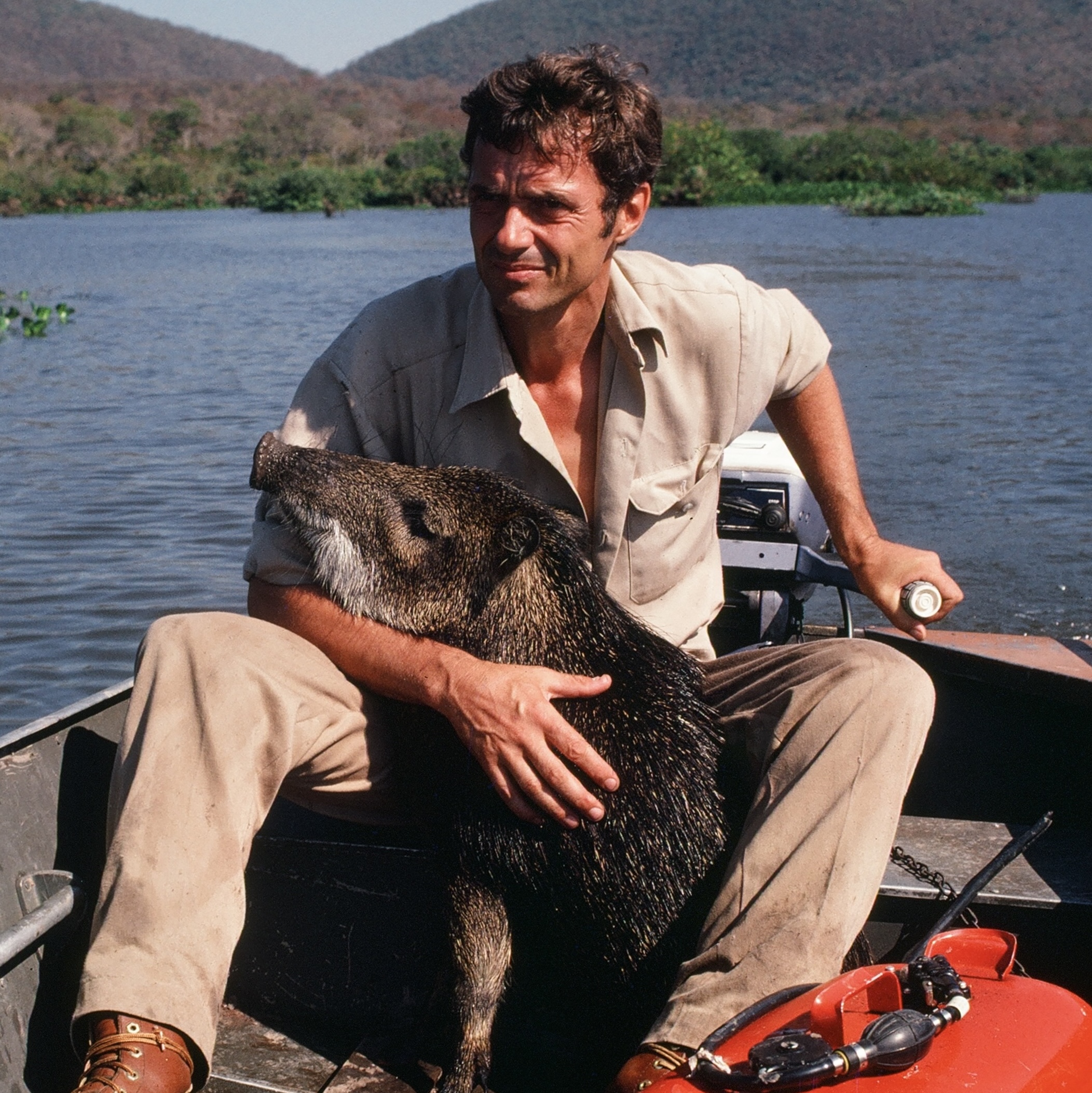
Rewilding Earth Podcast
Episode 172: “Homesick for a World Unknown: The Life of George B. Schaller” with Miriam Horn
00:55:20
Loading summary
Transcript42 lines
- [00:13]
A
In Tibet, where he's watching a polecat hunt. Pika. This cat is really on his game and in a very short order catches like four or five pikas. And the pikas finally go to ground. They finally get into their burrows to hide. And I have George's field journal. I read all 20,000 plus pages. It's all timestamped, basically. So the hikers have all gone into their burrows. The next entry is four hours later. One of them pokes its nose out to see if the coast is clear. And George is still sitting there. He's been sitting, waiting for four hours to see when the Faika will poke their noses back out. And he could just do it. Sam. Foreign,
- [01:27]
B
You're listening to the Rewilding Earth podcast. I'm your host, Jack Humphrey. Imagine walking into the heart of the Congo in 1959, not with a rifle or a battalion, but with a notebook and a folding chair. While the world still saw the mountain gorilla as a terrifying monster from the movies, George Schaller saw kin. He sat in the rain for 18 months, shedding the noise of civilization until his senses grew so sharp he could hear a branch snap at a mile away, just as the gorillas did. Known by conservationists around the world as the greatest field biologist of our time, George Schaller lived with lions in the Serengeti, tracked snow leopards through the Himalayas, and helped protect landscapes the size of entire nations. But behind the legendary headlines is a mysterious, often heartbreaking story of a man who spent 70 years homesick for a world he never knew. To truly understand a life this massive, you need a writer who knows the dirt as well as the pros. My guest today is Miriam Horne. George trusted Miriam for the job because she's lived with a foot in both worlds, splitting her time between rugged boots on the ground, conservation for the Environmental Defense Fund and U.S. forest Service, and and a powerhouse career as a New York journalist. She's a New York Times best selling author who's spent decades writing for Smithsonian, Vanity Fair and the Times. Today, Miriam takes us inside her new book, Homesick for a World Unknown, and the mind of the man who redefined Our connection to the wild. Miriam, thanks for joining me on the Rewilding Earth podcast.
- [03:08]
A
It's my pleasure to be here.
- [03:11]
B
We have a very big task before us today. I talked to Paul Ehrlich not too long ago, and I get really nervous when I talk to people like that because I want to honor those big ginormous careers and all the accomplishments and everything that goes with such a life. And I have to try to do that in an hour. And it just is like, how are we going to do it? I feel helped today because you've already worried about a lot of these things as you're trying to describe this huge project in smaller formats in different mediums, which I know has to have been a huge challenge for you because there's so much to cover with a person like George Schaller. So why, first of all, were you the perfect person to write George's story?
- [03:54]
A
Well, I think it's because I have lived this divided life. My. Really, my whole life. I've split my career between conservation work on the ground for the U.S. forest Service in Colorado and for Environmental Defense Fund and life as a writer, most of that time living in New York City. So I. I had. I had sort of a hand in both worlds. And it was really. George told me. George had turned down many biographers before me. And he told me eventually that the reason he said yes to me is because I had that on the ground, conservation experience. And so he trusted me to understand the complexities and not be sort of an armchair idealist who thought there were. Who passed judgment, for instance, on local people who were struggling with their own survival and with human wildlife conflict. And to realize that the solutions were going to be complicated, not perfect.
- [04:58]
B
Well, he chose well. He was going against the grain right off the bat. And some people probably skip over this and think it's not that big of a deal, but really big. People were telling him at the time. They were the leaders, the voices, Leakey and all of those saying that you don't go into guerrilla territory without a gun. And you don't go into the wild without these beasts. As they always said back in the day. It was these beasts and these other things. And it was also scary. It was like the opening of the original version of King Kong. And they just wanted to scare you about it. They were scared of everything in the W. And George decided to buck the system. Can you talk about that? It must have shocked the people around him that he did it.
- [05:42]
A
Yes, absolutely. I mean, he. Everyone until then who'd gone into the African jungle, which, you know, was still sort of viewed as the heart of darkness, had taken these big retinues you see in the old movies, you know, they would have 20 people behind them. And everybody would be in those pip helmets and be armed. And George refused to carry a gun. He knew that it would change his affect in a way that the guerrillas would sense. And it would introduce a kind of aggression between them or fear between them. He went and sat. He didn't sneak up on them. He went and sat in full view of them. Because he immediately saw that, like us, that we're far more afraid of the unseen. And that if they could see him, they would. They would make a fuss at first, but eventually they would just treat him like any other species that was wandering. By that, I mean, they live in a diverse world. And so here was just another animal sitting in the tree. And eventually they came to develop a fondness for him and a curiosity about him. Particularly a gorilla named Junior who would come and sit with him for hours on end. And also one, George's wife, Kay, who was very afraid. When they first got there, they were newlyweds and. And she was very terrified of the gorillas. And one day George took her out and they startled a bunch of gorillas. And he shoved her up into a tree, which. And he climbed into the next tree, as she said. He got the much nicer tree and he had the more comfortable tree. And he also had the rain ponchos and the lunch. So as they sat there for hours and it rained and sleeted, he could be comfortable while she sat there trembling both from cold and from fear, until something caught her eye. And she looked at another tree next to her and there was Junior, who she'd heard so much about, lying on his belly on a tree branch with his head propped in his hands, watching her like a kid would watch tv. And he started to kind of engage her. He started to do things to get her attention. And he totally overcame her fear. And so he. But, yes, it was an incredible move. It defied, you know, Carl Akeley, who shot the five guerrillas that are in New York's American Museum of Natural History, said anybody who approached them without a gun was a fool. Paul de Chaillu thought, you know, they thought they. They were a weird, like, science fictiony creature, almost half man, half beast. And they. They loaded their guns with these chunks of iron because they thought that bullets wouldn't kill this kind of supernatural creature. As you say, King Kong had just been revived just before George went. And here was the real King Kong. And the experts themselves, like Louis Leakey, like Sally Zuckerman at the Lemon Zoo, all said he was going on a suicide mission. And the reason, one of the really important things that had happened in George's life to prepare him for that was the time he had spent in the Alaskan Arctic with Olas Murie, one of the great field scientists who preceded George and Olas, I mean, they all had guns when they were in the Arctic. Olas had broken him open to the idea that they were living with these other beings, complex beings, and they had entered their world. Marty Muri, when Olas and Marty left Alaska, said, goodbye, grizzlies. Now you have your world back to yourself. And so it was an honoring of these other beings whose world they had entered. But also George had had some encounters with grizzlies where he realized how pointless a gun would have been, first of all, because he wouldn't have been able to move fast enough, but also how counterproductive it would have been. He. So he took one of those little starter pistols that they use at track meets to appease K. But. But never, never used it with gorillas anyway.
- [09:50]
B
So I remember when I was in my early 20s, and if Dave Foreman or Aldo Leopold or someone had told me, do this or don't do this, I'm absolutely sure I would do or not do whatever they told me to do. And George didn't. And I don't think people make a big enough deal out of that.
- [10:10]
A
Yeah, no, it's. I mean, it is what sets him apart, that so much of what of our encounters with nature, so much of our civilization comes out of this fear, this idea that these big wild animals are beings to be feared. And I think another important formative influence on him was this very dark childhood he had. He was born in Berlin in 1933 to an American mother and a German father. So he was. Wherever they were, he was forever an outcast. He lived with a great deal of human darkness and violence with bombs dropping and on a train tunnel he was in with American guns in his face. When he was in a boarding school his parents had shipped him off to. To try to get him away from the front because he was a teenager and he was in danger and being pulled into the war and the. And then the. The whole backdrop of what was going on with the. He. He. With the Holocaust and what. And what was slowly leaking out about that. And I think that set him up to understand that the. The scariest, most violent creatures on Earth were not gorillas or tigers or lions, but humans. And that he was actually moving to a. I mean, he soon discovered that gorillas are in fact the most placid creatures for the most part you could encounter. They're vegetarians, they're incredibly lazy. They spend their days sort of languidly eating and napping. And there a lot of the dogmas about things like the silverbacks and their Dominance, Their, their sexual territorialism and their, all of that he just saw were patently false. I mean, it quickly was apparent to him that most of these, these big poobahs of science didn't know what they were talking about. They'd never studied gorillas in the wild. The only studies of gorillas had been mostly as dead specimens on cold tables or in one case a captive gorilla named Miss Congo. But they, no one had gone before George to study mountain gorillas in the wild with. There was, there were two women that Louis Leakey had put in there. One of them was. It overwhelmed her and she spent almost no time there. The other one would be, she would be a good story. She, she spent a little bit more time with them. But nobody moved in. George and Kay moved into this jungle for 18 months and George went day after day after day to live with these gorillas. But I mean, you're asking such a good question about how does a 26 year old graduate student defy all these great men of science and all these certainties that were widely shared. I do think his, his youth where he saw the destructiveness of an ideology and even the destructiveness of how science was being deployed, the scientific lies that were being deployed in such a dark way, I think that helped break him open in some way.
- [13:39]
B
I had thought when I'd read about George's love of sitting and watching animals and the importance he places on observation and taking time. I always thought that, well, that had to be because of his mentors. Someone taught him to do that. And now I'm starting to think it might have been the gorillas that had the biggest impact on his early years of figuring out what it meant to observe and immerse yourself in something. And it was just because of the way you described that gorilla in the next tree over that made me think that.
- [14:11]
A
I mean, it's a very astute observation. He, I, the gorillas were incredibly important teachers. He, he decided he was really going to assimilate to their rhythms and their rules. So when he described how when he first started to sit with them, he noted they would, they would startle at things that he hadn't even heard. They would detect things with their senses that he could not perceive. But as time went by and he sat with them quietly day after day after day, his senses recovered their own acuity that, an acuity that kind of gets beat out of us by the noisy worlds, human worlds that we live in. And he would hear what they were hearing and he would startle at what they Startled at. He was always sheepish that when a silverback roared he would jump. But he was very relieved that as he put it, the other gorillas jumped too. So the gorillas were incredible teachers for him. They were also incredibly important to this point about, because they did. I mean they were certainly easy to recognize as kin. He says that nothing changes you like looking into a gorilla's eyes. I mean, there's probably no other animal on earth who feels more like our kin than a mountain gorilla. And they have these incredibly soft eyes and they really are one of the most placid of the great apes. But he. They also so quickly put to rest all of these dogmas that it really fortified his ability to just mistrust that all these scientific certainties that were being trafficked in around, you know, he also at University of Wisconsin where he did his PhD, Harry Harlow was there, the one who did those absolutely gruesome, infamous experiments with chimps where he. Monkeys, chimps, I think, where he separated babies from their mothers. It was a study to test what happened with war orphans and attachment theory. And he would separate these babies from their mothers and give them these surrogate mothers that were either like warm terry cloth that had a mechanism where the baby could get milk from this doll basically, or ice, actual ice cold, spiky, rejecting mothers. And it so damaged these babies. I mean, most of them ended up huddled in the corner clutching themselves. It so traumatized them. And so George had actually gotten to have a very close on look on what was still kind of the reigning practice of science when he was a graduate student were these laboratory experiments on animals that treated them as specimens that still often subscribe to this Cartesian idea that they were automatons, they were machines, that they didn't have inner lives, they didn't even feel pain. And what some people argued. And so, you know, he'd seen the horror of that. And so that also really broke this connection he had to the. These elders who professed to own the truth.
- [17:34]
B
Yeah, and I often think about how we look back on those times of those barbaric type studies that could only be performed on something you didn't think was really truly alive in a way that a human could be. And think that we have come somewhere from that. And in some ways we have, and in a lot more ways than I think people would think we have not. And I think that 50 years from now we'll probably look back on this time in the same way we're talking about that time in a lot of ways. I mean and if it's not for individual studies and our capacity to do really gross things on, on that level, it is going to certainly be for the wider level of biodiversity loss in general as a species. If you came here from another planet, you would say that this species has a disdain for diversity, biological and otherwise. It's just really strange. You take snapshots in time, you think about that compared to today. And we always think of ourselves as better than that.
- [18:34]
A
Well, and the converse of that is there. I don't want to dismiss the human mentors George had because he did have absolutely essential ones. And I mentioned Olafs and Marty Murray, who, you know, have this extraordinary marriage that became sort of the model he. For his and Kay's marriage that was really built around these wild adventures. And Olas was just famous for wanting to, you know, if he came upon grizzly scat, he sunk his hands into it to find out how warm it was and to sift through it to figure out what the grizzly had eaten and to smell it so that he could fully take it in. And, you know, Olas had both a level of observational acuity and also he always. George. The line I probably heard George say more than any other was he would talk about the intangible values, which was a line he got from Olaus. When George wrote Olaus to ask if he could go along, he'd heard that the Muris were going on this trip to the North Slope. And it's of course, the trip that resulted in the creation of, of anwar, the Arctic National Wildlife Refuge. And George wrote a letter from college, Alaska to Moose, Wyoming. That was all the address he needed. Can I come? I'm six foot tall, I'm strong. I'll work for what you pay the Gwich' in or for nothing at all. You know, I'll pay my own way if I need be. He was just determined to be on this trip. And Olas wrote back and said, well, I can't even tell you what we're going for. You know, I just want to be out in that world. And he. They both had a sense of what they both came to refer to as the intangible values. You know, so much of what we do now is even conservationists is built on what's the quantifiable value of having this animal in this ecosystem. We have to, you know, quantify its ecosystem services. And they were. So Olaf began with this basic sense that these animals have purposes in their own right. They have as much life as right to life as we do. And as much investment in their own lives as we do. And you don't measure their intelligence by how much they can imitate a human. And you don't measure their value by what they contribute to us. They're there are these interdependencies and George certainly helped illuminate them. But to recognize the value of these animals in their own right for their own selves was a super important thing. And then Brina Kessel was one of several women who mentored George along with Marty. And Brina gave him his. She was a professor at the University of Alaska where he was an undergraduate. And she gave him his first opportunities to go into the field as a freshman. She sent him in her stead. The Navy had rejected her going because she was a woman without a husband to join her. And so she sent freshman George up onto the Colville river with Tom Cade who would go on to found the Peregrine Fund to do a bird survey on the North Slope. And so he spent months out there and that was his is absolute first field experience. So 70 years ago there were, there were people then who could see what we're talking about some people seeing now and some not seeing now. So it. Yes, but I hope you're right that 50 years from now still more people see it.
- [22:15]
B
I'm thinking about that shifting baseline syndrome that also comes with the passage of time. And what kind of a toll, like how has he dealt with the world today and and reconcile with the world as it was 70 years ago. And dealing with the taming of the places he wants new is truly wild. Even though he has helped protect a huge amount, he's had to watch the world change from a place that we've been talking about today of how much wilder it was that has to weigh on a person. Did he give you any indication of that or in what ways did he do that?
- [22:53]
A
I mean, I think one of George's superpowers, and I've seen this in other conservation leaders, is they don't really think about the world that way. They think about that. It's never a one battle. It's never like you arrive. It's just what you keep doing every single day. And the heartbreak that George had to endure, I mean beginning with the guerrillas, you know, he was in the Belgian Congo when the Belgians suddenly decided they were going to go, they were going to exit and grant independence to the Congo. And the whole place went up in flames. And he also in neighboring Rwanda and he had to in the Barunga volcanoes where these gorillas were living and that it's their only home on Earth. He watched refugees coming in with cattle into this tiny bit of forest and in short order they would have destroyed the habitat to the degree that the gorillas would have been erased forever. There were only 400 of them. You can't do too much damage before you've lost them entirely. And so he stayed. The Belgians all left and he and one Belgian biologist stayed behind to do what they could to protect these gorillas from utter chaos and armed chaos. And you know, he did some pretty foolhardy things as a 20 something year old man and, but, but was later credited and, and unfortunately the, the new Congo government had the foresight to appoint a brilliant young conservationist. I mean, he wasn't really even a conservationist. He was bar, he was basically just out of college, but he had really good instincts and he first let George stay and continue his work. But then he really stepped up, as did a lot of the Congolese guards, stepped up and have continued to step up for decades. I mean, the heartaches that George has witnessed in ecosystem after ecosystem. And it was really his, his first big projects were, you know, he was in, well, he was in the Arctic, but then he was in the Congo with gorillas and then in India with tigers and then in the Serengeti with lions. And all three of those were national parks where the animals were relatively well protected, at least compared to wild animals elsewhere. And by the end of his time in the Serengeti, which was in the late 60s, he realized he didn't want to work any longer in parks. He wanted to go to the parts of the world that were being overlooked by other scientists and where there were no protections. And so that's when he went to Pakistan and used Pakistan as his home base to kind of look at much of Central Asia and the Himalaya, which became kind of his primary working home for the rest of his life. And Pakistan was what really brought home to him how much of the world was already emptied out. And it was only the 70s then. But that's where he really saw how, you know, he would walk for weeks through these landscapes and he would see six animals in the whole time. And he, you know, because people had been hunting out the Marco Polo sheep, I mean, hunting, hunting them out in huge numbers. And Pakistan had been through its own tumultuous history. And so it was a combination of the colonial powers and the maharajas and the new governments that were treating many of these animals as pests. And, and then you know, and when he was in Brazil working on jaguars, the ranchers killed his study animals as a way to get rid of him. When he was in China with the pandas, he saw panda after panda taken into captivity on the. The grounds that they were start saving them from starvation. And went. Even though he kept saying, the pandas are not starving. They're dying in captivity. They're not dying in the wild. You have to leave them in the wild. So it's. He has had to deal with. And he's, you know, watched animals. I mean, the gorilla. He watched gorillas have their hands torn off because people wanted them as souvenirs. He. That. I mean, the things that George has witnessed and continued on working, I think would have permanently broken any of our hearts. And again, it's the, you know, these qualities. He has one is this the one we talked about earlier about how did he step free of this fear? And, you know, I can suggest people that helped him or experiences that helped him, but somehow it is what set George Schauer apart from almost anyone else on earth. And the shame with this ability to. To endure these heartbreaks and to keep going. And he had to just keep doing it. You know, he. When he was working in Tibet, where he. He made 65 trips to Tibet, the Chinese, his. His perseverance with the pandas in the early 80s in a China that was not an easy place to work because it was right out of the Cultural Revolution. It was highly suspicious of, not only of foreigners, but everybody was suspicious of each other. And he was living in an icy tent most of the time. And pandas are incredibly hard to see in the wild. And so, you know, it was a really tough five years. And he was dealing with this. This. I mean, he called his book the Last Panda. He was watching what he thought could be the end of wild pandas with all this. All the taking of them into captivity, combined with some poaching and some other assaults on them, and the fact that he stuck it out for all those years won him the trust of the Chinese, and they gave him pretty much free access to Tibet for the next 40 years. So he made 65 trips to Tibet. No other Westerner has ever been granted that kind of access. But that's where he discovered that the Tibetan chiru, the beautiful Tibetan antelope with the tall lyrate horns, were being slaughtered en masse because they have the finest wool in the world. There had been a million animals. They were down to less than 100,000 by the time George figured this out. And Then the Chinese set him loose to figure out what the critical habitats were for the chiro and agreed to protect them. And George, by this time he was in his 70s and so walking these landscapes, he was famously tough when he was young, but even he, in his 70s, started to slow down. So in the end, Rick Ridgway and Jimmy Chin and Galen Rowell and Conrad Anchor finished a trip that George couldn't and found the calving grounds for the churu. And the pictures that Jimmy Chin and Galen Rowell took of them got George took to the Chinese government. And they protected, you know, huge amounts of habitat. I mean, the parks that George has persuaded governments to protect, if you added them all up, they cover an area the size of France and they protect not only the animals, but the traditional peoples that, you know, still are nomadic herders or subsistence hunters in these ecosystems.
- [30:40]
B
That is a heck of a thing to just walk away from a lifetime with. That accomplishment alone would be great. And he's got many more atop that.
- [30:48]
A
Absolutely.
- [30:50]
B
Dave Foreman considered George a mentor and cited his work all the time and his advocacy for big wild cores connected by corridors. And I was going to ask you, when do you think it was that it was way before the, the phrase rewilding was coined that he started talking like a rewilder, like someone who's like, okay, we can't just do parks. There's this park here and there's this park over here and in between is a complete dead zone. And those species he would know right away from all of his work need to connect for genetic diversity and all of that. They have to connect. So there's corridors. When would you say he became cognizant of the idea of recovery was a really big deal, which ultimately turned into the term rewilding.
- [31:40]
A
Well, certainly the idea of large landscape conservation and connectivity had already, he'd already witnessed it in the Arctic, in Alaska, because the caribou, he was one of the first people with the porcupine herd to gather together all these different sources of information, primarily from the native peoples who knew the caribou the best, but also from the bush pilots and from the Royal Canadian Mounties who moved around in the Canadian part of the Arctic and from his fellow scientists. And he was one of the first to sort of piece together a map of where the caribou moved and to understand that for these migratory species you had to protect their ability to move. And then he would revisit that over and over again with species over his 70 year career in terms of recovering broken places. I mean, again, the Virunga volcanoes were in pretty good shape when he arrived, but the habitat that was protected from the gorillas had been progressively shrinking. The Belgians had actually been carving out parts of the park to give to mostly European immigrants to farm. And so he saw that the guerrillas were being both shoved into these smaller and smaller areas, but also starting to be islanded so they could not reach guerrillas from other troops and have. So that they could mix their genetics. So he saw that really early on in terms of recovery. I mean, Pakistan was probably, again, because that's where he really understood how far these species were vanishing. And so that was where, after the Arctic National Wildlife Refuge, that was the first park that he worked to promote and took it right to the prime Minister of Pakistan. George was. For being an incredibly awkward man, which he is. He's not terribly at home among people. He was an incredible diplomat. And I think it's in part because he was kind of awkward, and so he could kind of look at people as if he wasn't one. He could kind of figure out the. The political dynamics in a room full of people, the same way he could in a tree full of gorillas. So
- [34:08]
B
that's just funny.
- [34:11]
A
I mean, it really. You really see him observing, like, when he's sitting in a room with a bunch of Chinese bureaucrats.
- [34:16]
B
Why couldn't you turn your powers of observation and wildlife on humans? I mean, it just totally makes sense that it's still funny.
- [34:24]
A
And he would do it. And, you know, and he never. I mean, he chastised himself always for this, but he never learned the languages of the places he worked with. You know, he learned a little Portuguese in Brazil, but he. He was always dependent on interpreters. But it also gave him this distance. So he would sit at a table. He was in a meeting in Beijing. He would draw the table with all the players around that he would, like, keep a field journal about what was going on in that room. And he would watch the dynamics, even what was going on in Chinese that he couldn't understand. He would watch their bodies and. And the deference in that. And he would get an incredible read on who, you know, what the power relations were and how to. To operate within them. And plus, you know, he was so rigorous and he was so respectful that. And humble that he, you know, he was never one of these, like, swaggering types, but that he. So he could really win these incredible political protections for these landscapes. So Pakistan was kind of the first place where he laid out a goal, suggested goal for The Prime Minister that he tried to protect Pakistan's endangered species in at least one place in the country, and that this place, Khunjerab, which is in northeast Pakistan, up near the Chinese border, could protect five of these endangered animals. And the Prime Minister created the park, you know, the largest park he created was in or helped to create. He would never put it that way. He would always say he, you know, suggested that it was the people in the country that created and including the local people and the, and the scientists, the national scientists that he mentored in every country he worked almost. You know, you look at most of the major wildlife scientists in the world and at some point they were in the field with Shaller as an apprentice. But the Chung Tang in northern Tibet, which is the second largest national park in the world, and again, he would try to get ahead of some of these destructive forces, the roads that were going in and fences that were blocking migrations. And he would stop that long enough for these landscapes to recover.
- [36:43]
B
CHANTING A hundred thousand square miles of habitat. Chinese GOVERNMENT Wow.
- [36:49]
A
Pretty amazing, huh? I wanted to say about, you know, how did he, how did he deal with the loss of everything? But we haven't talked about the title of the book. But that's one of the meanings of the title of the book. So the title is Homesick for a World Unknown. And it comes originally from a line George himself wrote in one of his books about Tibet. When he was a boy in war torn Europe, he found solace in two places. One was in the forest. He would go out in the forest and he would collect eggs. He started to be a little ornithologist. And in fact, when he started his Ph.D. it was in ornithology. And so the gorillas were kind of a radical, a radical shift from that. The other place he found solace was in reading the works of people like Sven Hedden, who was a Scandinavian explorer who went into Tibet right around 1900 or 1905. And George would read Headen's accounts and just dream and dream of going there. And it took him till the 80s before he was finally allowed into Tibet. So he was 50 years old. But when he was dreaming about it, he would say, can you be homesick for a World unknown? And he knew it was his home somehow he was already homesick for it, even though he'd never been inside of it. And so the image on the COVID of the book is George at the age of 23. We're looking kind of at his back, which is, that's significant because it it sort of is the way George, you know, it was never about George. He was never a lot of. Of naturalists, or at least nature writers. It's often very much about them and how they're being healed or enlightened by their encounter with nature. George was never very interested in what was happening in his interior. He was interested in these other beings and in becoming a portal for us, a window onto these other beings. And so we're looking at his back and he's looking out at what will become Anwar. And again, it's a world he's not yet entered, but he knows is his home. And he already feels homesick for there's another meaning of the title, which is he's homesick for a world he knew was already lost when he started working. So there's been tremendous loss in the 70, 80 years since George began his career, but there had. Had already been enormous loss thanks to, you know, the colonial extraction across much of the world and the wars that moved across many of these landscapes and the over hunting and over grazing and over logging, and all of this that had stripped the resources and the global markets that were emerging for wildlife, both mostly as meat, but often as other things and as furs or as leathers or as souvenirs or as pets. And so he was going in many places that he worked. He said the only place he could really stay find animals was either heads on people's walls or, you know, in cages at. At wildlife markets. So he himself was homesick for a while. He. He dreamt of times when tigers still roamed across all of Asia and, you know, prey were their prey were available in the hundreds of thousands or millions.
- [40:36]
B
So what makes me think back to this mythical time? It feels mythical, feels big, it feels cinematic. And I think there should be 12 movies about George's life on Netflix starting next week on Netflix. Would be great if they are listening. And it's this picture that John put on his interview with George, his written interview in February 2025 at rewilding.org a conversation with Field biologist George Schaller. And the top picture is, is I thought was John the profile of George in a canoe with his pet raven. I mean, come on, this is stuff that you. You read about in fiction books like this just doesn't have. That's exactly how you would depict a wildlife biologist back in that day. Back in that time. They would have a pet raven. Sure, why not?
- [41:30]
A
Well, and he went on to have a pet lion cub and a pet warthog and a pet mongoose. And a pet peccary. Most of them were rescues. I mean, he didn't really believe in capturing, you know, a healthy wild animal. So, for instance, Ramses, who was probably his most famous pet, was a lion cub that had been abandoned by his mom. She didn't have milk, and so she, in kind of desperation, picked him up and dropped him next to a carcass of a. Yeah, wildebeest or something. And Ramses was way too little to be able to tear meat off of such a carcass. So George saw him and saw that he was going to die. And he also saw that other lions would soon come in and eat this cub. They're not averse to eating their own. And so he and Kay had vowed to each other they would never have a pet lion. And here comes George home with this baby lion and who was really on the brink of death. They had to. You know, he was so cold, Case said that even you stuck your fingers in his mouth. Even his insides were cold, so they had to warm him up and feed him with a dropper. And so, yes, it does seem like a dream life. It's a life. I mean, back to your very first question about why me for this book. I mean, it's a life. From the time I was a little girl watching Mutual of Omaha Wild Kingdom, I thought I wanted a life like George Schaller's. I thought I wanted. I've always loved wildlife. I wanted to live in the wild in, you know, intimate proximity with them. I wouldn't have lasted a year as George Schaller because the amount of fortitude and patience, you know, the months that would go by where he would see nothing at all, months of physical misery in nettles and thorns and ice storms and. And frozen tents and, you know, he would. And ticks and, I mean, everything that nature would. Could deliver to him. But it. But there were many aspects of it that were a dream. And yes, that raven played an incredibly important role in his life. So that was the trip he did with Tom Cade, who became the great peregrine conservationist in the world and in the United States, and heat peregrine falcon. And he. He was a falconer. And so he taught George the basics of how you catch and train a wild bird. And the jesses, the leashes that you put on them and all of that. And so George succeeded with this raven, and the raven went back to college with him at University of Alaska. And the ravens have a lot of. In many cultures, they're considered a sacred being. And that, you know, they can bring good fortune. And so this raven, in fact George, the way Kay and George met was Kay heard somebody yelling in the. Down outside her window in her dorm. And she looks out and here's this handsome young man, three years her junior, I might add, this handsome young man yelling and shaking his fist at the sky. And she thinks, okay, well, people told me about this Arctic madness. Clearly, this is somebody with arctic madness. And. And then this raven drops out of the air onto George's arm, and they kind of have this little conversation and off he goes. Well, that was it for Kane. That was. From that moment on, she was fascinated with who this wouldn't be.
- [44:59]
B
Seriously, that's got to be one of the movies. Just his college years. Has to be one of the movies on Netflix next week. Thank you very much.
- [45:07]
A
No, I agree. I mean, I. My dream is that we get a television series out of this. I mean, because, you know, you could do a mother that. Each chapter of his life, it's so wild in new ways. He's in an entirely new country and political context and ecosystem and charismatic mammal and stage of life with his own family. And so, yeah, it's an unbelievable life. There's no question.
- [45:36]
B
Unbelievable. Very, very difficult, hard. I. I kind of agree with you about, you know, we see these pictures of him canoeing with a raven in Alaska, but the time spent before and after this could have been really, really cold, boring, awful, uncomfortable, you know, and I don't think a lot of people think of that when they think they all. They, you know, you don't take pictures of that stuff. You take pictures of this stuff with the raven and the, you know, and yeah, it's got to have been a very. But what fulfilling times. You know, he paid his dues for those times, but he got to have those times.
- [46:13]
A
And that's right. Wow. And you know, his capacity. Another, you know, we've been talking about his superpowers and another of them was disability to wait like nobody's business. I. I recount a moment. He's in Tibet where he's. He's watching a polecat hunt. Pika. And the. He sees this. This cat is really on his game and in mat in a very short order get catches like four or five and these pike and like their little rabbit relative. That's like a guinea pig sort of. And. And the pikas finally go to ground. They finally get into their burrows to hide. And I have George's field journals. I read all 20,000 plus pages of George Field. George's Field.
- [46:59]
B
Bless you.
- [47:00]
A
Which were basically a. Day by day. It's like cinema verite, you know, basically, day by day, I got to sit with George every hour in the. In the field with him. And. And so. And it's all time, you know, timestamp, basically. So he. It's like 10:20, and then it's like 14:40, because he used military time well. So he's sat down. So the hikers have all gone into their burrows. The next entry is four hours later. One of them pokes its nose out to see if the coast is clear. And George is still sitting there. He's been sitting, waiting for four hours to see when that pika will. When the pika will poke their noses back out. And he could just do it. I don't. And I mean, Hans Crook, who was with him in the Serengeti, Hans was studying hyenas, said that lions were the hardest animal to study. And George, you know, as he did with all these animals, he made the foundational study of lions, as he did with gorillas and with tiger and with. And with pandas and with Marco Polo sheep and. But he said. Hans said lions were particularly difficult because they basically just sleep all day. So you just have to be able to sit there watching animals sleep until the one minute when some action happens.
- [48:15]
B
So patience being another massive keyword.
- [48:18]
A
Yeah.
- [48:19]
B
To the success. Explaining the success of a George Schaller. I just had one question that I have to ask. So the Rewilding Earth podcast listeners are a varied bunch, and we're getting a lot more younger people, but we have a pretty big core of older people who. Who think they know a lot about George's life. So I wanted to ask you, what's something in the book that is. I know it won't be a spoiler, because I know you've probably got 30 or 40 or 100 of these things in the book, but pick one that you're pretty sure most people don't know about.
- [48:52]
A
I mean, I don't think most people know about this childhood of his. He. He wrote about it. If they read Tibet Wild, he wrote about it a tiny bit. But he was moved four times because his father, who was. Who, you know, had when they arrived in 1933, his father had to make a decision if he was going to continue working as a diplomat for the German government. So his parents met in Chicago in 1932, when his father was the German consul there. His mother was kind of a debutante. She came from kind of a fancy family, Midwestern family, and they Met and married and sailed to Germany just in time for Hitler to come to power. So his dad had to make a choice. And if he was going to continue working as a diplomat, he had to join the Nazi party, which he did. And so they had this really complicated life with his father being posted to different countries and, you know, George being loathed basically everywhere he was, because either for his American mother or for his German father. So if you read Tibet wild, there's like 20 pages that kind of touches on this a little bit. But another part of the book that his time in Brazil, he never wrote a book about Brazil. As you know, George wrote a book about almost everywhere he worked and generally two, sometimes more. So with the gorillas. He wrote the Mountain Gorilla, which was his dissertation, but it was the scientific monograph. And then he wrote Year of the Gorilla, which was the popular book in India. He wrote the Deer and the Tiger in the Serengeti, he wrote four books in. So he. He kept writing these. These stories, but, I mean, he would write these accounts, but he never wrote an account of Brazil. And his young protege there, Peter Crawshaw, asked. Finally asked him why, and he said it would be too sad because that's where they had killed the jaguars he was studying in order to get rid of him. So the, you know, the whole story in. In Brazil is a story that no one has ever read because George really never wrote it. I mean, he wrote a couple really brief little magazine pieces about it, about the capybara, but, you know, it's a completely untold story. Pakistan was revelatory for me, because when he wrote about Pakistan in Stones of Silence and Mountain Monarchs, Pakistan and the surrounding countries, he lent it a coherence that when I read his field journals, it really didn't have. And it's a moment where George kind of lost his way. And I think it was partly. It was. His home life got more complicated. And so it was partly about that, and it was partly about confronting. Really confronting this great dying in the world and understanding that, you know, he'd kind of been living in a dream world in these parks in the Congo, in India and the Serengeti. And now he was seeing what was the real true state of the planet and how, you know, he would often say he was too late. He would. And so I think the. That kind of. It wasn't aimlessness, but, you know, everywhere George had worked up until then, he was so systematic about where he would go when and what, you know, the picture that he was building. And it was the first time where I felt like there was like George got lost for a little while. So I think they won't know that either.
- [52:41]
B
I think getting lost is kind of also a theme, but getting lost from his, his knowing, being lost is a whole level of loss that I think I would be scared of experiencing. But I think I also probably can remember some times in my life what there was some semblance of that. Yeah, yeah.
- [53:03]
A
I mean, the other thing that goes on in that, in that chapter of his life in Pakistan and Nepal is this famous trip with Peter Matheson. And I think I certainly, you know, because I got to read two accounts by each man because I had Peter Matheson's field journal and his novel or his, his book, his non fiction book, the Snow Leopard. And I had Shaller's field journal and the chapter he wrote in Stones of Silence about that journey. And I came to feel very differently. I came to understand things about both men that were very different from what I walked in with. So I think that will also be people who go back far enough to remember reading the Snow Leopard and a lot of people, that's where they met George as GS in the Snow Leopard. So I think that will also be interesting to kind of look at that trip through a more complicated lens.
- [54:02]
B
Homesick for a World Unknown is available for pre order@miriamhorne.com and if you're listening to this a year from now, it's just available there. You don't have to pre order it. You can just straight order it. Miriam, I know we could sit around a giant campfire with a lot of wood and talk for a very, very long time about George. And that's a clunky way of getting the word out about George's life. It's much better and efficient that you wrote a book that everybody can sit around their own campfires and experience this wonderful life and your wonderful work. Thank you so much for doing it and thank you so much for sharing today on Rewilding Earth Podcast.
- [54:44]
A
It was really my pleasure. This was a great conversation. Thank you.
- [54:48]
B
Thanks for listening to the Rewilding Earth Podcast. We do what we do because of you. This podcast is supported by listeners like you who long to live in a wilder world. Please consider consider donating@rewilding.org and subscribe to our weekly news and article Digest. While you're there to go the extra mile, you can follow and share Rewilding Earth on Instagram, Facebook and Twitter. Bonus points for sharing this podcast with your friends. To listen to past episodes, go to rewilding.org pod that's rewilding.org podcast.