← Rich Habits Podcast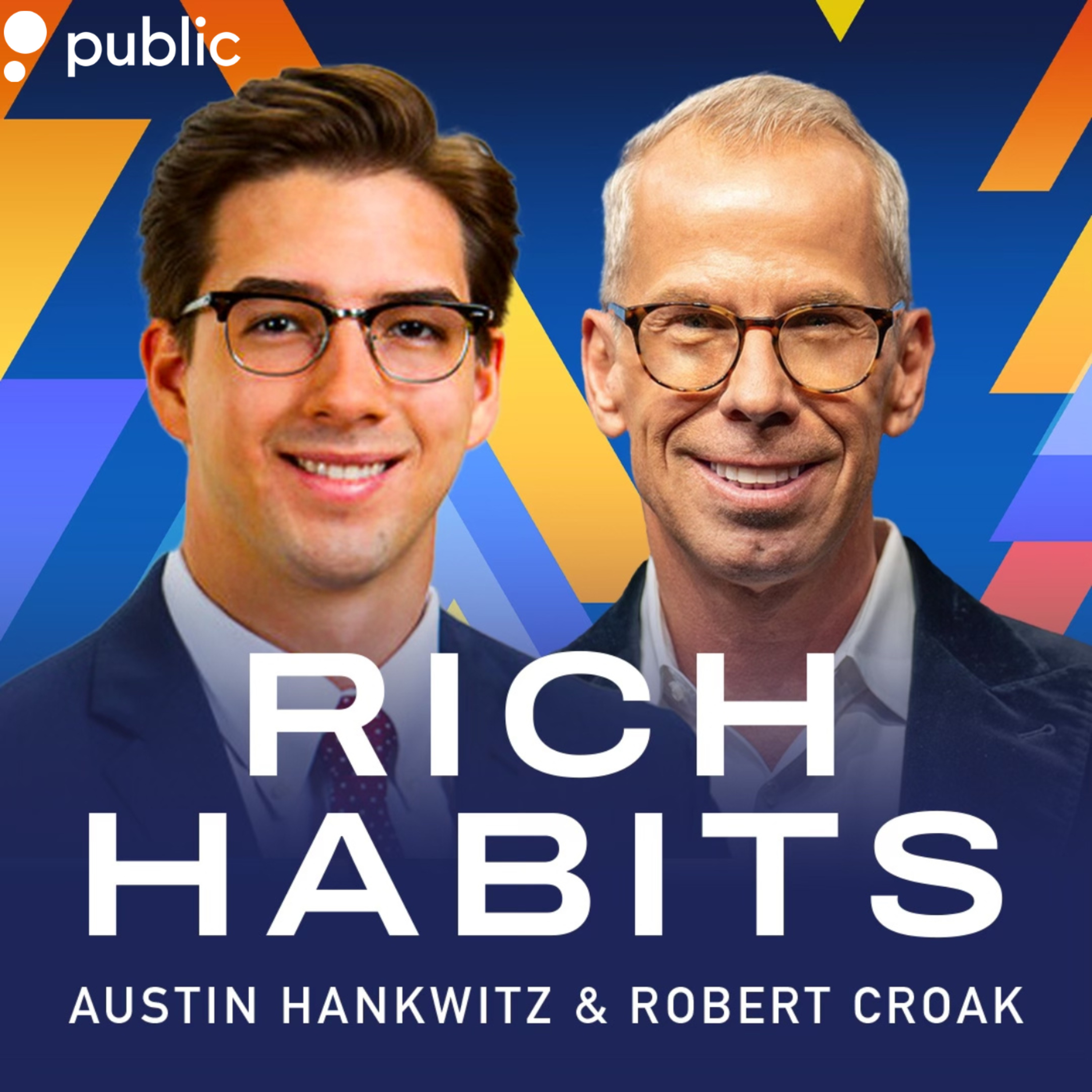
Rich Habits Podcast
Anthropic & SpaceX Partnership, GameStop Buying eBay & Data Centers In Your House
00:29:29
Loading summary
Transcript47 lines
- [00:00]
A
You are tuning in to the Rich Habits Radar, our Friday episode of the Rich Habits podcast, where every Friday morning we're coming at you with the biggest headlines impacting you and your money. This episode is brought to you by vcx, the public ticker for private tech. My name is Austin Hankwitz. I'm joined by my co host Robert Kroke. And the three things sitting at the top of our Rich Habits Radar this week include Anthropic taking over Elon Musk's supercomputer, the US and Iran closing in on a deal to hopefully end the war, and Google killing Fitbit and replacing it with a $99 Whoop competitor. And be sure to stick around to the end where we talk about Nvidia's plan to put a data center in your house. No, we're not joking.
- [00:44]
B
We are definitely not joking. And this is going to be an awesome episode. So many cool things to talk about and cover. So let's start out by Anthropic, the company behind Claude, one of the most popular AI assistants in the world, just announced it will use all of the computing capacity at SpaceX's Colossus 1 data center, Memphis, Tennessee. That's 300 megawatts of power and more than 220,000 Nvidia GPUs, including H2 hundreds and the next generation GB200 accelerators coming online by the end of this month.
- [01:18]
A
So let's explain why this is such a big deal, starting with the backstory. Colossus 1 was originally built by Elon Musk's Xai company to train Grok, their AI chatbot. It launched in September 2024 at a former Electrolux factory in South Memphis of Memphis, Tennessee there. But in February of 2026, SpaceX merged with Xai. So Musk is now building Colossus 2, a much bigger facility in Memphis's White haven neighborhood. And SpaceX has already shifted its AI operations from Colossus 1 to this new Colossus 2, which means Colossus 1 has capacity to spare. Now enter Anthropic into the equation.
- [02:01]
B
Yeah, this comes at a critical moment for Anthropic. The the company has been compute starved. You've seen it all over the headlines. And demand for Claude has exploded. Annualized revenue grew from 1 billion in December of 2024 to roughly 30 billion by the end of March 2026. Which is just crazy, crazy revenue cloud code alone, their AI coding tool is doing over $2.5 billion in annualized revenue. But they've been throttling back users because they physically don't have enough GPUs to to serve everyone. This deal, Anthropic says will substantially increase their capacity. And they've already announced higher usage limits for Claude Code and Claude API.
- [02:43]
A
That's been one of Elon Musk's priorities with the company for a while now. There's been no details formally announced, but the fact that it was mentioned publicly signals both companies are thinking about a long term partnership.
- [02:55]
B
And the timing on all of this matters because SpaceX filed confidentially with the SEC on April 1st for an IPO targeting evaluation between 1.75 trillion and $2 trillion. That really just blows my mind every single time. The public S1 is expected by late May with a roadshow set for the week of June 8th. A major revenue generating compute deal with one of the hottest AI companies on the planet. That's exactly the kind of story you want to tell investors right before that IPO when you go public.
- [03:27]
A
And speaking of Anthropic, there's been rumors of a $50 billion fundraise at a up to 900 billion valuation for that company, which is much more valuable than OpenAI's most recent valuation. I think it was 852 billion. So lots of chatter, a little chit chat here and there. So Robert, why don't you break it down for everyone? What does this mean for you and your money?
- [03:49]
B
Yeah, this deal is a perfect snapshot of where the AI industry is heading right now. Demand is outstripping supply so dramatically that the most well funded AI companies in the world are making deals with competitors just to get access to those GPUs. Anthropic and Musk companies are not natural allies and Musk has been publicly critical of Anthropic's leadership in the past. But when your compute starved and someone has 220,000 idle GPUs, ideology takes a backseat to infrastructure.
- [04:18]
A
Yeah, and for your portfolio, the obvious beneficiary here is Nvidia. Every one of these announcements Colossus 1, Colossus 2, the 700 billion plus CapEx spend that we talked about last week, all of it traces back to Nvidia hardware. It's funny, I was on X and I saw Nvidia, the real Nvidia X account sort of quote tweeted Anthropic's announcement and was like happy to be the one to supply this. Right? Like they're like they're the ones. It's all back to Nvidia. Their GPUs are the backbone of every AI data center on the planet. Now, beyond Nvidia, the semiconductor supply chain companies are just as important. Micron for memory, Broadcom for networking, TSMC for fabrication. All of these names benefit from the insatiable demand we're seeing with AI.
- [05:06]
B
The bigger takeaway for me is that the AI race is consolidating around a handful of massive players. OpenAI has Microsoft. Anthropic now has SpaceX and Amazon. Google has DeepMind in house. Meta is building its own. So if you're a smaller AI company without access to hundreds of thousands of GPOs, you're simply going to get squeezed out. The compute haves are pulling further ahead of the compute have nots and that divide is only going to widen.
- [05:33]
A
I could not agree more. Which is why we're seeing a flurry, right? $700 billion Robert of Capex spend right now from hyperscalers let's now jump to our second story. With the potential deal to end the war between the US and Iran, the White House believes it's getting close to an agreement framework for detailed nuclear negotiations. According to Axios, the US expects Iranian responses on several key points this week. Two US officials and two other sources briefed on the issue say that this is the closest that the two sides have been to an agreement since the war began, which I think is good news. I don't want war. I don't think anyone wants war.
- [06:09]
B
In its current form, the memo would declare an end to the war in the region and a start of a 30 day period of negotiations on a comprehensive long term agreement.
- [06:19]
A
Iran would commit to a moratorium on nuclear enrichment. The duration is being actively negotiated, but sources say somewhere between 12 and 15 years as the likely landing spot. Iran said 5 US said 20 and maybe they'll meet somewhere in the middle there. Any Iranian violation would automatically extend it when it expires. Iran would only be able to enrich about three and a half percent, which is the civilian reactor grade, well below weapons grade. Iran would also commit to never seek a nuclear weapon, agree not to operate underground nuclear facilities, and submit to enhanced inspections, including snap inspections by UN inspectors.
- [06:59]
B
And here's the headline that would have been unthinkable six months ago. Two sources claim Iran would agree to remove its highly enriched uranium from the country entirely. One source said an option being discussed is moving the material to the United States, which is crazy to me, but that sounds amazing. That has been a key American demand that Tehran has rejected up until now.
- [07:19]
A
In exchange for this, the United States would gradually lift sanctions and release billions of dollars in frozen Iranian funds held all around the world. Both sides would gradually lift restrictions on transit through the Strait of Hormuz during that 30 day negotiation period. And if the talks collapse, U.S. forces could restore the blockade or resume their military action.
- [07:40]
B
Secretary of State Marco Rubio said this is highly complex and technical and called some of Iran's top leaders, and I'm quoting, insane in the brain. The White House believes the Iranian leadership is divided and may be hard to forge consensus across the different factions. US Officials have expressed optimism about deals at several points during this war and have yet to reach one. So nothing has been agreed upon yet. So Austin, this is a big deal. This could really move the markets and everything else. Tell our listeners what does this mean for you and your money.
- [08:12]
A
Yeah, I mean if the deal holds single most important macro development of the year, right. The Strait of Hormuz handles roughly 20% of the world's petroleum, 20% of global liquefied natural gas. When it was effectively shut down earlier this year. Brent crude, which is like the price of oil, essentially went from the low 70s to the high 110 range. Gasoline has spiked CPI, which is essentially the inflation index that re accelerated to 3.3%. The Fed's hands were tied in the most recent meeting because they said, listen, this isn't a demand side, this is a supply side and we can't help the supply. We can only impact demand now by unwinding that even gradually over the coming 30 days. That would remove the biggest inflationary shock for the year thus far, which hopefully leads us to rate cuts. Who knows?
- [09:01]
B
For your portfolio, the beneficiaries are clear. Airlines like Spirit, Rest in Peace cruise lines, consumer discretionary anything where fuel costs compress margins. Delta, United, Southwest, Royal Caribbean, they all get an immediate tailwind from cheaper oil. Consumers get relief at the pump pump, which means more discretionary spending, which means retail and restaurants benefit too. So this is great news if it happens.
- [09:25]
A
I want to double click on the pump thing, Robert, because I've seen literally in the last like three days or five friends put on their Instagram stories that they're spending 60 or $70 to fill up their gas tank at the pump when normally they would only be spending, call it 30, $40. Right. So they're spending an extra 30 or $40 just to fill up their tank every week. That's 30 or $40 that doesn't get spent at Chili's or Texas Roadhouse or at you Lemon. Not that anyone's buying lululemon stuff for 30 bucks. These days. But you know what I'm saying, right? It's like the more money that goes to one thing that we all have to spend money on, which is fuel for our vehicles and transportation. That is money that can't go and be spent somewhere else. And so those companies that rely on that discretionary spending, the person that says, yeah, let's go eat out this taco Tuesday for Cinco de Mayo, right, that restaurant that was hoping that people would go, you know, pull up to their restaurant or spend money to whatever it is with that extra 30 or $40, they don't have it in their budget anymore because it's already spent pump. So I think this is going to be a really big deal if we can get these gas prices down. I love to see this. The deal's not done though. Iran's reviewing the proposal. There are hardliners in Tehran who just don't want to negotiate on all this stuff. So again, this is not done yet. But progress is progress and that's what I'm excited about.
- [10:42]
B
And we will definitely make sure to keep you guys abreast of everything that is happening with this because it touches all of us throughout all aspects of our finances because little leaks do sink ships and seeing $5 a gallon gas is really difficult now. Austin, before we jump into our third story, support for the show comes from vcx, the public ticker for private tech. For generations, American companies have moved the world forward through their ingenuity and determination. And for generations, everyday Americans could take a part of that journey through perhaps the greatest innovation of all, the US Stock market.
- [11:16]
A
It didn't matter if you were a factory worker in Detroit or a farmer in Omaha. Anywh one can own a piece of the great American companies. But now that's changed. Today, our most innovated companies are staying private rather than going public. The result is that everyday Americans are excluded from investing and getting left further behind, while a select few reap all the benefits. Until now.
- [11:38]
B
Introducing vcx, the public ticker for private tech, VCX by Fundrise gives everyone the opportunity to invest in the next generation of innovation, including the companies leading the AI revolution, space exploration, defense tech, and so much more.
- [11:53]
A
Visit getvcx.com for more information. That's get VCX.com carefully consider the investment material before investing, including objectives, risks, charges and expenses. This and other information can be found in the Fund's prospectus@getvcx.com this is a paid sponsorship. Robert. I wonder if we see anthropic rays at that 900 billion dollar valuation that they're rumored to be doing here. And VCX has about 20, I think, or 25% ownership, like call it a fourth, a fifth, whatever it might be of the fund entirely is in anthropic what that markup might do for that market. Net asset value. It'd be really cool to see that. So I'm definitely keeping an eye on this one.
- [12:34]
B
Yeah, I think so too because it will move the needle and get that M nav price more in line with where it should be. So we'll definitely keep an eye on that and I'm excited as well since we are both holders of vcx.
- [12:45]
A
Now let's go jump to our third story of the week, which is Google launching for Fitbit Air 99. Screenless fitness band that looks, feels and functions almost exactly like a whoop. You guys have probably seen these wh o o p It's like a little bracelet people wear. Really popular. I had one, I didn't really like it that much. It was also very expensive. Now the one that Google has launched here, the Fitbit Air has no screen, has no buttons, just a small modular sensor that pops out of the band and can be swapped into different straps, wristbands, chest straps or whatever you want to wear it with.
- [13:20]
B
This is definitely a step in the right direction. RIP Whoop. It weighs 5.2 grams without the band and 12 grams with it. It's 25% smaller than the Fitbit Luxe and 50% smaller than the Inspire band. And here's the kicker, it costs $99. No subscription required for the core features. So this is something for us all to keep an eye on.
- [13:44]
A
I think that's interesting you said no subscription because Whoop charges 199 up to 359 per year just for the subscription. And that's on top of the hardware. So the Whoop MG band itself is $360. So to get the full Whoop experience, you're paying 500 to $700. To get your Whoop going on, Google's offering a competing product for a hundred dollars flat. No subscription fee, no nothing. Just buy it once. Get all the access.
- [14:11]
B
And the Fitbit Air packs an optical heart rate sensor, gyroscoped accelerometer, blood oxygen sensor and skin temperature sensor for sleep tracking. It's waterproof to 50 meters. Battery life is seven days with a five minute charge getting you one full day of use. And it can work alongside of a Pixel watch and you wear the watch during the day and the air for sleep and workouts if you want. So this thing sounds magical. I'm definitely going to want to check it out.
- [14:40]
A
Yeah. Not just a hardware story, this is a platform story because on May 19, Google plans to kill the Fitbit app app entirely. It's being consolidated into a new app that they're calling Google Health. Along with Android's Health Connect, the Fitbit Premium subscription is being rebranded as Google Health Premium, and the AI Health coach that's been in beta since October is now rolling out completely to the public.
- [15:03]
B
Google's VP of health and home told the Verge that the goal is to become a health platform that works with any device, not just Fitbit and Pixel hardware. Eventually, they want Google Health to work with Apple Watches, Garmins, Whoops and Oura Rings. They want to consolidate the fragmented world of health data, where your fitness metrics are all in one app, your medical records are in another, your nutrition is in a third into one single platform with AI powered coaching. Sounds incredible, Robert.
- [15:33]
A
Nearly half a million users participated in the Google Health beta, and Google received over a million pieces of feedback. The final version will add back missing features like cycle tracking, a more accurate sleep algorithm, and what they describe as a less chatty AI coach. So Robert, what does this mean for you and your money?
- [15:50]
B
This is Google doing what Google does best, using distribution and price to commoditize a competitor's core product. Whoop Build a great business by charging premium prices for a screenless band plus a subscription for Insights. And Google just undercut them on price by 70 to 80% and bundled it all into a platform that already has a billion Android users as potential customers for your portfolio.
- [16:15]
A
Google's hardware and services business has always been the smallest part of their revenue pie, but the strategic play here is about the data. Health data is the next frontier for artificial intelligence. Whoever owns the health data platform will have a massive advantage in personalized AI coaching, insurance partnerships, pharmaceutical targeting and clinical research. Google acquiring Fitbit for over $2 billion a couple years ago never really made sense as a hardware play, but it makes makes perfect sense as an AI health data play.
- [16:48]
B
So the company getting disrupted here is Whoop, which is currently private. But if you own shares in Apple, it's worth noting that the Apple Watch faces a new competitor in the wearable health space from a company that's deliberately building a platform agnostic approach. Google Health working on iOS means they're coming for Apple's health data moat directly.
- [17:08]
A
So the big picture here is that we're watching fitness and health tracking shift from just A hardware business to a data and AI business. The ban on your risk is becoming the commodity. The value is what you do with the data. The band is telling you. And that's the race Google has entered in a serious way. So, Robert, those are our top three stories for the week. We of course talked about SpaceX and Anthropic's partnership, hopefully the end of the US and Iran war and Google potentially putting Whoop out of business. I was invited to invest in Whoop. I felt like an idiot for not investing in Whoop. And now I'm kind of like, oh, I'm glad I didn't do that.
- [17:43]
B
This really illustrates how important it is to understand these, these sectors and these technologies and how fast things are growing. Because a company that is once like WHOOP has ruled the world in what they do now is facing this AI decimation and what Google's doing. And it happens very quickly. And that's why we have to keep our eye on the prize no matter what type of sector we are investing in.
- [18:06]
A
So, Robert, let's now jump to our radar points. As a reminder, I come with three sort of show and tell stories, headlines, whatever you want to call them. Robert's got three as well. It's our favorite three headlines of the week and we share them here with you. So I'll kick us off. My headlines include Spirit Airlines shutting down for good. Ryan Cohen making a $56 billion unsolicited bid to buy ebay. And the best cities to start your career aren't exactly where you would think if you're a recent college graduate, which means if you're a recent college grad or, you know, a recent college grad, this little headline story, show and tell is going to be for you. You. So let's start with Spirit Airlines unfortunately just shutting down and going out of business. After years and years of losses, two failed merger attempts, and a bankruptcy filing back In November of 2024, Spirit Airlines is officially closing its doors. The first major US Airline liquidation in over a decade. At its peak, spirit carried nearly 60 million passengers a year on their ultra low cost model. The budget airline playbook of charging $49 fares and nickel and D for every single carry on or water bottle or whatever obviously didn't survive. Especially when you pair it with rising fuel costs, post pandemic labor expenses, and this blocked JetBlue merger that obviously would have kept it in business. So whoever blocked that, you know who you are. I think that that obviously is the reason Spirit Airlines is not with us anymore. But Monopolies, right? Yeah. Okay. Next story is GameStop's Ryan Cohen making this massive bid to buy ebay. Ryan Cohen sent ebay's board of directors a letter offering $129 per share, which is a 20% premium to where their stock was trading at in half cash and a half stock deal. Despite GameStop's market cap being just 12 billion and eBay's being 46 billion, he says he's lined up $20 billion of financing from TD bank, built a 5% stake through derivatives and argue he could double ebay's earnings by cutting two and a half billion dollars in sales and marketing blocks. EBay's board confirmed that they're reviewing the offer, but the stock only popped to $109, well below the 125, which means that investors are deeply skeptical that something like this actually closes. His own ebay account just this week got suspended. Who knows why, but I just thought that that was so funny. He was selling, he was selling his socks for $8,000 to help fund the deal of ebay. It's, it's pretty funny. Big trolling going on for ebay Here, here. All right, so this one's for the recent college grads and the people that are graduating. Best cities to start your career aren't exactly where you expect. A new ADP analysis of 400,020 something or others found that Birmingham for recent graduates and the median graduate wages are up 16% to about $60,000 a year in the booming bioscience and engineering sector in that specific metro. Tampa jumped from 26th place to second on the strength of hiring rate specifically in healthcare and financial services. And San Jose cracked into the top three thanks to a quiet AI driven rebound in junior tech jobs.
- [21:26]
B
Love your radar points today. So good and just so insightful. And I guess the other takeaway for me is seeing a company as large as Spirit just shut down. Now, I know they've had their financial issues, but I just think it's weird because when the government blocked the merger with JetBlue, were they not considering they're so worried about Monopoly yet there's monopolies everywhere and sector. But to not think forward ahead enough that they could cause that 17,000, those 17,000 people to lose their jobs is just such short sighted thinking in my opinion from the government. So that's a big takeaway for me as well because these people got no advance notice and boom, they're just out of a job. So I really hate to see that.
- [22:08]
A
I do too. Robert. Now, before we jump to your radar points, this episode of the Rich Habits podcast is brought to you by Equable Shares and their Hedged Equity ETF ETF Ticker. H E D G if you've been thinking about how to balance market exposure with a disciplined risk approach, H E D G could be right for you. It's an actively managed ETF that combines large cap US equity exposure, aka the S P500 with an options hedging strategy that seeks to mitigate downside risk with a partial put spread and covered call
- [22:43]
B
writing in plain terms. It's an equity strategy that doesn't just sit there hoping the markets will go up. It has built in tools that seek to manage risk and create more disciplined low volatility strategy for those long term investors.
- [22:56]
A
So to learn more about Equitable Shares, Hedge Equity ETF H E D G please visit equableshares.com fun hedg and as with all investments, investors should carefully consider the investment objectives, risks, charges and expenses before investing. The prospectus contains this and other important information and can be attained@equableshares.com Please read it carefully before investing. Investing involves risk, including possible loss of print principal. Distributed by Kassar Distributors llc. Robert, we've had Ron Santella on the show a handful of times now. He is a wizard at his craft. He has built the easiest way for people to have that downside protection, that insurance in their own portfolios with the Hedg etf I think it is absolutely incredible. I was just speaking with him earlier this week to get his insights on this market rally we've had something he said really stuck out to me. He said when the markets are at all time highs, it's cheap to buy insurance against the downside. Right. And so as we think about the markets are green. They're green, they're green. This is a great time if you haven't already added a little bit of exposure to Hedg and they're sort of hedged Equity ETF there. I've been doing that. Personally, I think it's an awesome, awesome thing to keep in the back pocket of that portfolio. So Robert, walk me through your radar points.
- [24:11]
B
Yeah, mine aren't quite as fun as yours, but I think they're very insightful and interesting. So let's get into to it. Nvidia is putting many data centers on the side of your house. That's right. Nvidia just partnered with Span, a California startup known for their smart electrical panels, to install small AI compute nodes called XFRA units on residential homes and small businesses. And how this works is the units absorb unused electrical capacity from local grids and homeowners get compensated for the power and network access. Think of it like renting out your roof for solar, except you're renting electrical panel for AI. Compute span claims a network of 8,000 units and can match a hundred megawatt traditional data center at 1/5 the cost and 6 times the speed. And they've already deployed units in new Pulte Group communities. Really excited about this one because we already have this bottleneck in compute and in energy. This could be a way for people to make a little side hustle money and also help these data centers and all of these big companies, you know, kind of get through through it. So I really like that one. The second one, it's been top of mind for me and we've been talking about it a lot in the Rich Habits Network is everything that's happening with Ozempic in all of these different GLP1s and Amazon will deliver the Ozempic pill to your door the same day. That's right. Amazon just announced that Novo Nordisk's newly launched Oral Ozempic, a once daily pill version of the blockbuster GLP1 diabetes and weight loss drug, will be available for same day delivery. Delivery through Amazon pharmacy in nearly 3,000 U.S. cities, expanding to 4,500 by year end and no prime membership required. Patients can also pick it up within minutes at in office kiosks inside of Amazon's One Medical clinics right after their appointment. Pricing starts at $25 a month with insurance or $149 a month cash. A massive accessibility play that positions Amazon as the front door to the GLP1 revolution while squeezing traditional pharmacy chains like CVS and Walgreens even further than they're already squeezed. And my last radar point today is DoorDash is spending $50 million to help drivers cope with $4.56 gas. With the national average of gas price up 45% year over year to 456 a gallon, a direct consequence of the Iran war's impact on oil, DoorDash announced it's rolling out temporary relief payments for drivers this spring, structured as weekly bonuses starting at $5 and scaling to $15 based on their miles driven. The key detail, DoorDash is eating the cost internally by cutting spending elsewhere rather than raising prices to consumers. And CFO Ravi Inaconda said his full year EBITDA outlook hasn't changed, which is pretty incredible for DoorDash. And we'll keep an eye on that one. It's a smart retention play as gig drivers have options. And losing them to Uber E sheets or Instacart over 4.56 cents a gallon would cost DoorDash a lot more than the $50 million.
- [27:23]
A
It's really cool that DoorDash is doing that. However, man, sign me up for one of these mini data centers at the side of my house. I'm building a house right now here in Nolensville, which is like a suburb of Nashville. And dude, slap a cool little data center on the side there, give me a couple extra 100 bucks to cover my property taxes or my insurance. That sounds like fun. It's actually funny. I, I am friends with the chief marketing officer over at span and I wasn't aware. His name's Greg. Shout out Greg. And I wasn't aware they were doing this. So this is really cool.
- [27:52]
B
Yeah, it's kind of how they pitch solar back in the day, hey, just put the solar on, no payments. You can pay it over 10 years. And solar has now worked out, but for many, many years it just really didn't turn out to be profitable for people. But I think this is a lot easier because so many people are already installing these smart electrical panels channels. So it's kind of a bolt on thing and I think we'll see what happens. But it could be really good for people trying to offset some of their cost of living.
- [28:18]
A
Everybody, thanks so much for joining us at the Rich Habits Retreat. If you were over there, we had so much fun. I can't believe all the fun stuff we got into at the Rich Habits Retreat. We're so excited to maybe make it the inaugural Rich Habits Retreat and it turns into a cool thing in Austin, Texas every year. Maybe we have another event later this year. The next event we have though will certainly be for the masses, right? The hundreds of people that want to join us. Maybe a theater or a bar or something really fun and cool where we can get to sit down and hang out with all of you face to face. And can't wait for that. So stay tuned to those developments. But regardless, please consider joining the Rich Habits Network. If you've not yet joined, consider subscribing to the Rich Habits newsletter. And if you want to know what Wall street thinks about your portfolio, Visit Wall Street Favorites.com thanks everyone and we'll
- [29:05]
B
see you on Monday.
- [29:08]
A
Sam.