Podcast
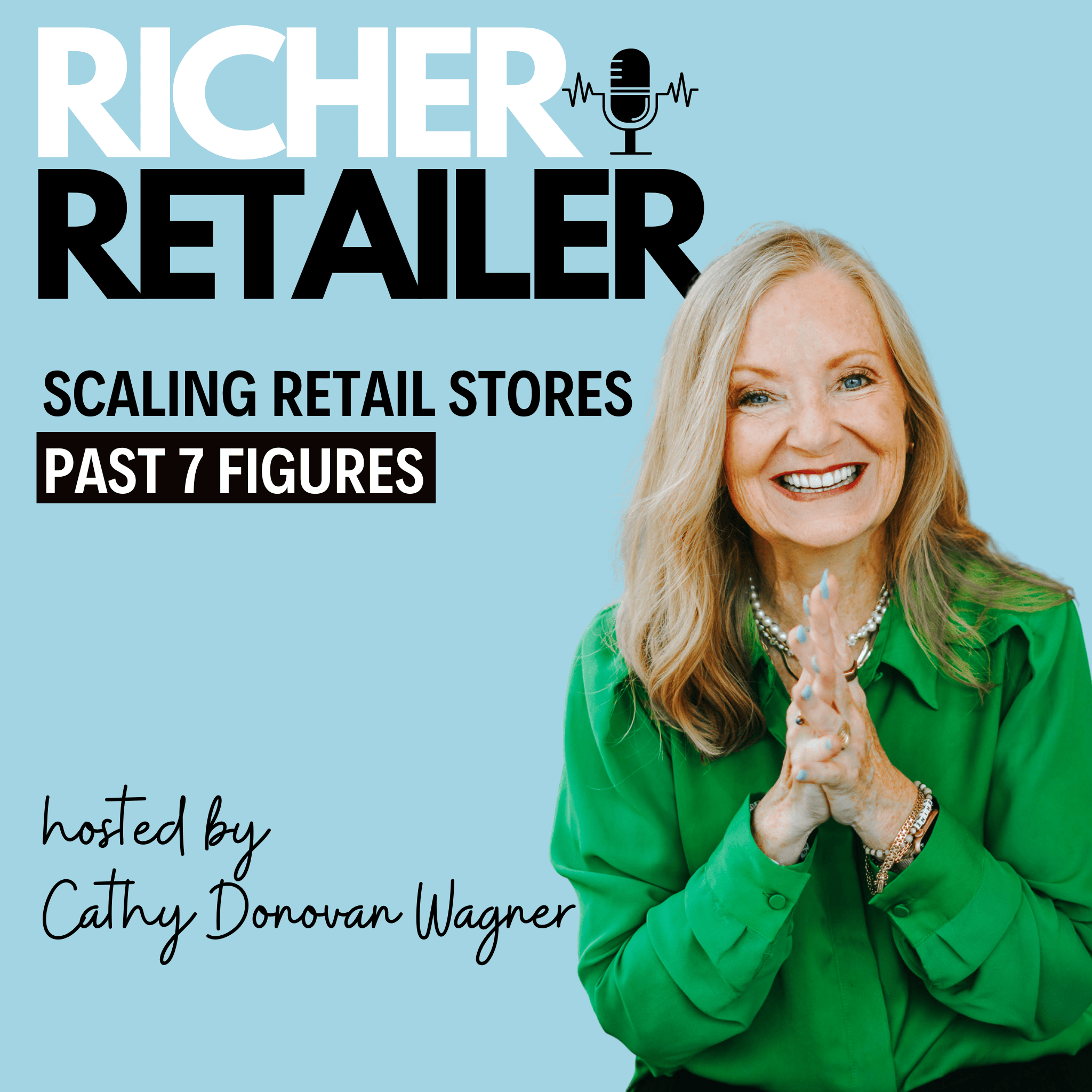
Richer Retailer - Scaling Retail Stores Past 7 Figures
Hosted by RETAILMavens · EN
Are you lying awake at night, wondering how your store will make it through another month? Do you remember the excitement you felt when you first opened your doors, only to now find yourself drowning in inventory decisions and cash flow worries? Team? Family?
You’re not alone. As a mom and store owner who nearly lost everything – twice – I intimately understand the weight of these struggles. Those sleepless nights and constant stress almost made me walk away from my retail dreams entirely.
But here’s the truth that changed everything: retail success isn’t about working harder; it’s about working smarter with proven systems that actually work.
The Richer Retailer Podcast is your weekly guide to mastering the three pillars that revolutionize independent retail businesses: strategic inventory management, sustainable cash flow systems, and transformative leadership skills.
Ready to become richer? Not just in profits, but in time and freedom too? Join our vibrant community of ambitious retailers who are done with just surviving – they’re ready to thrive.
49episodes
Episodes
Newest firstAll episodes

#094: What a Customer Is Actually Worth to Your Store (It's Not What the Receipt Says) with Tim Shea
6d ago00:30:52Tap to summarizeCathy Donovan Wagner sits down with Tim Shea, founder and CEO of Latticework Insights, to explore the question that changes everything: "What is my customer really worth?" That customer who spent $45 today could actually be worth $540+ over time if you understand the data. But most store owners never see it coming and it's costing them money. Tim brings 25+ years of Fortune 500 analytics (NBA, Pepsi, Sweetgreen, Reddit) into the hands of independent retailers. In this conversation, Cathy and Tim reveal why the 80/20 rule dominates retail, how to find your "super thumbs," and the framework that unlocks the next stage of your growth. Guest: Tim Shea Founder & CEO, Latticework Insights 25+ years of data science and analytics experience Co-founded 3 companies, raised millions Worked with major brands: NBA, Pepsi, Sweetgreen, Reddit Website: LatticeworkInsights.com LinkedIn: Tim Shea (Latticework Insights) What You'll Learn in This Episode [08:31] Lifetime Value (LTV) vs. Lifetime Revenue (LTR) and why the difference changes your strategy [09:45] LTV/CAC ratio: the metric that tells you how aggressive you should be with acquisition spending [11:20] How AI is rewiring everything about retail analytics (and why you don't need a $150K data warehouse anymore) [14:32] The Lattice Work concept: why your data is scattered across 10-20 platforms and how to connect it [21:47] The SMART framework exercise: five steps to see your business more clearly this week Key Takeaways The Hand Method (Cathy's Customer Segments) Pinkies: Sale/discount customers (low LTV, cut the channel) Pointer Fingers: Customers with potential Thumbs: Your best 20% driving 80% of revenue Super Thumbs: The half of thumbs that are extremely valuable The Four Moments That Matter First purchase: Discovery ($45 customer appears) Second purchase: The turning point (most critical, most will churn here) Third purchase: Customer becomes profitable Fourth+ purchases: Exponential growth (5x more likely to buy 10+ items) Your Millie Moment: This Week, Run the SMART Framework This is not theoretical. This is where you unlock what Tim calls "return on analytics spend." Pick one real thing happening in your store right now. A promotion, event, buying decision, team conflict something live. Answer these five questions: Speed: How quickly do your customers buy? Every 30 days? Once a year? What's the pattern? Margin: What does it actually cost to acquire and serve each customer? Attribution: Where do they come from? (Facebook, word-of-mouth, email, affiliate, Amazon?) Retention: What does it take to get a second purchase? A third? What's the journey? Trust: How confident are you in these answers? Can you calculate them this Monday, next Monday, and have them line up? Resources & Links Check out Tim Shea website at Latticeworkinsights.com Ready to free up cash and finally build wealth from your store? Apply for your free Gameplan Call, where we'll identify your growth opportunities and map out your most profitable next steps. Want a behind-the-scenes look at how our top clients grow profit without burning out? Our free training, Beyond Busy: 3 Shifts to Reclaim Your Time and Boost Store Income, walks you through the exact method we use in our Profit Club focusing on your role as CEO, CIO, and CFO to grow a business that's both profitable and sustainable. Follow us on social media for more updates! Facebook / Instagram 💚 Remember: Every customer walking through your door has a number. Once you know it, your business changes forever. And the second purchase? That's the one you celebrate. That's the one that decides everything.
Transcribe →
#093: What You Didn't Know That You Needed in Order to be Truly Richer - Part 2
2w ago00:26:05Tap to summarizeIn part 2 of this episode. After co-founding and selling The Coaches Console, Melinda Cohan spent 20 years watching entrepreneurs burn out while scaling. She stopped asking "how can I scale faster?" and started asking the question that changed everything: "What is this actually costing me?" In this eye-opening conversation, Melinda sits down with Cathy Donovan Wagner to explore why smart, capable, hardworking store owners hit revenue goals while feeling absolutely exhausted. Cathy gets vulnerable about a therapy breakthrough she's never shared publicly, the moment her coach said, "Your business will never run until you stop hiding behind your clients" and Melinda introduces the framework that changed everything: the four boxes (employee, manager, CEO, shareholder) and the four levels of consciousness that reveal why the same achiever energy that built your business is the exact energy burning you out. If you're hitting your numbers on fumes, this conversation is for you. And stay tuned for Part 2, where Melinda shows you the bridge from burnout to flow. What You'll Learn in This Episode [04:15] Why you're not a control freak or a micromanager, you're addicted to the doing and why that distinction changes everything [05:46] The painter's tape exercise: the four boxes every owner lives in (employee, manager, CEO, shareholder) and why bouncing between the first two is where burnout lives [19:07] The four levels of consciousness; to me, by me, through me, and as me and why "if it's got to be, it's up to me" serves you early and costs you later [26:00] The burnout warning signs most of us push right through and how to recognize you're in trouble before it gets worse Key Takeaways The identity trap: "I'm not micromanaging, I'm just here to help", it sounds caring, but it's really you avoiding delegation and staying in the doing The four levels of consciousness: to me (victim), by me (doer), through me (flow), and as me (integrated) most store owners live in "by me" and wonder why they're exhausted The burnout warning signs Cathy checked herself against, one by one: resentment, perfectionism, loss of joy, isolation, and the lie that it'll feel better when revenue hits the next number Your Millie Moment: This Week, Do the Four Square Exercise for Real The Painter's Tape Framework: This is not a visualization exercise. This is a physical, embodied experience that shifts how you see your business. Get painter's tape and mark four boxes on your floor. Label them clearly: Employee, Manager, CEO, Shareholder Pick one thing happening in your store right now. Could be a promotion, an event, a buying decision, a team conflict something real and current Physically stand in the Employee box first. Say out loud: What are my concerns from this seat? What are my goals? What do I need? Step into the Manager box. What's my perspective here? What am I responsible for? What worries me? Move to the CEO box. What's the big picture? What's my vision? What decisions am I making? Stand in the Shareholder box. What return am I getting? Is this investment paying off? Am I building wealth? Notice which boxes felt natural and which felt foreign. Most store owners discover they've been living in two boxes (usually Employee and Manager) and ignoring the two that actually make them richer (CEO and Shareholder) Most store owners discover they've been living in two boxes and ignoring the two that actually make them richer. That's the burnout trap. That's what we're here to fix. Resources & Links Get Melinda's book, Sustainable Success, plus a complimentary companion guide at SustainableSuccessBook.com Ready to free up cash and finally build wealth from your store? Apply for your free Gameplan Call, where we'll identify your growth opportunities and map out your most profitable next steps. Want a behind-the-scenes look at how our top clients grow profit without burning out? Our free training, Beyond Busy: 3 Shifts to Reclaim Your Time and Boost Store Income, walks you through the exact method we use in our Profit Club focusing on your role as CEO, CIO, and CFO to grow a business that's both profitable and sustainable. Follow us on social media for more updates! Facebook / Instagram 💚 Remember: If you hit a million dollars on fumes, think what you can hit when you're not on fumes. You are your greatest asset, and burnout isn't proof you're failing. It's a signal that something needs to shift.
Transcribe →
#092: What You Didn't Know That You Needed in Order to be Truly Richer - Part 1
3w ago00:30:01Tap to summarizeMelinda Cohan co-founded The Coaches Console from an idea scribbled on a napkin, grew it into a multi-million dollar company, and sold it. Then, after 20 years of watching every flavor of burnout (including her own), she stopped asking "how can I scale faster?" and started asking "what is this actually costing me?" That question became her book, Sustainable Success. In this episode, Cathy and Melinda dig into why smart, capable, hardworking store owners get stuck at the exact moment they should feel the richest. Cathy gets more honest than she ever has on this podcast, including a therapy story she's never told publicly and the moment a coach told her, "Your business will never run until you stop hiding behind your clients." Melinda shares the painter's tape exercise that changed how she ran her business, the four levels of consciousness that explain why the achiever mode that built your store is the same mode burning you out, and the warning signs most of us push right through. If your business is working and you're exhausted anyway, this conversation is for you. And come back for Part 2, where Melinda lays out the bridge from burnout to flow. What You'll Learn in This Episode Why you're not a control freak or a micromanager, you're addicted to the doing, and why that distinction matters The four boxes every owner has to stand in (employee, manager, CEO, shareholder) and why bouncing between the first two is where burnout lives The four levels of consciousness: to me, by me, through me, and as me, and why "if it's got to be, it's up to me" serves you early and costs you later Why self-care is a strategic advantage, and why it has nothing to do with manicures and massages Key Takeaways [04:15] The identity trap: "I'm not micromanaging, I'm just here to help" [05:46] The painter's tape exercise: employee, manager, CEO, shareholder [19:07] The four levels of consciousness [26:00] The burnout warning signs Cathy checked herself against, one by one Your Millie Moment: This week, do the four square exercise for real. Grab painter's tape and mark four boxes on your floor: employee, manager, CEO, shareholder Pick one thing happening in your store right now, a promotion, an event, a buying decision Physically stand in each box and say out loud what your concerns, goals, and needs are from that seat Notice which boxes felt natural and which ones you've barely visited Most store owners discover they've been living in two boxes and ignoring the two that actually make them richer. Resources & Links Get Melinda's book, Sustainable Success, plus a complimentary companion guide at SustainableSuccessBook.com Ready to free up cash and finally build wealth from your store? Apply for your free Gameplan Call, where we'll identify your growth opportunities and map out your most profitable next steps. Want a behind-the-scenes look at how our top clients grow profit without burning out? Our free training, Beyond Busy: 3 Shifts to Reclaim Your Time and Boost Store Income, walks you through the exact method we use in our Profit Club focusing on your role as CEO, CIO, and CFO to grow a business that's both profitable and sustainable. Follow us on social media for more updates! Facebook / Instagram 💚 Remember: If you hit a million dollars on fumes, think what you can hit when you're not on fumes. You are your greatest asset, and burnout isn't proof you're failing. It's a signal that something needs to shift.
Transcribe →
#091: Why a $300 Billion Company Just Bought a Fitness Race And What It Means For Your Store
4w ago00:17:29Tap to summarizeLVMH, the luxury empire behind Louis Vuitton, Dior, and Moët, just moved to buy a stake in HyROX, a fitness race, in a deal that values it at up to a billion dollars. Cathy couldn't stop thinking about it, and not because she cares about fitness races. In this solo episode, Cathy breaks down why one of the biggest luxury companies in the world is pulling back on traditional ads and pouring money into belonging instead. She walks through the three-rung Experience Ladder LVMH has climbed, from borrowing an audience, to building an experience inside their own stores, to owning a piece of the thing itself, and shows exactly what each rung looks like for a store doing this on a fraction of that budget. She also shares her own story of building a customer tradition with four walls and a photographer, long before she had any of this figured out. What You'll Learn in This Episode Why the biggest luxury brand in the world is spending less on ads and more on belonging, and what that means for your marketing budget How to "borrow" an audience your best customer already loves, without building anything from scratch What it looks like to "build" an experience inside your own store that can't be bought online How to "own" an experience so it becomes something your town expects from you every year Why a sale gets someone to buy once, but an experience builds an identity that keeps them coming back Key Takeaways [05:15] Rung One: Borrow the Experience [11:40] Rung Two: Build the Experience [16:30] Rung Three: Own the Experience [21:00] Why This Builds Identity, Not Just Sales Your Millie Moment: This week, just rung one. Nothing more. Identify your single best customer, the one who buys without a sale and tells her friends about you Ask what she's already showing up for, a race, a festival, a studio, a church event Find the smallest way to put your store's name next to it: sponsor a raffle, donate a gift bag, set up a small display Don't build anything and don't host anything. Just show up where she already is. One customer. One thing they already love. One small way to borrow it. Resources & Links Got dead stock taking up space and eating your cash flow? Join the Sale That Works Workshop, where Cathy will walk you through the exact strategy to liquidate unwanted inventory without slashing prices storewide or hurting your margins. Ready to free up cash and finally build wealth from your store? Apply for your free Gameplan Call, where we'll identify your growth opportunities and map out your most profitable next steps. Want a behind-the-scenes look at how our top clients grow profit without burning out? Our free training, Beyond Busy: 3 Shifts to Reclaim Your Time and Boost Store Income, walks you through the exact method we use in our Profit Club focusing on your role as CEO, CIO, and CFO to grow a business that's both profitable and sustainable. Follow us on social media for more updates! Facebook / Instagram 💚 Remember: A sale gets someone to buy once. An experience gets them to decide who they are. Every dollar you spend on belonging instead of an ad is a dollar that keeps working long after the sale ends.
Transcribe →
#090: Sales Are Up. So Why Does It Feel So Hard?: State of Retail Q3
Jul 700:23:57Tap to summarizeSales are coming in. Just... slower and harder to get than they used to be. If you've felt like you're working just as hard as last year but getting less for it, Cathy wants you to know: it's not you, and it's not just a feeling. In this solo episode, Cathy breaks down what's actually happening in retail right now, a cautiously warm environment where spending is up but transactions per store are down, shoppers are spreading their money across more stops, and import costs are creeping up on the other side. Then she gets specific about the three things that will keep your Q3 profitable: your margins, your in-store advantage, and a metric most store owners never check. She also makes the case for why the store that reads her numbers before reacting always beats the store that just tries something. What You'll Learn in This Episode Why margin math done today decides whether you're profitable in November How to check your initial markup and why your bestsellers are the wrong place to compete on price The real reason your clearance sale needs to be done and wrapped before fall inventory arrives Why one recurring in-store event beats five one-off events, and two ways to run one that actually builds loyalty How to calculate items per sale and use it to catch the sales you're losing without realizing it Key Takeaways [01:30] The State of Q3: Cautiously Warm, Not Cold [06:45] Checking Your Initial Markup and Why It Matters Now [12:10] Getting Your Clearance Sale Done Before Fall [17:20] One Recurring Event: Your In-Store Advantage [24:05] Items Per Sale: The Metric That Protects Your Profit [31:40] Read Your Numbers Before You React Your Millie Moment: This week, pull your numbers before you make a single move. Pull your top 20 bestsellers and check the initial markup on each one Calculate your items per sale for this June and compare it to last June, not last month Pick one thing from today's episode, margin, clearance, recurring event, or items per sale, and take one action on it this week If your week feels slow, sit down and find out why before you post a sale or take a promotion you didn't plan One number checked. One action taken. That's how you stay ahead of fall instead of catching up to it. Resources & Links Grab your ticket to the Clearance Strategy that WORKS workshop Ready to free up cash and finally build wealth from your store? Apply for your free Gameplan Call, where we'll identify your growth opportunities and map out your most profitable next steps. Want a behind-the-scenes look at how our top clients grow profit without burning out? Our free training, Beyond Busy: 3 Shifts to Reclaim Your Time and Boost Store Income, walks you through the exact method we use in our Profit Club focusing on your role as CEO, CIO, and CFO to grow a business that's both profitable and sustainable. Follow us on social media for more updates! Facebook / Instagram 💚 Remember: The holiday season doesn't fix a shaky foundation, it amplifies whatever's already there. Get your margins, your clearance sale, and your team's items-per-sale habit locked in now, while there's still time to change your results.
Transcribe →
#089: AI, Mindset, and Why Busy Is Not the Same as Smart with Chelsea Jones
Jun 2900:27:55Tap to summarizeChelsea Jones has spent over 20 years building websites for some of the most recognizable names in retail; J.Lo Beauty, Liverpool Los Angeles, Chroma Wellness, and more. As co-founder of Sunny Road, a Shopify Platinum agency, she works with retail brands every day and sees exactly where they're leaving money on the table. In this episode, Chelsea and Cathy get into what's actually happening in AI search right now, why your products may not be showing up when shoppers search on ChatGPT or Perplexity, and how to fix it. Chelsea also breaks down why most people are using AI wrong and the simple shift that changes your results. But this conversation goes deeper than tech. Chelsea shares how she filters out distractions, protects her time, and keeps moving forward even after going through cancer and rebuilding from scratch. If you've ever felt busy all day but not sure what you actually moved forward, this one is for you. What You'll Learn in This Episode Why your products may be invisible in AI search and what to do about it The feedback loop approach to AI that actually gets results How to filter signals from noise when everything feels urgent Why fear should make you curious, not stop you The one daily question Chelsea asks herself to stay on track Key Takeaways [03:21] Leveraging AI for E-commerce Growth [05:28] Feedback Loops and Continuous Improvement [14:07] Establishing Effective Filters for Decision Making [16:52] The Importance of Rest and Intentionality [20:25] Overcoming Fear and Embracing Curiosity Your Millie Moment: This week, find out if your store is showing up where shoppers are actually searching. Go to AgentShop.com and run the free audit See exactly where your products are visible and where they're not across AI search tools like ChatGPT and Perplexity Pick one gap from the audit and research how to fix it Then ask yourself: if you repeated yesterday every single day, would you be closer to your goals? Write down one thing you're doing that isn't moving your store forward and decide what happens to it this week One audit. One honest question. Two things that cost you nothing but could change a lot. Resources & Links Free Audit: AgentShop.com run it and find out if your products are showing up in AI search Connect with Chelsea Jones and Sunny Road, Shopify design, development, and conversion rate optimization for retail brands Need an AI playbook for your store? Visit Chelsea's consultancy at Shop Playbook Follow Chelsea on Instagram she shows up on the beach every morning and it's worth following Ready to free up cash and finally build wealth from your store? Apply for your free Gameplan Call, where we'll identify your growth opportunities and map out your most profitable next steps. Want a behind-the-scenes look at how our top clients grow profit without burning out? Our free training, Beyond Busy: 3 Shifts to Reclaim Your Time and Boost Store Income, walks you through the exact method we use in our Profit Club focusing on your role as CEO, CIO, and CFO to grow a business that's both profitable and sustainable. Follow us on social media for more updates! Facebook / Instagram 💚 Remember: Adding another tool won't fix a scattered strategy. If everything feels urgent and nothing feels clear, the answer isn't more, it's a better filter. Chelsea breaks down exactly how she builds one in this episode.
Transcribe →
#088: White Space Is Not a Luxury. It's a Strategy with Joey Gourdji - Part 2
Jun 2200:34:48Tap to summarizeIn Part 1, Cathy and Joey talked about clearing the calendar. Going from 38 meetings a week to 11. Identifying what was water, what was food, and what was mushroom coffee. Part 1 was about seeing the problem clearly. Part 2 is about what you actually do with the space once you have it and why most people quietly fill it right back up. Joey is back, and this time they go into the practical frameworks, the mindset work that holds all of it together, and the one daily habit that Cathy says has changed her more than anything else she's done. She also tells herself about the period she stopped doing it and what happened. What You'll Learn in This Episode The SLED framework, four categories of choices that create white space and keep it from disappearing again: Stopping low-impact activities, setting Limits on your calendar, building Efficiencies into your high-impact work, and Delegating what you've convinced yourself only you can do Why ambitious store owners go back to their old habits even after a real breakthrough and why that's not a character flaw, it's your brain doing exactly what brains do The Effort/Impact Matrix and how to use it to put real dollar numbers on what stays and what goes because "directionally accurate" is all you need to start making better decisions The four levels of consciousness (To Me, By Me, Through Me, As Me) and why the state you're in when you make a decision matters as much as the decision itself Key Takeaways [03:10] The overwhelm flywheel, how overcommitment leads to worse decisions, worse results, and more pressure, and what it looks like when it spins the other way [07:27] SLED: the four categories that create white space and a simple way to remember them [09:25] How to use the Effort/Impact Matrix with real numbers not just percentages so your gut instincts have something to lean on [19:30] Box breathing: why one round before you respond to a hard situation changes the outcome more than you'd expect [21:09] Positive brainwashing, how to identify your automatic negative thoughts, write the antidote, and record the version of yourself you're becoming Resources & Links Free Download: Become Her grab it and follow along as you listen Connect with Joey Gourdji and Conversion Engineering Ready to free up cash and finally build wealth from your store? Apply for your free Gameplan Call, where we'll identify your growth opportunities and map out your most profitable next steps. Want a behind-the-scenes look at how our top clients grow profit without burning out? Our free training, Beyond Busy: 3 Shifts to Reclaim Your Time and Boost Store Income, walks you through the exact method we use in our Profit Club focusing on your role as CEO, CIO, and CFO to grow a business that's both profitable and sustainable. Follow us on social media for more updates! Facebook / Instagram Your Millie Moment Write down one automatic negative thought you notice yourself running this week. Just one. It might be "I have to do this myself," or "I don't have time," or "it's not that big a deal." You don't have to fix it today. Just name it. That's where the rewiring starts. Then grab the Become Her download in the show notes. It walks you through exactly what to do next. 💚 Remember: If every single thing on your list feels high impact and urgent, that's not a prioritization problem. That's overwhelming talk. When your brain is scattered, the matrix won't save you. Getting centered first, that's the actual first step. Joey and Cathy get into exactly how in this episode.
Transcribe →
#087: White Space Is Not a Luxury. It's a Strategy with Joey Gourdji - Part 1
Jun 1500:42:39Tap to summarizeCathy had 38 meetings a week and no open space on her calendar. She couldn't eat lunch without it being scheduled around something else. Her business was growing, she was delegating, and she still couldn't get ahead. Then she started working with Joey Gourdji and got it down to 11 meetings a week. Joey is a coach at Conversion Engineering, the agency she runs with her husband Ross. She spent a decade in online education, finishing as Director of Operations at Mirasee, where she was part of the team that grew the company from $5M to $13M and from 20 to 100+ people. She also grew up watching her mother build a retail store from scratch so she understands this world in a way most coaches don't. In this episode, Cathy and Joey lay out the foundation of how that calendar transformation actually happened, the framework, the hard parts, and the moment Cathy laughed out loud at the idea that any of it was possible. Cathy is also honest that she's partially backsliding, and that's in here too. This is Part 1. Part 2 is coming. What You'll Learn in This Episode What white space actually is, why it's not just free time, and the three ways you should be using it if you want your business and your life to stop feeling like they're fighting each other The water, food, and mushroom coffee framework, the exercise that helps you see what your business genuinely cannot survive without, versus what just fills your week and feels productive Why ambitious, hardworking store owners end up with the most overloaded calendars and why that's not a character flaw, it's a pattern What self-sabotage looks like when you're the one running the show and why most people don't see it until someone else points it out Key Takeaways: [02:18] Why Cathy's calendar had no open space even after she thought she'd been delegating and what Joey saw immediately when she looked at it [09:37] What white space actually means, and why "open space" and "uncommitted time" both miss the point [14:41] The water, food, and mushroom coffee framework and why Cathy put everything in the water column the first time she tried it [23:44] The carrot analogy that explains why pulling good things off your list is what lets the right things grow [32:16] What got you here won't get you there and why the habits that built your business may be exactly what's keeping you stuck now Your Millie Moment Take a piece of paper and write three columns: water, food, mushroom coffee. Water is the two or three things your business genuinely cannot survive without for even a week. For most retailers that's knowing your numbers, staying on top of your inventory, and managing your team. Now look at your calendar for this week. How many of your meetings, tasks, and commitments are actually water? How many are mushroom coffee you've been treating like water? You don't have to fix it today. Just see it clearly first. That's where this starts. Resources & Links Free Download:Your companion guide to this episode grab it and follow along as you listen Connect with Joey Gourdji and Conversion Engineering Ready to free up cash and finally build wealth from your store? Apply for your free Gameplan Call, where we'll identify your growth opportunities and map out your most profitable next steps. Want a behind-the-scenes look at how our top clients grow profit without burning out? Our free training, Beyond Busy: 3 Shifts to Reclaim Your Time and Boost Store Income, walks you through the exact method we use in our Profit Club focusing on your role as CEO, CIO, and CFO to grow a business that's both profitable and sustainable. Follow us on social media for more updates! Facebook / Instagram 💚Remeber: If you genuinely cannot carve out thinking time in your week right now, that's not a scheduling problem. It's data. It's telling you something about the state of your business and the state of your mind. Part 2 is coming, and it gets into exactly what to do about it.
Transcribe →
#086: Celebrating Anti-Prime Day with Jessie McNaughton
Jun 800:30:33Tap to summarizeJuly is slow. Every store owner knows it. So when Jesse McNaughton, co-founder of Lift Bridge Yarns in Fairport, New York, decided to run a four-day Anti-Prime Days campaign instead of just waiting for things to pick up, she wasn't sure what would happen. She ended up with a 286% increase in sales. Jesse opened Lift Bridge Yarns four months before the pandemic, with a six-month-old baby at home and a community of customers who followed her from a previous shop. She and her co-founder Dawn built the business from the ground up, community first, sales second, and that foundation is exactly what made Anti-Prime Days work so well. In this episode, Cathy sits down with Jesse to break down every detail: what deals she ran, why the humor worked, how her team took it and ran with it, and what she'd do differently. Jesse also shares what it actually looks like to build a shop that people call their "happy place", and why that kind of community doesn't just feel good, it pays. What You'll Learn in This Episode: What the Anti-Prime Days strategy is, why it works, and how a yarn shop in upstate New York used it to turn their slowest month into one of their best The specific deals Jesse ran, percentage off accessories, BOGO 70% off, and a $15 bounce back coupon with no minimum, and what each one actually cost her (spoiler: less than you'd think) Why the humor in their marketing, yes, including the "Jeff Bezos sucks, but we don't" email header worked because it was genuinely on brand How a team with essentially zero marketing budget drove results with a $50 Facebook boost and an email schedule Key Takeaways: [04:37] Why July was the perfect month for a promo push, and how Jesse structured four days of different deals to keep customers coming back [06:02] The $15 bounce back coupon with no minimum purchase, and why fewer restrictions on offers almost always works in your favor [07:15] The real math behind Buy One, Get One 70% Off, Jesse's average discount came out to 27%, not the 70% it sounds like [13:48] Why community-first isn't just a feel-good philosophy, it's what makes campaigns like this actually land Your Millie Moment: Pick one slow week on your calendar, it doesn't have to be July, and plan your own version of Anti-Prime Days. You don't need a big budget. You need four days, a few well-thought-out deals, and the willingness to be a little bit bold about it. Jesse did it with $50 in boosted posts and an email list. She followed the plan, ran the deals, and ended up with a 286% sales lift. The plan works. You just have to do it. Resources & Links: Connect with Jesse and the Lift Bridge Yarns community: liftbridgeyarns.com | @liftbridgeyarns on Instagram | email her at jessie@liftbridgeyarns.com | nyfibertrail.com Your Store Days: Learn how to turn Amazon Prime Days into your own store event. Some retailers have seen sales jump 176%! Get the full strategy, email templates, and press release guide. Ready to free up cash and finally build wealth from your store? Apply for your free Gameplan Call, where we’ll identify your growth opportunities and map out the most profitable next steps to elevate your visibility, attract the right customers, and scale with confidence. Want a behind-the-scenes look at how our top clients grow profit without burning out? Our free training, Beyond Busy: 3 Shifts to Reclaim Your Time and Boost Store Income, walks you through the exact method we use in our Profit Club, focusing on your role as CEO, CIO, and CFO to grow a business that’s both profitable and sustainable. Follow us on social media for more updates! Facebook / Instagram 💚 Remember: Your community is not a marketing tactic. It never was. The people who walk through your doors, tell you it's their happy place, and show up for every event you run, they are the business. Take care of them, give them something to rally behind, and the sales will follow every single time.
Transcribe →
#085: Disaster Recovery for Retail Store Owners: Heart on Main Street with Patrick Kaiser
Jun 100:28:20Tap to summarizeYou have built something real. The inventory, the team, the loyal customers who come back year after year. What happens if all of that gets wiped out not by a bad buying decision or a slow season, but by a hurricane, a flood, a fire, or a ceiling that collapses the day before your biggest event? Most store owners have never thought about it. And the ones who have faced it will tell you: there is almost no one coming to help. Not FEMA, not the Red Cross, not the grants that end up going somewhere else. You are mostly on your own. That's the gap Patrick Kaiser saw. And instead of talking about it, he built an organization to close it. Patrick is the founder of Heart on Main Street, a nonprofit built specifically to help independent retailers recover from natural disasters and catastrophic events. Three years in, they have worked in the Southeast, Tornado Alley, Florida, California, and Hawaii. Cathy sits down with him to talk about what that help actually looks like and what every store owner should do right now, before anything ever happens. What You'll Learn in This Episode Why independent retailers fall through the cracks when disaster hits and why federal aid and insurance don't fill the gap The three ways Heart on Main Street helps: direct financial grants, the Jumpstart program (wholesale product donations that can turn $5,000 into $12–15,000 in retail margin), and on-the-ground volunteer rebuilds The one thing you can do this week to protect yourself, a quick phone video of your store that could make or break an insurance claim Key Takeaways [02:08] What drove Patrick to build Heart on Main Street after Hurricane Ian [06:22] How the Jumpstart program works and what wholesale product donations mean in practice [20:07] The practical prep every store owner should do before disaster strikes Your Millie Moment Pull out your phone this week and do a walk-through video of your entire store; inventory, equipment, computers, displays, all of it. Save it to the cloud. That two minutes of footage could be the difference between a paid insurance claim and starting over from scratch. Then go to heartonmainstreet.org and bookmark it. Share it with one other store owner in your world. You may never need it. But a Millie protects what she's built before she needs to. Resources & Links Heart on Main Street exists for moments like this. If your store has been hit by a disaster or if you want to support the store owners who have, visit heartonmainstreet.org to apply, donate, or learn how to get involved. Ready for more? Catch the full recorded webinar with Cathy and Patrick and walk away with a plan you can use in your store today. Watch here. Follow Heart on Main Street on Instagram and Facebook and find the Main Street Matters podcast. Ready to free up cash and finally build wealth from your store? Apply for your free Gameplan Call, where we’ll identify your growth opportunities and map out the most profitable next steps to elevate your visibility, attract the right customers, and scale with confidence. Want a behind-the-scenes look at how our top clients grow profit without burning out? Our free training, Beyond Busy: 3 Shifts to Reclaim Your Time and Boost Store Income, walks you through the exact method we use in our Profit Club, focusing on your role as CEO, CIO, and CFO to grow a business that’s both profitable and sustainable. Follow us on social media for more updates! Facebook / Instagram 💚 Remember: Your store is the backbone of your community. The people in your town notice when you close and they celebrate when you come back. That's worth protecting.
Transcribe →