← Right About Now - Legendary Business Advice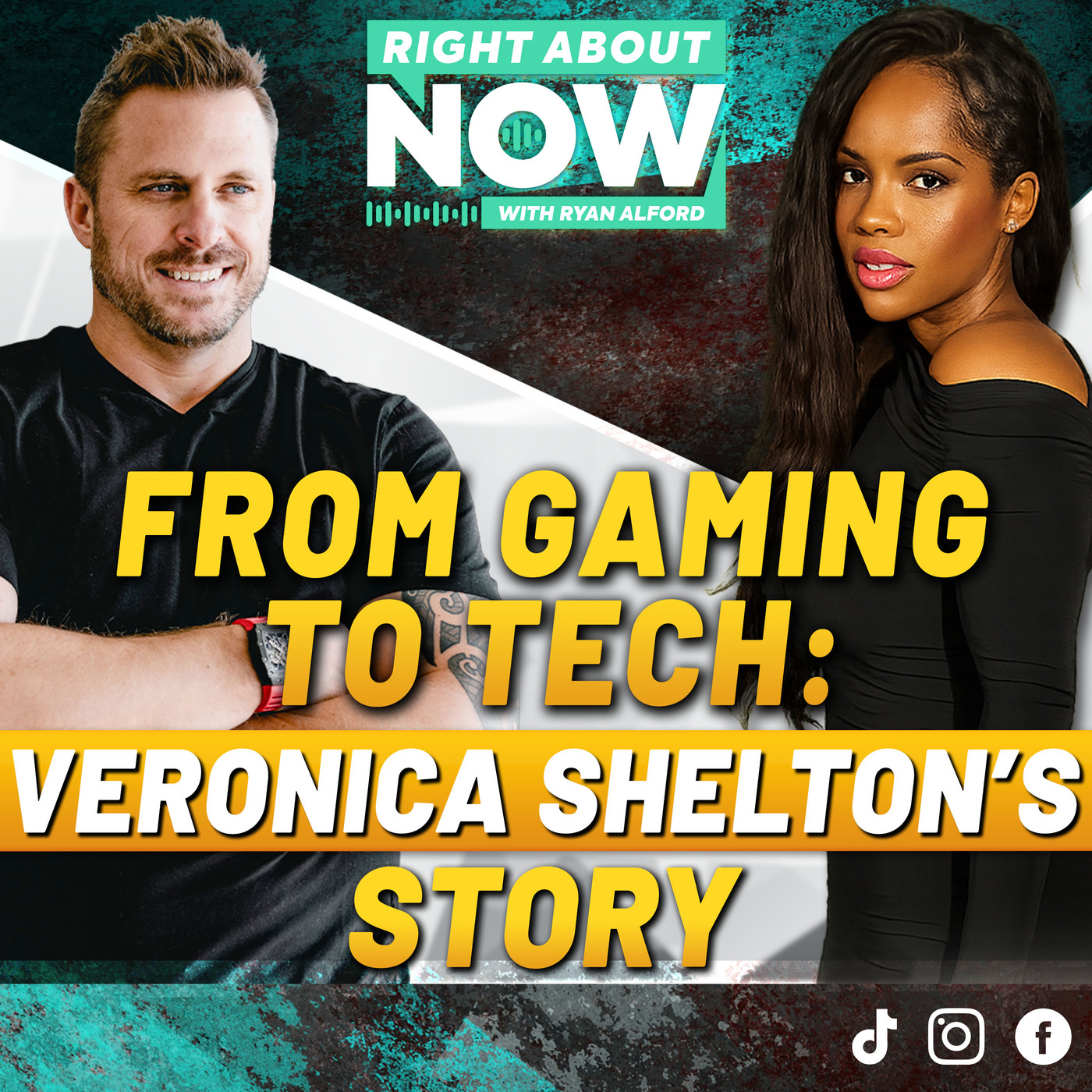
Loading summary
Transcript87 lines
- [00:01]
A
This is the story of the Watt. As a maintenance engineer, he hears things differently. To the untrained ear, everything on his shop floor might sound fine, but he can hear gears grinding or a belt slipping. So he steps in to fix the problem at hand before it gets out of hand. And he knows Grainger's got the right product he needs to get the job done, which is music to his ears. Call clickgranger.com or just stop by Grainger for the ones who get it done. If you're alignment in charge of keeping the lights on, Grainger understands that you go to great lengths and sometimes heights to ensure the power is always flowing. Which is why you can count on Grainger for professional grade products and next day delivery. So you have everything you need to get the job done. Call 1-800-GRAINGER click granger.com or just stop by Grainger for the ones who get it done.
- [01:00]
B
Leave your ego at the door and always be straightforward and honest. People who will want to work with you will work with you. I don't think I'm smarter than anyone on my team or else why the hell would they be there? I think with those things in mind, it allows me to be honest with my team and open. I'm not anyone on my team's competitor. There's nothing in me that wants to feel better than you. I want you to feel like you want to be here. Because at the end of the day, the truth is each one of those people on your team are building your dream. This is Right about now with Ryan Alford. A Radcast Network production. We are the number one business show on the planet with over 1 million downloads a month. Taking the BS out of business for over 6 years in over 400 episodes. You ready to start snapping next and cashing checks? Well, it starts right about now.
- [01:48]
A
Right about now. Hello and welcome to Right about now. We're always mixing things up. You never know what to expect. Even with our countdowns for our guests. I am excited today. I'll be honest, you know, you do this show, I've had 700 guests and sometimes I get in here and I start talking with the guests and I'm like, you know, I don't know if I'm going to jive with this person but we're going to make some lemonade out of lemons. I don't have a problem. Today we have the lovely Veronica Shelton. She is the co founder of Oak Theory. What's up, Veronica?
- [02:15]
B
What's up, Ryan? Hi. Hi, how are you?
- [02:17]
A
I am fabulous. You Know, you make people want to smile. I think it's your smile. You had a great smile.
- [02:22]
B
You know, it's glued to my face. Yeah. I can't help it.
- [02:24]
A
Reading everything you've done, all the brands you're working with, everything you're doing with oaktheory, it's cool. What the hell is oaktheory?
- [02:30]
B
So oaktheory, we're a product design studio now we're calling ourselves a creative tech studio because product design has gotten so big. But basically we build products, software applications, digital experiences and. And just flow with it full service.
- [02:44]
A
How'd you get into this? Nothing gets my attention like neurospicy, creativity.
- [02:49]
B
I am neurotypical. Well, neurodivergent. Sorry, I have autism. But level one. And I think that played a huge part in me being with. In the industry that I'm in. I'm obsessed with not just tech, but how humans use it and how we adapt to things, which is going crazy right now with AI. Right. Like, there's a huge psychological side to it.
- [03:08]
A
I get having done this show for now, going on seven years and having some of the biggest founders founders and I get asked a lot and I asked a lot. What's the key to success? And you know, because everybody wants the blueprint. I mean, a lot of people listen to the show. They're wanting to get the cheat sheet from people like yourself and others. Curiosity. The most successful people are the most curious people I know. They have to like, figure something out because if you don't have that, then you probably aren't solving a problem that you would get paid to solve anyway.
- [03:38]
B
Yep, that is 100 truth. And then you don't have enough. Dive into it. If you're curious about something, go deeper. You just like something like, oh, I like this business. I'm just going to do this business surface level. It's like, well, you'll just stay in that space. You'll never get more. So. Yeah, I agree.
- [03:52]
A
It's got to be interesting not only kind of being in this tech side, you're a woman of color. So you got two things that are a very untypical for that space. Being both a woman and a woman of color. What's that been like?
- [04:05]
B
Honestly, I am what my friends call a golden retriever. Always happy, smile glued. And so even in that situation, I feel like it's been such a superpower because I have a perspective that not a lot of people have because of who I am. And I feel like I bring that to the table with everything. So the way you look at tech is probably different sometimes than the way I look at experiences in tech in the way that I even have to go into meetings and how I am listened to versus not listened to sometimes. So I think there's been like of course these learning moments, I'd rather call them learning the negative across the board, but I think there's been a lot of positive in it. Vocal about the value that you bring and you don't hide it and you can say it in a way that doesn't come off like huh. I think it leaves a lot of space for us to lean in and focus on innovation and how to do things and stay curious about things together.
- [04:53]
A
I love that you turn that kick out a lot of different ways with that and the positivity that you bring around it and, and what I think. And I go, man, wouldn't Veronica's perspective that because she's smart, she understands this stuff and the diversity that you bring, why the geez high demand if you ask me, like I want that perspective. I mean, because I'm telling you I'm going to totally stereotype here. So I'm leaning in. I don't need another dorky 27 year old guy telling me something about tech. Oh, like that seems a little cookie cutter. I think that's great perspective. And what do you think when you have those discussions or you're working with clients? What do you think that diversity and thought process for you? What colors do you paint with? What do you think changes from your perspective when you get in those discussions about technology or building products or things?
- [05:41]
B
Oh my God. I think with technology the one beautiful thing that I like about it is similar to math, certain demographic data doesn't matter. And so a lot of times with tech it's more so about our brain, how we navigate things. And that's one thing I love because that's something that I think we share across the board as humans brings us together and I think it's why there's so much unity in it because there's so little bias that is surface level, it's all here so in physical. So I think usually the conversations never have to do with how I look until we get past look. Like a lot of times with clients when they come in and they meet Hannah and I, Hannah is Korean, I'm black, we're both women. People do not expect us to be who we are because of the biases and shit that's out there. I think like already that's usually, usually that is a mountain that we have to climb over in a lot more meetings than I'd like to admit to be able to get to the good stuff. Usually we've had it more times. Are you guys. You guys are. Who would be working on the project? It's like, hi. Like, who's a tech lead? Hi. Really? Yes. Can we please just. I promise you, if we can get to it, you'll understand. So I think that's easily.
- [06:51]
A
I say Google, Disney and Sephora. Can you talk about the types of projects or things you've done with some of these companies?
- [06:58]
B
So Disney was great. It was books. So I'm having a brain fog, pregnancy fog. But with Disney, I was working on books, children's books. I got to creative direct quite a few big titles, which was really fun. And that was me working with brilliant artists and copywriters and printing team publishing. Jesus throws the word. So that was great. And honestly, those things come into perspective. Working on things like Doc McStuffins, right? And calling out how certain words are used. Who's the demographic? Whose table are these gonna be on? Snow White and the Zeppendorf. So there's a lot of different books that I worked on with Sephora. Again, I will admit, that's very perspective based. It was going into a project, doing a global campaign with a humongous company, Make a Company. And that was working on things all the way from figuring out what models we're going to use. I think during that time, if you were to look at my portfolio during the time of Sephora, William Sonoma, who else is back then? I don't know some other names. I was very vocal about being a black woman in tech because I think I say back then, but it was maybe 10 years ago, eight years ago, it was a bit more on the publishing side. So with Sephora, it was like, hey, you have these models, you have one type of Asian model, you have one type of black model, one type of Latino model. But if we look at some of the stats, I was able to come to the table and be like, if we look at numbers, this is not what they all look like. Like, you're using models that have a look that's not commercial enough for it to probably attract the demographic you're going for. Here's numbers to prove what I'm saying so it doesn't sound stupid. Same with Lamp Sonoma. I was able to work on a project that introduced the first family of black family in their catalog. So those are things that I think were race related in those projects. And then when we go to things like Google working on their diversity supplier platform, which I think is bigger, it's a bigger issue when it comes to diversity because we're talking a lot of people across the board. Google's huge or global. And so when we're looking at a diversity platform, we don't. It's not a black and white thing. There's people of all shades and all colors and all backgrounds who go into that. So fun projects to work on.
- [08:58]
A
Let me ask you, on the diversity side, how do you balance if there's sides to an argument, I don't know that that's the right way to frame it, but I'm lacking a better way to say it. Diversity for diversity sake versus getting the best whatever for whatever it might be the best solution or the best diverse solution. Those always the easiest to align, are they?
- [09:19]
B
They should always align. Diversity is not just race. It's age, ableism, gender, anything that you can do. There's some people who can't function their hands the same as others. There's some people who are colorblind, there's some people who are dyslexic. Those are all things that come into tech that I feel like a lot of people miss. When we're talking diversity, it's ageism. There's some people who can't see text that's below 14 points. And so with technology and how we use it, tech is only as good as how easy and accessible it is for the use. Otherwise it's a waste. You get the best product in the world, the best application, the smartest tool. OpenAI still needs a UI team, perplexity, Google, they still need a team of designers and UI specialists and psychologists and anthropologists to make sure that their tool works well for people. So I think they have to work together. You have to have diversity in tech.
- [10:10]
A
You know, you used a word that I like better than diversity. Accessibility is really what it's about. That's really what we're talking about. It's making complex things accessible to diverse groups that might not always be representative or thought of. And I think that accessibility really helps frame it better, you know, because this isn't about diversity for diversity's sake. It is that accessibility because we're all blinded by our own ignorance sometimes and not in what's in our sphere of influence. And so if I don't see through the eyes of these people what they go through, how they do things, that is what has to get unlocked. And I think that's the superpower you bring, is that accessibility to diverse groups. Am I summarizing the right way?
- [10:55]
B
You are onto it. Look at you, smarty pants. Exactly. And it's the empathy towards accessibility. And I think it's becoming more mainstream. Like, people are understanding it now. People are talking about it now. We have the tiktoks and the social sites where it's. Even the neurospiciness came from somewhere. Right. It's because people now understand where it comes from and what it means. So I'm happy with the direction we're going and which accessibility is becoming very important. So, yeah, you're absolutely correct.
- [11:21]
A
What's been your favorite project?
- [11:23]
B
I can't say that here. I love all my projects.
- [11:26]
A
Who's your favorite baby? Which baby of yours is the prettiest?
- [11:29]
B
You are my baby. Yes. I will never. You will never catch me. I love all my clients. You guys are all amazing, of course.
- [11:38]
A
But it probably has to be something that you're just really sunk your teeth into. Favorite might be the wrong word, but something that just maybe you weren't sure what it was going to be, but damn, you walked away proud and excited about it.
- [11:48]
B
Okay. I'm going to go in a different direction anyway, and it's going to be a little selfish plug. But my favorite project right now is under the Oak. And that is what. It's a media project that we're working on that's coming from oaktheory. So oaktheory, we're almost. We're very technical. We build. We make products, we make software, we build applications. And it's very project focused. The team is very project focused. We have an amazing team. And then we're working on this new thing where at the end of the day, we're still human. And sometimes we can get lost in trying to make things more efficient and trying to, you know, the burnout of trying to make everything. Oh, it has to be super profitable. It has to be all these things. And so under the Oak brings in that psychological side that I think Hannah and I needed, honestly, as a breakaway to be. Like, when we do work on projects that feel maybe a little heavy with AI coming in, there's a lot of projects that are coming in where there's this feeling of, this is so smart, this is so great. But how is this going to affect mankind and what are we seeing happening? How is this affecting our brains? How is this affecting our youth? How's this affecting how we interact with people? We know we're smart girls, so we know based research that a lot of the things that are happening right now with AI and just with technology in general. We've seen some Asian countries like Japan and things like that, how that can lead to isolation and depression in certain groups of people and how it could. Right now we see it in places in Europe and even in America with the youth where they're becoming. They're losing their critical thinking skills. And so we wanted a place where we could talk about those things openly and more from an emotional side. And so I think that's my favorite project right now.
- [13:23]
A
I love that. And I had a guy last week on. He wrote a book called Generation Generation AI. And it's kind of like you guys would make a great team together. His is more like the implications of what them growing up within it and sort of like. But not necessarily some of the deep end of the water stuff with what it means for how brain development is all that kind of stuff. I don't think it's intentionally swept under the rug. I just don't know if we think or talk about it enough.
- [13:48]
B
It's definitely talked about in the. In certain groups. I feel like it's not like it's all I hear about, especially with the.
- [13:55]
A
No, you hear about it, but you don't hear about. Okay, what does this actually mean for how our kids are developing?
- [14:00]
B
We do. And this is where I think it's important to look at things, right? Like, God, I could pivot everywhere with things I've worked on, but especially with gaming and children, there's a lot of games that are being government funded in processes and things that are being government funded because our youth are going to lose a huge part of how they of cognitive abilities. They're not going to have the same critical thinking skills that we have. I'll put it this way. Are you a millennial?
- [14:26]
A
I am Gen X. Oh, well, okay.
- [14:28]
B
So I'm a millennial. I think there's probably a lot of millennial listeners. And I feel like one thing that we all have gotten used to. And honestly, you too, we're part of a really huge transformational era. Like, we're used to it. We went from cassette tapes to now music being pulled out of thin air. We've adapted really quickly, but now we're in a place where adapting is insane. It's faster than that. And if you look at how we've changed over time and how we've become dependent. We used to never have cell phones in our hands. It wasn't a way of living. Now you cannot go without a cel one in your hand. You Are completely dependent. Your whole life depends on it. How you connect with your friends and family depend on it. You don't even know what writing a letter or stamps look like these days. It's completely changed how we do things. Calculators out the door. So if you think about that and you think that that is what we can consider a healthy timeline to adjust right now. If you squish that probably, I would say a hundred times, condense that a hundred times, that's the timeline that this new generation has to adapt to. A new way of being like technology. We used to have expectations of technology. Now we're at place where technology is now having expectations of us changing how we work, how we live, how we think. These are really huge things to consider. I think when we're looking at AI and how these things come in, I think it's talked about. It's definitely not talked about enough.
- [15:43]
A
Yeah, it's fascinating. I came up in analog world. We converted to digital, you know, which is kind of like what you're talking about with ev. And now we're going from digital. And this is one second of thought, probably a better word, to generative. Because analog and digital still require a pull. I'm grabbing something.
- [16:01]
B
Yes.
- [16:02]
A
Versus it's now how generative it's creating itself and pushing whether it's digital or analog. We're pulling information, we're pulling songs, we're pulling data. Now it's pushing out.
- [16:14]
B
That's why these things are important. Because it's funny, I was joking my business partner, because there's this rumor going around with Jeff Bezos buying Vogue for his wife or something. And I freaked out because this is recent. If he did it, it's exactly what we're trying to do now. Because even when we started, I was like, I want it to be the Conde Nast of this generation. Because if we remember those magazines those are. That kind of kept us grounded. They had the quizzes in it and they had all these things that just kept us in this place where we still had fun and we were still able to look at things without this new culture that's coming in that just feels like it's so hustle culture. Be more efficient, be more productive. Oh, you like doing that thing? Here's how to make millions doing that thing. And it's like, yes, yes. But that's not all life has to offer. You need to remember yourself in what's going on in here. You have kids. They still need to experience outside these influencers and all this stuff. But here's the effects that that can have them and maybe some healthy ways in which you can go about it. We're still figuring this out, but it's. There's just this conversation that I think is missing in this new transformation, a new era of AI. You shouldn't be having all those conversations with AI. Those conversations need to be had among humans who are experiencing things.
- [17:23]
A
Talking with Veronica Shelton. She is the co founder of Oak Theory. I love that name. You know, it's like old and new. Yeah. Old Oak wood versus theories. Like, sounds so high tech.
- [17:33]
B
Yeah.
- [17:34]
A
Very good branding. I like it.
- [17:35]
B
Thank you.
- [17:36]
A
Is this print? Is this digital? How are we telling these stories?
- [17:40]
B
Right now? It's digital. It's blogs, it's articles. We even have a podcast here and there that we're like, playing around with. But it's a digital media platform that we're building out just to have those deep conversations about where we're at in tech and where things are going, and it's changing our lives.
- [17:58]
A
I love it. There's definitely a lot of white, blue ocean space for that type of content, so I think it's unlimited.
- [18:05]
B
Yeah. Right now we work on a lot of projects, I think, that are coming in that are technical and especially building with AI. And so a lot of times there's a lot of research that goes into building things out. We might have a school that approaches us and they want to like a university. They want to develop new ways to get their students to buy products from their store. And so we have to go into the psychological aspect of what makes them want to do that, what can hit them in certain places. Why do we still like nostalgia and what triggers us in nostalgia to make us want to buy something? Those are psychological things that we probably don't look at off the shelf. Like, we're like, oh, it's just buying something. But it's like, no, There's a reason why you looked at that product at Target and it was a color that made you feel something, and suddenly you're picking up something you didn't even come into the store for, and now you're getting it. There's a psychological side to it. Target alone, I'm not even going to get started on the Brilliant Mind. I forgot her name. Who puts maps together for them to do exactly that. Her job is to make maps for the store that increase sales. On a psychological level. When we have projects come in, though, we want to be able to talk about those things and what we gain from our research and bring that to the. To the public. And so under the oak is kind of our way to do that. We do it. Permission, of course. But it's like, hey, we did a lot of research on this thing that shows what we were talking about earlier, how certain tools that your kids are using and really affect their critical thinking skills. Here are some ways that we've learned can help. Here are some ways that we've learned are impacting it. Take with it what you will. Open conversation.
- [19:31]
A
I love it. I used to work in shopper marketing. Yeah, I've done a lot in the marketing side. Lighting a store up. Everything is at a place. There's a reason. The milk and the eggs are in the back of the store and the bread is hard to find. You have to stumble upon a hundred other things you may or may not need. There's a lot of psychology involved in it.
- [19:48]
B
There's so much.
- [19:49]
A
And there's a reason the candy is where it is too.
- [19:53]
B
Yes, exactly. In the magazines. Easy grabs. Like there's.
- [19:58]
A
And kid level. It's short on purpose. Those. Those shows.
- [20:03]
B
Yeah.
- [20:04]
A
So the kids can grab it and hand it to their mom and dad and, you know, get it. So it's how much stuff can be done.
- [20:11]
B
It's crazy, but I love it sometimes, I gotta admit. Yeah.
- [20:15]
A
I imagine you're on the forefront of seeing different technologies, platform, software. I mean, is there anything you're seeing that you're excited about that is gonna make the things you do better for accessibility and diversity and things like that?
- [20:30]
B
Anything that makes me excited.
- [20:32]
A
Software or hardware side. Are you seeing stuff that would blow people's minds or is it more practical than you think?
- [20:38]
B
That is a hard question to ask because in my brain a lot of things are probably more practical than I think think right now the biggest thing that everyone's talking about, and it's the obvious, is AI and where it's going. I feel like it's the best tool that's ever existed. I feel like there's so much that's coming from it, from building agentic environments. I think that's a whole new world of its own and mind of its own. Then my excitement honestly goes into something that I think we're not going to get to for a while, but it's ar. I think it's quiet right now on purpose. But AR is probably where I'm definitely focusing a lot of attention to know about because I do think that's going to be the future. We're going through this evolution. I think that's probably going to be the big One that's going to be the cell phone of just having augmented elements in reality, in our real world. So that's probably what's making me excited. I can go down the deepest tunnel with accessibility features and why I think that's great. I think it's going to change the game for a lot of people whose brains and skill sets we haven't been able to experience. I think AI in general is doing that right. I have an amazing team. I have a team, brilliant people. We started oaktheory five years ago. We had designated spaces for them. Designers were designers, engineers were engineers, Developers were developers, sales or sales. Now that we're in this new place for the past year, this is where we're seeing this huge shift in jobs and what people are capable of. Designers are now able to develop a lot easier sales copywriters, people who weren't naturally creative, are able to create. It's creating such a fluid space in work environments that it's ridiculous. On top of that, I've been struggling as a founder. I think a lot of founders probably are struggling with this too, with the integrity to keep your team and not replace them with AI. Because AI is coming in and doing a lot of things that I think project management wise and things like that are just no brainer. You don't need it anymore like you used to, but you still need that human side. But I think there's this really cool area that I've been playing around with where it's being very transparent with the team. Like, hey, jobs are changing. We need to adapt. Creative person. Now that you have AI, what else can you do? Suddenly our designer is able to write things, we're able to have copywriting done by them and they can finish projects easier. Suddenly our developers, our engineers, are working across the board on in every area. I can't even go in to how vast our skill set or how wide range our skill set is. Now, just because of this one tool, our sales is able to put together their own pitch decks without having to go to design. That saves us a lot of money a year. And so I think that's something that I really find interesting and I'm working on processes is we've replaced our team in the past year. I will be honest, it saved us mid six figures. And in that we've been able to do so much more and our team has become so core that it's almost like a new kind of core where our team works together in such a fluid way. Our Mondays and Thursday meetings are the most amazing things I've ever seen because they're touching so many things now. It's not so horrible to be a jack of all trades. It's not so horrible to say I have a team that does a lot because it doesn't feel like they're caring as much anymore. And in fact they're like learning and having fun with it. So that is a place where I, I think is really fun. And having them work with agents is really interesting. Watching them work with the agents that were built in this like hybrid environment is dystopian as hell, if that's the right word. I don't know. It's wild.
- [23:58]
A
Yeah, it is wild. And I'm glad you went there. This is a really fascinating topic that I think there's a lot of interest around. And I own multiple companies. I worked in New York and I had a team of a hundred people worked in the ad agency world. This is way before AI and it will build to exactly the thing you're talking about. I was always sort of a jack of all trades in the ad agency agency world. And it was not the most popular thing because the ad agency world especially likes putting people in boxes. You're the creative person, you're the writer, you're the account person, you're the strategy person, you're the media person. And how dare the account person ever be creative. Crosses over strategic. And I was the strategic creative account guy that made the agency a lot of money, but wasn't always the most popular. And I started my agency Radical with the intent to create sort of a flat environment way before AI and agents because I knew you're not extracting the best out of people. Yes, you need specialization and you need to know what your job is and what your functions are. But I always believed you weren't always extracting the best out of your team when you limited them to only one function.
- [25:00]
B
Yes.
- [25:03]
A
That proved to be successful. And then AIs come around and I had the exact discussion with my team. I had close to 20 employees four years ago. We have less than a quarter of that now. It's been natural. I think I've only fired one person. It's just been natural evolution of leaving and going other places and me not replacing as some of these technologies have come along and now we're as lean mean as ever. But I had that exact discussion that you did. And then I think a lot of business owners are having to have this discussion with their teams to go, this can do a lot of what your job was. I believe in you. And you are talented and I need you to embrace this. And I'm not going to fire you, but you need to understand that you need to be doing not just more well, you just got to work more. No, you don't have to work more, work the same hours, but the output should be 10x because of what these agents are doing. And you're no longer just this. You can be the writer and the designer and the developer and your agent can help you do these things with task management and a litany of other things. If people aren't embracing that, they will be jobless. But if you embrace it, it will be just fine. But it's a very interesting discussion I think a lot of leaderships are having.
- [26:13]
B
It has to be accepted because you need a team that can be fluid and grow with you. And honestly it's such a battle because we have had people who are like, well, I don't want to. And it's like, well damn, because I know you don't want to. But this is like us changing software. You have to adjust to the new software. You can't just say I don't want to learn it because if you don't, then we can't do anything now together. And I feel like that's what's happening now. We're moving over to this new way of thinking. It is going to be the way of thinking. We have to stay float. We're a business and if you're not on it and you can't do it, that means you can't adapt. If you can't adapt, adapt. We can't grow as a business. We have to adapt. That's the whole point. So I think there have been hard conversations and it's a thing that's happening.
- [26:55]
A
But people have to embrace it though. Those who embrace it will have plenty of work. But it's just you have to leverage it and going to be those that leverage it and those that don't and then if you don't, I don't know what's on. You need to go get skills, trade or something. Be a plumber, be a something with your hands that hasn't been replaced yet.
- [27:12]
B
Intel. Yeah, right. Their CEO just had to make that big announcement that they did, that they did not adapt fast enough. Now they're out of the game, they can't even compete. Their CEO had to say that we failed because that's what happened when leadership doesn't adapt. So we can see that huge scale, how that affects everyone now.
- [27:29]
A
Everyone who is like leadership job to Coach everyone that this is the new reality and you've got to come along because if leadership puts their head in the sand, then everybody's out of a job because the business is out of job.
- [27:42]
B
I've seen friends companies where they have leaders or people just don't want to do it. In their minds they know it works because that's what's always worked. And now they're like upshifting Schitt's Creek. And if there's one thing as a company we've definitely nailed is we're very chill as a company. We're four day work week. We're not really on everyone's ass all the time, but when we have hard truths like this, this is when we kind of sit the hell down. We gotta, this is real. And so I think the hard conversations was pretty soft because it's, we left so much open for where do you see yourself evolving? You have to do it, you have to evolve as this is what's happening to your role here. Let's use this same tool to show you where your skill set could take you. Where do you want to go? Okay. How is that going to bring to the company? Like these are conversations we've had with each and every team member. Hey developer, you're doing front end right now. Now we have these tools. By next week, I want to see you introduce three other tools to me that will allow you to expand your skill set using AI. We'll pay for it, we'll fund it. We pay for them to learn, we pay for their classes. But you have to grow or else we're going to have to replace you because now we won't be able to compete. And if we can't compete, we can't feed everybody. We got family people with families. We're not about to let them not eat just because your ass wants to sit here and say, well, I'm comfortable doing this. So it's real conversations that are being had. But it's made such a our team and we're stronger than ever. We got robots talking in the team. It feels seamless and it feels beautiful and it feels just as homey and cozy as it always felt.
- [29:09]
A
It doesn't have to be uncomfortable unless you make it that way. It should be exciting because for me, I've loved it. Not because my employee, you know, costs are lower. I loved it because how much more productive and how I could think and spend more time on the stuff that matters.
- [29:27]
B
Yeah.
- [29:27]
A
Versus mundane things. And so if you aren't embracing that reality Then that's the problem, not the other way around.
- [29:35]
B
Yes, there, you said it. Because this is exactly what we say. It gives us space to focus on what matters. It gives us space to look at projects. And now because so many of those mundane little tasks that had to go into a project that were like more tactical, more like step by step, a process, those can get done. And so now we could focus on real problems and how to solve them. And I think that's even what gave us the room to start this under the O because we were able to now say, holy shit, look at all the psychological things are going into this. It's what gives us space to do more. And I'm watching it with friends companies. A lot of people are starting sub brands and other companies now within their company because of this. It gives you room to see things that you couldn't see before because you're so focused on getting the project done now the projects are getting done more efficiently, less hands on deck. You're able to really have a wider look and range on what you're working on and why. And there's a beauty in that. So yeah, you're absolutely correct. Yeah, I love that you said that because right on the same you seem.
- [30:32]
A
Like a great leader. Has that been nature or nurture your leadership?
- [30:36]
B
Both. A lot of humility. I don't know if it's a neuro spicy thing, but I think if there's one thing I tell everyone how you deal with so many first times, I'm like, leave your ego at the door. Leave your ego at the door and always be straightforward and honest. People who will want to work with you, will work with you. You'll see patterns immediately with people always pick up on that. But I leave my ego at the door. I don't think I'm smarter than anyone on my team or else why the hell would I they be there? So I think with those things in mind, it allows me to be honest with my team and open. I'm not anyone on my team's competitor. I'm like, there's nothing in me that wants to feel better than you. I want you to feel like you want to be here. Because at the end of the day, the truth is each one of those people on your team are building your dream and you're giving them freedom. I like to say I offer freedom tokens, pay you for what you're doing. That's the trade off. At the end of the day, they're building something for me. And if they want to be a Part of it. That's great because I'm like, listen, I'll do whatever I can to make sure you're part of this right honey? I'll make sure that you're in in it. That you feel like it's home. I think there is that ego thing where you have to drop it aside and be like that is the hard truth though, if you hire right talent that you feel like you cannot replace, there's a lot of value that you put on them.
- [31:44]
A
Under the oak sounds like a podcast to me and I have a podcast network. So we should talk more about that.
- [31:49]
B
We should. We have so many recordings already, things that we talk about and it's just putting it out there and I think, you know, you've been doing this for a while. There's that perfectionism thing that comes in and there's like this thing that we're working through and still trying to get through. And especially because on my end I'm very opinion based with my conversations and we're still getting through.
- [32:08]
A
That's what makes it spicy.
- [32:10]
B
Listen, that is, that is my personality. We're figuring it out but it's really fun and I'm really excited about the conversations we're having.
- [32:17]
A
Where can everybody keep up with everything you're doing?
- [32:18]
B
Oaktheory CO CEO undertheoak co CEO I like to be authentic. Can I just say this? I will always be me. You can't look at my social and know who I am unless you go to the link. I'll just say that my social, if anyone wants to reach out to me is Ver Shelton on insta and everything else and you can follow me on LinkedIn but under theoak co we have a contact reach out. If you want to reach out, let's talk. We're always open to work on new projects and fun new things and hello@op fun. It's less fun. I know Ryan, I had good expectations unlike you.
- [32:49]
A
So hey, I like it. Hey, that means I'm on brand.
- [32:53]
B
Yes, yes, yes. I was like, oh, this is going to be cool. I was excited.
- [32:57]
A
Well, you were all awesome. You look great. Congratulations on being a new mother to be. So I hope all that goes well. Let's stay in touch. I'm serious. If you guys get down the media route on podcast or something, I'm here.
- [33:10]
B
Here to be a resource proof that you said it. So no take backs. Everyone heard it. Thank you.
- [33:14]
A
Hey guys, you know where to find us. Ryan is right.com you'll find highlight clips from today's episode. The full episode download of links to YouTube. You need to watch this. You got to see the lovely Veronica here in person live on YouTube. We release that every week when the episode comes out. We appreciate you for making us number one. We'll see you next time.
- [33:35]
B
Right about now this has been Right about now with Ryan Alford, a Radcast network production. Visit ryanisright.com for full audio and video versions of the show, or to inquire about sponsorship opportunities. Thanks for listening.
- [33:56]
A
With Robinhood, not only can you trade individual stocks and ETFs, you can also seamlessly buy and sell crypto at low costs. Trade all in one place. Get started now on Robinhood Trading. Crypto involves significant risk Crypto trading is offered through an account with the Robinhood Crypto llc. Robinhood Crypto is licensed to engage in virtual currency business activity by the New York State Department of Financial Services. Crypto held through Robinhood Crypto is not FDIC insured or SIPC Protected investor involves risk including loss of principal. Securities trading is offered through an account with Robinhood Financial llc. Member sipc, a registered broker dealer this Labor Day at Lowe's Shop member only Doorbuster deals for a limited time. Save $50 on an ego string trimmer now $169 plus get 50% off select Holland Pavers.
- [34:40]
B
Not a Rewards member.
- [34:42]
A
Sign up for free today, but hurry. Labor Day Doorbuster deal won't last long. Lowe's we help you Save valid through 9:1 while supplies last program subject to terms and conditions. Details@lowe's.com Terms subject to change.