← Right About Now - Legendary Business Advice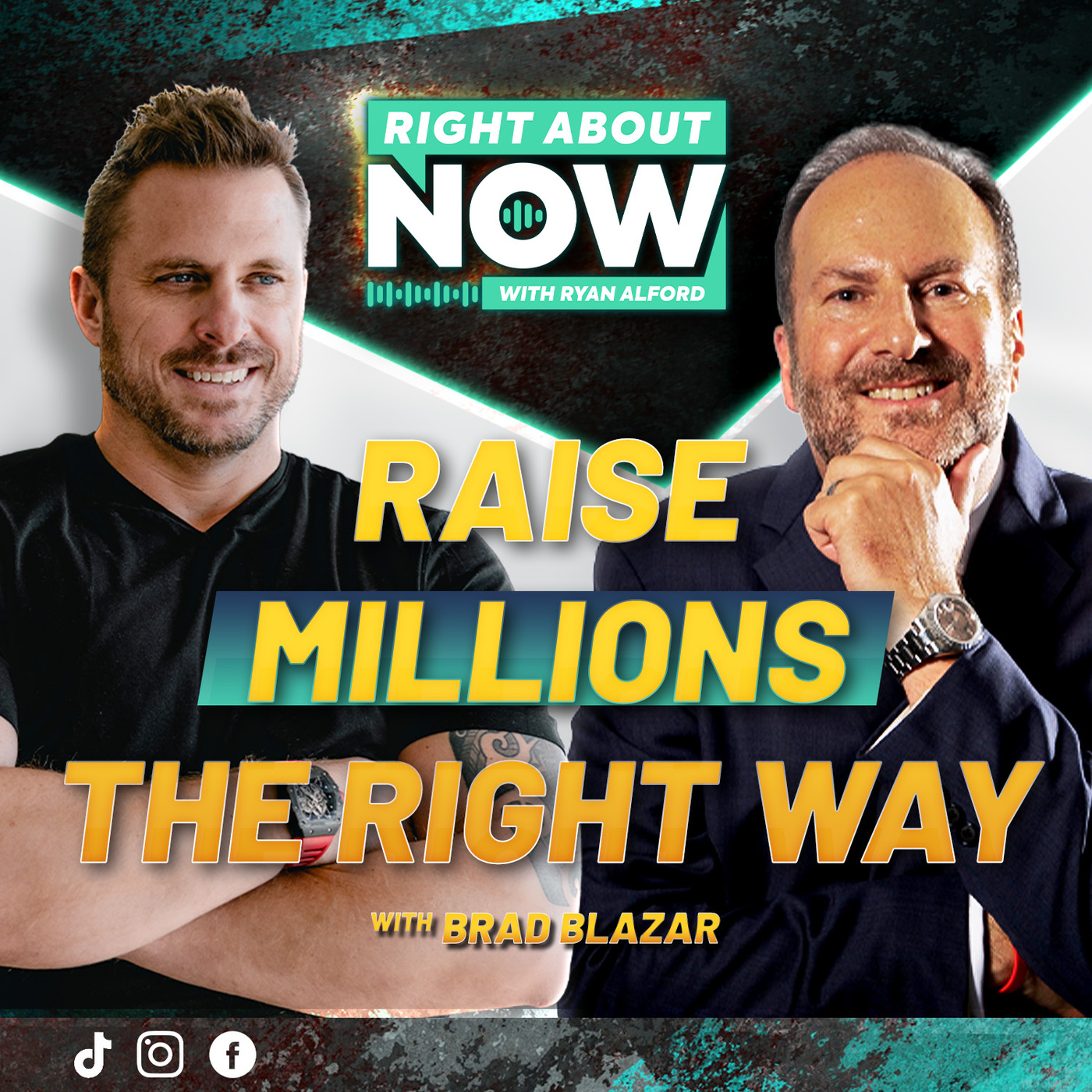
Right About Now - Legendary Business Advice
From Oil Deals to Entrepreneurship: Brad Blazar’s Masterclass on Funding & Business Growth
00:18:12
Loading summary
Transcript33 lines
- [00:00]
Ryan Alford
Stop letting a lack of capital hold.
- [00:02]
Podcast Host/Announcer
You back from your biggest business dreams. In this episode, I talked to Brad Blazer, the capital catalyst who has raised over $2 billion about how anyone can master the art of syndication and utilize other people's money to build massive wealth. That and more. Right about now, when you look at.
- [00:19]
Brad Blazer
Raising money from investors to buy businesses and then maybe buy another business that's complementary, you start building something very similar to private equity firm. When you look at a private equity firm, what private equity firms ultimately own, they own businesses and they scale those businesses. There's a lot of synergy where businesses are complementary to one another.
- [00:42]
Ryan Alford
This is Right about now with Ryan Alford, a Radcast Network production. We are the number one business show on the planet with over 1 million downloads a month, taking the BS out of business for over 6 years and over 400 episodes. You ready to start snapping necks and cashing checks? Well, it starts right about now.
- [01:05]
What's up, guys? Welcome to Right about now. We're always getting right and it's always about what is important today. And now in business and marketing and look, we're all about trailblazing. That's what we got. Brad Blazer here today. What's up, Brad?
- [01:19]
Brad Blazer
How you doing there, Ryan? It's great to be here with you.
- [01:26]
Podcast Host/Announcer
It's good to have you.
- [01:27]
Ryan Alford
I'm ready to talk about how to raise some capital. It's a good skill to have in the entrepreneur tool bag. Whether you end up using it or not, it's important that you understand it. I'm sure you could talk talk about that quite a bit, Brad.
- [01:38]
Brad Blazer
I think it's one of the skills that a lot of people just overlook.
- [01:41]
Podcast Host/Announcer
Block Trust IRA is changing how investors approach crypto. Crypto offers impressive returns, but it's also stressful. Sharp dips, sudden surges, 24. 7 volatility. Most investors panic, sell, or hold too tight, losing gains. That's why Block Trust IRA offers exclusive access to Animus AI, an AI trading system that spots key market movements ahead of the game, manages volatility, reduces risk, and accelerates growth while taking the stress out of investing. Since 2020, Animus AI has outperformed Bitcoin by over 250%. Visit writeaboutcrypto.com today. That's right about crypto.com to get started and earn up to $2,500 in bonus crypto. Hey, guys, consolidation is a wonderful thing and I know as a small business owner, it is everything, Let me tell you. Juggling multiple apps, managing business Finances, being anxious about taxes, being behind on the books. Yes, that's why I love consolidation and why I love Found. It can all become so much to deal with. Foundation helps you solve it all. They've automated things like tracking expenses, finding write offs, budgeting for tax time. You can even send invoices for free and pay your contractors. Everything, all from one app. That's consolidation. Found makes it easy to regain control of your business finances so you can get back to doing what you love. I wish a program like Found had come around years ago when I first started my entrepreneurial journey. I've never felt more control of my finances though. Now take back control of your business. Today open a Found account for free@found.com that's f o u n d dot com. Found is a financial technology company, not a bank. Banking services are provided by lead bank member fdic. Join the hundreds of thousands who've already streamlined their finances with Found.
- [03:56]
Brad Blazer
Look, so many entrepreneurs, business owners, they want to do something big. They go to the bank, they don't get approved. They either don't have credit, they don't have experience. They kind of give up on those dreams. Never pursue the things that they're capable of. They never really realize that every day when we get out of bed, we're pretty much surrounded by all the money we need. We just call these other people investors. Most people just don't understand how to build the interest, how to talk to people, the things they need to have obviously to do it successfully. Having literally coached thousands of people, people and raised over $2 billion. It's just one of those skills where I tell people, look, my past helps build your future. Man, you want to learn how to do this? Let's have a conversation about it.
- [04:30]
Ryan Alford
Knowledge is power and wisdom is king of the castle. Brad, let's talk about some capital. Where did your passion for sharing knowledge around this come from? And some of your own endeavors that led to all this wisdom?
- [04:42]
Brad Blazer
I went to school not to be in the oil business. I actually was studying architecture and had I not stumbled into the oil industry, I'd probably be designing buildings and houses and stuff like that. Just one day responded an ad and went to work in the oil field. And the CEO of the company kind of took a liking to me, showed me how to raise capital from investors. That's what I did. And after a couple years just kind of decided to bet on myself and took some money, started an oil company, built it up over the course of about a decade. Great business to be in the shit, hit the fan man. Oil prices plummeted, the tax laws dramatically changed, and so investment capital dried up. That's when I went back to school and I came out. I realized that my primary skill, what I was really good at, was knowing how to raise capital. And so I just kind of said to myself, I bet that's a skill that a lot of people pay a lot of good money for. And it's been great work for some of the biggest financial services firms in the world. Some of the largest multi billion dollar real estate sponsors have raised $2 billion and today even raise money for deals of my own. We just put an offering on a 252 unit self storage property just north of Houston here. Kind of keep my fingers crossed that the seller likes the offer and we get to raise some capital and take down that deal. The whole thing about raising capital, and this is actually in the book Rich Dad, Poor Dad. Robert Kiyosaki says the key to really building sizable wealth is not to try to do it on your own. It'll take you such a much longer time. It's to understand the principle of opm, other people's money. And when you understand that fundamental principle, wealth is knowledge or there's knowledge is power. Once you understand that and then more importantly, you know how to do that, Ryan, the sky's the limit. I know guys literally that are in their 30s, 40s, that are sitting there with companies where they have multiple hundreds of millions of dollars that they own and control.
- [06:29]
Ryan Alford
I could let go of some control and think about it to a degree. Maybe things could go faster. The notion for me is always the moment you have someone else's money in the deal, you don't control your own time. I don't know if that's true.
- [06:40]
Brad Blazer
Either most of these guys that are doing stuff that are real estate entrepreneurs, or they're raising money to buy businesses. They're not giving up control. The investors are all passive. They have absolutely no say in the business. They really don't have any ownership in the business. Think of it this way. Your company is the sponsor of a fund or another entity that's raising money to do something else. If your company is up here, this is not what people are investing in. They're investing in what your company is sponsoring that they invest in. If I've got a real estate investment firm and I want to go out and buy this apartment building, I'll syndicate that building and I'll bring investors in to go out and buy that, and now my company owns an interest in that Building alongside the investors or if we're going to buy a business, my company owns an interest alongside investors that now own and operate that business. And I get my proportionate share for putting the deal together. But the investors themselves don't have any control of my parent company. They don't have any say in really what it is we're doing. They're totally passive. And what they're essentially doing is they're relying on my expertise, my track record, the team of people that we put together and assembled. And so it's a beautiful thing to.
- [07:51]
Ryan Alford
Find the difference with real estate, where you're buying an asset versus the idea of a business. I use my own businesses, I own a digital ad agency, I own a media network. Those don't have necessarily the asset at the center of it, that is land or something like that. Walk me through that path. The idea of business versus the tangible of real estate.
- [08:12]
Brad Blazer
If I'm going out and I'm buying something like an apartment building, at the end of the day, that is a tangible asset, but it's a business. The tenants that live there are my customers. Your business where you have customers that you've got to keep happy, I got to keep them happy so they keep paying rent and they want to continue living there. I look at real estate assets as a business. I'm buying a business, it cash flows and all the other reasons, expenses, things like that. When you look at raising money from investors to buy businesses and then maybe buy another business that's complementary, you start building something very similar to private equity firm. When you look at a private equity firm, what do private equity firms ultimately own? They own businesses and they scale those businesses. There's a lot of synergy where businesses are complementary to one another. And we see a lot of people that will do that. They'll go out, start a company and they're like, I just want to raise money and buy, buy cash flowing businesses. Things that are boring, but cash flow make profit. Like laundromats, H Vac companies, car washes. Imagine if you got this company and over a couple years you now own and operate 8, 10, 12 cash flowing businesses. You're doing pretty good. There's really no difference in raising money from investors to buy cash flowing businesses or buy real estate assets. Because at the end of the day, really real estate is a business just, you know, you look at it a little differently.
- [09:38]
Ryan Alford
What about capital raising for ideas of business, the idea of the business. But you don't necessarily have a million customers built in day one or even a Thousand or a hundred. Do you counsel that side of capital raising?
- [09:50]
Brad Blazer
When you're raising money, you have to look at kind of the avatar and where you are in the growth curve. Are you a startup? Are you a more mature business? Are you kind of on a trajectory where you've been around a couple of years and have a track record prior performance? When you look at a true startup, somebody that's got this idea that's really unfounded or unproven, you're primarily looking for venture capital firms. They invest in startups, startups. Or maybe you're looking for an angel investor that's typically a very wealthy person that may have been a business owner that sold their business. Now they're worth 10, 20, $50 million. They're willing to take those types of risks because they know if they can hit a home run, obviously the return on investment is going to be substantial. But when you look at the different types of investors, family offices, private equity, venture capital, each one of these different groups likes to focus on different things. Private equity firm likes to buy traditionally existing ca flowing businesses. They come in, they put in some capital, they make some management tweaks, they scale the business, then they exit. The venture capital firm knows, okay, we're going to invest in five companies. Realistically, we're going to lose money on one, we're probably going to hit singles and doubles on the other three. And then that one boom is the home run that makes up for the others. And that's just the investment model. It depends. When you're a business owner and you're going out there trying to raise capital, that the first thing you do is you identify the type of investor that you want to be focusing your efforts on. Because if you're out there with a startup and you're talking to investors over here that like to invest in more seasoned, more established businesses, chances are you're not going to be very successful because your message is not related to that.
- [11:28]
Ryan Alford
Audience, identifying the right people to target. But even more so should people when raising capital have different expectations, be it controlled, whatever it might be, depending on the stage of the business.
- [11:41]
Brad Blazer
If you're coming in more on the earlier stage and you're taking on more risks, you definitely want a higher return because there's more risk. If you're investing in something that's a little bit more mature, that's a little bit more proven, the host or the sponsor or the person that is offering that investment doesn't have to give up as much or offer as significant a return because they're like, look man, you know, this is not nearly as risky as investing in a startup that's not yet proven. When you look at investing, there's this theory, we call it the risk adjusted rate of return. More risk, more return. And obviously as people get older, as they mature, their risk profile changes. People that are in their late 20s, 30s, some degree, in their early 40s, they can afford to take risk early in life. Their attitude is like, look man, I'm making great money. If I lose 50, 100 grand, I could earn that back over the next couple years or my other investments will replenish that. But when I get up into my late 50s and 60s, I'm much more conservative. Why? Because I'm beyond my peak earning years or maybe I'm a couple years away from retirement. So I got to play it a lot safer and I got to go into things that don't have that same risk profile.
- [12:47]
Ryan Alford
The higher risk, the higher reward.
- [12:49]
Brad Blazer
A lot of times people are willing to take those calculated risks, but at the end of the day, you really got to vet and you got to do due diligence on the people you're getting in bed with, the people that you're investing with. I see so many people out there doing stuff and I look at people that are investing with them and I just smile and I said, man, this shit's going to blow up. It has to. Because they don't have the foundation or some of the things in place that a guy like me knows has been doing this so long, they need to have in place. The most important thing really is the regulatory and the compliance side. When you take somebody else's money and you do something with that to create a return on it investment for them. You're in the securities business. Bottom line. I don't care if it's two investors or whether it's 100 investors. You get state regulators, you got of course the sec. And you don't want to get on their bad side because that can get real ugly real fast.
- [13:36]
Ryan Alford
Tell us some good stories of some stuff you've done on the capital side or things you've seen that would be interesting.
- [13:42]
Brad Blazer
Back when I was about a 26, 27 year old, cocky little kid in the oil business living high on the hog, had the Porsche, had the nice watch, had a nice house. I had this very wealthy doctor, the guy was a retired neurosurgeon, told me that he was a business partner of Sheldon Adelson. For whatever reason, the guy would just not invest with us. I think it might have been the fear of investing in a dry hole, losing the whole investment. I'm like, doctor, come on out here, meet me, go out in the field with us, we'll show you the whole operation. We'll get you to a place of comfort where hopefully you can make a better decision. And so I said, I got a private jet, I'll come out, come into the airport. His plane lands, he taxis in, gets out, introduces himself, I get him in my nice Suburban, go out to the oil field, we spend the day, treat them to lunch, and again, just would not invest. I had my sales team that worked for him. And I always told my sales team, you remember the first time you climbed up the ladder to the high dive at that neighborhood pool and you crawled out to the end and you're whoa. You look back and there's a line of kids going, jump you pussy. It ain't that hot. It's about 5:30, 6 o'. Clock. And what I used to do, Ryan, is I used to let my guys go home at three couple days. We'd come in, we get some beers, we get some pizzas, we sit there dialing out to the west coast or dialing to Hawaii because there's a five hour time difference. Dr. Schnack, it just takes two things to invest in oil. Well, then he said, what? I said, big brass balls and lots of money, dude, which of the two don't you have? And they're silent. He goes, tell me again, Brad, how much are three units in your drilling? I said, doctor, go get your checkbook. Welcome aboard. The dude became one of my best investors. Ryan rang the bell and I got my sales team together. And I told him, man, you guys have my permission to use this closing line anytime you choose to because it will absolutely work. And he became one of my best investors. Really great guy. The whole thing about getting people to make a buying decision, sometimes, you know, you got to squeeze the hotness a little bit and kick him where it hurts.
- [15:42]
Ryan Alford
What's the biggest misconception in raising capital? Perhaps what bugs are you squashing every day like of misconceptions?
- [15:49]
Brad Blazer
A lot of people think, oh, I got to have gray hair or I've got to have a track record or I've got to have done this and I've got to have done that. I say bullshit to all of that. Here I was a little 23 year old cocky kid that didn't know the first thing about drilling an oil well. You know, the first thing about building multimillion dollar business. All I knew how to do was just raise capital. And I knew that I could find the team. Get a cpa, you get an attorney, you build the team of people. Capital raising is a team sport. Most investors are going to look at somebody and if you're doing everything in the business, there's going to be doubt. I've established some pretty good relationships with some of the Sharks. I've talked to Kevin Harrington about this and Robert Herjavec and they said, look man, you know, as we all know, a lot of great people come into the Shark tank, their days, their doctors, and they don't get a deal. And it's not because of them, it's because of one word. It comes down to execut. Can you execute on what you're trying to do? And if we see doubt in that, naturally, why would we want to invest? When you're talking to an investor, what you have to be able to communicate is, hey, the collective experience of my team is this. We've done these things. Our track record is this. And so you eliminate the uncertainty that allows an investor potentially to move forward. Because at the end of the day, people invest emotionally. They invest in people they know like and trust. If you're good at building relationships and understand how to do that, the world becomes your oyster. I'm so pissed off at our educational system because we don't teach people how to become financially independent. What we do is we teach people how to assimilate and fit in with the rest of society, which is get your ass a job, work your 40 to 50 years, script and save and hopefully you'll have a decent retirement. The option, which a lot of my buddies, you probably know, many of them, like the Carlos Reyes's and basically the Nick Perry's the world, they're like, no, screw that shit man. Work your ass off for three to five years and I'll show you can be done in five to seven years. Boom. You just go out and post sale or you're getting some real estate deals like we do and you get some passive income income. Then you can double down and start focusing on the wealth creation or like you're doing, you just start building some businesses. You get one business, the multiple seven figures, then you focus on another, then another, and you just keep doing that. And that's the answer.
- [17:55]
Ryan Alford
Talk to me about where everybody can keep up with you and anything else you got going on there.
- [18:00]
Brad Blazer
The easiest thing is just follow me on the website. It's just my first and last name, bradblazar.com. there are no E's in the spelling of my name. It's just. Just Brad Blazer. B L a Z A R. So go there, check it out. Follow me on Instagram. Just look for that little blue check or whatever that says you're following the right dude and shoot me a dm. Love to get on a call. Love to invite you to some of the events that we do throughout the year. We do some big, cool events. We do some masterminds, and we just love connecting with people.
- [18:26]
Ryan Alford
I love it, man. I really appreciate you coming on and dropping all the knowledge and look forward to staying in touch. Appreciate you, brother.
- [18:32]
Podcast Host/Announcer
Hey, guys.
- [18:32]
Ryan Alford
You know, to find US Ryan is right.com because we're always right. We're always now. We're always here for you. Thank you.
- [18:39]
This has been Right about Now with Ryan Alford, a Radcast network production. Visit ryanisright.com for full audio and video versions of the show or to inquire about sponsorship opportunities. Thanks for listening.