← Right About Now - Legendary Business Advice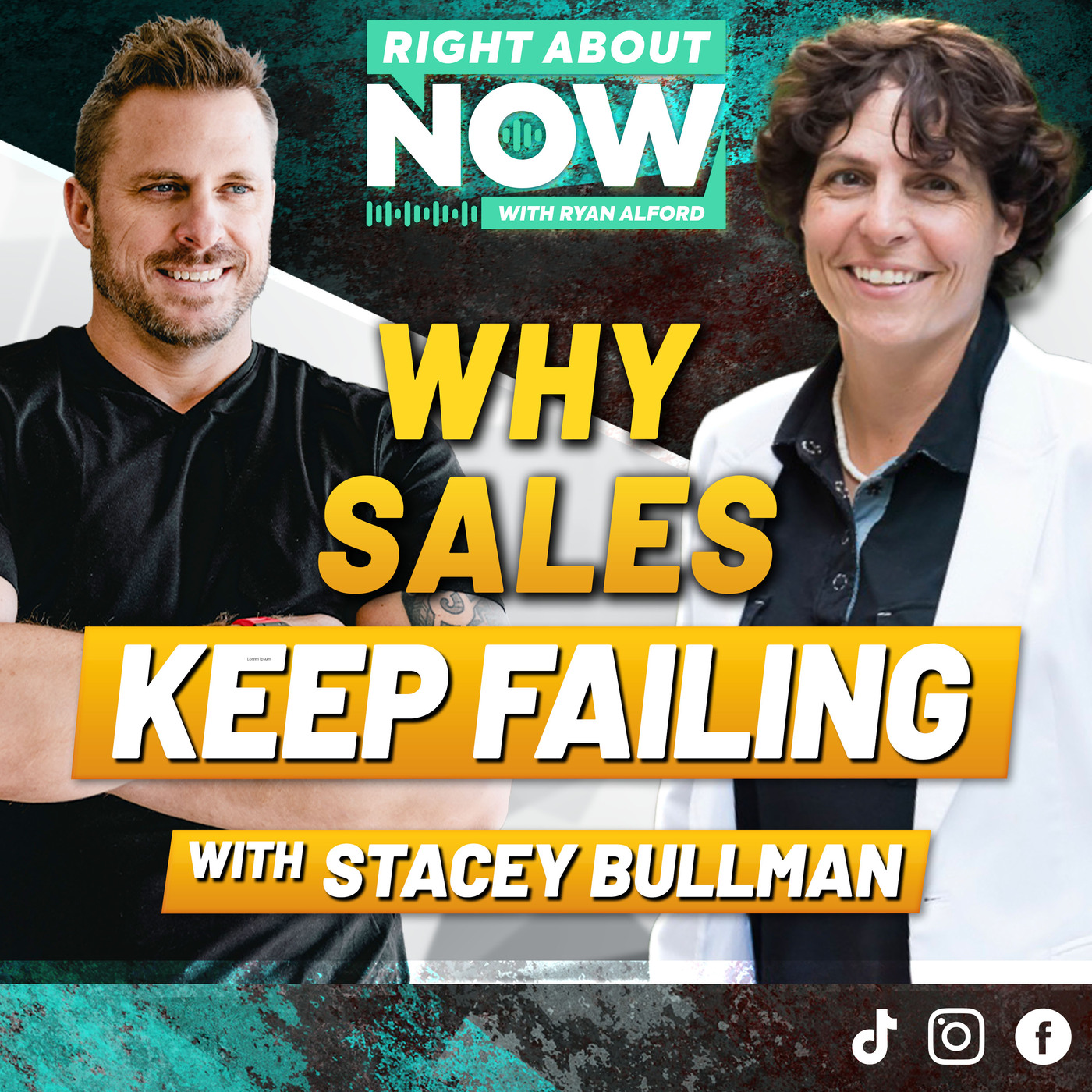
Right About Now - Legendary Business Advice
How Consultants Help Businesses Grow | Stacey Bullman
00:19:20
Loading summary
Transcript49 lines
- [00:00]
Grainger Announcer
This is the story of the 1. As head of maintenance at a concert hall, he knows the show must always go on. That's why he works behind the scenes, ensuring every light is working, the H Vac is humming, and his facility shines with Grainger's supplies and solutions for every challenge he faces. Plus 24. 7 customer support. His venue never misses a beat. Call quickgranger.com or just stop by Granger for the ones who get it done.
- [00:30]
Stacy Bullman
LeBron James. Years ago, he said, I haven't activated playoff mode. I relate this to people that turn on and off their sales pipeline. A lot of times companies will get real busy and they're like, okay, we're gonna chill out on sales for a minute. We're gonna go to operations. LeBron related that to sports. I haven't activated playoff mode yet. When he did activate playoff mode, guess what? They didn't make the playoffs because it was too late. And that's the exact same thing I tell people about when you kind of turn on and off your pipe pipeline, your sales pipeline, your efforts and energy towards sales. If you turn that off, you don't get to just turn it back on and you turn it off. And you may be 90 days, 120 days. You may be out of business.
- [01:07]
Ryan Alford
This is Right about now with Ryan Alford, a Radcast Network production. We are the number one business show on the planet with over 1 million downloads a month, taking the BS out of business for over 6 years in over 400 episodes. You ready to start snapping next and cashing checks? Well, it starts right about now.
- [01:30]
Ryan Israel
Hello and welcome to Right about now. It is our guest episode here. Business consulting is always an interesting term and it's always a little bit of like. And then I saw founder of I am not mad at. I'm not mad at you. Well, I got my attention. That's Stacey Bullman here. She is the founder of the business consulting firm I am not mad at you. What's up?
- [01:51]
Stacy Bullman
What's up with you? Thank you for having me today.
- [01:53]
Ryan Israel
Hey, I ain't mad.
- [01:55]
Stacy Bullman
I ain't mad at you. I'm not mad at you. We live in that state.
- [01:59]
Ryan Israel
What's cooking, Stacy?
- [02:00]
Stacy Bullman
Having a wonderful opportunity to speak to you this morning. Work in the consulting field these days. Living in Mexico, enjoying life, manifesting dreams.
- [02:08]
Ryan Israel
I saw the Believe tattoo pre episode. We can show that here. I like it. You gotta believe, baby. You gotta believe it before you see it. That's what I like to say.
- [02:16]
Stacy Bullman
Facts, facts.
- [02:18]
Ryan Israel
Yeah, everything's good with me. I am Always curious because sometimes I see consulting firm. That still makes you an entrepreneur though, right? It's like just because you're a consultant, consultant. Is a consulting firm still an entrepreneurial journey? I would think it is in what we do.
- [02:32]
Stacy Bullman
It is. I would not speak to all consulting companies in that way. In fact, we brag about the way we work and how we work differently. I did come from corporate America. I spent 30 years working for the Fortune 100 companies and learning their systems and processes. So the Fortune 100 companies don't go out of business. And so far most of the companies we work with don't go out of business either because they're working with systems and processes. You're right. Consulting has a terrible wrap. Generally speaking, I have to come behind that. Probably the reason I started the company. One of them was in vain. Of all the other business consultants that the companies I was working for would hire and spend millions of dollars. And honestly, they never touched the field level individuals. And so they didn't ever come back with any relatable advice, anything that was executable to the team. You're sitting there, we just spent a million dollars and you're out in the field going, none of this makes any difference for how I'm going to sell more Snickers bars next week. We like to think we do it. Cut through that. There's not the I'm not mad at you way, shall we call it? We don't make you take a course, we don't make you read anything really within the first week of deciding we want to work with a client, we open up the P and L and we get to work. There's not read this course and do all this stuff. It's looking at their P and L, getting inside their business and talking about their business. And that's how the Fortune 100 companies did it. And that's how we do it A lot of times also, consultants are not held accountable for the work they do. Same thing. If we start with the P and L, we have to finish with the P and L. If we've worked with you for six months and we don't see a substantial difference, for instance, on cash flow, revenue, net income, I'm not paying for myself and I'm not valuable to the organizations.
- [04:04]
Ryan Israel
It's an interesting world. I know a lot of consultants and I feel like I'm entering this period in life where in the next 10 years I could see myself probably going down that channel. Seems to be like the way people, I don't know, I Don't think I'm in the sunset of my career, I'm a young buck, you know, but you know, it is kind of generally a decent. Well, you've gained all this wisdom and you can share it and you know how to look at a business and organization, all that. It's also bad sometimes because you have to do what is recommended to see the results. And a lot of companies, I've seen them, Sultan comes in assuming they're stand up consultant, doing good work. Like you look at the recommendation, that makes sense and then the companies don't do it.
- [04:42]
Stacy Bullman
A lot of people have paid me a lot of money over the past 10 years and didn't do what we asked. I don't work in a vacuum. And the way our primary way that we work with our clients is in a CEO soundboarding capacity. And we sit and talk every single week. We look at the information together with each other's collaborative efforts, we come up with a plan. They can't really, really pay me to do that work. In some cases I can. In some cases it's writing an email campaign for them. In some cases it's rebranding them or creating a value proposition. But in most cases it's soundboarding with that CEO and you're as a team coming up with the plan. It's not in a vacuum, but you're right, they pay me good money and oftentimes they don't listen. One of the things we talked about the other day is we've never in 10 years had a client come back to us. And we think that's good because if they left it was because they weren't listening. No one's come back five years later after working with us. Like, you know what, we know we weren't listening and we want get a better experience with you. They don't because they recognize in order for this to work, it has to be collaborative. You do have to listen and you have to take the steps of action. You're like, that's the actual execution.
- [05:43]
Ryan Israel
You can take the order, come back, don't come back.
- [05:47]
Stacy Bullman
You're like, it didn't work and I'm not mad at you and I'm going to wish them the best. But it is kind of fun to sit back, like I said, watching the clients that do listen and seeing their success and watching the ones that don't. And what we said the other day is that every single time they don't listen, it fails every time.
- [06:01]
Ryan Israel
You know what a good name of a consulting firm would be?
- [06:04]
Stacy Bullman
Tell Me, Right.
- [06:06]
Ryan Israel
No, I'm kidding. It's kind of. It's kind of that same vein, like be the case study. You want every client to become the case study. You know, I told them that.
- [06:13]
Stacy Bullman
And if they're not, I tell them I fire them. In fact, in my pitch, I say, if you're not a case study, I fire you. So I put a little pressure on them in the beginning to deliver.
- [06:23]
Ryan Israel
I'm gonna throw something at you here then. I want to ask a few things. I do know a lot of consultants are really good ones like yourself, and it does connect between recommendation to action, put the consultant almost on the team and make them stay on enacted or something. I'm sure that exists. Right.
- [06:39]
Stacy Bullman
And well, that's actually how I work with the clients I work with. We're now going to merge in a one timeout type of product offering, which we have not done in the 10 years because we didn't feel like there was a place to come in and do that in the businesses to jump in and jump out. Now we're going to offer that. But you're right, the way that the clients have worked with us in the soundboarding capacity is it's at minimum three months. Because we tell them like there's not. Especially since no matter what any company wants to tell you, if you ask them what their greatest problem is, and I've talked to so many CEOs over the past 10 years, and they'll come of break up their problem in a million different slivers, you know what the ultimate problem is? Sales and revenue. No matter how you slice it, if you have a personnel problem, you're going to end up having a sales problem. If you have an operational problem that's going to end up being a sales problem, we stick to a lot of that. When we are soundboarding with our clients and we talk to them every week, it's kind of hard to run away from us and not have a collaborative effort. We don't want them to come in, listen once, and talk to us six weeks later. We don't think that's that valuable because there's too many decisions that CEO is going to make in that six weeks that might be wrong, or may not be well thought out, or may not have someone else be like, wait a minute, what are the consequences of this? I'm the little devil's advocate right here. Or the one that's telling you it's a great idea and go for it, or telling you how to execute against this idea. Step one, step two, Step three, I.
- [07:57]
Ryan Israel
Think you've kind of just talked about it a little bit. But what was the biggest problem you identified and that you guys ultimately are solving for companies?
- [08:04]
Stacy Bullman
It's sales, it's cash flow. I've heard every other answer. But once you start working with them, you recognize that no matter what that problem will lead to, ultimately a sales problem or a cash flow problem or a production problem, which is still sales. Most the companies I work with are small to mid sized businesses. I've had a lot of success in construction. I can't build anything. Nothing. I can build nothing. But what the construction person is really good at is building something. And when I'm coming as a consultant, I presume they know how to build multifamily, residential, commercial. I leave it that at that. But what that construction person doesn't probably know how to do is sales, marketing, accounting, finance. And to be fair, when you're a construction, construction person, you start a construction company, you usually as the CEO only get to go out and do construction maybe 10 or 15% of the time. The rest of your time better be devoted to business development, challenges in the organization, HR challenges, all the other things that you have to wear as a hat as you've CEOs. The biggest kind of hurdle was to get these operational people to focus on sales and cash flow and revenue. And just because you paid payroll this week does not mean you're financially sound. And that's where a lot of CEOs were like, look, I covered payroll, we're doing great. And that was about as, as far as they were going to understand that. I use this theory. I love this. It's a sports thing. And I hated this when he said it and he deserved what happened. But LeBron James, years ago, it was like February and he said, I haven't activated playoff mode yet. Do you remember that? Yeah, I haven't activated playoff mode. I relate this to people that turn on and off their sales pipeline. A lot of times some people get real busy and they're like, okay, we're going to chill out on sales for a minute. We're going to go to operations. You've probably seen or people talk about that. Yeah, LeBron related that to sports in February. I haven't activated playoff mode yet. When he did activate playoff mode, guess what? They didn't make the playoffs because it was too late. And that's the exact same thing I tell people about. When you kind of turn on and off your pipeline, your sales pipeline, your efforts and energy towards sales, you turn that Off. You don't get to just turn it back on and you turn it off, and you may be 90 days, 120 days, you may be out of business. You really have to get these operational people who come from an operational background to constantly spend as much time and energy for sales and business development, which can be tedious. And sometimes you don't see the results of your action.
- [10:21]
Ryan Israel
Yeah, that's the biggest difference in operations and building and doing the actual work. It's kind of like raking the front yard. You know, you don't want to do it, but you see the results immediately.
- [10:29]
Stacy Bullman
Right.
- [10:30]
Ryan Israel
You know, I mean, it's like mowing your lawn.
- [10:32]
Stacy Bullman
I looked at it for three days after I mowed my lawn. Right. It was a rewarding thing. And oftentimes you get one yes out of 100 no's. With sales, generally, you have to be really good at the 99 no's. And there's a lot of time, oftentimes in between the yeses. That's back to the small business owner. It's easy to spend time on the operational things. It's easy to spend time on the things that you can see an immediate result in. It's difficult to spend time writing an email that you think might get opened, that might get a phone call or it's difficult to create content. That content is king. Now, that's not fun for most of us, that's not that enjoyable. It's challenging. I think of myself as a consultant, but guess I have to go create content today no matter what.
- [11:11]
Ryan Israel
You and I have both been around the block a little bit. We've done what we've done for a while. What's the biggest change you've seen in sales the last five to 10 years? I mean, some universal truths maybe for.
- [11:22]
Stacy Bullman
I know you know this answer, but it's technology. I started my first company at 27 years old. I was a food broker. I was representing food into the distributors and into restaurants. And I remember having to come up with targets and lead lists. And I mean, I was with the Yellow Pages and I had to get in my car and traipse around Dallas and maybe find one person a day, maybe. That was an amazing day. If you got one good lead that kind of fit into what you were doing, my goodness. I can go on LinkedIn, I can go on Google, I can literally create my target list in 15 minutes. Between ChatGPT, Google, LinkedIn, different technological things that we have today, YouTube, we can create a robust target list in minutes. And then you go Attack. And so you can get 6,000 opportunities instead of six. And you already know you're going to get told no five or six times most likely. But I'd rather have 6,000 opportunities be told than six.
- [12:19]
Ryan Israel
The good part of that is what you just said. The bad part is then every contact's getting hit a lot more. Everybody, oh, I get sold to all the time. They said that 20, 30 years ago. Well, now they really do.
- [12:29]
Stacy Bullman
Yeah. The noise is a lot louder. The noise is a lot louder. For those that are in the consumption space with us making people and companies better, we technically believe every single person is a potential, potential human being that we could make better or their companies. We have to hit them in an organic spot. You have to be ready for help. And that's probably another thing where most leaders are not out there asking for help because it's against the mantra, it's against sort of the mindset of a leader because they're generally out there telling everyone they've got it down. They know what they're doing. They have the answers for that small to mid sized business owner if they're the sole person that wears the hat, that's challenging. Because you don't have all the answers. None of us do. I don't believe. I think we're all out here supposed to ask for help and seek others to find the best path and then take what you want. Throw away the rent. Some is good, some is bad.
- [13:15]
Ryan Israel
What's the biggest when you go into an organization other than they've put the pencil down, we're busy. Put the pencil down. With sales, when you get into the sales, what are the biggest challenges they're having? Let's just say if they've got the pencil raised. What are some of those things you're seeing that are universally just challenges within organizations with sales having a good message.
- [13:34]
Stacy Bullman
To deliver or a good story? The first thing is you have to have a value proposition and a point of differentiation. If you're in sales and the organization you're with has not given you a value proposition or a point of differentiation, that's hard if you're.
- [13:47]
Ryan Israel
You'd be surprised how many companies have it. You wouldn't me, but people would be. Because I've asked that same thing. We have a marketing agency, we work with clients. I'll ask someone that and they don't have an answer.
- [13:59]
Stacy Bullman
We think our point of differentiation is that we work 83% faster than other consulting firms. And I will tell you something, that it's bold to say it because there's times I'm saying that to other people that are in my space. But I'm confident we have a process that we brand a product, a service in an hour and a half. Worked with companies where we spent six months to create a brand or a story for that brand. We do it in an hour and a half because we want to. It's sort of like psychology. We don't want to spend six weeks to make them right. It doesn't benefit us. I want them right in a week. Then they can see the results. And then back to that point of like, I want them to see the results of them to recognize that we did work 83% faster and maybe we should keep her wrong because we can fix you fast. And a lot of the clients we've had have, they've been smart. They're like, take her word, get her information. We're out. I had one of my first clients. This is where I sort of changed my pricing model. But one of my first clients, he was in audio visual installation into high end homes in the Dallas market. And he'd been in business for 10 years. He was doing very well. He was right at about half a million dollars. And he's like, I've been at a half a million dollars for like four or five years. Come on, Stace. He had been installing AV in my homes for 10 or 15 years as well. So I knew him, it was really simple. I was able to look at his sales over the past two years kind of quickly take a report like, where are you selling? What are, you know, what's the common denominat denominators here? You know what the commonator denominator with, with him was? Word of mouth referral. 99.9% of his clients were coming from another person he worked with. So you know what I said, here's six things we should do. Knowing this, he did two of them. He doubled his sales in the first year. He went from you know, 6 to 1.2. And he only implemented like two of the things I told him to do. And he did that within the first like three or four weeks. And he's like, I think I'm good. He hired me for a month for eighteen hundred dollars. He grew his sales from six hundred to $1.2 million. And I got eighteen hundred dollars for that. I had to change my mindset. That's actually now I'm doing some of the things I'm doing. I'm offering a don't be dumb session. It's one session is $2,500. Because to be fair, what we've learned in 10 years is we spend an hour speaking to people, they get certainly $2,500.
- [15:58]
Ryan Israel
If not sometimes get paid for results. I mean, you know, 100%.
- [16:02]
Stacy Bullman
Yes. I need to stop saying 100%. That's my results. Yours. Take away yours.
- [16:06]
Ryan Israel
Stacy, as we close out, I want to know this. We've got a lot of entrepreneurs listening. Soon to be entrepreneurs. Give me the four things they might not be doing and say three things, two things, whatever it is, what is like a quick little playbook for anyone listening. Things they're probably not doing. They might could do that. Give them some value.
- [16:25]
Stacy Bullman
100 cut that man. Number one is create your target market. Create the avatar. That's not that hard. Is it a male? Is it female? Is it 30 years old? Is it 60 years old? Create your avatar. Then realistically look at how big the numbers are for that target demographic. Correct. Like you understand that. Do the numbers first. If you're about to start a business, run the numbers. So if you have a product that's target market is females from 20 to 40 and it's, let's say it's an actual product, a building, you're gonna open a gym or whatever it is, how many people are there to say yes and then take that entire actual correct demographic. It's not all the people in Greenville, South Carolina. Let's say it's half those people. Then how many people are 20 years old? Get that number and then recognize you're getting to get half percent of them to say yes. You have to really build a good target and stay focused and don't stop. Go, go, go, go. It's easy to stop midway or quarter way through. You have to, as we said, never, never stop. Never go into reserve mode because you had a good month in sales. So don't stop and be okay with accepting no. That's part of the equation, the reward of when you get the yes.
- [17:33]
Ryan Israel
Stacy, where can everybody learn more about what you're doing? Find out about how to work with I am not mad at you.
- [17:39]
Stacy Bullman
It's pretty simple. I'm not mad@you.com. stacy at I'm not mad@you.com. i'm not. And it's not I am. It's I'm not mad at you. We're not hard to find. If you can spell I'm not mad at you and not I'm not Matcha Tupac. We're easy to find. We're on the Internet. We're on the webs.
- [17:57]
Ryan Israel
Appreciate you for coming on.
- [17:59]
Stacy Bullman
No, I appreciate you. You have a amazing vibe. You're super easy to talk to. Wish we had talked about other things besides business, to be honest with you.
- [18:06]
Ryan Israel
Hey, we'll have to do it some time. You got my number. You got my 41 1. We appreciate Stacey Bullman for coming on. I am not mad at you. Dot com. We'll have all that in the show notes. You can find me at Ryan Israel write.com where you'll find all the highlight clips, the full episode and links to YouTube. You gotta watch the show, people. If you're listening, you gotta go watch. If you're watching, go listen. We appreciate you for making us number one. We'll see you next time. Right about now.
- [18:31]
Ryan Alford
This has been Right about now with Ryan Alford, a Radcast network production. Visit ryanisright.com for full audio and video versions of the show or to inquire about sponsorship opportunities. Thanks for listening.
- [18:51]
Stephen H. Mann
Listen up. ESPN Unlimited is now included at no extra cost with Spectrum tv. Spectrum gives you everything from espn, live games, original series, top analysis and more. Spectrum is really stepping up with this offer and you get more of me. Stephen H. Mann get your act together and go to spectrum.com entertainment for D3, ESPN unlimited and more Popular streaming apps are included at no extra cost with Spectrum TV restrictions apply.
- [19:21]
Grainger Announcer
This is the story of the 1. As head of maintenance at a concert hall, he knows the show must always go on. That's why he works behind the scenes, ensuring every light is working, the H Vac is humming, and his facility shines with Grainger's supplies and solutions for every challenge he faces. Plus 24. 7 customer support. His venue never misses a beat. Call quickgranger.com or just stop by Granger for the ones who get it done.