← Risk Never Sleeps Podcast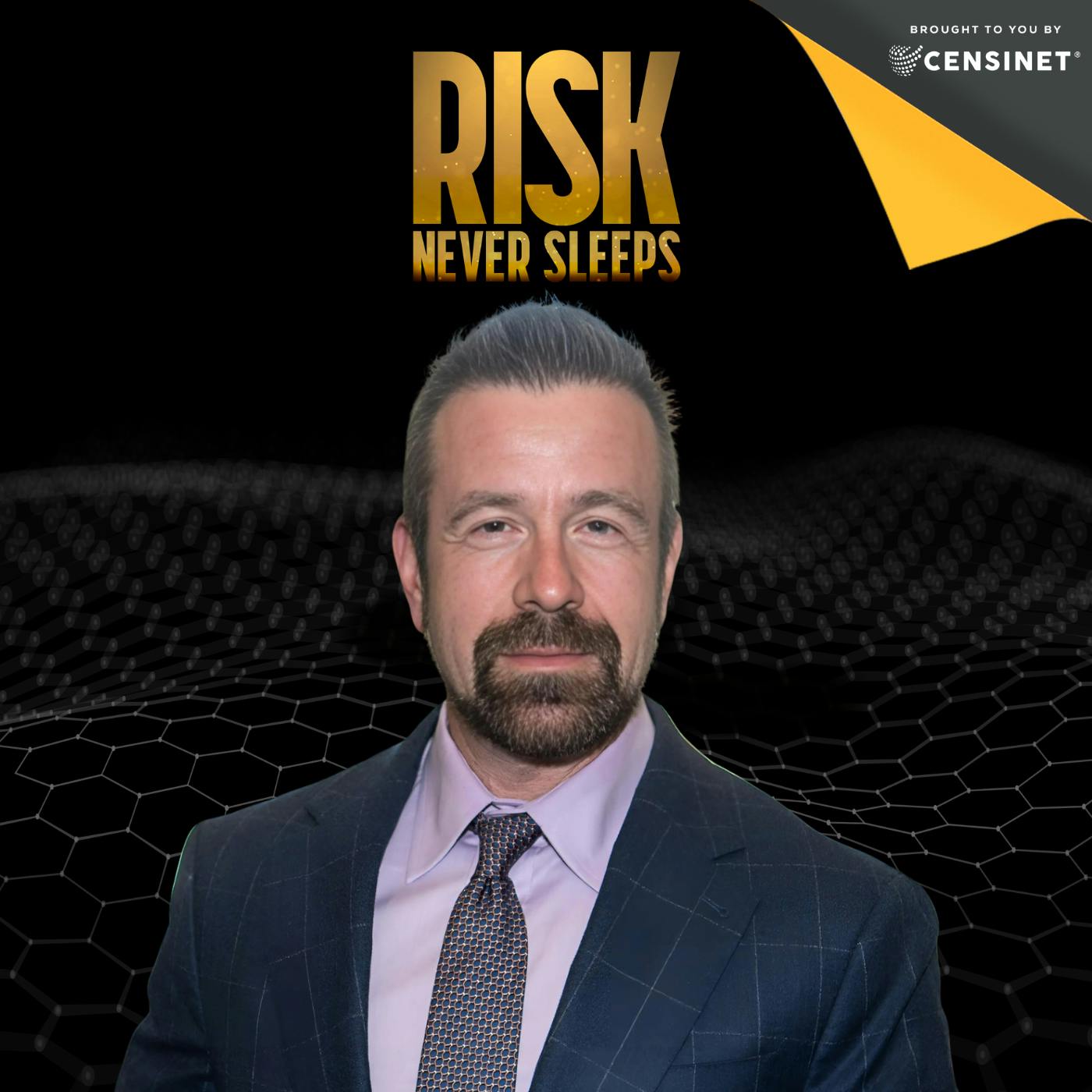
Risk Never Sleeps Podcast
Episode #143. When Machines Predict, Humans Protect with Bob Berbeco, CIO of Mahaska Health
00:26:46
Loading summary
Transcript137 lines
- [00:00]
Bob Berbeko
Foreign.
- [00:06]
Ed Gaudette
Welcome to Risk Never Sleeps, where we meet and get to know the people delivering patient care and protecting patient safety. I'm your host, Ed Gaudette.
- [00:18]
Welcome to the Risk Never Sleeps podcast which we learn about the people that are on the front lines delivering and protecting patient care. I'm Ed Gaudette, the host of our program and today joining us is is Bob Berbeko, CIO of Mahaska Health.
- [00:33]
Bob Berbeko
Welcome, Bob. Thanks, Zed.
- [00:35]
Ed Gaudette
Let's start off with sharing with our listeners a little bit about your current organization and your current role.
- [00:40]
Bob Berbeko
Absolutely. So, as you mentioned, I'm the CIO here at Mahaska Health. I lead the organizational information technology, data science, AI, cybersecurity, pretty much everything when it comes to technology here at Mahaska Health. And just going into my background a little bit is prior to Mahaska, I've been a senior leader in healthcare technology for pretty long time and I've done predictive analytics, process optimization, AD car, change management, service line administration. I've done operational side too, business intelligence. A number of things won't bore you with the details, but a number of things, no, I love that.
- [01:21]
Ed Gaudette
I looked at your background informatics, you were cto, you've done data governance. So it seems like all of that work puts you in the position you're in currently and so love to explore a lot around AI, the things that you're doing with AI. But let's start off with as you look into entering into 2026, which isn't that far away, if you can believe it already.
- [01:44]
Yeah.
- [01:45]
Where did the summer go?
- [01:47]
Bob Berbeko
Just.
- [01:48]
Ed Gaudette
It's crazy. But what are your key initiatives over the next 12 to 24 months?
- [01:53]
Bob Berbeko
Yeah, I would say the biggest initiative that we have right now, and we're really excited about this, is there's in my background, there's a couple of items that I tend to focus on. One is data analytics, but in the terms of creating a measurement culture. The other is I do have a six Sigma black belt. I'm very focused. My passion is on just continuous improvement and optimization. So that gets me to what I'm excited about is we're in the process of growing a data science and AI center of Excellence here at Nahaska Health. And that will be a strategic hub, strategic hub for healthcare analytics research, AI. For us, we're going to be working on predictive modeling, machine learning and research support for Ransom Publications, as well as ensuring that there's data and ethical governance. And for us, it's going to get us down that path of innovation. There's a lot of things that we do well. We're anticipating where the future is headed and so we want to get on that track. The one other aspect of this I just want to mention too is the group. I'm included, of course, the catalyst for us. But we have providers, so we have providers, we have clinicians, we have informatics, we have technical condominium, we have people who are engaged. I have a CMI Ergor who is engaged in this process. And that's really important when it comes to healthcare is making sure you don't want to have a room too large. But you do want to ensure that you have people with different lenses and different focuses on what they do daily. So it helps you to put together a picture of what we want to get accomplishing.
- [03:46]
Ed Gaudette
I love that. Any tips or tricks that you've used over your career to collaborate with physicians, clinicians? I know that's a challenge for some folks and you could share.
- [03:57]
Bob Berbeko
Yeah, I channel a curious beginner's model. So I am. I have experience, I have things that can come to the table. But when I engage with others, I sincerely want to learn their background. I sincerely want to learn what's important to them and how I, as with my background, can help them deliver results and do things better for them. So with providers, I listen to them and I listen to what they have to say as well as say I'm going to get excited. I haven't been a provider. So there's things in their background that they see on a daily basis that I don't. And it's. So I listen to that and then I listen to what are some things that we, technology wise, can help them in terms of burnout and taste that. So yeah, that's my strategy.
- [04:49]
Ed Gaudette
So proactive empathy.
- [04:51]
Yeah.
- [04:52]
Which is. I hear that as a common theme with folks that have been successful. So that's really good. Any challenges as it relates to communicating technology and any advice you have for folks that are communicating technology to the board?
- [05:06]
Bob Berbeko
Yeah. Wow. These are great questions, Ed. I would do your best. I have an experience talking with board members. I have an experience of talking with exec. I use that experience. However, if you don't have that experience, anticipate what those folks would be looking for. So try to do your best and whether you talk to others to try and get that information, but do your best to channel what their lens is because technology, I think it goes without saying I can go down the mumbo jumbo route, but people will get lost. So what's important to them? Anticipate what's important to them and then deliver the message to those we. Thanks.
- [05:48]
Ed Gaudette
I love that I've seen people actually create Persona based chats and use that as a way to interact with board members. And what questions will you be asking me when I present this information?
- [06:00]
Bob Berbeko
Oh, that's. Yeah, actually that's a great tactic. I'll. I'll add that to my repertoire.
- [06:05]
Ed Gaudette
Okay, cool. How did you get into healthcare? And it.
- [06:10]
Bob Berbeko
Yeah, another great question. Let's see my path. I got a degree, a master's in computer science. And from that I have always taken this path of learning. And a long story short, I got my first technical job and then another job came up where it was health. And at that point in time in my life I didn't know much about healthcare, so I took that role. And then throughout my life and career I've always looked to. I take that learning approach. So I get back to beginners mind. So throughout my career I started with that position and I interacted, created friendships, created mentorships with people and just kept learning from them and taking what I learned into how I can grow over time.
- [06:59]
Ed Gaudette
Yeah, I think you don't really. Regardless of where you are on your journey, when you enter healthcare, you realize quickly you didn't. You don't really know healthcare until you're.
- [07:07]
Bob Berbeko
Yeah, I love it. It's fascinating you even say that, Ed. So even I've been decades, I'm seasoned. And what's. I love what you're saying is you know it. So a potential dark side could be as well. I know all there is to know. I've been there, I've done it all though. And that dark side, it's like you really have to fight that because there's still. Things are still changing and healthcare is adapting. We have AI in the mix if we want to go down that technology path. A lot of stuff is happening. A lot of stuff is happening fast and we have to get ahead of it. So I love how you mentioned.
- [07:41]
Ed Gaudette
Yeah, and I love the, the black belt in, in Six Sigma because I assume you apply that every. Just not just to technology, but continually learning and improving your own life and how you dress. I can sense it. I see it.
- [07:55]
Bob Berbeko
It's. It's funny you say that and I, I approach it in my personal life as well. And sometimes it can be irritating to those who are close to me in, in that I'm trying to think how to say this. I approach it like this logical, analytical kind of KPI.
- [08:12]
Ed Gaudette
Yeah.
- [08:12]
Bob Berbeko
Yeah, that's great. Place there's other kind of. And actually that's something I have to learn is I have to adapt to the situation as well.
- [08:22]
Ed Gaudette
Well, in that mental mode of staying curious too can be irritating to people that know you. It's like, because there's that line between confidence and insecurity, if you will.
- [08:33]
Bob Berbeko
Yeah, no, that's really good.
- [08:36]
Ed Gaudette
As you think about your journey into health care, I often hear about the shared mission that we all experience. What does that mean to you?
- [08:43]
Bob Berbeko
Oh, wow, great question. What I focus on in life is if I internalize this a lot, every day I'm looking for some way that I can influence something awesome. And so when it comes to health care, how I channel in healthcare is I may not be a provider or clinician, I may not be direct line support to patients, but there are things that we do in healthcare, even on the technology side, that can have a great positive impact on people who come and see us. And so I channeled that. What can we do? Why my experience? Why my team's experience? What can we do as technical people to help our providers and clinicians deliver the best care they can and then help in terms of we have artificial intelligence and analytics out there. What are some things that, some approaches we can take to be more proactive in how we deliver purchase?
- [09:34]
Ed Gaudette
What are the things that you know as you look out over the next 12, 24 months, keep you up at night, what are you most worried or concerned about?
- [09:41]
Bob Berbeko
Oh, wow, that is a really good question. Outside of cybersecurity is probably the easiest answer. Yeah, right.
- [09:48]
Ed Gaudette
Overall, that keeps everybody up.
- [09:51]
Bob Berbeko
Right. I would say with artificial intelligence, it's grown so fast and it seems it has all this promise out there. There's just, there's ethical risks that are potentially associated with it. And there's a. Some good use cases too, is there's technologies that exist right now where the artificial intelligence can look at, say a CT scan and diagnose. That's great. The potential problem of that though is we are aware that AI does have hallucinations and they do make mistakes. So the potential problem is, well, that we just take and go. There could be a mistake made. How do we reconcile that when it comes to compliance? So there is a need, as we keep moving these AI technologies forward, there's still this need to have human oversight. So whether it's clinical information or clinical diagnosis, there needs to be clinical based oversight over those types of initial diagnosis so that we're making sure that we're truly doing the right thing.
- [10:51]
Ed Gaudette
Yeah, that's A great point. I think a lot of people ran to AI and then realize, whoa, we need use cases. We need not just the security of the infrastructure and the data, but we need to look at the quality, the efficacy of the data.
- [11:04]
Bob Berbeko
Well, yeah, I love what you just said. The use cases. We do have to. Maybe it takes the sizzle and the sizzle around AI. Exciting.
- [11:14]
Ed Gaudette
Yeah.
- [11:15]
Bob Berbeko
But. But we really have to be mindful and have that go through those use case pathways to make sure that we truly are. If it's baked in there, it truly is doing what we need to do. The last thing too, that's tricky about these AI technologies. Is there a black box today? And I'm generalizing and I'm not a complete AIs, but a lot of these large language models, we don't know that ethical like we don't know some of what is behind the scenes on how it reaches its decisions. And so that. That creates another potential problem overcoming. And I'll admit that does keep me up at night. The more those things are embedded, Blackhawks don't know how they're reaching their decisions. That's all that's right.
- [11:57]
Ed Gaudette
And the frequency of change at the model level is also unnerving because you could have all the ducks in our over open ChatGPT OpenAI 4 and then 5 comes out and they've rewritten everything and I. And to make matters worse, sometimes they look at the prompt and they determine which model to use. So you may have moved everything and now you're going backwards looking at.
- [12:19]
Bob Berbeko
It's just right. Yeah, I do think about it. I try to channel the anxiety, if you will, as how can I do something productive? So that's. Yeah.
- [12:28]
Ed Gaudette
So if you, as you think about other things in your life, if you weren't doing this job, what would you be doing? What are you most passionate about outside of.
- [12:35]
Bob Berbeko
Oh, wow. I think I really want to. That is a great question. Whatever it is. I would want to be a leader of people and or mentor people in some way. I don't know how that would manifest. I really enjoy doing what I can to help others grow and mentor them. That's always been something that has been important to me and I love that and I love being a part of it. So that is a. I'm trying to think of a real good, crisp way of saying or giving you an answer to that. But that's how I'm cha. That's how I'm wired today is wherever I see an opportunity and if it involves people, I jump in and do what I can. I'm not. You just do what I can to inspire or provide a positive outcome.
- [13:19]
Ed Gaudette
And hobbies that you.
- [13:20]
Bob Berbeko
Yeah, you're gonna, you may, you may chuckle at hobbies.
- [13:24]
Ed Gaudette
I don't know.
- [13:24]
What are your, what are your hobbies?
- [13:25]
Bob Berbeko
Okay. I race motorcycles.
- [13:27]
Ed Gaudette
Oh, it's so funny. I had motorcycle image in my head for.
- [13:32]
Yeah.
- [13:32]
For some reason. You Ducatis or.
- [13:34]
Bob Berbeko
Yeah, Ducatis are some of them.
- [13:36]
Ed Gaudette
That's nice.
- [13:37]
Bob Berbeko
That's fascinating. I race modern ones, I race vintage ones. So one of my motorcycles is from 1960, like a triumph is a Bridgestone. Oh, I don't know the Bridgestone. So Bridgestone was. I work. Quite digressing. But no, it's a competitor to Honda back in the 60s. So their bikes look very similar to like the Honda Dream, if you're familiar with those.
- [14:02]
Ed Gaudette
Yes, yeah.
- [14:03]
Bob Berbeko
And they were short lived. Bridge Johnson were short lived. They were out there I think for about five years, something like that. It's a two stroke.
- [14:09]
Ed Gaudette
Last time I was on a bike was 16. I was at this concert in Coachella called Desert Trip and we rented Indian Chiefs and we're headed up to Joshua Tree Motel because that's where Graham Parsons died. So we were going to pay homage to Graham and who's a musician back in the 60s and used to collaborate with Keith Richards from the Rolling Stones. And anyway, long story short is it's very windy there and they don't tell you. And when you cross over to I think it's 10, all of a sudden you realize why up in the horizon are the. Is this windmill of turbines and you go, oh, wow, it's interesting. They put them there and then you realize, oh, that's why they're there.
- [14:51]
Bob Berbeko
I love it.
- [14:54]
Ed Gaudette
That's great that you still ride. Now, did I hear you say hobbies? So do you do other things as well?
- [15:00]
Bob Berbeko
I bodybuild. Oh yeah. And I in. When I was younger, I was very overweight. I was on a path to be morbidly obese. I made a conscious choice to not go down that path. And so ever since then, health has been important to me. I used to be the gym rat. That would work out. And I'd say I've taken that to a next level about 10 years.
- [15:25]
Ed Gaudette
I know it doesn't look like it, but I too used to bodybuild. So Joe Weider and do you know who Joe was or.
- [15:32]
Bob Berbeko
Yeah, yeah.
- [15:33]
Ed Gaudette
And personally.
- [15:34]
Bob Berbeko
But I know who he is.
- [15:35]
Ed Gaudette
Yeah.
- [15:36]
And it's so funny when you said stay curious, what came to mind was Stay Hungry which was an AR it was an Arnold Schwarzenegger statement I think a movie too actually he did called Stay Hungry all about bodybuilding back at Muscle beach in California in Venice beach.
- [15:51]
Bob Berbeko
And yeah yeah oh it's very fascinating and I, I it's like a personal challenge to me. I like to challenge myself so I like how you said stay hungry because there are aspects of fighting with hungry you're gonna be hungry. But I see that as a personal challenge like I it's a good one is I have it requires discipline so I have the choice and my choices will potentially have success or failure really as far as what what happens. I know there's other people on the stage but I have choices to make to present the best Bob I can and then let everything else follows it and so I I love that yeah.
- [16:32]
Ed Gaudette
Personal creed philosophy I subscribe to that if you could go back in time what would you tell your 20 year old self?
- [16:39]
Bob Berbeko
Yeah I would say and it's related to what we've just talked about is I would say that I always be curious always never try to resist the urge to settle down and what I mean is always why you mentioned the hungry that's aerobic way of saying be adaptable so always and always be adaptable and volunteer and if you see gas continue to jump into those and the last of the two is I I pushed myself really hard when I was younger to do things and I think with time I've learned be patient, don't things to happen just go that and do your best the donut or something.
- [17:24]
Ed Gaudette
Glad that's a lesson we learn with time. I think I was having that conversation with with someone today about that. It's like we don't have to rush it it'll be there tomorrow. Let's take our time.
- [17:35]
Bob Berbeko
Yeah that's the last like something related is I learned that with change management is I will you didn't ask the question but I'll I am a change agent I'm very so there's the pendulum I swing all the way inside a chain and that's something else I think I can add to the this worm other people there some are averse to change on this side and then there's others are somewhere in the middle and you can't swing over here and try to pull people in which you really have to work with them again bite sized chunks is a good way of saying that but work with them at their level and show compassion and understanding.
- [18:13]
Ed Gaudette
Yeah and a lot of those blocks that the building blocks you have like continual improvement. I think you have to be wired to always be improving, whether you're professionally improving or personally improving with that level of self awareness that allows you to accept change in a way that sets one apart. Because most people, I think to your point, are actually adverse to change. Most people, in fact, will create this inertia, will fight against change, whether they know it or not, consciously or subconsciously.
- [18:43]
Bob Berbeko
Right, yeah.
- [18:44]
Ed Gaudette
So I love that point about. And the connection of those things. This is the riskiest. This is the risk never sleeps.
- [18:50]
Bob Berbeko
It is pretty risky too.
- [18:51]
Ed Gaudette
May not be the riskiest thing you've done this week, but what is the riskiest thing you've done in your life? It could be anything.
- [18:58]
Bob Berbeko
Oh, wow. Wow. Okay. I would say, like personally, motorcycle racing is probably. I mean. Yeah, almost goes without saying, but I have. I've jumped out of planes. Wow. I have.
- [19:11]
Ed Gaudette
Military or personal?
- [19:13]
Bob Berbeko
No, just doing it for fun. For fun. Fifth Fun.
- [19:18]
Ed Gaudette
Said no one ever.
- [19:20]
Bob Berbeko
The stratosphere. I would say the stratosphere personally was the serious thing. It seems like that I did. Because if you're in Vegas. Yeah, you basically.
- [19:31]
Ed Gaudette
Yes, I know you did that.
- [19:36]
Bob Berbeko
And it's cable assisted. So in. Hopefully I don't get too detailed on this, but when you jump off a plane, it's like your bot, your mind is trying to process what's happening. So a. Once you're out of plane, it's not too scary because your mind's like trying to. So what's going on? I don't see the ground. With the stratosphere, when you jump up, you do see the ground. So immediately your mind hits that fear reaction and. Yeah, I'll get that. And it's cable assisted. So it feels like until the cable starts slowing down, feels like you're free fall. Whoa.
- [20:12]
Ed Gaudette
Yeah.
- [20:12]
Yeah, that's. So have you bungee jumped?
- [20:16]
Bob Berbeko
I have not done that. Yeah, I have not done that.
- [20:18]
Ed Gaudette
But this sounds pretty close.
- [20:20]
Bob Berbeko
I would think it would be. Yeah. Yeah. And then professionally, the riskiest things I've done is I mentioned earlier that I would look for gaps and I would look for things that would help me grow and I would look for projects. I would volunteer for projects that they were within Agents of Failure. Like. No.
- [20:40]
Ed Gaudette
Yeah.
- [20:41]
Bob Berbeko
The plane was swamped. They were on looking bad. And I just wanted the opportunity to try and put it in a good place, make a positive difference.
- [20:49]
Ed Gaudette
I love that. What is wrong with us? Why do we do that?
- [20:52]
Bob Berbeko
I know, I know. You know what's so fascinating? It's like change. I Learned the first one was, well, it turned out well, but there was a learning thing. So a lot of anxiety, a lot of fear. Why did I do this? And then I learned that, wow, look at all the growth. Myself, my team, all we really did is we were persistently positive. Now, we didn't have our eyes where we didn't have our head in clouds. We were still. But we were persistently positive. And just by having that catalyst within the team and us constantly working towards a positive outcome seemed to help. You just learn so much. Like the hardest things in your life, the worst things that can happen to you, you learn a lot about yourself those.
- [21:34]
Ed Gaudette
And those are the best lessons. You have got to have failures, and you got to be okay with that because you learn so much through the failures.
- [21:41]
Bob Berbeko
You take those lessons learned not to. I call it a root cause analysis. So it sounds all scientific, but I do. It's like I take those lessons learned into a root cause analysis. And what can I do to just make myself 5% better.
- [21:54]
Ed Gaudette
Exactly.
- [21:55]
Yeah.
- [21:55]
Don't take it personally.
- [21:57]
Yeah.
- [21:57]
Try to look at it, meet it in a place that's positive and. And offers a learning experience. I love that. All right, this is my favorite question. So you're on a desert island. What top five records albums would you bring?
- [22:10]
Bob Berbeko
Yeah, well, I had three, so.
- [22:13]
Ed Gaudette
Okay, well, we'll go with three. We can always add.
- [22:15]
Bob Berbeko
There are two albums and it'll be interesting is one is the patch mode of Dark Celebration. Ooh, I love it. And the other one is Spinny Puppy wrote it.
- [22:27]
Ed Gaudette
Wait, Skinny, did you say? I know Skinny Puppy.
- [22:31]
Bob Berbeko
Awesome. So do I.
- [22:34]
Ed Gaudette
Do you ever hear a scratch acid?
- [22:36]
Bob Berbeko
Yeah.
- [22:36]
Ed Gaudette
That's another band that.
- [22:37]
Bob Berbeko
That's awesome. So in the context behind those. And then I'll get to my movie. I had the two album is so Paula and I, my wife and I, we've been married for 32 years. We met each other 34 years ago. And during that time in my life, given those albums, you probably could guess that we might have been on the punk side.
- [22:56]
Ed Gaudette
Oh, absolutely. Absolutely.
- [22:59]
Bob Berbeko
It just. It brings back. So every time I listen to those albums, I could listen to them over and over again because that's when we met. That's. Every time I listen to those albums reminds me of her. And she has had, like, her influence and presence has had a profound impact on who I become.
- [23:18]
Ed Gaudette
Well, that. What a great story. I too was into. I've been into all types of music, but I went through my punk phase probably everyone else. And there's a place In Boston. I went to school in Boston. It's called the Rat. Skeller, I don't know if you've ever.
- [23:29]
Bob Berbeko
Heard of the Rat.
- [23:30]
Ed Gaudette
Yeah.
- [23:30]
But I've seen hundreds of punk shows. The Suicidal Tendencies. Remember them? Anybody from the Repo man soundtrack. I would try to go see, like.
- [23:41]
Bob Berbeko
We saw them, too.
- [23:42]
Ed Gaudette
Yeah.
- [23:43]
You like Jonathan Richmond and the Modern Lovers. And Roadrunner.
- [23:47]
Bob Berbeko
The song Roadrunner Lovers. It's been a very long time.
- [23:51]
Ed Gaudette
Yeah. Yeah.
- [23:52]
That's great.
- [23:53]
Yeah.
- [23:53]
You don't find too many people that like punk anymore.
- [23:56]
Bob Berbeko
No. And once again, it's every time, like, I could listen to those albums. I never get tired of them.
- [24:01]
Ed Gaudette
Yeah.
- [24:01]
Bob Berbeko
And I won't go too much into details, but there's, like, certain songs at certain moments that Paula and I share that every time I. That song brings back energy, so it's beautiful.
- [24:11]
Ed Gaudette
Yeah, I have that with my wife. We met in college, and we have a couple Cure songs that are really special. Yeah, that. That's amazing. And. All right, so last question. What advice would you give to kids graduating? They're not probably kids at this point.
- [24:28]
Bob Berbeko
Right.
- [24:29]
Ed Gaudette
They want to come into healthcare. They want to come into it.
- [24:32]
Bob Berbeko
What advice would you give them? I would give them the advice of, so what is going to become important with technology is. There was a time when I was younger when you could be that technical person and be purely technical. You can just focus on technology and not interact. I would say my advice is learn. Whoever your customer may be, learn from that. Learn. Try to proactively anticipate what the needs are and work to deliver solutions to those needs. But also, like, have the beginner's mind, have the learners be adaptable. Don't go in thinking you know it all. And that's actually my last important point is there's. Don't be the smartest talent or. Or don't be the smartest person, is try to surround yourself with the smartest. Yes. That's actually something else I forgot to mention earlier. That's something else that as well. Lay it yourself. I always thought it was necessary to be smartest person. I would advise not. In fact, try to be one of the lower ones, because in that room you will learn so much from, and then they'll take you a step higher. And then the next time they'll maybe be more smart people. So it's just. You become. You just grow so great through that.
- [25:48]
Ed Gaudette
Standing on the shoulders of giants.
- [25:50]
Bob Berbeko
Yeah. Yeah. And always be learning. Always be.
- [25:53]
Ed Gaudette
Always be learning. Always be learning. Bob, thank you so much for joining the program. Today. It's been a pleasure.
- [25:59]
Bob Berbeko
I really appreciate this, Ed. Thank you.
- [26:01]
Ed Gaudette
Yeah.
- [26:01]
This is Zed Gaudette from the Risk Never Sleeps podcast. And if you're on the front lines protecting patient safety and delivering patient care, remember to stay vigilant because Risk never sleeps.
- [26:17]
Thanks for listening to Risk Never Sleeps. For the show notes, resources and more information and how to transform the protection of patient safety, Visit us@cincinnat.com that's C-E-N-S-I-N-E-T.com. i'm your host, Ed Gaudet. And until next time, stay vigilant because Risk never sleeps.