← Risk Never Sleeps Podcast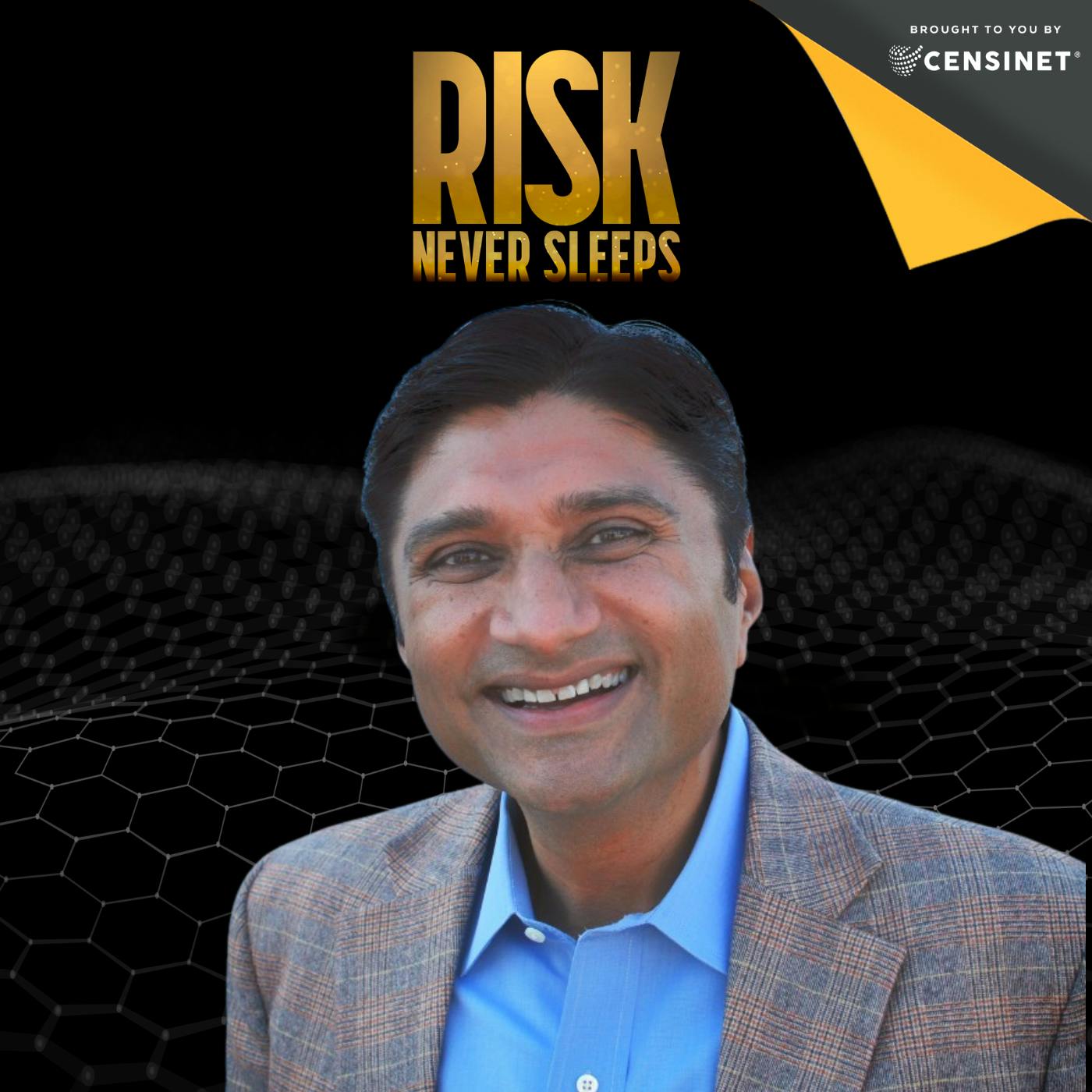
Risk Never Sleeps Podcast
Episode #154. The Human Code: Embedding Compassion into Technology, Leadership, and Care, with Dr. Apurv Gupta, Founder and Board Member of A Loving Organization
00:20:52
Loading summary
Transcript171 lines
- [00:00]
A
Foreign.
- [00:06]
B
Welcome to Risk Never Sleeps, where we meet and get to know the people delivering patient care and protecting patient safety. I'm your host, Ed Gaudet.
- [00:18]
Welcome to the Risk Never Sleeps and the Outcomes Rocket podcast live at AI Med 25 in San Diego. I'm here with our first guest, Apurv Gupta. Good to see you, my friend.
- [00:33]
A
Thank you. Face to face for the first time.
- [00:36]
B
Is that right?
- [00:36]
A
Face to face for the first time.
- [00:37]
B
It's so weird you say that, because earlier when I saw Sheri and I saw Art, I could have swore to God I've seen her before in person.
- [00:45]
A
Oh, you haven't?
- [00:47]
B
She said no, but I was like, that's amazing. Yeah, I didn't have that, even with you. Usually I have a cognitive dissonance, like, I know this person, but I don't know this person. But, like, I. I felt like I've seen you before.
- [00:59]
A
Imagine this is the world of AI now we are entering into.
- [01:03]
B
So it's been a while. Well, relatively speaking, I feel like we talk every day because we're on the same thread.
- [01:11]
A
That's right, the Sherry thread. The Sherry thread, right. Yes.
- [01:14]
B
All hours of the night, weekends. It just lights up. It's beautiful thing. I feel like I'm always on.
- [01:20]
A
That's right.
- [01:21]
B
So what's new in your life?
- [01:23]
A
Well, this event is the first time I'm here at AI Med, so that's exciting.
- [01:27]
B
Me too.
- [01:28]
A
Yeah, really exciting. Just kind of getting more drawn in to this world and particularly the intersection of all my professional worlds, you know, as you know, the last time I was on your podcast, we talked about the loving organization work that I'm doing.
- [01:42]
B
Yes.
- [01:42]
A
And how that coincides with this whole AI world. So that's kind of what's really new, is like, exploring more of that. I think we're getting a lot of traction these days recently with our loving organization work, and I think people are starting to recognize that there's a great technology component that can be built around it. So, honestly, I mean, I hate to be a nerd and just talk about work, but that's primarily what's new.
- [02:06]
B
Tell me more about the technology link to it.
- [02:09]
A
Yeah, well, so I don't even know if we talked about this at last time, because this has sort of been in the back of our minds, but now it's becoming more in the forefront. So for some of your listeners who may not know, the Loving Organization Consortium is a nonprofit, and we have about 75 charter members from all over healthcare. Doctors, nurses, therapists, leadership experts, burnout Experts, IT experts. And our goal is to bring more love and compassion into healthcare by leveraging the systems of healthcare, which includes people based systems. So that's things like the leadership, the teams, the community and the staff themselves. But we also have non people based systems, the process system. So you could say so things like management, culture, workflows and policies. But one of those very important components is technology. So those are the nine systems. We refer to it by an acronym called integrate. Nine letter acronyms refers to these nine systems. And the thought process is that when you infuse love into those systems, then you get love as an output. If you operate those systems at default in their fear based mode, top down, command and control, hierarchical, then it's no surprise that you get more fear out of the system. So you get burnout and loneliness and disengagement. So we're trying to bring that systems based approach into healthcare and that's where the technology comes in. So on the technology front, which is to get to the point of your question, what we're thinking of is how do we develop loving AI so solutions.
- [03:40]
B
That could essentially sounds like an oxymoron. Loving AI like jumbo shrimp.
- [03:46]
A
Yes.
- [03:49]
B
CIA.
- [03:50]
A
There you go. Right, exactly, exactly.
- [03:54]
B
How do we do that? How do we make AI lovable?
- [03:57]
A
Well, that's exactly what we're on that quest to. It's not like we've solved it, but few of the hypotheses that we have are one. We can make it easier for doctors and nurses and other clinicians to do their work. So that's making AI more loving or empathetic for the doctors. Right. And the workers. So it's easing their workload burden. They're not charting, they're not documentation. That's kind of like already been well established even in the last year where suddenly everyone's heard about ambient listening. Ambient document, document.
- [04:26]
B
And if you hadn't, you're probably not in healthcare.
- [04:28]
A
Yes, exactly, exactly. Or definitely not at AI Med. Right. I mean AI Med, that's all we're talking about is stuff like that. But it's interesting because even in a year it's almost become entry level or table stakes. Everyone's doing something on the other of ambient listening. And if they're not, they're planning for it.
- [04:45]
B
Right.
- [04:45]
A
So I think that that's the kind of critical type of technology. It's saving doctors two to three hours of pajama time every single day. It's improving the doctor patient relationship because now the doctors can pay attention to the patient instead of focusing on the keyboard or the screen. So that's one example of a technology, but there's many others. Things that could just make it easier for doctors to not have to worry about their workflows. Scheduling access kinds of technologies, front desk automation technologies. Things that just make it easier for doctors and nurses to do their work.
- [05:18]
B
Your mention of pajama time reminds me of the International Pillow Fight Association. I watched pillow fights last night on espn.
- [05:27]
A
Is there really?
- [05:28]
B
Yeah, like MMA fighting.
- [05:30]
A
No kidding. Wow. It's serious fighting.
- [05:33]
B
It's serious. And it's like two pounds. These pillows are like.
- [05:36]
A
Yeah.
- [05:36]
B
Bags are like two pounds of, you.
- [05:38]
A
Know, oh, my God. Maybe you should get the doctors into that and come have them actually come in their pajamas.
- [05:43]
B
So fun.
- [05:43]
A
And just duke it out. Doctors versus administrators.
- [05:46]
B
That would be. Oh, next. AI met. Yeah, we do a little cage, have.
- [05:51]
A
A little booth right next to the podcast. People get into the ring and get out. I love it.
- [05:56]
B
The other thing you said is we need, like, a burnout ometer. Like something that. Because my watch is always telling me I'm not doing enough. I'm not taking enough steps. That is, I'm not breathing enough.
- [06:08]
A
I'm not.
- [06:09]
B
That is actually my first time feeding.
- [06:11]
A
Right?
- [06:11]
B
Yeah, that's ometers. Like, hey, you're burning out.
- [06:14]
A
Yes, let's go. Yes.
- [06:15]
B
Go sleep.
- [06:16]
A
Yes.
- [06:16]
B
Go rest. Go read a book. Go write a poem.
- [06:18]
A
I love that.
- [06:19]
B
Go love somebody.
- [06:21]
A
The watch technology, and generally that should be able to get there fairly quickly.
- [06:25]
B
With a ring, right? Do you have.
- [06:26]
A
I don't have the ring, but I know the people that watch. They'll wear that. Yeah.
- [06:30]
B
Yeah. That would be kind of cool, right?
- [06:31]
A
I know, I totally. Yes. I like.
- [06:33]
B
No one wants to burn out.
- [06:34]
A
Right?
- [06:34]
B
And when you're burning out, you don't even realize you're burning out. That's the irony.
- [06:39]
A
On that note, we are collaborating with some companies. There's a company actually we've been talking to called Adelaide Tech, and that's using data from the electronic medical record and the HR system to be able to predict which physicians and nurses are at risk of burnout. So it's not quite the sensor technology, but they're looking at keystrokes, how much time you're spending in the medical record, other demographic information, and they're saying it's about 70% accurate in predicting likelihood of turnover. Really? Which is an amazing technology if you think about it. For a health system to have kind of long. Your burnout on burnout emitter. I can't even say it.
- [07:16]
B
Burnout. Ometer. I know I can't even say, right.
- [07:18]
A
I think. But taking it down to that individual level and marrying it with that kind of a data, right. Could be really great.
- [07:24]
B
And then you could. You could chart, after you do the pillow fight, whether or not your burnout trend goes down. Right. The release. Right?
- [07:32]
A
Yes. Release of endorphins.
- [07:34]
B
Right?
- [07:34]
A
Yes.
- [07:35]
B
Because you're gonna have that.
- [07:36]
A
Why not? You could have massage chairs, too.
- [07:38]
B
Oh, now you're talking. That was Advent help, that. Advent massage. Brilliant.
- [07:45]
A
I know.
- [07:45]
B
I love that. Like, I saw those as a whole row of them, six of them.
- [07:49]
A
For anybody who hasn't tried those, you got to know those. Massage chairs.
- [07:52]
B
No, So I think I told you this. I was in Vegas and I walked by one of these shops and they busked me in, and I went in. I got sucked in. Because who doesn't like a massage, right? So they took me into a back room, and that should have been the first sign. Like, what about these chairs? No, no, for you, sir, we have a back room chair.
- [08:08]
A
Oh, my God.
- [08:09]
B
So I go in this back room. She hooks me in, right? And I'm like. Got my arms hooked in my legs, and she turns it on, and then she leaves and she's out front. This thing was on the highest setting. I was in so much pain, I'm trying to get out. I, like, weaseled my arm out of the lock, and then I figured out how to shut the thing off. It was awful. I was like Hal in that movie. Like, hal's got me. Dave, you can't leave Dave. Right.
- [08:39]
A
Oh, my goodness.
- [08:40]
B
It's scary. That's the problem with AI Perv. What do you say about that?
- [08:44]
A
Yeah, No, I agree. I think that there's always that tendency because there's a. As much as the technology is amazing, of course there's a human operator element involved, right?
- [08:54]
B
Like, because without humans, the human leaves. That's not good.
- [08:57]
A
There's no human in the loop. When there's no human in the loop, that's a problem. Someone has to be monitoring this, Right?
- [09:02]
B
Exactly.
- [09:03]
A
Because you can't assume that the end user knows what the experience is. There's probably a range of settings. They may not have even asked you what setting you would like. Someone could have stayed for a few seconds just to make sure you were okay. So this is kind of like how we think about technology in the healthcare side too, right? I mean, the technology has great potential, but how are we making sure that it's being set up for what the doctor and the nurse need? But Also for what the patient need. And that's just that element of monitoring, the element of collecting data, the element of getting feedback, creating a feedback loop, so you know that it's working. And that's the work you and I do with Sherry all the time with tc.
- [09:40]
B
Building in trust, building in safety.
- [09:43]
A
Exactly.
- [09:44]
B
Into computing and into the people and the processes.
- [09:47]
A
Exactly.
- [09:47]
B
There's a lot of talk about that earlier as well.
- [09:49]
A
Yes. And that's the thing. So sometimes we focus on the tech piece of it alone, but the tech is one piece of the overall loop that we need to be looking at is like, what's the individual clinician's role in the tac? What's the individual patient's role in the tack? How were they involved in even designing the tac? So we kind of have to think about the overall loop. And then there's the governance loop, which is, who's monitoring this? How are we making sure it's actually having the intended impact? Is it safe? Are people appreciating it? Is it leading to the good outcomes? So I think sometimes in the process of looking at technology, we forget all the other components that kind of need to come around the technology to make it work. Yeah.
- [10:28]
B
People look at technology as the solution for everything, and they treat it in that equation, 80% of the problem, but it's really only like 10%, 20% of the problem. The real problem is getting people to transform their processes and procedures and policies and everything else that has to be there for you to get the full value out of technology. And we always miss that. Why do we always miss that?
- [10:55]
A
Yeah, well, I mean, I'll get to that question, but I'll just bring it back to what we talked about earlier with Integrate. It's the. Everything else that needs to wrap around it is why we felt like we had to develop a methodology like Integrate so that we can bring people's attention back to policies, workflows, culture, the people. Right. All those aspects have to be brought back in. So we're hoping that through that model, we can go in and help an organization get a broad, holistic, integrated view on all of the different aspects of what they need to do. So now, to go back to your question, why are people missing it? I actually think, honestly, it starts first with the lack of awareness. Like, we don't even know. We don't have a framework. We don't have a model. So that's kind of why consultants like me and us working together, what we try to do is introduce the right framework so that you can change people's understanding and thinking about a space, helping them understand how technology fits within the overall integrate context. Now people start to get it and say, okay, I need to look at policies and workflows and other elements and people.
- [11:57]
B
Yeah, my team, the people, the skills they have or don't have.
- [12:01]
A
Exactly. So I think it starts with awareness. Secondly, then I think it goes to once I have the awareness, then do I have the capabilities? Right? Do I know what I need to do in each of those segments? So we have to build those capabilities. I guess it sounds a little bit flabbergasting that in 2025, management and leadership and organizations don't already have those capabilities. But unfortunately they're not well developed and they're spotty, they're not consistent. So that's the next level up from a lack awareness gap that we can fill by making people understand that we have models and frameworks and methodologies and tools, standards that we can leverage. That's sort of the base layer. The next layer is that let's teach them how to do it. Give them the capabilities, upskill them so that they know how to be a good manager and be a good leader. And then I think that in that same context, the technology comes next because it's more about now. Once I know what I need to do and I have the capabilities of doing it, the technology then makes it easier for me to do it. So that's how I think of like the hierarchy or the pyramid of needs in this space. It's more, first you've got to start with that awareness, then you've got to build some capabilities and then only then can you actually figure out how the technology is going to solve the challenges.
- [13:14]
B
Don't you think Maslow missed it with his hierarchy?
- [13:17]
A
Yeah.
- [13:18]
B
Where's love in that?
- [13:19]
A
Where's love? Right? Yes. Well, I think he has it as more like self actualization, sort of towards that.
- [13:25]
B
Yeah, self actualization is.
- [13:27]
A
Yes.
- [13:28]
B
I mean, sure, maybe love is part of that, but I don't know whether or not he meant love in that equation.
- [13:35]
A
I think that's a really valid point. Yeah, we got to go back and rewrite.
- [13:38]
B
Damn you, Maslow, you're dead to us.
- [13:42]
A
Well, the other interesting point, I'm so glad you're bringing that up, Ed, because from the love perspective, sometimes the Maslow's hierarchy of needs is seen as you have to start from the bottom. And that almost makes it very reductive because then we think, well, unless my biological needs are met, I can't meet my Physical needs. If my physical needs aren't met, I can't meet my emotional needs. If I don't meet my emotional needs, I can't meet my self actualization needs. And so we almost see it as the pinnacle of where we can get to. But you've got to start from the bottom and when that's actually not the case. So a lot of people have talked about how the hierarchical approach to the needs isn't really valid anyway and again, you would argue maybe love is the most basic need and if you don't have that, then you're staircasing all these.
- [14:28]
B
Other needs on top of serial killer.
- [14:31]
A
Yeah, exactly.
- [14:32]
B
We don't want serial killers. That's right.
- [14:33]
A
So why don't we start first with that, which is what we really want to encourage people to be more loving and then create systems that allow them to be loving, which is interesting.
- [14:42]
B
When you're born, the first thing that happens, well, they slap you, I guess they don't do that anymore.
- [14:47]
A
Do they make you cry?
- [14:48]
B
They don't do that anymore, do they? I don't think they do. I think they hit you like seven times or something. They might have dropped me too. And then after they clean you up and everything.
- [14:58]
A
Right.
- [14:58]
B
They hand you to the mother.
- [15:00]
A
Right, right. It's the love. It's that connection bonding.
- [15:03]
B
They don't feed you. There's no feeding right away.
- [15:05]
A
Right.
- [15:06]
B
There's love.
- [15:07]
A
Skin to skin.
- [15:09]
To love. Oxytocin, that's do to release the bonding that happens, releases hormones in the mother and the child that creates that bonding. So.
- [15:17]
B
Yeah. And when you have that situation where there's an impedance mismatch, the mother emotionally can't get there. Right.
- [15:24]
A
That happens. Yes.
- [15:25]
B
That child tends to struggle throughout life.
- [15:29]
A
Right, right. I totally agree. I think even the way you're presenting that you can see it that when you don't have love is often then when you get into biological behaviors and psychological behaviors because they're more coping mechanisms, survival mechanisms, that's kind of what you focus on.
- [15:43]
B
The therapists might not like it because we'd put them out of business if we figured it out.
- [15:49]
A
Right. Yeah. We might put all the therapists out of business.
- [15:52]
B
Companies wouldn't like it either because we put them out of business.
- [15:55]
A
Right, right, right, right, exactly.
- [15:58]
B
Yeah. Comes back to love. You're on to something.
- [16:01]
A
Don't you think so? Yeah, I think you're on here we are talking about AI, but it comes back to love.
- [16:05]
B
Yeah. Well, this is the thing. I think it becomes more pronounced because AI can actually remove love. If you think about the threat to love, like, what's the opposite of love? It's not hate.
- [16:19]
A
It's. We think of it as fear.
- [16:20]
B
It's indifference. Right?
- [16:21]
A
Yes.
- [16:22]
B
It's the lack of hate is an emotion. Love is an emotion.
- [16:25]
A
Yes.
- [16:26]
B
So the actual opposite is indifferent.
- [16:28]
A
Yes.
- [16:29]
B
AI can be indifferent.
- [16:31]
A
Neutral. Neutral, yes, yes, yes, yes. Well, and what we try to say is that the AI will be neutral and can solve whatever problems you give it in a more objective basis. But if it's programmed with love, then you will get a different outcome out of it. And if the overall management milieu within which we're designing it, inviting physicians and nurses into the mix, inviting patients into the mix, providing the oversight, providing the structure, that's kind of like the loving approach that has to be brought to the objective technology, because the technology itself will be neutral, but ultimately it still has to interface with the human component. And the human component, if that's loving, that environment is loving, designed with the loving intention, then you're going to get the loving output. Right. Because otherwise the technology on its own really isn't ultimately going to deliver either. It'll deliver a neutral outcome, objective outcome, but it still has to be interpreted and implemented in a human setting.
- [17:31]
B
Love is all you need.
- [17:33]
A
Right. Well, at least it's the beginning. We say, right, you gotta start with the love. And depending on how deeply we take it, I mean, you could argue that love is ultimately representative of excellence in outcomes and also demonstrates all the different elements that you want. Quality. All of those could be seen as outgrowths of love. But ultimately, not to be so reductive, if we say, at least, if we start first with the intention of love, and then you add in all the other elements that you'd like, you're more likely to get a better outcome because it's based on the solid foundation.
- [18:05]
B
Yeah. Without love, you don't have that amazing scene in Moulin Rouge. Right.
- [18:13]
Between the writer and the madam.
- [18:16]
A
That's right. That's right. That's right. Yes. Love is that motive force, you know.
- [18:21]
B
That's right.
- [18:21]
A
The force that moves all of us.
- [18:23]
B
That's right.
- [18:24]
A
Well, time goes fast when you're talking about love.
- [18:27]
B
I think so, yeah. And it's such an easy concept, but it eludes all of us. Right. That's why you have poets.
- [18:36]
A
Yes.
- [18:37]
B
Right.
- [18:37]
A
Yes. And what we say is, I mean, you can't really always take the mystery out of it because you'll always have poetry and music and other intuitive ways of understanding the world. But systems are another way to access love. They just have to be thought of that way. Systems are pretty much kind of a tapping into kind of a collective universal knowledge that most of us sort of are missing. So that's another way for us to think about love as well, for at least for those of us in the business environment, because we're not all going to become creative artists and musicians and poets, but we are expected to be virtuosos in the management leadership, clinical, technical arenas. And in there, it's really understanding what is that force that allows us to tap into love. So that's what I would say is systems. So we call it loving Systems. That's what helps us create loving organizations.
- [19:29]
B
So we remake Space Odyssey.
- [19:31]
A
Yes.
- [19:31]
B
And Hal doesn't say, I can't do that, Dave. Hal says, I love you, Dave.
- [19:37]
A
I love you. That's a remake that we have to do.
- [19:41]
B
That's the remake we do. I love it.
- [19:42]
A
Yes.
- [19:43]
B
All right. Well, we're here live at AI Med in San Diego at this wonderful hotel, the Grand Hyatt. And I'm here with Approved Gupta.
- [19:52]
A
Yes, sir.
- [19:53]
B
With the Loving.
- [19:55]
A
A loving organization.
- [19:56]
B
Loving Consortium organization. You should call it the Loving Institute. Keep it.
- [20:01]
A
Keep it. We're looking for sponsors, and we're happy to name it that. The Esk. Loving Institute.
- [20:07]
B
Loving. I'm a brandy guy. Too many words, man. Yeah. Thank you for joining the program.
- [20:13]
A
Oh, pleasure. Thank you for helping me. You know. Here. Get the word out.
- [20:17]
B
You bet.
- [20:17]
A
Thank you. Appreciate it.
- [20:23]
B
Thanks for listening to Risk Never Sleeps for the show. Notes, resources and more information and how to transform the protection of patient safety. Visit us@cincinnat.com that's C-E N S I N E T dot com. I'm your host, Ed Gaudet. And until next time, stay vigilant because Risk never sleeps.