← Risk Never Sleeps Podcast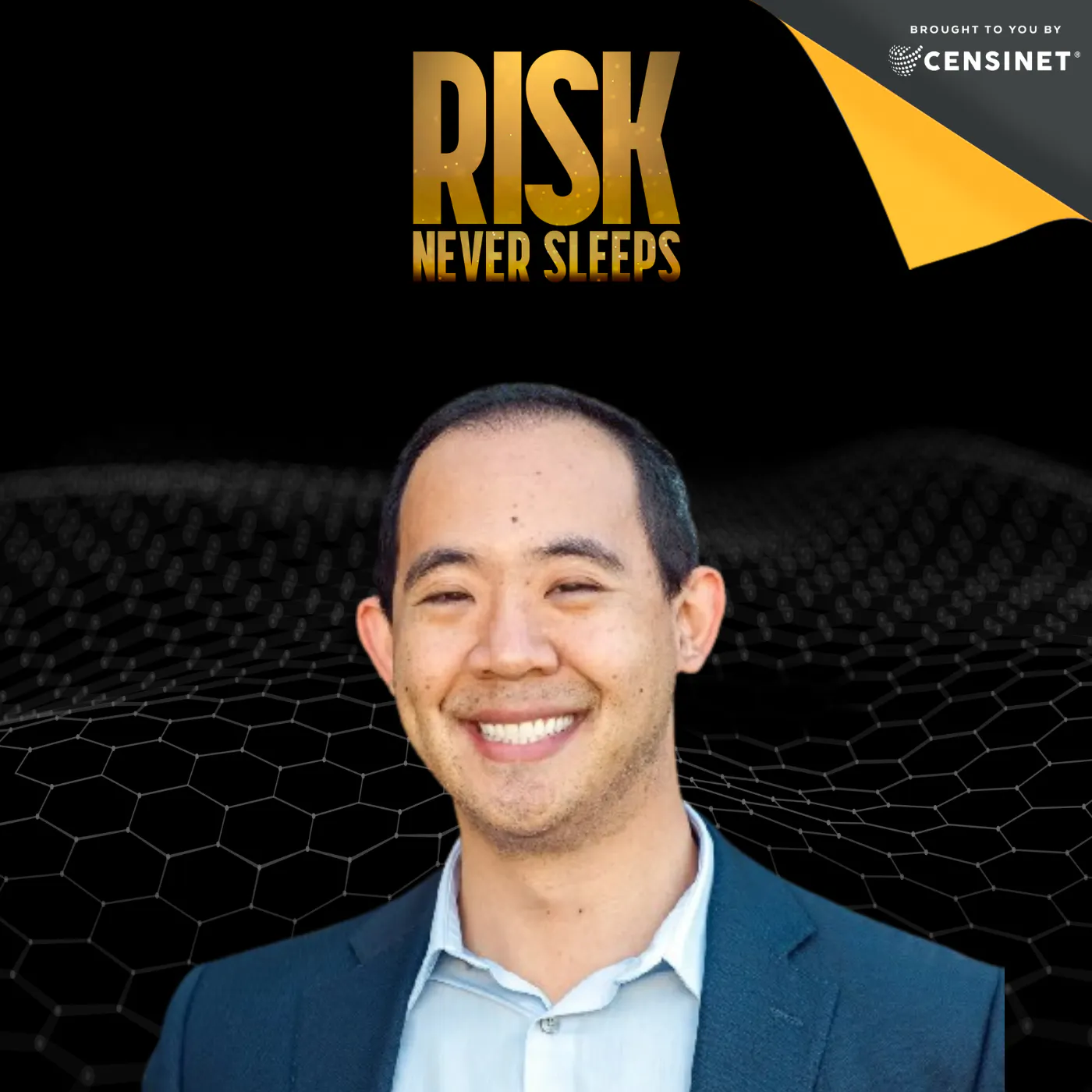
Risk Never Sleeps Podcast
Episode #183. Why Building AI In-House Can Be Safer Than Buying It, with Brian Yam, Chief Operating Officer at Sonology
00:25:10
Loading summary
Transcript69 lines
- [00:00]
Saul
Foreign.
- [00:06]
Ed Gaudet
Welcome to Risk Never Sleeps where we meet and get to know the people delivering patient care and protecting patient safety. I'm your host, Ed Gaudet.
- [00:18]
Saul
Hello everyone and welcome back to the Aimed Insight series. Just have had a pleasure recording this series with my co host Ed Gaudet. I'm flying solo on this one. This series is sponsored by Cincinnati and Outcomes Rocket and I'm so thrilled to have our guest today. His name is Brian Yam. He is the Chief Operating officer at Somnology. Brian, thanks for joining us.
- [00:46]
Brian Yam
Thank you so much, Saul, for your time today and really excited to be a part of this.
- [00:50]
Saul
Yeah, man, we had the pleasure of connecting while at the conference. Just what brought you to Aimed at?
- [00:58]
Brian Yam
That's a great question. Honestly, being a part of ttic, which our chair there at Sherry Duville really has done a great job looking at AI and how do you build AI regulations in a world that AI is growing so quickly? AI regulations continue to evolve, as you know, and it's a world where you really can continue to run into bad actors in AI if you don't look at how to properly institute and look at the regulations that are coming out of really across the world. But specifically right now, our lead out of the EUAI act, which is IEEE UL 2933. And so for us as a digital sleep therapeutics company, we really are looking at AI ourselves. It's great to be able to be a part of that board, the TTIC board. And that is Taylor Francis trustworthy. And really it's interesting because for us there are so many different ways you can go with AI right now. You can either build it, you can purchase it from a vendor, or you can basically partner up with a bigger firm. And for us, we've looked at building internally. We do believe that meeting the regulations is actually more effective that way. It is, I understand a money kind of issue for a lot of companies being able to build internally or off of a base such as llama. But again, to keep up with regulations, that's what we've done. And I think that's what aimed was interesting for us, seeing the world converge between doctors and AI solutions.
- [02:39]
Saul
Totally, man. And this is a challenge that all innovators and business folks face today. You build, you partner, do you buy? And sounds like you guys have gone the build route. It helps keep control, right? I mean, ultimately, I mean, dude, the other the other day, I mean literally yesterday I saw the, the news about Google's AI coding platform hacked the day after they launched.
- [03:05]
Brian Yam
Yes, it's for us it's just right, you want to understand where the keys to the kingdom are at all times. And really if you give that over to a bigger company, yes, they might have the right tools, they might have this right cybersecurity locks and measures in place. But at the same time, if you don't have those keys internal, you still don't know where you're putting your client's phi and the world of health that is just so important and you can't let that out. And so I mean with us as somnology work with professional sports teams, we work with US armed forces, we work with, we're in discussions with commercial airlines. So we really, we're dealing with information and phi that we cannot let get out.
- [03:53]
Saul
Yeah. And look, that's a good opportunity to level set. Well, tell us a little bit about Somnology and the work that you guys do. Why is it so important? And the history as the history is.
- [04:02]
Brian Yam
Pretty cool for us and thank you for that. For us it's really been interesting. And so, I mean it was born out of the mind of a board service physician who was just kind of getting tired about seeing these reports from other companies, wearable device companies that are, don't get me wrong, they have some great tech out there and it continues to evolve and change, but it just was not medical. And so basically she would have to go back and she being our CEO now as well as our chief medical officer and she would have to go back and say, hey look, you need to wear this other device that's a little more medical so that the doctors would be able to utilize that information. What we've seen on top of that is really how do we then not only take it from a state of how do you be able to get this medical data but then also how do you incorporate a approach where the individual is able to understand that data approach that takes in other aspects of that user or end user or client's life and being able to basically draw correlative data for them to understand what data and the graphs mean and how to actually improve it. Because for us at Somnology, the biggest win at the end of the day is for a patient to be really able to empower their own health before an appointment, between appointments and after the appointment. And we then basically add on to that with great medical care during telehealth or in person visits.
- [05:41]
Saul
Listen, I think it's awesome you guys also have a ring, right? The Somno ring.
- [05:47]
Brian Yam
That is correct. So we actually, the somno ring is actually a white label for us. We currently are looking at the market consistently for devices that are the most medical grade. And so we want to figure out how to integrate those. And as long as those meet the medical standard of the doctors that are on our team, then we're able to say, okay, great, let's incorporate that. Let's figure out how to make those data points line up with our graphs and then be able to work alongside the AI platform that we built.
- [06:20]
Saul
So you're device agnostic.
- [06:21]
Brian Yam
It doesn't. We are devising correct.
- [06:23]
Saul
As long as it's medical grade.
- [06:25]
Brian Yam
As long as it's medical grade. And we've even had some great conversations with some of the biggest tech companies in the world and really it's a matter for them to say, hey, look, if you guys want to work with us, we need to have you meet medical grade standards. We are really happy with one of the partners that we found, as you've seen with the sondering, and we are actually in right now discussions with another company that we're very happy with because they understand the purpose and importance of medical grade. How do you find and how do you work towards making your device, which may be just in a wearable market now? How do you make that meet medical grade standards?
- [07:03]
Saul
Cool. Super interesting, man. And you know, in fact, I was having a conversation earlier today with another gentleman, a software company, and they do patient access kind of AI, right. The company is called Relation. And so he's like an open table reservation is not the same as a doctor's appointment. You cannot expect the same thing. So literally like, you know, similar conversation, different application, a hundred percent.
- [07:31]
Brian Yam
And I think that's what's really interesting in this world right now where AI is just growing and evolving as we had talked about earlier so quickly. Because in a world where AI, yeah, you can put it on an open or open table, or you can put on stuff like that that doesn't include phi. When you even get into the world of pii, it does become a world where you need to look at cybersecurity standards. But those even are in a world of pii, I wouldn't even say those are as stringent as what you actually have to make sure that if you have clients phi, you cannot play with that. You have to make sure that the highest levels of cybersecurity standards are on that. And I think that's one of the two probably biggest issues for medical use right now of AI. I know there's kind of the belief maybe that It'll take jobs. And I don't really know if that's true or not. I think that is something that may be kind of the nightmare that if right now it can create jobs is just as much though, I think, as it might look at potentially taking more administrative jobs. But again, that's a world far into the future. I fully feel, especially as it is right now, AI is just so needed by. Or AI needs the human in the loop. And so I do think that the fear though it addresses, though, is also the fear of trust. And I think there's a lot of mistrust right now by doctors and saying, have I put this information, is that just gonna all of a sudden be a phi leak, a HIPAA breach? That's a real worry. And so I think we really need to figure out and companies that are dealing either with bringing in a vendor that has an AI solution or is building their own, they have to be really adherent to cybersecurity regulations.
- [09:19]
Saul
Totally, man. That's how the work you guys are doing is super important. We'll leave in the show notes all the information on some of the standards you guys are helping set as part of that committee with Sherry and team. Like, really important work. Did you do any presentations at the meeting?
- [09:35]
Brian Yam
I did not have a panel or anything like that.
- [09:37]
Saul
Not this year.
- [09:37]
Brian Yam
I did not this year. They actually are interested in the panel that we might be doing next year. We are looking at it with one of the largest actually professional sports organizations who is looking at AI regulations as a really big thing that they want to incorporate, not because they're building their own AI tool, but they're looking at a lot of vendors coming in that have AI solutions. And they need to make sure that their organization is protected as well as the teams in their organization, which then leads, of course, to the athletes in their organization. And we're really happy that they're ahead of the ball on this. So we're excited. And I think if the progression of talks about them looking at AI regulations and how to build a cybersecurity blanket for looking at AI solutions and vendors coming into their organization continues to evolve as it is, I think they might be interested in. And I think we could end up paneling with them at next year's aimed.
- [10:35]
Saul
That's cool, man. Well, we'll keep an eye out for that one, for sure. I'm fascinated by your background, Brian. Like, somehow sports have always been in the mix, whether it's been the beginning when, you know, you did college basketball to, like a Legal degree that you got representing Japanese basketball teams to like now professional football. Like how does it all come together? Like this is so cool. Tell us the story.
- [11:01]
Brian Yam
I always had a dream of being in professional sports. But as you guys can imagine, at 5 foot 10, I really had not much of an opportunity in basketball, which is the route I end up going. And being a part of UCSB men's basketball team was definitely an experience. Two straight NCAA tournaments in our final years when I was team manager and just really was proud to be and honored to be part of that team. But I wanted to figure out really from that point, knowing that I was not going in to be an athlete myself, how to best be able to work with athletes and be able to elongate their careers and really help them have successful careers. And I think being part of a team there, working in as you had mentioned, in Japan I worked for a sports agency that represented players in Japan's professional baseball league via Naephon Baseball League or npb. And so being able to understand at both the collegiate level and the professional level how the issues are affecting them and really everything outside of the court or the field or the ice, what is affecting them really as health and how do they make sure that that is something they don't have to worry about so they can worry about their craft and being able to provide them a solution to be able to do that. I think sleep health is one of the key areas for that. I think it is maybe one of millions of areas that they can really focus on in health as well as off the field areas. But I think it is a definitely a key one that can definitely help them again elongate their careers and be successful.
- [12:38]
Saul
That's great man. Brian, what's the riskiest thing you've ever done?
- [12:42]
Brian Yam
Oof, that's a great question. Let's see. Riskiest maybe kind of jumping into this and leaving the legal career again as you had mentioned, being in a law school for three years and then I mean the easiest route route is going to a law firm. But I think with the issue of when you come straight out of law school, there's not a lot of opportunity to be a part of something that would get to work with a professional sports league or team or athlete for that matter. And so I decided that was more important to me. And so I was able to find this company at Somnology, great leadership. And they really were like, yeah, we want to hit the sports market. We want to figure out how to improve athletes lives and specifically through sleep Health. And so I said, great, let me see if I can step in and be able to be of assistance and kind of just evolve from there.
- [13:38]
Saul
Did your friends and family think you were crazy?
- [13:41]
Brian Yam
Honestly? No. I know my mom. When I.
- [13:44]
Saul
Did you say no? Did you say no? They didn't. They don't think you're. Yeah. Oh, okay.
- [13:49]
Brian Yam
Anyone that truly knows me knows my interests and pensions for professional and collegiate sports and knew I was always going to chase that, whether it was a crazy idea or not. So, I mean, the thing is, even when I was little, I know mom and dad would always be like, enough of the sports facts, enough for the sports statistics. It's not going to help you anytime. And I was like, it's what's interesting to me. And honestly, when I'm going through mentorship programs myself to mentor the next generations, I find the same thing where it's like, I'm not going to push them towards sports. That's my passion. Maybe that is their passion and we can talk about that and how to actually chase that passion. But my ultimate message to them is find a passion. Find something that you absolutely love to do and chase it because you don't want to be going to the office doing something that you dread. If you go to the office and do something you love, you'll find yourself working any hours to do that. Because I can tell you, even when I put the kind of office life down and go back to my apartment, it's more of a, you know what? I still want to do what I'm doing. I still continue to do what. Because that's my passion. I love it.
- [15:03]
Saul
That's so great. Brian. I was recently at a seminar and we were taking a look at sort of just like leaders and the activities that, that we do. And we divided them into incompetent, competent experts and unique ability. And what's interesting is that in this quadrant, incompetent was like negative, 10x, competent was 1x, expert is 2x you. Unique ability is 10x. And it's basically like the impact you could have. Right? And I'm bringing this up, I'm so glad you mentioned passion because the difference between 2x at expert and 10x at unique ability is passion. Yeah.
- [15:47]
Brian Yam
And it's something, right? Because if. Think about this. If a client calls you at some off hour of the night, right? Calls you at 2 o' clock in the morning as an issue, is that something you're gonna be like? Maybe you're saying, no, I'm not going to answer that. That's one level. The next level is going to be, oh, I'll answer it. I'll drag my feet. I can guarantee you they're going to read that on your voice or you're going to pick it up and be like, dang, that's. That's something I really want to answer and be able to assist them. Yeah. And you're going to be. They can say they can sense that passion on your voice. And I.
- [16:21]
Saul
You get in those 2:00am calls. Brian, are you getting those 2:00am calls?
- [16:26]
Brian Yam
I will plead the fifth there. So that's awesome. Yeah, no, it's always fun. Fun is key, and I think it's easy for people to say look for fun. So that's why I do more use the term of passion, because it's something that you want to work on and you want to make better. Because there's so many holes in every single market, in every single industry, especially with the evolution, as we said about AI. Yeah. You can find your spot in any industry. You just have to know it and own it as a craft and really want to achieve it.
- [17:01]
Saul
That's awesome, brother.
- [17:02]
Brian Yam
I love that.
- [17:03]
Saul
I love that you plead the fifth on that one. That's fantastic. All right, so here's another. Here's another question for you. If you were stranded on a desert island, what five albums would you listen to?
- [17:17]
Brian Yam
It's a great question. I think. Think you've given me a stumper here. This first time I'm having to think about.
- [17:24]
Saul
And if it's not music, you could also do movies if you prefer movies.
- [17:28]
Brian Yam
Honestly, I think the more thing for music is just finding five songs that I can say are better because I love music. I'll say everything is kind of on that same page, but it means for different things. I think maybe in terms of this and in terms of line of work. Eminem, lose yourself. Just the words and that song. Because really, you have one opportunity. You got one life. You don't chase your passion. If you don't own kind of the opportunity, you will miss out. And that is the unfortunate part of life. There are other opportunities that will come along, but you don't want to have to rely on those. And so if you are really passionate, you're just going to chase and really understand and own. You'll be prepared. And I think that is right, the definition of luck, being at the right place at the right time with the right skills, and everything just aligns because you. Those moments will come. You just have to be prepared for them. So I think that Song really speaks a lot. So I don't know if I can give you five, but I think that one song is a.
- [18:35]
Saul
You just jam out, you jam out to that one. You just be like, so we're on the island with Brian. He's. He's jamming out. Lose yourself.
- [18:43]
Brian Yam
Exactly.
- [18:45]
Saul
That's awesome, brother. That's awesome.
- [18:47]
Brian Yam
If that. You could also say the Rocky theme song is a pretty great one as well. Along those same. Yeah, yeah, I love it.
- [18:54]
Saul
We're celebrating on that island with, with Brian as.
- [18:57]
Brian Yam
Oh yeah, you know, celebration.
- [19:00]
Saul
We're thinking big and we're celebrating.
- [19:02]
Brian Yam
I love that.
- [19:02]
Saul
I love that. Listen, if you had the opportunity to go back in time and speak to your 20 year old self, what, what advice would you give him?
- [19:14]
Brian Yam
Have faith in yourself. Don't ever let your passions go. Because I don't believe I did. And I think I've gone to where I am because I just believe that, you know what, something in the cards is going to just land here and land in the right place and if I come continue to know as much as I can and not just write the surface level things, but understand really what are the problems and how maybe to make it better. Be not afraid to take a risk or take a chance because typically you may think, oh, other people have thought about that or other people are doing that. It's not always the case. And you can assist the areas that you really want to and the people you really want to help if you just take that chance. Worst thing anyone's ever going to say to you is no. What is that?
- [20:02]
Saul
Amen. Amen. Love that man. Would you do anything differently? Like if you, if you went back, would you do anything differently?
- [20:10]
Brian Yam
I think I would have actually the craziest thing. Would have probably wanted to play baseball. Oh yeah, I had a big.
- [20:17]
Saul
So you would have, you would have, you would have chosen baseball over basketball in college or even before. Or even before.
- [20:23]
Brian Yam
I gave up baseball in middle school from the craziest thing. And I think maybe that's one thing I would say rethink about. I was a pitcher. I'm not going to toot my horn at all. But was definitely on a trajectory play at least college baseball. And it turned around on a really crazy happenstance.
- [20:43]
Saul
Damn.
- [20:44]
Brian Yam
What happened where, where I saw one of my teammates get beaten in the head by the power hitter on the other team. Oh, he had to be carted off the field. And I think that's one thing you just have to understand is like those things are so far and away going to happen. So you can't let that affect you. But young me was like, I don't want that happen to me.
- [21:07]
Saul
So it impacted you. Right? It had a big impact on you. Yeah.
- [21:11]
Brian Yam
And I know being. Having to step onto the field to kind of take his place for the rest of that game because we did end up playing through that. Honestly, that game probably should have been stopped, but bam. Yeah. No, it's something that. Did you kind of feel the weight fear gets you.
- [21:28]
Saul
Did you kind of feel the weight of what he did on accident?
- [21:31]
Brian Yam
I've almost put not only the weight, but I also put myself in his shoes and just thought, like, how is he going to be changed by this? And I honestly, this is also something I would have told myself not to do, is not lose contact with your old teammates. This is what I would recommend to everyone, is never burn bridges. Always figure out to, like, just how to be personable with everyone, because everyone's coming from a really interesting stand of life and they can teach you something. And so everyone really, like, you can build a friendship or partnership or relationship with everyone you meet, and you never know where they're going to end up someday. And I think some of the biggest, biggest things that have helped me to the point of I am and I have to be just so grateful to so many people. A lot of those people are keys to why I'm where I am today. Just people you meet at a random party, from a team, from an outing, just randomly. I mean, you never know when that person will end up the assistant GM of a professional baseball team. You don't know when that person is going to be, say, the next person signing a $20 million contract in the NBA. And so, again, always just be kind to people. Like, people want to talk. They want to talk and figure out, like, how are you relatable to them. And I think that is just being open to that experience is key.
- [22:53]
Saul
That's awesome, Brian. And, hey, by the way, folks, Brian and I met randomly a year ago at health, right? And it was a year ago. We were at lunch, we took a selfie, and then we're at AI Med, and we're like, we are early to the dinner. And I'm like, dude, you look familiar.
- [23:11]
Brian Yam
And then.
- [23:12]
Saul
And then we're. I'm like, let me text you. Oh, yeah, there's the picture of our selfie.
- [23:20]
Brian Yam
Case in point, happenstance.
- [23:22]
Saul
We do live in a small world. I'm glad that in this small world, Brian, you are doing what you do so well. You're in the right place, doing the right things with the right, right people. So I want to wrap up today by just giving you a chance to give us a closing thought. Best place that people could learn more about you, follow your work and where can they reach out with Somnology.
- [23:45]
Brian Yam
Perfect. Yeah, reach out both on LinkedIn. Very active there. Also with our website somnologymd.com that's S O M N O L O G Y M D as in medical doctor and yeah, we're really excited. Would love for people to reach out, learn about sleep health and we can teach you about how to empower your own sleep health. And yeah, we really appreciate the time spent with you today.
- [24:12]
Saul
Here's all my pleasure, Brian. Folks, there you have it. Brian Yam, chief operating officer at Somnology, coming here live with the Aimed Insight series. Thank you all so much for tuning in. Check out all the show notes for ways to get in touch with him as well as the short notes on our discussion. Brian, thanks for being with us.
- [24:34]
Brian Yam
Thanks, Saul.
- [24:41]
Ed Gaudet
Thanks for listening to Risk Never Sleeps. For the show notes, resources and more information and how to transform the protection of patient safety, Visit us@cincinnat.com that's C. I'm your host, Ed Gaudette. And until next time, stay vigilant because Risk Never Sleeps.