← Risk Never Sleeps Podcast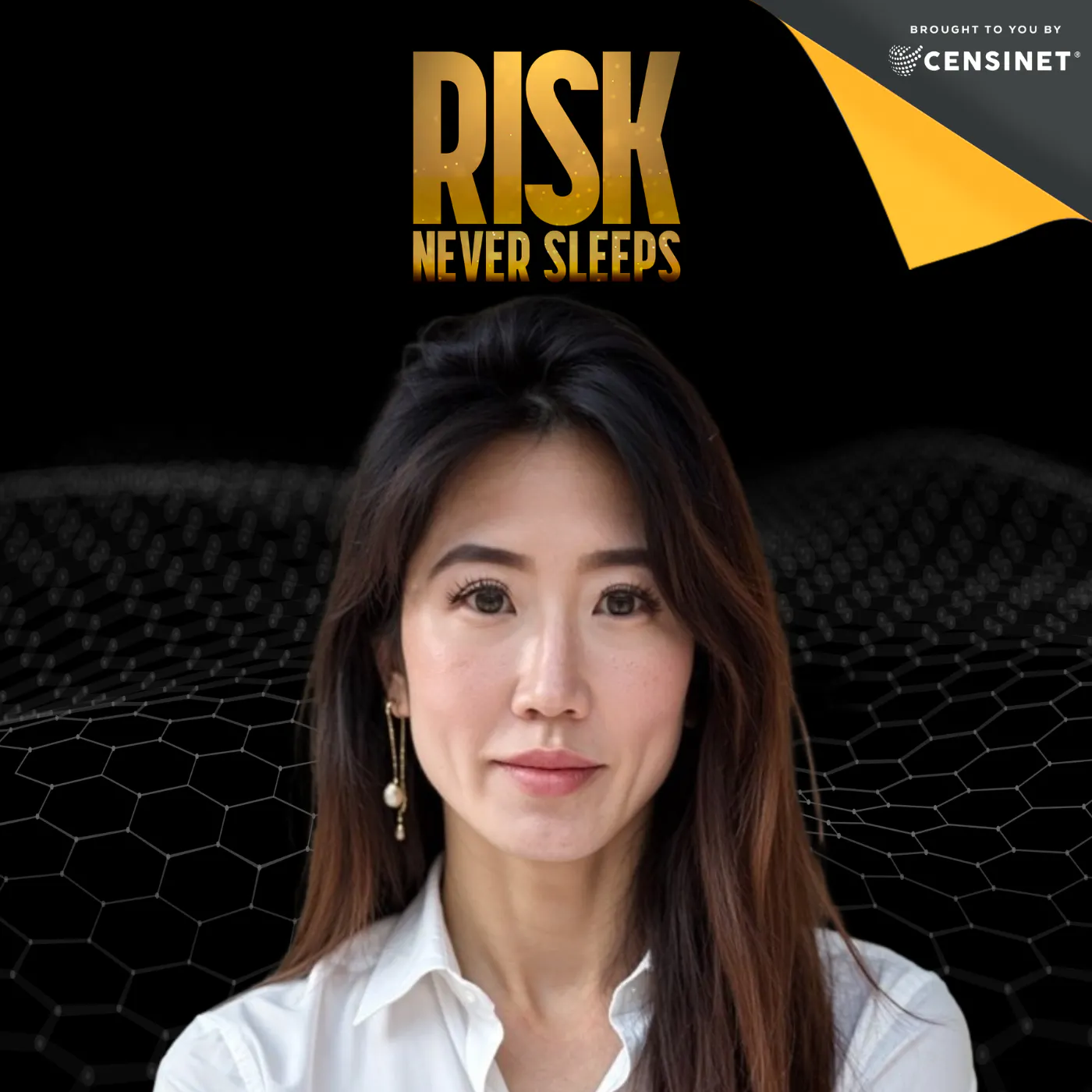
Risk Never Sleeps Podcast
Episode #185. The Hidden Risks Of AI Adoption That Leaders Must Tackle ,with Joyce Oh, Chief Information and Digital Transformation Officer
00:14:40
Loading summary
Transcript52 lines
- [00:00]
Ed Gaudette
Foreign.
- [00:06]
Welcome to Risk Never Sleeps, where we meet and get to know the people delivering patient care and protecting patient safety. I'm your host, Ed Gaudette.
- [00:18]
Welcome to the Risk Never Sleeps podcast in which we learn about the people that are on the front lines protecting patient safety and delivering patient care. I'm Ed Gaudet, the host, and today I am pleased to be joined by Joy. Oh. So let's start off with sharing with listeners a little bit about your current role in your organization.
- [00:34]
Joy Oh
Sure, absolutely. So I am the Chief Information and Digital Transformation Officer at Christ Hospital Health Network. I've been here for a little over a year now. We are located in Cincinnati and many people may not know this, but our organization was actually founded in 1888 by James Gamble of Procter and Gamble and Deaconess called Isabella Thornton. Just wanting to help with the health and just with the city of Cincinnati trying to allow it to grow and the economy and so forth, really got a long history and legacy in the city. We pride ourselves on great quality. So I think we've been. We just recently ranked 11th in the region in Cincinnati in my newest US News and World Report, I think four times Magnet accredited, very well known for our cardiovascular and oncology and musculoskeletal service lines. So I'd like to think of it as like a smaller health system that really tries to provide exceptional care for our patients and our community. So it's been really fun and it's been a good journey.
- [01:33]
Ed Gaudette
Congratulations. That's amazing. If you look over the next couple of months, 12, 24 months, what are some of your top priorities initiatives there?
- [01:41]
Joy Oh
Sure. I don't think you would be surprised to hear about AI because no one's ever talking about it, Right?
- [01:47]
Ed Gaudette
Nobody's talking about it.
- [01:47]
Joy Oh
But the way I see it, it's like for the past year or two, everybody's been dipping their toes in, Right. And now we feel like, oh, this water is nice. And everybody now wants to jump in and start swimming, but we're not always prepared. Right. And you don't know what's in the water necessarily. In the same way, even in the past year at Christ, I think we've put in a few key AI initiatives, seen success, and now it's opened the floodgates. So I think going forward, it's really more about now stabilization and operationalizing, not only the current AI we have, but also what is the process to bring in new AI because as most health systems are, we have limited budget and that T department is no exception. Right. And so how do we put in the proper governance so that we can really decide what are going to be the needle movers. Right. Which are the projects that will align to our strategic goals as well as, like, how are we going to manage the risk going forward? We do the assessments at the beginning. Right. In terms of cybersecurity risk and potential for, say, hallucinations of AI. Right. Or divergence, but on an ongoing basis, how are you going to manage that? As well as the more and more reliance we have on third parties, there's increasing risk there. So I think it's all of those things that we really want to put in place so we can mature as an organization and not just be doing spot solutions, I guess.
- [03:09]
Ed Gaudette
Well, okay. Okay. In any particular area that you're targeting for AI?
- [03:14]
Joy Oh
Yeah, sure. So for us, it's really about first starting with the physician and the clinician. Right. How do we reduce their administrative burden, especially around, like the ehr. We're on epic. How do we. The way I like to think of it is the technology should almost like disappear and they can just do their job and be there with the patient. So whether it's like they don't have to look at their tablet Right. When they're in the room because you have ambient listening. Right. Or they don't have to go back and now start entering orders because the system knows to do that next. Right. And then there's automation. So really just have the technology disappear. And then I think the second area we're focusing on is, and this is my point about budget, is how do we make our team members more productive? Right. So in the revenue cycle space, how can we put in automation? Right. How can we put in coding for things that are more repetitive. Right. And a little bit more formulaic? Because our philosophy is if you have physicians that are productive and that are not burdened by the technology, if you have team members that are working at their full potential, then excellent patient care will automatically follow. I think if you start with thinking about the patient, and I'll give you an example, the whole advent of patients being able to message their doctors, and it's great. Right. You can now reach out to your doctor anytime, but you don't see the other side, where you have a doctor who's receiving hundreds and hundreds of messages, some of them urgent, some of them not. Right. And they have a personal obligation. I've heard this from doctors myself. Like, they have a personal obligation to read through these and get back. Because they don't know. Right. One might be a patient who's asking about a medicine and if they don't get the answer, they might take something wrong or they might need something that they need to provide. It was all in good intent to allow the patient to have free access to their doctor. But we didn't think about the implication. Right. So I think by flipping it a little bit and thinking about how do we make sure that our doctors provide the best care that they can. Right. Because there's things that only they can do that a machine cannot do. Right. And that technology can't do, AI cannot do. Let them do what they do best and then we'll support them. And I think changing that. And so like even last year, two of the big projects we put in were, one I already mentioned of Ambient Scribe and another one that we'd started working on was addressing this problem of the messaging inbox. And how do we help use AI? We're using AI to categorize the messages and then be able to route them. So maybe some don't even need to go to the doc, some could go to the nurse, some to go to more billing as well as can we flag. Can we use AI to flag certain messages and to say this one's an urgent one, while this one is more of an appointment related issue versus an advice question. Got pain in my knee versus I feel like my heart is exploding. And those are some of the things that we were really trying to figure out and how we can keep on pushing forward.
- [06:00]
Ed Gaudette
And how did you get involved in healthcare?
- [06:03]
Joy Oh
Yeah, so I actually have a pretty, I don't know, maybe unconventional background. I started wanting to go into healthcare because of the whole mission behind it. I even went as far as to try to take some courses. And then I realized quickly I didn't have the stomach for it. I distinctly remember one time in class, they're like, yeah, next week we're gonna start like practicing pricking each other. I was like, ooh. And then the next week after that, like, we're going to bring in the cadavers. And I was like, I can't. I'm sorry, but I cannot do this. And so I found myself going into consulting. I did consulting with Big three, Big Five for like eight years. And then after that I worked at a variety of industries. So I did gas and utilities. I worked for Domino's. But as I guess it was fortunate that I was reached out to by Beaumont Health in Michigan saying, hey, we've got a role, a leader in it for you. Are you interested? And of course I was. And so that's how I got in. And it was around 2020. So I was. Yeah, exactly. I was trying to learn healthcare as well as trying to navigate, help my new team now navigate through a global pandemic to which we've never seen before. Right. But it's interesting though because I found that a lot of the background that I had gained from outside of healthcare actually helped. So for example, when you think about Domino's, a lot of times like the organization refers to itself as like a tech company that happens to sell pizza. Right. And so there was just a lot of innovation going on there probably before a lot of others around. How do we give people mobile access? Right. And how do we meet the consumer where they are? It's all, it was all about the experience. And those are all things that now, especially when we got into the pandemic, we needed to figure out very quickly. Right. How do we get. Allow people now to do things in a way using technology that they weren't, they didn't have to do before. Right. The whole telehealth idea. So I think using some of the practices that, that I had learned as well as some of the strategies around, especially around failing fast, working in more of an agile framework, I think those are the kind of things that actually helped when we got into healthcare. And so I really just been in healthcare since then and been loving it.
- [08:06]
Ed Gaudette
And if you weren't doing this, what would you be doing? Do you have any hobbies or.
- [08:10]
Joy Oh
Yeah, I, during the pandemic got into gardening and being very, a glutton for punishment, I decided to go with the most difficult plant there is. So I started growing roses. Yeah, exactly. And so, and my husband thinks I'm crazy because at one point I had like 40 roses bushes in the garden. But, but to me that's, I like the challenge, right. I like, I like being able to study, learn about it and how just like you nurture a team. Right. Or you nurture. I'm a parent. Right. Just how you nurture your kids, even with plants you got, you have to figure out what do they need. Right. What's ailing them, how do I make them thrive. Not all roses are the same. Like I, it's the way I approach everything. And so it's like I have to really take. Step back and make sure I understand and take a really analytical approach. And that's just one thing that I like every time.
- [08:59]
Ed Gaudette
No, that's, I love that. And if you could go back in time and tell your 20 year old self something, what would you Tell her.
- [09:05]
Joy Oh
I would say don't take life too seriously. Probably. I think I could still tell myself that today.
- [09:11]
Ed Gaudette
I think you have to. Right.
- [09:12]
Joy Oh
I think there's a lot of pressure, especially now, more so than ever, to make decisions. Right. On what sport do you want to be in? Back body. When we were younger, right. It's like you could just play any sport and have fun and you could try five different things in high school, but now it's like by the time you're six, you need to say like, I want to be going to baseball, I want to go into soccer, I want to go into volleyball. Pressure. Right. There is a lot of pressure and so, and a lot of it I think is self inflicted. And so for me, I think as an 18, 20, 22 year old, it's like. And maybe it's a little bit with that Gen X thing where we grew up as known as the latchkey generation and very self reliant, it's like, okay, I need to figure out what wings do and I need to figure out what is that next career step. And I think over time I realized that your career is not necessarily always going to just take a vertical path. Right. And that's okay. Sometimes you're going to go diagonally, sometimes you're going to go sideways. And as long as you're growing and as long as you. And you know those. Right. As long as you like what you do and you're working with good people, I think that's more important than just really climbing the ladder.
- [10:11]
Ed Gaudette
Yeah. So true. So true. We miss that. I think as we're.
- [10:15]
Joy Oh
Yeah.
- [10:15]
Ed Gaudette
As we're going. As we're, as we are climbing.
- [10:17]
Joy Oh
Well, for you, did you know you always wanted to do this that you're doing now?
- [10:21]
Ed Gaudette
No.
- [10:21]
Joy Oh
Would you predict it?
- [10:23]
Ed Gaudette
No.
- [10:23]
Joy Oh
Never.
- [10:24]
Ed Gaudette
No.
- [10:24]
Joy Oh
No. Exactly.
- [10:25]
Ed Gaudette
And you had a circuitous path to getting here. But I also believe in the, the universe has plans for you, if you're open to it.
- [10:33]
Joy Oh
For sure.
- [10:34]
Ed Gaudette
Yeah. If you're willing to take the journey. I think things get revealed to you in ways that you couldn't have planned for.
- [10:39]
Joy Oh
Absolutely.
- [10:40]
Ed Gaudette
What's the riskiest thing you've ever done.
- [10:42]
Joy Oh
From a personal standpoint or from a professional standpoint? Either way.
- [10:45]
Ed Gaudette
Either one. Either one.
- [10:46]
Joy Oh
I think having kids. Yeah.
- [10:49]
Ed Gaudette
That's risky. Yeah. No manual for that.
- [10:52]
Joy Oh
No manual. And you don't, you don't know what are you going to get and am I going to be a good parent?
- [10:57]
Ed Gaudette
Yeah.
- [10:57]
Joy Oh
It's a big responsibility. So I think that's a risk in terms of A professional career. I think anytime you step into a new role with a new organization, I think you're always taking some kind of risk.
- [11:09]
Ed Gaudette
Yeah.
- [11:09]
Joy Oh
Because you think about it in the interview process, you spend a couple of months getting to know each other and all, all they see of you is your best interview face. Right. And all you see of them is they say everything's great, we love our organization and we have no issues. And then you really don't know until you get there and you look under the hood. I think just going in, eyes wide open and just trying to figure out how you make the best of any situation that I'm put into. But I think that's when you think about risk from a personal and professional standpoint, it's taking on a new role, especially say if you have to move, relocate your family. But thankfully I've been lucky enough that I think the path I've taken has worked out and enjoying where I am today.
- [11:45]
Ed Gaudette
No, nice. What advice would you have for someone that wants to get into health care and. Or it coming out of school?
- [11:51]
Joy Oh
Yeah, I would say for health care you really have to have a passion for it because it's tough. Right. Again, like there's we don't print money and so you're always going to be dealing with these challenges of say not enough budget, not enough resources. But if you like challenges and you like being creative. Right. And you like finding solutions and you like feeling like you're doing something more than just lining shareholders pockets. Like I think health care is great and so I think just. But really understanding what the environment is, is really important. You're never going to be paid like as much as maybe someone else is in your same role who works for a tech company. Right. Or for profit.
- [12:30]
Ed Gaudette
And I think you get that shared mission which is so unique.
- [12:33]
Joy Oh
Absolutely, absolutely. And it's so satisfying, especially nowadays where it's like you can't do anything in healthcare without technology. So it's like I tell my team all the time, I speak you, I say you guys are probably actually doing more for a larger number of patients than like one doctor could do in a month. Right, Exactly. Because the tools you put in are helping thousands of patients, allowing them to get access quicker, allow them to get better care. And then for somebody who's interested in going into technology, honestly I was telling my son this the other day. I said I think cybersecurity is not going away. So I think that's a really great field. I find it fascinating. Honestly, I don't know if I could stomach being a ciso, because I think that just takes a lot of guts.
- [13:15]
Ed Gaudette
Yeah. Talk about pressure. But.
- [13:17]
Joy Oh
But I think the field is really fascinating, but I think for someone wanting to get into it, honestly, I do feel like it's a great field to be in. There's just so many avenues you can take, whether it's data, whether it's engineering, whether it's coding, whether it's, like, more. I'm more visual and artistic and I want to go into the web development. Yeah, there's just. There's just so much. So you just need to go out there and figure out, okay, what am I interested in? What industry do I want to work in? Because I think the need for tech is just going to get more and more. So. And, and so I think it's a great field and I'm biased.
- [13:49]
Ed Gaudette
Yeah, no, no, we're both biased. Yeah. No, that's a great advice. Thank you so much for your time. Really appreciate, appreciate meeting you and hearing about your story.
- [13:57]
Joy Oh
Absolutely.
- [13:57]
Ed Gaudette
This is Ed Gaudette from the Risk Never Sleeps podcast. If you're on the front lines protecting patient safety and delivering patient care, remember to stay vigilant, because Risk never sleeps.
- [14:11]
Thanks for listening to Risk Never Sleeps. For the show, notes, resources and more information and how to transform the protection of patient safety, Visit us@SenseInet.com that's C-E N S I N E T.com I'm your host, Ed Gaudet. And until next time, stay vigilant because Risk never Sleeps.