Loading summary
Transcript196 lines
- [00:00]
A
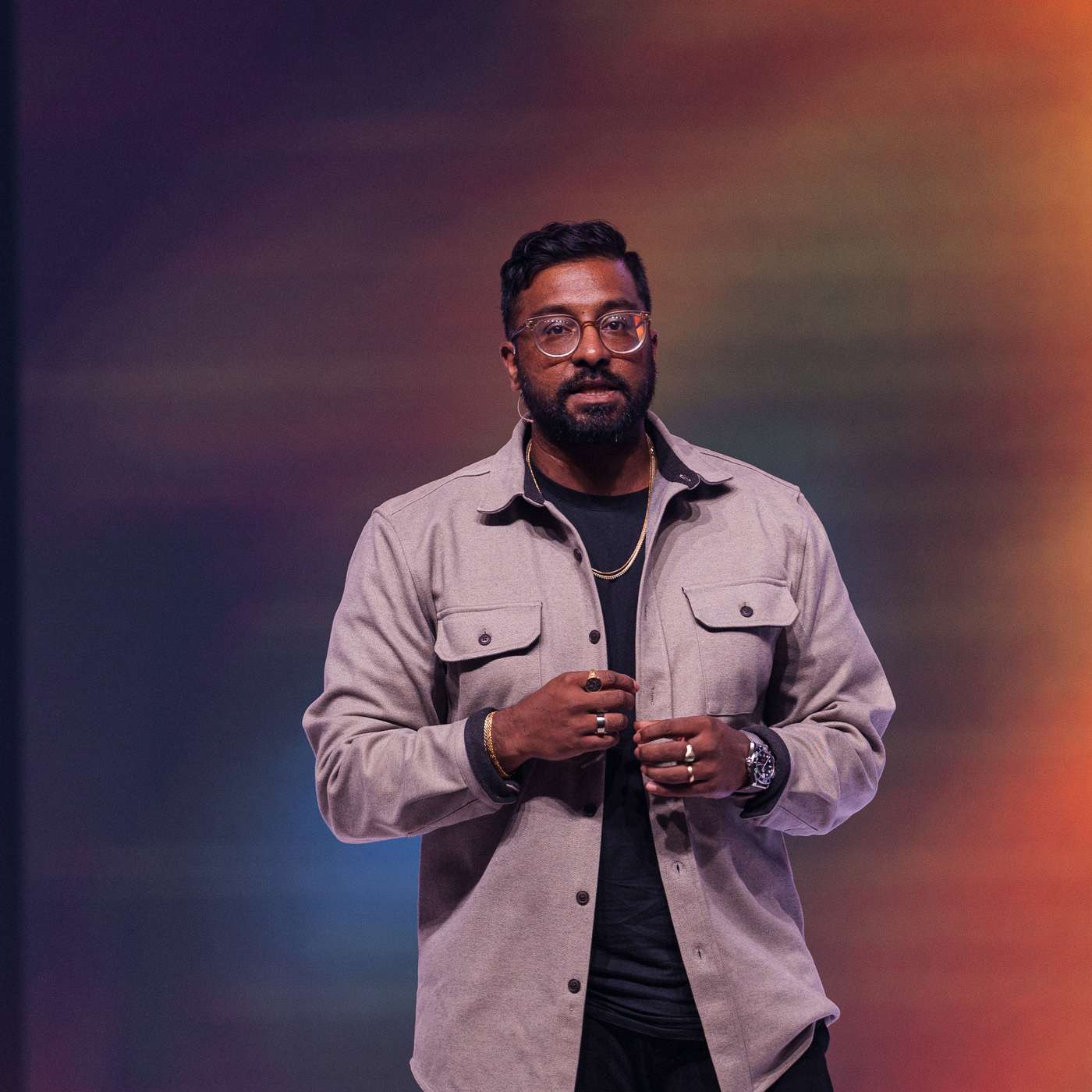
Well, River Valley, you are in for a treat. If you were at Sparkle, you already know about Dr. Joel Mutamali. And if you weren't a part of Sparkle, I just want to introduce for just a moment, he has been with Proverbs 31 ministry. He's a sought after speaker all around the world. Becca and I just really met him this weekend and I leaned over him during Sparkle. I said, we really like you. We really like you. He's a theologian. He's on several staffs and boards helping with theology and. And just has a love for Jesus and a passion for life. So, River Valley, in River Valley fashion, can you welcome with me Dr. Joel Mutamali as he preaches today?
- [00:48]
B
Love you, man. Thank you. Y' all are so kind. So kind. It is so good to be here with you today. And I'm excited to unpack God's word.
- [01:03]
C
So if you've got your Bibles, I.
- [01:04]
B
Would love for you to turn to Luke, chapter 24.
- [01:08]
C
It is in the New Testament.
- [01:10]
B
Matthew, Mark, Luke. That's where it is. If you've got an iPhone, you'll get there instantly if you have an Android device. I just. Once again, I'm sorry for all of you. I'm sorry. Just doing some study. Every time we get a green bubble, an angel loses its wings. But I shared that with Sparkle earlier. Hey, before I get started, I just want to thank pastors Rob and Becca. Just. I'm just consistently overwhelmed by the excellence here, but also just the love for Jesus. And a moment of worship just now was so good. And really, I want to summarize what I want to talk about. And from the get. I've never done this before, but I want to do it from the get. This is the one thing I want y' all to leave here with. It's like, I could do this and then we'll be done. And here's the one thing. Please don't miss Jesus. That's it. And listen, when I say don't miss Jesus, I mean something very specific. I think that in our generation, in our culture, I think the greatest issue that we're going to face actually is.
- [02:15]
C
Not gonna be a denial of Jesus. I actually think it's something far more subversive, far more deceptive. I think it's gonna be a attempt to.
- [02:24]
B
To make Jesus in our image not.
- [02:27]
C
Being conformed into the image of Jesus.
- [02:31]
B
And so I'm gonna beg with y'. All. I'm gonna plead with you, don't miss Jesus on his terms.
- [02:41]
C
Well, how do we know his terms.
- [02:42]
B
We know his terms through his word. And we're gonna study a passage of.
- [02:47]
C
Scripture that I've grown to love.
- [02:48]
B
It is Luke, chapter 24.
- [02:50]
C
And depending on the heading of your Bible, mine just says resurrection. And so in one sense it's like, oh my goodness, this is excitement. But we have to jump into the context of the moment in order to understand what's actually taking place. And I wanna just introduce us to the context. You see, in Israel, there has been this rumor of this man and his name is Jesus. Now if you were a little Jewish kid and you were growing up, you had been hearing these stories of a long awaited Messiah. Messiah just means the anointed. And growing up, you'd hear like, okay.
- [03:30]
B
How do we know that the Messiah is coming?
- [03:32]
C
Like, how do we know that the Messiah will be here? Here's how you will know that the Messiah is here. You will know when the blind will.
- [03:39]
B
Be able to see.
- [03:41]
C
And then it's like, wait a minute, didn't we hear the story about Jesus in one of these villages? Like, check. And then it's like, well, how do we know that it's the Messiah? Here's all you'll know. You'll know the Messiah when the lame, those who cannot walk will be able to walk. It's like, Jesus, like, wait a minute, we saw the TikTok reel about that, right? It's like, check. It's like, well, how will we know about the Messiah? Here's how you know about the Messiah. The dead, those who are in the grave will come to life. And everybody's googling. Lazarus. Yes. What? Jesus. Check. And I want you to imagine living in this moment. And it's like, finally we're under the oppression of Rome. And we have been long awaiting the Davidic king who would come back and who would set us free. And it's like, Jesus. Jesus is the one who's gonna do this for us.
- [04:38]
B
And then the Romans, Caesar, along with the Pharisees and the Sadducees and the religious rulers came together and conspired against Jesus. And in literally the darkest day in human history, Jesus was hung on a cross. And I want you all to know, in this moment, the hope of Israel hung with Jesus. And then something wild happened three days later. See, there's these women who had been following Jesus. At the top of Luke 24, the women had gone to the tomb in order to do the preparation. And guess what? The body ain't there no more. And they go back and they share.
- [05:29]
C
This story, like the body of Jesus. It's not there anymore. And it creates this conversation. And all of some people are like, how can this be? And there's a dialogue that's taking place. How can the body not be there? We saw his body hanging.
- [05:44]
B
And that is the context of Luke chapter 24, verse 13. So let's jump into it. It says this.
- [05:51]
C
Now, that same day, this is resurrection morning. That same day, two of them were on their way to a village called Emmaus, which was about seven miles.
- [06:01]
B
If you're taking notes, I want you.
- [06:02]
C
To circle or highlight seven miles.
- [06:04]
B
We're gonna come back to that later. About seven miles from Jerusalem.
- [06:08]
C
Now, together, they were discussing everything that had taken place. Here's the first thing that I want us to just notice here is that you've got these two, and they're going on a walk. I have a confession for all of you right off the. I, Joel, am not a runner for.
- [06:23]
B
Fun or a walker for no reason.
- [06:26]
C
Just not my thing. Okay? Now, 16 years in my wife, we.
- [06:31]
B
Have actually a picture of my beautiful family. I think it's gonna come up here in a second.
- [06:34]
C
My wife, Brittany.
- [06:36]
B
There's the whole squad. I know. They're so cute. They get their looks from their mama. Absolutely.
- [06:42]
C
My girl, she loves to walk. That girl is a walker. We live in Charlotte. Y' all know how hot it is in Charlotte? It is so hot.
- [06:49]
B
I get up in the morning.
- [06:50]
C
I think, it is so hot.
- [06:51]
B
She gets up in the morning.
- [06:52]
C
She thinks, now's a good time for a walk. What? And so after 16 years, I've learned, okay, how I will show my love for my wife is we'll go on a walk. And so we go on a walk. And I need you to know how I think about things when I wake.
- [07:06]
B
Up and I'm thinking, okay, we're doing our morning walk together. And I think, destination in mind.
- [07:11]
C
Right? Right. I know, right?
- [07:13]
B
Some of you are with me. And so it's like, okay, here's what I'm gonna do. I'm gonna go out, and we're gonna do a walk in the cul de sac, and I'll be done. I know y' all are like, my people.
- [07:25]
C
Like, I'll be done. But I'll think, my girl, she's a walker.
- [07:29]
B
That girl loves to walk.
- [07:30]
C
So we will go extra walking.
- [07:33]
B
Isn't that so kind?
- [07:34]
C
Right?
- [07:35]
B
Help me out. Yes.
- [07:37]
C
So we go out on this walk. This is what happens. And we get to the point where I should be done. And, no, we're gonna keep going. We keep Going. And at the end of the walk, we sat there, and when I think I'm done, I'll look at Britt and.
- [07:47]
B
I'll say, hey, babe, we're done, right? She'll look back at me and she'll say, no. And I'll look back at her and I'll say, well, when are we done? And she'll look back at me and she'll say, well, I don't know. And I'm confused.
- [08:00]
C
What do you mean?
- [08:01]
B
Here's what happened. The aim of the walk was very different for the two of us. You see, for me, I had a destination in mind. But for my wife, what she cared about was not the destination. What she cared about was the quality of intimacy in between the starting point and the end point. I think all the way back to Genesis. In Genesis, chapter three, it says that it was common for Yahweh to walk with Adam and Eve in the cool of the evening breeze. I just think about, what does God desire to do with his people? He wants to walk with them. He wants to talk with them.
- [08:39]
C
Do you want. You wanna know what the definition of real life is?
- [08:42]
B
Real life is walking in the presence of God.
- [08:45]
C
That is the beauty of it. This is the safest place for you and I to be. And so here we are. It's to walk with God and you jump all the way to Luke chapter 24. And here's what I love about the script. There's always a reason for the repetition that we find take place on this morning, on resurrection morning. You're gonna find a beautiful collision, a.
- [09:08]
B
Collision of just everyday, average moment with the cosmic Christ. And the context of that collision is gonna be a simple walk. These two are walking, and there's some New Testament scholars that actually suggest that they actually might be a married couple. This is not a common thought. There's just like a fringe minority. And you might be asking, why would this fringe minority think that they might be a married couple? Here's verse 15. And while they were discussing and arguing, I'm actually serious. I can give you the footnote for the scholar who thinks this.
- [09:44]
C
So they're arguing. What are they arguing about?
- [09:45]
B
Here's what they're arguing about. Like, Jesus, was he who he said he was, was he not who he said he was? Y' all ever have a friend who's like, let's just call him, like, type a friend. And type A friend is like, you know, every perspective is, everything's gonna be good. They are the utter optimists. You know what I'M talking about.
- [10:05]
C
Every setback is just a setup for a step up so you can get up.
- [10:09]
B
You're like, what in the world does that even mean? I don't know what that means.
- [10:12]
C
But you're just like, yes, it's good. And then you have maybe type B friend. And type B is the forever pessimist. You know, the glass is always half empty. It's like, there's traffic. No, there'll be traffic forever.
- [10:29]
B
I think these two are maybe in conversation. And as they're in conversation, like, I just want us to think about the humanity of the text. They're in deep conversation together, and they're arguing about all of these things. And it says this in verse 15.
- [10:42]
C
And while they were discussing and arguing.
- [10:45]
B
It says this, Jesus himself. In Greek, this is referred to as an adjectival intensive.
- [10:50]
C
That's just a Bible nerdy way to say that. The focus is on Jesus. It's him.
- [10:56]
B
If I were to say it, I'd.
- [10:57]
C
Say it like this. It'd be like, y', all, it's Jesus himself.
- [11:02]
B
It says this that he came near and began walking along with them, but they were prevented from recognizing him. Just play this out. Person A is in conversation with person B, and they are in it. Y' all ever been like that? You're like, in an A and B conversation, and you're, like, deep in the conversation, and it's getting intense.
- [11:23]
C
And then all of a sudden, person.
- [11:24]
B
C walks up and they look at.
- [11:27]
C
The situation, and if they have an ounce of common sense, they would know, stay out of the conversation. This is an A and B conversation. But then all of a sudden, they somehow find themselves seeing themselves into the conversation. How do you feel right now?
- [11:45]
B
Annoyed. That's how you feel? Let's be honest, I just love Jesus. Cause I think there's a part of Jesus that's just hilarious. This is what it says. Verse 17. Then he asked them, what is this dispute that you're having with each other.
- [11:59]
C
As you are walking? And they stopped walking and looked discouraged.
- [12:08]
B
Again. Let's step into the moment. Let's step into the confusion. Let's step into the tension of this situation. Verse 18. The one named Cleopas answered him, Are.
- [12:24]
C
You the only visitor in Jerusalem who doesn't know the things that happened there in these days?
- [12:30]
B
This is how we know that Jesus is funny. He's like, what things.
- [12:37]
C
Y'? All?
- [12:37]
B
I'm just telling you, Jesus is a great hang. I just believe it.
- [12:41]
C
So they said to him, the things concerning Jesus of Nazareth, who was a prophet powerful in action and speech before God and all the people. And how our chief priests and leaders handed him over to be sentenced to.
- [12:55]
B
Death and they crucified him. There are some words in our language that we've become a bit too familiar with. We say them a bit flippantly. And I'm truly concerned that this word crucifixion, the cross, is one of those words that has lost a little bit of the bite that it was associated with in the ancient world. The cross was the utter totality of death and failure. The cross was reserved for the worst of criminals. If you were a Roman citizen, you weren't even allowed to go to the cross. Like this was for traitors. And here they are, and they say in all of this, they crucified him. Verse 21. I love the honesty of this, but we were hoping. I'm going to pause here, and I want to ask you a question that's going to seem very simple, but it's far from simplistic. What is your hope in today? Now, if you've been in the Church for any bit of time, you know the right answer. Jesus, God, Holy Spirit, Holy Bible. But I want you for a moment to be honest with yourself and with the Lord. Because I truly believe that honesty and humility go together. And if honesty and humility go together, then pride and insanity do as well. What is your actual hope in the text continues and says, we were hoping that he was the one who was about to redeem.
- [14:44]
C
Besides all of this. It's the third day since these things happened. Moreover, some women from our group astounded us. They arrived early at the tomb, and when they didn't find his body, they came and reported that they had seen a vision of angels who said he was alive. And some of those who were with us went to the tomb and found it, just as the woman had said.
- [15:05]
B
But they didn't see Him. I want us to point out one of the things about this whole conversation that's happening that I find so, so fascinating. You've got two individuals that are caught up in total confusion. They're trying to make sense of the.
- [15:23]
C
Things that are senseless in the world. But listen to this. Not only are they caught up in confusion, simultaneously they're in conversation with the risen Christian. Have you thought about that?
- [15:37]
B
They are in confusion, and simultaneously they are in conversation with Christ. Listen, I want you to know this, that his nearness to us is not dependent on our awareness of Him. His nearness to us, the eternal truth.
- [16:02]
C
The through line of scripture.
- [16:04]
B
God with us is not dependent on our awareness of him. You see, he begins that conversation, he initiates that conversation.
- [16:14]
C
He intrudes upon their conversation far before.
- [16:18]
B
They even knew who he was. I have a suspicion that some of you are in confusion right now.
- [16:26]
C
I have some suspicion that maybe some.
- [16:29]
B
Of you are navigating some things in.
- [16:31]
C
Your life that don't seem to make sense.
- [16:35]
B
May it be that simultaneously as you're walking through the confusion, you might actually be in conversation with Christ himself. We'll get to that in a second. Verse 25, he said to them, I think Jesus is done being playful Jesus, you know, I think now he's like, okay, it's time for the Messiah to teach.
- [16:59]
C
Verse 25. He says this to them, how foolish.
- [17:02]
B
You are and how slow.
- [17:05]
C
Literally, this means slow of heart. How slow of heart to believe all that the prophets have spoken.
- [17:11]
B
And then he identifies the very specific thing that they have missed, the very.
- [17:17]
C
Specific thing that they overlooked, why they missed the Messiah. Verse 26.
- [17:21]
B
Why?
- [17:22]
C
Wasn't it necessary?
- [17:24]
B
Not optional, not conditional, no.
- [17:27]
C
Wasn't it necessary for the Messiah to.
- [17:30]
B
Suffer these things and enter into his glory? And then verse 27, then beginning with Moses and all the prophets, he interpreted for them the things concerning himself in all of the scriptures. Now, anybody remember how many miles this was to Emmaus? Anybody remember?
- [17:53]
C
Look at y', all, Bible scholars.
- [17:54]
B
Excellent, right?
- [17:56]
C
Okay, so I was just curious.
- [17:57]
B
I was just curious, like, I wonder how long of a walk this would be, you know?
- [18:03]
C
And so I researched this. And when I say I researched it.
- [18:06]
B
I mean I did chatgpt, but it's like, chat, help me out. On average, how long does it take for a person to walk one mile? And chat responded and said, 17 minutes for one mile. Some of you are very offended right now. You're like, joel, look at me. I crossfit. I'm just asking you to look at me.
- [18:29]
C
I don't. So on behalf of your average friends, it's gonna take us 17 minutes for one mile.
- [18:34]
B
Okay, so just walk with us.
- [18:37]
C
17 minutes for one mile. Which means this would have taken about 119 minutes or just under two hours. This is the distance we're talking about, a two hour conversation. And Jesus in this two hour conversation, he goes through Moses, which we believe wrote the first five books of the Old Testament, the Pentateuch, Genesis, Exodus, Leviticus, Numbers, and Deuteronomy. And then he talks about the prophets. Well, the prophets would have technically started at Joshua and would have gone all the way through Malachi. Y' all just see what Jesus just did. He literally was like, hey, don't you worry.
- [19:11]
B
Let me give you a master class of the Hebrew Bible.
- [19:14]
C
We're gonna go from Genesis through Malachi, and let me show you what it.
- [19:19]
B
Is that you have been missing, which.
- [19:20]
C
Is why you missed the Messiah in the first place. And there's a part of me that just wonders, Luke, you're a historian, homie. Why didn't you just tell us what passages he went to? Don't you ever wish, like Jesus? Where did you turn to?
- [19:33]
B
Here. And we know some things about Jesus.
- [19:35]
C
Jesus was deeply rooted in the story of Israel. And so did he go to Deuteronomy?
- [19:39]
B
Did he go to Exodus? Or is he.
- [19:41]
C
Did he quote any of the Old Testament prophets? I kind of have a suspicion.
- [19:45]
B
What if Jesus turned to Isaiah, chapter 53. What if on the walk, Jesus goes to Isaiah 53, 3, 5, and he.
- [19:54]
C
Says, by the way, he was despised.
- [19:57]
B
And rejected by men. He was a man of suffering. Who knew what sickness was? He was like someone people turned away from. He was despised, and we didn't value him.
- [20:13]
C
Yet he himself bore our sickness and he carried our pains. But we in turn regarded him stricken, struck down by God and afflicted. But he was pierced because of our.
- [20:26]
B
Rebellion, crushed because of our iniquities. Punishment for our peace was on him and we are healed by his wounds. I love what the early Church, Father Augustine, says that the implication is that the very fabric of the entire Old Testament is Christological. For every thread and theme leads to and centers on the crucified, risen Christ. You see, all of this in some form or in some fashion, points to Jesus. Do not miss Jesus. The Old Testament, it anticipates that Jesus will come.
- [21:24]
C
The Gospels, they announce that Jesus is here. The Epistles, they proclaim him. And the Book of Revelation promises us.
- [21:33]
B
Of his triumphant return. You see, the central message of the Scriptures is Jesus himself. He's the master key of the entire world. Earlier, these individuals were in a debate and confusion of words. You see, what they needed to bring clarity to their own confusion was. Was the very word of God himself. And that is what you and I need today. See, when Jesus does this, he does something very powerful. His nearness. This is all about his presence, his nearness to us. It redefines our understanding of what we know in part, compared to what he knows in fullness. And then Jesus does something that I think is so fascinating. Verse 28. They came near the village where they were going, and he gave them the impression that he was going further. Ever wonder about that language? The impression that he was going further? Anybody in here watch Family Matters? You know, remember Steve Urkel? Steve Urkel, right? Like, what is Urkel trying to do?
- [22:45]
C
Trying to get in the house all the time, right? Like, howdy. Winslow's like, what is he doing? Why he wants to be in.
- [22:51]
B
He's like, how about this one? Full house. Anybody? Full house. Full house, people in here, right?
- [22:56]
C
Why is it that we never find.
- [22:57]
B
Out who Kimmy Gibbler's parents are to, like, ever?
- [23:01]
C
Kimmy's just always over. Why? It's like this impression, like, oh, I wanna go. No, no, you wanna come into the house? And I kinda think that's what's here. It's like he gives him the impression that he's gonna go further than 29. They urged him, no, no, no, stay with us. It's almost evening, and now the day is almost over.
- [23:16]
B
So he's like, yeah, I'll come in and stay with you. Remember, there's always reason for the repetition of Scripture. So I want to ask you, when was the last time you saw this scene take place? So beautifully correlates with communion that we just had verse 30. It was as he reclined at a table. When was the last time Jesus reclined at a table? And who was he with when he reclined at that table?
- [23:42]
C
It was as he reclined at the.
- [23:44]
B
Table with them that he took the.
- [23:47]
C
Bread, he blessed the bread, he broke.
- [23:51]
B
The bread, and he gave it to them. I've always just wondered, why this order? Why bless the bread, then break the bread, then give it to them?
- [24:07]
C
Why not just break the bread, then bless it, then give it to them? You see, I think that there's an intentionality built into even this.
- [24:14]
B
I'm a biblical theology guy, and so I kind of see all of scripture being one cohesive story. And I think it's really important for.
- [24:20]
C
Us to go back to the Eden.
- [24:22]
B
Story, because if we can understand humanity's purpose in Eden, we can understand what God purposes for us in the future. What Pastor Logan just said, right?
- [24:32]
C
We want to think about the future. Okay? So do you remember what took place in Eden?
- [24:38]
B
Let me just play this out poetically for you.
- [24:39]
C
You have the high king of heaven.
- [24:42]
B
Who comes low and in lowliness.
- [24:45]
C
He literally gets his hands dirty, which is a wild thought. A wild thought. And he gets into the soil. The Hebrew word here is Adam. And he gets into the soil and he creates humanity. So the soil is Adama, and humanity is Adam, and he Forms them, and they're just soil formed.
- [25:04]
B
And in order to give life to.
- [25:06]
C
Them, he does the unthinkable.
- [25:07]
B
What does he do?
- [25:08]
C
He breathes his breath of life into them. And then they come into being. Adam comes into being. And I find this so fascinating that in Genesis 1:26 and 27, it says this, that the first thing that God.
- [25:25]
B
Does is he blesses them. You think about that. Can you imagine the first thing that you experience when you come into existence? The sound of the good Father who sings a song of blessing over your life. I think of Zephaniah, the Lord who sings over us. And it's from here, this God who sings over us, who then places us in the safety of Eden and commissions.
- [25:59]
C
Us to not build a monastic society and a castle built in. He says, go out and into the world and take my image and spread it out into the ends of the earth. But, man, we know what happens, don't we?
- [26:12]
B
Genesis chapter three comes screeching into the story. And so you have blessing. But Genesis 3 has breaking. And from Genesis 4 until the incarnation is the process of God trying to redeem his people back into blessing. I want you for a moment to think about the story of Jesus himself in the incarnation, the blessing of heaven.
- [26:46]
C
Coming down onto earth in the incarnation.
- [26:50]
B
To be broken on the cross so.
- [26:53]
C
That as he is broken on the.
- [26:55]
B
Cross, he might pour out his blessing onto you and I today. Blessed, broken, blessed again. You see, I wonder what those two were thinking when they saw that piece of bread.
- [27:17]
C
I wonder what they thought when Jesus reclined.
- [27:21]
B
They're like, wait a minute. Didn't those followers of Jesus talk about this moment before that Jesus reclined? And I wonder what they thought about when Jesus took the bread and when he broke the bread. You see, it would be so nice, wouldn't it, if you and I were only allowed one brokenness in our life.
- [27:45]
C
That's it. One brokenness.
- [27:48]
B
Here's what Jesus does. Jesus blesses and then breaks.
- [27:52]
C
And then.
- [27:53]
B
But we know in our life that the breaking seems to be so much more. It's like, okay, the brokenness. But then it's the phone call from the doctor that we never saw coming. It's the marriage that we saw was unshakable. That is very shaky right now. It is the children that we raised to follow Jesus, but we can't make sense of the decisions that they're making right now. It is the utter destructive violence of our world right now. It's the disunity of people who say they love Jesus. But they're at each other's throats. And so much brokenness.
- [28:40]
C
Have you thought about Jesus?
- [28:41]
B
He goes.
- [28:44]
C
The blessing actually comes before the brokenness. But then for you and I, who put our faith and our trust in Jesus, this miraculous thing happens. That we experience the blessing of Jesus in the midst of the brokenness and in every ounce of our brokenness. You notice that there's multiplication. And in the multiplication now we become a means of blessing to a broken world. This is the economy of the kingdom of heaven.
- [29:20]
B
Blessed, broken and blessed again. Verse 31 says, Then their eyes were opened and they recognized him.
- [29:34]
C
Remember I said Jesus was funny.
- [29:37]
B
Here you go. But he disappeared from their sight.
- [29:40]
C
It's like for real Jesus, like he didn't even get to say, you were the one. Jesus is gone.
- [29:50]
B
I want to pay close attention to.
- [29:51]
C
The words after this.
- [29:52]
B
It says, they said to each other.
- [29:54]
C
Weren'T our hearts burning within us? And you expect right here. Weren't our hearts burning within us when he blessed the bread?
- [30:02]
B
That's not what it says.
- [30:04]
C
Weren't our hearts burning within us when he broke the bread? That's not what it says. Weren't our hearts burning within us when he reclined at the table? That's not what the text says. What does the text say? It says, weren't our hearts burning within us while he was talking with us on the road and explaining the Scriptures to us? How do two people who were slow of heart, I think they were dead of heart. They're trying to navigate life. Two hours earlier, there was a kindling that took place inside of their heart. Dead hearts began to come alive. And that alive took place when they encountered the risen Christ. And how did Jesus himself teach us to teach others how to encounter Him?
- [30:44]
B
Through His Word.
- [30:47]
C
He opened the Scriptures.
- [30:51]
B
The text says that in our hearts come alive. Weren't they burning within us while he was talking with us on the road and explaining the Scriptures to us? That very hour in the middle of the night, they got up and they returned to Jerusalem. They found the 11 and those with them gathered together who said, the Lord has truly been raised and has appeared to Simon. At this point, I think the women are like, I told you so. Then they began to describe what had happened on the road and how he was made known to them in the breaking of the bread. There's so much heartache in our world today. But there is a promise that is embedded in the hope of not a heaven that is far off and distant, but a hope of a new heavens and a new Earth that is going to come and make all things new.
- [31:58]
C
And that hope is not in the.
- [32:00]
B
Absence of all the brokenness, but that hope is in the midst and through all that brokenness. You see, I think it's vital that we recognize the most important preposition in the Bible is the preposition through. It was necessary for the Israelites to go through the Red Sea.
- [32:19]
C
Why?
- [32:20]
B
So they could experience the power of Yahweh who parts the Red Sea.
- [32:25]
C
It's vital for the Israelites to go through the wilderness. Why?
- [32:29]
B
So they could experience the provision of God in the midst of the wilderness journey.
- [32:35]
C
It's essential for Jesus to go through Samaria. Why? So he can meet a half Jew, half Gentile woman hiding in the middle of the day? Ain't nobody trying to hide in the middle of the day in the sun. So that she could experience and meet the very presence of God himself.
- [32:53]
B
Jesus, the incarnate God, y'. All. It was necessary, vital, essential for Jesus to go through the cross. Why? So that you and I today could experience his power, can experience his provision, and can experience his presence. I'm going to end with the way I started. It is all about Jesus. Don't miss Jesus.
- [33:35]
C
Don't miss Jesus. Did you know that there is one reason why our feet right now do not float into oblivion? You know, there's one singular reason why the sun doesn't scorch up the entire Earth. There's one simple reason why the moon doesn't come crashing into planet Earth.
- [33:55]
B
It's John, chapter one. In the beginning was the Word. And the Word was with God.
- [33:58]
C
And the Word was God. Through him, all things were made. Without him, nothing has been made that has been made. And in him was life. And that life was the light of man. There is one reason.
- [34:10]
B
And his name is Jesus. And if you're here tonight and you are ready to experience not just the theory of his name, but the presence of his name, I want to invite you into a real relationship with Jesus.
- [34:30]
C
And if you've been distant from him.
- [34:31]
B
For a while and you feel like.
- [34:34]
C
You'Ve just been in conversation, you've been watching him walk in front of you, you're like, no, I want to catch up. I want to be in conversation. I want to invite you back into.
- [34:41]
B
That conversation to experience his presence. Would you raise your hand if this is you?
- [34:50]
C
If this is you? If you're like, I want to give my life to Jesus. I want to experience his presence. Would you raise your hand in confidence.
- [34:58]
B
And in boldness and put your faith.
- [35:00]
C
And your trust in him. And if you want to reconnect with Christ in a powerful way, would you raise your hand? Would you put your faith in him?
- [35:11]
B
Let's bow our heads and let's pray. Lord God, we need you. God, we're desperate for you. God, help us to remember that you poured out your blessing onto earth, that in the midst of our brokenness, we experience the powerful presence of your son, Jesus. And in some mysterious way, even our brokenness is a means of grace to be a blessing to those who are broken. Would we be a people who boldly proclaim the name of Jesus? May we not miss Jesus? He is the point. We pray, Lord, that our hearts would be stirred alive with affections for the King of heaven and earth. It's in your name we pray. Amen.