Loading summary
Transcript4 lines
- [00:00]
A
Hey, church Pastor Rob here. And I'm super excited for this weekend because Pastor Terry Parkman is going to be preaching now. He's on our team. He's over Global Ministries, and he wrote an amazing book, Future Church. I read it. You can buy it. You can get it anywhere. Books are sold, Amazon, et cetera. If he's selling it at church, at your campus, those proceeds are going to Kingdom Builders.
- [00:22]
B
This is just.
- [00:22]
A
It's a great tool. This is something about talking about where the church is going. I think it's timely because I think that we're at a time where we've got to remember, rethink some of the things church is doing. And when I read this, I thought, yes, yes, yes, preach this to our church. And so he's bringing the Word this week. Next week, I'm gonna be Bringing Vision Part 2. But welcome with me Pastor Terry Parkman as he preaches the Word this weekend.
- [00:49]
B
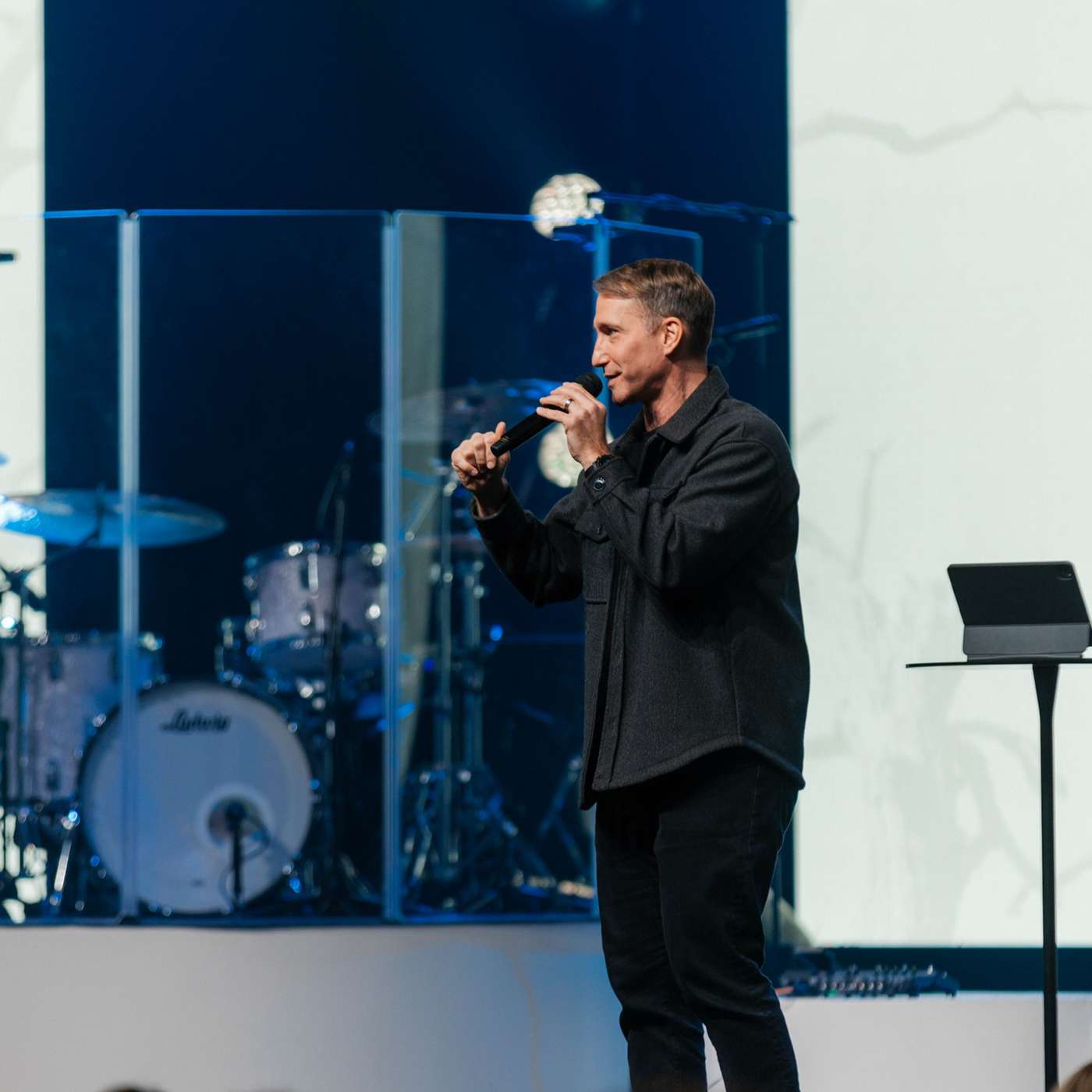
All right, River Valley Church. It is so good to be able to be with you here again. And it is an absolute privilege to be able to share this book with you guys today. Now, as Pastor Rob said, I serve as a Global Global Ministries pastor. I've been here at River Valley church for almost 12 years. So I am a part of this family. And I'm not leaving. I'm not going anywhere. I love this church. I love our pastor. Can we give it up for our lead pastor, Pastor Rob? Pastor Rob is an incredible empowerer of his team, if you didn't know that. He empowers everybody around him. And one of the things he's empowered me to do is have the privilege to go around the world and connect with emerging leaders and to connect with people in the Capital C Church in other parts of the world to really see what's going on, to be able to see what's impacting the church in other parts of the world. And it was on one of these trips, it was a trip to Thailand almost, I would say, eight, nine years ago, that I had the privilege of teaching and training 25 National Youth Directors from all over Asia Pacific. And as I was teaching and training them in some of the things I'm going to talk to you about today, I began to see the gentleman from Vietnam talk excitedly with this translator. Everybody had a translator in the room. It was like talking to a room full of, like, junior highs. Everybody was talking while you're talking. And so as I'm talking, the gentleman from Vietnam is excitedly talking with this translator. And the gentleman from Japan is weeping. His eyes Out. And I stopped a moment, and I looked to the leader from Vietnam, and I said, can you tell me what's going on? It seems like you guys struck on something. And through his translator, he said, pastor Terry, he said, we are recognizing that because this generation is a global generation, based on what you're saying, that we are about 10 years away from where you are in America. And we know now, based on what you're saying, what we need to do to meet their needs tomorrow. And we're really excited about it. We're already planning the next 10 years. I said, that's amazing. I turned to the gentleman from Japan and I said, can you talk to me about what's going on right now? And as he wipes the tears from his eyes, he said, pastor Terry, where you're at today in America? We were 10 years ago with the next generation. He said, we were there 10 years ago. And so we went to our leadership and we said, can we begin to change the way we reach the next generation? Because the church is aging and the church is changing, and we don't wanna lose the next generation. And he said, pastor Terry, my leadership looked at me and said, you're not gonna change a thing. What you're saying is the way we set it up for you is no longer good enough anymore, and that's not honorable. No, you keep doing it the way we set it up, and it's gonna be just fine. He said, Pastor Terry, 10 years ago, we had an average of 30 teenagers in every church. And today in Japan, we have an average of 0.7 teenagers on average in every church. That's less than one teenager on average in every church. And in that moment, the Lord spoke to me and he said, are you going to let that happen in the Capital C church where you're at on your watch? And I said, God, I don't want that to happen on my watch. I don't want that to happen in the church today. I want to be able to meet the needs of the next generation and the future of the church so that the church doesn't die out in America. There are so many times that we'll hear pastors get on a stage. I haven't heard it here. I've heard it in other places. But pastors get on the stage and say. And say, you better get going. You better hurry up. You bet. Jesus is coming back, and the church isn't going to be waiting. You better hurry up. We're one generation away from losing the church. But, my friends, if you look in the story of Joshua, after Joshua and the Bible died and was gathered to his ancestors, the Bible said a generation rose up that didn't know the Lord. And I think to myself, wait a minute, wait a minute. The deliverance from bondage in Egypt, going through the Red Sea on dry ground, entering the Promised Land, seeing cities like Jericho fall, and another generation raises up that doesn't know God. And I don't want that to happen here. And even though right now we are seeing great things start to resurge in Japan, how many of you are grateful for River Valley Tokyo, with Pastor Kirby and Pastor Miwa having great engagement in Japan right now. And we are starting to see a reawakening in the church there. You see, I believe that God never leaves a generation abandoned. It doesn't matter what things impact us today. It doesn't matter what things come our way. I know that God never leaves a generation abandoned. In fact, one of the earliest examples is found in 1st Chronicles, chapter 1232. Now, these are one of those chapters that you go through because they just start naming tribes and numbers and everything else. You're like, I did my Bible reading for the day, like, really quick. But if you dig into it, you begin to recognize that God has a plan for every generation. He says, from the tribe of issachar, there were 200 leaders of the tribes with all their relatives. All these men understood the signs of the times and knew the best course for Israel to take. Now, this isn't a verse that you put up on your wall right next to live, laugh, love. Okay, I know that. But what it is, it's a verse that talks about the heart of God. He said Israel was in such a place, in such disarray and such confusion, that they didn't know where to go. So God being a God that doesn't leave his people abandoned, no matter what's going on in their times, causes his people to have a sons of Issachar tribe, a group of people anointed to understand the signs of the times and know the best course for Israel to take. And I believe every generation has a tribe of Issachar that is so that God doesn't leave his generation abandoned in a world of AI and virtual realities, in a world of robotics and metaverses. Many in the church fear what's going to take place or what's coming. But my friends, if God is the same today, yesterday and forever, I know he equips his people today to meet the needs that they're encountering. How many of you Believe that. Amen. So we're gonna break this down into three stages. I'm trying to condense an entire book into 30 minutes. So here we go. Let's pray. Jesus, I thank you that today we have a privilege of looking around the corner for the future of the church. We see in that passage about the sons of Issachar, the tribe of Issachar, that you always anoint a group of people in every generation to understand where your people should go. And Father, we thank you for the gift of helping us to see around the corner. God, we really need your insight today, God, in everything that's happening in our world around us. We have two options. We could either wring our hands in fear, or we can get into your word and we can open up our heart because it's still your holy Spirit. That's the greatest guide, the greatest equipper, and the greatest in power in all of existence. So, Father, we lean into that part. We lean into you. We are not people created from fear for fear, but we are created in your image for your image, to give you glory. So we pray that you help us to do this in your name. And everybody said amen and amen. Well, first I want to talk to you about where we've been throughout history, because it really helps to frame up where we're at and where we're going today, which are going to be the second two parts of this conversation that we're beginning to have. I've stumbled upon some time ago a quote by a woman named Margaret Mead. Margaret Mead is that woman. She's a social anthropologist back in the 60s and 70s. And she made this amazing quote. It said, never doubt that a small group of committed people can change the world because indeed, it's the only thing that ever has. Awesome quote. But I think there is a more prophetic quote that she has when she's talking about culture because she studied culture and in 1972 she stated, throughout history most cultures have been post figurative where parents and grandparents helped the young to understand the future. What she was saying is so little changed throughout history that most cultures throughout history could have their grandparents and parents equip their kids and grandkids on how to understand the future. And they would be right. It would be sufficient because nothing would really change. She goes on to say a few times throughout history, culture becomes co figurative where change happens so fast that society depends on the young to help understand the future. The last time that happened was with Generation X, the MTV generation, My generation to where people are saying what's going, what are those kids doing? I got what? Oh, they're doing what we did. It just looks different. That's a co figurative generation. That's only happened a few times throughout history. But then she states this in 1972. But there is a time coming in history where technology changes so fast that culture, for the very first time in human history, will be prefigurative where the children will have to figure out for themselves what their values will be. And that hit me right between the eyes because in 1972 she identified technology as being the catalyst. Back in 1972, a computer was as big as this room, people. I mean, let's talk about it. But yet she still acknowledged that it was technology that would catalyze this first time in history moment where culture changes so fast that young people will have to figure out for themselves what their values will be because their parents and grandparents can't keep up. Do you know that with technology today, scrolling social media, diving into what they see online, that culture changes for a young person every four months on a micro level and every 12 months on a macro level. Do you know that once you start to figure out what that young person is looking at, boom, it changes again. And then boom, it changes again. And then boom, it hits again. This generation is sharing ideas and thoughts and beliefs across borders and boundaries in a way that that language is no longer a barrier. You have people, kids and adults on average, globally looking at their screens and scrolling for four hours and four minutes on average a day. Four hours and four minutes. Do you know that research shows that after 15 minutes of scrolling, your brain begins to rewire itself like it's learning a brand new language? I don't know about you, but I have not been on Duolingo for four hours and four minutes a day trying to learn a new language. It has not happened. And yet all over the world for four hours and four minutes a day, you have everybody on average having their minds wired the same way. And the last time the world spoke the same language was the Tower of Babel. We are at this inflection point in history and as a church, we must make a response. It's so easy to be the people to say, I'm going to opt out, I'm going to step back from all these changes, I'm going to ignore it all. And many of us, we say, well, how if the next generation and how if adults and how and truly some of the most greatest online interaction is through those 60 and up. I remember back in the day, I Was on my phone at Christmas and my grandma said, terry, would you get off the phone? We're having Christmas. A couple Christmases ago, I said, grandma, can you get off the phone? We are having Christmas. Here. She goes, what are you talking about? I'm telling my friends we're opening presents together. I mean, it's happening all over the world. But instead of having our minds conformed to what online said, let us have them transformed by the renewing of our mind in God's word. In Romans chapter 12:2, it says this. It says, do not be conformed to this world, but be transformed by the renewing of our mind. What is our response for a world being neurologically rewired by what they see online? What's our response to renew and to transform our mind in the word of God and not conform it through social media or technology? Listen, you want to navigate the ever changing cultures? Do you want to navigate the cultural shifts going on? Spend some time in God's Word where you can gain the mind of Christ because his mind is transformative more than what you scroll is, as the church many of us say, well, if culture changes every four months for a young person or for anybody, like, what do we do? How do we keep up? The goal isn't keeping up. The goal is keeping rooted in God's word and in tune with the Holy Spirit. So no matter what world culture says, God is speaking the truth to you to impart to those around you. Amen. Now, that's where we've been. Now, I wanna talk to you today about where we're at. And I think this is so crucial and so important because we're in the midst of it today. And where we're at is in an age of disruption. It's in an age of disruption. We're in a time of disruption right now. And I'm not talking about interruption, okay? An interruption is when you're trying to leave church and you're gonna go out to eat and somebody talks your ear off in a lobby. Some of you know what I'm saying? There's prayer for you afterwards, okay? That's an interruption because you're still going from point A to point B, okay? You're still gonna end up going out to eat. A disruption is when you're standing in the lobby talking to somebody and your family takes off and they go out to eat and they leave you there and you're intending to go, but somebody else says, hey, somebody just hit your parked car in the parking lot. You're not going out to eat anymore. That was a disruption. There is a new point B on the map of your day. And when disruption takes place, there is a new point B plotted on the map of history. I mean, think of 2020. We all remember the disruption of 2020. That was not an interruption, it was a disruption. And when people came out of lockdown, they wanted to run past towards the original point B. But how many of you knew, no, there's a new point B on the map. We say, man, I don't like disruption. Disruption stinks. I don't, I don't like what it does. I don't like that I can move forward with my plans. But before we hate on it too much, might I submit that God started disruption? I mean, I mean, look at, look at the Bible. Noah and the flood disrupted a lot of people's day, let's be honest, disrupted a lot of people's day. You look at Abraham and his family leaving the land that they were a part of. Abraham was arguably one of the richest and wealthiest men on earth at the time. When he moved, economies shifted. And so when God said, start walking, and on the way, I'm going to tell you where you're going to go, Take a step of faith. It changed absolutely everything for the world. When you have Babylon in the Old Testament exiling Israel, it disrupted all of it. God did that. When you had Jesus Christ show up on the scene, it disrupted the law of sin and death forever. When you have the Holy Spirit fall in Acts chapter 2, verse before, by that time, before that, the devil had one Jesus to worry about. After Acts chapter 2, he had 3,000 little Jesus to worry about. He disrupts the status quo. And that's what God does. He will allow disruption to take place, to shake up culture. And then he puts men and women of God in place to lead the change that comes after it. So in the midst of the disruptions we're in now, and might I say generation Z has experienced more disruptions in the last five years globally than the last three generations combined. You have Generation Alpha, which is 15 and younger, being native to a world of disruption. And so the question isn't when is this going to end? But the question is, God, what is your plan in the midst of this? God, how can I be used to change the world in the midst of what's going on? And I think one of the closest correlations we can have to what we're walking through today is what Israel walked through when they were exiled into Babylon. If you read the Old Testament and You should. Okay. That's why we do. So you'll see that Israel lived in sin. The kingdom of Israel, the kingdom of Judah, lived in sin. And God would punish them by sending in an invading nation to take them captive. And that's how he would punish them. Well, you have Nebuchadnezzar, the king of Babylon, and Babylon invading Judah. And what they did is they went in and they took all the best, the brightest, the elite, the politicians, the influencers, the celebrities, the wealthy, everybody. And they trafficked them from Judah into Babylon. And when that disruption took place, their worlds were absolutely shaken. You had people like Daniel, like Daniel and lies. And Daniel, Ezekiel, Shadrach, Meshach and Abednego and other Hebrew elites were forcibly taken to Babylon. And their worldview was utterly changed. I don't know about you, but I've had my worldview changed about a hundred times in the last five years. Their worldview was utterly changed. They were Jews who had to abide by Jewish law. They lived in the land of God, in the city of God, Jerusalem, and went to the house of God, the temple. They couldn't wear clothes of mixed linens. They couldn't shave the edges of their beard. They couldn't eat certain things. And yet they were pushed into Babylon. And they had to figure out not how to be Jews in Jerusalem, but they had to figure out how to be Jews in the midst of Babylon. And what was interesting is when all these people were trafficked into Babylon, they said, you know what? We're not gonna participate in this disruption. All we're gonna do is we're still gonna act like Jews in Jerusalem. But here's the reality. If God wanted them to be that, he would have left them there. But instead he put them in the middle of world culture so they could be Jews in the midst of Babylon and being the priests of the world, pointing them to the one true God. And many of us do what the Israelites did in that time. They had a captivity mindset. They moved away from Babylon and they moved into the outskirts of Babylon. They said, we're not going to participate. This isn't God's will. In fact, so many false prophets arose that the people became convinced. In the middle of disruption, in the middle of world change, false prophets rose up and said, nope, this isn't God's plan. God's gonna send somebody in to save us. God's gonna take out King Nebuchadnezzar. God is gonna send an invading army to take them out, and we're gonna go back to Jerusalem, just tickling the ears of people. Listen. When the world is changing and my world is shaken, I never wanna listen to things that tickle my ears. I wanna listen to the word of God. And so God said, no, no, no, listen. You have too many false prophets speaking lies into your ear. Let me send you the prophet. And in Jeremiah 29:4 7, God says this, that this worldwide sociopolitical, global disruption has a purpose. He says, this is what the Lord Almighty, the God of Israel, said to all those I carried into exile from Jerusalem to Babylon. He said, your world changed and you're blaming everybody else for it. But don't get it twisted. I did this. I made this happen. I made you be exiled from Jerusalem to Babylon. So instead of living on the outskirts, I want you to do this. Verse 5. Build houses and settle down. Plant gardens and eat what they produce. Marry and have sons and daughters. Find wives for your sons and give your daughters in marriage so they too may have sons and daughters. What he's saying is, stop living in the suburbs. Stop living on the outside of culture. Stop living on the outside of the society in which I have you planted. You are not there to opt out. You are there to step in and bring redemption and light and life to the middle of darkness. That's what he's saying to them. He's saying, I didn't exile you here for you to just sit and wait. I brought you into this place that's of discomfort and maybe inconvenience for you so that you can invade it with redemption and with the light of God. He goes on to say this. He said, also he said. He said, increase and do not decrease in number. There also seek the peace and prosperity of the city to which I've carried you, because if it prospers, you prosper. God said three things to a nation that was exiled and trafficked to a foreign nation. He said three things. He said, number one, stop complaining and get to work. He said, move back into the middle of it because darkness can't have light if light is on the outskirts. You gotta get into the middle of it. Number two, he said, increase. There's so many times when disruptions happen in our world that we take our toys and we go home. We're like, well, we're just gonna opt out. We're just gonna step away. The church says, you know what? I'm just not going to engage. But what does God say to his people? I challenge you to increase there. Increase so much that they can't help but see the light of God in that place. And then finally, and one of the most important things and the hardest things when things are going on that we don't agree with, pray for the peace and prosperity of the city to which I've carried you to. Wait a minute. Babylon came in, took me from my home, trafficked me here. The last thing I want to do is pray for his peace and prosperity. No, no, no. I want to pray for it to go under. And God said, but that's not how you're going to reach it. You have to reach it by praying for the peace and prosperity of the city to which I've carried you to. You see, many of us, like the people of Israel, when things went down that we didn't. That they didn't like, they tried to attack it, they tried to control it, and they tried to ignore it. And many times when things happen in the news or in our scroll time and we see different things pop up that we don't like, we try to attack it, we try to control it, or we try to ignore it. But let me say this today to you, church, Christ did not come into the world to attack it, control it, or ignore it. Jesus came into the world to redeem this world. That is the reason Jesus came in. And you're like, wait a minute, where does it say that? I'm glad you asked. John 3:17, it says, for God did not send his son into the world to, what, condemn the world, but to save the world through him. So if I'm about, about any business, I'm gonna be about Jesus business. And my job is to save the world around me. I don't want my leanings or I don't want my biases to be the block from redeeming somebody and leading them to the Lord. So our job is not to attack it. Our job is not to control it. Our job is not to ignore it. Our job is to redeem the world around us, no matter the cost. And that's where we're at today. Maybe, just maybe, Israel is called to be a light in the midst of the most evil city, Babylon. And when they did that, when they said, all right, we're gonna do this, and captivity woke them up to be the nation of priests that they were meant to be. They went from one side idolatry to ultra devotion. It was insane. Oh, that God would wake up his church to be the nation of priests, to be that redemptive movement of his spirit until the knowledge of the Lord fills this earth. Amen. Amen. Now we've already talked about where we've been and where we're at today. We're at an age of disruption. But can I talk to you a little bit about where we're going? Where we're at today is in the middle of an age called the Web3 Age. Okay. You're like, what do you mean, Web3? There's been three versions of the Internet. It's very important to understand this. Web one was built for consumers. I don't know if you remember, but you can get on the Internet after work and be done by 8pm There was not much there. You know what I mean? You could go there. And it was just built for people to consume content. And then you have web2. Web2 created social media and it created platforms for community. And it started to create Facebook and it started to create Instagram and Snapchat and TikTok and all these other social community spaces. And then people no longer just consumed, but they interacted with it. Okay. It's from. They started interacting and integrating what they saw online. Web3 is a new version of the Internet. That's where you get artificial intelligence from. That's where you get the metaverse from. That's where you get cryptocurrency from. And that Web3 is going to take us from being interacting with the Internet to integrating the Internet to completely becoming the Internet. There's a lot of people who are already having AI companions as their boyfriend and girlfriend and not real people. We laugh, but what happens when you swipe right and it's a robot? Like, think about it. It's already happening today. There's already laws in some nations that are being established for people to marry their AI companion. It's all, yeah, wow is right. You're like, no, no, that's the future. That's Terminator. What are you talking about, Pastor Terry? I'm talking about today. What happens when people go to work and they put on their VR headset, and as they do that, they work from wherever they're at. They can be home, but that's their world. And then when they get off work, they don't log out. They just go and meet their friends, the world in spaces that affirm their version of truth rather than the truth. What happens when those people who have their truth affirmed for four hours and four minutes a day, even though it might not be the truth, walk through the doors of your church and expects you to affirm their version of truth too? What do you do that's gonna happen in less than 10 years? So what do we do as a result? Man, it feels good to attack, control, or ignore now doesn't it? I just. I just wanted to go away. Maybe there's gonna be a global EMP and it just fries everything, right? And then we can go back to growing all of our food. I know something. My wife would like that, right? But what? God has called us to the midst of this world to redeem this world. And God could have had you born into any age in history, and yet he chose for you to be born in this age. The Bible says that the gifts and the callings of God are without regret. That means every gift, every calling that he placed in you is to meet the needs of the world around you in the age that you live in today. And I believe that many of us, many of us have pushed down the gifts and callings of God because we don't like what's going on around us. We see it and we panic. We see it and we worry. But I gotta tell you, today, the church was built for this. The church was built for this. The church was built for this age. It's called the Great Commission. Many of us like, how am I gonna reach all these people in all these places? Well, Paul says in First Corinthians 9 that I become all things to all people to win them. You have it in you church. And I believe that God is going to use you to transform the world around you. So what's next? What's the next step that we take? We just kind of went on a crash course of 120 page book, but now we gotta ask, what's next? What are the handles to this message? What should I do right now, today, if I'm going to meet the needs of the world around me? My friends, it's three things. I mean, come on, are you a pastor if you don't have three points? It's three things and it's very important. And you're gonna say, how does this meet the needs of the future? Watch, I'll show you. The very first thing that you need to do is make discipleship. Discipleship in your life. What do you mean? I go to groups. Listen, I'm glad you go to groups and I want you to join a small group. We just played a video for small group. But don't just settle for great relationships in your small group. Join a small group that will disciple you to look like Jesus. Okay? Don't just go places where you're good friends with somebody and you're gonna call it a small group. But you're not gonna crack the Word of God. Get into a place. Cause discipleship is becoming more like him. Listen, I'm always being formed. There is no neutral ground in our life. The Bible said. I read it in Romans 12. 2. Don't be conformed to the ways of this world, but be transformed by the renewing of your mind. You're being formed. You're either being conformed or transformed with everything you do, everything you say, everything you listen to, and everything you watch. Do I want to be conformed to the ways of this world? Or do I want to be discipled and transformed to look more like Christ? Truly make discipleship. Discipleship. Join a small group, a Bible study, a community of believers that want to get closer to Jesus. Do you know what disciple means in the Bible? It means to follow your master, who is Jesus, so closely that you can taste the dust kicked up by his heels as he walks. If I'm calling myself a disciple of Jesus, am I that close to his feet as he's walking? Am I following him so close? So I want to challenge you. Make discipleship. Discipleship so that you're not conformed to what you see on the screen, but you're formed to be more like Christ. The second thing that's more important, that's not more important, that's also important is to increase biblical literacy and fluency in your life. Fun fact about me Back in high school, I managed two Chinese restaurants. Yeah, yeah, we'll talk about it later. In North Dakota at that. It was wild. And after four years of working in Chinese restaurants, I could understand some Chinese writing. I could read some of it. I could even as a. I could even understand some of it as I spoke it in the kitchen. But asked Terry Parkman to speak Chinese? Not a chance. I was not fluent in it at all. I sounded horrible. But yet many of us are like that with the word God. We're happy with being able to read the Word of God and understand the Word of God. But none of us know how to speak the Word of God into culture. If I am going to meet the future needs of the world around me, I have to be so saturated in the Word of God that it flows out of me in every instance. That's what cultural redemption is. Can I redeem this cultural moment through the Word of God? Without knowing the Word of God, I don't know what can be redeemed. But by knowing the Word of God and speaking the Word of God, I could redeem the world around me. Be so saturated that it doesn't just hit your devo time in your journal, but the word of God comes out of your mouth daily. And the last thing and the most important thing is get a firsthand experience with Jesus and don't settle for a secondhand experience. Well, Pastor Terry, what do you mean? Well, our theme, our vision, Pastor Rob laid it out last week for this year, is speak, Lord. We're listening. Yes, be discipled. Yes, be in the word, but get that firsthand experience with Jesus. It says this in First Samuel, 3, 4, 10. Then the Lord called Samuel, and Samuel answered him, here I am. And he ran to Eli and said, here I am. You called me. But Eli said, I didn't call you. Eli was a priest. Let me backfill this. Samuel was a little boy who later became the prophet, who later anointed King David to be king, the last great prophet back then. So here's Samuel about to anoint David, right? Last great judge, I should say. And he's a little boy, and he's sleeping by the ark of the covenant, where God's presence rested. And he hears the voice of God, but he didn't know who God was yet. So he goes to the priest who served in the temple, named Eli, and said, did you call me? And that's where we pick up here today. But Eli said, I did not call you. Go back and lay down. So he went back to lay down, and again the Lord called Samuel, and Samuel got up and went to Eli instead and said, here I am. You called me, my son. Eli said, I did not call you. Go back and lie down. Many of us have this with our kids. And every single night, a third time, the Lord called Samuel, and Samuel got up and went to Eli and said, here I am. You called me. Then Eli realized that the Lord was calling the boy. So Eli told Samuel, go and lie down. And if he calls you, say, speak, Lord, your servant is listening. So Samuel went to lay down in his place. The Lord came and stood there calling at as the other times. And he said, samuel, Samuel. Then Samuel said, speak, Lord, your servant is listening. Many times when God says our name, when he wants to engage us, when God speaks to us, and we're wondering what we should do with the voice of God. Many of us might not run to Eli, but we run to social media to see if other people are doing the thing that God told us to do. That's a secondhand experience for many of us. We never have a firsthand experience with God because we just come to church and we Wait for our pastor to tell us what we should do. That's a secondhand experience. A firsthand experience is to hear all these things, but to go before the Lord and say, God, I don't want a secondhand experience. I don't wanna hear this through anybody else's lips. God, I need to hear your voice speak to me and, God, I'm gonna sit here and I'm gonna say, speak, Lord, your servant is listening. My friends, we have to be discipled. We have to be, in the word, biblically literate and biblically fluent. But we can't stop there. Daily, daily, we have to go before the Lord and say, speak, Lord, your servant is listening. Before we listen to social media, before we listen to our favorite podcast, before we listen to our favorite speaker, we have to listen to the voice of God. Because he's the only one who put that calling in you. He's the only one that has equipped you with the gifts to meet the needs of this world. And I believe that without a shadow of a doubt, when you do that, you're gonna see God use you to impact the future of his church. Amen. Amen. So, Jesus, we thank you that today we had the privilege of just briefly talking about some of the things that are gonna impact the world around us. And, God, I pray in your name that it doesn't stay here. But I pray, Lord, that we are challenged, absolutely challenged, to be redemptive in the world around us. Whenever disruptions happen and the world changes in a way we don't like, help us to not attack the world you called us to, or try to control it and make it look more like us or ignore it, but help us to do what you did, Jesus, and that's redeem it, God, use us to be those redemptive vessels on mission, fulfilling the Great Commission and on call with you. God, we thank you and we praise you in your name. Amen.