
Podcast
Rocketship.fm
Hosted by Rocketship.FM · EN
Rocketship.FM brings you the latest and most important stories shaping the world of technology. From groundbreaking innovations to high-stakes corporate battles, we break down the news that matters—giving you the insights you need to stay informed in an ever-evolving tech landscape. Whether it's AI, big tech power plays, or the future of digital policy, we make sense of the headlines so you don’t have to.
Rocketship.fm, produced in partnership with Evergreen Podcasts, has been featured in Forbes, Huffington Post, Inc, Entrepreneur, and many more business publications as a top business podcast year after year.
18episodes
Episodes
Newest firstAll episodes
Meta’s Bold Move: The End of Content Moderation as We Know It
Jan 16, 202500:34:29Tap to summarizeMeta is making waves in 2025 with a decision that’s turning heads across the tech world. Mark Zuckerberg announced the end of traditional content moderation at Meta, replacing fact-checkers with a Community Notes-style system where users take the reins. Borrowing a page from Elon Musk’s playbook at X, this shift puts the responsibility for identifying misinformation squarely on Meta’s users. But is this a step toward democratizing the internet or a dangerous move away from accountability?In this episode, we explore the history of content moderation, reactions from media and political leaders, and the challenges of adopting a Community Notes approach. With insights from Meta, X, and the broader tech community, we’ll break down what this bold pivot means for the future of online discourse—and whether Meta is ready for the wild west it’s about to unleash.
Transcribe →Delight: Building Emotional Connections in Products with Nesrine Changuel
Jan 9, 202500:36:25Tap to summarizeIn this episode of Rocketship.FM, host Mike Belsito sits down with Nesrine Changuel, a seasoned product manager with an impressive track record at Spotify, Skype, and Google, to explore the transformative power of emotional connection in product design. Nesrine’s upcoming book, Delight, introduces the concept of the Delight Grid framework—a practical tool to help product teams prioritize features that not only solve problems but also resonate deeply with users. Through her research and real-world experience, she shares how to move beyond functional solutions to create products that genuinely delight.Join us for an exclusive sneak preview of Nesrine’s insights, including actionable steps to start building emotional connections in your own products, the challenges teams face when adopting this approach, and how delighting your users ties directly to business outcomes. Whether you're leading a product team or simply passionate about creating user-centric experiences, this conversation will leave you inspired and equipped to elevate your product strategy.
Transcribe →2025 Tech Predictions: AI, Jobs, and the Future of Social Media
Jan 2, 202500:28:03Tap to summarizeIn this episode of Rocketship.FM, we look ahead to the pivotal trends set to shape the tech world in 2025. From the continued evolution of AI in redefining how we interact with the web to a predicted rebound in tech jobs, we explore what these changes mean for product managers, technologists, and businesses alike. With social media consolidating around a few dominant platforms and the growing push for child safety in AI chatbots, this year promises both innovation and challenges that will redefine the industry landscape.Join us as we dive into the key stories driving these predictions, including the role of AI as a browser alternative, the rise of sustainability-focused tech jobs, and how TikTok might survive regulatory pressures. Whether you're a seasoned product leader or simply curious about what's next, this episode offers insights and actionable takeaways to help you navigate the tech industry's future.
Transcribe →Defining Moments: The Top Stories In Tech That Defined 2024
Dec 26, 202400:34:39Tap to summarizeFrom groundbreaking innovations to industry-shaking controversies, 2024 was a year that kept us on our toes in tech. In this episode of Rocketship.FM, we uncover six defining stories that shaped the landscape for product managers, tech leaders, and innovators alike. Whether you're leading a product team or simply keeping an eye on the ever-changing world of technology, these stories will give you the context you need to stay ahead.Join us as we explore how these pivotal moments unfolded and their lasting impact on our industry. From unexpected market shifts to revolutionary product launches, we break down what mattered most—and why. This is your front-row seat to the trends and turning points that made 2024 a year to remember for the tech world.
Transcribe →Product Market Fit: A Deep Dive
Apr 16, 2024Tap to summarizeIn this episode of Rocketship.fm, hosts Michael Sacca and Mike Belsito take listeners through an in-depth examination of the pivotal business concept known as product market fit. They begin by acknowledging that, despite frequently using the term, they haven't fully dissected its meaning in previous episodes. They outline the importance of product market fit, describing it as a critical transition point that can propel a startup from uncertainty to being a market leader or at least demonstrating market alignment. They emphasize how this fit can indicate a growing customer base and stronger ties between the product and its users, and discuss the continuous process of iterating a product based on customer feedback and evolving market demands.Throughout the episode, we'll dissect the idea of product market fit, explaining it as a kind of complex puzzle where each piece represents an aspect of the product's journey towards market acceptance. They identify the key components of achieving product market fit: a quality product that aligns with market demands, its relevance and affordability to the target audience's needs, and a good market actively seeking the product's solutions. The hosts highlight the importance of customer feedback, describing how it should be actively sought, received, and used - not to immediately fulfill every customer's request, but to genuinely listen, interpret needs, and then create a comprehensive solution. They underscore that achieving product market fit is not a one-time event but a continuous process that involves constant adaption and refinement.Finally, we'll share insights on common metrics used to measure product market fit, such as customer retention rates and net promoter scores, while pointing out the necessity of customizing these metrics to fit the unique context of a product and its market. They also touch upon challenges faced in the quest for product market fit, using stories and clips from notable figures like Peter Reinart from Segment and the late Clayton Christensen. These anecdotes highlight the real-world struggles and breakthroughs companies encounter as they shift from pushing their product to a market that's not responding, to being in demand by the market itself—underscoring the episode’s key takeaway of what finding product market fit truly entails.This podcast is brought to you by:Go to http://porkbun.com/RocketshipFM24 to get $1 off your next desired domain name at Porkbun!Miro: Go to Miro.com/podcast and get your first three Miro boards free forever.Hubspot: Listen to The Science of Scaling wherever you get your podcasts.Gigantic: Learn more about Gigantic's Product Leadership course, Generative AI, Product Management course, Executive Leadership course & Web3 for Marketing course, AI Product Management Course, and Customer Research and Discovery Course at Gigantic.isLeadpages: The Easiest Way to Grow Your Sales. Check out their landing page templates today. Rocketship is brought to you by The Podglomerate.This show is a part of the Podglomerate network, a company that produces, distributes, and monetizes podcasts. We encourage you to visit the website and sign up for our newsletter for more information about our shows, launches, and events. For more information on how The Podglomerate treats data, please see our Privacy Policy. Since you're listening to Rocketship, we'd like to suggest you also try other Podglomerate shows surrounding entrepreneurship, business, and careers like Creative Elements and Freelance to Founder.
Transcribe →
Streamlining Workflows: The Asana Automation Journey
Feb 9, 2024Tap to summarizeToday, hosts Michael Sacca and Mike Belsito dive into the intricacies of a product that has sparked both admiration and frustration among its users: Asana.As they unpack Asana's evolution, they explore its inception by co-founders Justin Rosenstein and Dustin Moskovitz, with Dustin's departure from Facebook marking the genesis of a vision for modernizing project management. From its beta days to the 2011 public launch, Asana's rapid growth and intuitive interface captured the hearts of users, boasting a retention rate of over 75% within a year.But it wasn't just about project management; Asana's flexibility saw users employing it for myriad purposes, reflecting the product's adaptability and appeal. Despite stiff competition, Asana's strategic decisions, including offering the product free for teams of up to 30 people, solidified its position in the market.Fast forward to the present day, where the spotlight shines on Asana's latest innovation: Automation. With insights from Anna Marie Clifton, the mastermind behind this transformative feature, listeners gain a behind-the-scenes look at the product development process. Anna's departure from Coinbase underscores her commitment to reshaping the future of work through Asana.Through strategic alignment and narrative development, Anna and her team set out to tackle the age-old problem of "work about work." Focusing on streamlining workflows and addressing pain points such as cumbersome handoffs, Asana's Automation feature promises to revolutionize how teams collaborate and communicate.Join Sacca and Belsito as they navigate the Asana Automation journey, uncovering the driving forces behind this game-changing innovation and its potential to redefine productivity in the modern workplace. Tune in for an insightful discussion that explores the intersection of product development, user experience, and the ever-evolving landscape of work.
Transcribe →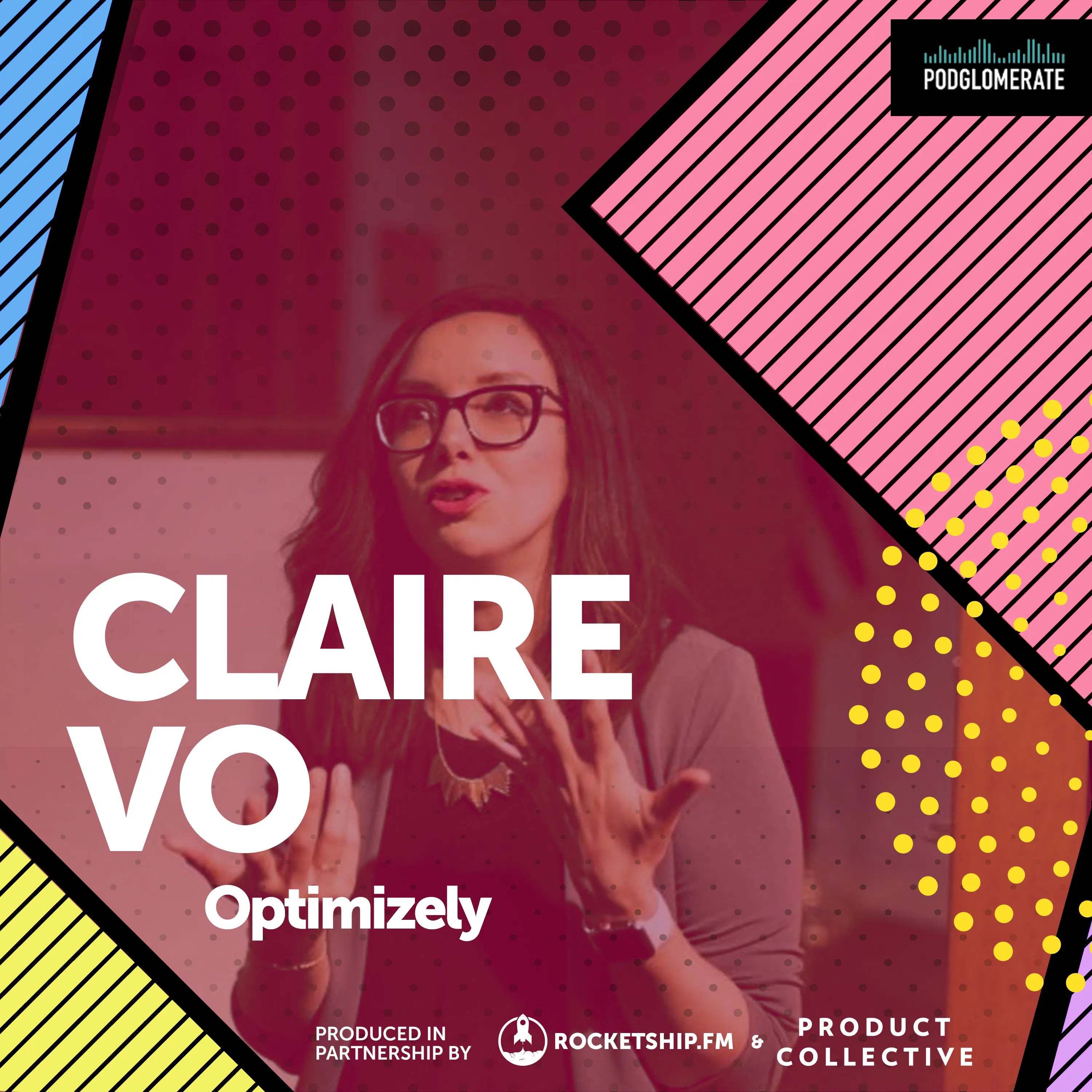
Interview: Claire Vo of Optimizely on Product Testing and Experimentation
Oct 30, 2018Tap to summarizeThis week to chat with Claire about Product Experimentation, how to advocate for it in your organization and how to ask the right questions to get your team thinking about what and how they should be testing.Claire is the VP of Product Management at Optimizely, the world’s leader in customer experience optimization. Previously, she was the CEO and co-founder of Experiment Engine which was acquired by Optimizely in 2017. Prior to launching Experiment Engine, Claire led product development for several startups and technology companies including Electronic Arts and BuildASign.com. Claire is an expert in high velocity experimentation programs, product strategy and user experience, and a passionate advocate for women in technology.***This show is a part of the Podglomerate network, a company that produces, distributes, and monetizes podcasts. We encourage you to visit the website and sign up for our newsletter for more information about our shows, launches, and events. For more information on how The Podglomerate treats data, please see our Privacy Policy. Since you're listening to Rocketship, we'd like to suggest you also try other Podglomerate shows surrounding entrepreneurship, business, and careers like Creative Elements and Freelance to Founder.
Transcribe →
Powering your growth engine (Growth Ep 5)
Jan 3, 2017Tap to summarizeIn this episode we break down our talks with Casey Winters, Andrew Chen, Dmitry Dragilev and Ryan O'Donnell about what it was like to be a one person growth team and how they grew the teams at Grubhub, Pinterest, Zurb & SellHack. ***This show is a part of the Podglomerate network, a company that produces, distributes, and monetizes podcasts. We encourage you to visit the website and sign up for our newsletter for more information about our shows, launches, and events. For more information on how The Podglomerate treats data, please see our Privacy Policy. Since you're listening to Rocketship, we'd like to suggest you also try other Podglomerate shows surrounding entrepreneurship, business, and careers like Creative Elements and Freelance to Founder.
Transcribe →