
Podcast
RoS: Review of Systems
Hosted by Review of Systems | Primary Care Innovation | Health Policy | Health Care Delivery | Payment Reform · EN
Harvard Medical School
10episodes
Episodes
Newest firstAll episodes
RoS: Opioid Use Disorder Care in Primary Care
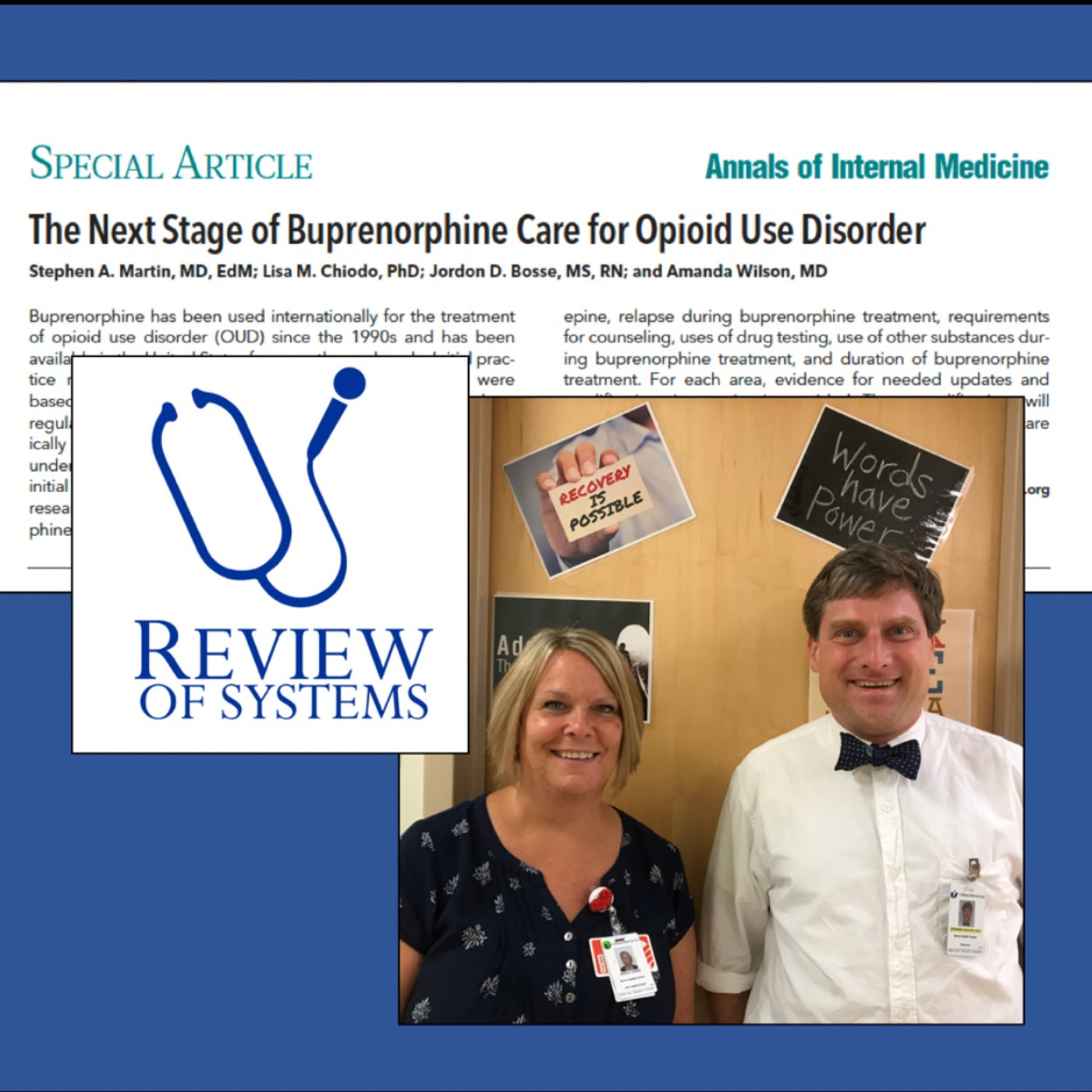
Sep 3, 201900:31:05Tap to summarizeWelcome to Recovery Month! In celebration of primary care’s role in addiction care, we are featuring a show about caring for patients with addiction. Our guests this week are Adele Ojeda, the office based opioid treatment (or OBOT) nurse for Barre Family Health Center and Dr. Stephen Martin. Dr. Martin is Associate Professor of Family Medicine and Community Health at University of MA Medical School and a faculty physician at Berry Family Health Center, and affiliate faculty for the HMS Center for Primary Care. They share their experiences caring for patients with OUD in the primary care setting, and we also discuss an article Dr. Martin published with several colleagues in Annals of Internal Medicine in November 2018 entitled The Next Stage of Buprenorphine Care for Opioid Use Disorder that focuses on a number of widely accepted, yet not evidence-based, and potentially harmful practices in buprenorphine care. If you enjoy the show, please rate, review & subscribe to us wherever you listen, it helps others find the show, and share us on social media and with our friends and colleagues. We’d love to hear feedback and suggestions, so you can tweet at us @RoSpodcast, @HMSPrimaryCare, @audreymdmph or drop us a line at reviewofsystemspod@gmail.com.
Transcribe →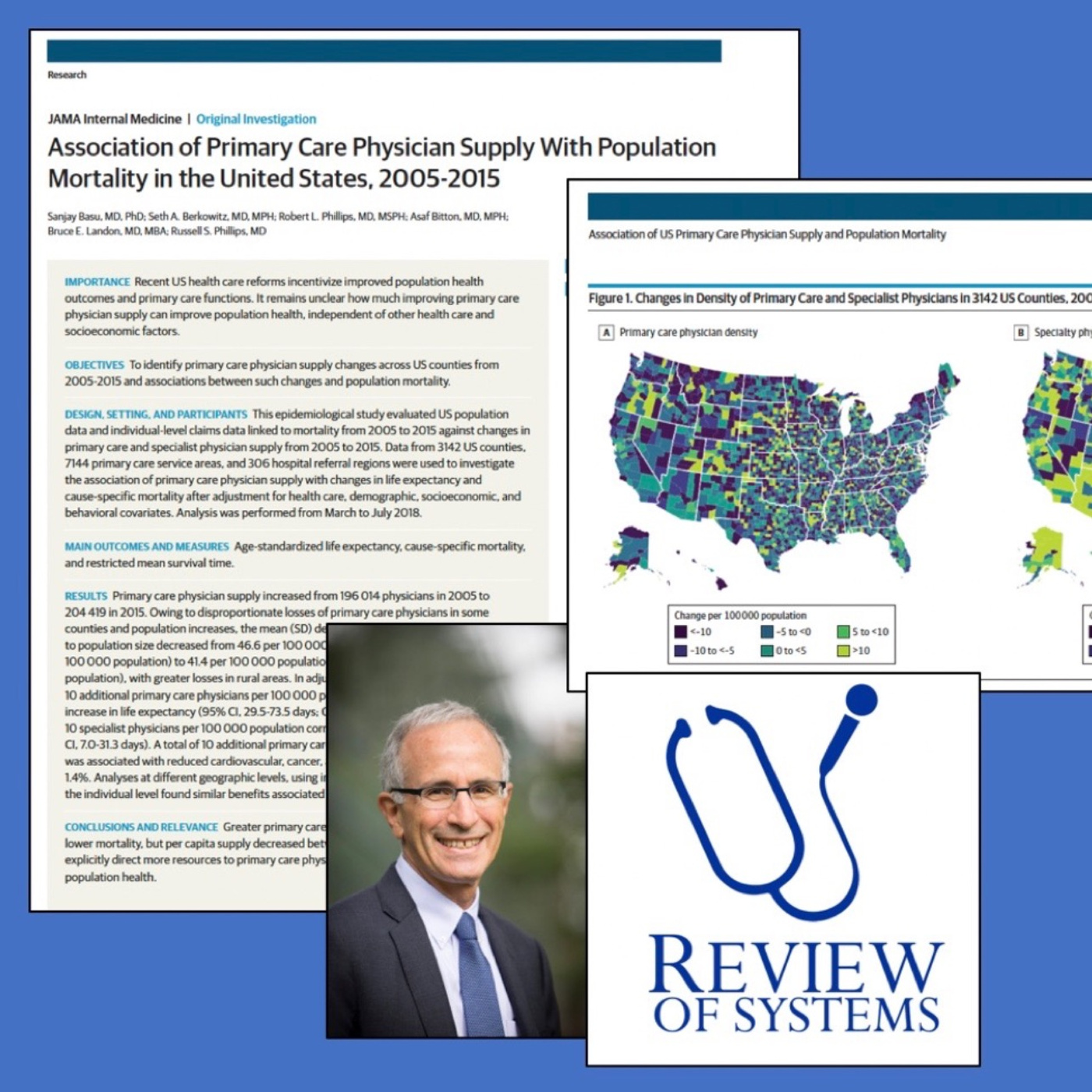
RoS Reprise: Understanding the Association of Primary Care Physician Supply and Mortality in the US
Aug 20, 201900:25:31Tap to summarizeThis week, we are joined by Russ Phillips! Dr. Russell Phillips is Director of the Center for Primary Care and the William Applebaum Professor of Medicine and Professor of Global Health and Social Medicine at Harvard Medical School. He is a devoted primary care general internist at Beth Israel Deaconess Medical Center (BIDMC) where he manages a panel of patients. Within the Center for Primary Care, he leads programs that are transforming education and care systems, developing entirely new approaches to improving primary care and health, and performing research on high performing health systems and practices, and the impact of changes in payment and primary care practice structure on the finances of primary care practices. He joins us to talk about a recent publication in JAMA IM that he wrote with a number of collaborators including other Center for Primary Care faculty, entitled: Association of Primary Care Physician Supply With Population Mortality in the United States, 2005-2015. We also reference the accompanying editorial by Zabar et al and the paper that inspired their work, by Starfield, Shi and collaborators. This interview has been lightly edited for length and clarity.
Transcribe →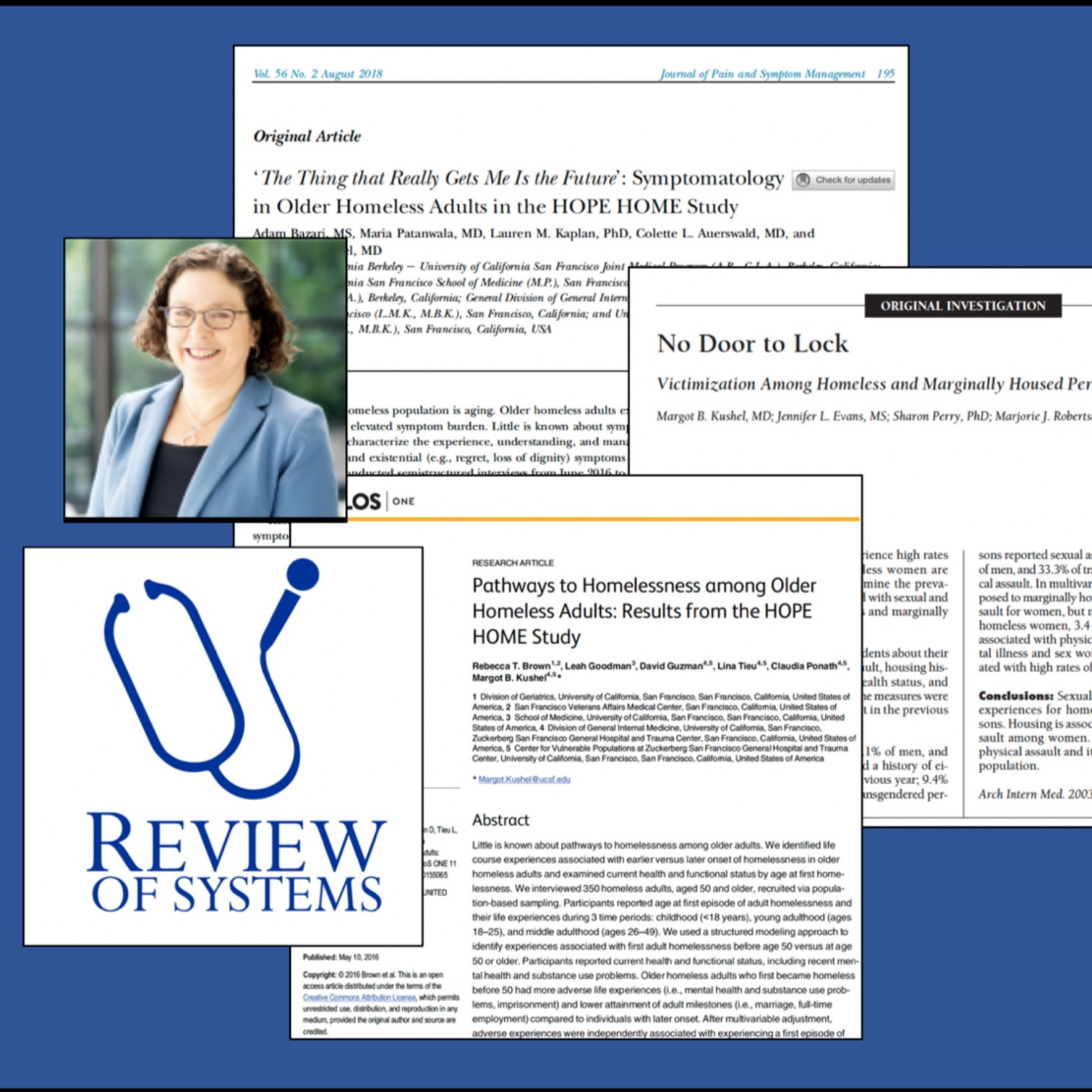
RoS: Understanding the Health Effects of Homelessness with Dr. Margot Kushel
Aug 6, 201900:28:39Tap to summarizeOur guest this week is Dr. Margot Kushel, a Professor of Medicine at UCSF and Director of the UCSF Center for Vulnerable Populations, as well as the Director of the UCSF Benioff Homelessness and Housing Initiative. Dr. Kushel’s research focuses on homelessness among older adults and the adverse health effects associated with homelessness. She developed and continues to follow the HOPE HOME cohort, an ongoing longitudinal cohort study examining the causes and effects of homelessness among adults 50 and over in Oakland, CA. If you enjoy the show, please rate, review & subscribe to us wherever you listen, it helps others find the show, and share us on social media and with our friends and colleagues. We’d love to hear feedback and suggestions, so you can tweet at us @RoSpodcast, @HMSPrimaryCare, @audreymdmph or drop us a line at reviewofsystemspod@gmail.com.
Transcribe →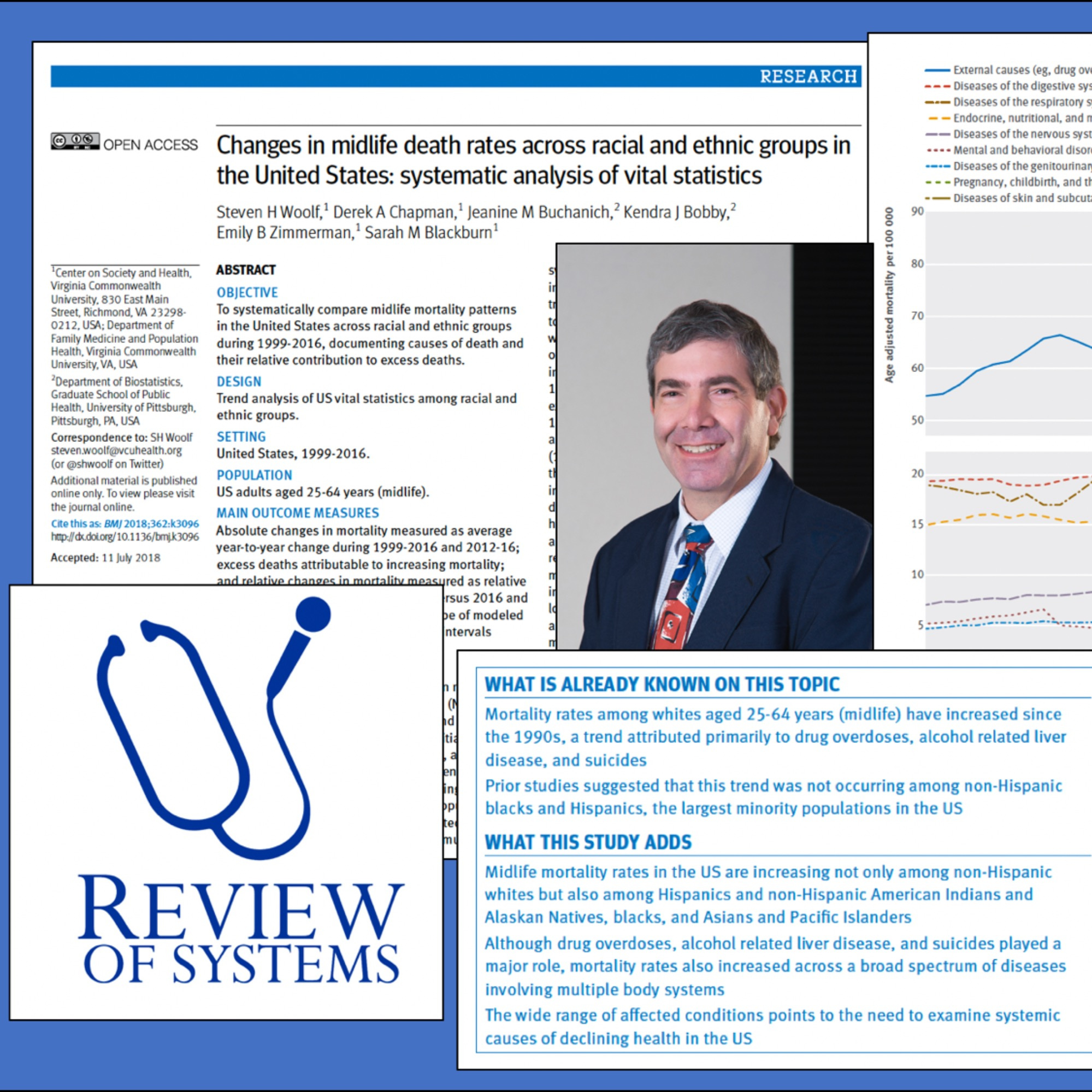
RoS: Understanding Increasing Mid-Life Mortality in the US with Steven Woolf
Jul 23, 201900:28:42Tap to summarizeOur guest this week is Dr. Steven Woolf. He is the C. Kenneth and Dianne Wright Distinguished Chair in Population health and Health Equity at VCU as well as Director Emeritus and Senior Advisor to the VCU Center on Society and Health. He joins us this week to talk about his work improving our understanding of the increasing death rates among mid-life Americans, on which he published a crucial paper about in 2018 in BMJ, entitled Changes in midlife death rates across racial and ethnic groups in the United States: systematic analysis of vital statistics, as well as authoring in an extensive report entitled US Health in International Perspective: Shorter Lives, Poorer Health. If you enjoy the show, please rate, review & subscribe to us wherever you listen, it helps others find the show, and share us on social media and with our friends and colleagues. We’d love to hear feedback and suggestions, so you can tweet at us @RoSpodcast, @HMSPrimaryCare, @audreymdmph or drop us a line at reviewofsystemspodATgmail.com.
Transcribe →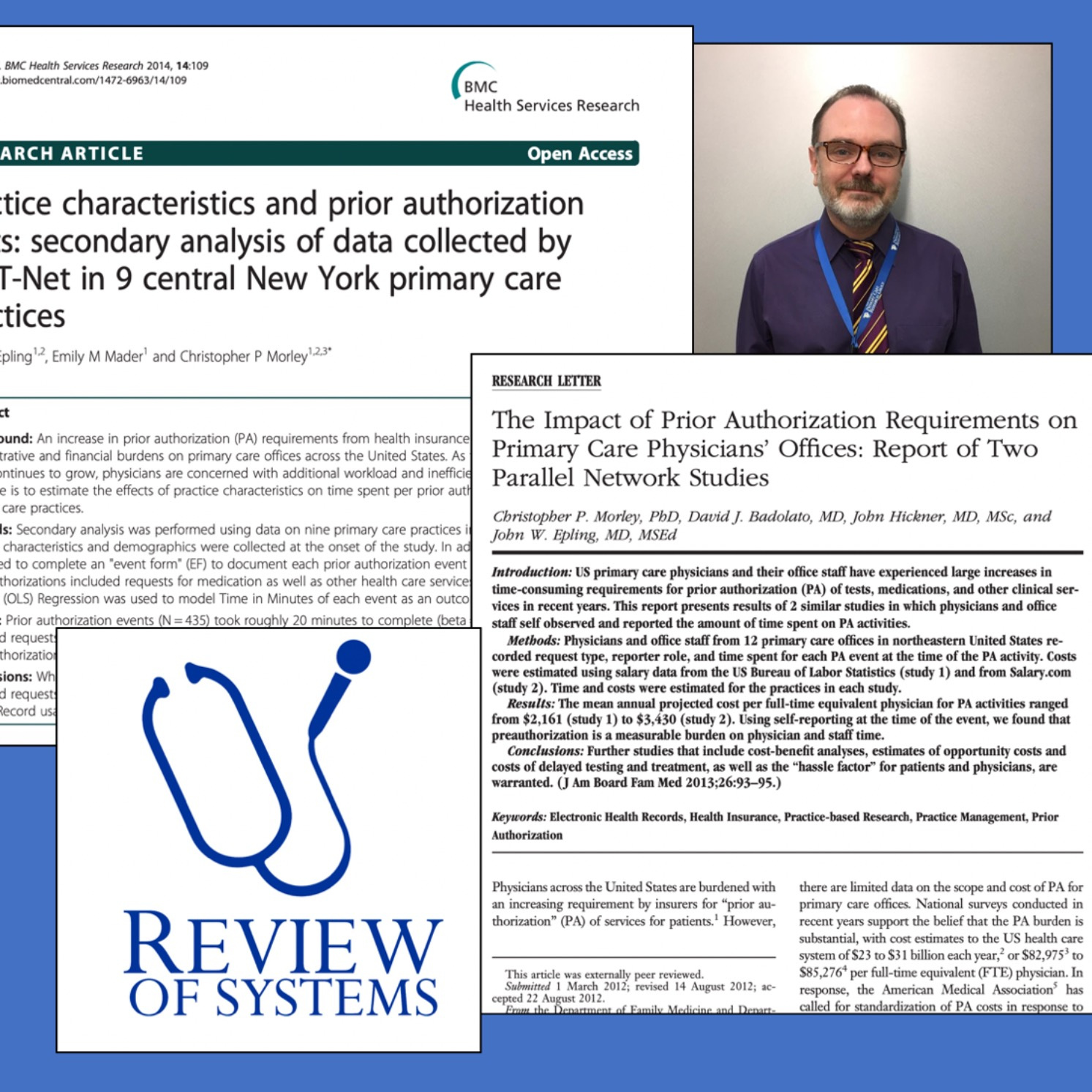
RoS: Understanding the Costs of PAs with Chris Morley
Jul 8, 201900:27:01Tap to summarizeChristopher Morley joins us this week to talk about prior authorizations, or PAs – a bureaucratic headache well known to anyone in primary care in which a physician’s office must complete additional paperwork or phone calls to a patient’s insurance company in order to get a medication or procedure covered by the insurance. This used to be a fairly rare occurrence, but it has dramatically increased in frequency over the last 20 years or so. Dr. Morley set out with some colleagues to try to quantify how much the PA process may cost, and moreover, to help us all think about who pays those costs in reality – ultimately, it is our patients. Dr. Morley is the Chair of the Department of Public Health and Preventive Medicine at SUNY Upstate Medical University, as well as the Vice Chair for Research in the Department of Family Medicine. He is a medical social scientist with principal interests in health disparities, particularly those that occur in primary care settings; health workforce development and medical education. Review of Systems is a podcast hosted by Audrey Provenzano featuring conversations about the changing healthcare landscape from the Harvard Center for Primary Care. Check out our website, primarycare.hms.harvard.edu to find our podcast library, subscribe in your favorite podcast app, and find us at @rospodcast and @audreymdmph Tweet us feedback and suggestions or email us at reviewofsystemspod@gmail.com. If you enjoy the show, please rate, review & subscribe to us wherever you listen, it helps others find the show, and share us on social media and with our friends and colleagues.
Transcribe →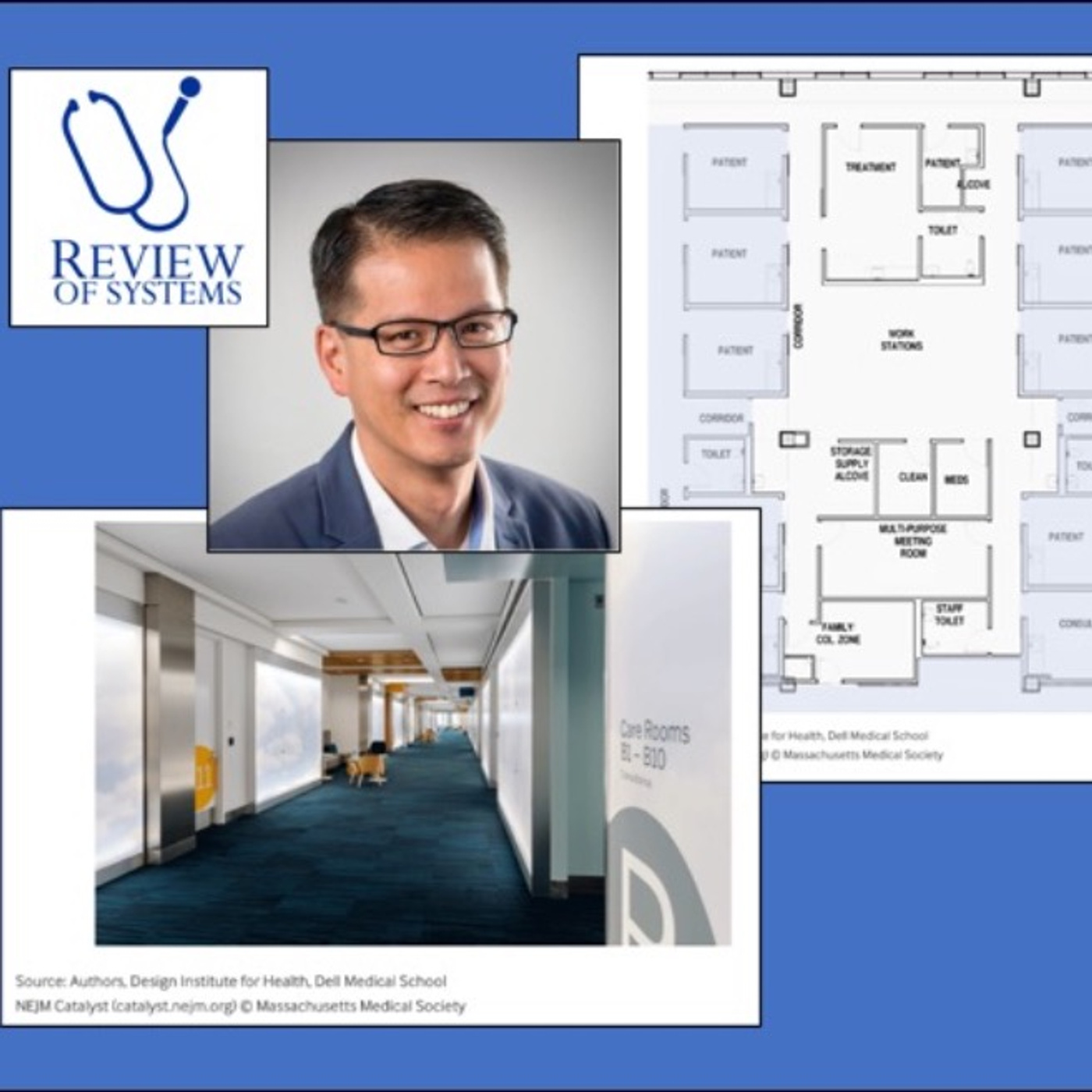
RoS: Design Thinking & Clinics with No Waiting Rooms with Stacey Chang
Jun 25, 201900:44:55Tap to summarizeOur guest this week is Stacey Chang. He is the executive Director of the Design Institute for Health at Dell Medical School. He joins us today to talk about design in medicine and how we can use design thinking as a tool to improve healthcare, and in particular how he and colleagues went about designing a series of clinics at Dell Medical School without any waiting rooms! I hope you enjoy the show, please rate, review & subscribe to us wherever you listen, it helps others find the show, and share us on social media and with our friends and colleagues. We’d love to hear feedback and suggestions, so you can tweet at us @RoSpodcast, @HMSPrimaryCare, @audreymdmph or drop us a line at reviewofsystemspodATgmail.com.
Transcribe →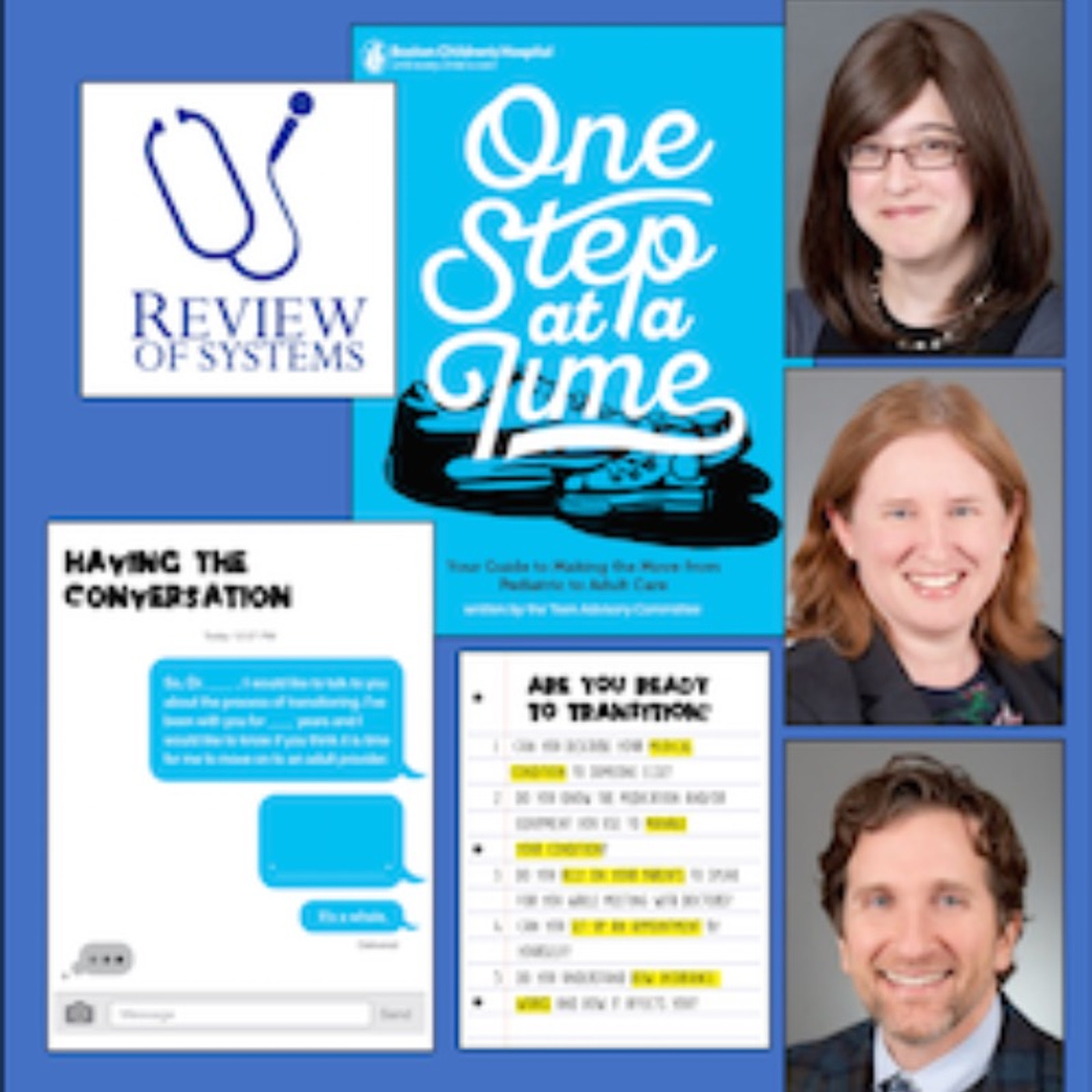
RoS: Transitions in Care from Pedi to Adult Care for Medically Complex Patients
Jun 11, 201900:47:23Tap to summarizeWhat happens when a medical complex young person turns 18, and then, suddenly, they make their own medical decisions rather than their parents? How does one navigate the sometimes very thorny issues of sexual health and fertility? What about insurance issues? This week, we have a very special show for you featuring a number of guests on this topic talking about the Weitzman Family Bridges Adult Transition Program at Boston Children’s Hospital and how the program addresses these questions. We have Kitty O’Hare, a practicing med-peds primary care physician and Assistant Professor of Medicine and Pediatrics, Harvard Medical School; Ahmet Uluer, the Medical Director of the Weitzman Family Bridges Adult Transition Program; Amy, a patient who helped give input in the design of the program, helped to write the transition in care guide One Step at a Time, and has gone on to become a nurse; Susan Shanske, MSW, LICSW, the Director of Transitional Care Support; and Julia Roboff, a Nurse Practitioner with the program. Thanks for listening!
Transcribe →
RoS The effects of neighborhood greening on mental health with Eugenia South & Michelle Kondo
May 27, 201900:21:59Tap to summarizeIn this reprise episode, Michelle Kondo and Eugenia South join us to talk about their research looking at how neighborhood contexts impact health and safety in urban environments, and their recent publication in JAMA Network Open looking at the relationship between neighborhood greening and mental health. Dr. South and Dr. Kondo collaborate from two different perspectives – Dr. South is an emergency physician and health services researcher at UPenn; and Dr. Kondo is a PhD research social scientist with the USDA-Forest Service, Philadelphia Field Station. If you enjoy the show, please rate, review & subscribe to us wherever you listen, it helps others find the show, and share us on social media and with our friends and colleagues. We’d love to hear feedback and suggestions, so you can tweet at us @RoSpodcast, @HMSPrimaryCare, @audreymdmph or drop me a line at contactATrospod.org.
Transcribe →
RoS Addressing Food Insecurity among diabetic patients at Geisinger with Allison Hess
May 27, 201900:23:57Tap to summarizeThis week, we are joined by Allison Hess, VP of Health for the Steele Institute for Innovation at Geisinger to talk about Geisinger’s Fresh Food Farmacy, a program that provides food insecure patients with poorly controlled diabetes access to fresh healthy foods as part of a comprehensive diabetes care plan. Read more about the Fresh Food Farmacy and also check out the feature about their program on Care Zooming, a social enterprise company aimed at connecting healthcare professionals and disseminating innovative programs. Tweet us your thoughts at @RoSpodcast or you can email us at contactATrospod.org.
Transcribe →
RoS: Understanding the association of primary care physician supply & mortality in the US with Russ Phillips
May 27, 201900:25:31Tap to summarizeThis week, we are joined by Russ Phillips! Dr. Russell Phillips is Director of the Center for Primary Care and the William Applebaum Professor of Medicine and Professor of Global Health and Social Medicine at Harvard Medical School. He is a devoted primary care general internist at Beth Israel Deaconess Medical Center (BIDMC) where he manages a panel of patients. Within the Center for Primary Care, he leads programs that are transforming education and care systems, developing entirely new approaches to improving primary care and health, and performing research on high performing health systems and practices, and the impact of changes in payment and primary care practice structure on the finances of primary care practices. He joins us to talk about a recent publication in JAMA IM that he wrote with a number of collaborators including other Center for Primary Care faculty, entitled: Association of Primary Care Physician Supply With Population Mortality in the United States, 2005-2015. We also reference the accompanying editorial by Zabar et al and the paper that inspired their work, by Starfield, Shi and collaborators. This interview has been lightly edited for length and clarity.
Transcribe →