
Podcast
RTHK:Video News
Hosted by RTHK.HK · EN
Video news from Hong Kong and around the world.
15episodes
Episodes
Newest firstAll episodes

Ride-hailing drivers 'should face cabbie-style test'
Mar 20, 2025Tap to summarizeThe government should draw up "an appropriate level" of regulations for ride-hailing platforms, such as by making it mandatory for drivers to take a licensing exam similar to that for cabbies, a lawmaker said on Thursday. Legislator Hoey Simon Lee also said ride-hailing drivers should be subject to legal restrictions because they are not simply operating a private vehicle. "We should have an appropriate level of regulations – not too tight but not too loose," said Lee, who conducted a study on online-hailing services. "If it's too tight, it will affect the sharing economy. But if it's too loose, it will not be protective enough for passengers and also not fair to or healthy for the whole sector." Hong Kong is seeking to regulate platforms offering ride-hailing services with a proposed framework expected to be unveiled this year. Lee urged the administration to require operators to ensure the vehicles providing services are safe and that personal data stored on such platforms are handled properly. Such vehicles should be required to install dash cameras too, he added. Other than suggestions to regulate ride-hailing services, Lee called on the authorities to consider making changes to policies affecting the taxi trade such as in the design of driving exams and their operations.
Transcribe →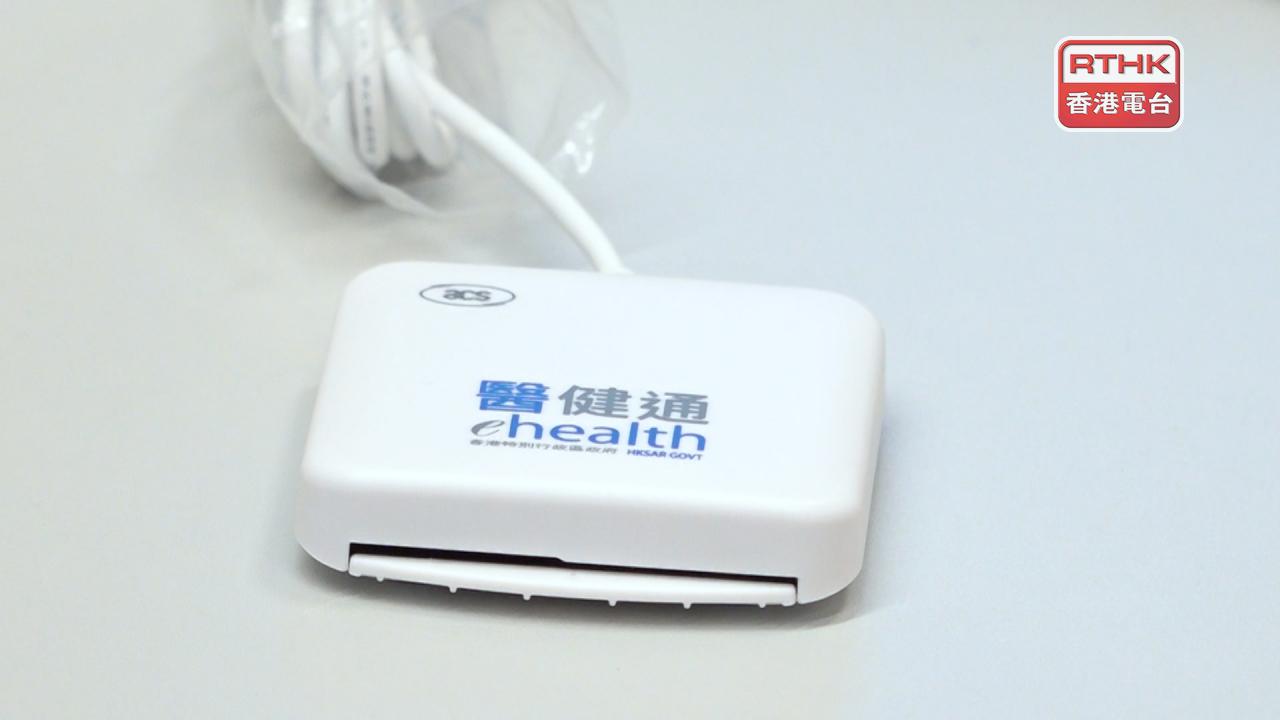
Complete eHealth database 'key for treating patients'
Mar 20, 2025Tap to summarizeHealthcare officials said on Thursday that patients should not get to pick the medical record to be stored on a government-run electronic platform. The administration is proposing legal changes to make it mandatory for all healthcare workers to upload important patient information onto its eHealth platform. Under the proposal, Deputy Secretary for Health Sam Hui said, patients would still get to decide whether to use the system at all, as well as whether they consent to healthcare providers' access to their records. "We hope patients understand that a complete medical record is very important for the standard and level of safety of the healthcare services they receive," he said on an RTHK programme. "The public shouldn't have too much of a choice when it comes to what information they put or not put into the eHealth account." Hui said if patients do have concerns about joining the electronic system, they can bring them up with healthcare professionals. He stressed that the government respects the personal nature of patients' medical records. The medical sector, he said, agrees that records such as drug allergies, jabs received and past diagnoses are very important to reach up-to-date diagnoses. He said officials are working on getting an outsourced provider to sync electronic record platforms that better connect the eHealth system with others. Speaking on the same programme, family doctor Lam Wing-wo said he agrees that the trend is to have big data, which can help with the public health situation. The government has said 60 percent of private doctors currently access records stored on eHealth but that basically all information in the system is provided by the public sector. Lam said that from what he understands, it's not very accurate for the administration to say that private doctors aren't being proactive enough to upload records. Doctors, he pointed out, simply cannot submit data to eHealth because the electronic medical record systems used by the public and private sectors are different. The bill to amend the Electronic Health Record Sharing System Ordinance will be tabled to the legislature for first reading on Wednesday.
Transcribe →
Low-altitude economy a new growth engine: CE
Mar 20, 2025Tap to summarizeChief Executive John Lee on Thursday said the low-altitude economy will be a new growth engine, with a trial programme on drone operations set to help such activities take off and "fly steadily and far". Under the Low-altitude Economy Regulatory Sandbox, pilot projects would be conducted to test airspace management, flight operations, and emergency response to support the use of unmanned aircraft. The initial phase, which involves 38 projects, is expected to begin next month. "The low-altitude economy not only brings about a number of industries, but also has very extensive application scenarios and huge potential," Lee said at the sandbox's launch ceremony. "In addition to improving urban management and business efficiency, it can also bring new experiences of smart living to the public and become a new growth engine for the economy." The sandbox serves as a safe testing ground and an incubator for technologies to develop an environment suitable for the SAR in developing the low-altitude economy, Lee added. Transport minister Mable Chan, for her part, said the first phase of the trial programme is expected to last for half a year and will test take-off and landing points of drones as well as their routes in places such as Cyberport and the Hong Kong Science Park. The trial of the sandbox projects would help the authorities to "accumulate experience and data" in devising "comprehensive infrastructure support for the execution of the various low-altitude economic activities", according to the minister. She also said the authorities are looking to introduce legislative amendments on regulating small unmanned aircraft to Legco in the second quarter of this year. "We would like to increase the existing weight limit, so as to facilitate heavier and more sophisticated drones to be flying," Chan said. "On the other hand, we would also introduce a special provision enabling the Director-General of Civil Aviation to allow trials of even more sophisticated and heavier low-altitude equipment, so as to facilitate our trial of the state-of-the-art models, including those models which can carry passengers."
Transcribe →
Temporary e-permit to assist HKers on the mainland
Mar 20, 2025Tap to summarizeHongkongers who are travelling and living in mainland China can now apply for a temporary digital permit to travel by air and train within mainland cities if they lose, damage, or forget their permit. Under the policy announced by the National Immigration Administration (NIA) on Thursday, the temporary digital mainland travel permit will be valid for seven days after application. Residents can apply for the temporary permit via the NIA’s 12367 mobile app. “Under the new policy, Hong Kong, Macau and Taiwan residents who lose, damage, or forget to carry their travel permits can apply for a temporary electronic permit valid for seven days, allowing them to board flights and trains within mainland cities.” the NIA said in a statement via Xinhua News Agency. The NIA has also launched a verification service linking travel and residence permits. People can also access this service via the 12367 app. The linkage proof between the permits is for those who are trying to access finance or internet services on the mainland. The NIA said they will continue to improve relevant measures to provide "accurate and equally convenient" services for SAR residents. A Federation of Trade Unions lawmaker Kingsley Wong welcomed the NIA announcement, but pointed out the arrangement only allows travellers to use two modes of transport. "I hope temporary electronic permits can be used for immigration in the future," he told reporters at Legco. "If Hong Kong residents lose their permit on the mainland, I hope they can also apply for a temporary electronic permit, allowing them to return to the city, instead of wasting their time waiting at border control points." And Hong Kong's delegate to the National People's Congress Standing Committee Starry Lee said the arrangement helps facilitate travel between mainland cities. But she hopes central authorities could consider permanent electronic permits for Hong Kong residents in the long run. "This will make it more convenient for people with travel permits who reside and live on the mainland," she said. "The numbers of a mainland travel permit and a mainland identity card are different, and sometimes it may be inconvenient and time costly to deal with different situations."
Transcribe →
Trump 'open' to Elon Musk buying TikTok
Jan 22, 2025Tap to summarizeUS President Donald Trump said on Tuesday that he would be open to tech billionaire Elon Musk - the owner of social media platform X - buying Chinese-owned app TikTok. "I would be if he wanted to buy it," Trump told reporters when asked if he was open to Musk, the world's richest man and the head of a budget-cutting initiative in the new administration, acquiring the video-sharing platform. TikTok is facing down a US law that ordered the company to divest from its Chinese owner ByteDance or be banned in the United States. In one of his first acts in office, Trump ordered a pause on enforcing the law that should have seen TikTok effectively made illegal in the country on Sunday, a day before he took office for a second term. The executive order directed his attorney general to delay the implementation of the law for 75 days. To save the company's US operations, Trump on Monday also floated the idea of a 50-50 partnership between "the United States" and its Chinese owner ByteDance, though he did not provide details on how this could be achieved. Asked on Tuesday if his phone had TikTok, which is banned on US government devices, Trump said: "No, but... I think I'll get it right now." TikTok briefly shut down in the United States late Saturday as the law's sale deadline approached, leaving millions of dismayed users barred from the app. With the tacit co-operation of Oracle, its server provider, TikTok restored service in the United States on Sunday crediting Trump's commitment to save the app for making the reversal possible. But even if existing users can still enjoy TikTok, Apple and Google have still not made the app available in their app stores, therefore denying downloads to new users as well as updates to those who have it. Companies that violate the law, which remains officially in effect, face penalties of up to US$5,000 per user if the app is accessed. Last week, a report that Chinese officials were considering selling the company's US operations to Musk's social media platform X was met with a firm denial from TikTok. (AFP)
Transcribe →