
Podcast
Scaling Up Business with Bill Gallagher
Hosted by Bill Gallagher · EN
Do you dream of an easier way to scale and grow your business? Do you wish you didn’t have to work so hard and put in as many hours? Do you find growth too slow, or hard to sustain?
This podcast—Scaling Up Business with Bill Gallagher—can help you achieve and maintain the growth you want.
A message from your host: “I’ve been in your shoes as a founder, CEO, and executive leader. I’ve coached and trained many leaders just like you over more than 15 years to grow their businesses successfully and profitably. But more than that, I’ve helped give them their time and sanity back. My core strength is making the growth process easier, faster, and way more fun.”
A dynamic thought leader, Bill talks with fascinating and brilliant guests each week, including visionary CEOs, trailblazing entrepreneurs, best-selling authors, renowned business strategists, and more.
Broadly, each episode focuses on one of the four major decision areas every entrepreneur and company must get right: People, Strategy, Execution, and Cash. More specifically, the show explores topics such as:
* Business Growth & Scaling.
* Customer Experience & Marketing.
* Innovation & Differentiation.
* Leadership Development.
* Delegation & Accountability.
* Vision & Strategy.
* Team Dynamics.
* Hiring & Talent Management.
* Company Culture.
* Employee Engagement.
* Crisis Management.
* Effective Communication.
* Influence & Persuasion.
* Business Strategies.
Running a business is ultimately about freedom. Subscribe to this podcast to learn how leaders like you can get your organizations moving in sync, create something significant, and still enjoy the ride. Subscribe if you want to elevate your business to unprecedented heights by tuning in to a masterclass in business excellence.
For information on Bill Gallagher’s coaching and training programs, and Scaling Up Workshops, visit www.ScalingCoach.com
41episodes
Episodes
Newest firstAll episodes
Is AI Making You Busier — or More Effective?
1w ago00:14:06Tap to summarizeAI was supposed to give us our time back. For a lot of leaders, it's done the opposite — one more inbox, one more tool, one more thing to keep up with. This bonus episode in the Busy Is Broken series asks the only question that matters: is AI actually making you more effective, or just busier in a shinier way?Bill draws the line between motion and progress. The big top-down AI initiatives tend to stall, because tools dropped on an overloaded team just add load. What he sees working instead is quieter and more durable: the leaders getting real leverage use AI in small ways across every hour of every day, and the teams that compound their learning are the ones where small groups share what's working and brainstorm together every week.The takeaway is pure Busy Is Broken: a faster way to do the wrong work is still the wrong work. Before you add another AI tool, get honest about whether it's buying back your best hours or just helping you produce more noise, faster. Effective beats busy — even when busy has a chatbot.Links:Busy Is Broken book and free diagnostic: busyisbroken.comQ20 Growth Diagnostic: scalingcoach.com/Q20Mentioned in this episode:Busy Is BrokenHave you ever had a week where you're completely slammed but somehow nothing actually moved? Is this one of those weeks? That’s not really a time problem. It's a busyness habit problem. My new book, Busy Is Broken: Do Less, Scale More, is about growing by doing less, not more. Read or listen to a sample chapter, over at busyisbroken.com. That's busyisbroken.com. Also on amazon and other booksellers.
Transcribe →Happier Aging at Scale with Arif Abdulla
2w ago00:49:00Tap to summarizeArif Abdulla joined Nurse Next Door at twenty-three years old, fresh out of university, drawn by the demographics and financial potential of home care. Then he met Mrs. Wong — and watched her caregiver Steven doing her hair and makeup every morning, making her feel beautiful. When Steven walked into the office months later with tears streaming down his face because Mrs. Wong had passed, Arif realized this business was about something much deeper than logistics. Twenty years later, he's VP of Franchise Development for a company that grew from one Vancouver location to more than four hundred franchise units across Canada, the US, the UK, and Australia.Bill and Arif dig into what it takes to scale a deeply human, community-based business through franchising. The conversation covers why Nurse Next Door chose the franchise model over corporate expansion — the business is so community-focused that they needed local leaders embedded in their markets. Arif shares the three traits he looks for in franchise partners: sales aptitude, leadership ability, and genuine work ethic. He's candid about the mistakes made early on by accepting partners who weren't the right fit, and how he now has the discipline to end a process even when a candidate is ready to write the check.The episode also explores Nurse Next Door's key differentiator — centralizing the 24/7 scheduling component so franchisees can focus on recruiting and sales rather than burning out on around-the-clock operations.In This EpisodeGuest LinksArif Abdulla — VP of Franchise Development, Nurse Next Doornursenextdoorfranchise.com | nursenextdoor.comHost LinksScalingCoach.com | Q20 Growth Diagnostic: scalingcoach.com/Q20 | busyisbroken.comMentioned in this episode:Busy Is BrokenHave you ever had a week where you're completely slammed but somehow nothing actually moved? Is this one of those weeks? That’s not really a time problem. It's a busyness habit problem. My new book, Busy Is Broken: Do Less, Scale More, is about growing by doing less, not more. Read or listen to a sample chapter, over at busyisbroken.com. That's busyisbroken.com. Also on amazon and other booksellers.
Transcribe →
The Italy Test: Could You Leave Your Business for a Month? (Book Solo #9)
3w ago00:16:27Tap to summarizeIn the summer of 2009, Bill and his wife made good on a promise they'd made before kids and before the business got serious: they'd take the family to Italy for a month when the kids were old enough to remember it. The business was shaky. The timing was terrible. They went anyway. Episode nine of the Busy Is Broken series is the story of what happened to the company while Bill was gone — and the ten months of rewiring it took to make leaving possible.The forcing function was simple and brutal: a real date on the calendar with plane tickets attached. Not an imaginary "someday." Bill had to confront an uncomfortable truth — he'd built and led the company in a way that guaranteed he could never truly step away. So he spent about ten months changing it.What happened in Italy? The company moved forward. The team didn't crumble, because they were leaning on their own judgment instead of his. Here's the test for you: if you had to leave for a month starting tomorrow, what would break? Name it. Then spend the next quarter making your absence survivable.Links:Busy Is Broken book and free diagnostic: busyisbroken.comQ20 Growth Diagnostic: scalingcoach.com/Q20Mentioned in this episode:Busy Is BrokenHave you ever had a week where you're completely slammed but somehow nothing actually moved? Is this one of those weeks? That’s not really a time problem. It's a busyness habit problem. My new book, Busy Is Broken: Do Less, Scale More, is about growing by doing less, not more. Read or listen to a sample chapter, over at busyisbroken.com. That's busyisbroken.com. Also on amazon and other booksellers.
Transcribe →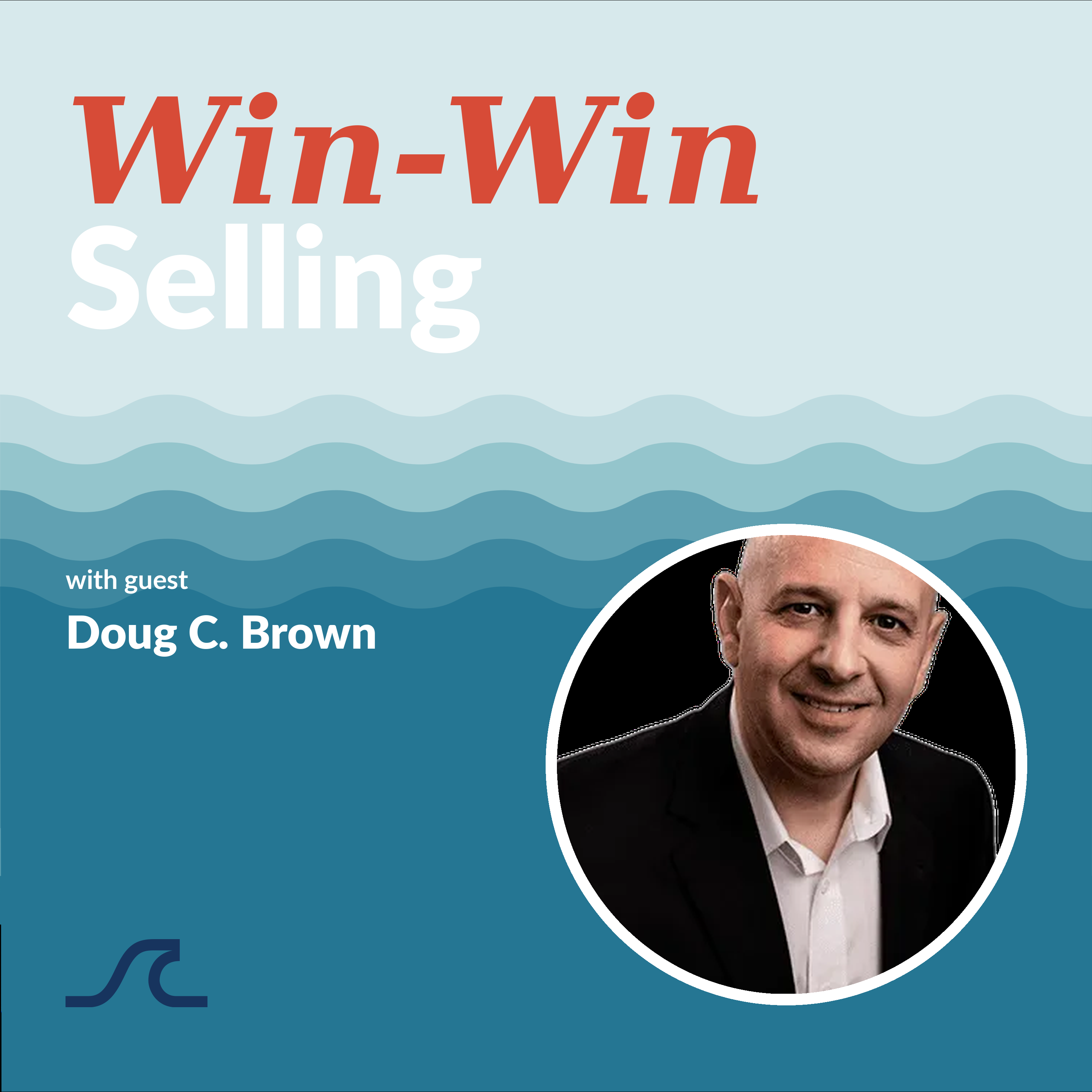
Win-Win Selling with Doug C. Brown
Jul 800:48:49Tap to summarizeWhat happens when you start selling at six years old — not lemonade, but industrial machinery parts? Doug C. Brown figured out the math of leverage before he finished second grade: why work forty hours for ten dollars when you can sell one part in six minutes and make the same? That early wiring never left him. From military service to selling music equipment to Aerosmith and Paul McCartney, from nuclear medicine to telecom where he helped grow a company from $62 million to $368 million in two years as their number one rep, Doug's career is a masterclass in following the leverage.Doug joins Bill to unpack his concept of Win-Win-Win Selling — the idea that every deal should produce three winners: you, your buyer, and someone else who benefits from the transaction. He shares the origin story behind this philosophy, born from watching too many reps stuff commissions by selling clients things they didn't need, simply because they didn't have enough prospects in the pipeline. Doug explains how he built an internal partner channel at his telecom company — connecting telephone hardware vendors with his cost-saving service so that clients saved money, vendors sold more phone systems, and Doug's phone rang sixty-two times a day with inbound leads.The conversation digs into what actually separates top 1% performers from everybody else. Doug breaks it down to four things: always thinking in terms of leverage, systematizing everything, continuously building business skills, and continuously building personal skills. Bill and Doug trade war stories about the car dealership model of win-lose selling, the brutal economics of department store procurement, and the costly lesson Doug learned when he walked into a multi-million dollar meeting totally unprepared while six people on the other side had done their homework. They also explore the power of follow-up — Doug's two-year nurture that landed NASCAR, his mentor Chet Holmes' five-year pursuit of Jay Abraham and even longer play to land Tony Robbins, and why a simple quarterly "just thinking about you" message builds the kind of relationship capital that changes careers.In This EpisodeAbout the GuestDoug C. Brown is the CEO of CEO Sales Strategies and author of Win-Win Selling: Unlocking Your Power for Profitability by Resolving Objections. A military veteran, former musician, and nuclear medicine professional turned sales leader, Doug has helped companies from startups to Fortune 500s build revenue growth systems. He was the #1 sales rep at a telecom company that grew from $62M to $368M, served as President of Training and Sales under Tony Robbins, and has worked with brands like Enterprise, Procter & Gamble, and NASCAR. His mission: helping business owners and sales professionals break into the top 1% of earners.Links & ResourcesStuck? The Q20 Growth Diagnostic will give you a fresh perspective and it's free. ScalingCoach.com/Q20Our new book, Busy is Broken, coming this September. Sign up for the release at busyisbroken.comMentioned in this episode:Busy Is BrokenHave you ever had a week where you're completely slammed but somehow nothing actually moved? Is this one of those weeks? That’s not really a time problem. It's a busyness habit problem. My new book, Busy Is Broken: Do Less, Scale More, is about growing by doing less, not more. Read or listen to a sample chapter, over at busyisbroken.com. That's busyisbroken.com. Also on amazon and other booksellers.
Transcribe →
The Five Engines Keeping You Stuck
Jul 100:13:55Tap to summarizeIf the data on overwork is this loud, why do otherwise rational leaders keep flooring it? Episode eight of the Busy Is Broken series names what's running under the hood. After twenty years of coaching CEOs, Bill has found five engines that keep smart leaders stuck in patterns they know aren't working. They're not character flaws. They're operating systems. And most leaders run on at least two or three simultaneously.Engine one — Identity: your sense of self is welded to the role. When "I am the business" becomes your operating identity, rest feels like death. Engine two — Fear: the quiet saboteur dressed as caution. Sounds like diligence. "I'm not micromanaging, I'm double-checking." Underneath: if this goes wrong, people will think I'm not good enough. Engine three — Habit: yesterday's survival reflex running tomorrow's company. The habits that built the company are the same ones trapping you inside it. Engine four — Culture: visible effort signals competence. Research shows people infer higher status from whoever appears busier. Being indispensable feels like winning. Engine five — Adrenaline: the dopamine of the save. That was Bill's. He loved being the one who got the call.These compound. Fear drives micromanagement. Micromanagement feeds the identity of being needed. The adrenaline of firefighting masks the strategic neglect underneath. And the four sins they produce — poor delegation, micromanagement, perfectionism, strategic myopia — feed each other in a doom loop. This week's invitation: name your engine out loud. Don't pick the one that sounds least bad. Pick the one that's actually driving your behavior. Say it to someone you trust. Naming it is the first step to choosing something different. Next episode: the Italy Test — what happens when you put a real date on the calendar to step away.Links:Busy Is Broken book and free diagnostic: https://busyisbroken.comQ20 Growth Diagnostic: https://scalingcoach.com/Q20Mentioned in this episode:Busy Is BrokenHave you ever had a week where you're completely slammed but somehow nothing actually moved? Is this one of those weeks? That’s not really a time problem. It's a busyness habit problem. My new book, Busy Is Broken: Do Less, Scale More, is about growing by doing less, not more. Read or listen to a sample chapter, over at busyisbroken.com. That's busyisbroken.com. Also on amazon and other booksellers.
Transcribe →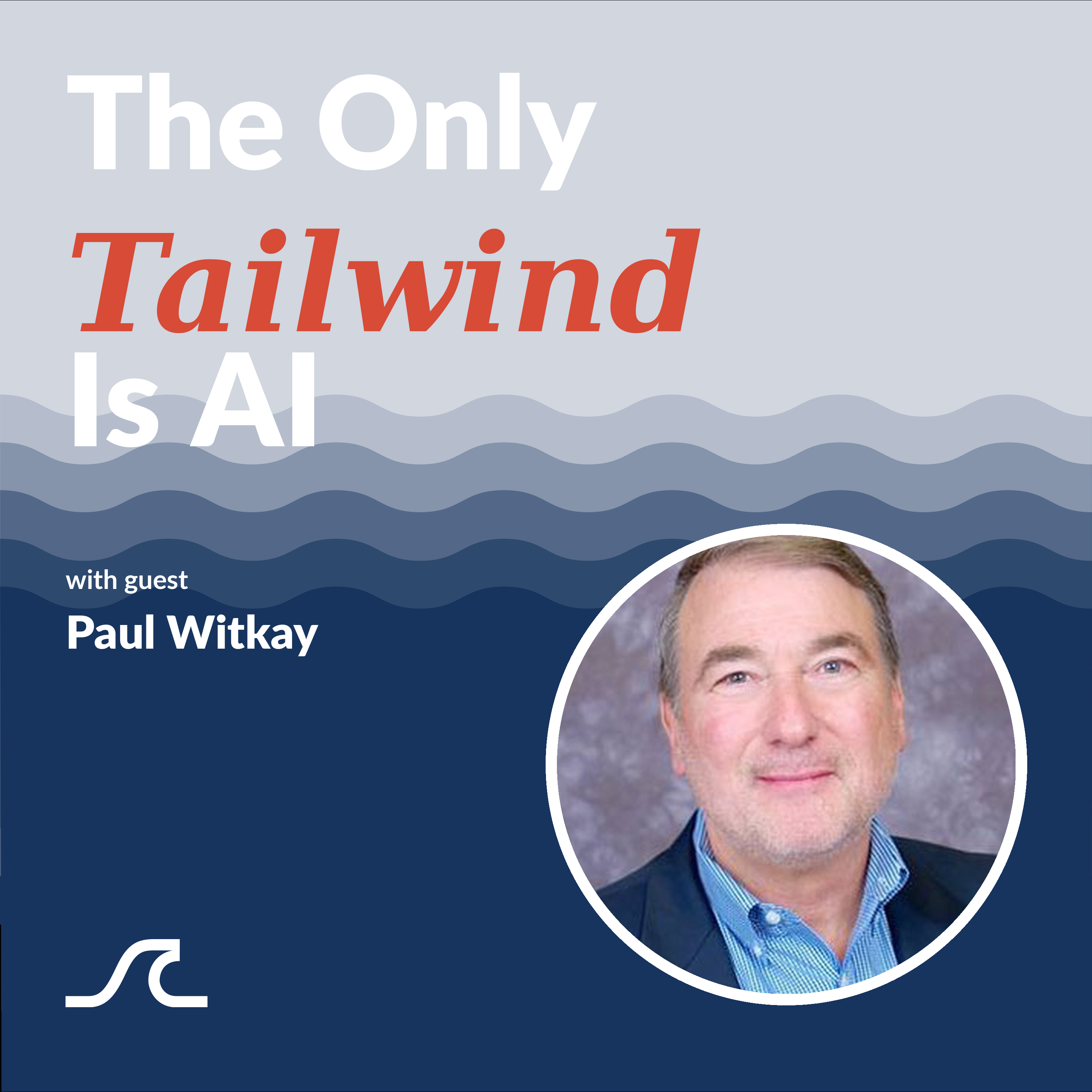
The Only Tailwind Is AI — Inside the CEO Business Barometer, with Paul Witkay
Jun 2400:52:14Tap to summarizeCEOs are calmer about the world — and twice as worried about their own companies. Paul Witkay has been sitting in confidential rooms with chief executives through every cycle since the dot-com era. He’s the founder of the Alliance of Chief Executives and publishes a quarterly Business Barometer that tracks what CEOs are actually thinking across industries and around the world. In this conversation with Bill Gallagher, Paul walks through four quarters of data — and the picture is striking. After eighteen months of uncertainty that left CEOs frozen like deer in headlights, the mood shifted to action. Not because they found answers, but because they couldn’t afford to stay frozen. And sixteen times more respondents now say that twelve months from now, things will be even more unpredictable than today. Unpredictability isn’t a phase — it’s the new constant.They dig into the inside-outside paradox, where CEOs are getting less negative about the global economy but more pessimistic about their own businesses. Paul shares the AI data — the only indicator that showed as a tailwind in a sea of headwinds. Sixty-one percent of CEOs are now building AI agents in-house, fifty percent have AI mandates, and the job numbers surprised everyone: twenty-nine percent are adding staff because of AI while only twelve percent are cutting. Bill shares how AI runs through every part of his coaching, book, and PhD work — and they talk about what happens to companies that decide AI isn’t for them. If you lead a company and you’re trying to figure out how to move forward when nobody has the answers, this one’s for you.Links:Alliance of Chief Executives: https://allianceofceos.comPaul Witkay on LinkedIn: https://www.linkedin.com/in/paulwitkay/Q2 Barometer survey opens June — contact paulwitkay@allianceofceos.comStuck? Q20 Growth Diagnostic will give you a fresh perspective and it’s free. ScalingCoach.com/Q20Our new book, Busy is Broken, coming this September. Sign up for the release at busyisbroken.comMentioned in this episode:Busy Is BrokenHave you ever had a week where you're completely slammed but somehow nothing actually moved? Is this one of those weeks? That’s not really a time problem. It's a busyness habit problem. My new book, Busy Is Broken: Do Less, Scale More, is about growing by doing less, not more. Read or listen to a sample chapter, over at busyisbroken.com. That's busyisbroken.com. Also on amazon and other booksellers.
Transcribe →
What Your Team Won't Tell You
Jun 1700:13:48Tap to summarizeEvery CEO story gets told from the leader’s chair. Episode seven of the Busy Is Broken series flips the camera. Bill walks through four composite vignettes — anonymized but visceral — drawn from real teams he’s coached. Each one shows what a leader’s patterns look like from the other side of the table. If you manage people, those people have a version of one of these stories. They’ve probably stopped trying to tell you.The Chaotic Team: a chief of staff opens her phone at 5:30 AM to find 3 AM messages rearranging tomorrow’s priorities. Operational meddling and strategic absence at the same time — the leader is everywhere on detail and nowhere on direction. The Unsafe Team: meetings opened with problems, never connection. Every new book the CEO read triggered a new system. People tapped out alongside a leader who slept two hours a night. They were tired of sprinting after gusts of wind. The Resigned Team: “This is how it is.” They’d moved past hoping things would change. No one was angry anymore. That’s worse than anger. The Frozen Team: everything waited on the founder. A gentle, patient, permanent freeze. Lovely people making a lovely product. But they were helpers, not leaders. Their own potential sat on the shelf for decades.The hard truth is the gap. The gap between how you’d describe your leadership and how your team would describe it. Self-reflection has limited perspective. You need the outside-in view. This week’s invitation: ask one person on your team — someone you trust to be honest — this question: “What’s the one thing I do that makes your job harder?” Then listen. Don’t defend. Don’t explain. The answer is worth more than any consultant’s report.Links:Busy Is Broken book and free diagnostic: https://busyisbroken.comQ20 Growth Diagnostic: https://scalingcoach.com/Q20Mentioned in this episode:Busy Is BrokenHave you ever had a week where you're completely slammed but somehow nothing actually moved? Is this one of those weeks? That’s not really a time problem. It's a busyness habit problem. My new book, Busy Is Broken: Do Less, Scale More, is about growing by doing less, not more. Read or listen to a sample chapter, over at busyisbroken.com. That's busyisbroken.com. Also on amazon and other booksellers.
Transcribe →
Stop Dumping and Start Delengaging — A New Framework for Delegation, with Tess Fyalka
Jun 1000:41:58Tap to summarizeEvery company promotes its best people into leadership, then sets them adrift with zero tools to actually lead. Tess Fyalka has spent 25 years cleaning up that mess. She's the founder of Angle Coaching & Communication, author of Walking the Leadership Ledge, and spent nearly a decade building leadership development infrastructure inside a mid-size commercial construction company before going independent. Two thousand ghostwritten articles and white papers later, she pulled the patterns into a book.In this conversation, Bill and Tess take on the promotion trap that quietly wrecks teams, the lie new leaders tell themselves to avoid hard conversations, and what it actually takes for a star individual contributor to become a real leader of people. Tess walks through "Betsy" — the kind of high-performer companies promote because they assume excellence is transferable, then watch flame out when the wheels come off the bus. She names the Big Lie directly: when a leader avoids a difficult conversation to "protect" their team member, they're really protecting themselves. And the cost of that avoidance compounds.They get into the inside-out nature of leadership development: you can't lead others well until you know your own values, your triggers, and what you're choosing to be in the role. Tess shares her BRRR framework for difficult conversations and why the imaginary scenarios in your head are almost never how the conversation actually plays out. Bill brings his own moments of getting it wrong, including the time he caught himself reflexively defending micromanagement. They close on the metaphor that gives the book its title: when you step into a new leadership role, you're standing on a ledge, and you don't know yet whether the drop is ten inches or ten thousand feet.In This Episode:Why the skills that earn a promotion actively work against you as a managerThe "Big Lie" ineffective leaders tell themselves to avoid hard conversations"Delengaging" — Tess's framework for delegating through genuine engagementThe Betsy problem: what happens when companies promote excellence and expect it to transferHow nearly a decade in commercial construction proved leadership development works anywhereWhy most delegation is really just dumping — and how to tell the differenceAbout the Book:Walking the Leadership Ledge: The "New" Leaders' Guide to Building Resilience and Confidence at Every Step. Hybrid Global Publishing, 2025.Connect with Tess:Angle Coaching: anglecoaching.comBook: walkingtheleadershipledge.comLinkedIn: linkedin.com/in/tess-fyalka-cpcc-pccFree assessment — "NEW" Leader's Reality Check: walkingtheleadershipledge.comConnect with Bill:Website: ScalingCoach.comLinkedIn: linkedin.com/in/billgallagherFree Q20 Growth Diagnostic: ScalingCoach.com/Q20Busy is Broken — Bill's new book, coming September 2026. Sign up at busyisbroken.comKeep scaling.Mentioned in this episode:Busy Is BrokenHave you ever had a week where you're completely slammed but somehow nothing actually moved? Is this one of those weeks? That’s not really a time problem. It's a busyness habit problem. My new book, Busy Is Broken: Do Less, Scale More, is about growing by doing less, not more. Read or listen to a sample chapter, over at busyisbroken.com. That's busyisbroken.com. Also on amazon and other booksellers.
Transcribe →
I Made All the Big Events. That's About It.
Jun 300:13:08Tap to summarizeThis is the most personal episode in the Busy Is Broken series. Bill made all the big events — the graduations, the performances, the big games, the Bar and Bat Mitzvahs. He has the photos. He was in the right seat at the right time for every moment that had a date on a calendar and a crowd in the room. That’s about it.What he missed was everything that led up to those moments. The practices before the big game. The rehearsals before the play. The meetings with the rabbi in the weeks before the Bar and Bat Mitzvahs. The ordinary Tuesday nights and Saturday mornings that, strung together, make up the actual texture of a childhood. Nobody sends you a calendar invite for “the night your daughter told a funny story at dinner that became a family legend you’ll never know.” You just look up one day and the kids are grown. Bill’s engine was adrenaline. He loved being needed. Every rescue was a hit of proof that he mattered. And it was also what kept him on a plane when his kids were at practice and in a hotel when they were doing homework at the kitchen table.This isn’t self-pity and it isn’t a pitch to feel sorry for the host. It’s recognition. Bill tells the story because he sees himself in the leaders he coaches now — the founder who can’t leave the office before seven, the CEO who hasn’t taken a real vacation in three years, the leader checking Slack during their kid’s soccer game. The question underneath isn’t “why are you working hard?” That’s obvious. It’s why the specific pattern. Why the midnight emails. Why the inability to let go of decisions your team could make. Why the thing that costs you more than it earns. This week’s invitation is small and concrete: tonight, put your phone in another room during dinner. Not on silent. In another room. Be present for thirty minutes with the people you love. The moments that haven’t happened yet are still available.Links:Busy Is Broken book and free diagnostic: https://busyisbroken.comQ20 Growth Diagnostic: https://scalingcoach.com/Q20Mentioned in this episode:Busy Is BrokenHave you ever had a week where you're completely slammed but somehow nothing actually moved? Is this one of those weeks? That’s not really a time problem. It's a busyness habit problem. My new book, Busy Is Broken: Do Less, Scale More, is about growing by doing less, not more. Read or listen to a sample chapter, over at busyisbroken.com. That's busyisbroken.com. Also on amazon and other booksellers.
Transcribe →
From IPO to Bankruptcy and Back: Scaling Across Full Lifecycles with Mike Krupit
May 2700:46:12Tap to summarizeWhat does it take to go from startup all the way to exit, multiple times, across different sectors? Mike Krupit has done it. He's been part of three IPOs, including CDNOW, where he served as COO and helped take the company public. He's also been through the harder side: building, growing, and winding down companies when the math stopped working.In this conversation, Bill and Mike dig into what 30 years of building companies actually teaches you. The most surprising lesson, in Mike's words: it's not about the idea, the product, or the timing. It's about having the right people in the right seats. And in the AI era, that hasn't changed; AI is a multiplier on top of people, not a replacement for them.They get into the founder-to-CEO transition Mike has lived multiple times, the four accountabilities a real CEO holds (vision, fiduciary, people, outside face) and why everything else needs to be someone else's job. Mike shares the CDNOW story straight: a planned merger with Columbia House that fell through at the last minute, the dot-com bust hitting at the same time, preparing for Chapter 11 while also running a sale process, and a late acquisition by Bertelsmann at $3 a share when the stock had once peaked near $39. He also opens up about his last startup, where he chose to return capital and shut it down rather than take more money and put a team in greater jeopardy.In This Episode:Why people — not ideas or products — are the real driver of company successThe four accountabilities that define a real CEOThe CDNOW story: from IPO to near-bankruptcy and a last-minute acquisitionWhat bankruptcy and shutting down a startup teach you that winning never willWhy most companies have a comfort problem, not a culture problemHow AI multiplies great people but doesn't replace the need for themConnect with Mike:Trajectify: trajectify.comLinkedIn: linkedin.com/in/mkrupitYouTube: Building Better BusinessesConnect with Bill:Website: ScalingCoach.comLinkedIn: linkedin.com/in/billgallagherFree Q20 Growth Diagnostic: ScalingCoach.com/Q20Busy is Broken — Bill's new book, coming September 2026. Sign up at busyisbroken.comKeep scaling.Mentioned in this episode:Busy Is BrokenHave you ever had a week where you're completely slammed but somehow nothing actually moved? Is this one of those weeks? That’s not really a time problem. It's a busyness habit problem. My new book, Busy Is Broken: Do Less, Scale More, is about growing by doing less, not more. Read or listen to a sample chapter, over at busyisbroken.com. That's busyisbroken.com. Also on amazon and other booksellers.
Transcribe →