← School of Podcasting: Expert Tips for Launching and Growing Your Podcast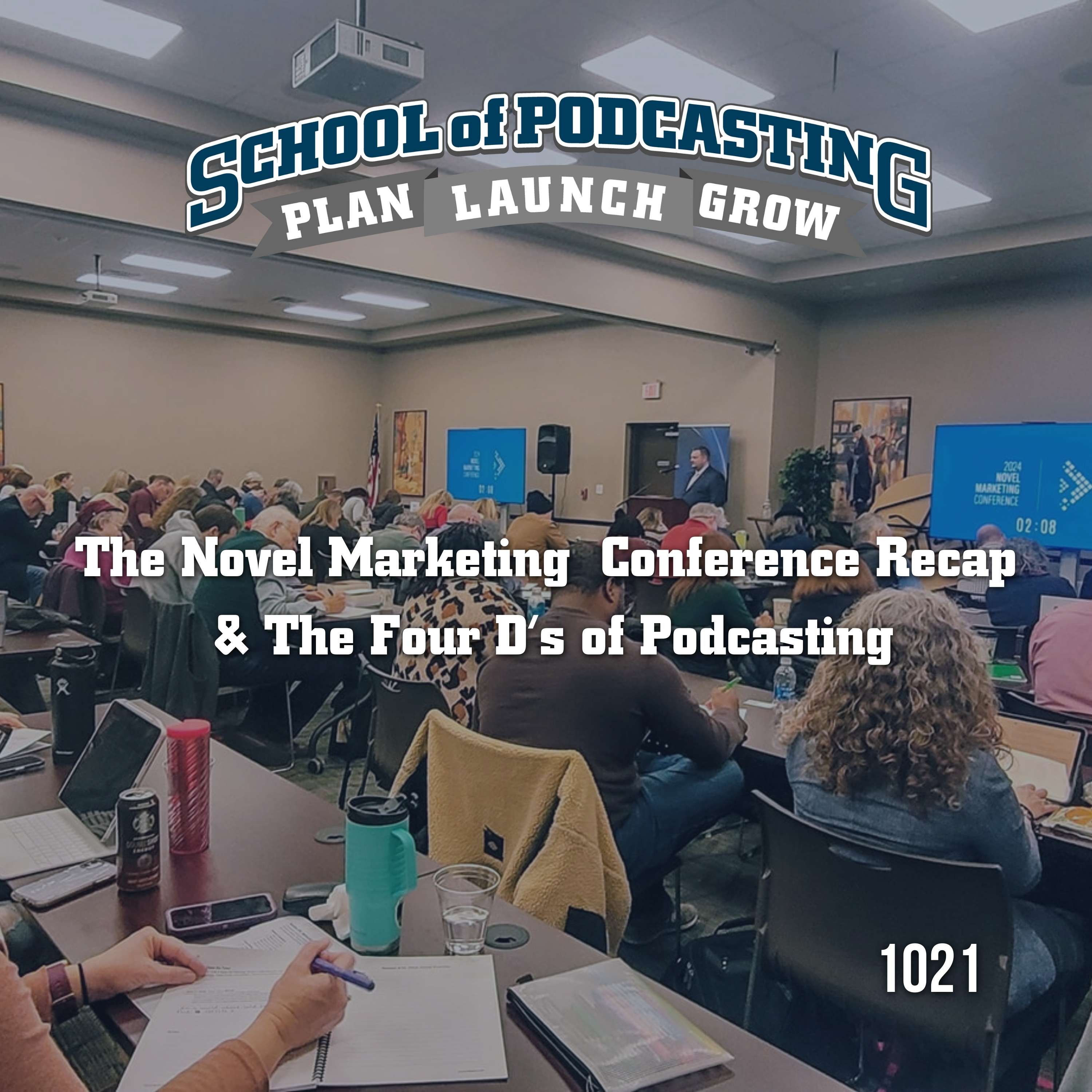
School of Podcasting: Expert Tips for Launching and Growing Your Podcast
The Four D's of Podcasting: Novel Marketing Conference Recap
00:51:39
Loading summary
Transcript1 lines
- [00:00]
A
People often ask me, they're like, dave, how do you do a solo show? How do you talk to nobody? And I go, well, there's always at least two voices in my head. And I just got back from the Novel Marketing Conference in Austin, Texas. This is an event that was put on by my buddy, Thomas Umstadt Jr. Because it's just fun to say Umstadt. And it was an amazing event. And so this episode is like, you asked me, dave, how is the Novel Marketing Conference? And I'm going to answer it like you're sitting across the table from me. Don't overthink it. Hit it, brother. What's happening? This is Brother Love of the Just Keep Talking podcast. You are hanging out with Dave Jackson. The only way to listen and the only way to learn is to listen and learn the truth School of podcasting. Plan, launch, grow with Dave Jackson. Again, this is Brother Love of the Just Keep Talking podcast. Podcasting since 2005. I am your award winning hall of fame podcast coach, Dave Jackson. Thanking you so much for tuning in. If you're new to the show, as Brother Love said, we plan, launch and grow your podcast here. And I am fresh back. As in like, just got off the plane, just got home. It is a whopping 66 degrees in my office and we're going to talk podcasting. And I got to tell you, my favorite, my absolute favorite kind of conference is a single track conference. And I just got back from one of the best single track conferences I've ever, ever been to. You've heard me talk about Thomas Umstadt Jr. Before. You can find him at novel marketing.com or authormedia.com they both go to the same place and this was a lot of fun. Now, in full disclosure, I got floated a ticket and I got to sit in the back and it was absolutely great. It was great to see Thomas. Congratulations. Every time I see Thomas, his wife is expecting, I was like, holy. I mean, they seriously, like 6, maybe 27. I forget how many kids he's going to have. But you know what, Those kids are lucky. We need more Umstads in the world. And so the opening keynote was amazing. It's this guy named Chase and I believe it's reploggle. This is where it would have been good to go hear that guy say his name. But he was amazing and it was. He had so many cool stats and he was talking about, you know why. Now here's the cool thing. This was a book conference and you might. This is a cool strategy. So we weren't really there to talk about podcasting, although Zach and I'll talk about him in a second. Was there talking podcasting. But it was a book conference. But here's the thing. It was book marketing, and they're not a whole lot different between book marketing and podcast marketing. We are both artists, man. We're artists. We just want you to consume my stuff. It was interesting in a way that there was a different. It's always interesting when you go into somebody else's bubble, you know what I mean? Like, their own little niche. Because there are, like, apparently 37 million types of. Of books. Like, one was steampunk, one was like comfy fantasy, and then there was, like, uncomfy hillbilly. Like, wait, what is that a real. Like, no, I don't know. But it was. I knew I was in a niche when they started talking about things that I didn't know. Meanwhile, back in my notes, I was telling you about Chase Rep Logel, and he does. Before I even say it, I gotta play the sound effect because I'm gonna mention maybe a P and J word. You guessed it. Invisible sky Buddy alert. Invisible Sky Buddy alert. Beware. Yes, Chase is a pastor, and he does a show called the Pastor Writer show, among other ones. And this was the one I was like, I got to share. That's really cool. And he talks about how he has some kids as well, and his one son is taking jiu jitsu. And he tells his children that, you know, there are times when we're afraid, but really courageous is doing it afraid. It's like being afraid and doing it anyway. I don't know exactly the stat he quoted here. I just wrote down that a thousand people start something and only six people will finish. We all think about doing it. We might take a couple steps, but apparently not many of us will basically finish something that we started. But he brought up some things, and I thought this was really cool. The first one, I'm going to call this the 1, 2, 3, 4 Ds of podcasting. And again, he was talking about writing. But writing and podcasting are distant cousins, really. And the first D is decisiveness. And this is where you need to decide. I'm going to start a podcast. Not. I think I'm going to, like, no, make the decision. Like, are you gonna do it or not? Come on, man. Everybody's doing it, right? And he said, nobody reads what you write. They read what you rewrite. So let's put that into podcasting. Nobody listens to what you record. They listen to what you edit. And that is a key. In fact, I had a lot of questions about that. Like, how do you do this and that? And what if you do this? And I go, that's the magic of editing. I am not perfect by any means. So the first one is you have to decide, as they say, you have to poop or get off the pot. The second one is a discipline, and this is the courage to keep going. You jumped into the pool and you're like, hey, I gotta kick my legs and move my arms to swim. And you're like, uh huh, yeah, takes a little discipline. And he talks about how writing. And I agree, this applies to podcasting is kind of blue collar work. You get in there, you get dirty, you turn that wrench, you batten that wench and turn that bail. Something like that. I don't know. Don't hit the wench. That doesn't sound right. But you have. I decide, then you have the discipline. Because it does take a little discipline to go, well, I could just sit here and watch yet another rerun of Friends in Seinfeld, or I could do something productive. So decisiveness, discipline, and discernment. And this is a fun one. In other words, how do you know when it's ready? And you kind of have to. Is this good? Is. Because often he said you don't feel as good as you thought you were going to feel like you're like, hey, the episode's done, you know, or the book's done, and you kind of thought you'd feel a little more like, you know, oh, like it's done, like the angels sing, etc. And he said, but instead we kind of keep making changes. Maybe I need a new microphone or maybe I need to do this, maybe I need to do that. And I love this line. He says, when it comes to making changes, are you making changes for the better, or is this change just making it different? And sometimes making it different doesn't mean you're making it better. And I see a lot of podcasters making changes so they can say, well, I'm working on my show and we'll get to this. In the end, there's kind of repeated in a different phrase. So yeah, the discernment to know when it's done. And then the fourth one is the devotion, and this one is, okay, we've decided to do a podcast. We had the discipline to go through the work and to roll up our sleeves and get in there and do the work. And then we decided, yep, that's good enough. And it was in the end, you kind of go, I hear this all the time, man. That took a lot more time than I thought it was going to. And when you first start out, that's absolutely true. It's called a learning curve, and I'll talk about that in a second. But the devotion is. You know what? That was hard. And it wasn't as fun as I thought it was going to be at first. And of course, nothing ever is. But then you decide to do it again. Why? Because you're devoted. And for me, at the heart of every good podcaster is a devotion to your audience, to serve the audience. So decisiveness, discipline, discernment, and devotion from Chase Replogle, I believe is how you say that. And I will put a link to his website and to his podcast out in the show notes. Just go to schoolofpodcasting.com 1021. Yeah, yeah, yeah. I want to give a quick thanks to Aubrey Hendrick, who writes medieval fantasy and historical fiction. And again, that's. I hear this and I'm like, oh, well, I write reluctant lore. Fantasy or speculative domesticity. And I was like, what? Is that real? No, I just made those up. But it was cool that I was like, wow, I'm in a niche and I have no idea what they're talking about, but the marketing applied greatly. And so thanks to Aubrey. Thank you also to Emily Kate. You can find Emily Kate Milykate creative. She writes Fantasy Comfort. There you go. And Aubrey. Oh, doggone it, Aubrey, your website is not on your business card. And I do a similar thing. People notice that my email was not on my business card, which kind of defeats the purpose, which is why I'm having new cards made. But, ladies, thank you for the dinners that you took me to. I deeply appreciated that. Yeah, yeah, yeah. And one note I took that was inspired by Chase's opening keynote was we always worry, right? We're always scared. And what if nobody listens to my show? Well, somebody will. You will get at least two downloads. One of those will be you. And maybe mom listened. But let's go. Absolute worst case scenario. What if nobody listened to your show? The only person that would know that nobody listened to your show is you. There's no shame in that. You swung the bat and you missed. All right, well, let's take that knowledge and try to swing again. And maybe this time keep our eye on the ball. And I'm not saying that getting your ego smushed isn't fun. Right? That would be not easy in some cases to get over. But I Just had that in my notes that we. All right. Because he was talking about doing things, afraid, and what's the worst that could happen? Nobody listens. Yeah, yeah, yeah. All right, going forward, I'm not gonna. Here, go. Oh. In books, it's this. In podcasting, it's this. I'm just gonna translate everything into podcasting. And Thomas did a great talk, and he said, make your audience a promise. And so whatever the title of your episode is, that's the promise that you are saying to your audience. Hey, today I'm going to share the four Ds of podcasting with you and then get to that topic as quickly as you can. But he asked a question. He said, is your podcast, Is it a vitamin or is it a painkiller? And the difference there is, you can take vitamins. I take a bunch of vitamins. I have no idea if they're working or not. Right. It's like, do I have more energy? I don't know. I keep getting older and I have less energy, and I don't know. But if it's a painkiller, when you have a headache and you pop a pill and the pain goes away, it's noticeable. And so you have to ask yourself, what pain am I taking away from my audience? Make the right promise to your audience. And realize that podcasters, we think about the competition, because the last time I checked, there were, like, 4 million podcasts. But don't poop your pants with that. There's only, like 250,000 that are actually putting out episodes. And actually, it's probably less than that. It's really. When you Compare it to YouTube, there's much less competition in audio podcasting. But realize we're not just competing against podcast. We're competing against video games. We're competing against satellite radio. We have to look at all these different things. We have to be more fun than tv, in a way. And so we have to ask ourself what makes our podcast the best? And it's easier to answer that question when you have a clear picture of. Of who your audience is. Who is it for? And when you try to do it for everyone, it's really hard to ask everyone, hey, what's your favorite thing? And then put it in the show. And so he went on to talk about, why do people consume books? And again, we're talking podcasting. But you'll see where this applies. Number one is entertainment. I listened to Be entertained. Am I entertaining you? Right? And the people that consume things for entertainment. I remember waking up once and it was like 4 in the morning, and I get up to pee, and I see the light still on in the living room, and I go out and there's my dad. And my dad was one of those guys that if you gave him a good book, he would not put it down until it was over. And so people that consume content, they just have to finish it. So when you're binging that thing on Netflix or Hulu or whatever, you're into the entertainment. And next week, we're going to talk about what makes things bingeable. So stay tuned for that. Some of us consume podcasts for education, and this is where we're constantly listening on the plane. In my case, maybe when we're walking around the neighborhood, wherever we're at, we're trying to get to the answer to that question. And I listened to an episode. I won't say what the podcast was, but they said they were going to answer a question. And, man, did it take forever to get to the actual answer of that question. But we want to know how it ends. What's the answer to that question? And then some of us listen to podcasts for escape. It makes us feel different. It takes us. Calgon, Take me away. Remember that commercial? And these people where the people that read for education or for entertainment, they really are. They're trying to get to the end of the, like, what's the answer? These people that consume things for escape, they kind of don't want the episode to end because it takes them to a different space. It helps them forget the fact that their boss is a total jerk. Right? And so when you hear shows that are kind of like, well, that seems kind of dumb. Well, sometimes we need things that we don't have to think. I don't want to have to think about it. Just take me away. And so sometimes you will hear shows like that where it just seems like a bunch of people babbling on about nothing. And sometimes that's exactly what people need. But realize we've got more competition than the other podcasters. And that sometimes can again, make us a little nervous. But sometimes we do things scared. And so think about recording a podcast that people want to listen to. I know that's kind of a duh, but, you know, record a podcast that people want to listen to. And here's the other one. These are my notes after listening to Thomas. All podcasts are the same price, right? Almost every podcast is free, but they're not. Thomas pointed this out. Whether you're reading a book or you're Listening to a podcast. You're paying with your time. The reason I haven't listened to a Dan Carlin's hardcore history, although I've had so many people tell me how amazing it is, Dan doesn't put out a podcast. He basically puts out an audiobook. And I look at it and go, three hours. That's a big investment. And so we need to earn their time and make sure that we are the best podcast for that person that we know like the back of our hand. Growing up, did you feel like nobody would listen to you? I mean, was this you and your dad growing up? But Daddy, it's not fair. What's the matter with you? You're not there. You asked the high school guidance counselor about going to Harvard. No, no, no, no. And he suggested clown college. And then you got married. Did you just knock it off? And of course, children. Kevin, if you're not in bed by the time I count to 10, I'm gonna. It's easy to see how all of life's experiences have impacted your thoughts and about starting a podcast. And the school of podcasting community will help you plan, launch, and grow your podcast in a safe space where you can go at your own pace. And if you want to monetize, well, hey, I wrote the book on it. I get it. You don't want to try this alone. And in addition to the courses, the coaching, and the community, check out this bonus. You now have unlimited one on one consulting with me. So you are never, never alone. You don't have to worry because I'm right there by your side. And speaking of Worry, there's a 30 day money back guarantee. That's the Dave Jackson difference. It's a podcast consultant in your pocket. SchoolOfPodcasting.com listener is where you want to go. It's time for you to be heard. Let's see what we can do together. SchoolOfPodcasting.com listener want to know more about what I think when it comes to podcasting? Check out my newsletter@podcastingobservations.com that's podcastingobservations.com links in the show notes. The school of podcasting. Yeah, yeah, yeah. Here's another quick note that I saw that Thomas had put down and I was like, oh, that's a great analogy. You know me, I love me a good analogy. And if you look at a podcast, it's a lot like a shower. When you first turn it on, it's kind of cold. And then you just have to wait for the cold. To go through until the hot water finally makes it. And when you first start a podcast, the numbers leave you a little cold. It's always kind of funny because first people are like, ah, why should I start a podcast? Nobody's going to listen. And then eventually that water starts to get warm and people actually do listen. And then people get nervous. They're like, holy cow, people are listening to me. So just be patient. Realize that sometimes you gotta let that cold water go through before the hot water makes it. And sometimes you gotta wait a bit for your audience to find you before things start to warm up. Yeah. Yeah, yeah. Zach Russell did a session on podcasting. And I had met Zach, I believe, at the National Religious Broadcasters, which I'll be speaking at here in February. And what was interesting is Zach is like the rest of these folks, and I say this with love and compassion. He's a book nerd. And I am book nerd Light because of my book, Profit from youm Podcast. And so Zach did a presentation on podcasting, completely different than I would have, but it was much more book nerdy. Like, he speaks their language. And I found that very interesting. In fact, if you think about it, there were a lot of Christians, because Thomas is a Christian, and he does a Christian show. There were a lot of Christians at this event. And the thing I thought about that is, any Christian show is kind of tough because in theory, they are all using the same source material. They're all going back to the Bible, and it's just a matter of what angle are you going to show it at. So this was a case where Zach was talking about podcasting, but in a way that I definitely was like. And then finally I went, oh, I see where he's going. He would get to the point, not that he was meandering or whatever, but I just didn't quite get it because he was doing a little more book speak than I would. And so keep that in mind that sometimes what you can do is go listen to other shows and listen for what they're not doing. Like, when you listen, like, well, they're not talking about this. Okay, well, then you could talk about that. Oh, and I hate the lightning round. Okay, don't do a lightning round. You can be inspired by other shows. Don't rip them off. But it never, you know, just see how they do it and write down what you liked about it and what you didn't. And then maybe you can come up with a format that fits you and more importantly, fits your target audience. Jonathan Schuberger I'm messing up Jonathan's name. Jonathan Schurger, if you see the spelling. Jonathan was, first of all, very entertaining the night before he spoke. He is a, I believe, former Marine and had all sorts of fun army stories and I think his hobby. And he does this in a loving and caring way. I think Jonathan just waits for the opportunity to punch somebody in the face. I got that kind of take from him in his presentation. He actually did some jiu jitsu, which was kind of interesting. He's a very unique guy. And he did a whole thing on Amazon page optimization. And he made a great point. He said, we often make things to sell ourselves that we think, oh, well, I would buy if I saw something like that. So we gear our marketing for us, which is great as long as our target audience is just like us. And in some cases they're not. And in a very, you know, again, he's got this military background. He goes, you got to know what your target is, otherwise you're not going to hit it. And Thomas had brought up a point that sometimes doing a poll on, let's say, X or wherever you're going to do it, if it's something like that, people only get to see your stuff if the algorithm says they can, which means you may not be getting an absolutely clear picture in that poll, because only certain people got to see it. And I was like, that is a really good point. That's where newsletters really come in handy. And I get it. Somebody said, yeah, but newsletters, those people are people that just said, hey, I want more from you. And I'm like, yeah, who do you want to take care of more than those people? The people that have already said, yes, I like your stuff. Yes, I want to make sure those people are really, really happy. So again, it was a marketing conference. Yes. About books. But there were a lot of good nuggets in it. Yeah, yeah, yeah. And Thomas, I swear, is one of the most just brilliantly intelligent. Like, the guy just knows everything about everything. And he was talking about when, back when the United States was settled, people were driving across this country and here's your plot of land, and it's just covered in trees. And what was the first thing to do was to, yeah, cut down trees. But you had to figure out which trees to keep and which trees to lose. And then also. And we've all heard this analogy, right? If you're going to cut down a bunch of trees, you better sharpen your axe. And so he talked about that we need to work on the Right thing, the right way. And I was like, man, that's. I told him, I said, you have a lot of bumper stickers in these presentations. That is stuff we know. But sometimes hearing not the basics, but you're just like, oh, you know what? That's true. Because so many times we start running around like a chicken with our head cut off, and we just need to do something, and whatever is the closest, we grab our dull axe and start hacking away at it when we need to figure out, well, what do I need to do to move the needle? And that might be, and in many cases might be your content. I always say great content is, you know, a great episode is made up of two things. Remarkable content delivered in an entertaining or educational way. And we've talked about that before. You know, the whole laugh, cry, think grown, educate, or entertain. Try to do at least one, two, or maybe three of those. You can solve a problem, meaning save them time or money. That's always a bonus as well. And he talked about getting things done because it does take more time than we thought when you first start off. And one of the things I've done, and we talked about smart goals, I won't go into that. I'll put a link to a show where I talked about that before. But I had to realize that I got 24 hours a day. And at the end of the day, sometimes I've been doing the wrong things the wrong way. And one of them is I have bought so many courses that I will watch someday. And so I just went to my calendar and I put an hour block a couple times a week that just says learn stuff. And I'm smart enough to go, well, right now I'm going through a bunch of SEO stuff, but I have a storytelling course. I have a whole bunch of courses, and I just keep buying more and I'm not learning any of them. And that's that. Discipline to go, okay, well, maybe tonight I'm not going to spend 20 minutes scrolling through Facebook lives or, you know, reels or whatever. I'm not going to do that. I'm not going to sit here on Hulu trying to find something to watch. You know, we have things to watch, so think about doing the right thing the right way. Yeah, yeah, yeah, yeah. And of course, we had to talk about AI Thomas. If you look for Patron Toolbox, if you are an author, you got to go to patron. It's 10 bucks right now. And it is an insane amount of tools that I will be signing up for as soon as I get Done here. I was going to do it last night, but are you. Is this just me? I get really weirded out buying things when I'm on a hotel wifi. I just am always assuming someone's going to hack something. But anyway, I will be doing that. And he was talking about AI, and Thomas refers to his target audience as Timothy. And so what you do with AI if you're brand new to ChatGPT, this is super simple. You say who you are and then what your role is. So it might be, hey, I'm Dave Jackson, I'm a podcast consultant. And then what to do? I need you to write a blah, blah, blah about such and such so you can kind of tell who the audience is there. But here's who I am, here's my identity, here's my role. I'm a podcast consultant and I need you to do this for these people. And he said there's a super prompt. Because if you're like, dave, I don't know anything about that GPK. What is it? M double X? What? Chi. ChatGPT. I still remember when ChatGPT was around and nobody could say GPT. We all said GT DEP GX thing. It's this, who am I? So I'm a historical fiction author who wants to avoid historical errors. And then what I want, I want my fictional story to feel like it could have really happened. So who am I? What do I want? And then here's the cool thing. If you don't know AI, ask AI how to write a prompt for for AI. And then he said, so it could be help me create a prompt to check my manuscript for anachronisms. That's a big word right there. Anachronisms. Try to work that into your vocabulary today. And I haven't tried that yet, but he said it is an absolute game changer. And what was really cool is he, you can hear me turning these pages in the background. Probably. He had a sponsors and stuff in the back, especially the stuff. And QR codes are throughout the whole thing. And so I'm looking at the page now from the pastor writer and about him. And again, Jamie Foley did a whole thing on making a great book cover. And that again applies to podcasters. And the rule number one is don't be cheap. Just don't be cheap. Because as much as you shouldn't judge a book by cover, we all. What is it? Yeah, we all judge a book by its cover. And we actually did it. She had these little experiments where she had kind of a, okay, book Cover and then one that was professionally made. And she would ask the group, she'd put it on the screen for, like a second and go, which one would you buy? And everybody together was like, oh, the one on the right. Oh, the one on the left, the one on the right. It was really cool. And so he has. As I look at this workbook, so this made this interactive. And here's the other thing I asked him at the end because I was like, dude, this was. And again, I'm somewhat biased because I love single track, smaller conferences. And that's what this was. And I'm like, dude, this was so much fun. It was so good. And I go, and I'm looking at the workbook, and there were little places to, like, fill in the blank. And so just so you could kind of pay attention. You're always looking for. It's that brain thing, right? You know, I always talk about when there's a cliffhanger, the brain's like, wait, I need to hear. You know, and so you're. You. You turn the page and like, wait, there's three words missing from this workbook that I have to fill in. And so it was a way. I was surprised at how much my brain was like, wait, I've only got two out of three words. Did I miss a word? It kept you alert. And it was really, really good. I really. And the cool thing was, here's another thing he did, and we're going to. I'm going to interview him in the future. I want to interview Mark Roenick. Ironic. I always get that wrong. Mark, you know, from Podcast Morning Chat, he does the Empowered Podcasting conference. I want to interview him. I want to interview Chris Komitz because I think this might be something we want to look into. And this is. Look, I love Podfest. I just had a blast at podfest. That was the last episode. But it's. For me, it's just a little sprinkle on top when it's. I got to meet so many people. And this is one of the things that Thomas did is he grouped people together and you all sat together, and then after lunch, you had to sit someplace else. He purposely made us sit someplace else. We're constantly doing interactive things. So by the end of it, I got to meet a ton of people. And what was fun, again, was I was the podcast guy and shout out to both Zach and Thomas. And I didn't ask them and I didn't pay them, but they both said, hey, Dave, Jackson's in the room. Dave could you raise your arm and if you have. Because they were talking about podcasting, they said, if you really want to get a in depth answer, that guy back there with the pod page shirt is the guy you want to talk to. So thanks both to Zach and Thomas there. And Zach and I one time were at a table and we were kind of the podcast gurus that were answering a ton of questions. And thanks to everyone who asked questions. It sounds weird because by the end of Sunday, and when I went out with Aubrey and her husband, you know, here again was another, like, half hour, probably time of just talking about podcasting. And it gave me a chance to really go, yep, this is what I love to do. Because I was answering, yeah, I was answering the same questions that a lot of people had already asked. But to see the answers plant a seed in someone that they're like, you know what? I think I'm going to do a podcast. I think I'm going to do it. And that, to me, it puts gas in my tank, because I know, I know what's on the other side. I know the things that can happen when you start a podcast and when you do it right, and you figure out who your audience is and you figure out why you're doing it. And a lot of times people are like, what's my schedule? And I'm like, here's the thing. Do a couple episodes and record everything thing. Record the time you're planning, record the time you're editing, record the time you're writing show notes, record everything and see how long it took. And then go, okay, that took three hours. Okay, do you have three hours every week to do a podcast? And if the answer is no, you're not doing a weekly show or you need to make it shorter, things like that. So it was so much fun. And just the speakers are great. And that's why I knew there was a reason I brought up the workbook. Because I went to Thomas afterwards and I go, man, I've been a person that ran the podcast track for the New Media Expo. And when you pick your teachers and your speakers, you know, kind of they've told you what they're going to talk about, but you cannot control them. We've all been at conferences where people blatantly sell from the stage. And I'm here to tell you, every conference I know of says you're not allowed to blatantly sell from the stage. If you want to put a QR code up at the end, that's cool. But we've seen people that you're like, this is nothing but a 20 minute pitch. And there was none of that here. Zach played a couple clips from his show, but it wasn't in a salesy, listen to my show kind of way. It was again, kind of showing the book speak thing. And so I said, did you know what everybody was going to say? And he said, well, we do. He gives them kind of a like, here's how to make your slides, here's what's expected. And so while I didn't know exactly what they were going to say, he had a clue because he had to print that workbook and he saw all the missing words. And I was like, that's a really cool way to. Without kind of micromanaging your speakers, at least have a clue what's coming on. And that way he could also see if the content kind of just flowed together. And it did. It was amazing. There was a speaker on lead magnets and everything you needed there for marketing. Again, this was the marketing version of that. I guess another version of this is if you're going to do a book launch and that will be coming up. And I may go to that one because again, it's marketing and I'm sure there's not a whole lot. Well, there probably are some different things because you have to work with publishers and things like that, but I might go to that. And it's in Texas. And it was weird because I was in Texas and the one night it was, I want to say, 41 degrees outside, which is ridiculous in Texas, where it's supposed to be, you know, And I was in Florida the week before and it was like 50. And I'm like, look, I came back to Ohio. It was. Well, the one night, the night before I came back, it was minus seven in Ohio. When I got back, it was 21, so it was much colder. But I was waiting for some heat in Texas and boy, the weather's really, really weird. But I had a great time at the novel marketing conference. I'll put a link to everything. I don't know that it was recorded. I don't believe it was. I could be wrong, but I didn't hear any kind of talk about that. But if you are a person that is interested in writing a book, or if you have a book and you're looking to either launch it or get an agent or what, any kind of book stuff, I'm here to tell you Thomas Umstadt Jr. Is the man. And you can find him at again, novel marketing dot com. Hey, where am I going to be February 4th online. I'll be doing a presentation, podcasting power Grow your small business with your your voice. Then February 17th through the 20th in Nashville, Tennessee. I'll be speaking at the NRB 2026 International Christian Media Convention. For more information, go to schoolofpodcasting.com where to have me speak? Go to schoolofpodcasting.com Contact. Ooh, now that's a good question. From the hallway at the Novel Marketing Conference, my buddy Emily Kate from EM8 Creative has a question. I want to know in the beginning, throughout your story, what sacrifices and shortcuts did you take and did they work out well? The ones that worked out well and made you a success, what were they? All right, I need your answer by February 20, 2026. Go to schoolofpodcasting.comquestion and don't forget to tell us the name of your show, your website, and a little bit about your show. Again, schoolofpodcasting.com? by February 20, 2026. Thanks, Emily Kate. The School of podcasting. I thought it was done, but I found another nugget in here. Again, these are all like bumper stickers, but when you're trying to figure out should I do something? You want to ask yourself, this was from Thomas. Again, how does this action that you want to take, how does this compare to my next best alternative? And this is where he said the bit about social media is kind of a bubble and it may not show reality. And then I love this line if you're look, I've, I get my ego gets in my way. I don't really have much of an ego and I'm not really sure why, but I'm obsessive about making sure I don't miss Mondays. And I've always said that I would rather have a quote. Can you just put up your little air quotes? A late show that was good than an on time show that was okay. And he made a point and I think he credited Nintendo for this. But he said a game is only late for a short time, but it's bad forever. And so if you're rushing to do an episode, which I kind of was a couple weeks ago, because you don't want to be late. It's only late until your next episode comes out. Right. But it's bad forever. And I was like, oh, holy cow, that's a thinker right there. And then if you are in a Christian type of show and you're like, yeah, it's really hard to target Christians on Facebook or wherever Jonathan mentioned in his talk that you don't, you can't. In some cases, you can't target that. So what do you do? You target Chick Fil A and Hobby Lobby. And I was like, oh, I see what you did there. That guy. That's a good one right there. Quick tangent and then we're going to go back to the conference. How to pitch a podcast@pitchapodcast.com I got a few examples. Somebody shared their stories. I need more. I want to have 20 before I start. So when you get a bad pitch from somebody trying to be a guest on your show, simply read it into a microphone and send it to me along with the name of your show, your website, and who your perfect guest would be and what you're looking for. Because you never know, they might be listening. Go to pitchapodcast.com yeah, yeah, yeah. And I think one of the things that I was really excited about, how do you grow your podcast? Is you find people that don't listen to your show but should. And I was in a room with a lot of authors and some of them definitely are not ever going to start a podcast. They don't want it. And that's perfectly fine. But there were a lot in there that were like, I've been thinking about it a long time. And then others are like, I've already started it, but I need some help. And so I left thinking, and hello to everyone from novel marketing that is now listening to this. Thanks for a great weekend. It was a wonderful time. But that's how you grow your audience. And I was like, I should look for more podcast adjacent. So what is your topic like? Podcasting? It's an art man. And I was like, maybe I should go to more art related shows. Maybe I should go to music conferences. Because every, every musician should be doing podcasts, doing the behind the scenes of every song, which then makes you do what it makes you want to go listen to the song. And every. I remember once I got some clients, I went to a webinar or a thing at a library and it was about SEO. Well, people that are studying SEO are trying to get more traffic and to get more exposure. You know, a great way to get more exposure, start a podcast. So sometimes going to not an exact fit is, you know, kind of adjacent to maybe what your topic is, but your audience might be there as well. And then the one thing they stumped, a question. Emily Kate has a question that you'll be hearing for the question of the month. And if you haven't Figured it out. We didn't do one in January. And so you'll be. You just heard Emily Kate there a second ago for February. And we will be using. I know I hinted at one for January. We're going to use that next month. But there was a question that I was like, huh? And that was, what if you do a fantasy podcast? I got your. I'm sorry, I'm a fantasy author. What kind of podcast would you do? And you have to think about, I'm trying to attract people who read fantasy. Right? That's my target audience. Because you could do a show about fantasy, like, what's going on in the fantasy author industry, but that would probably attract fantasy writers who may or may not be fantasy readers. Now, you could interview other fantasy authors and hope that their audience who are fantasy readers might go, oh, yeah, I love that interview with Shelley. I wish her new book was out. Oh, wait a minute. You know, Zach's got a new book out. Maybe I'll go read his. So you have to really think about sometimes who is going to be attracted to this information. Again, going back to Jonathan, you got to know your target. You got to use the right thing. Lisa did a session on Lead Magnets, and you have to know. Again, it always starts with knowing your audience. And the best way to know your audience is if there's a conference around or if there's a meetup around. The best way to know your audience, when you can tell me what your audience's eye color is, you're in the right spot because you'll learn more things much quicker when you're in person. Then you go into things like forums, Reddit. And yes, Reddit can be kind of the CIS bull of the Internet, but, you know, take it with a grain of salt and bring an extra layer of skin. I know I got trolled once on Reddit, and it took me a day or two to kind of shake it. You can go over to YouTube and look at comments there to see what you know, find a show that is similar to yours and go look at the comments and you can kind of get an idea. An idea. And again, I said kind of an idea. And it's. I don't think there's a way around it. You're going to start a show and you're going to get feedback. And this is where if we look at books. When I wrote my book, I thought I was done, right? I'm like, oh, here it is. And then they edited it and they sent it to me to approve the edit. And I was like, here it is. And I was like, okay, we're done now. Yeah, four more times. It got edited. And the last time was like, now we're fact checking. And I was like, how dare you question my facts? But it went through a bunch. And that's the step I think most of us skip. I don't think we get feedback. I haven't quite figured out why. Besides the fact that I just spent 10 hours on this thing. I want it out. It's like in labor, right? I've never been in a labor room, but I just, you know, I see the Hollywood movies where they're the women, God bless them for going through childbirth, you know, and they're just like, get this thing out of here. And I think sometimes we adopt that mentality. Like, I've been working on this thing. I can't take it anymore. Just take this episode and get it out there. Which is okay, but probably not the best strategy. You should get some feedback, shape it up a little bit, polish it up a little bit, and just know that when you do episode 10, you will still look back at episode one and go, Eek. So thanks so much for listening to this. Thanks again to all my. If I start naming more names, I'm going to forget somebody. But thanks to, you know, who really needs thanked. Of course, Thomas Umstad Jr. But also, I don't know her name, but Thomas, if you play this for her, Mrs. Umstadt Jr. Who is home taking care of his, you know, stagecoach of children that he has. And that's such a beautiful picture, my friend. Congrats on the new one on the way. Just. Thank you, Mrs. Umstadt, because one of the things you'll hear, the question of the month. We're talking about sacrifices and, you know, when you have lots of kids and you go, honey, I'm going to go do a conference for the weekend. You know, I'm sure she brought in maybe a couple reinforcements, but, you know, that's kudos to Mrs. Umstad for. Because we realize you're not there, but you're part of that conference just as much, and we appreciate that along with all the speakers and everybody else. So if you need help with a podcast, if you, Hey, I met you at that conference. We were talking about a podcast. This is where I am, schoolofpodcasting.com where I help you plan, launch and grow. And if you want to monetize, but realize you don't monetize a podcast, you monetize an audience. And I'll have links to my book. I'll have links to all the things I mentioned here today. Again, you can find them at. And for the record, I just realized I said today and not today, but I'm not going to fix that. So we all know I'm not AI now. Schoolofpodcasting.com 1021 because today is episode number 1021. I'm Dave Jackson. I help podcasters. It's what I do. Been doing it going on 21 years and I can't wait to see what we do together. Until next week where we'll be talking about why do people binge? I think I found the actual recipe. So until next week. Take care. God bless. Class is dismissed. If you like the show, please share it with a friend. If you like the show, pretty, pretty please share it with a friend right now. And then Joseph again, the guy that was talking about Amazon that wants to punch people in the face. I think it's his name. Hold on, what was his name? Yeah.