
Podcast
Science History Podcast
Hosted by Frank A. von Hippel · EN
Monthly interviews on important moments in the history of science.
11episodes
Episodes
Newest firstAll episodes

Episode 104. Pugwash: John Holdren
4w ago02:16:41Tap to summarizeOn July 9, 1955, mathematician and philosopher Bertrand Russell announced the Russell-Einstein manifesto, which warned the world of the dangers posed by nuclear weapons. The 11 signatories included Albert Einstein, who signed it just before his death. Physicist Joseph Rotblat stated that the manifesto was "the last message from the man who was the symbol of the great heights the human intellect can reach, imploring us not to let all this be destroyed by human folly." Russell and Rotblat then initiated the Pugwash Conferences on Science and World Affairs, with the first one occurring in 1957 in Pugwash, Nova Scotia. Rotblat led the Pugwash Conferences until 1973, and he and the Pugwash Conferences jointly won the Nobel Peace Prize in 1995 "for their efforts to diminish the part played by nuclear arms in international politics and, in the longer run, to eliminate such arms". With us to discuss the history of Pugwash, nuclear disarmament, and public policy related to science is John Holdren. John served as science advisor to President Barack Obama from 2009 to 2017, making him the longest serving presidential science advisor since World War II. He served in many other scientific leadership roles, including as chair of the executive committee of the Pugwash Conferences from 1987-1997. When the group was awarded the Nobel Peace Prize in 1995, John delivered the acceptance lecture, so he is the perfect person to reflect on the history of Pugwash and nuclear disarmament.
Transcribe →
Episode 103. Astronomy: Sarah Alam Malik
Jun 1601:06:04Tap to summarizeWhat did the ancient world discover about the cosmos? What were the contributions of Copernicus, Kepler, and Galileo? How did the science of astronomy advance under Newton? And how did everything change again with the discoveries of special relativity, general relativity, and quantum mechanics? With us to answer these questions is Sarah Alam Malik. Sarah is an expert on dark matter, and her work on large-scale experiments such as the Large Hadron Collider has placed her at the cutting edge of exploring the universe's mysteries and its fundamental laws. Today we discuss her new book entitled, A Brief History of the Universe (and our place in it).
Transcribe →
Episode 102. Chemicals & Children's Health: Tracey Woodruff
May 1401:17:32Tap to summarizeChemical exposures in the womb can lead to what biologists call organizational effects - that is, impacts on the developing child that are irreversible. How were developmental problems associated with chemical exposures during pregnancy first discovered? And how did these discoveries influence policy? With me to discuss chemicals and child development is Tracey Woodruff. Tracey is a professor in the Department of Epidemiology and Population Health at Stanford University, where she co-leads the UCSF/Stanford Environmental Research and Translation for Health Center. She is an expert on environmental pollution exposures and impacts on health, with a focus on pregnancy, infancy and childhood, and health equity. Tracey was elected to the National Academy of Medicine in recognition of her pioneering work advancing environmental health and reproductive justice.
Transcribe →
Episode 101. Longitude: Emily Akkermans
Apr 1001:23:26Tap to summarizeThe age of exploration altered the course of human history, but how did early explorers find their way? Calculating their latitude at sea was a relatively straightforward proposition, but calculating longitude presented a vexing problem. Given the big power competition for colonies, conquest, and riches, the search to discover an accurate means of assessing longitude became a scramble. A major piece of the puzzle lay in the accurate assessment of time on a rocking vessel, which tested the ingenuity of the most creative clock makers. With me to discuss the history of the technologies associated with the measurement of longitude is Emily Akkermans. Emily is the Curator of Time at Royal Museums Greenwich, which includes the Royal Observatory Greenwich. The observatory is Britain's oldest purpose-built scientific institution, and it just celebrated its 350th anniversary - which is the impetus for this episode. The observatory is the birthplace of modern astronomy and the home of Greenwich Mean Time and the Prime Meridian.
Transcribe →
Episode 100. Bohr's Legacy: Tomas Bohr
Mar 1101:53:19Tap to summarizeToday we explore the life and legacy of the physicist Niels Bohr through the reflections of his grandson Tomas Bohr. Tomas is an Emeritus Professor at the Technical University of Denmark. He studies fluid dynamics, biophysics, chaos, turbulence and statistical mechanics, and he has a long and distinguished career publishing in these fields. He is a member of the Royal Danish Academy of Sciences and Letters.
Transcribe →
Episode 99. Rapa Nui's Collapse: Mike Pitts
Feb 1101:54:32Tap to summarizeOften in the history of science, myths overrun scientific findings and take hold with such force that they are difficult or nearly impossible to dislodge from public understanding. Perhaps no example of this phenomenon is more pronounced than that of the societal collapse of Easter Island, also known as Rapa Nui. With us to unravel the myth from the science is Mike Pitts. Mike is a writer and broadcaster (a frequent voice on BBC radio), archaeologist (directing excavations at Stonehenge), and one-time museum curator. He has written for The Times, Telegraph, Sunday Times, Observer, and Guardian, and many magazines including New Scientist, Archaeology, and BBC History. He edited British Archaeology magazine for 20 years and has written books on topics ranging from the discovery of Richard III's grave to How to Build Stonehenge. His original research has been published in peer-reviewed journals such as Nature, World Archaeology, and Antiquity. He is a Fellow of the Society of Antiquaries.
Transcribe →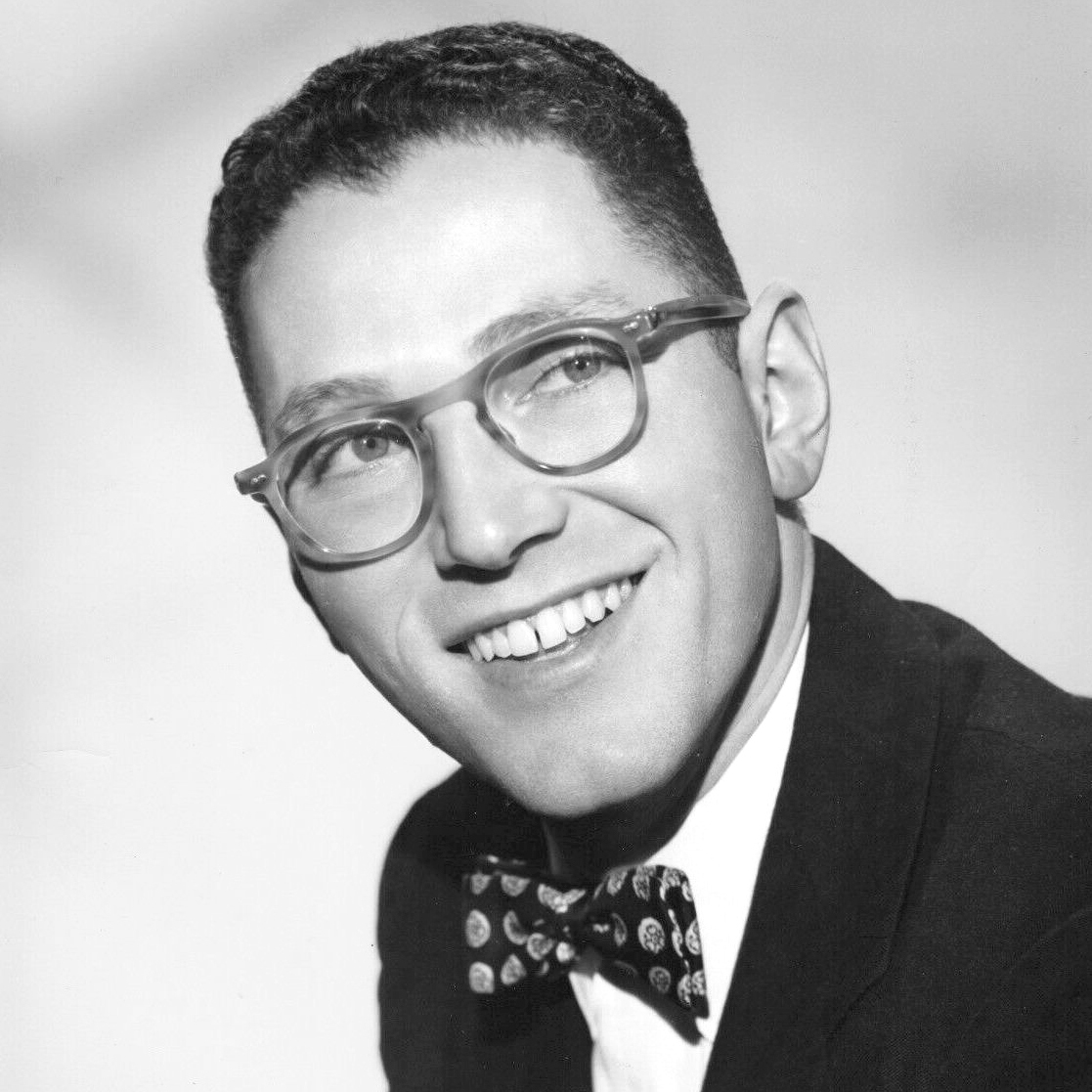
Episode 98. Retrospective: Tom Lehrer's Mathematics
Jan 1001:12:26Tap to summarizeThe Science History Podcast, now in its 9th year, has spanned Trump's first term in office, four years of the Biden Administration, and a year of the second Trump Administration, not to mention a global pandemic, horrific wars around the world, and the emergence of AI. So now seems like the perfect moment for some levity. The master of musical satire, Tom Lehrer, passed away in 2025. Here is my celebration of Lehrer's ability to make us laugh during the even more tumultuous times of the Civil Rights era, the Vietnam War, the Cold War, and political assassinations and violent polarization.
Transcribe →
Episode 97. Forever Chemicals: Sharon Udasin
Dec 1000:56:53Tap to summarizeToday's episode is a discussion on the history of PFAS, or forever chemicals, including their accidental development, incorporation into commercial products, concerns about health effects, and environmental contamination and remediation. My guest is Sharon Udasin. Sharon is a Colorado-based environmental journalist and author of Poisoning the Well: How Forever Chemicals Contaminated America. She was a Ted Scripps Fellow in Environmental Journalism at the University of Colorado Boulder in 2019-2020 and received a SEAL Environmental Journalism Award in 2023. A graduate of the University of Pennsylvania and Columbia Journalism School, she has reported for numerous publications over the past two decades — most recently for The Hill.
Transcribe →
Episode 96. The Weather: Simon Winchester
Nov 1101:03:40Tap to summarizeThe weather has always been a critical element of the human experience - deadly during storms and droughts, sustaining when aligned with the harvest schedule, beautiful and frightening, and integrated into the myths and religions of all societies. How did a scientific understanding of the weather come about? Here to guide us on this question is Simon Winchester. Simon's articles and approximately 30 books range in topic from travel writing to politics, geography, biography, and science history. Simon is best known for his books The Professor and the Madman, The Men Who United the States, The Map That Changed the World, The Man Who Loved China, A Crack in the Edge of the World, and Krakatoa, all of which were New York Times bestsellers. In 2006, Simon was made an officer of the Order of the British Empire by Her Majesty Queen Elizabeth the II. Today we discuss Simon's new book about the weather entitled, The Breath of the Gods, published by HarperCollins.
Transcribe →
Episode 95. The River War: James Muller
Oct 1101:24:24Tap to summarizeIn Episodes 10 and 11 of the Science History Podcast, I interviewed James Muller on the role that Winston Churchill played in the unparalleled advancement of science and technology during the first half of the 20th Century, particularly as it related to the two world wars. In today's episode, Jim returns to discuss Churchill and an earlier war fought in the Sudan at the end of the 19th Century. Jim is a Professor Emeritus at the University of Alaska Anchorage and one of the world's foremost authorities on Churchill. For more than a quarter century, Jim has chaired the Board of Academic Advisers of the International Churchill Society. He is the author of many works on Churchill, including edited and scholarly reprintings of Churchill's interwar books Thoughts and Adventures and Great Contemporaries. Today we discuss his remarkable new edition of the two-volume Churchill book The River War: An Historical Account of the Reconquest of the Soudan, published in 2021 by St. Augustine's Press, which won the Churchill Literary Award from the International Churchill Society. St. Augustine's Press also published Jim's 2024 scholarly edition of Churchill's book My Early Life, A Roving Commission.
Transcribe →