← Science Weekly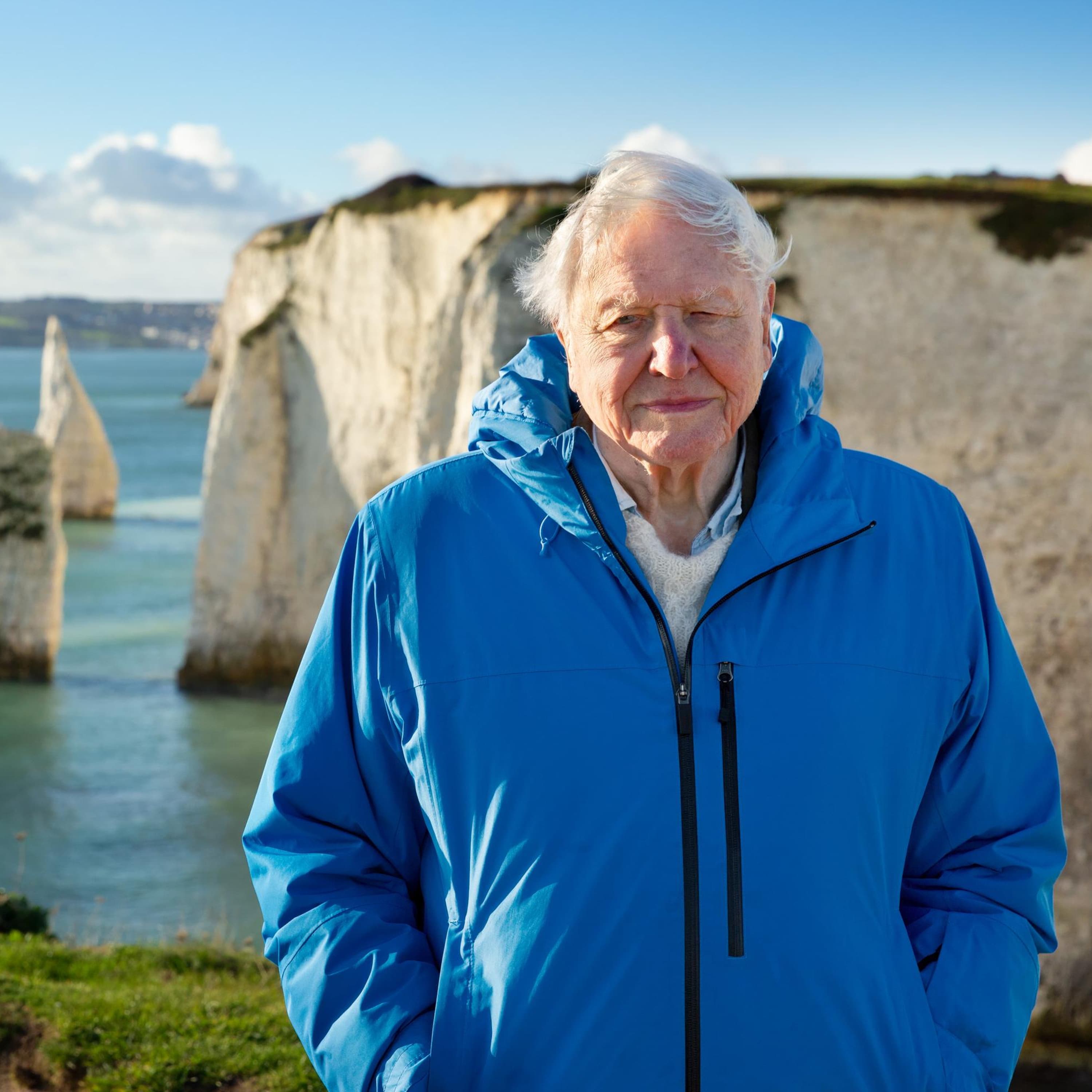
Science Weekly
100 years on Earth: celebrating David Attenborough’s birthday
00:20:51
Madeleine Finlay hears from natural history writer Patrick Barkham
Loading summary
Transcript76 lines
- [00:00]
Madeline Findlay
This is the Guardian.
- [00:10]
Andrew
Many business leaders see AI's tremendous potential for their companies, but are still struggling to turn their potential into measurable results and competitive advantage. I'm Andrew.
- [00:21]
Sarah Elk
And I'm Sarah Elk. And on our new podcast, Winning with AI, we're talking to CEOs who are using AI to drive business transformation, delivering real wins and changing how their companies run.
- [00:32]
Andrew
We'll hear how leaders empower and mobilize their people and make the use of AI part of how the whole organization thinks. Winning with AI
- [00:42]
Patrick Barkham
ACAST powers the world's best podcasts. Here's a show that we recommend.
- [00:50]
Nikayla Matthew Zakomay
If you've ever dreamed of quitting your job to take your side hustle full time, listen up. This is Nikayla Matthew Zakomay, host of side Hustle Pro, a podcast that helps you build and grow from passion project to profitable business. Every week you'll hear from guests just like you who wanted to start a business on the side. If you can't run a side Hustle, you can't run a business. They share real tips and so I started connecting with all these people on LinkedIn and I saw Target supplier diversity was having office hours. Real advice. Procrastination is the easiest form of resistance and the actual strategies they use to turn their side hustle into their main hustle. Getting back in touch with your tangible cash and sitting down and learning to give your money a job like it changes something. Check out side Hustle every week on your favorite podcast app and YouTube.
- [01:40]
Patrick Barkham
Acast helps creators launch, grow and monetize their podcasts everywhere. Acast.com.
- [01:52]
Madeline Findlay
Tomorrow is Sir David Attenborough's 100th birthday. It's astonishing to imagine how different the world was when he was born and the changes he's witnessed. If you'd have gone gone onto the streets of London, you would have seen men in bowler hats and flat caps, horse drawn carriages, and perhaps heard jazz floating out from a nearby gramophone. And in the countryside, calls of nightingales and cuckoos echoing through the woodlands. The BBC, where Attenborough eventually found his home, launched its first ever regular television service when he was 10 years old. He's lived through the Second World War, the invention of the nuclear bomb, the swinging 60s, Watergate, the space race, the Internet and the rise of computers. Over the past century, we've transformed our planet and in doing so, reshaped the natural world.
- [02:55]
David Attenborough
The world depends upon plants and we treat them with so little thought and so little care and exterminate them without little thought or care. And we will pay the price.
- [03:11]
Madeline Findlay
Attenborough has spent seven decades bringing the beauty and majesty of life on Earth to our screens.
- [03:19]
David Attenborough
These engaging chicks are so inquisitive that you only have to sit down to their own level for them all to gather around you. Meaning and mutual understanding in exchanging a glance with a gorilla and any other animal I know.
- [03:39]
Madeline Findlay
His shows continue to inspire millions and more than ever implore us to remember we have a world worth saving.
- [03:48]
David Attenborough
I mean, we have a responsibility, and if there's only a fragment of hope left, you have a responsibility to do something about it.
- [04:02]
Madeline Findlay
So today, 100 years on Earth with David Attenborough from the Guardian. I'm Madeline Findlay and this is Science Weekly. Patrick Barcombe. You're a natural history writer and you've been lucky enough to meet and interview David Attenborough. So. So what is he like?
- [04:27]
Patrick Barkham
Well, I guess the impression I come away with is just of his amazing intelligence. I spent a good couple of hours with him at his home a few years ago. Now his mind is way quicker than mine still, and he's now obviously turning 100. And he's a brilliant storyteller, a great raconteur, and someone who's just endlessly curious about the world. You know, it was very much like interviewing another journalist in that he ends up asking me lots of questions and I'm like, hang on, I've got nothing of interest to say to you, you know, but there he was, curious about the world and what I knew about it.
- [05:10]
Madeline Findlay
So tell me a little bit about his early life and how his interest in the natural world began.
- [05:15]
Patrick Barkham
So David grew up in a family of teachers on the edge of Leicester, and it was in that era where small boys and girls roamed the countryside. And that's what David. And he kept tanks of tropical fish at home, and he cycled for miles and miles in search of fossils.
- [05:35]
David Attenborough
My favorite place was a woodland in the middle of England, and it had rocks around it which are full of fossils. And sometimes you could hit a rock, sometimes they were sitting out there and you just turned over the rock and there it was. And it was. You were the first person ever to see that. And it hadn't seen the sun for maybe 150 million years.
- [06:03]
Patrick Barkham
And so he grew up with just that natural sort of casual intimacy with the wild nature of Britain in that era, which, of course, was much more plentiful than it is today.
- [06:14]
Madeline Findlay
And so he begins to kind of cultivate this passion for nature. Eventually he ends up making TV about it. How does that journey happen?
- [06:25]
Patrick Barkham
Well, his TV career is so interesting because his presenting duties came about completely accidentally. He studied natural sciences at Cambridge University and then he got a job in publishing and he decided it was quite boring. So he pitched to get into the more glamorous world of the new TV programs. So he became a producer director and he was onto a new show called Zoo Quest, where he went out with the presenter who was called Jack Lester, who was a curator at London Zoo. And after one episode out in Sierra Leone, Jack Lester fell ill. And so David was propelled in front of the cameras and of course he became this colossus on our screens for decades and decades.
- [07:13]
Madeline Findlay
We've got a lot to thank Jack Lester's immune system for now. During the 60s he rose the ran in the BBC. He ends up as controller of BBC2 and then he's even the director of programming across BBC. But in the late 70s he returns to the camera with this epic series, Life on Earth. Why was that such a landmark program?
- [07:41]
Patrick Barkham
Well, it's very interesting how Life on Earth came about because as you mentioned, David Aspenbruth became controller of BBC2 and he was a big innovator. And one of his innovations, apart from bringing snooker to the small screen, was to create the landmark documentary series he commissioned, Civilization, which was an epic 12 parter and it told the story of culture through the ages. And then he thought, why don't I make a similar epic documentary, but make it about my passion and the thing that I'm really quite expert in, which is natural history. And so Life on Earth was a thing 13 episode series. And it took David around the world three times. He wrote every word of the script. And probably to the BBC's amazement, it was a huge success. It attracted audiences of 14 million, which was as big as telly could get in those days. And it set the vocabulary really for natural history filmmaking, which the BBC then followed through the 80s to create all these series that calls blue chip or blockbuster natural history documentaries. And they're still one of Britain's greatest kind of cultural productions, really.
- [08:57]
Madeline Findlay
Attenborough has certainly proved there's a big public appetite for natural history. And when he first started out with Zoo Quest, where he goes around the world bringing species back to house in London Zoo, you know, that was a very colonialist set up. Although if you watch it, Anbra approaches everything with curiosity and neutrality. Even so, the programs have changed a lot over the years and now he speaks out about environmental issues. So how much of that change has come from reflecting the public mood or did his program shape it in Any
- [09:33]
Patrick Barkham
way, it's a good question, Madeleine, and I honestly think the answer is that his programmes have rather reflected the public mood rather than shaping them. And certainly over the years, his filmmaking has changed hugely. But even when you look at life on earth back in 1979, it contains some very strong environmental messages. And in the famous scenes where David meets the gorillas, he comments on how sad it is that gorilla is used in human society as a sort of byword for aggression, when actually the actual species lives incredibly peacefully and lightly on the planet.
- [10:16]
David Attenborough
It seems really very unfair that man should have chosen the gorilla to symbolize all that is aggressive and violent. And that's the one thing that the gorilla is not and that we are.
- [10:32]
Patrick Barkham
But certainly he doesn't develop explicit we must save the planet, we must save these species messages within the programs themselves for quite some years. And that's changed in the last 10 years. And I think that came about through a kind of growing criticism of his output for not revealing the true scale of the human destruction of the natural world. He's always been in that BBC tradition of neutrality, political impartiality, kind of diplomacy and care about what he said. He had a scientific background. He wanted evidence for everything that he said publicly. But he doesn't shape the programs in perhaps the way that people imagine they are shaped by a team of biologists, wildlife experts, TV people who for a long time were quietly saying, we can't include scenes of human devastation on the natural world because we're not going to get the ratings, we're not going to get a primetime BBC slot. And they've changed their view over the last 20 years as the public mood shifted and people are becoming more aware of the environmental problems.
- [11:43]
Madeline Findlay
But there is some influence the other way too, I guess. Like when you think about Blue Planet 2, that was maybe the first big blue chip BBC natural history series that had an unashamed environmental message that really had an impact on people.
- [11:59]
Patrick Barkham
That program really sparked a level of popular awareness and outrage about plastic. And a mood of something must be done in a way that previous programs haven't done. And certainly ever since then, every one of David's programs has been explicitly environmental. A message of we're doing this to the planet and this species is at risk and we need to change our ways.
- [12:22]
David Attenborough
The trouble is that the problems are getting worse and worse and worse by the day and we don't have time to spare. That's difficulty.
- [12:37]
Madeline Findlay
Well, Patrick, let's discuss a little more about how humans have changed the planet over the past 100 years that Attenborough has been with us on it, we almost live in another world entirely from the one Attenborough was born in. And so, as a natural history writer yourself, what does your mind go to when you think about how nature and biodiversity has transformed in this time?
- [13:03]
Patrick Barkham
It is another world, Madeleine. Exactly. I mean, looking back to 1926 is incredible, really, because David was born into a different geological epoch. He was born in the Holocene, and we're now in the Anthropocene, which is defined by our sort of disruptive destruction of the planet. And in 1926, the planet's human population was 2 billion. Today, it's 8.2 billion in terms of carbon emissions, parts per million. Back in 1926, it was approximately 305 parts per million. And today it's up to 430. And, of course, the thing that's really transformed is our levels of consumption in the first world and the impact that's had on the planet. Roughly roughly half of all the destruction of forests in human history has happened over the course of Sir David's lifetime. That's an area larger than the size of China. We have, since 1970, a 73% decline in the average populations of monitored vertebrates. Among invertebrates, it's less certain, but certainly in Britain, there's good data. Since 1970, there's been a 37% decline in invertebrates found on farmland. And that's the honest picture of the last hundred years. It's just astonishing to think of the losses that have occurred over his lifetime, and those losses are continuing. But there is some hope, too, and a lot has changed for the better over the course of, Certainly the last 50 years of David's life.
- [14:36]
Madeline Findlay
Well, let's talk about those positives. What kind of things have we seen over the past 50 years that bring you a smile or some hope?
- [14:44]
Patrick Barkham
We've seen the birth of conservation in Sir David's lifetime. The Wildlife Trusts actually celebrate their hundredth birthday a few weeks before David's hundredth birthday. So the conservation movement in Britain was essentially born in the same year as David Attenborough. And, I mean, one of the things we've touched on is David's own influence on conservation science. It's virtually impossible to meet a conservation scientist anywhere in the world who won't cite David Attenborough as one of their influences and sources of inspiration.
- [15:17]
Madeline Findlay
So, Patrick, what have we managed to conserve?
- [15:20]
Patrick Barkham
We've seen and demonstrated enormous successes with saving individual species, particularly charismatic predators and mammals towards the top of the food chain. We've seen tiger populations double in India over the past decade, thanks to focused conservation efforts. The gorillas that David of course famously filmed in Life on Earth numbered 250. In Rwanda in the sevent, poaching had decimated them. And today the population in the national park where he filmed them is more than 600. Here in the UK, species of butterfly like the large blue, which became extinct in the year that Life on Earth was broadcast, have been brought back from extinction. And Britain actually has a larger large blue butterfly population than any other country in the world now. And by saving individual species, we not only inspire and galvanize people, but we often are saving a particular habitat or an ecosystem. So it is important to see all the successes and what we're doing, but obviously set them in the frame of ongoing challenges.
- [16:32]
Madeline Findlay
Coming up, what will Sir David Attenborough's legacy be and what can he teach us about reaching your second century in good health?
- [16:50]
Kai Wright
I'm Kai Wright.
- [16:51]
Kari Sherman
I'm Kari Sherman.
- [16:52]
Kai Wright
And we are here to tell you about our new show, which is rooted in this feeling that at least I have. I know you have, where, you know, it's kind of like when you wake up in the morning and you pick up your phone and you're just hit in the face with a fire hose of news, right?
- [17:09]
Kari Sherman
Like, there's war, there's authoritarianism, our planet is burning. I could go on and on and
- [17:14]
Kai Wright
on and on and on and on. But, like, we're trying to figure out how to manage it, right?
- [17:18]
Nikayla Matthew Zakomay
Manage it.
- [17:19]
Kari Sherman
I manage it by leaning in and trying to learn more and trying to figure out, okay, how can I be smarter about this particular topic and who can I talk to that's going to make me feel better about it?
- [17:30]
Kai Wright
And who can tell me who's responsible for the mess that I'm reading about? So that's our mission. That's the show.
- [17:36]
Kari Sherman
Welcome to Stateside with Kai and Carter. We're a new show from the Guardian.
- [17:40]
Kai Wright
We're talking to big thinkers and the best journalists just trying to understand the world through smart conversation and honest reporting.
- [17:46]
Kari Sherman
We don't have billionaires telling us what to say.
- [17:49]
Kai Wright
Stateside with Kyan Carter will come out three times a week, Monday, Wednesday and Friday, starting May 13.
- [17:54]
Kari Sherman
Follow on Apple Podcasts or catch us wherever you watch or listen.
- [18:03]
Andrew
Many business leaders see AI's tremendous potential for the companies, but are still struggling to turn that potential into measurable results and competitive advantage. I'm Andrewton.
- [18:14]
Sarah Elk
And I'm Sarah Elk. And on our new podcast, Winning with AI, we're talking to CEOs who are using AI to drive business transformation, delivering real wins and changing how their companies run.
- [18:25]
Andrew
We'll hear how leaders empower and mobilize their people and make the use of AI part of how the whole organization thinks. Winning with AI.
- [18:37]
Madeline Findlay
Patrick Attenborough has inspired us with these intimate views of the natural world. Whether or not that makes any of us act is debatable. But as you said, it's almost impossible to find a conservationist who wouldn't cite him as an inspiration. But how would you sum up his enduring influence? What do you think that has really been?
- [19:03]
Patrick Barkham
Well, the invisible side of the legacy is, as you say, in the hearts and minds of all the people who have watched Attenborough programmes and been inspired not simply to act, but make their careers, their life's work, one of acting to save species or help the planet. And so that's a very real legacy. And he carries so much authority that people really do listen, and they include world leaders and politicians desperate to be seen to be doing the right thing when gently admonished by David Attenborough. It's hard to put our finger on how much action has been, but certainly specifically last summer, he released a film, ocean, that was incredibly successful at cinemas in Britain and around the world, and that highlighted very graphically for the first time, the devastation caused by bottom trawling. And I know that David Attenborough had very specific ambitions there to see that practice banned. It hasn't been yet, but there's certainly more of a movement now to curtail it and constrain it than ever before. I think he will look at his own work and the astonishing number of glorious programmes that tell amazing stories about the natural world. And I don't see how he would not consider that a life's work well spent.
- [20:27]
Madeline Findlay
And finally, Patrick, it is amazing that Attenborough is still doing as much as he is as he turns 100. What do you think the secret to his longevity is? Do you think it's potentially connected to this passion and curiosity about the natural world that he's had and cultivated since his childhood?
- [20:48]
Patrick Barkham
My gosh, he's a model and an inspiration for all of us in terms of how to tackle old age. He would acknowledge, of course, his great privilege and his good fortune, but you really notice when you meet him, his enduring curiosity about the world. And obviously he's been blessed with a great intellect, but the only reason that's still there is because his mind is being used so much. He's a great advert for not retiring. And I think that lifelong work by him is the thing that's really kept him going and kept him in such good health and spirits for 100 years. And he's someone that we can look up to, admire and attempt to follow.
- [21:31]
Madeline Findlay
Well, Patrick, I know you and all of our listeners and probably millions of people out there will be wishing David Attenborough a very happy 100th birthday tomorrow. And it's just been such a joy to chat about him ahead of his centenary. So thank you so much.
- [21:49]
Patrick Barkham
Oh, thanks, Madeline. Yeah. Happy birthday, David Attenborough. I hope he has a wonderful day.
- [21:57]
Madeline Findlay
Thanks again to Patrick Barkham. You can find all his reporting@theguardian.com and before you go, I wanted to tell you about a new video podcast that our New York office is launching. It's called Stateside with Kai and Carter, and it's hosted by our colleagues Kai Wright and Carter Sherman. Each week, they're going to be trying to make sense of some of the biggest stories happening right now. The show will feature conversations with some of the smartest thinkers and reporters, not just from Guardian, but across the world. It's launching on the 13th of May, with episodes every Monday, Wednesday and Friday. You can find it in full video on YouTube and wherever you get your podcast podcasts. And that's all from us. This episode was produced by me, Madeline Finley and Ellie Sands. The sound design was by Joel Cox, and the executive producer was Ellie Burie. We'll be back on Tuesday. See you then.
- [23:01]
Andrew
This is the guardian.
- [23:06]
David Attenborough
Foreign.
- [23:11]
Andrew
Leaders see AI's tremendous potential for their companies, but they're still struggling to turn that potential into measurable results and competitive advantage. I'm Andrew.
- [23:21]
Sarah Elk
And I'm Sarah Elk. And on our new podcast, Winning with AI, we're talking to CEOs who are using AI to drive business transformation, delivering real wins and changing how their companies run.
- [23:32]
Andrew
We'll hear how leaders empower and mobilize their people and make the use of AI part of how the whole organization thinks. Winning with AI.
- [23:41]
Hayden
Howdy, howdy ho, and welcome to Fantasy Fan.
- [23:43]
Sarah Elk
Fellas.
- [23:43]
Hayden
I'm Hayden, producer of the Fantasy Fangirls podcast and your resident lover of all things Sanderson.
- [23:49]
Stephen
And I'm Stephen, your bookish Internet goofball. But you can call me the Smash Daddy.
- [23:53]
Hayden
And we are currently deep diving Brandon Sanderson's fantasy epic Mistborn. But here's the catch. Steven here has not read Mistborn before.
- [24:01]
Stephen
That's right.
- [24:02]
Andrew
Hey.
- [24:02]
Stephen
Hey. So each week you'll get my unfiltered raw reactions to every single chapter.
- [24:06]
Hayden
And along the way, we'll do character deep dives, magic explainers, and Steven will even try to guess what's next. Spoiler alert. He'll be wrong.
- [24:13]
Stephen
News flash. I'm never wrong. Episodes come out every Wednesday, and you can find fantasy fanfellas wherever you get your podcasts.
- [24:21]
Sarah Elk
Summer smells like citrus in the sun. Turn your home into a daily getaway with Pura's new summer collection. Find your flow and fragrance and explore the scents at pura. Com.