← Science Weekly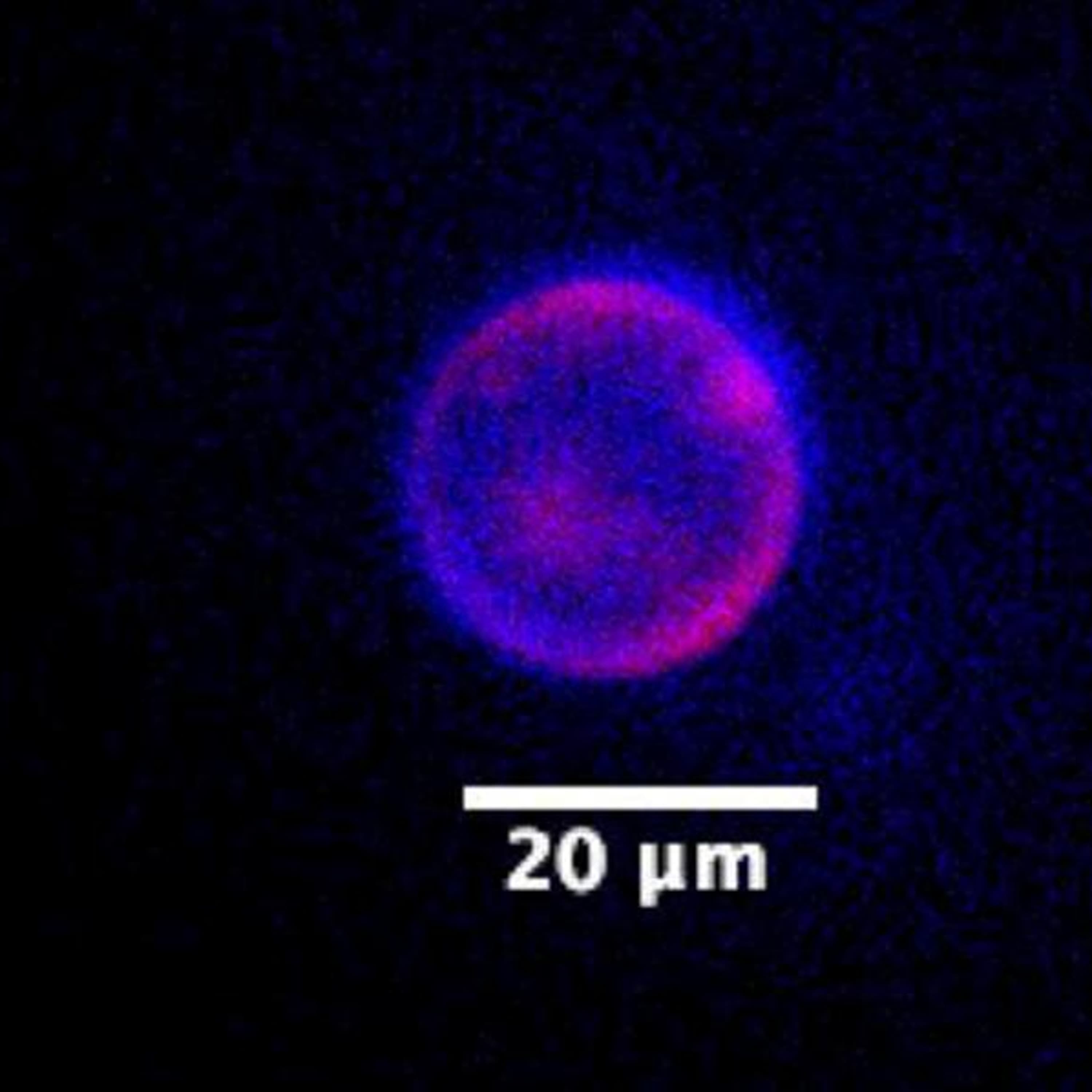
Science Weekly
‘Beautiful blobs’: can scientists build life from scratch?
00:16:53
Madeleine Finlay hears from co-host Ian Sample and from Kate Adamala, professor of genetics at the University of Minnesota
Loading summary
Transcript46 lines
- [00:00]
Ian
This is the Guardian.
- [00:10]
Boost Mobile Advertiser
He's dribbling the ball with everything on the line. He's driving down the pitch. He's facing price hikes and cuts past him. Carrier contracts, tries to block him. Oh, he leaves him in the dust. He's at the edge of the box. He cuts past the non stop group chat trash talk. He clears on goal. He shoots. No unlimited data for $25 a month forever.
- [00:29]
Boost Mobile Announcer
Visit your local Boost Mobile store today to get unlimited with a price that never changes. Boost mobile after 30gb, customers may experience lower speeds. Customers will pay $25 a month as long as they remain active on the Boost $25 Unlimited plan.
- [00:41]
Thomson Reuters Announcer
This podcast is brought to you by Thomson Reuters. The best don't just do their work. They change what's possible. Cases won, audits completed, jobs saved. Behind every one of those moments is a professional who needed to get it right and did. Thomson Reuters builds the technology that sharpens insights, speeds up decision making and powers the outcomes that matter. So when professionals act, the impact is felt by everyone. Be a changemaker. Visit tr.com changemakers.
- [01:18]
Madeline Findlay
Scientists creating life from scratch sounds like the premise of a sci fi disaster movie. But now a team of researchers say they've come closer than ever before with something they're calling a spud cell. Their work raises profound questions, like what is life? But also why bother? So today, how close are we to building life in the lab? From the Guardian, I'm Madeline Findlay and this is Science Week. Ian, you've got some very interesting research to tell me about today. It's a step towards creating synthetic life. So who's behind this and what have they done?
- [02:13]
Ian
So this is a team from the University of Minnesota led by Kate Ademala, and she is a geneticist there. And what they've been doing over the years is working towards can you build life from scratch so just from chemicals that you know and understand? What they've come up with is what they're calling a synthetic cell. It can grow, it can divide, and it can sort of replicate its own genome. And when I spoke to Kate, I asked her what these synthetic cells look like.
- [02:44]
Kate Ademala
To most people looking at it under the microscope, it doesn't look like much. It looks very similar to a very simple natural cell. It's a blob. It doesn't have any visible features like flagellum or any other kind of a irregular shape. It's a round blob that becomes sometimes less round than its budding wonderfully.
- [03:05]
Ian
They call it spud cell, and that name is Intended to evoke Sputnik as the dawn of the space age, the beginning of a new era. But Kate is from Poland and she says, well, look, another reason is that I'm mostly made from potatoes. So spud cell seemed like a pretty fitting name.
- [03:23]
Madeline Findlay
Well, if she says that, it's okay. Now I want to dig a deeper into what they've done. So what is this cell made of?
- [03:32]
Ian
Spud cell is essentially a small ball of like a fatty like substance, and inside it's liquid. So you can think of it as a small sort of water filled sphere. They're very tiny. They're like a few microns across, a few thousandths of a millimeter. And inside that little sphere, they put a very small genome. And so that genome can do basic functions. So those functions can help it to do this growing, this feeding the division, and also this replicating of its own genome so that it can go into the daughter cells, the next generation cells, and they've had it run over several generations.
- [04:12]
Madeline Findlay
That sounds very impressive. It sounds like it can do quite a lot that a normal cell can do. So what can't it do?
- [04:22]
Ian
Well, it can't do an awful lot. I mean, this is incredibly basic in terms of the functions it can do. I mean, the genome inside it is about a 50th the size that you get inside E. Coli, which is a common bacteria you'll find in soil. It produces proteins, which it needs, and they help it fuse with little balls that are added to the sort of feedstock, if you like, added to the liquid that it lives in. So it can sort of fuse to tiny little blobs and absorb them. It needs to be fed these little blobs because they contain all sorts of stuff that the synthetic cell needs to do anything. And a key thing it can't do on its own without being fed is it can't build its own proteins inside. It needs these things called ribosomes, which turn genetic material into proteins. So the cell can't do that. It needs energy from the medium it's in. It needs crucial enzymes from the medium it's in. So essentially an awful lot is done by the liquid that this spud cell is in. And if you took it out and put it anywhere else, it wouldn't survive.
- [05:27]
Madeline Findlay
So is that why we wouldn't consider this cell to be alive? How should we understand exactly what this is, the spud cell?
- [05:36]
Ian
Yeah, and I think of them as starting blobs for making life. And I was trying to think of other analogies, and in a way they feel more like puppets to me. And if you have a puppet, obviously it might look like, but you know, someone is pulling the strings. And in this case, a lot of that liquid that this thing is in is pulling the strings. And also I've got this little wind up Easter chick and you put it down and it kind of hops along, but you wouldn't think it's nearly alive. I'm winding up a mechanical thing and it is tootling along on its own. It's very crudely mimicking something that you see in life that's being a little bit harsh on spud cells. Spud cells are using DNA. They are doing things very differently to life, but they are doing things using biochemistry. But for me, they are sort of nearer the toy side of things or the puppet side of things than they are towards actual living cells. But I asked Kate why she didn't consider these cells to be alive as well.
- [06:37]
Kate Ademala
Mainly because it's not robust enough. To me, life just kind of. My gut feeling is life is associated with being robust. We think of life as this crappy process that can squeeze into every niche, every hole. And spud cell does not yet have this ability. So to me, it's a first step. It's a platform that will enable engineering eventually living, more robust synthetic cells. But in the current iteration, it's, to me, not yet alive.
- [07:10]
Madeline Findlay
What was Kate's reaction to seeing what she had created? I mean, the fact that these are kind of things that resem but aren't alive. I assume she didn't have that kind of Frankensteinian big bolt of lightning moment.
- [07:25]
Ian
You know, the reality of being a scientist in a lab is that you spend an awful long time with things going wrong, with checking things have worked the way you think, with staring down microscopes. And so when something does happen, it may not be a particularly clearly defined event that you can point back to and say it was, you know, 12:33 on a Friday. I was in the lab and I saw it happen. And that was the case here, that she was really struck by seeing these spud cells divide. But if you think about what happens with a living cell, E. Coli divides in about 20 minutes. These guys take about 12 hours. So it's a very slow process. You're not going to be staring down the microscope for all of that time. And so for her, it was a much more drawn out process, but she still found it pretty stunning.
- [08:12]
Kate Ademala
We do see it under the microscope, but it's not a moment. It's kind of a drawn out process. And to me, they're one of the most beautiful images I've ever seen. But obviously unbiased.
- [08:29]
Madeline Findlay
Ian, despite it not being this kind of moment where scientists have created life, it is pretty exciting. But perhaps you could put it in some context for me. I mean, how much of an advance is this on work that's been done before or elsewhere?
- [08:46]
Ian
Other research labs and this one have done sort of elements of this before. They've done small parts of the work in isolation. And I think what's nice about this study is that they're pulling a lot of it together and showing we can get all these different processes working at the same time. I mean, what Kate would say is, this is a chassis. This is a starting point. The bare essentials that you could then start to try and build on. Say, okay, how do we make it more capable? How do we make it more resilient, more robust? How do we get it to respond to its environment, to protect itself, in a sense, have, you know, things like we call homeostasis, which is just controlling your environment. A living cell has to be able to control its environment so it doesn't get too hot or too cold so the chemical reactions can run properly. And so I think it's a big step and an interesting step, but it's still very much square one.
- [09:41]
Madeline Findlay
And are there other labs attempting to do this?
- [09:44]
Ian
There are other labs looking at exactly this kind of approach, where you go from the bottom up. And I think they will be the labs that will be joining in this effort and seeing. Well, look, if we start with the sort of spud cell idea, can we all start just agreeing approaches? Say, look, I'm going to work on how to get these cells to build their own ribosomes. And these are little cellular machines that cells have to produce their own proteins. How can I get it to clear its waste, things like that. But, you know, there's other groups going top down. So they will start with a living organism, and they will just trim away, trim away, trim away, trying to get rid of genes that are on the genome that are useful for that species but aren't necessary for life. So the interest there is to say, okay, what is the bare minimum that biology says an organism needs to survive, but also to survive, you know, for a decent time in its environment?
- [10:40]
Madeline Findlay
And I have to ask, obviously, invoking Sputnik, there's an element to this of we're doing it to see if we can do it. But beyond the fundamental science, why are labs trying to do this?
- [10:53]
Ian
Well, I think that fundamental Question of what is it about particular assemblies of chemicals of inanimate matter suddenly crosses the threshold to life. But if we're looking applications, what are these cells for? Well, they will say we want to use them to study models of life because we know everything going into it. We can generate digital models of life and we can start playing around with simulations of life, which is pretty cool. But more practically, you can program them, you can build them from the ground up so that they're producing drugs, fuels, foods, new materials. And so you can just have vats of these things churning out whatever substance you want because you've built the whole thing from scratch. And that is its dedicated role in life, if it is life.
- [11:46]
Madeline Findlay
Coming up, what do we mean when we say something's alive?
- [11:54]
Max Rushton
33 days, 33 episodes, no off Switch from the goals and the glories, the politics and the problems of the World Cup. If you want football analysis from a podcast that's been overanalyzing the game for more than 20 years, this is it. Join me, Max Rushton and our expert team of football journalists every day of the tournament. Can England end 60 years of hurt? Probably not. Or will this be another year of falling just short? Probably. World cup daily. Listen wherever you get your podcasts or watch the full episodes on YouTube.
- [12:22]
Boost Mobile Advertiser
He's dribbling the ball with everything on the line. He's driving down the pitch. He's facing price hikes and cuts past him. Carrier contracts, tries to block him. Oh, he leaves him in the dust. He's at the edge of the box. He cuts past the non stop grub chat trash talk. He clears on goal. He shoots no unlimited data for $25 a month. Forever.
- [12:41]
Boost Mobile Announcer
Visit your local Boost Mobile store today to get unlimited data with a price that never changes. Boost mobile after 30gb, customers may experience lower speeds. Customers will pay $25 a month as long as they remain active on the Boost $25 Unlimited plan.
- [12:58]
Madeline Findlay
Ian, that takes us to a question, a really fundamental philosophical question that this work raises, which is what is life?
- [13:08]
Ian
This is ridiculously one of the hardest questions in biology. There is no agreed upon definition of what is life. I mean, NASA has this definition that they use in their astrobiology work and they have it defined as a self sustained chemical system capable of undergoing Darwinian evolution. And this is about life as we know it. So it's self sustained. It can keep going and going and going in its environment, it can adapt to its environment and so on. But other scientists will point to other things and they will say, well, look Metabolism is really key. So taking in nutrients, being able to process those things like homeostasis, that is a really important part of life, as I see it. So there's more of a checklist, really, that you go through and say, well, look, if it can do this and it can do, you know, X, Y and Z, it's life. But you have things that sort of sit in this sort of weird space, like viruses. I think most biologists don't consider viruses alive, but obviously they replicate, they mutate, they have a genome, and they basically hijack cells to do what they want to do in life.
- [14:15]
Madeline Findlay
It's such an interesting question that this raises. Now we've got some time to think about it because obviously, as you've said, we're still very far away from creating synthetic life. But it feels to me like there's an element of risk in all of this. Is this something that Kate and scientists like her are thinking about?
- [14:40]
Ian
They absolutely are. And they really want all of this work to be done in the open, and they want to have just a sort of agreement on what we're going to do with these cells and what we're not going to do with these cells. If you wanted to cause mayhem, there are far easier ways of doing it than starting with a small blob of fat with water in it. You know, you could take an existing pathogen and boost it using genetics. You can make it more transmissible and all the rest of it.
- [15:08]
Madeline Findlay
Don't give people too many ideas.
- [15:09]
Ian
No, but that is dangerous science. I think if you're starting with something like this, it's quite hard to see how you're going to cause any damage, but it's a good time to start thinking about it. And I put this to Kate because I was really keen to know what
- [15:24]
Kate Ademala
she was thinking about, that anytime you're learning to engineer life on this most fundamental level, you're also creating an ability to misuse that technology. And that's been a big discussion in the field ever since synthetic biology started. And the same with spud cell. We have to keep it contained. We're engineering into it safeguards so that if it ever gets good enough to live on its own and gets released into the environment, it's not going to spread and do harm. And we're also engineering the kind of limitations so that it only can live in the lab. There is no way for it to kind of escape and live on its own.
- [16:07]
Madeline Findlay
Ian, all of this work, it's really putting trust in scientists to do the right thing. And there is A question here about, you know, scientists playing God. Is this something that we should be worried about?
- [16:23]
Ian
That phrase, playing God is inherently considered a bad thing to do, isn't it? And so what do we mean by playing God? I mean, if we're going to talk about should we be trying to build life? Well, why not? Why wouldn't we want to know how chemicals assemble and become living? That's a really, really interesting question. These groups are a million miles away from creating even a living ball of gel. Basically, we're a long way away from that. But even if they did have a living synthetic cell, we don't give rights to E. Coli. We don't give rights to bacteria. We are killing them all the time. Whenever we put anything in the dishwasher or wash it, we are killing bacteria left, right and center. And so I don't think we need to worry about sort of rights at that sort of point. I think the concern, if any is around, can you make these things dangerous? But again, go back to that point. Just start with something that's dangerous already. There's plenty of pathogens out there that are horrendously dangerous. You know, that's your starting point. Not something that is basically a tiny water filled football.
- [17:31]
Madeline Findlay
Well, Ian, I've loved discussing this with you and hearing about this research. Thank you so much.
- [17:36]
Ian
You're welcome.
- [17:37]
Madeline Findlay
Thanks again to Ian and to Professor Kate Ademala. You can read Ian's piece about spud cells on theguardian.com and before you go, I want to recommend a brilliant video from our explainer series. It's complicated. It's all about how marketing can trick us into mistaking ultra processed foods for health foods. It's definitely worth a watch. And we put a link on today's episode page or just search It's Complicated from The Guardian on YouTube. And that's it for today. This episode was produced by me, Madeline Finlay. It was sound, designed by Josh and Chana, and the executive producer is Ali Burey. We'll be back on Tuesday. See you then.
- [18:28]
Ian
This is the Guardian.
- [18:37]
Wayfair Announcer
You want to get your backyard summer ready, but you don't want to break the bank. Wayfair gets it. Planning on dining al fresco or relaxing poolside? Wayfair has everything you need to prep your space. Shop now and save up to 70% off during Wayfair's 4th of July clearance score. Huge deals on outdoor furniture, area rugs and more. We're talking thousands of products for every style and budget. Plus surprise flash deals. July 6th. Don't wait shop Wayfair's 4th of July clearance now through July 6th at Wayfair.com
- [19:05]
Thomson Reuters Announcer
Wayfair every style, every home.
- [19:07]
Boost Mobile Advertiser
He's dribbling the ball with everything on the line. He's driving down the pitch. He's facing price hikes and cuts past him. Carrier contracts, tries to block him. Oh, he leaves him in the dust. He's at the edge of the box. He cuts past the non stop group chat trash talk. He clears on goal. He shoots no unlimited data for $25 a month forever.
- [19:26]
Boost Mobile Announcer
Visit your local Boost Mobile store today to get unlimited data with a price that never changes. Boost mobile after 30gb, customers may experience lower speeds. Customers will pay $25 a month as long as they remain active on the Boost $25 Unlimited plan.
- [19:38]
Thomson Reuters Announcer
This podcast is brought to you by Thomson Reuters. The best don't just do their work. They change what's possible. Cases won, Audits completed. Jobs saved. Behind every one of those moments is a professional who needed to get it right and did. Thompson Reuters builds the technology that sharpens insights, speeds up decision making, and powers the outcomes that matter. So when professionals act, the impact is felt by everyone. Be a changemaker visit tr.com changemakers.