← Science Weekly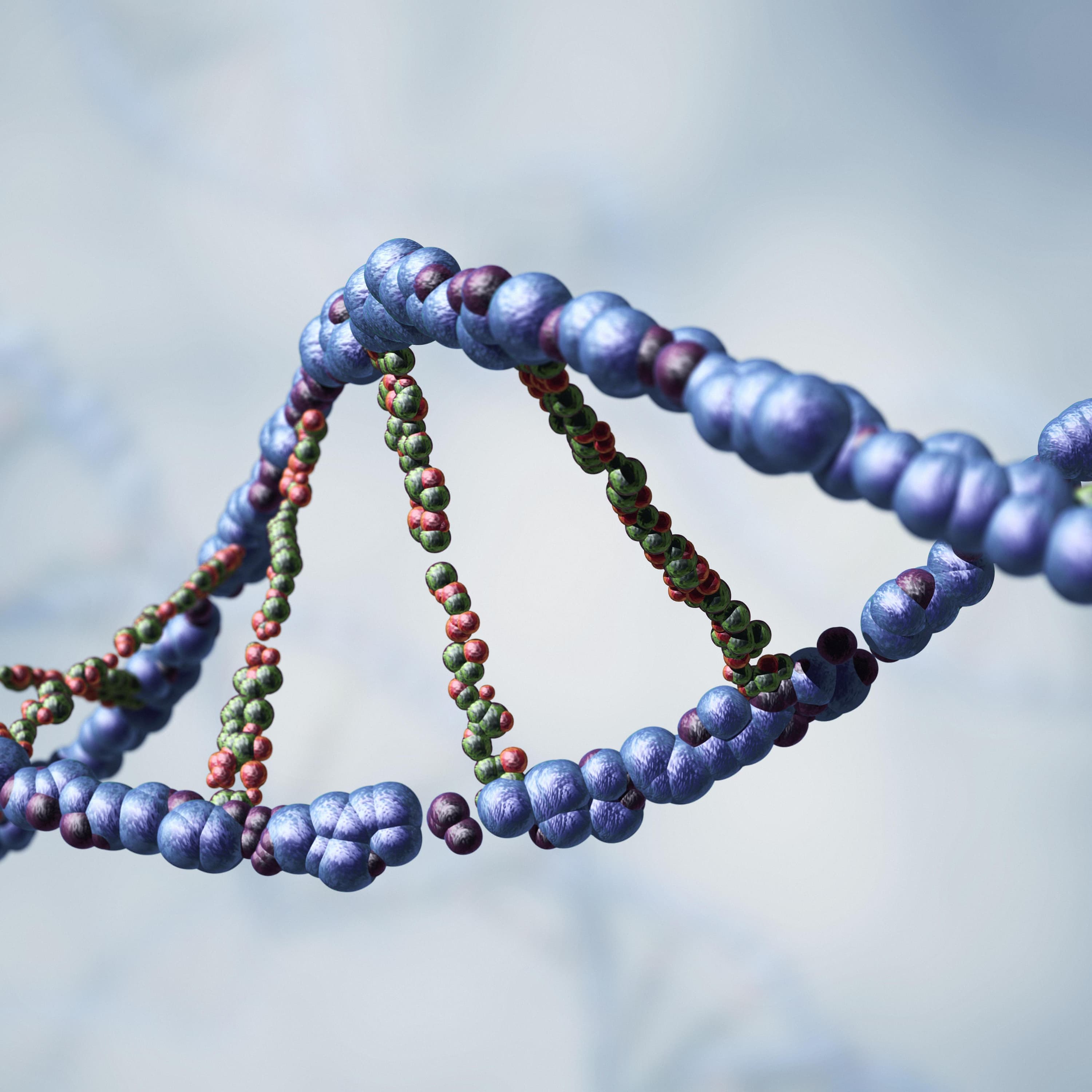
Science Weekly
Can a world-first gene therapy reverse ageing?
00:18:29
Madeleine Finlay hears from science editor Ian Sample and from Paul Knoepfler, professor of cell biology and human anatomy at the university of California, Davis.
Loading summary
Transcript47 lines
- [00:00]
Madeline Findlay
This is the guardian.
- [00:10]
Progressive Insurance Advertiser
Insurance isn't one size fits all. That's why drivers have enjoyed Progressive's name your price tool for years now. With the name your price tool, you tell them what you want to pay and they'll show you options that fit your budget. So whether you're picking out your first policy or just looking for something that works better for you and your family, they make it easy to see your options. Visit progressive.com find a rate that works for you with the name your price tool. Progressive Casualty Insurance company and affiliates Price and Coverage Match limited By state law,
- [00:41]
Automated Voice/Boost Mobile Advertiser
your call has been forwarded to an automatic voice message system.
- [00:44]
Progressive Insurance Advertiser
Running a business means you're always reachable. Until you're not. And the moment you miss that call, a competitor picks it up. That's why this episode is brought to you by Quo, spelled Q U O. The business phone system. Built so you never miss an opportunity. All your calls, texts and voicemails live in one place. Anyone on your team can pick up a conversation, see the full history and respond fast. Quo is the number one rated business phone system on G2, trusted by over 90,000 businesses. Set up in minutes on any device. Keep your existing number, add teammates as you grow. No it, no hassle. Quo's built in AI agent even handles after hours calls and books appointments so you're covered around the clock. Money is on the line. Always say hello with Quo. Try Quo Free plus 20% off your first six months at Quo.com tech that's Quashuo.com tech.
- [01:50]
Madeline Findlay
Imagine a pill for youth. Not just one that slows aging, but actually turns back the clock. A trial has begun that aims to restore damaged eye cells to a more youthful state, hopefully improving sight. If it works, it could potentially be developed for other organs or maybe even our whole bodies. So today, how researchers are trying to reverse biological time. From the Guardian, I'm Madeline Findlay and this is Science Weekly. Ian Back in June, a US biotech company called Life Biosciences announced that a human participant had received a world first treatment for age related eye disease. And this is essentially all about making retinal cells young again. And it's a really big milestone for this concept of cellular rejuvenation. And as you might imagine from the name, this is also something that the longevity community are really excited about, right?
- [03:12]
Ian
Totally. And let me give you a bit of context. I mean, over the past decade or so, we've seen a real, really dramatic increase in longevity research. And look, a lot of this is funded by very wealthy individuals, but Much of it is based on really interesting advances in biology. And what it's led to is this huge effort to build, often drugs that will slow or reverse aging. What this trial is all about is this really radical idea, extremely interesting idea of being able to rejuvenate cells and actually rewind the clock on cells and make adult old cells work like young ones.
- [03:58]
Madeline Findlay
So before we get to the trial, I think we need to go back to some first principles. Just spell out for me what happens. And as our cells get older.
- [04:09]
Ian
So obviously, as we age, as our cells get older, they become less good at doing all those functions that they need to do to keep us. Keep us healthy. And there's a whole bunch of processes that drive this, right? But things like, you know, your. Your DNA accumulates damage over time because the way cells repair DNA isn't perfect. The mitochondria, which are these sort of the. The power plants in our cells that give them energy, those become less efficient. What's most important for this study is something else, and this is called epigenetic patterning. And again, as our cells age, what's called your epigenome, the epigenetics changes, and that also affects how well cells function.
- [04:51]
Madeline Findlay
Right? Okay, so explain those epigenetic changes to me.
- [04:56]
Ian
So most of the cells in your body carry DNA. Not all of them, but the vast majority. Okay. Now, that code is the same in all of those cells. So that raises a question. Well, if the code's the same in all the cells, how come I've got all these different types of cells, specialized cells doing different things? We've got neurons, we've got muscle cells, got liver cells. And the answer is epigenetics. So if you go inside a cell and you look at the DNA, the DNA will have a pattern of chemical tags running along it, and they will tell the cell which genes to read and which ones to leave. Okay. That pattern of epigenetics across the DNA is really what determines what that cell becomes. So whether it becomes a heart cell, a liver cell, or a muscle cell. Now, your epigenome, as it's called, this pattern is primarily set when you're an embryo, but it's not fixed. There's all sorts of things that can feed into how that sort of epigenome evolves over your lifetime. And this is things like exposure to hormones, estrogen, testosterone. It's things like your diet. It can be even things like the pollution you're exposed to and even how much exercise you get. Now, these changes build up over time, but also, as we age, the epigenetics gets messed up a little bit, and the cells don't function as properly because this controlling structure over the top isn't doing the job it should be doing. And it's almost like, you know, a nice analogy is it's like the fluff on a record that it sort of just builds up to the point that the needle skips and it's not reading the grooves in the record proper feel like.
- [06:29]
Madeline Findlay
And so the fact that the epigenome can change or it can be changed by environmental factors leads to this kind of idea that maybe you can purposefully change the epigenome to change what the cell is doing or how it operates.
- [06:46]
Ian
That's exactly right. And so the hope with cellular rejuvenation is that if you can clear those markers, that epigenome, if you can clear it to some extent, and if you can actually rewind the clock back on these cells again to some extent, and what you're doing then is you're essentially taking an old cell and you're rewinding it back in time. You're rewinding it back to an earlier stage of its development when it is operating as a younger cell. Okay. And so that is an extraordinary thing.
- [07:26]
Madeline Findlay
Okay, Ian. So there's this idea that you can potentially sort of blow off our biological dust. How do you do it in the lab, or how are scientists trying to do it in the lab?
- [07:36]
Ian
The really key work in this was done pretty much 20 years ago to the year, actually, by a scientist called Shinya Yamanaka. And he was really interested in why is it that stem cells in early embryos are so versatile? What I mean by versatile is those cells, those embryonic stem cells can grow into pretty much every cell in your body. Why is that? But I spoke to a guy called Paul Knopfler about this. He's a professor of cell biology and human anatomy at UC Davis, University of California, Davis. He's in the School of medicine there.
- [08:08]
Professor Paul Knopfler
What he was doing was to take factors that were known to be at high levels in the very earliest human embryo and her early mouse embryo, for example, to, to. And put them into adult cells. So cells that might have already have a well defined function, they don't necessarily grow much or anything. And so Yamanaka was trying out different combinations of these early embryo factors and hit upon a combination that worked really well of four factors that would make these sort of generic human cells and mouse cells called fibroblasts be more like the cells of the very earliest embryo that can Grow a whole person.
- [08:48]
Ian
So I'm going to spell this out a bit more because I think this is really cool. Okay. If you think about when your mum's egg was fertilized by your, your dad's sperm, and actually having said that, maybe you really don't want to think about,
- [09:01]
Madeline Findlay
about that, but don't think about it too closely.
- [09:03]
Ian
Bear with me. Let's just move on quickly to a fertilized egg, a freshly fertilized egg. What does it have to do? That fertilized egg has to produce all of the cells in your body. So you have to get rid of the epigenetic markers, or nearly all of the epigenetic markers on the sperm and on the egg to enable that fertilized egg to have this flexibility. Okay. And you also want to get rid of nearly all of the epigenetic markers that have just built up over your parents lifetimes.
- [09:35]
Professor Paul Knopfler
Right.
- [09:35]
Ian
Because there's all that mess that's happened with, with aging. And so this is a really interesting biological process that Yamanaka hit on. And he found that these, these four proteins, these four Yamanaka factors are the ones that are triggered that do that cleaning of the slate. So if you put these factors into adult cells, this is what it does. It clears away the epigenetics and those cells become what we call induced pluripotent stem cells. And these are sort of stem cell like cells which can grow into pretty much everything in your body. And this was, was such a big finding that Yamanaka got the Nobel Prize for it.
- [10:12]
Madeline Findlay
So you can apply these proteins, these factors to an adult cell, a skin cell, a liver cell, and it's going to turn that cell back into a pluripotent stem cell.
- [10:25]
Ian
Absolutely. And what you can then do is you can steer that cell into becoming whatever cell you want.
- [10:32]
Madeline Findlay
It sounds like scientists have done this successfully in the lab in a petri dish. But what about in living animals? How have those exper. Because I can't imagine that you would want to turn adult cells, all adult cells back into stem cells. You know, you don't want, instead of your liver, a big blob of stem cells. So how have experiments gone?
- [10:55]
Ian
Well, you've hit the nail on the head, actually. It turns out that these factors are extremely potent. And when scientists like Yamanaka put them into mice, it turned out that they were so effective as to be dangerous. What can happen is, as you kind of alluded to, is you can rewind the clock back so far, they actually become such blank slates that those Cells can become all sorts of things. Okay. And if you don't stop short of going back that far, what we saw in animals was those cells can grow into something called teratoma cancers. And these are tumors which contain an absolutely chaotic mass of cells. You'll have bits of tooth, bone, hair in those things and they will be growing in these animals because you've just taken the cells back to this blank slate level and then they've just gone wild. Okay? So that tells us you have to be extremely careful when you're doing this, because not only can you induce these cancers, you need to know when to stop. And, you know, one of the ways you can do that is you can, instead of putting all four Yamanaka factors into cells, you can put, say, three in. Or you can do something where you, you can pulse them if you like, you can kind of pulse the dose of the Yamanaka factor. So you can rewind, rewind, rewind a little bit, but stop short of completely destroying that cell's identity. Because it's when you get rid of the identity altogether that you're at risk of these cells going on to becoming tumours.
- [12:25]
Madeline Findlay
Wow, this sounds very complex. It sounds very risky. And I guess that brings us on to this new trial that's making use of these Yamanaka factors. What exactly are they doing there?
- [12:41]
Ian
So this is a phase one trial of a gene therapy that they're calling ER100. It's done by a company called Life Biosciences and they are doing this trial for people who have age related eye disease. So this is. These are diseases which will very likely make these people go blind. They're using a harmless virus that carries Yamanaka genes and they will be injected into the retina with the hope that those factors rewind the clock on those cells in the eye. Now, Paul isn't involved in the trial, but he took me through how the researchers hope it's going to work.
- [13:20]
Professor Paul Knopfler
The hope is they'll rejuvenate cells inside of the eye. And so these factors then can be switched on with a drug. And then the hope is that certain cells inside the eye will be partially reprogrammed again, kind of turning the dial back partway. They'll still be the same eye cells they were all along, but they'll be like healthier, younger versions of themselves. And then the idea is that these cells perhaps can grow a little bit or maybe secrete different factors that make the eye healthier and could address the two main eye conditions that the trial is Focused on
- [13:56]
Ian
this is the first in human trial of this therapy and owner of any therapy that's tried to do this kind of thing. So as a phase one, it's really just looking at safety, but clearly they'll pop to get some sort of information on whether it has any effect, any meaningful effect. And it's worth saying that Life Biosciences, the company behind this, is co founded by David Sinclair who is, he's a professor of genetics at Harvard and he's, he's a controversial scientist. He's a controversial scientist in the whole sort of longevity research field. And you know, to some people I think he is, you know, this absolute pioneer who is, is charging ahead, I would say for others he is sometimes gets ahead of the evidence, should we say, and pushes too far. But there's, there's no doubt David Sinclair is a big figure. And I think what's interesting is that this trial obviously looking at eye disease, but I think it's really just the starting point of where he's interested in using these kinds of therapies to treat patients.
- [14:59]
Madeline Findlay
Coming up, how close are we to an elixir of youth?
- [15:12]
Progressive Insurance Advertiser
You're listening to this podcast, so I know you've got a curious mind. Here's a helpful fact you might not know yet. Drivers who switch and save with Progressive save over $900 on average. Pop over to progressive.com, answer some questions and you'll get a quick quote with discounts that are easy to come by. In fact, 99% of their auto customers earn at least one discount. Visit progressive.com and see if you can enjoy a little cash back. Progressive Casualty Insurance Company and affiliates. The national average, 12 month savings by $946 by new customers surveyed who saved with Progressive between June 2024 and May 2025. Potential savings will vary.
- [15:53]
Madeline Findlay
Ian, this trial is obviously really exciting. It's very interesting science, but it also sounds quite early days. I mean, how risky is this?
- [16:05]
Ian
I mean the big question, all trials are risky, but I talked to Paul about this, so this is what he made of it.
- [16:12]
Professor Paul Knopfler
The biggest risk I think is just that the reprogramming will be too intense and you won't get younger versions of the same eye cells. You'll get these more primitive stem cells that can form tumors. They're so powerful you could end up with non tumors, but the wrong cells like you could end up with skin in the eye or something like that that you really don't want.
- [16:31]
Ian
Given all those risks that are inherent in this trial. I Asked Paul, you know, what do you think the chances of it working are?
- [16:37]
Professor Paul Knopfler
I personally think the odds are pretty low that it's going to work. I'm excited about the trial, but I think it has many challenges to it. And again, this is sort of the first time anyone's done anything like this. And so the really important main goal is actually to prove safety in this kind of trial. And then it's an extra bonus if you see any signs of efficacy, like maybe it actually worked. And so the first real big hurdle here is, is this safe? Because again, these factors are so powerful and the way that they're being delivered, although there is an element of control to it, it's not entirely controllable. So my hope is that the first thing is they'll find it is safe. That's really the most important goal of an early trial like this.
- [17:27]
Madeline Findlay
If this trial does turn out some kind of success, what does it mean for the field more generally? I mean, where does the research go from here?
- [17:38]
Ian
If these guys see a success, as in it's safe, but also, you know, probably hard to see from a phase one, but if they see a meaningful clinical improvement, if these people have the, you know, the, their retinal cells become essentially younger and the disease abates, that is enormous. It would be massive. Because that would say that this direction of research is effective, it's likely to work. Now, doesn't mean you, you suddenly have an elixir for life on your hands. Right. But what this means is fundamental. Okay. Because at the moment we treat age related diseases in isolation. What this would suggest is that you can move towards this kind of goal of treating not those diseases individually, but treating aging as the disease. And so you keep aging at bay and so your cells are healthier, they're functioning more properly, and so those diseases do not manifest or certainly manifest a whole lot later, depending on how much you can stem the tide. Right. And that is obviously transformational for what medicine and certainly what geriatric medicine means now. Okay, come back to reality. This is a trial done in the eye. And you can con. The eye is very self contained. If things go wrong, at the worst, they can take the eye out. Okay. You can see what's happening as well in the eye. If you're thinking about treatments across your body, how are you going to monitor it? You know, you need to think about that very carefully and the damage you could cause could be so much greater. Right. So I think follow up trials, the next trials that would be trying to look at different diseases would probably progress very slowly to get the permissions to do that. And some of these things are not going to be easy. You have to think about delivery. How are you going to suddenly get these Yamanaka factors into particular places? Sure, you can target the kidney, the liver and, you know, and isolated things. But what if you, you know, a lot of old people will die of problems because of their blood vessels being too hard. Their blood vessels are hard and they have, like, problems with that. What are you going to do? Have something that goes in and changes all of your blood vessels and makes them more elastic? I mean, that's incredibly difficult thing to do. So there is a long way to go, even if this is a success. But a success would be monumental.
- [20:02]
Madeline Findlay
Well, Ian, what interesting science. And I won't get too excited that we'll be sat here in another hundred years doing Science Weekly.
- [20:11]
Ian
Well, you might have a chance.
- [20:14]
Madeline Findlay
Thanks to Ian and to Professor Paul Knopfler. And that's it for today. This episode was produced by Ellie Sands. It was sound designed by Joel Cox and the executive producer is Ellie Burie. We'll be back on Tuesday. See you then.
- [20:39]
Thomson Reuters Advertiser
This is the Guardian. This podcast is brought to you by Thomson Reuters. The best don't just do their work. They change what's possible. Cases won, audits completed, jobs saved. Behind every one of those moments is a professional who needed to get it right and did. Thomson Reuters builds the technology that sharpens insights, speeds up decision making and powers the outcomes that matter. So when professionals act, the impact is felt by everyone. Be a changemaker. Visit tr.com changemakers our trip up the coast was perfection.
- [21:21]
Madeline Findlay
With my Sapphire Preferred card, we earned three times the points on gas, online, grocery and dining.
- [21:26]
Progressive Insurance Advertiser
It was amazing.
- [21:26]
Madeline Findlay
Chase Sapphire preferred the card that's preferred for a reason. Cards issued by JPMorgan Chase Bank. Any member FDIC subject to credit approval terms apply.
- [21:33]
Automated Voice/Boost Mobile Advertiser
He's dribbling the ball with everything on the line. He's driving down the pitch. He's facing price hikes and cuts past him. Carrier contracts, tries to block him. Oh, he leaves him in the dust. He's at the edge of the box. He cuts past the nonstop group chat, trash talk. He clears on goal. He shoots no unlimited data for $25 a month. Forever. Visit your local Boost Mobile store today
- [21:54]
Ian
to get unlimited data with a price that never changes.
- [21:57]
Automated Voice/Boost Mobile Advertiser
Boost mobile after 30gb, customers may experience lower speeds. Customers will pay 25amonth as long as they remain active on the Boost 25 Unlimited plan.